

The average American household throws away $1,500 in groceries every single year. That’s forgotten leftovers hiding in the back. Wilted greens nobody saw. Condiments that expired three seasons ago. A few simple fridge organization ideas? They stop that waste dead in its tracks.
The best part? Organized fridges aren’t about perfection or buying fancy containers. They’re about visibility, intention, and knowing exactly what you have. When healthy food sits at eye level, you eat it. When you can see everything at a glance, you use it before it spoils. When things have a home, you actually put them back.
We’re going to walk through fridge organization hacks that work in real life, not just Instagram. Budget-friendly solutions. Time-saving tricks. The kind of setup that makes you feel calm every time you open the door.
Why a Tidy Fridge Actually Changes Your Life
You might think this is overstated. It’s really not.
You’ll Save Serious Money
Families can reduce food waste by half and save $750 a year PR Newswire, according to recent research. That’s enough for a family vacation, a month of groceries, or several tanks of gas. When your fridge is organized, you see what you have. You use it before it goes bad. You make better grocery lists. You stop buying duplicates.
An organized fridge is basically a money machine disguised as storage.
Healthy Food Stays Visible
There’s actual science behind this. When vegetables and fruits sit in clear containers at eye level, you eat them more. When leftover salad gets buried behind yogurt, you order takeout instead. Vision drives behavior. Zone your fridge right, and suddenly eating better isn’t willpower. It’s just what’s easiest to grab.
Cooking Becomes Easier and Faster
Meal prep speeds up when you’re not hunting through a cluttered fridge. You can see exactly what proteins you have. You know which veggies are fresh. You remember that leftover rice from Tuesday. Suddenly, throwing together a healthy dinner takes minutes instead of the frustrating scavenger hunt.
The Right Zones for the Right Foods
Not all fridge space is created equal. Different shelves stay at different temperatures, and understanding that difference changes everything.
Top Shelf = Leftovers and Ready-to-Eat Items
The top shelf tends to be the warmest zone in your fridge (closest to the door opening). It’s perfect for leftovers, ready-to-eat items, and foods you’ve already prepared. Keep these items visible and accessible so you actually use them.
Middle Shelves = Dairy and Condiments
Dairy products like milk, yogurt, and cheese like moderate, consistent temperatures. The middle shelves hit that sweet spot. Store them together so you’re not digging around.
Bottom Shelves = Raw Meat and Perishables
This is the coldest zone. It’s where raw meat, poultry, and fish belong. Not only does this keep them as cold as possible, but it also prevents cross-contamination by keeping raw proteins away from ready-to-eat foods.
Crisper Drawers = Your Veggie Champions
Most fridges have humidity-controlled drawers for a reason. Use them. Leafy greens, broccoli, and other tender produce thrive in higher humidity. Apples, pears, and other ethylene-producing fruits do better in low-humidity drawers. Check your fridge’s settings and adjust accordingly.
The Game-Changing Storage Containers That Work
You don’t need expensive organizers. You need the right containers and the willingness to use them.
Clear Bins for Visibility
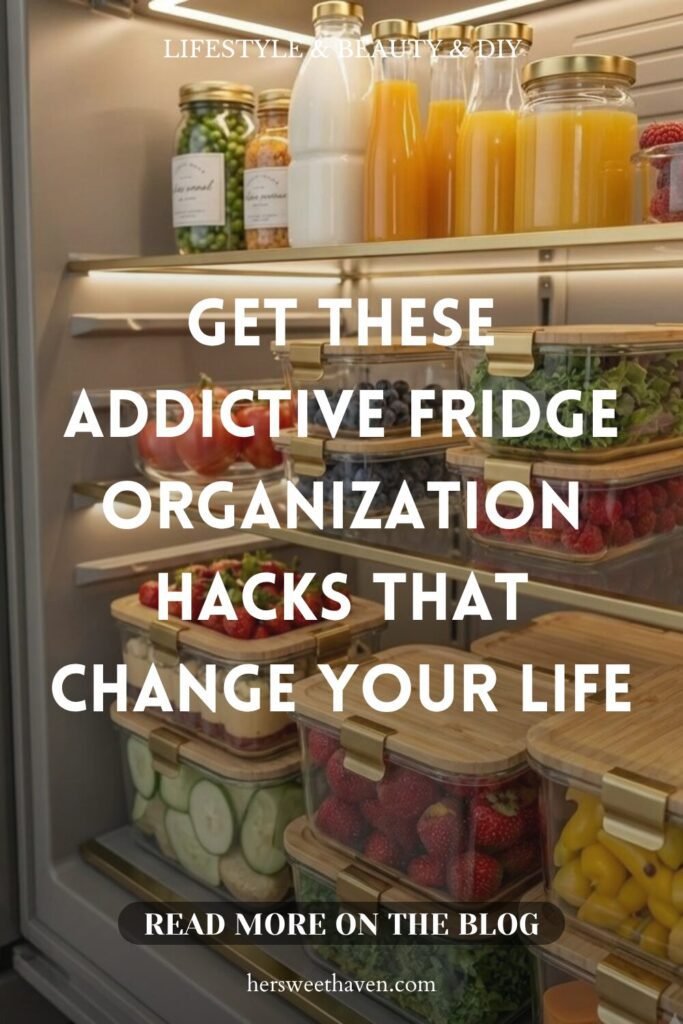
This is non-negotiable. Transparent containers (clear acrylic, glass, or plastic) let you see exactly what’s inside without opening them. You’re less likely to buy duplicates. You’re more likely to use what’s there before it goes bad. Stackable containers save vertical space too.
Lazy Susans for Condiments
A lazy Susan in the back corner of your fridge is a game-changer for condiments and small jars. Spin it to find what you need instead of reaching to the back. It sounds simple, but it keeps things accessible and makes your fridge feel intentional.
Glass Containers for Fresh Produce
Glass containers work beautifully for prepped vegetables, berries, and cut fruit. They’re durable, clear, and don’t stain like plastic. Plus, there’s something satisfying about seeing all your fresh produce lined up and ready to eat.
Drawer Dividers and Stackable Boxes
Dollar store drawer dividers transform your crisper drawers into organized zones. Different compartments for different types of produce. Everything stays visible. Everything has a home.
Label Everything (Yes, Really)
Labeling feels like overkill until you’re standing in front of your fridge wondering when you made that container of soup.
Why Labels Stop Food Waste
A simple label with the date and contents is the difference between using something and tossing it. You know at a glance what’s in each container and how long it’s been there. No mystery. No “I’m not sure, so I’ll throw it out” moments.
What to Label
Label leftovers with the date and what’s inside. Label prepped vegetables. Label any open jar or container, especially sauces and condiments. You don’t need anything fancy. A dry-erase marker and painter’s tape work perfectly. So do sticky labels from the dollar store.
Budget-Friendly Labeling Ideas
Skip the fancy label makers. Painter’s tape + permanent marker. Sticky labels + printer. Even a whiteboard dry-erase marker directly on clear containers. The goal is visibility, not Instagram aesthetics.
Quick Hacks That Take 5 Minutes
The Shelf Liner Trick
Line your shelves and drawers with washable shelf liners or even old sheet trays with raised edges. They catch spills, make cleaning easier, and help keep things organized. When something drips, wipe the liner instead of your fridge shelf. It’s a small thing that saves so much frustration.
Remove Excess Packaging
Take items out of bulky cardboard boxes and plastic containers. Store them in your own clear containers. You save space, everything is more visible, and your fridge feels instantly bigger.
Group by Category
All dairy together. All proteins together. All condiments on one shelf or lazy Susan. All vegetables in the crisper. This sounds basic, but it prevents the “I thought we had milk” moment and makes restocking after grocery shopping automatic.
Keep a Running Inventory
Use a dry-erase board on your fridge door to jot down what’s inside. Update it as you add and use items. Sounds tedious? It saves you from buying duplicates and from forgetting about leftovers hidden in the back.
Container Ideas for Keeping Food Fresh
Clear stackable drawers maximize vertical space. Ceramic or plastic baskets give produce a farmers’ market vibe while keeping things organized. Glass jars with lids are perfect for leftovers and stay-fresh ingredients.
Heavy-duty, water-resistant liners with ridges allow airflow and prevent mold while containing spills Food52, making them ideal for drawer organization.
The key is choosing containers you’ll actually use and that fit your fridge’s dimensions. Measure before you buy. Nothing kills organization faster than containers that don’t fit.
Sleek Fridge Arrangements Perfect for Contemporary Kitchens
Modern kitchens call for fridge organization that matches the aesthetic. Clear containers lined up like a curated collection. Matching labels in consistent handwriting. Color-coordinated zones.
It doesn’t have to look like a showroom. It just has to look intentional. When your fridge feels organized and calm, opening it becomes a moment of satisfaction instead of stress.
Space-Saving Hacks for Crowded Refrigerators
Not everyone has a massive fridge. If you’re working with limited space, think vertical. Stackable containers. Shelf risers that create extra room. Lazy Susans that maximize corner space. Remove packaging. Use every inch intentionally.
Small fridges actually force you to be more organized because there’s no room for chaos. That’s a feature, not a bug.
How Often Should You Clean Out Your Fridge?
Make it part of your weekly routine before grocery shopping. Pull out everything, check dates, compost what’s gone bad, and wipe down the shelves. It takes 15 minutes and prevents the “mystery smell” from ever developing.
What’s the Best Container Brand?
Honestly? Dollar store bins work just as well as expensive options. Buy what fits your space and budget. If you like a specific brand, great. But don’t feel like you need to spend a fortune. Organization is about systems and habits, not price tags.
How Do You Prevent Cross-Contamination?
Use proper zones. Raw meat on the bottom shelf, away from ready-to-eat foods. Store meat in containers with raised edges to catch drips. Use shelf liners that are easy to clean. Label everything clearly. These simple practices keep your food safe and your fridge hygienic.
The Magic of Seeing Everything
Here’s the thing about fridge organization: it changes how you eat, shop, and think about food. When everything is visible and accessible, you make better choices. When you know what you have, you waste less. When things have a home, you maintain the system naturally.
Start with one section. Maybe your crisper drawer. Use clear containers, group by type, label what you’ve prepped. Notice how much easier it is to eat vegetables that week. Then expand to another section. Build from there.
You don’t need the perfect system. You need a system that works for your life, your family, and your fridge. Something you’ll actually maintain because it makes your day easier, not harder.
Try one hack this week. Just one. Clear out one shelf. Add one liner. Buy one set of containers. Notice how different it feels. Notice how many meals you actually cook instead of ordering out because you can finally see what you have.
That’s when it becomes addictive. That’s when you understand why fridge organization is worth the tiny amount of effort it takes.
What hack are you trying first? Save this post and come back to it when you’re ready to transform your fridge. Your wallet will thank you.






Leave a Reply