

Most people think you need a cabinet full of expensive products to keep a clean home. They’re wrong.
The truth is, three pantry staples handle almost every cleaning job in your house: white vinegar, baking soda, and lemon. They’re affordable, non-toxic, and genuinely effective. And once you start using them, you’ll wonder why you ever spent money on anything else.
These 9 natural cleaning hacks cover every room, from the kitchen to the bathroom to your living room upholstery. Each one uses ingredients you probably already have, and none of them require any special equipment. If you’re also working on a well-organized cleaning routine to go with these hacks, these tips slot right in.
Why Natural Cleaning Hacks Actually Work
Before getting into the specific hacks, it helps to understand what you’re working with. These aren’t just feel-good alternatives to real cleaners. They work because of science.
The Power Trio: Baking Soda, White Vinegar, and Lemon
Baking soda (sodium bicarbonate) is a mild abrasive and natural deodorizer. According to Cornell Cooperative Extension, it dissolves into stains, lifts dirt, and neutralizes odors across almost every surface in your home.
White vinegar cuts through grease, kills bacteria like salmonella and E. coli, and breaks down mineral deposits and hard water buildup. Lemon juice adds antibacterial properties, cuts through soap scum, and leaves a genuinely fresh scent rather than that sharp vinegar smell. Use them together or separately, and they cover most of what a full shelf of store-bought cleaners would do.
What Surfaces to Avoid
A quick note before you start: vinegar and lemon are both acidic. Cleaning experts recommend keeping them away from granite, marble, and natural stone, as the acid can etch the surface over time. Baking soda should not be used on aluminum either, as it causes discoloration. Test any new surface in a small, hidden spot first.
9 Natural Cleaning Hacks to Use Room by Room
Here’s where it gets practical.
Hack 1: Steam-Clean Your Microwave with Lemon
This is one of the most satisfying natural cleaning hacks in the kitchen. Fill a microwave-safe bowl with one cup of water and two tablespoons of lemon juice. Heat it on high for three to five minutes until the inside is steaming.
Leave the door closed for another two minutes, then open and wipe down the interior with a damp cloth. According to Useful Home Tips, the steam loosens every bit of stuck-on food and the lemon eliminates odors at the same time. No scrubbing required.
Hack 2: Unclog and Freshen Drains with Baking Soda and Vinegar
Slow drains are a common household frustration, and this fix costs almost nothing. Pour one cup of baking soda directly down the drain, followed immediately by one cup of hot white vinegar. The fizzing reaction breaks down buildup inside the pipe.
Wait five minutes, then flush with two quarts of hot water. Cornell’s household cleaning guide recommends repeating this a couple of times for drains that haven’t been cleaned in a while. For a deeper clean, use the baking soda and salt version: pour one cup baking soda and half a cup of salt down the drain, let it sit overnight, then flush with boiling water in the morning.
Hack 3: Make a Streak-Free All-Purpose Spray
A good all-purpose spray is the foundation of any natural cleaning routine. Add 10ml of lemon juice and 20ml of white vinegar to a 500ml spray bottle, then fill the rest with water. Shake before each use.
This formula works on glass, mirrors, countertops, and most hard surfaces. House Cleaning Pros point out that the lemon-vinegar combination delivers a streak-free finish on glass without leaving any residue behind. Keep one bottle in the kitchen and one in the bathroom, and you’ll reach for it constantly.
Hack 4: Tackle Oven Buildup with a Baking Soda Paste
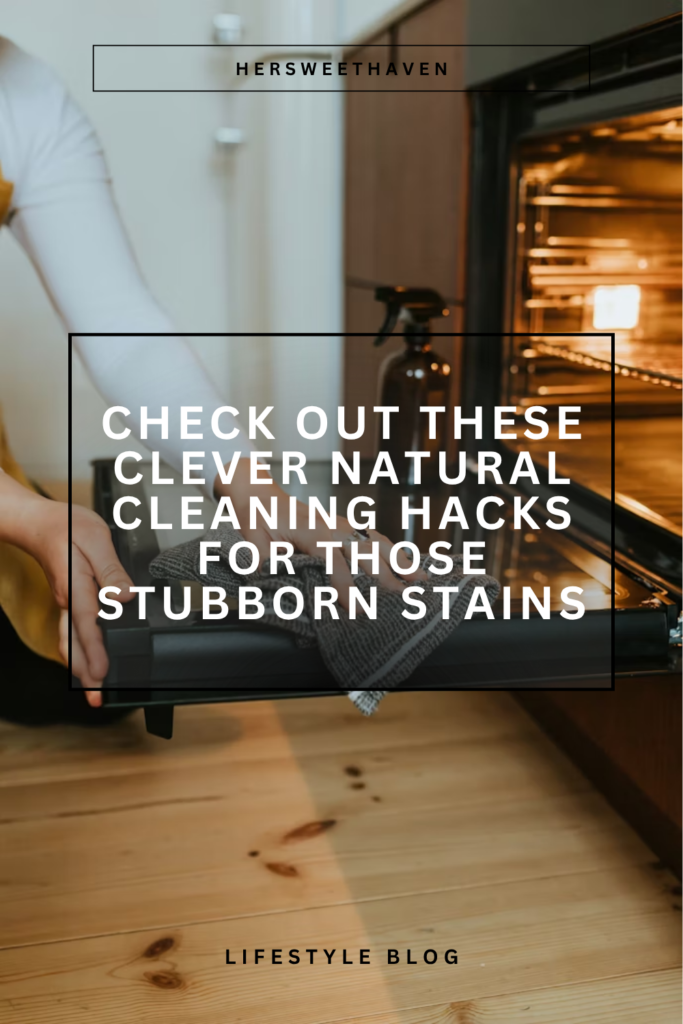
Oven cleaning is one of those jobs most people dread, but the baking soda method makes it genuinely manageable. Mix half a cup of baking soda with three tablespoons of water to form a thick paste. Spread it over the burnt-on areas inside the oven, avoiding the heating elements.
For light buildup, leave it for 15 to 20 minutes. For heavy, baked-on spills, leave it overnight. Wipe away the paste and loosened residue with a damp cloth, then follow up with a spray of diluted white vinegar for a final wipe. Earth911’s cleaning guide notes that the combination of both agents at this stage gives you extra grease-cutting power for the last step. (Note: skip this method if you have a self-cleaning oven.)
Hack 5: Remove Carpet Odors with Baking Soda
This one requires almost zero effort. Sprinkle a generous layer of baking soda over your carpet or rug. Leave it for at least 15 minutes (longer if the odor is strong), then vacuum thoroughly.
For carpet spills, blot up as much liquid as possible first, then spray the stain with equal parts white vinegar and water. Let it sit for five to ten minutes, then blot with a clean towel. Earth911 recommends this two-step approach for fresh stains. The baking soda deodorizes and the vinegar lifts the stain without leaving a chemical residue behind.
Hack 6: Clean Cutting Boards with Salt and Lemon

Cutting boards absorb everything: food juices, odors, bacteria. The salt and lemon method is one of the most effective natural cleaning hacks for getting them properly clean. Rinse off any food residue first, then sprinkle coarse salt generously over the surface.
Cut a lemon in half and scrub the board using the cut side down, squeezing gently as you go to release the juice. The lemon’s acidity breaks down stains and bacteria while the salt acts as a gentle abrasive. Let it sit for five minutes, rinse thoroughly, and repeat on the other side. This method also works well on wooden chopping boards that can’t go in the dishwasher.
Hack 7: Dissolve Hard Water Stains from Faucets and Showerheads
Hard water leaves white mineral deposits on faucets, showerheads, and tiles that look awful and are surprisingly stubborn. White vinegar dissolves them without any scrubbing.
Soak a cloth in undiluted white vinegar and wrap it around the stained faucet. Leave it for 30 minutes, then scrub lightly and rinse. For showerheads, Useful Home Tips suggest filling a small plastic bag with vinegar and securing it over the showerhead with a rubber band overnight. By morning, the deposits wipe right off. For rust spots specifically, sprinkle salt on the area, add lemon juice, and leave it for two to three hours before scrubbing.
Hack 8: Refresh Upholstered Furniture Naturally
For keeping your bedroom and living spaces fresh, upholstered furniture is often the biggest source of trapped odors. The fix is simple: sprinkle baking soda directly over sofas, armchairs, or fabric headboards. Leave it for at least 15 minutes to absorb odors, then vacuum it off thoroughly.
For a light surface clean and deodorize in one step, mix equal parts white vinegar and water with a few drops of lavender essential oil in a spray bottle. Mist the fabric lightly, let it dry completely, and the odors go with it.
Hack 9: Clean Bathroom Grout with a Lemon and Baking Soda Paste
Grout is notoriously difficult to clean because it’s porous and traps grime deep in the surface. A paste made from lemon juice and baking soda, mixed to a toothpaste-like consistency, is one of the most effective natural cleaning hacks for getting it bright again.
Apply the paste directly to the grout lines using an old toothbrush. Scrub in small circular motions and let it sit for a few minutes before rinsing. Safe Financial’s cleaning guide also recommends spraying any mouldy areas with straight white vinegar first, leaving it for 30 minutes, then rinsing before applying the paste for really stubborn buildup.
FAQ: Natural Cleaning Hacks Answered
Are Natural Cleaning Products as Effective as Store-Bought Ones?
For most everyday household cleaning jobs, yes. White vinegar kills salmonella and E. coli. Baking soda removes stains and neutralizes odors. Lemon juice cuts grease and dissolves soap scum. Where natural products fall short is in heavy-duty disinfection situations, such as after illness or on surfaces that need EPA-registered disinfectants. For day-to-day maintenance, though, the pantry staples are just as effective and far cheaper.
Can You Mix Vinegar and Baking Soda for Cleaning?
You can, and the fizzing reaction is useful for drains and oven surfaces. That said, when you mix the two, they partially neutralize each other, so the combination is less potent than using each one separately. The practical approach: use baking soda as a scrub first, then follow with vinegar as a rinse or spray for maximum results from both.
What Surfaces Should You Never Clean with Vinegar?
Avoid vinegar on granite, marble, stone, and unprotected natural wood floors. The acidity can etch stone surfaces and strip protective coatings on wood over time. It also shouldn’t be used on aluminum, copper, or iron. For these surfaces, a mild soap-and-water solution or a specialized cleaner is the safer choice.
Keep It Simple, Keep It Natural
Three ingredients. Nine hacks. Every room in your house covered.
Once you build the habit of reaching for baking soda, vinegar, or lemon before heading to the cleaning aisle, the savings add up fast and your home stays just as clean without the chemical load. Start with one hack this weekend, the microwave steam clean is a good first one, and you’ll quickly see why so many people have made the switch for good.
For more budget-friendly home projects and natural maintenance ideas, there’s plenty more on the blog to keep you going.
Save this post so you have it handy on cleaning day, and drop a comment below: which hack are you trying first?
Leave a Reply