

What do all those veil photos in your saved folder actually have in common? Not the dress. Not the venue. Not even the veil.
It’s that someone was holding the fabric off to the side, out of frame, and the light was coming from behind it. That’s the whole thing. That’s the trick you’ve been saving forty times without noticing.
I figured this out the annoying way: by scrolling my own Pinterest board and realizing I couldn’t explain a single pin to an actual human being. So I sorted them. These are the veil photoshoot ideas I’d send in a message the week before, with the reasoning attached, because “I want it to look like this” is not a shot list.
By the end of this you’ll know which shots earn their time, which ones need length, and which ones nobody thinks to ask for.

What Makes a Veil Shot Worth Sending
Most saved veil pins are unusable as instructions. They’re a mood, not a request. And a photographer working a nine-hour day cannot read a mood.
Here’s the filter I use. A veil shot is worth sending if it has three things: movement in the fabric, light coming through it instead of at it, and a face you can still find. Miss any one of those and you get a pretty texture study of some tulle.
Movement is the one people skip. A veil hanging straight down is just fabric. A veil mid-lift, mid-swoop, mid-toss is where the photo lives.
The good news is you’re not doing anything unusual by wanting these. Roughly 67% of brides are still wearing a veil, which means your photographer has almost certainly done this before and probably has opinions. Ask for them.
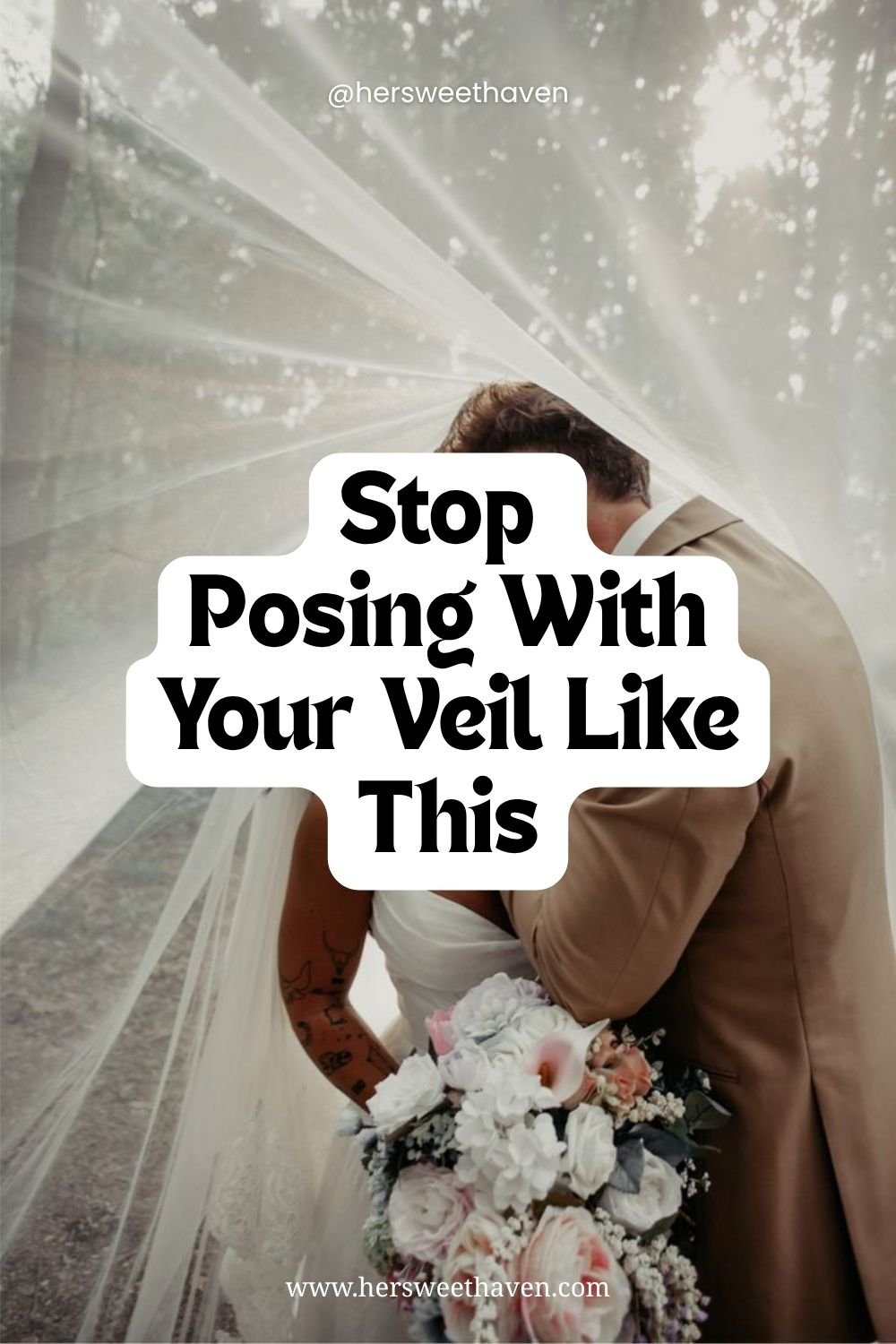
The Veil Photoshoot Ideas I’d Put at the Top of the List
If you only get ten minutes for portraits (and honestly, that’s a realistic number on a real wedding day), these are the two I’d spend them on.
The Veil Swoop
This is the one that makes your gallery look like it cost more than it did. The photographer, or a second shooter, pulls the end of your veil toward the lens so the fabric curves into a soft leading line that runs from the camera straight to you.
It works because your eye has nowhere else to go. The line does the pointing.
SLR Lounge frames it as building your own leading lines out of the veil, which is a much better way to say it than I just did. A slight breeze does half the work for free. No breeze? Someone waves it. Nobody will ever know.
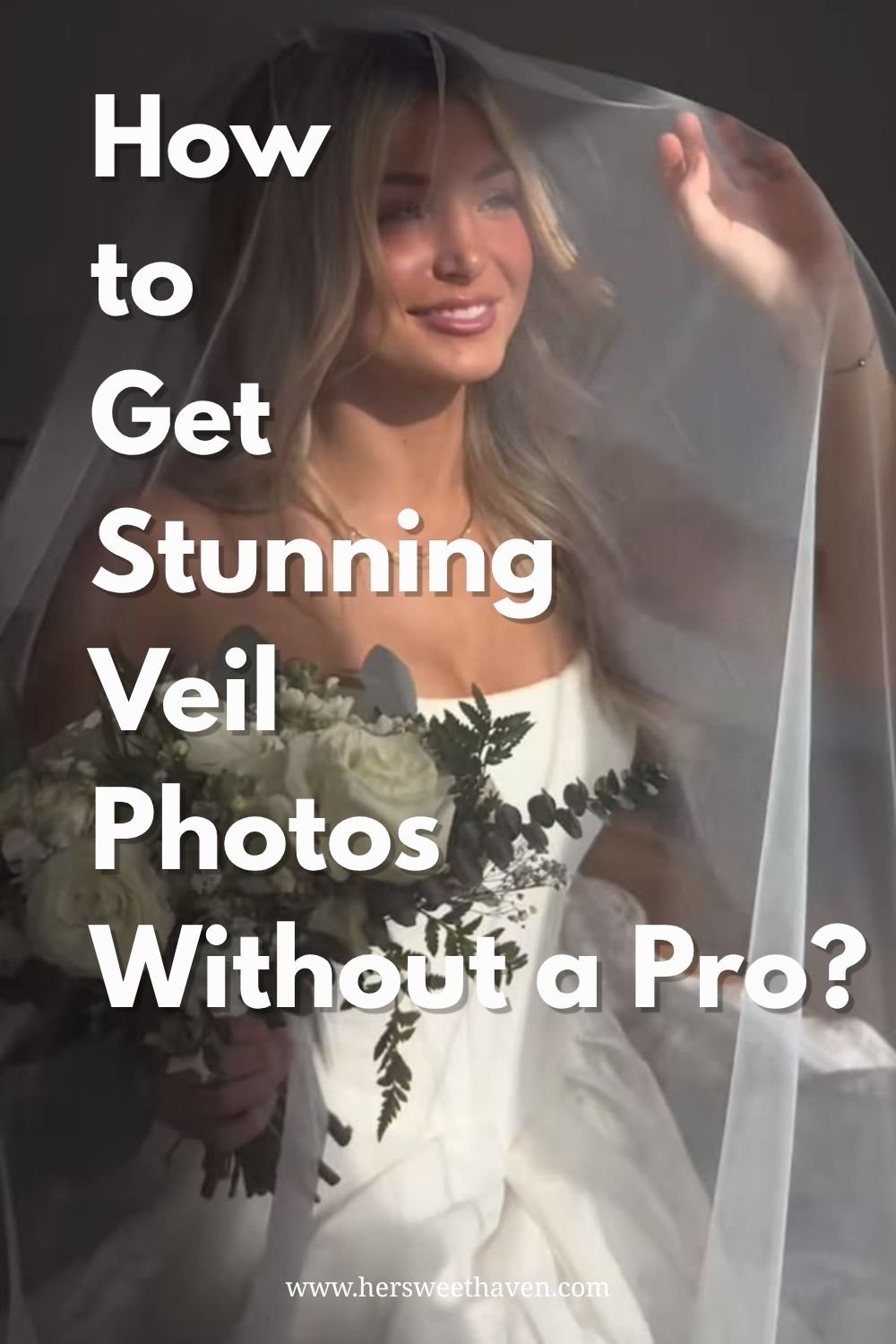
The Under-the-Veil Two-Shot
Both of you underneath, veil over the top, photographer shooting through the tulle from outside. It’s soft, it’s close, and it’s the one that ends up printed.
Here’s the catch. The pose alone gives you nothing. Two people standing still under fabric look like two people standing still under fabric. It only works when something is actually happening: a whisper, a slow almost-kiss, a laugh at how ridiculous this feels.
Tell your photographer you want direction, not just placement. The ones who are good at this will already have a line ready.
The Shots Nobody Asks For (But Should)
The veil toss. Someone throws the fabric up and it hangs there behind you for about one second. Photographers sometimes call it a veil toss and sometimes a veil drop, so use both words when you ask, otherwise you’ll get blank looks.
Then the detail shot. Your veil laid out on its own, maybe next to your shoes or your bouquet, photographed against a light backdrop or played with in shadow. Nobody requests this. Everybody loves it afterward, especially if the lace meant something.
It costs you nothing, either. Your photographer is already shooting details while you’re getting ready, so the veil just joins the pile with the rings and the shoes. Two minutes, tops.
And the one I’d actually put first if I had to pick: somebody you love putting the veil on you. Your mom, your sister, whoever. It takes thirty seconds and it’s the only shot on this list that isn’t about the fabric at all.
How to Choose What Actually Fits Your Day
Length decides most of this. Cathedral veils keep showing up in 2026 for their editorial pull and the photos they make possible, not because of tradition. If you want swoops and tosses, you want length. There’s no version of this where a birdcage veil billows.
Location decides the rest. Long veils and grass do not get along. Sand is worse. If you’re outside, ask about a detachable layer: long for portraits, gone for the ceremony.
Timing is the quiet one. Golden hour plus backlight is where every single one of these ideas gets easier, and it’s the slot that gets eaten by dinner if you don’t block it. (Block it.)
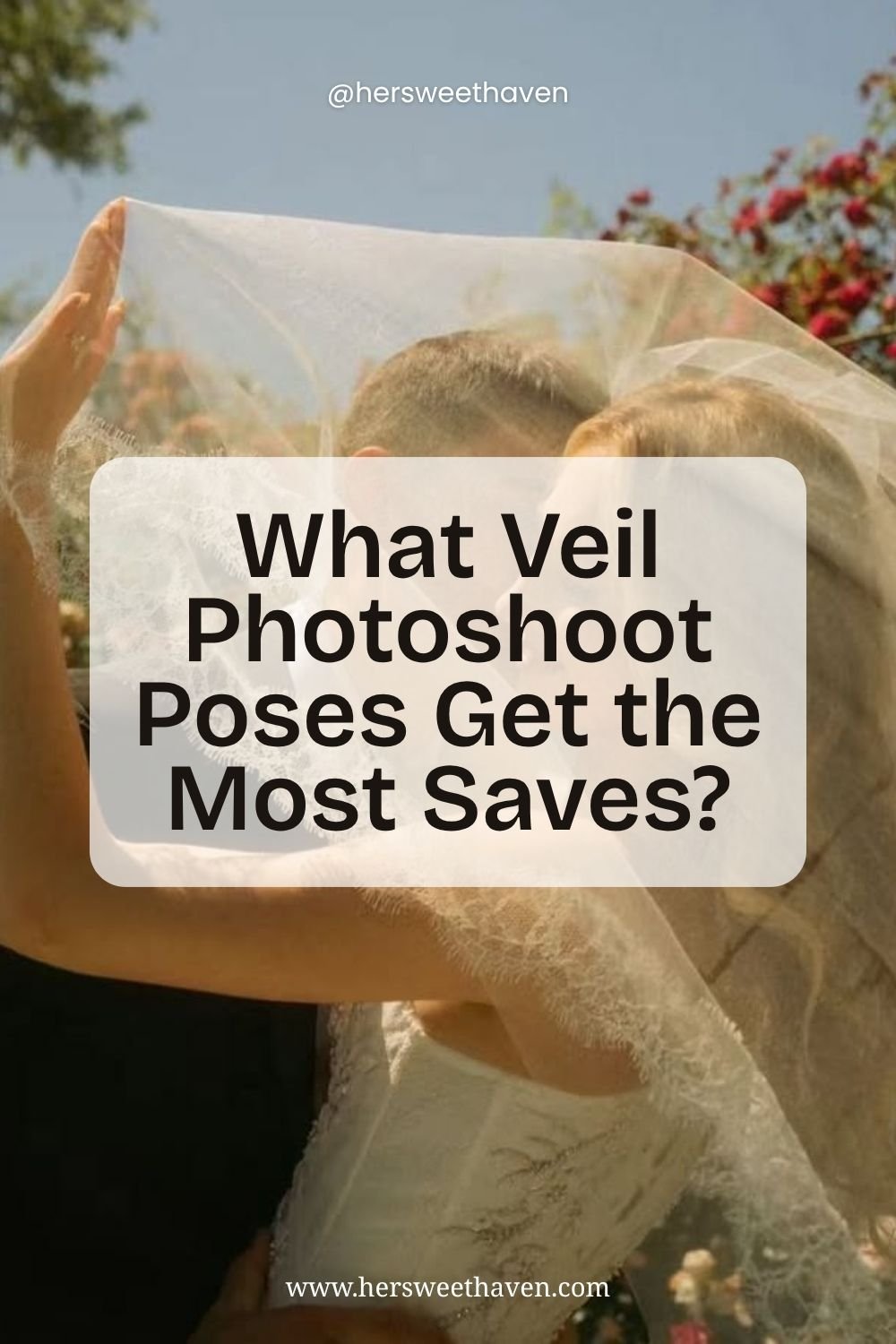
Do You Need a Long Veil for These Veil Photoshoot Ideas?
For the swoop and the toss, mostly yes. Cathedral or chapel length gives you fabric to move, and fabric to move is the entire point.
But short veils aren’t out. The under-the-veil shot, the detail shot, and the veil-being-placed moment all work at any length. So if you already bought a fingertip veil and you’re now panicking: don’t. You lose two ideas from this list, not the list.
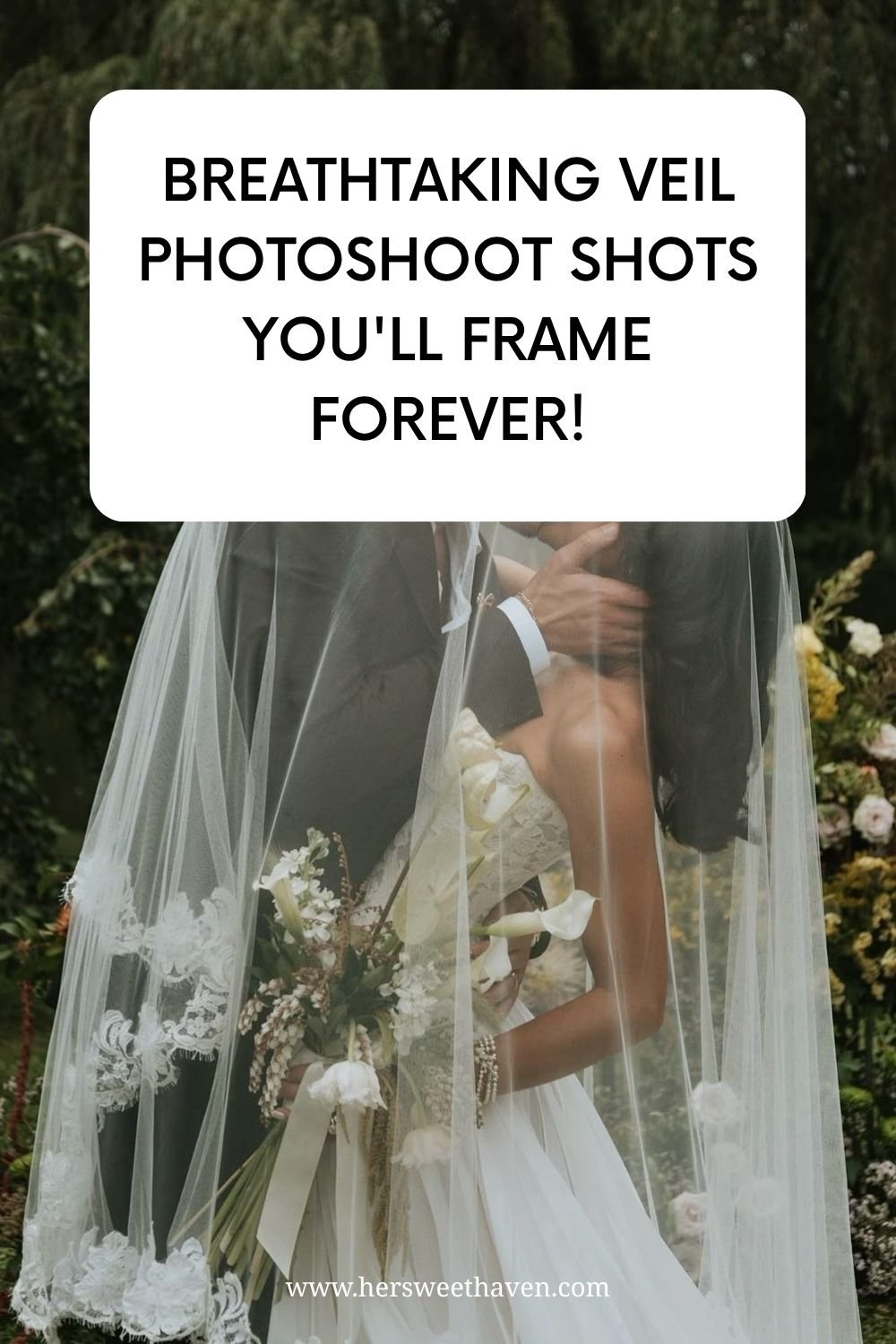
When Should You Actually Schedule Veil Photos?
Right before the first look or the ceremony, when the veil goes on anyway. That’s the natural window and most brides use it.
Then take it off. Long veils get heavy and you’re not wearing that thing through dinner (nobody is). Get your shots, reset your hair, go eat.
Where to Take This Next
That’s the shot list. Five ideas, three of them free, one of them worth the whole gallery.
Once you’ve sent this to your photographer and you know what’s coming, the next thing worth thinking about is what’s happening underneath the veil: how your hair holds up when fabric gets pulled off it twice, and whether your updo survives the swoop. That’s the part that quietly makes or breaks every single one of these photos, and it’s where I’d point you next.
Send the list first, though. Everything else is easier once your photographer knows what you actually want.






Leave a Reply