
The Great Sofa Showdown: Why Modular is My New Best Friend
I’ll be honest with you. I used to think a sofa was just a sofa. You find a pretty one, you measure the wall, you squeeze it through the front door, and you’re done for the next ten years. But then I moved into my current place with its awkward corner and narrow hallway, and suddenly, my „perfect” traditional couch felt like a giant, velvet-covered anchor. I spent three hours trying to pivot it around a banister only to realize it wouldn’t even clear the ceiling height. That was my „aha” moment.
We often treat furniture like a permanent commitment, but our lives are anything but static. We move, we host movie nights, we adopt pets, and sometimes we just want to rearrange the whole living room on a Tuesday night because we’re bored. This is where the debate between modular and traditional sofas really begins. While the classic sofa has served us well for decades, the modular revolution is changing how we think about our homes.
In this article, I’m going to break down why modular sofas are the versatile heroes we’ve been waiting for. We’ll look at how they adapt to your space, why they make moving a breeze, and why they might just be the last couch you ever need to buy. If you’ve ever felt „stuck” with your furniture, stick around.
The Freedom of the „Lego” Living Room
The biggest draw of a modular sofa is, without a doubt, the flexibility. Think of it like Legos for grown-ups. A traditional sofa is one solid block of wood, springs, and fabric. Once it’s in your room, it stays in that exact shape forever. If you decide you want the chaise on the left instead of the right, you’re usually out of luck.
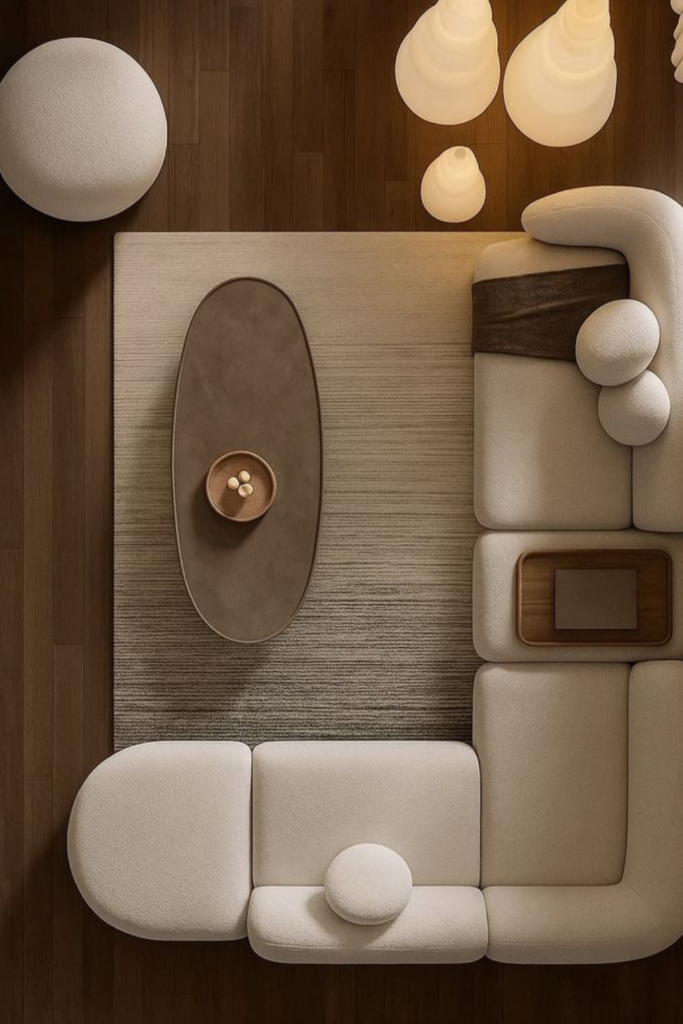
Look at this incredible overhead view of a modular setup. You can see how each piece fits together like a puzzle to create a perfect „L” shape that hugs the rug. This is such a smart way to maximize floor space without making the room feel crowded.
Modular sofas are made of individual pieces—or modules—that clip together. You can have a two-seater today and add a middle section or an ottoman next year when you move to a bigger place. I remember helping a friend move her modular couch into a third-floor walk-up. We took it up piece by piece, and it was actually… easy? I didn’t even have to apologize to the neighbors for blocking the stairs for an hour.
Why Versatility Wins Every Time
- Adaptable Layouts: You can change from an L-shape to a long straight sofa in minutes.
- Scalability: Your furniture grows with your family or your floor plan.
- Custom Comfort: Want more legroom? Just move an ottoman module to wherever you’re sitting.
When you choose a modular design, you aren’t just buying a seat. You are buying a system that responds to your life. Whether you are hosting a huge Super Bowl party or just want to sprawl out for a solo marathon of The Bear, a modular sofa lets you curate the experience.
Comfort Meets Customization: Finding Your Perfect Fit
One of the biggest myths about modular sofas is that they aren’t as „cozy” as traditional ones because of the gaps between pieces. I used to believe this too. I was worried I’d fall through the cracks during a nap. But modern engineering has fixed that with heavy-duty hidden brackets that keep everything locked tight.
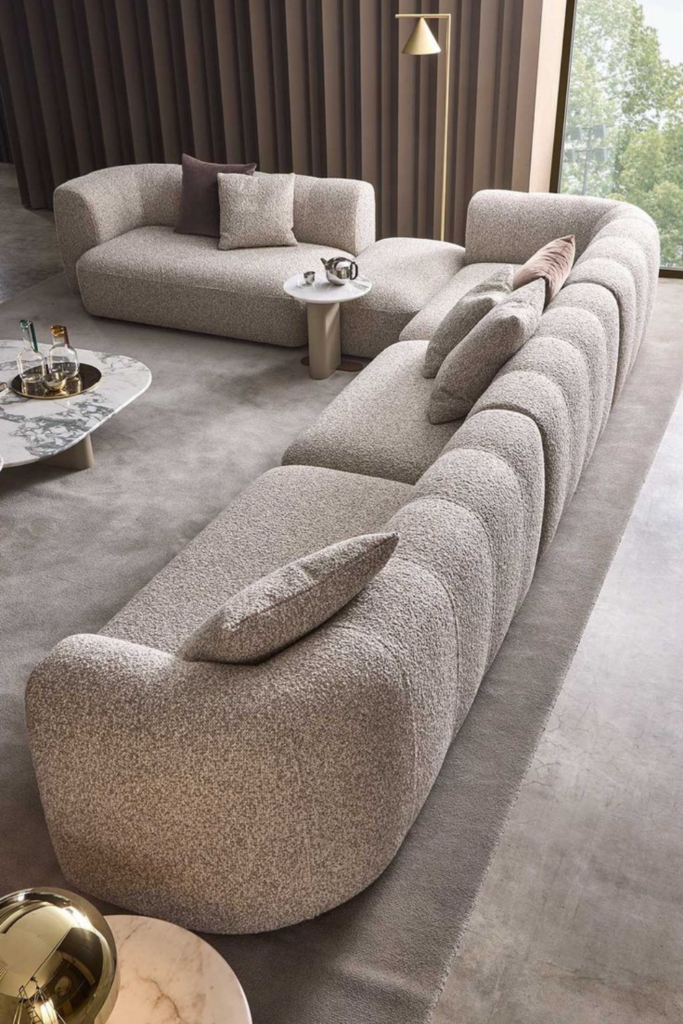
This image shows off that gorgeous, textured „bouclé” fabric that is so popular right now. Notice how the deep, rounded sections create a sense of rhythm in the room. It looks like a soft cloud you could just sink into for hours.
Traditional sofas often prioritize a specific „look” over personalized comfort. They are designed for a „standard” body type. Modular systems, however, often come with different seat depths and back heights. You can literally build a couch that fits your height and your lounging style.
I once sat on a traditional „designer” sofa that was so shallow my knees felt like they were hitting my chin. It looked great in the catalog, but it was a nightmare for actually watching a movie. With a modular setup, you can often pick deeper modules for the „lounge” area and firmer, shallower modules for the „conversation” side of the room.
The Secret Power of the Ottoman Module
The ottoman is the unsung hero of the modular world. It can be a coffee table with a tray on top, an extra seat for a guest, or the extension that turns your sofa into a giant bed.
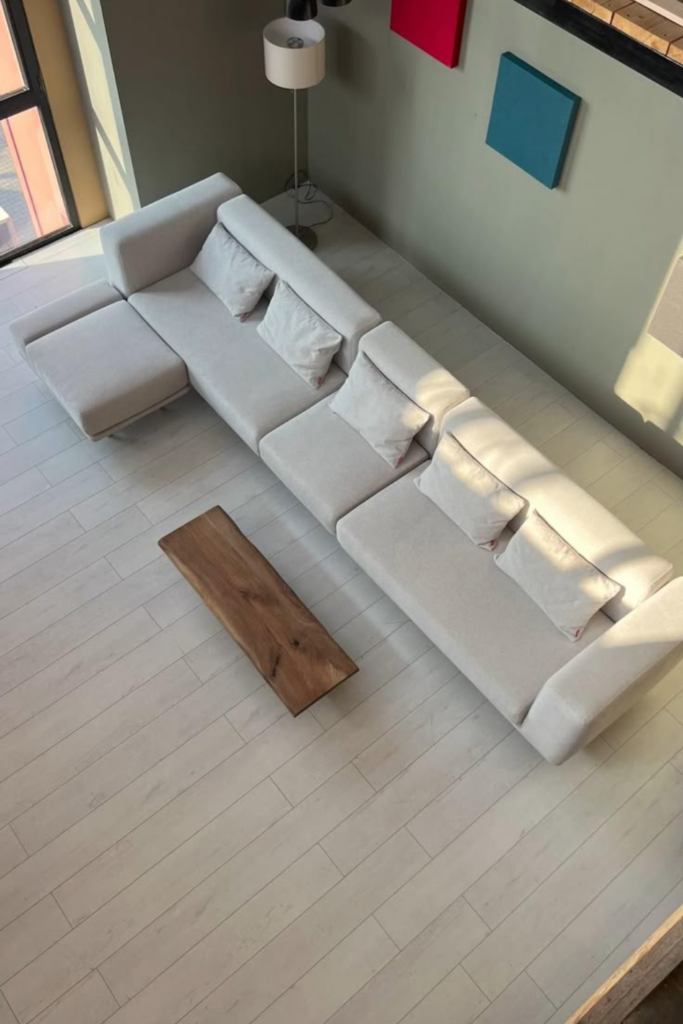
Here is a great example of a minimalist modular sofa with a separate ottoman. The clean lines and neutral color make the room feel so calm and airy. I love how that simple wooden table adds a bit of warmth to the cool tones of the floor.
Durability and the „Life Happens” Factor
Let’s talk about the elephant in the room: spills. I once spilled an entire glass of red wine on a traditional white sofa. I spent three days scrubbing, and I still had to hide the stain with a strategically placed throw pillow for five years. If that had been a modular sofa, I could have just replaced the cover of that one specific module or—worst-case scenario—replaced that one single seat.
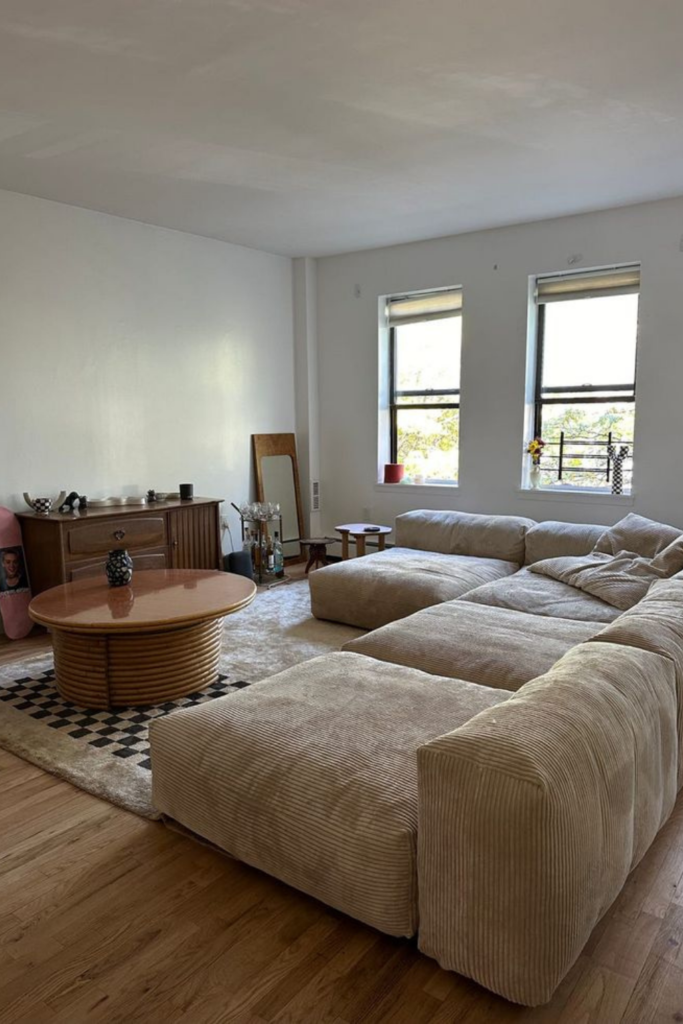
This setup feels so lived-in and real. The corduroy-style texture on this modular sofa is fantastic for hiding the occasional crumb or pet hair. It’s a perfect example of how „imperfect” furniture can make a space feel like home.
Modular sofas are built for the long haul because they are repairable. If a spring breaks in a traditional couch, you usually have to toss the whole thing or pay a fortune for professional reupholstery. With modularity, the „unit” is smaller. This makes maintenance much more manageable for the average person.
Why Modular is More Sustainable
- Reduced Waste: You don’t throw away the whole sofa just because one part is worn out.
- Longer Lifespan: Because it adapts to new homes, you are less likely to replace it when you move.
- Transport Efficiency: Shipped in smaller boxes, which often means a smaller carbon footprint during delivery.
The „Nest” Factor: Creating Your Ultimate Sanctuary
At the end of a long day, we don’t just want a place to sit; we want a place to hide. There is a certain psychological comfort in a sofa that wraps around you. Modular sofas excel at creating these „nests” because you can build deep corners that feel like a giant hug.
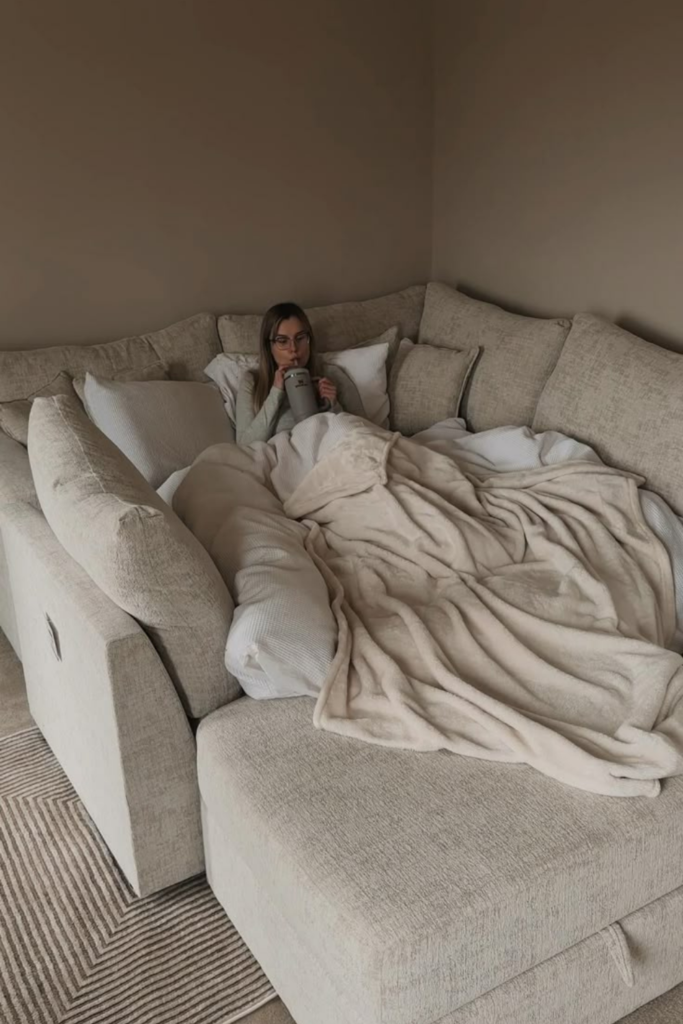
This is exactly what I mean by „nesting”! Look at how deep and cozy this corner is, filled with blankets and pillows. It’s the ultimate spot for a weekend morning with a big mug of tea and a good book.
I’ve found that my productivity actually goes up when I have a comfortable, designated „chill zone”. It creates a clear boundary between „work time” and „rest time”. When I’m on my modular „pit” sofa, my brain knows it’s time to turn off the emails and just breathe.
Traditional sofas can feel a bit formal. They are often designed for „sitting properly” with your feet on the floor. But let’s be real—how often do we actually sit like that? We want to curl up, tuck our feet in, and maybe even nap. Modular designs embrace this relaxed reality.
My Pro Tips for Choosing Your Next Sofa
If you’re ready to make the switch, here is some „friend-to-friend” advice to keep in mind. Don’t make the same mistakes I did!
- Measure the „Path,” Not Just the Room: The sofa might fit in your living room, but will it fit through the hallway? Modular pieces are easier, but you still need to check those box dimensions.
- Check the Connection Points: Look for sofas with „alligator clips” or heavy-duty connectors. You don’t want your sofa drifting apart like icebergs in the middle of a movie.
- Test the Fabric Samples: Always order swatches! What looks like a soft grey in a photo might look like a blue-tinted hospital blanket in your living room light.
- Start Small: You don’t have to buy the 12-piece mega-sofa right away. Start with a 3-piece set and see how it feels in your space. You can always add more later!
- Don’t Forget the Bottom: Make sure the feet of the sofa are floor-friendly or buy some felt pads. Modular pieces are light enough to slide, and you don’t want to scratch your beautiful wood floors.
The Verdict: Why Modular Wins My Heart
At the end of the day, your home should serve you, not the other way around. Traditional sofas are beautiful, but they can be rigid and demanding. Modular sofas offer a sense of freedom and adaptability that fits the way we actually live today.
They are easier to move, simpler to clean, and infinitely customizable. Whether you’re in a tiny studio or a sprawling house, a modular system gives you the power to change your mind without buying new furniture. It’s an investment in your future comfort.
I’m so glad I finally let go of my „perfect” traditional couch and embraced the beautiful chaos of modular living. It has made my space feel so much more like me.
What’s your biggest „must-have” when you’re looking for a new couch—is it the look, the size, or how easy it is to nap on?