

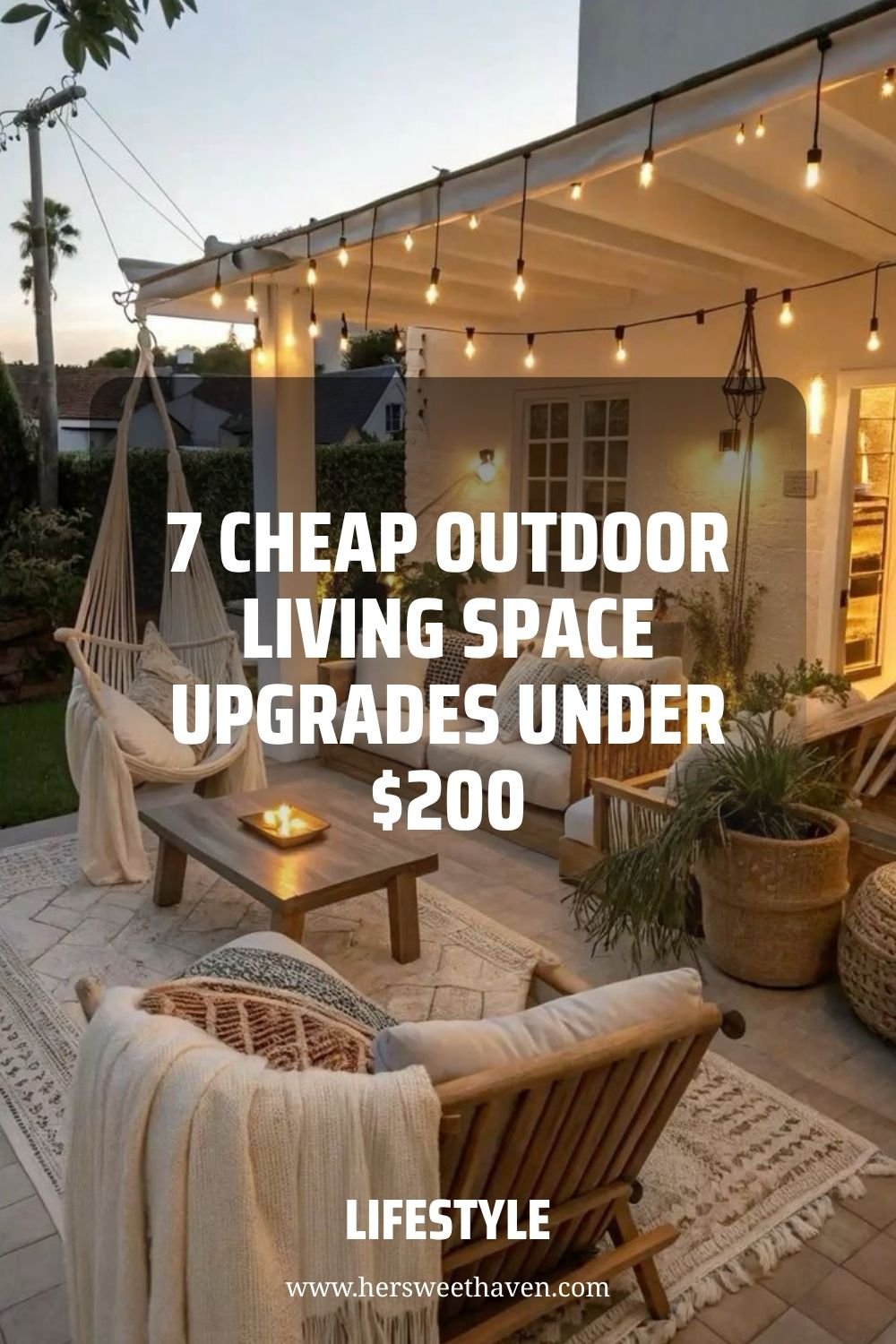
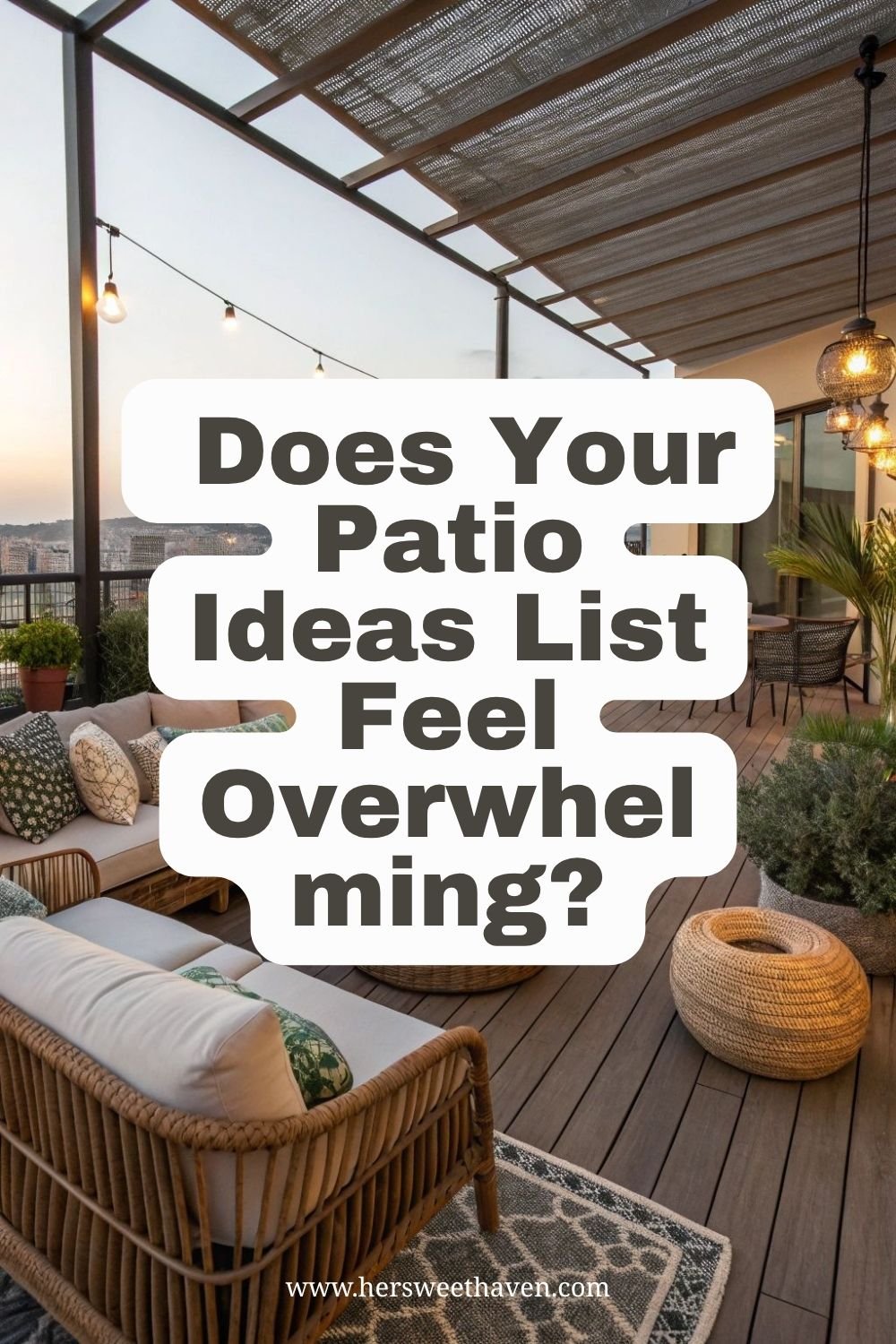
The average professional outdoor makeover runs about $7,800, and that number climbs fast once you add custom patios, built-in kitchens, and contractor labor. But here’s what nobody tells you: you can get 80% of that look for under $200 if you do it yourself. A set of string lights is $15. An outdoor rug is $30. A few pillows and a couple of plants, maybe another $40.
I know because I did it. My patio was a bare concrete slab I walked past every day without a second thought. Then one evening I strung up a $15 set of solar lights across the fence, threw a blanket over a chair, and sat outside for the first time in months. The whole thing took 20 minutes, and I remember thinking, why did I wait so long?
That’s the whole idea behind this post. Whether you’re working with a tiny apartment balcony, a suburban patio, or a neglected backyard corner, the playbook is the same. Here’s how to make any outdoor space feel like yours without spending a fortune.
Start With Intention, Not a Big Budget
Here’s the thing most outdoor spaces have in common: they became a dumping ground. Old chairs, a laundry rack, planters full of dead things. It’s not that the space lacks potential, it’s that nobody gave it the same thought they’d give a room inside.
And people are catching on. According to the Pinterest Spring 2026 trend report, searches for balcony makeover ideas jumped 165% this year, with small outdoor spaces becoming what Pinterest calls “spring’s main stage.” Turns out we’re all rethinking every square foot we’ve got.
The balconies and patios that look best online share one trait, and it isn’t money or size. It’s intention. So before you buy a single thing, answer this: how do you want to feel when you step outside? Morning coffee spot? Evening wind-down? A place to read for five quiet minutes? That one answer shapes every choice after it. It’s also the reason a $50 makeover can look better than a $500 one.
The 3 Upgrades With the Biggest Impact
If you only do three things, make it these. They give you the most change for the least money, and they work on a balcony, a patio, or a backyard equally well.
Lighting. This is the single biggest upgrade you can make, and one of the cheapest. String lights instantly add warmth and structure to an otherwise flat space. Solar-powered ones are the best budget pick because they cost nothing to run and need zero wiring. You hang them and forget them. The difference between a space with lighting and one without is the difference between a spot you use at night and one you don’t.
An outdoor rug. A rug does something no other single item can: it draws a visual boundary that turns a random slab of concrete into a “room.” Choose one big enough to sit under the front legs of your furniture, or go bigger so everything lands on it. Flatweave polypropylene rugs handle moisture, dry fast, and hose off easily. You’ll find solid options for $25 to $50.
Textiles. Pillows and throws are what make a space feel cozy instead of just functional. Pick two or three coordinating colors and scatter them across your seating, then drape a throw over a chair for cooler evenings. You don’t need pricey outdoor-rated versions for a covered spot. IKEA’s outdoor guide suggests just bringing your favorite indoor throws out while you’re using the space and storing them after.
How much does this actually cost?
Way less than you’d think, and you can do it in stages. Under $50 gets you string lights, a couple of candles, and some pillows. Under $200 adds a rug, a few plants, a throw, and a thrifted side table, which is the sweet spot where the space starts to feel like a real room. Under $500 opens up a basic fire pit and a small furniture set. You don’t have to do it all at once. It’s actually better if you don’t.
How Do You Make a Tiny Balcony Feel Bigger?
The answer is simpler than you’d expect. Start by clearing everything off. A clean, empty slate already reads as larger.
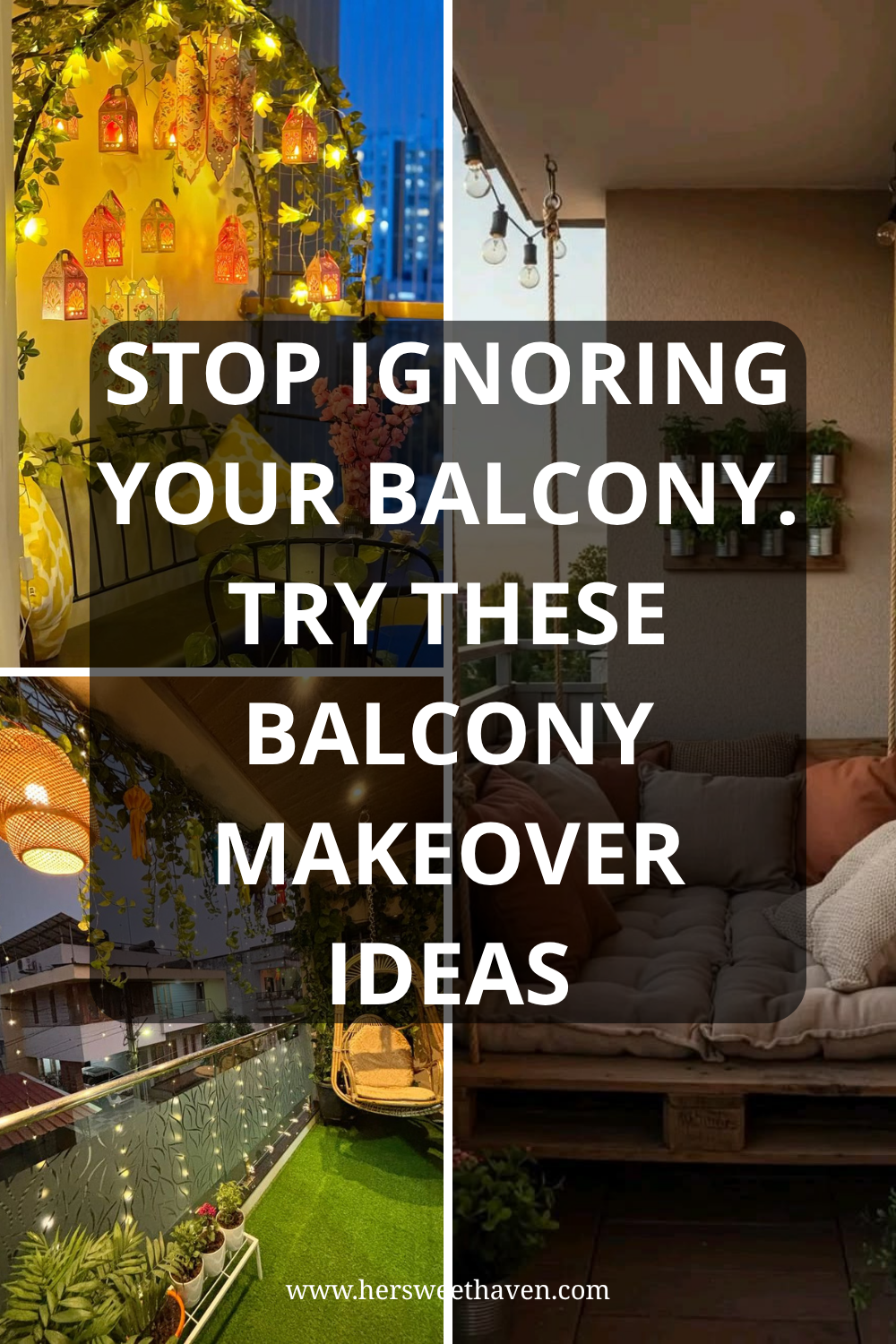
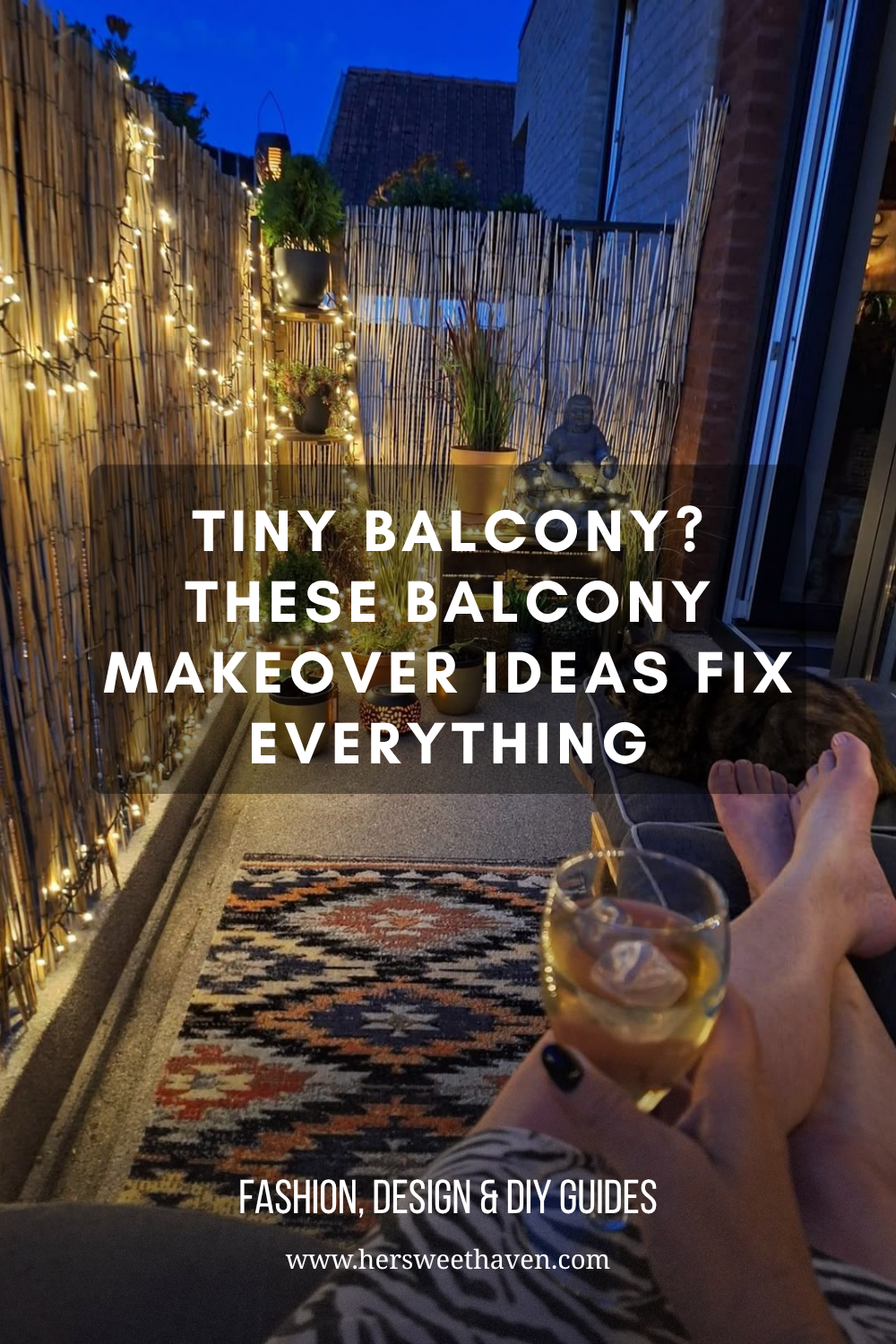
From there, use vertical space instead of floor space. Wall-mounted planters, railing hooks, and tiered shelves draw the eye up and keep the floor open. Stick to two or three colors max, and lay down one outdoor rug to define the seating area, which tricks the eye into seeing a room instead of a concrete ledge.
Flooring helps too. Interlocking wood deck tiles snap together over your existing floor and come apart when you move out, so they’re renter-friendly. Per Homefitra’s 2026 balcony guide, deck tiles are one of the easiest changes you can make and they shift the whole look of a space. Lighter tones open a small balcony up; darker ones add warmth.
Budget Furniture That Looks Expensive
This is where people either overspend or settle for pieces that look cheap and fall apart. The sweet spot is sturdy, weather-resistant, and pricier-looking than it was.
Thrift stores and Facebook Marketplace are gold mines. Solid wood and wrought iron can be sanded and repainted for a fraction of new. A $10 can of spray paint and an afternoon turns a $20 rusty bistro set into something that looks catalog-bought (it’s easier than it sounds). You can also repurpose what you already own: a wooden table replaced indoors gets sanded, sealed with outdoor polyurethane, and moved out back.
And if your budget is truly zero, go DIY. Wooden pallets stacked two high with a plywood top and cushions make a surprisingly comfortable bench or daybed. Cinder blocks with landscape timbers slid through the holes make sturdy seating for almost nothing. On their own they won’t win design awards, but dressed with textiles, tucked into a corner with a rug underneath and lights overhead, they blend right in (this is the part where you feel smug about a $15 bench).
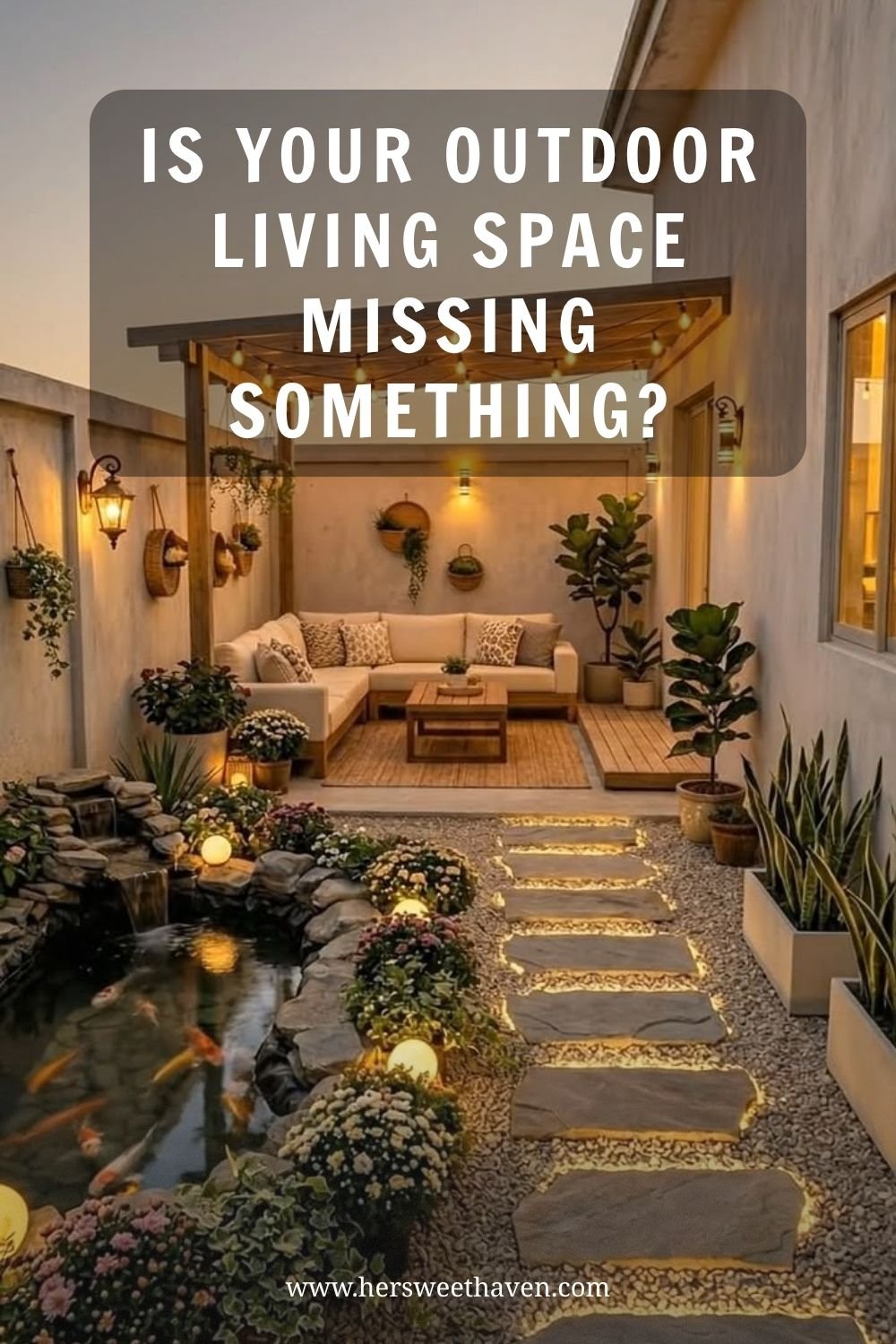
Weekend Projects That Look Way Pricier Than They Are
Once the basics are handled, these take a space from “nice” to “wait, you did this yourself?”
A simple fire pit. A basic pit from stacked stone or concrete blocks goes up in a few hours for under $100. No mortar, no special tools. Just stack the blocks in a circle on a level surface with a few inches of gravel at the bottom. No room for that? A tabletop fire pit gives you the flame and the gathering point without the footprint.
Privacy screens. Nothing kills the relaxation faster than feeling exposed to the neighbors. Outdoor curtains on a tension rod between two posts create an instant enclosed feel, and sheer neutral fabric keeps it airy. A wooden trellis with climbing jasmine or ivy adds greenery and privacy at once. Either runs under $50 and takes about an hour.
Shade and structure. A pergola gives a space a “ceiling,” which makes it feel like a room. Basic freestanding kits run $200 to $500, but a canvas shade sail achieves a similar effect for $30 to $80. Patio trend reports point to adjustable pergolas as a big 2026 look, but a simple sail gets you most of the way on a fraction of the budget.
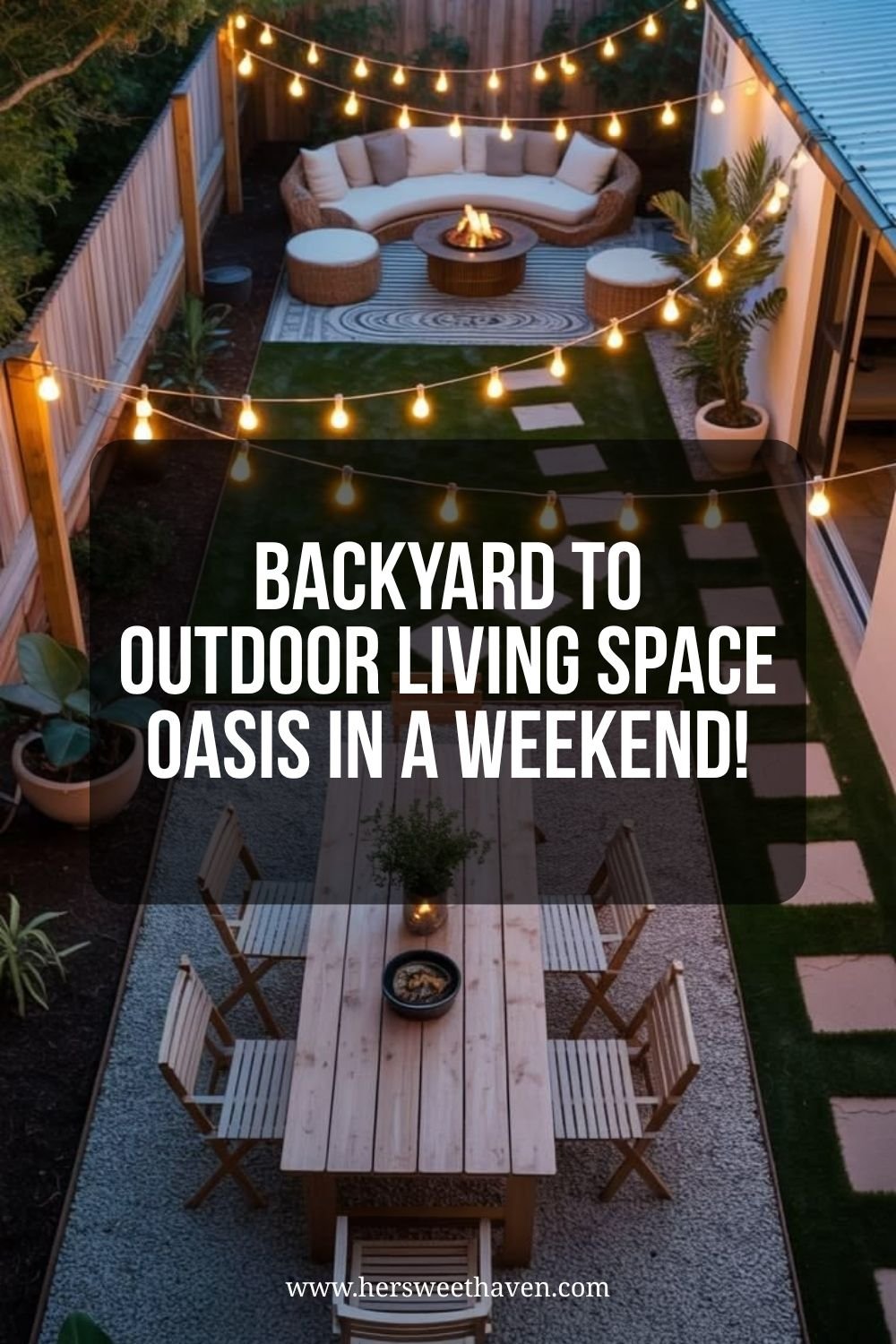
Steal a Style
Once the bones are there, a clear style ties it all together. These are the outdoor looks getting the most attention in 2026.
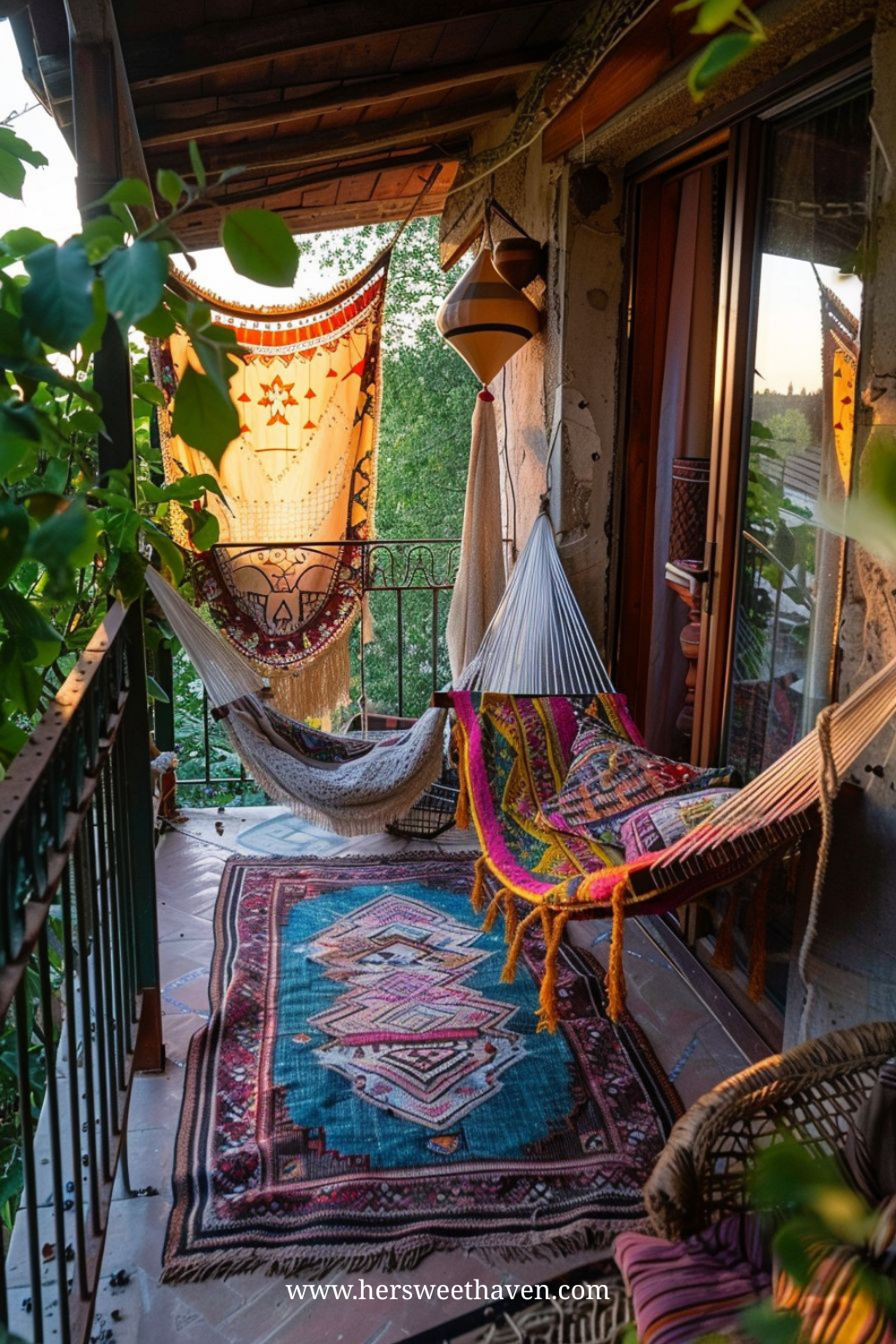
Boho and eclectic keeps dominating small spaces because it’s forgiving. Layer a patterned rug under floor cushions, add macrame and trailing plants, and mismatched suddenly looks collected instead of messy.
Mediterranean and terracotta is having a real moment. Per Nimorix’s 2026 balcony roundup, the Spanish-courtyard look of terracotta pots, warm earthy tones, and a tile accent is back. Use terracotta in mixed sizes and shades rather than matching planters.
Japandi minimal is for anyone who wants calm over color: light wood, clean lines, one good chair, a single plant, and almost nothing on the floor. It works best where each piece gets noticed, so quality matters more than quantity.
The rooftop lounge is the aspirational one: a low sectional or daybed with neutral cushions, big potted plants for soft privacy, and a shade sail overhead. Even on a small budget the formula scales down beautifully.
Avoid These Space-Shrinking Mistakes
A few choices that seem smart actually make a small space feel smaller.
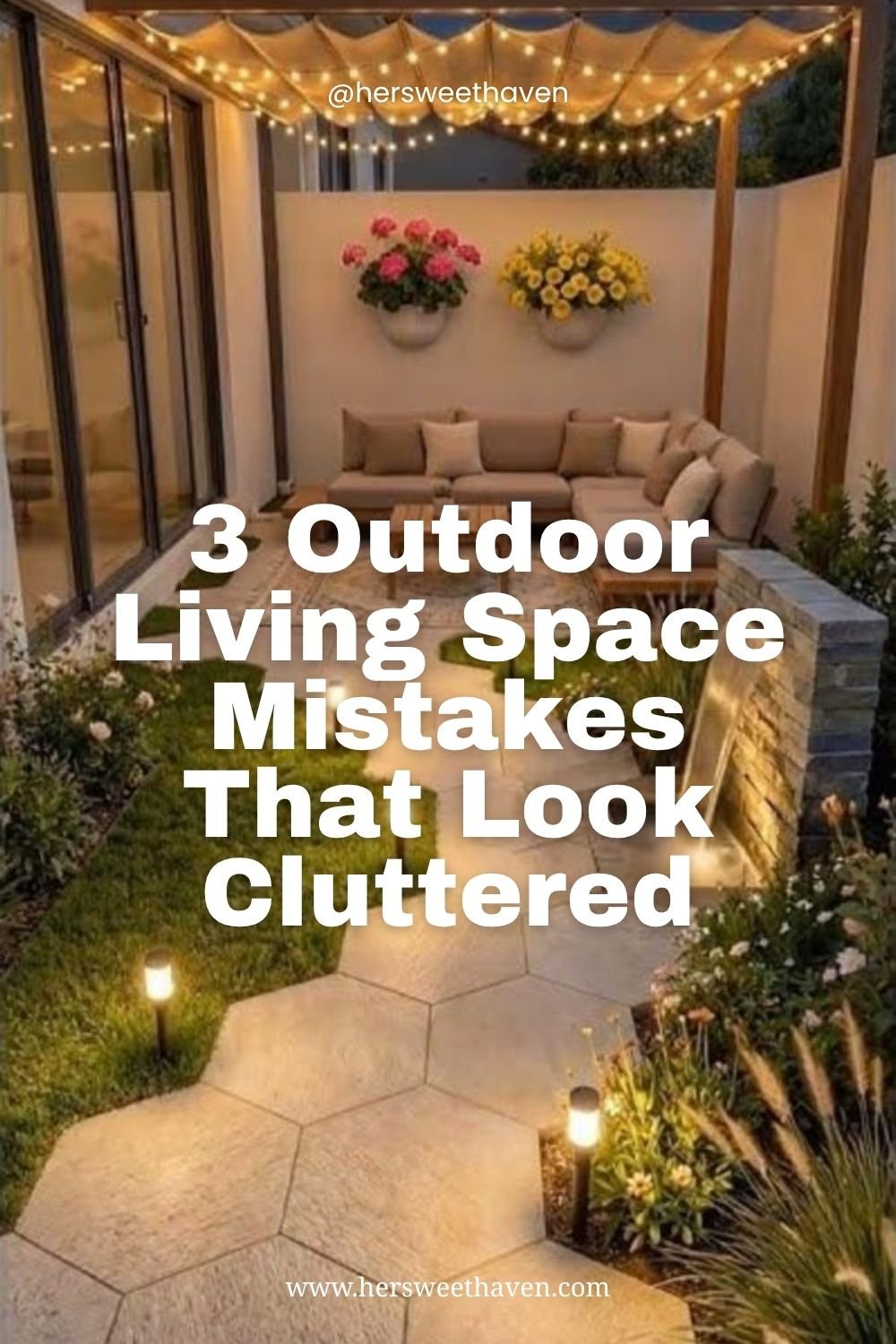
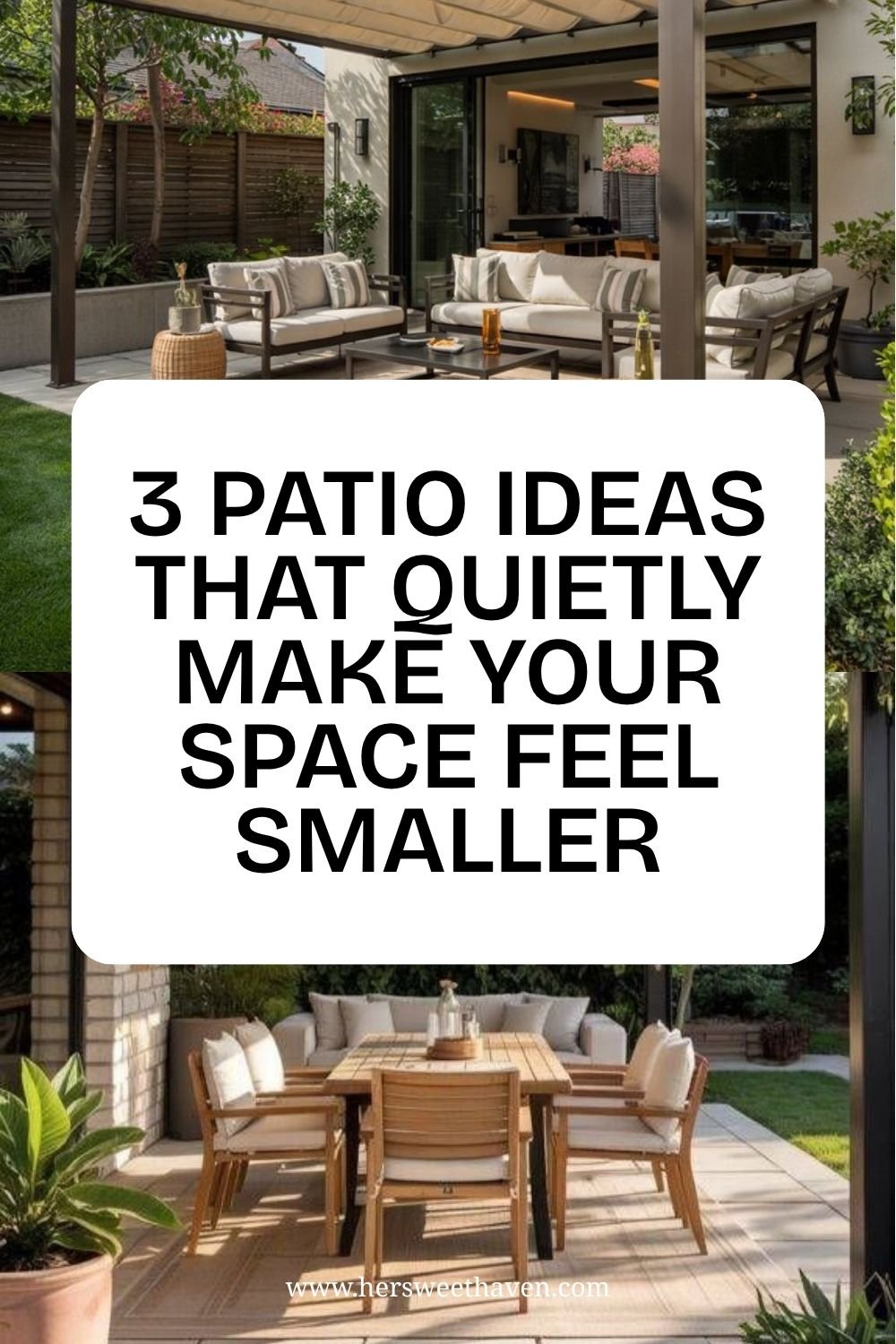
Oversized furniture. A giant sectional that eats 70% of a patio leaves no room to move or breathe. Patio designers warn that more furniture doesn’t equal more enjoyment. If you can’t walk around every piece with 18 inches of clearance, it’s too big.
Too many competing materials. Brick, stone, metal, plastic, and wood all in different finishes create visual noise. Small spaces feel bigger with two or three materials in a coordinating color family.
Tall solid barriers. A full wall or a row of tall planters across the front boxes the space in like a cage. Use partial screens instead (slat fencing, open-weave trellis, climbing plants on a frame) so light and air still pass through.
How to Start Without Getting Overwhelmed
The biggest reason people stall is trying to do everything at once. Don’t. Pick one zone and finish it fully before moving on.
The dining area is usually the best starting point because it’s the most useful: a table, chairs, a light overhead, a rug underneath, done. Once that feels finished, move to a seating corner, then a plant nook, then a lighting pass over the whole space. Building one zone at a time keeps it manageable and gives you visible progress that pulls you into the next step.
And if you can only buy three things this weekend, make them an outdoor rug, a set of string lights, and a few cushions for the furniture you already own. The rug grounds the space, the lights set the mood, and the cushions add comfort and color. That trio changes a space more than any single piece of furniture could.
This Time Next Year
Here’s what I want you to picture. A year from now, your outdoor space is going to look like something. It’s either the same bare slab you walk past today, or it’s a place with warm light overhead, a comfy spot to sit, and the quiet feeling that you made it yourself.
The difference between those two futures isn’t money and it isn’t skill. It’s one Saturday afternoon and a $15 set of string lights. Start there, see how it feels, and add one thing next weekend. By next summer you’ll be sitting out there wondering why you didn’t do this years ago. Pick one idea from this list, grab what you need, and give that little space the attention it’s been waiting for.


Leave a Reply