
Finding the right system completely changed my daily routine. We all start out with good intentions when we fold our laundry on Sunday afternoons, but life gets extremely busy. Before we know it, the plastic hangers are tangled together, the winter shoes are buried under a heavy mountain of discarded summer sweaters, and getting dressed becomes a highly stressful chore instead of a joyful act of self-expression. I remember mornings where I’d try on five different outfits, throw the rejected ones onto the nearest chair, and leave the house feeling defeated before the day even began.
Today, I’m going to walk you right through the exact steps I use to tame the chaos in my own home. We’ll look into the deep emotional side of letting go of old clothes, explore highly practical storage solutions that actually work for regular people with standard homes, and set up a realistic maintenance routine that doesn’t require you to be perfectly neat all the time. You’re going to learn how to turn that stressful, cluttered space into a quiet, calming corner of your bedroom. Grab a fresh cup of coffee, find a comfortable spot to sit, and let’s get started on this project together.
The Emotional Weight of Physical Clutter
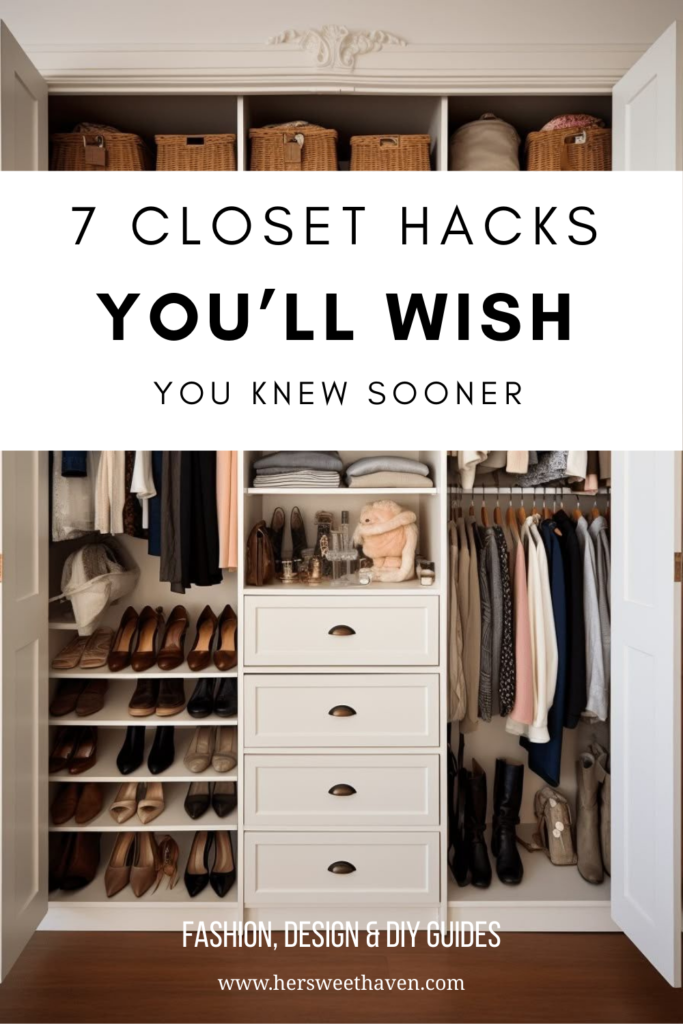
So you feel like nobody is paying attention to the sheer effort it takes just to get out the door on time and look put together. I hear you loud and clear, and I completely validate that frustration. For the longest time, my early mornings were defined by frantic, stressful searching. I’d dig aggressively through piles of wrinkled t-shirts, desperately trying to find that one specific black top, only to realize it was crumpled in the back dark corner behind a formal dress I hadn’t worn since a wedding in 2018. The physical mess wasn’t just a visual problem. It was a heavy, exhausting burden that actively drained my mental energy before I even left the house.
Publications that focus on personal stories often explore what it means to be human by analyzing the spectrum of human experience, ranging from the beautifully mundane to the extraordinary. A messy closet is exactly one of those deeply mundane struggles that impacts our universal human condition far more than we care to admit to our peers. The clutter in our physical space directly mirrors the anxious clutter in our minds. When you open those doors and see a chaotic jumble of fabrics and colors, your brain immediately registers it as a massive list of incomplete tasks. It’s loud, it’s demanding, and it’s incredibly stressful to process before you’ve even had breakfast.
I eventually realized I was holding onto countless items out of pure guilt rather than actual joy. There were expensive designer jeans that no longer fit my current body, bizarre gifts I never liked but felt terribly obligated to keep, and expensive shopping mistakes hanging there with the store tags still attached, mocking my financial decisions. Acknowledging that this entire organizational process was initially frustrating is very important to me. I failed several times before finding the right method that stuck. I used to just shove everything into heavy plastic bins, hide them under the guest bed, and pretend the problem was solved. Naturally, the mess always returned to my main wardrobe within a single week. I desperately needed a completely different, more honest approach.
My Step-by-Step Decluttering Process
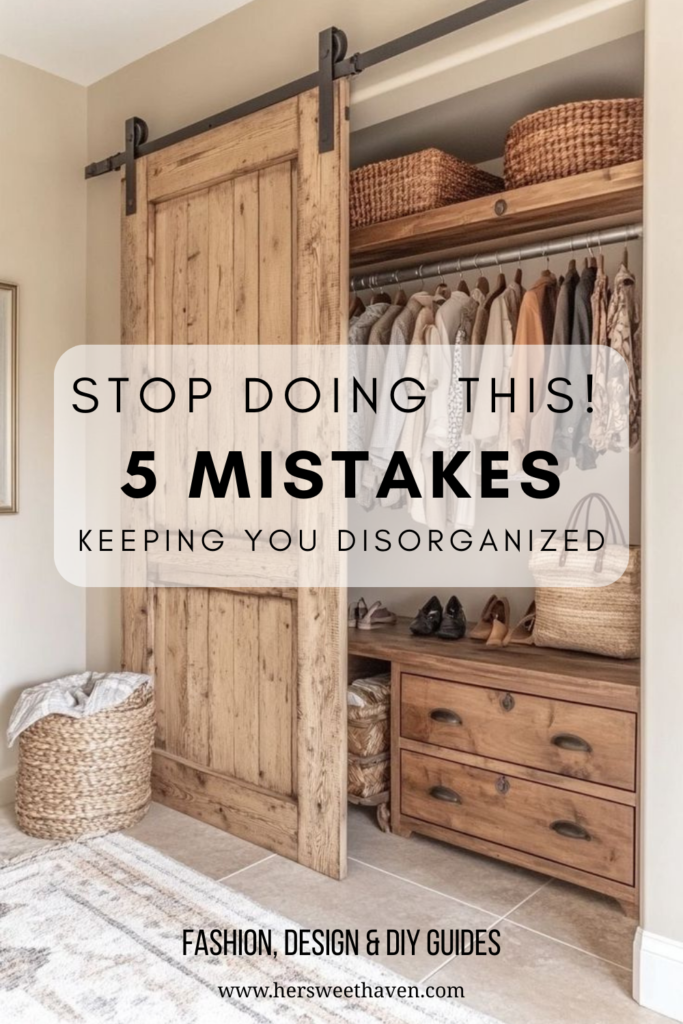
The first step is always the hardest part of the process, but it’s entirely necessary for long-term success. You have to take absolutely everything out of the space. Every single mismatched sock, every worn-out belt, and every forgotten winter scarf must come out into the open light of your bedroom. I like to pile it all directly onto my bed. This forces me to deal with the massive mountain of fabric before I can comfortably go to sleep that night. It’s a harsh reality check, but seeing the sheer, undeniable volume of stuff you own is incredibly powerful and motivating.
Once the physical space is entirely empty, give it a very good clean. Wipe down the dusty wooden shelves, vacuum the dark corners of the floor, and take a moment to enjoy the beautiful visual of a clean, blank slate. Now comes the intense sorting phase. I use a very straightforward sorting system consisting of three distinct piles: keep, donate, and maybe.
The „keep” pile is strictly reserved for items you wear regularly, that fit your body perfectly right now, and that make you feel genuinely good when you put them on. The „donate” pile is for items that are in good, wearable condition but no longer serve your lifestyle or aesthetic. The „maybe” pile is the tricky one that trips up most people. This is for expensive pieces you’re unsure about, or sentimental items you can’t quite part with yet. My strict rule for the „maybe” pile is to carefully pack it away in a cardboard box, tape it shut, and write today’s date on the side. I hide it completely out of sight in the garage or on a high shelf. If I don’t think about or actively reach for those specific items within six full months, the entire box goes straight to the local donation center without me opening it again. This completely reduces the exhausting decision fatigue that derails so many honest organizing attempts.
Designing Your Minimalist Wardrobe Storage Solutions
Now that you’ve successfully pared down your belongings, it’s time to put the „keep” pile back in a way that actually makes logical sense for your daily life. When we draw inspiration from the best writers in the lifestyle space, we focus heavily on cozy productivity and romanticizing your life. We want to build a space that feels deeply intentional and joyful, not just logistically sound or coldly efficient. +1
Invest in a set of matching hangers. This is a relatively small financial change, but it makes a massive visual difference to the overall aesthetic. Wooden or velvet hangers prevent delicate clothes from slipping off and instantly upgrade the look of your space from a messy dorm room to a curated boutique. Group your clothing strictly by category. Hang all your long-sleeved shirts together, your work pants together, and your summer dresses together. If you want to take it a step further, arrange them by color from light to dark. It looks absolutely beautiful, and it makes finding specific items incredibly fast when you’re running late.
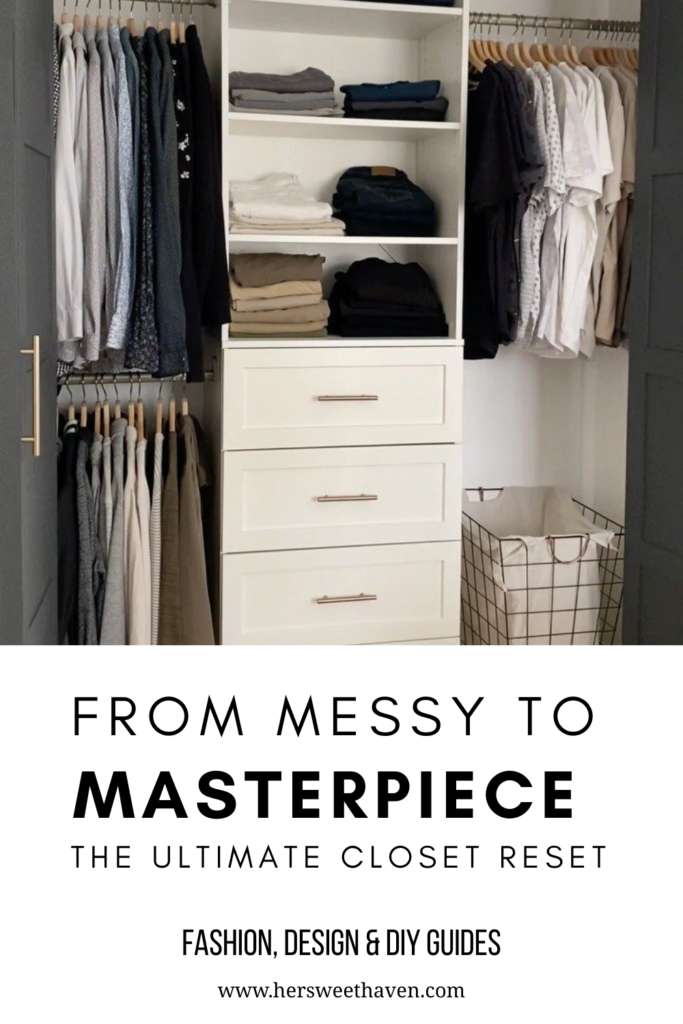
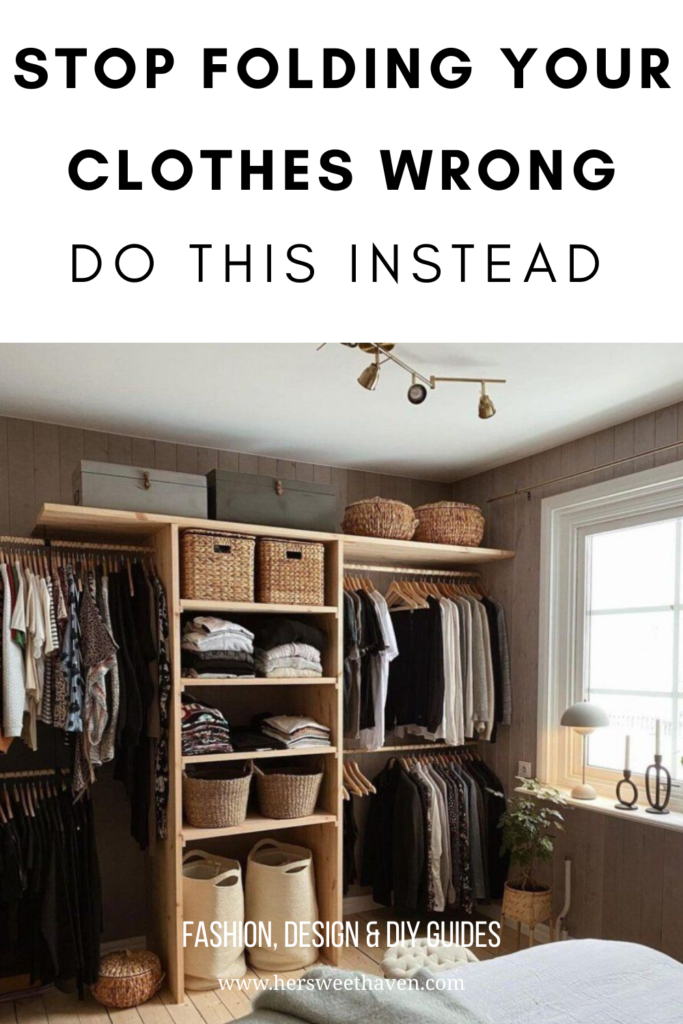
For items that don’t need to be hung on a rod, like chunky knit sweaters, denim jeans, or stretchy workout gear, use sturdy fabric baskets or woven bins on the upper shelves. This keeps the visual noise to an absolute minimum and prevents tall stacks of clothes from toppling over onto your head. I highly recommend using the file-folding method for your drawers. Instead of stacking t-shirts on top of each other, fold them into small rectangles and stand them upright. Use wooden drawer dividers for your socks and undergarments. Seeing everything neatly separated in its own designated zone rather than tangled in a giant knot brings a surprising amount of daily peace to my mornings.
Maintenance Over Perfection
We have to remember to focus entirely on the messy journey rather than a perfected end state. Readers don’t want to be lectured by someone who claims to have a completely flawless, catalog-ready life; they want to hear from someone who is actively figuring things out alongside them in the real world. Let me be rigorously honest with you: my closet is absolutely not always perfect. Just last week, I ruined a nice dinner recipe by adding way too much garlic to the sauce, and I also left a huge pile of clean laundry sitting in the plastic basket for four straight days because I was too tired to fold it. Real life happens to all of us.+3
The goal here isn’t to create a sterile, untouchable museum exhibit behind closed doors. The actual goal is to build a highly forgiving system that is very easy to reset when things inevitably get messy after a long trip or a busy work week. When you have a designated, logical spot for every single item you own, cleaning up the space takes five minutes instead of two exhausting hours. If you notice one specific shelf getting messy, just take a deep breath, play a nice song, and fix that one specific shelf. You don’t need to pull everything out and start from scratch every single time the space looks a little lived-in.
Friendly Advice on Sustaining the Magic
Gretchen Rubin brilliantly turns her own life into a personal laboratory, conducting daily experiments and documenting the honest results for her audience. Taking a direct page from her methodology, I decided to formulate my own specific set of guiding principles to keep my newly organized space intact over the long haul. Here are my five personal commandments for a consistently peaceful wardrobe. +2
First, you must practice the „one in, one out” rule religiously. If you buy a brand new sweater at the store, an older sweater from your collection has to go directly to the donation bin. This actively prevents the slow, creeping accumulation of extra stuff that ruined your space in the first place. It forces you to be highly intentional about what you allow into your home. If you don’t love a new item enough to part with an old one, you don’t actually need to buy it.
Second, commit to doing a quick seasonal edit. Four times a year, when the outdoor weather noticeably changes, take twenty short minutes to assess your current wardrobe. Pack away the heavy winter coats and thick boots when the warm spring weather arrives. This instantly frees up valuable breathing room in your primary closet and makes your daily clothing choices much easier to manage.
Third, always advocate for incremental lifestyle changes rather than overwhelming, weekend-long overhauls. If you only have ten spare minutes on a lazy Sunday afternoon, don’t try to reorganize the entire room. Just focus your energy and organize your sock drawer. Small, consistent daily actions are far more powerful and sustainable than massive, sporadic cleaning efforts. Hanging up your heavy jacket the exact moment you walk through the front door takes exactly five seconds, but it genuinely saves you from a massive, stressful cleaning session at the end of the long week.+1
Do’s and Don’ts For Your Wardrobe Reset
To make absolutely sure you get the most value out of this home project, I’ve put together a quick, actionable reference guide. Keep these simple rules in the back of your mind as you tackle your space this week.
The Do’s:
- Do start with very small sections. Tackle one single drawer or one specific hanging section at a time to prevent yourself from getting completely overwhelmed and abandoning the project.
- Do invest in good, clear lighting. If your closet is dark and gloomy, buy an inexpensive, battery-powered LED push light from the hardware store. Seeing your clothes clearly makes getting dressed much more enjoyable and fast.
- Do use all available vertical space. Add extra floating shelves above your main hanging rod or place small, tiered shoe racks on the floor to maximize every single inch of your available storage area.
- Do keep a permanent donation bag handy at all times. Keep a nice, sturdy canvas tote bag tucked discreetly in the corner. When you try on a shirt on a Tuesday morning and realize you hate the fit, put it straight into the bag instead of hanging it back up to deal with later.
The Don’ts (What to Look Out For):
- Don’t buy expensive storage containers first. Always declutter and completely purge your items before you buy fancy bins or baskets. You need to know exactly what you’re storing before you can buy the right tools for the job.
- Don’t keep old clothes that require major, expensive repairs. If a nice dress has been waiting for a new zipper for three entire years, you’re probably never going to fix it. Let it go and free up the hanger.
- Don’t hold onto aspirational sizing or guilt-inducing pieces. Keep the clothes that fit your beautiful body exactly as it is today. Staring at expensive jeans that are three sizes too small is a terrible way to start your morning routine.
- Don’t forget to use the back of the door. If you have a traditional swinging door, hang a sturdy wire rack over it to store accessories, belts, or bulky winter shoes. Ignoring this space is a huge missed opportunity for small homes.
Executive Summary
Organizing your clothes isn’t just about making a physical space look pretty for a photograph. It’s fundamentally about clearing your mental clutter, drastically reducing your daily morning anxiety, and focusing entirely on intentional, joyful living. By pulling everything out, sorting ruthlessly into three clear piles, and investing in uniform hangers, you create a deeply calm foundation for your early mornings. Please remember that maintaining this space is an ongoing daily practice, not a one-time magical fix. Be very kind to yourself when things inevitably get messy, and lean heavily on small daily habits to get back on track. How are you planning to tackle your own wardrobe this weekend? Please share your specific struggles, questions, and big victories in the comments below because I’d genuinely love to hear from you and cheer you on!