

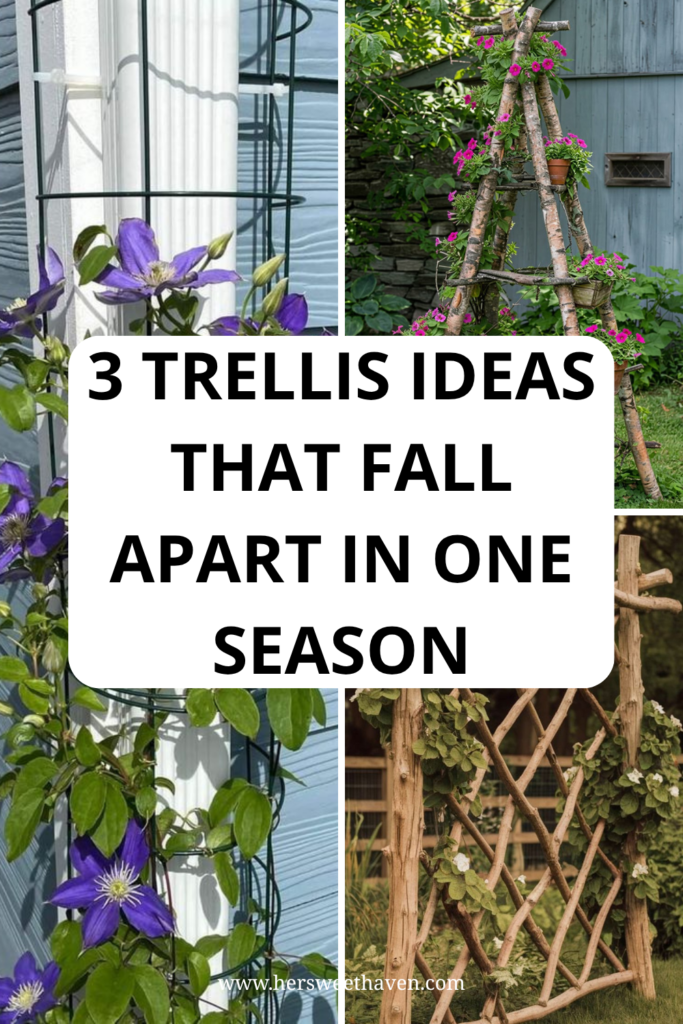
Rustic branch structures tied with twine. Tiny bamboo frames leaning against a wall. They photograph well. But after one summer of wind, rain, and the actual weight of a full-grown vine? Half of them are on the ground.
The best trellis ideas aren’t just pretty. They hold up. They support real plants through real weather. And they don’t have to cost a fortune to do it.
This post covers trellis ideas that actually work, from quick afternoon builds and budget-friendly designs under $25 to sturdy structures for heavy climbing plants, cucumber supports for your vegetable garden, and trellis designs that add privacy and curb appeal to the front of your house. Whether you’re working with a small garden or a full backyard, there’s something here for you.
Why Most Trellis Ideas You See Online Won’t Last
Before you grab a handful of sticks from your yard and start lashing them together, let’s talk about why so many popular trellis ideas fail. Understanding this will save you time, money, and the frustration of watching your plants collapse mid-season.
The Problem With Flimsy Trellis Builds
The trellis designs that go viral online tend to be the ones that look the most “aesthetic” in a photo. Branch trellises tied with jute rope. Thin dowel grids held together with hot glue. Skinny metal hoops pushed into potting soil.
They look incredible on day one. But they aren’t built to handle the weight of a mature plant loaded with leaves and fruit. A single cucumber vine, for example, can weigh several pounds once it’s producing. Multiply that by three or four vines, add a windy afternoon, and that pretty trellis is done.
The other issue is material breakdown. Untreated wood rots. Twine frays. Thin bamboo splits. According to Gardenary, a basic wood trellis might only last two or three seasons before it warps, cracks, or falls apart entirely. That’s not a good return on your weekend project.
What Materials Actually Hold Up Season After Season
If you want a trellis that lasts, the material matters more than the design. Here’s a quick breakdown based on what experienced gardeners recommend:
Powder-coated metal and steel are the gold standard for durability. They resist rust, handle heavy vines, and can last a decade or more without maintenance. Cedar and redwood are the strongest wood options because they naturally resist rot and insects, though they cost more upfront. Pressure-treated pine is a solid budget wood choice that holds up for six to eight years if kept off direct soil contact. Vinyl and PVC work well for decorative trellises but can’t handle the weight of heavy fruiting plants.
The bottom line: match your material to your plant. A lightweight morning glory on a vinyl lattice? Fine. A full-grown tomato vine on a stick trellis? That’s a recipe for disappointment.
Simple and Easy Trellis Ideas You Can Build in an Afternoon
You don’t need a workshop full of tools to build a trellis that works. Some of the best trellis ideas are ones you can put together in a few hours with basic supplies from the hardware store (or even your own backyard).
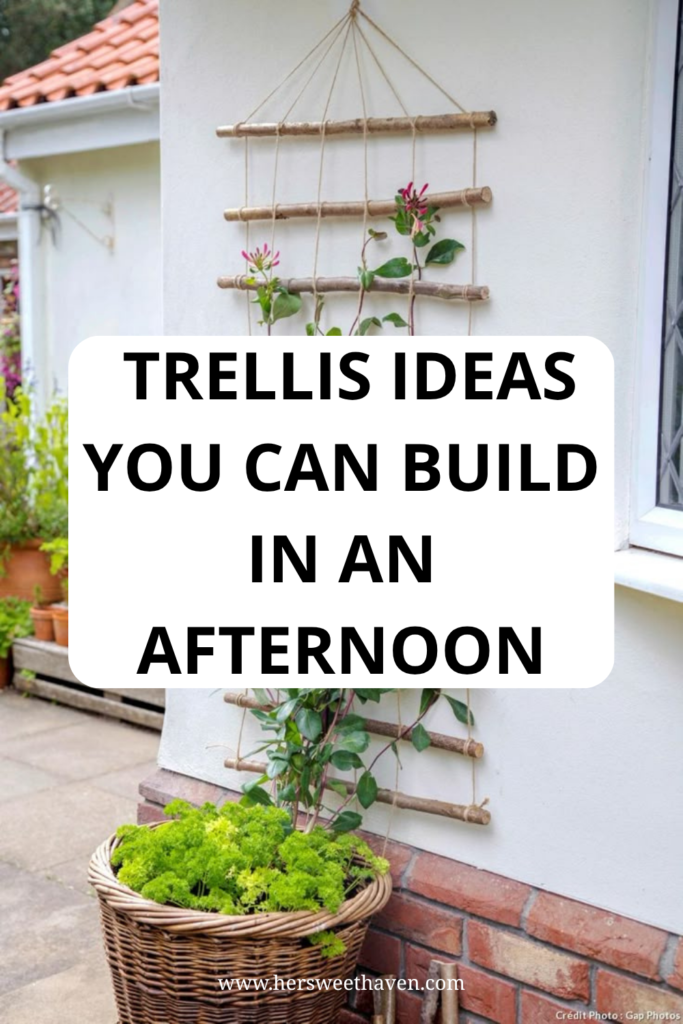
Stick-and-Twine Wall Trellis
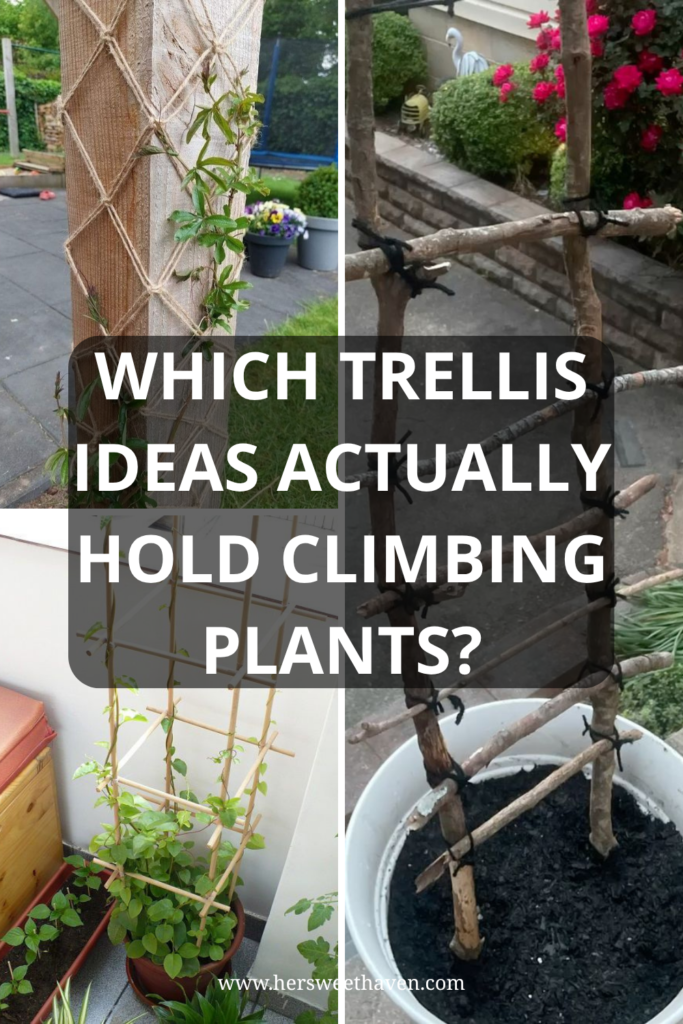
This is one of the easiest trellis garden projects you can try. Gather four or five straight branches (birch or willow work well), cut them to roughly the same length, and tie them horizontally between two vertical supports using sturdy garden twine or hemp cord. Hang it flat against an exterior wall or fence.
This style works best for lightweight climbers like honeysuckle, sweet peas, or small-flowered clematis. It looks beautiful next to a front door or beside a patio seating area. Just keep in mind that natural wood branches will need replacing every year or two, so treat this as a seasonal project rather than a permanent fixture.
Bamboo A-Frame Trellis for Containers
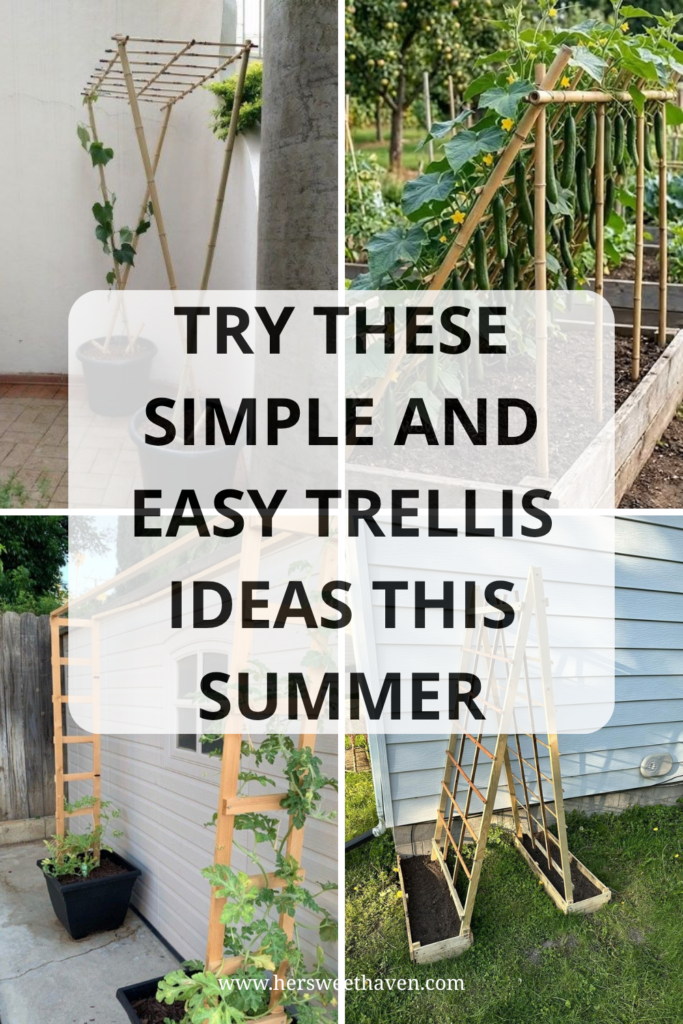
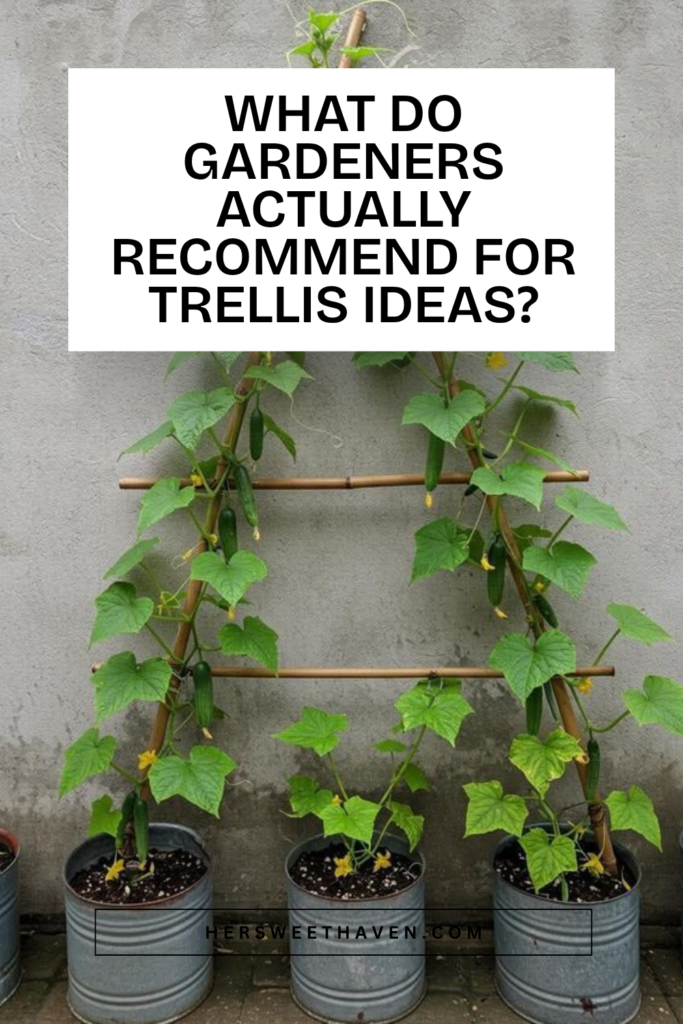
If you’re growing in pots or containers, an A-frame bamboo trellis is a smart pick. Take four to six bamboo poles, lean them together in pairs, and lash the tops with zip ties or heavy twine. You can add horizontal crossbars for extra support.
This trellis design is lightweight enough to move around your patio or balcony and strong enough to support beans, small cucumbers, or flowering vines. It’s also incredibly affordable. A bundle of bamboo stakes from the garden center costs just a few dollars, and the whole project takes about 30 minutes.
Budget Trellis Ideas Under $25 That Look Custom-Built
You don’t need to spend a lot to get a trellis that looks like it belongs in a magazine. These budget-friendly trellis ideas prove that a little planning and the right materials go a long way.
The Ladder-Style Trellis
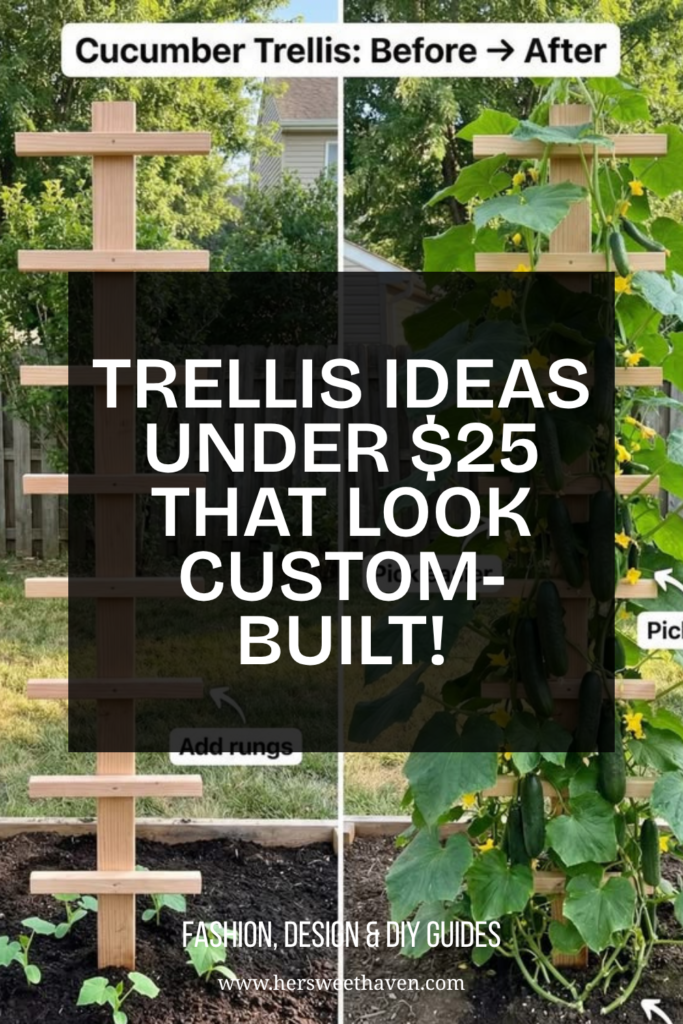
A ladder trellis is exactly what it sounds like: two tall vertical posts with horizontal rungs spaced evenly between them. It’s one of the most effective trellis designs because it gives climbing plants clear, evenly spaced points to grab onto.
You can build one using 2×2 lumber or even repurposed pallet wood. Cut two pieces to your desired height (five to six feet is ideal for most vegetables), then screw or nail horizontal rungs every 10 to 12 inches. The total cost for materials? Usually under $15. According to a popular build from Our Stoney Acres, using Douglas fir for this style of trellis gives you a structure that can easily last six to eight years.
The ladder trellis works for cucumbers, tomatoes, beans, and just about any climbing flower. Plant it in a raised garden bed and it becomes the centerpiece of your vegetable garden.
Wood-and-Wire Panel Trellis for Raised Beds
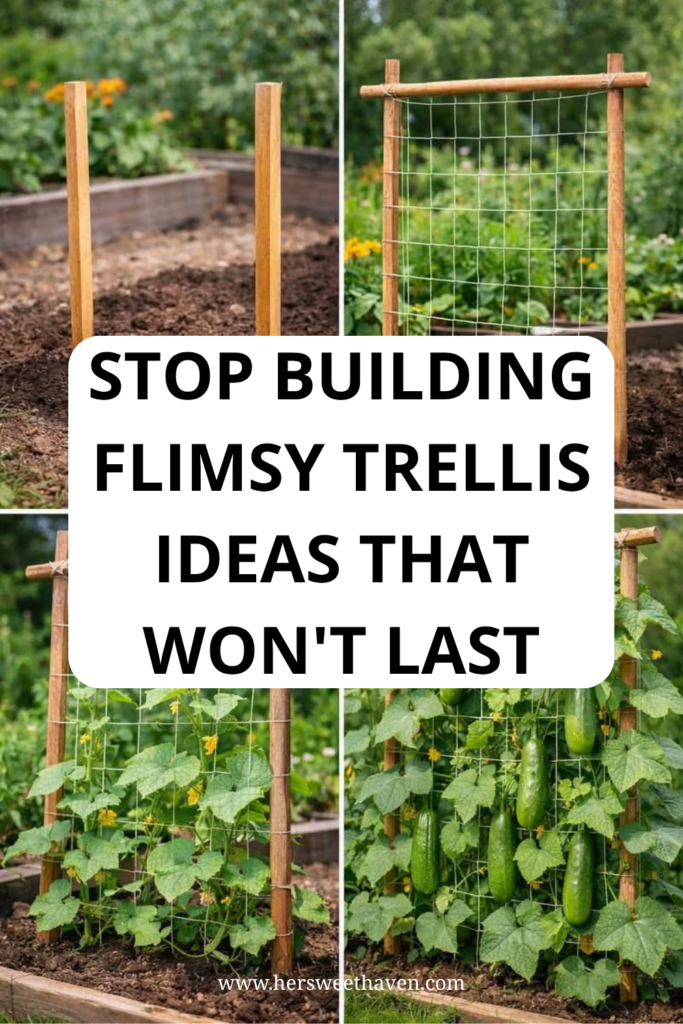
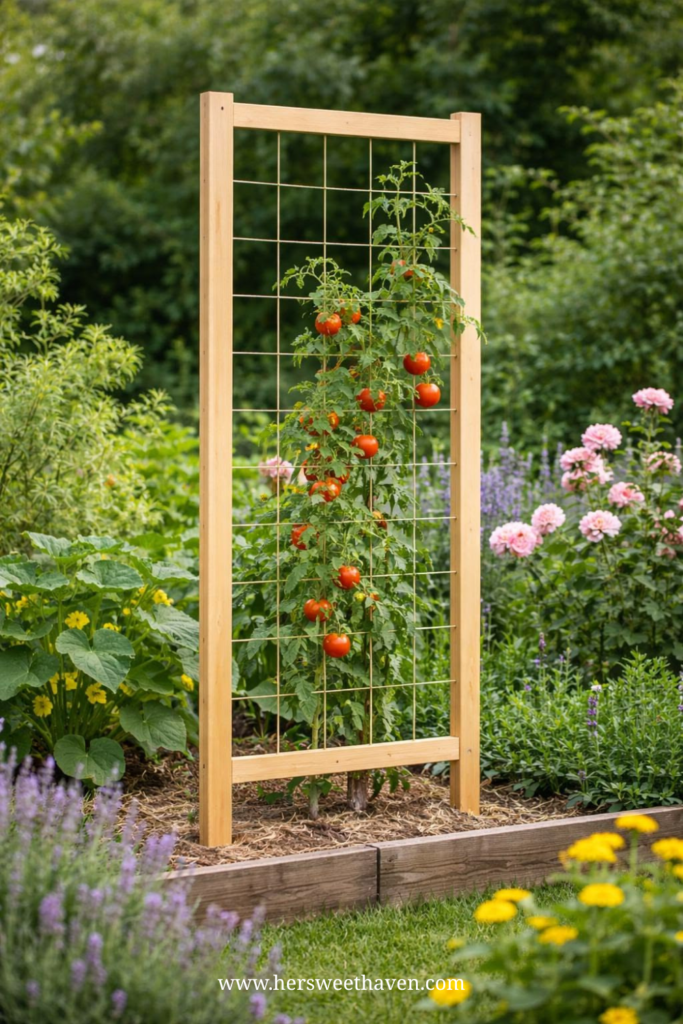
This is a step up in sturdiness while still staying well under $25. Build a rectangular frame from 2×2 or 2×4 lumber, then staple or screw wire mesh, concrete remesh, or even chicken wire to the inside of the frame.
The wire gives vines hundreds of tiny grab points, which is exactly what plants like cucumbers and pole beans need. The wood frame keeps everything rigid and makes it easy to anchor the trellis in the ground or attach it to a raised bed wall.
This design is a favorite among vegetable gardeners because it’s simple, reusable year after year, and strong enough to handle a full harvest load. You can build two of these in an afternoon and have your entire garden trellised before dinner.
Which Trellis Ideas Actually Hold Climbing Plants?
Not every trellis can handle every plant. This is where a lot of first-time gardeners get tripped up. They build something that looks nice, plant a vigorous vine, and then wonder why everything collapses in July.
What Gardeners Recommend for Heavy Vines
For heavy climbers like wisteria, climbing roses, grape vines, or large squash varieties, you need serious structure. According to HGTV’s trellis guide, the most popular materials for supporting heavy plants are iron, wood, and vinyl, but metal consistently wins for long-term durability.
A powder-coated steel trellis is the best investment if you’re growing anything that gets heavy. These trellises handle the weight without bending or rusting, and they look good doing it. If metal isn’t in your budget, go with a thick cedar or redwood frame with wire mesh. Avoid thin, flexible materials for anything heavier than a sweet pea vine.
The key measurements to keep in mind: your trellis should be at least five to six feet tall for most vining vegetables, and sturdy enough that you can’t wobble it by pushing on it with one hand. If it moves easily when it’s empty, it won’t stand a chance when it’s loaded with a full-grown plant.
Trellis Ideas Landscapers Use in Every Project
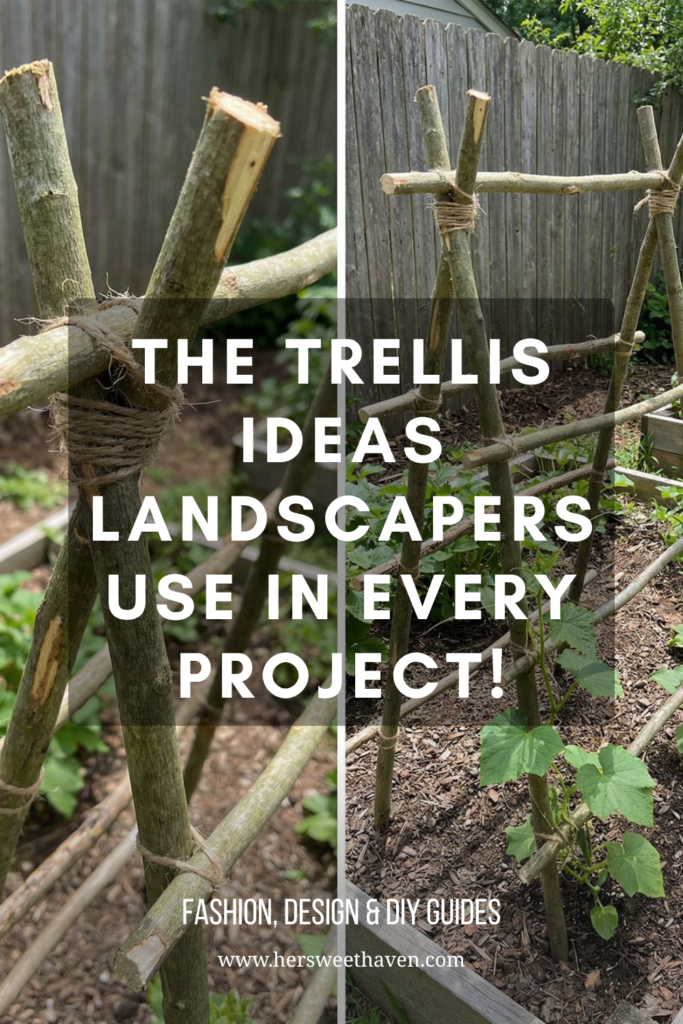
Professional landscapers tend to favor a few tried-and-true trellis designs that work across different garden styles. The flat panel trellis (a rectangular frame with a grid pattern) is the most common because it’s versatile, easy to install, and works for both ornamental and edible gardens.
Another landscaper favorite is the obelisk trellis, a tall, four-sided pyramid shape that sits directly in the garden bed. It provides 360-degree support for climbing plants and adds vertical interest to any space. These are especially useful in smaller gardens where you want height without taking up a lot of ground space.
The branch-lashed trellis (sticks tied together with twine or wire) is another option landscapers use for a rustic, natural look. The key difference between the professional version and the Pinterest version is the materials. Landscapers use thick, sturdy branches (often green hardwood, not dried sticks) and secure them with galvanized wire instead of decorative string.
Best Trellis Ideas for Cucumbers and Vegetable Gardens
If you’re growing vegetables, a trellis isn’t just a nice-to-have. It’s a game-changer for your harvest. Growing cucumbers, beans, peas, and even small melons vertically saves space, improves airflow, and keeps fruit off the ground where it can rot or attract pests.
Why Cucumbers Need a Trellis (And Which Design Works Best)
Cucumber vines are natural climbers. They have tendrils specifically designed to grab onto supports and pull the plant upward. When you let them sprawl on the ground, the fruit tends to curl, develop discolored spots, and become more vulnerable to disease. According to Homestead and Chill, growing cucumbers vertically increases airflow around the plant, reduces pest problems, and makes harvesting much easier.
The best trellis for cucumbers is a simple vertical panel, either a wood frame with wire mesh or T-posts with nylon netting strung between them. MIgardener recommends using heavy-duty nylon trellis netting on metal T-posts for an inexpensive, durable setup that you can reuse year after year. The netting gives cucumber tendrils plenty of grab points, and the metal posts won’t wobble under a full load of vines and fruit.
Aim for a trellis that’s at least four to five feet tall, since most cucumber varieties produce vines that grow four to six feet long.
A-Frame vs. Flat Panel: What Grows Better
Both A-frame and flat panel trellises work for cucumbers, but they serve slightly different purposes.
An A-frame trellis (two panels leaned together to form a triangle) gives you double the growing surface in the same footprint. You can plant cucumbers on both sides, which is great if you’re short on space. The downside is that fruit tends to hang inside the triangle, which can make it harder to spot and pick.
A flat panel trellis (a single vertical surface) is simpler to build and easier to harvest from because everything is visible on one side. It takes up a narrow strip of garden space and works perfectly along the back edge of a raised bed or garden row.
For most home gardeners, the flat panel is the easier and more practical choice. If you’re trying to maximize production in a tight space, the A-frame gives you more growing area per square foot.
Trellis Ideas for Privacy, Fences, and the Front of Your House
Trellises aren’t just for the vegetable garden. They’re one of the most effective (and affordable) ways to add privacy, soften a fence line, or boost your home’s curb appeal.
How to Use a Trellis Fence for Privacy
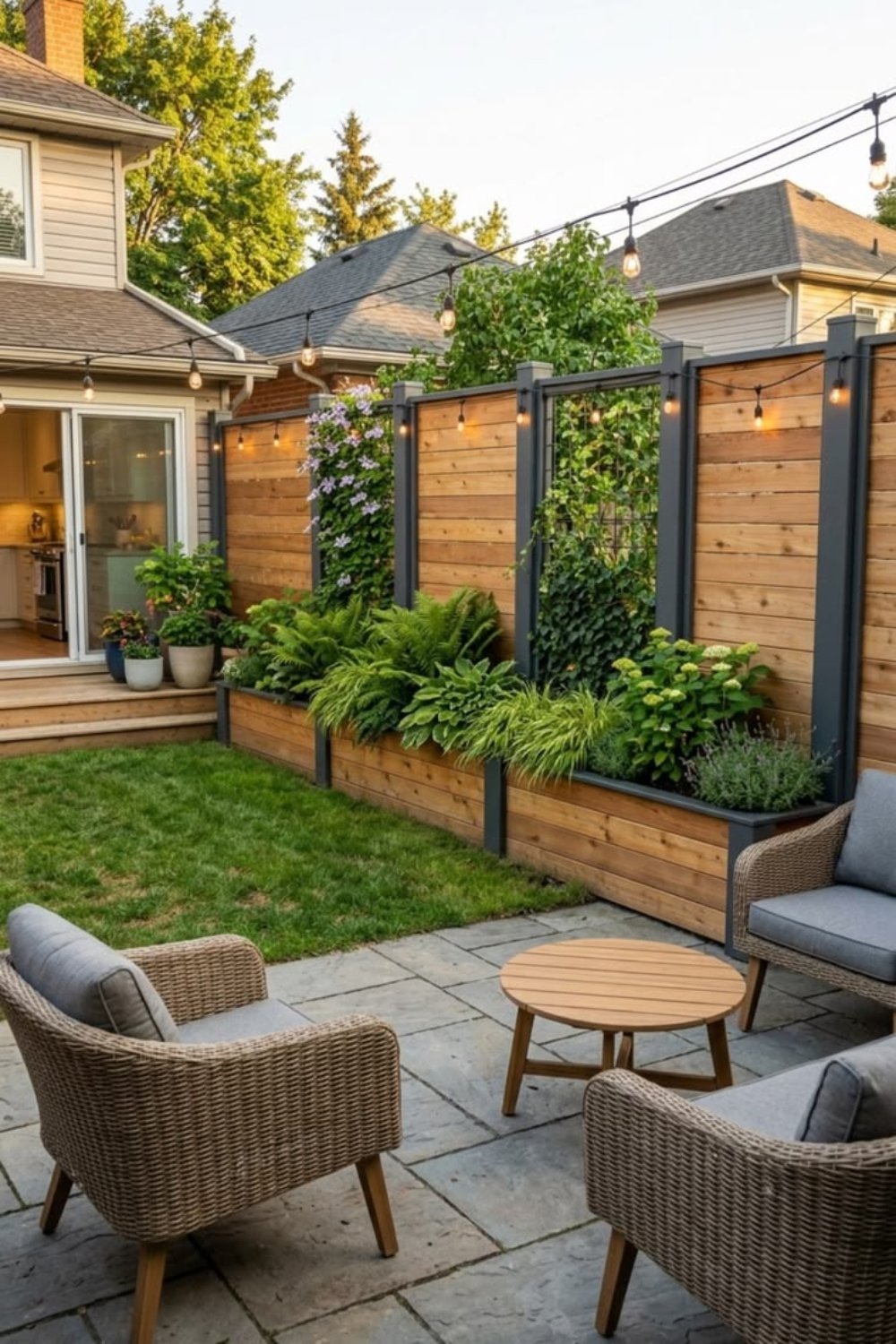
A trellis fence combines the structure of a fence with the beauty of climbing plants to create a living privacy screen. This approach is softer and more inviting than a solid wood or vinyl fence, and it lets light and air pass through while still blocking the view.
The simplest method is to attach lattice panels or wire trellis sections to the top of an existing fence. This adds height without the cost of replacing the entire fence. Then plant a vigorous climber at the base: jasmine, climbing hydrangea, or Virginia creeper are all popular choices depending on your climate.
Young House Love demonstrated how a simple raised planter box with wire strung between two painted 2×2 posts creates a beautiful living privacy wall. Jasmine grew to cover the trellis in under a year, creating a fragrant green screen without irrigation. If you want more options for screening your outdoor space, check out these garden privacy screen options for additional ideas.
Trellis Design for the Front of Your House and Over Garage Doors
Adding a trellis to the front of your house is one of the fastest ways to add curb appeal. A flat trellis panel mounted beside your front door, with a climbing rose or clematis trained up it, instantly makes the entrance feel more welcoming and established.
For garage doors specifically, an eyebrow trellis (also called a garage pergola) is a popular option. It’s a horizontal structure that mounts above the garage door, creating a decorative overhang. You can build one from cedar or purchase a kit in PVC or fiberglass. According to brick&batten, adding a pergola or trellis over a garage door is one of the top exterior design trends because it breaks up a large, flat surface and adds architectural interest.
These trellis designs work best when they match the style of your home. A painted white lattice trellis pairs well with cottage-style homes. A sleek black metal grid looks great on modern exteriors. And a natural wood pergola fits right in with farmhouse or craftsman architecture.
If you’re already working on your outdoor space, you might also want to look at patio decorating ideas on a budget to tie everything together.
How Do You Pick the Right Trellis Design for Your Garden?
With so many trellis ideas out there, it can feel overwhelming to choose. Here are the two most common questions (and straightforward answers) to help you narrow it down.
What Is the Best Material for a Long-Lasting Trellis?
Powder-coated metal is the most durable option, lasting 10 years or more with zero maintenance. Cedar and redwood are the best wood choices, naturally resisting rot for decades. Pressure-treated pine is the best budget wood, good for six to eight years. Vinyl works for lightweight decorative trellises but isn’t strong enough for heavy plants.
If you’re building a trellis for vegetables and you plan to reuse it every season, metal or treated wood is worth the upfront cost. For a seasonal decorative project, bamboo or natural branches work fine as long as you’re prepared to replace them.
Can You Build a Trellis on a Budget That Actually Works?
Absolutely. Some of the most effective trellis designs cost under $20 in materials. The key is using the right construction methods:
Use screws instead of nails (nails pull out over time). Sink your posts at least 12 inches into the ground for stability. Choose wire mesh or nylon netting over string or twine for the climbing surface. Pick pressure-treated or naturally rot-resistant wood if you want more than one season out of it.
A well-built budget trellis will outperform an expensive but flimsy one every single time. It’s not about how much you spend. It’s about how smartly you build.
Make Your Garden Look Better This Weekend
The right trellis does more than hold up a plant. It adds structure, height, and personality to your garden. It turns a flat, boring space into something layered and interesting. And when you pick a design that matches your plants and your skill level, it’s one of the most satisfying weekend projects you can take on.
Start with one trellis. Build it well. Watch it fill in with green over the next few weeks. Once you see how much of a difference it makes, you’ll want to add more. Whether it’s a simple cucumber support for your veggie patch, a living privacy screen along your fence line, or a pretty trellis at the front of your house, these ideas are designed to work in the real world, not just in a photo.
If you’re planning a garden party this summer, a trellis covered in blooming vines makes one of the best backdrops you can imagine. Now go build something.



Leave a Reply