

A perfectly mowed lawn is the most boring thing you can do with a front yard. There, I said it.
We’ve all been trained to see that flat green rectangle as the gold standard of homeownership, and anything else as a little suspicious. But front yard vegetable gardens, done with even a little intention, beat a lawn on every measure that matters: more color, more texture, more life, and actual food coming out of the ground you’re already watering.
The myth we’re busting today is the one that says vegetables belong hidden in the backyard, and the front is for grass and grass only. That idea has a history, it has costs, and it has never been easier to prove wrong.
So this is the full case: where lawn worship came from, why edible landscapes can be beautiful, how to design one with real curb appeal, what to plant, what the HOA will say, and what the whole swap costs. By the end, that green rectangle is going to look like wasted potential.
The Myth: Lawns Are What Front Yards Are For
Before we bust it, let’s be fair to the myth. It didn’t come from nowhere, and understanding it makes it much easier to let go.
Where Lawn Worship Comes From
The lawn started as a flex. Centuries ago, only wealthy landowners could afford to keep land that produced nothing, mowed by servants or sheep, purely for show. A lawn literally said “I’m rich enough to waste this dirt.”
Fast forward through suburbia, and the flex became the default. Lawns got written into neighborhood expectations and HOA bylaws, and “well-kept grass” became shorthand for “responsible neighbor.” Nobody chose it exactly. We inherited it.
Which means the lawn isn’t sacred. It’s a fashion, and fashions change. The buzz cut of landscaping has had a very long run, but it’s still just a haircut.
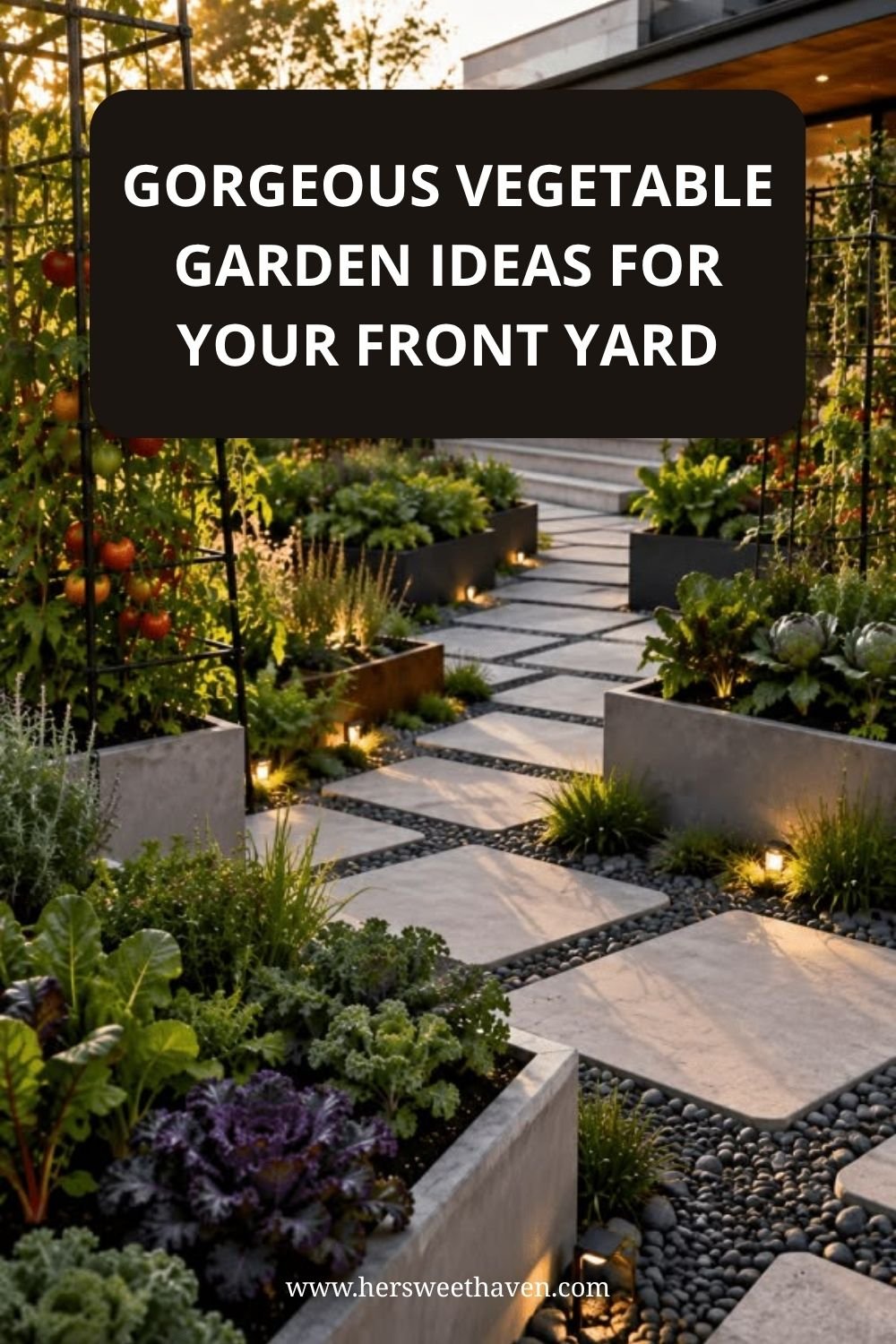
What Your Lawn Actually Costs You
Real talk: the lawn is the most demanding freeloader on your property. It wants watering through every dry week, mowing every weekend from April to October, plus fertilizer, weed control, edging, and the occasional reseeding when it browns out anyway.
Add it up honestly: hours of your summer, hundreds of dollars a year in water and products, and the reward is.. grass. Grass you can’t eat, can’t cut for a bouquet, and mostly look at while mowing it. (Been there, mowed that, every Saturday for years.)
A vegetable bed asks for similar attention and pays rent: tomatoes, salads, herbs, strawberries. Same watering can, wildly different return on effort.
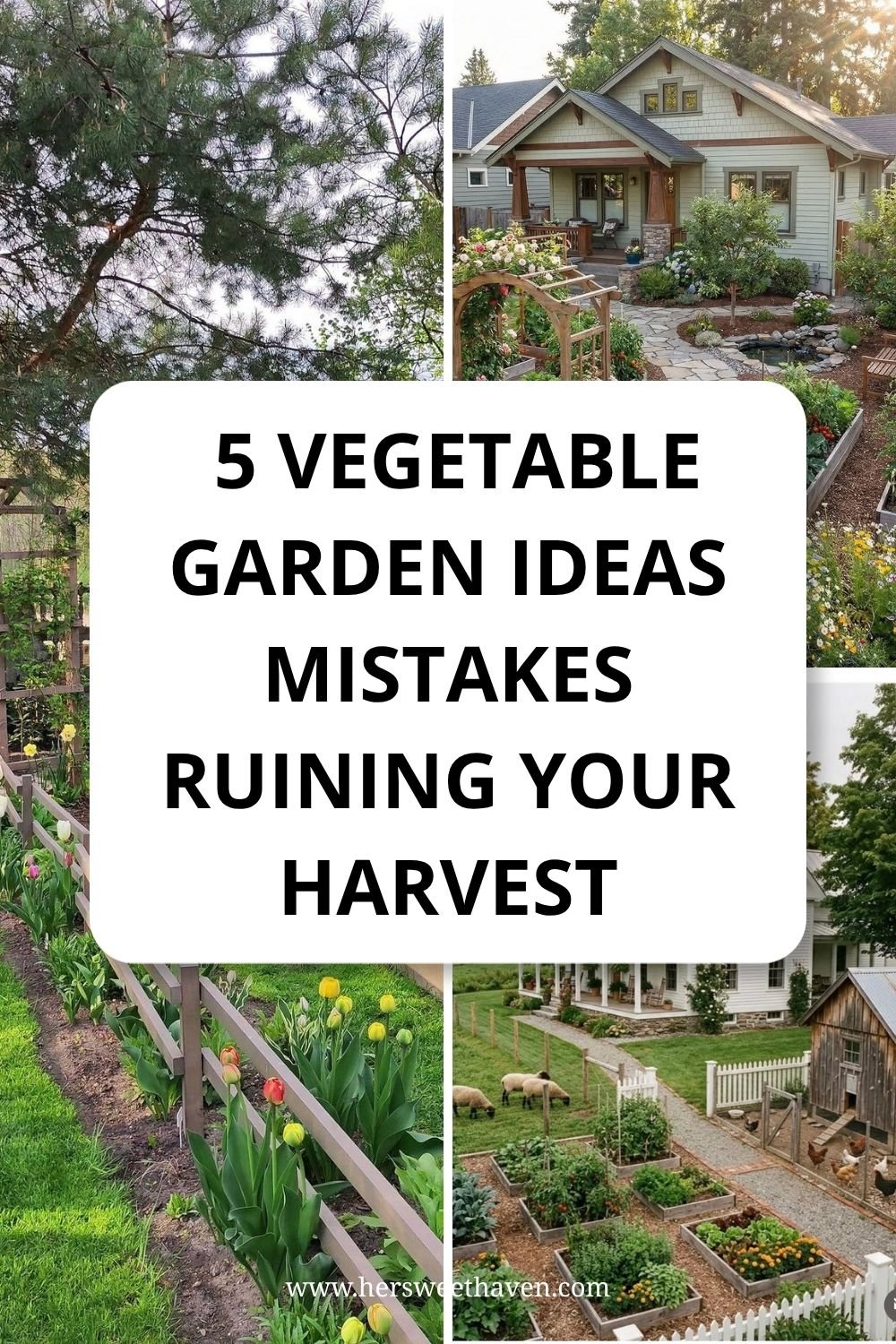
The Truth: Edible Can Be Gorgeous
The real objection to front yard food was never practical, it was visual. People picture straggly tomato plants and muddy rows. So let’s replace that picture, because the well-designed version looks like something from a magazine.
The Potager Principle
The French figured this out centuries ago with the potager: the kitchen garden designed as deliberately as a flower garden. Geometric beds, clipped edges, vegetables and blooms mixed on purpose, paths you want to walk down.
The principle is simple: structure makes anything look intentional. A tomato in a messy sprawl reads as neglect, and the same tomato in a neat raised bed with a marigold border reads as design. Gardens like the ones in Savvy Gardening’s front yard vegetable garden guide mix kale with cosmos and lavender, and the result reads “cottage charm,” not “farm overflow.”
So the rule is: never just vegetables, and never just scattered. Geometry plus flowers is the whole cheat code.
Vegetables That Pull Decorative Duty
Here’s the fun secret: half the vegetable aisle is secretly ornamental. Rainbow chard has neon pink and yellow stems that outshine most flowers. Artichokes are architectural silver sculptures. Purple kale, bronze lettuce, red cabbage, and frilly mustard greens hold their color all season.
Then come the climbers: scarlet runner beans with red blooms, peas on obelisks, squash over an arch. Vertical growth turns food into garden architecture, and it happens fast.. one season, not five years like a shrub.
Design with foliage color and shape first, harvest second, and the bed looks styled even in the weeks between crops. The eating is the bonus round.
And don’t stop at vegetables. A dwarf fruit tree makes a gorgeous front yard centerpiece with spring blossoms and summer fruit, blueberry bushes turn fire-red in autumn, and an herb spiral is basically edible sculpture. The category is “things you can eat that happen to be beautiful,” and it’s much bigger than the seed rack suggests.
Designing Front Yard Vegetable Gardens With Curb Appeal
Now the actual design playbook, because front yard vegetable gardens live or die on structure. The plants can be chaotic. The bones cannot.
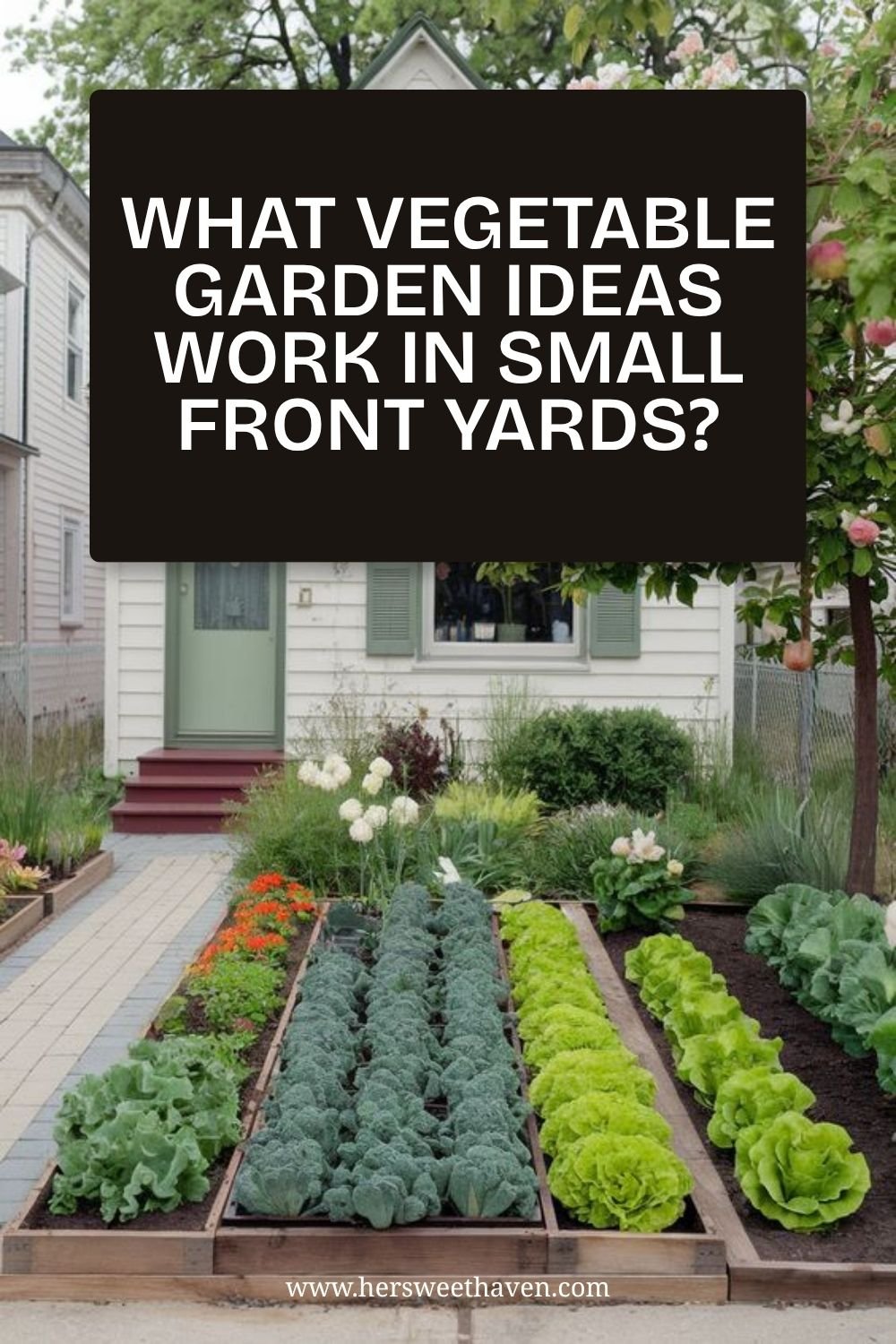
Start with raised beds, and treat them as hardscape: matching materials, straight lines or intentional patterns, generous paths between them. Cedar boards, galvanized stock tanks, brick, or stone all work, as long as they repeat. Idea collections like One Kind Design’s front yard vegetable garden roundup lean heavily on this: the beds themselves carry the curb appeal, whatever’s growing inside them.
Then connect everything with real paths: gravel, pavers, or mulch, wide enough to walk comfortably. Paths are what make a garden read as landscape instead of plot. Add edging along the sidewalk line, a low fence or lavender border, and the whole thing gets a frame, and frames make everything look finished.
Symmetry is the easiest shortcut for beginners: two, four, or six matching beds flanking the walkway, with an obelisk or fruit tree as a centerpiece. Nobody has ever looked at symmetrical beds and thought “messy.”
And borrow one trick from expensive landscaping: low-voltage lights along the path or in the beds. Solar stakes cost a few dollars and make the garden a feature at night, when most lawns disappear into the dark entirely.
One more designer habit worth stealing: pick a materials-and-color scheme before you build anything. Wood beds with gravel paths and terracotta pots is one language. Black metal tanks with pale pavers is another. Either works beautifully.. mixing five languages in one small yard is what creates the cluttered look people fear. Choose your palette once, then let every purchase obey it.
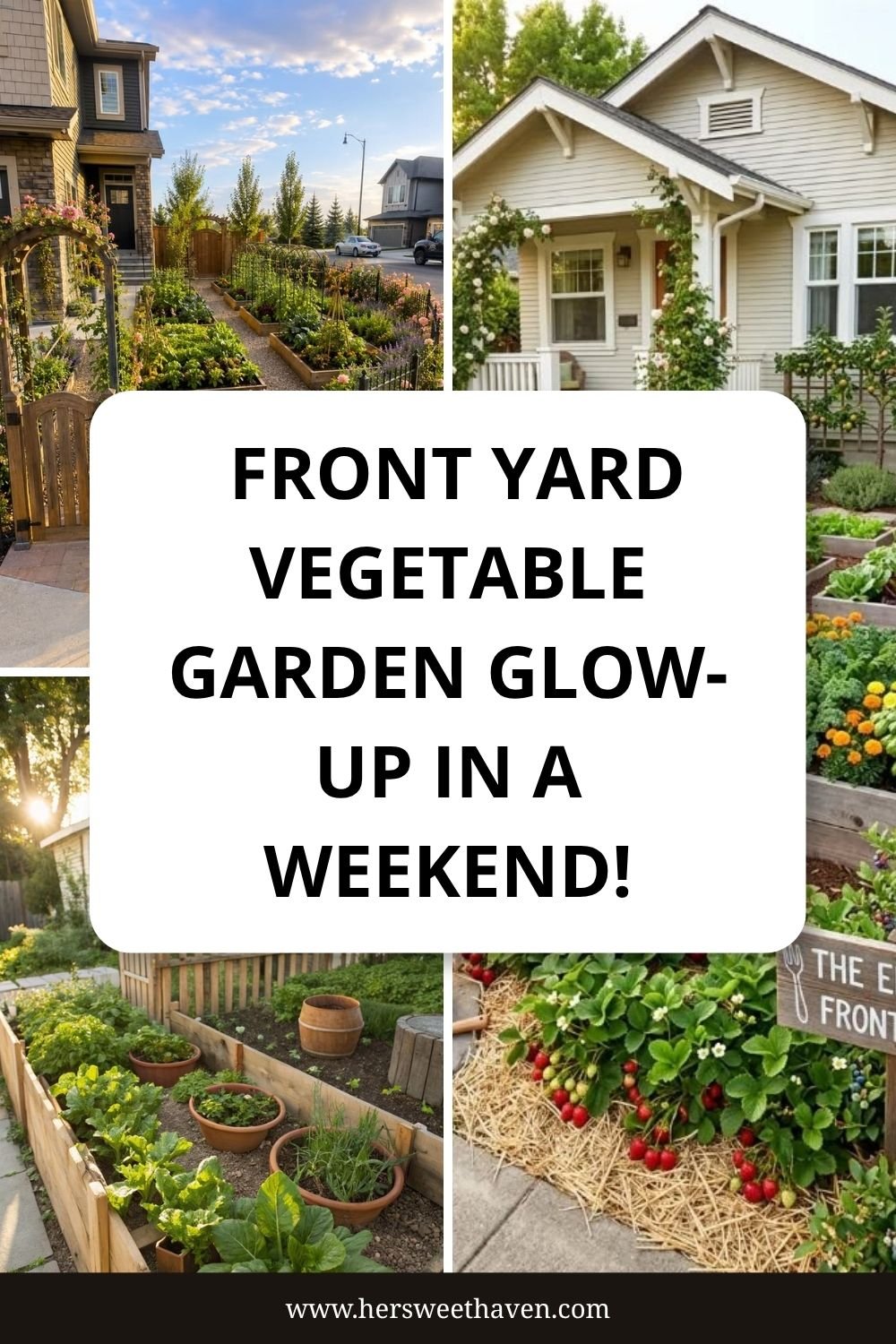
What Should You Actually Plant Out Front?
Short answer: the pretty producers, plus flowers that work. Not everything in the seed catalog deserves street-facing real estate.
The Pretty Workhorses
The front yard all-stars: cherry tomatoes trained neatly on tall stakes or in cages, peppers (the fruit looks like ornaments by August), rainbow chard, kale in every color, lettuces planted in blocks for that checkerboard look, and herbs everywhere: basil, thyme, sage, rosemary, chives.
Strawberries deserve special mention as the best edible ground cover in existence: glossy leaves, white blooms, red fruit, and they come back every year. Use them as bed edging and they replace mulch while feeding your breakfast.
What to keep in the backyard: sprawling squash and melons (unless they’re climbing an arch), corn, and anything that browns out dramatically mid-season. Potatoes are wonderful and look terrible by July. Every plant auditions for the front, and some just don’t get the part.
Flowers That Earn Their Spot
Flowers in a food garden aren’t decoration, they’re staff. Marigolds deter pests and bloom relentlessly. Nasturtiums fill gaps, tolerate neglect, and every part is edible.. they’re the freeloader-turned-employee of the flower world. Zinnias and cosmos bring in the pollinators your squash and tomatoes need, and sunflowers give the whole garden a skyline.
Interplant them right in the beds, not off in a separate corner. The mixed look is what makes people stop on the sidewalk, and it’s also just better gardening: more pollinators, fewer pests, no extra square footage.
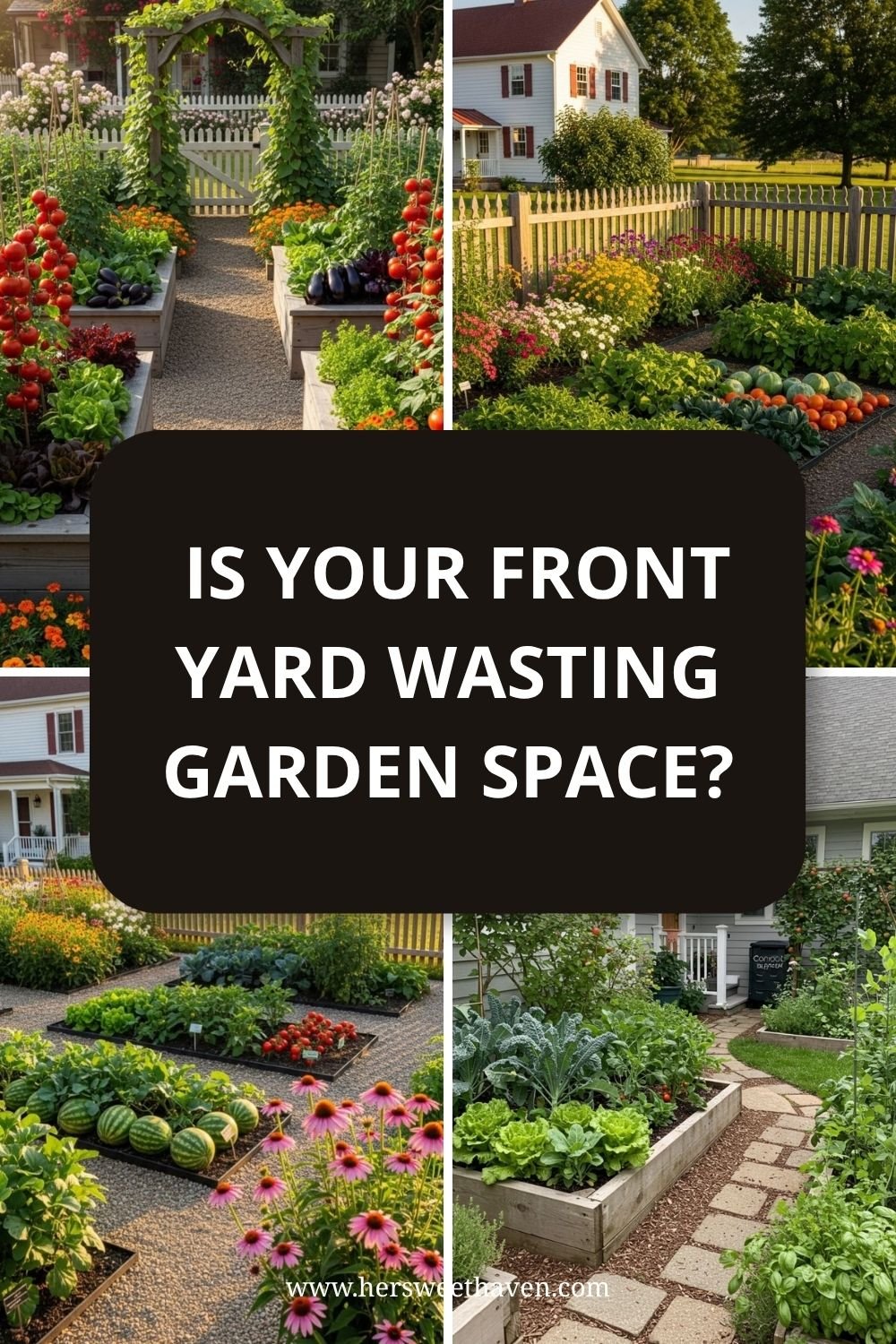
Can Your HOA Stop You From Growing Vegetables?
Honest answer: maybe, so check before you dig. This is the least fun section of the post and the one that saves you the most grief.
Check the Rules Before You Dig
Read your HOA covenants and your city’s ordinances first, specifically anything about front yard structures, fences, and “landscaping standards.” Some HOAs restrict visible food gardens outright, while many more just require tidiness, approval for structures, or height limits. Guides like ThriveLot’s breakdown of common HOA garden restrictions walk through the usual categories and the workarounds.
If your rules are strict, play the long game: submit a real plan drawing to the board, emphasize the design elements (matching beds, borders, tidy paths), and start with a small showcase bed rather than a full lawn conversion. A beautiful first bed is your best legal argument.
And know that in several states, laws now protect residents’ rights to grow food at home. If your HOA says no, it’s worth twenty minutes checking whether your state says otherwise.
Winning Over the Neighbors
The unofficial approval process matters as much as the official one. The formula: keep the edges immaculate, mix in obvious flowers, and let the garden look cared-for from day one. Neatness buys tolerance, and tolerance buys time for the garden to win people over on its own.
Because it will. A front yard garden is a conversation magnet.. you’ll meet more neighbors in one season of front yard gardening than in five years of waving from the driveway. And nothing converts a skeptic like a bag of surplus cherry tomatoes handed over the fence in August. Zucchini diplomacy is undefeated.
How Do You Keep It Pretty All Season?
The fear behind this question is real: gardens have ugly phases, and the front yard has no backstage. But the ugly phases are manageable with three habits.
Succession Planting Fills the Gaps
The trick professionals use: never let a bed finish. When the spring lettuce bolts, its replacement (basil, bush beans, fall kale) is already seeded and waiting. Keep a few transplants growing in pots on the side as understudies for any bare spot.
The rhythm is roughly three waves: cool spring crops, summer headliners, then fall greens as the summer stars fade. Planned that way, the beds are never empty, and “between crops” stops being a look your street ever sees.
Pests get the same front-yard treatment: handle them early and quietly. A row cover over young brassicas, a morning slug patrol, and the marigold-nasturtium security team prevent the chewed-leaf look before it starts. Front yard beds actually get fewer pest disasters than hidden ones, purely because you walk past them daily and catch problems at stage one.
Mulch, Edges, and the Five-Minute Tidy
Mulch is the makeup of the garden world: a fresh layer of straw or wood chips instantly makes any bed look maintained, while quietly suppressing weeds and holding moisture. Refresh it twice a season.
Then adopt the five-minute tidy: once or twice a week, pull the obvious weeds, yank yellowed leaves, restake the flopper, harvest anything overripe. Five minutes, genuinely. A garden that gets five honest minutes twice a week never reaches the scruffy stage that feeds the whole “vegetables are ugly” myth.
Don’t Forget the Winter View
The garden needs an off-season plan, because January curb appeal counts too. This is where structure earns its keep again: nice beds, paths, obelisks, and a birdbath look intentional even when empty.
Plant a few evergreen herbs (rosemary, thyme, sage hang on in most climates), sow a cover crop for a green winter blanket, or top beds with clean mulch and let the geometry carry the view. A tidy sleeping garden reads as “resting,” not “abandoned.”
How Much Does Replacing a Lawn Cost?
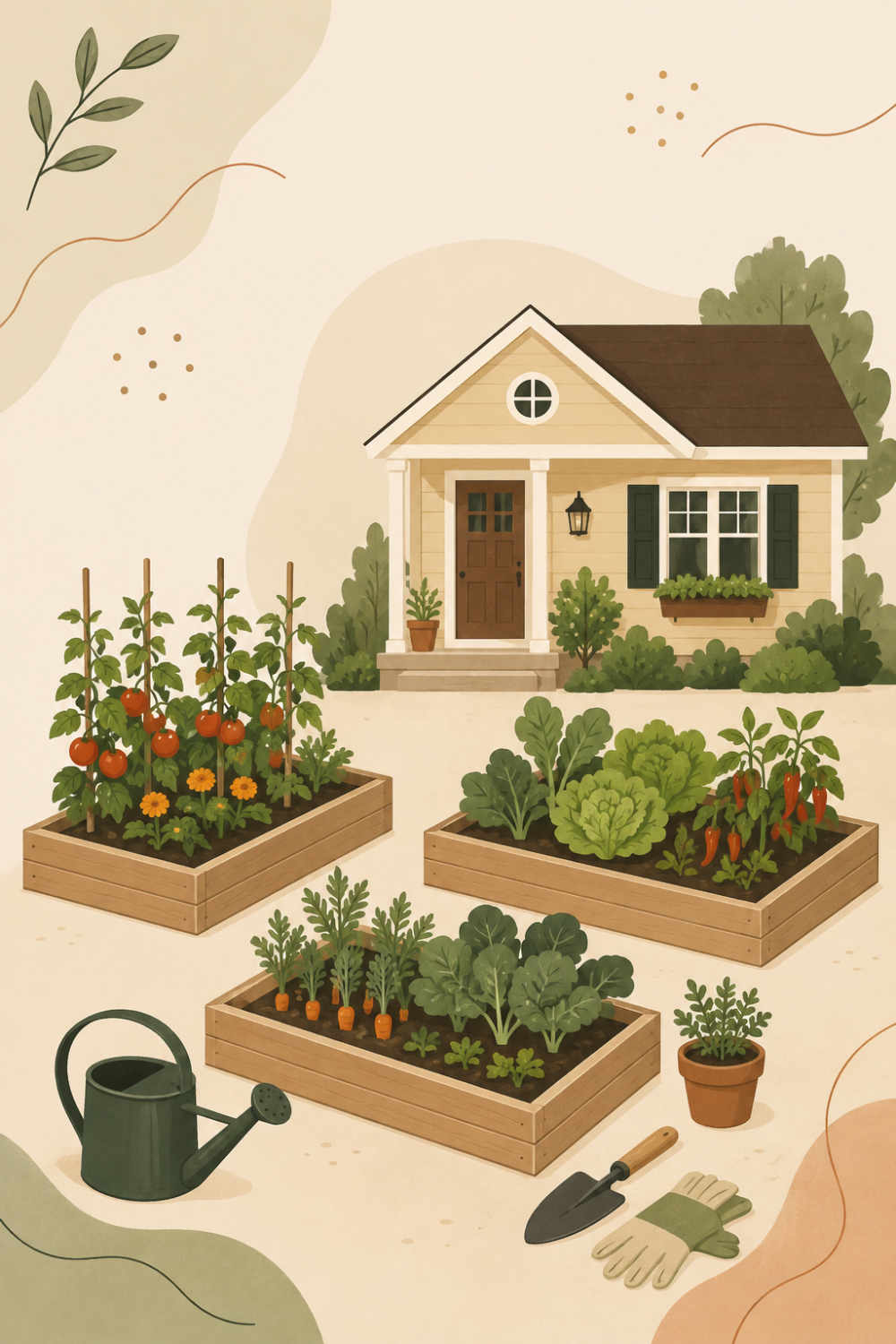
Numbers, because the myth’s last defense is always “that sounds expensive.” A basic 4×8 raised bed runs $50 to $150 in lumber, or nearly free from reclaimed materials, plus roughly $50 to $100 to fill with soil and compost. Seeds and starts for a season: $30 to $60 per bed. Gravel or mulch paths: cheap and one-time.
So a respectable two-bed front garden with paths lands around $300 to $500 up front, and far less if you DIY and scavenge. Compare that to what the lawn quietly eats every single year in water, fertilizer, and equipment, and the garden starts paying for itself around season two.. except the garden also pays you in groceries. A productive bed can return a few hundred dollars of produce per summer at store prices. (Spoiler: the tomatoes end up costing less than the lawn fertilizer did.)
And nobody says all-or-nothing. Convert the strip along the walkway this year, add two beds next spring, and let the lawn shrink at whatever pace your weekends allow. Gradual conversion spreads the cost and gives the neighbors time to fall in love.
Time cost deserves a line too, since it’s the other currency. Expect a bigger push at spring setup, then roughly an hour or two a week through the season, watering included. That’s comparable to what the mowing routine already took.. except one of those hours ends with a salad.
So Much for the Sacred Lawn
Back to the myth we started with: the lawn was never the definition of a cared-for home. It was a habit wearing a uniform, and habits can be traded up.
A front yard vegetable garden with good bones gives you everything the lawn promised, order, pride, curb appeal, and everything it never could: color that changes weekly, bees and butterflies, neighbors who stop to talk, and dinner growing ten steps from the front door.
So no, you don’t owe the street a rectangle of grass. You owe yourself a yard that does something. Start with one beautiful bed by the walkway, and let it argue the rest of the case for you.





Leave a Reply