
The front yard is the first thing anyone sees when they pull up to your home, and it quietly sets expectations for everything behind the front door. With a big lawn or a small patch of green alike, there are simple, budget-friendly changes that make it look planned rather than just maintained.
Below are ten front yard landscaping ideas, from winding stone paths and bold flower beds to rock gardens, lighting and a small seating area, plus the mistakes that make a yard look dated and what a makeover realistically costs. Pick one, pick three, or plan a whole season around them.
Before you start: sun, soil and rules
A few minutes of planning saves a lot of dead plants and wasted weekends. First, watch how the sun moves across the front of the house on a clear day. A north-facing front yard may get only a few hours of direct light, which rules out sun lovers like roses and lavender, while a south-facing one bakes in the afternoon.
Next, check your USDA hardiness zone (the USDA map is free online) and only buy plants rated for it, so they survive winter. A simple soil test from your local extension office shows whether the soil is sandy, heavy clay or somewhere in between, and what it needs. If you have an HOA, read the rules on fences, plant heights and hardscaping before you buy anything, and call 811 a few days before digging so underground utility lines get marked for free.
1. Swap a straight walk for a winding stone path
A straight concrete path from the driveway to the front door does its job, but it adds nothing to the look of the house. Replacing it, or adding a second path that curves through the lawn, changes the feel of the whole front yard.
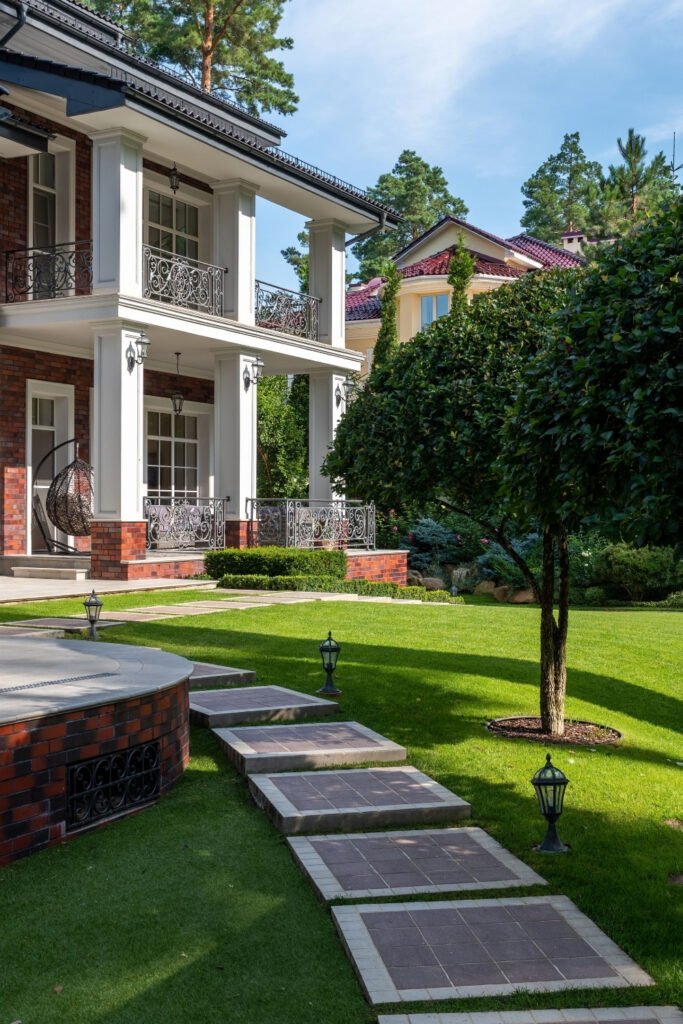
Photo by Max Vakhtbovych on Pexels
Natural flagstone, bluestone or stepping stones set into gravel give the yard depth and movement. A gentle curve draws the eye through the space instead of pointing straight at the door, and it makes a short walk feel longer.
Paths aren’t only decoration; they give the yard structure. The National Association of Landscape Professionals lists natural materials such as stone, gravel and reclaimed wood among the top design trends because they combine function with good looks.
Practical details matter here. Space stepping stones about 24 inches apart, center to center, which matches a comfortable adult stride, and set them so the top sits just above the soil to keep mud off. Creeping thyme or moss between the gaps softens the stone, and solar path lights along the edge make it safer at night (more on lighting below).
2. Layer plantings for year-round texture
Flat yards with one row of shrubs along the foundation look unfinished. Layered plantings mix heights, textures and seasons in one bed, and they’re the biggest change you can make to a plain front yard.
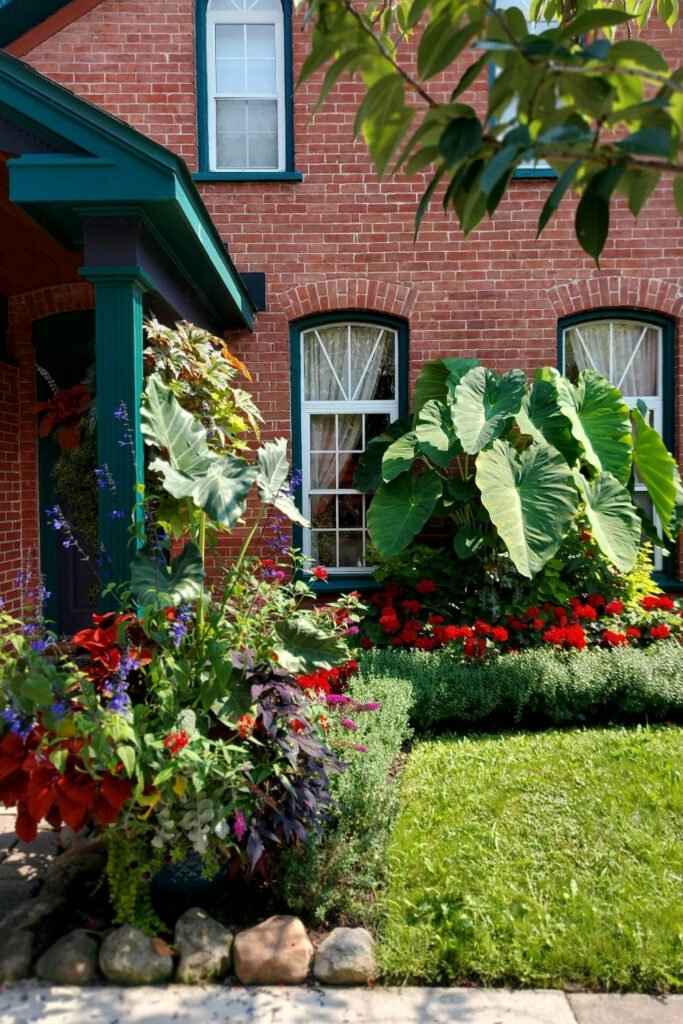
Photo by Kathleen Culbertson on Unsplash
Think in three tiers: small ornamental trees or tall shrubs at the back, mid-height shrubs and perennials in the middle, and low ground covers, grasses or annuals in front. The bed looks full without looking cluttered, and something is always growing, flowering or changing color.
Rigid rows of identical shrubs are giving way to looser, more natural groupings. In a small garden, layering works especially well because it makes a tiny space feel lush. Start with three to five plant varieties and repeat them through the bed. Repetition is what makes a planting look designed rather than collected one nursery trip at a time.
Check the mature size on every plant tag before you plant. A shrub sold in a one-gallon pot can be six feet wide in five years, and planting for the final size is what keeps the bed from turning into a jungle.
3. Use rocks for structure and less maintenance
If you’ve been looking for front yard landscaping ideas with rocks, this one’s for you. Rocks add structure, texture and visual weight without adding anything that needs watering or mowing.
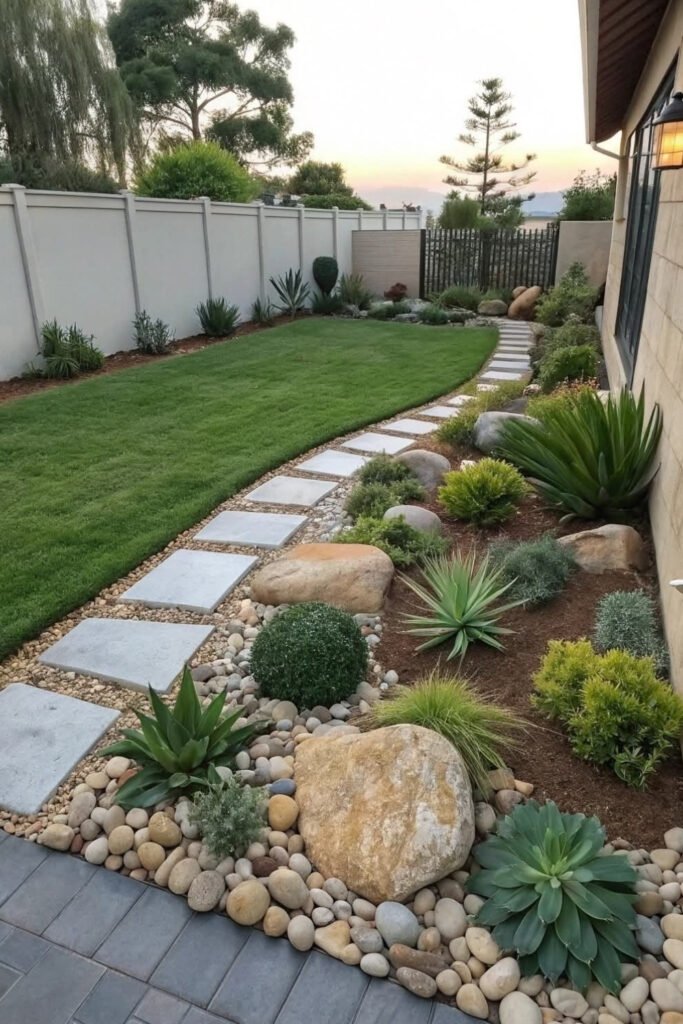
Large boulders, river rock borders and low stone walls define spaces and create clean lines. Mixing stone, plants and mulch keeps the look interesting without overdoing it. Drought-tolerant plants such as sedum, succulents, lavender and ornamental grasses tucked between the rocks add color.
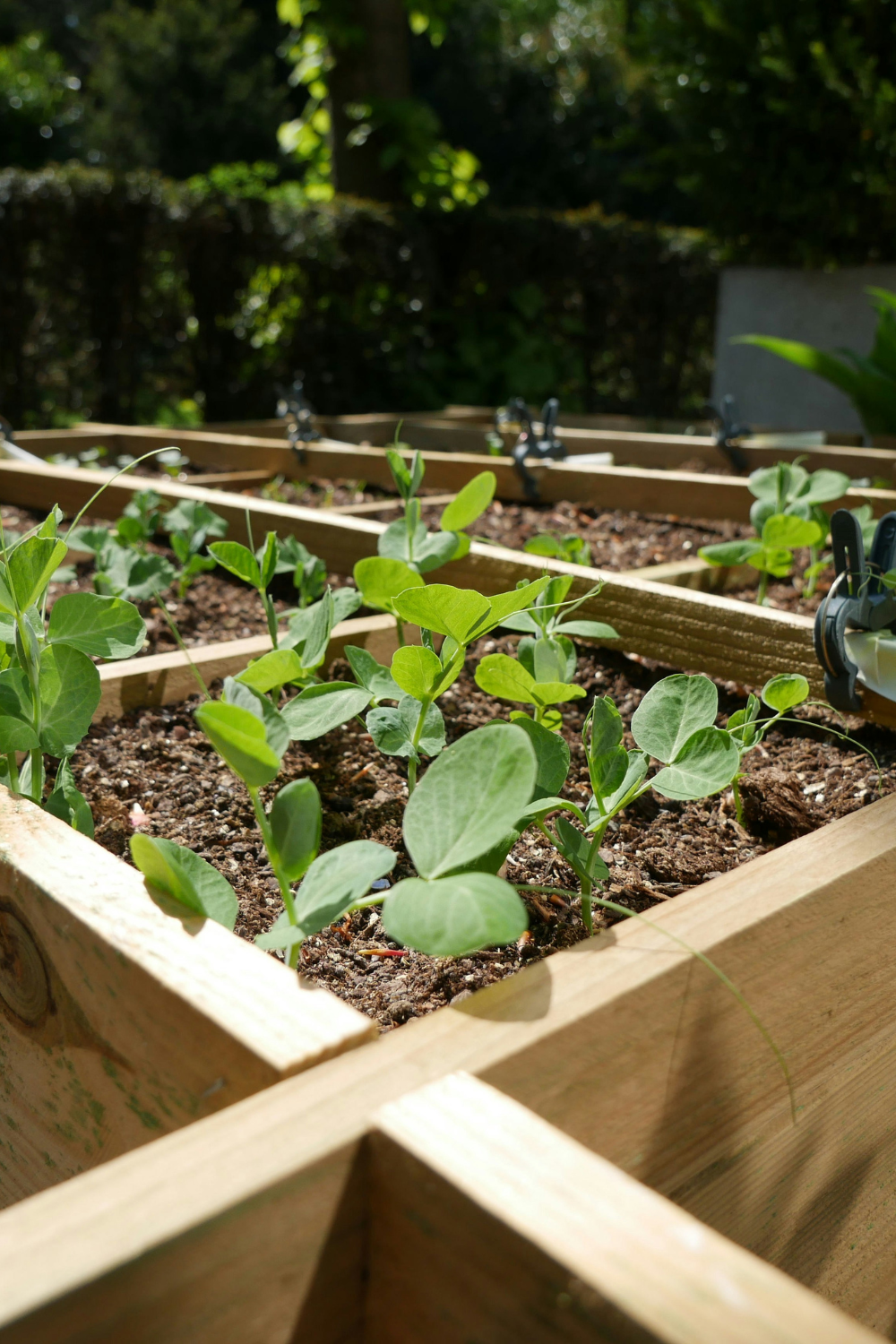
It’s a low-maintenance option that looks good year-round: no mowing, little watering and no seasonal replanting. Bury boulders by about a third so they look like they belong there instead of sitting on top of the ground, and put landscape fabric under gravel areas to slow the weeds. Rock areas also reduce how much lawn there is to mow and water, which adds up over a summer, especially in dry regions with watering restrictions. Start small with a rock border around an existing bed, or go bigger and replace a section of lawn with a rock garden. If you’re thinking about growing food too, this guide to building raised garden beds on a budget has step-by-step tips.
4. Mix a few materials for a clean, contemporary yard
A contemporary front yard isn’t cold or bare. It’s intentional: every element has a job, and the materials work together instead of competing.
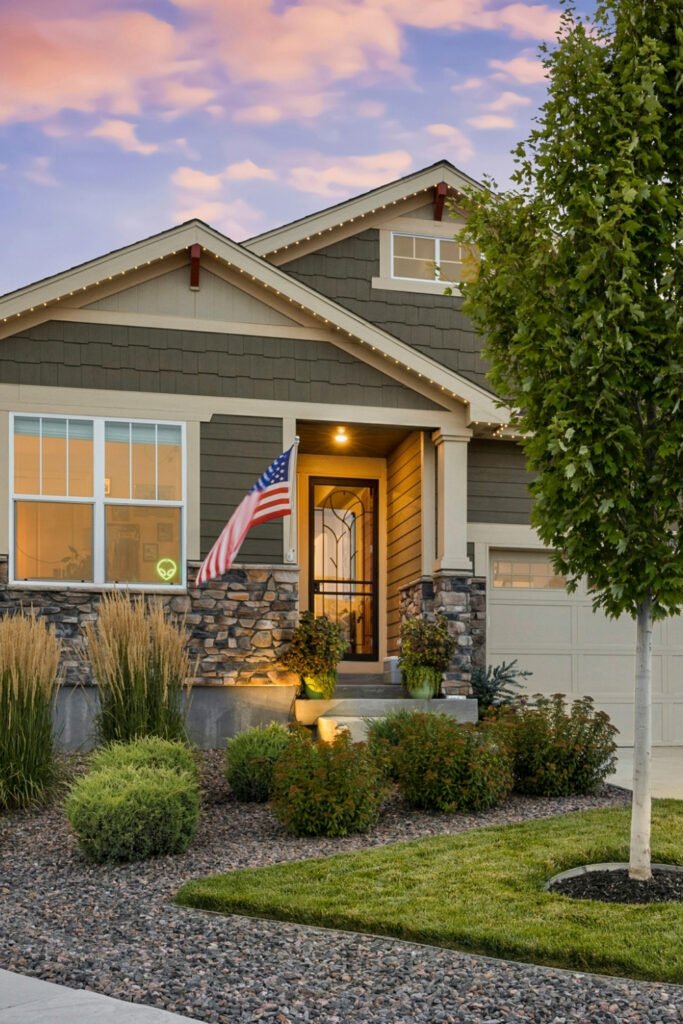
Photo by Patrick Bohn on Unsplash
Gravel, ornamental grasses and a few clipped shrubs in front of a plain facade show how much a limited palette can do. The contrast between soft, moving grasses and the hard lines of stone and gravel gives the yard its polished look.
The trick is to limit your materials. Pick two or three (say, flagstone, dark gravel and one ground cover) and repeat them throughout. That prevents the “too many things going on” look that makes a yard feel chaotic. If your front yard currently feels like a random collection of plants and patches, a simple mixed-material layout with a clear path, defined beds and one repeated grass is one of the fastest ways to make it look finished.
5. Frame the house with dark mulch and wider beds
A thick layer of dark mulch is one of those changes that looks expensive but costs very little. Black or deep brown mulch gives a clean backdrop that makes green leaves and bright flowers stand out, a bit like a dark frame around a picture.
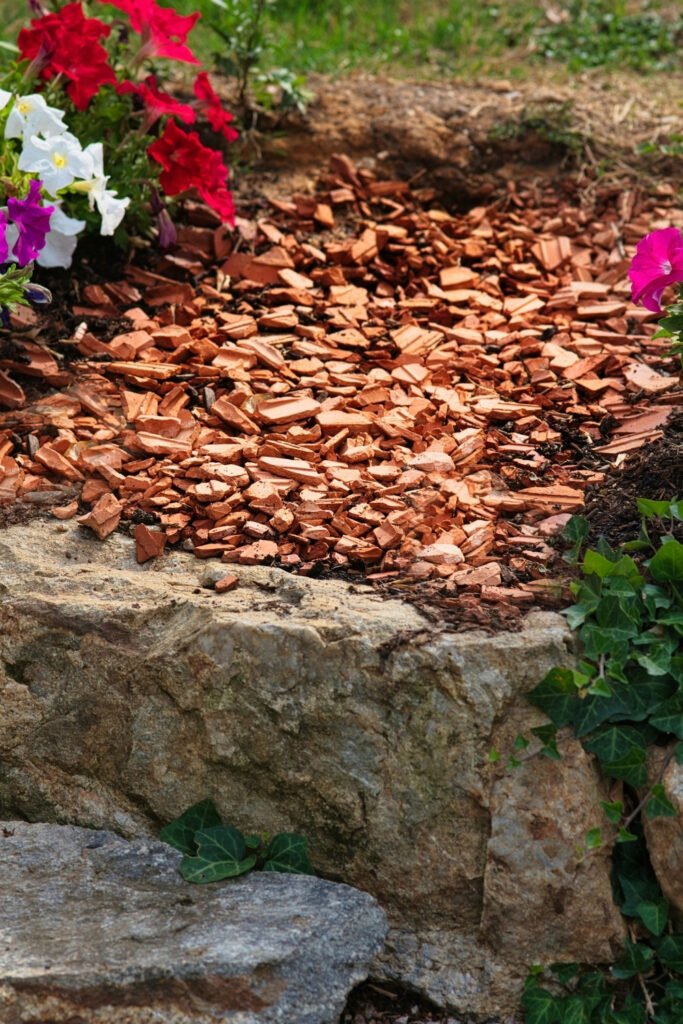
Photo by David Billington on Unsplash
Spread it 2 to 3 inches deep: thinner and weeds push through, thicker and water struggles to reach the roots. Keep mulch a few inches away from tree trunks and plant stems, since mulch piled against bark holds moisture and invites rot and pests.
The most common flower bed mistake is making beds too small. A narrow strip hugging the foundation does very little for curb appeal. Extend the beds further out, often 5 to 8 feet from the house, so plants have room and the bed has depth. Homes & Gardens points out that skinny “mustache” beds along the foundation are one of the fastest ways to make a house look dated.
6. Build flower borders with stone edging
If flower beds keep bleeding into the lawn, edging is the fix. A clear border of natural stone, brick or concrete curbing gives plantings a finished look and keeps grass from creeping in.
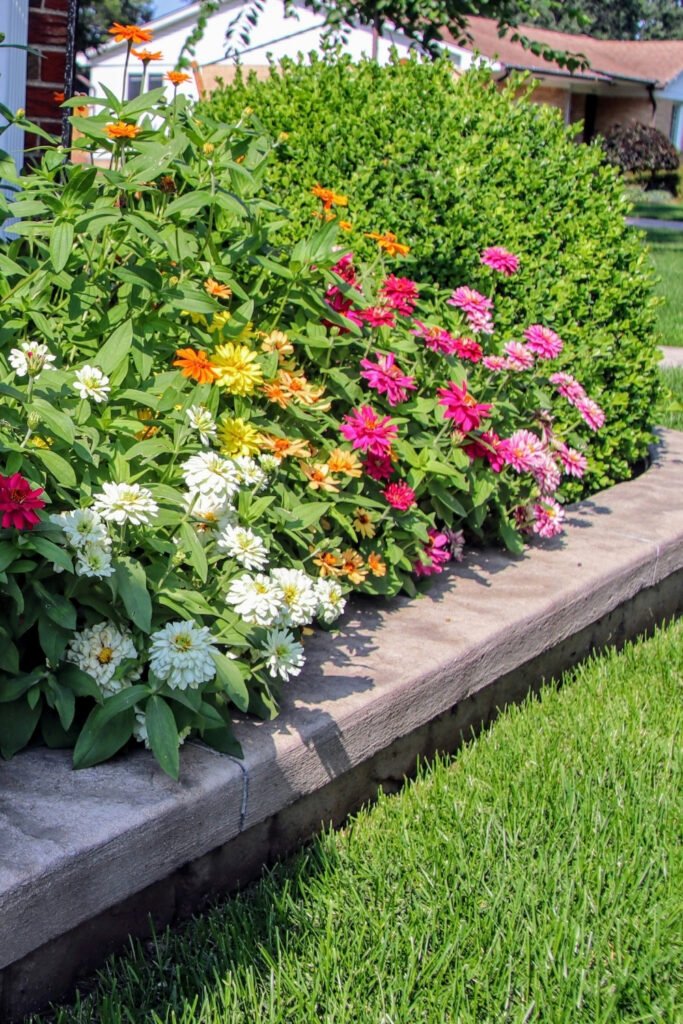
Photo by Gordon Chaffin on Unsplash
When choosing flowers, think about bloom times. Aim for something flowering in spring, summer and fall so the bed never looks bare: bulbs for spring, salvia, petunias and marigolds for summer, asters and sedum for fall, with hostas or heuchera for leaf color throughout. A mix of annuals for instant color and perennials for long-term structure works well for most yards.
The edging doesn’t need to be expensive. Natural stone from a local landscape supply yard, reclaimed bricks or simple steel edging all work. Set the edge slightly below the lawn height so the mower can run along it, and the line between grass and bed stays crisp with almost no trimming.
7. Add lighting for curb appeal after dark
Lighting is the front yard upgrade most people forget. Curb appeal doesn’t stop working when the sun goes down, and a few well-placed lights make a house look warm and cared for at night.
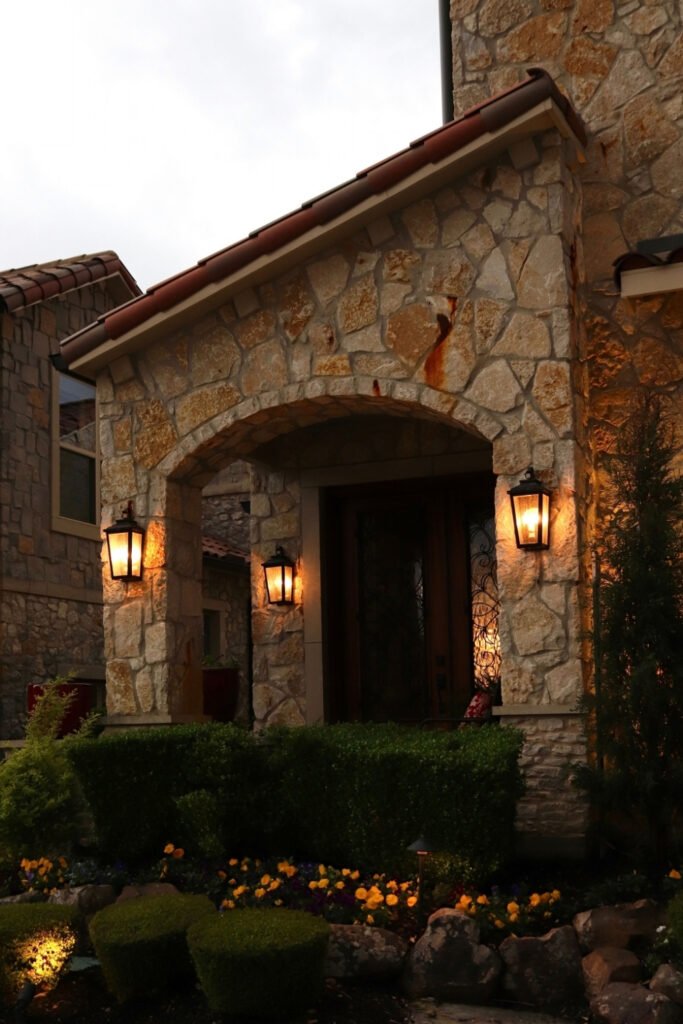
Wall lanterns by the door, path lights along the walk and one or two uplights at the base of a tree or near a large planter are usually all it takes. HGTV’s curb appeal guide lists landscape lighting among the easiest upgrades to install yourself.
It’s also one of the cheapest projects here. Solar stake lights cost a few dollars each, and plug-in low-voltage LED kits are sold at most hardware stores. Space path lights about 6 to 8 feet apart, aim uplights at something worth seeing, and choose warm white bulbs rather than cool blue-white ones. Anything hardwired to the house is a job for an electrician.
8. Line the walk with cottage-style beds
A path flanked by full, colorful flower beds makes a house feel welcoming the moment you step out of the car. Brick, flagstone or pavers all work for the path; brick suits colonial, craftsman and farmhouse homes especially well.
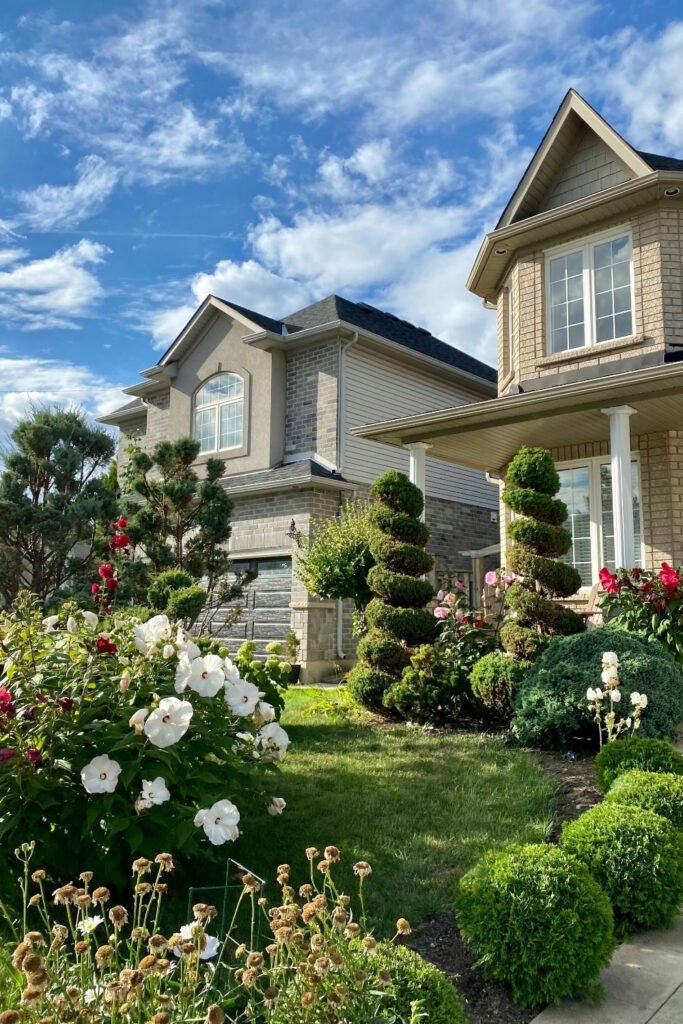
Photo by Wojtek Konrad on Unsplash
Brick pavers are durable, fairly affordable and manageable as a weekend DIY project. Lay them in a running bond or herringbone pattern over a compacted gravel base, and the walk will last for years. Then fill the beds on both sides and let the plants spill slightly over the edges to soften the lines.
For shady front yards, impatiens, begonias, hostas, caladiums and ferns give that full, overflowing look. In sun, try catmint, coneflowers, roses and low lavender hedges. If the front porch needs attention too, these welcoming entryway ideas are a good next step.
Choose plants that do the work for you
The easiest front yards are planted with things that suit the spot. Native plants for your region are adapted to local rainfall and soil, usually need less water once established, and feed pollinators. Your state’s native plant society or extension service usually publishes a list for front yards and foundation beds.
A good mix includes a few evergreens for winter structure (boxwood, dwarf conifers, holly), flowering shrubs for spring and summer (hydrangea, spirea, potentilla), perennials for months of color, and a handful of annuals by the door where you want the brightest spot. Group plants with similar water needs together, so one sprinkler zone or one round with the hose covers the whole bed.
9. Make room for a small seating area
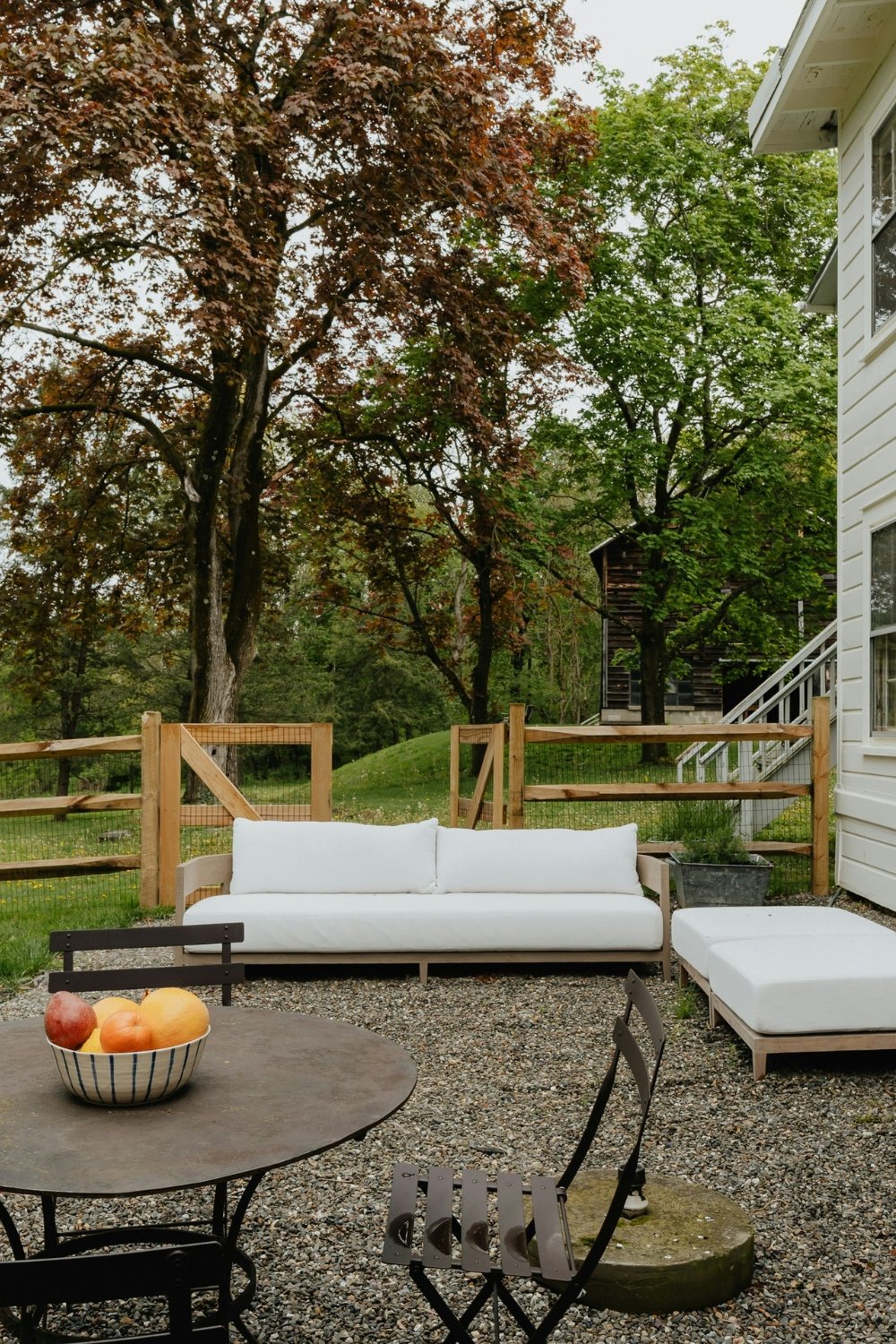
More homeowners are turning part of the front yard into a place to sit rather than just something to look at from the street. A small patio or a pair of chairs by the door gives you a spot to have morning coffee, watch the kids ride bikes or say hello to neighbors.
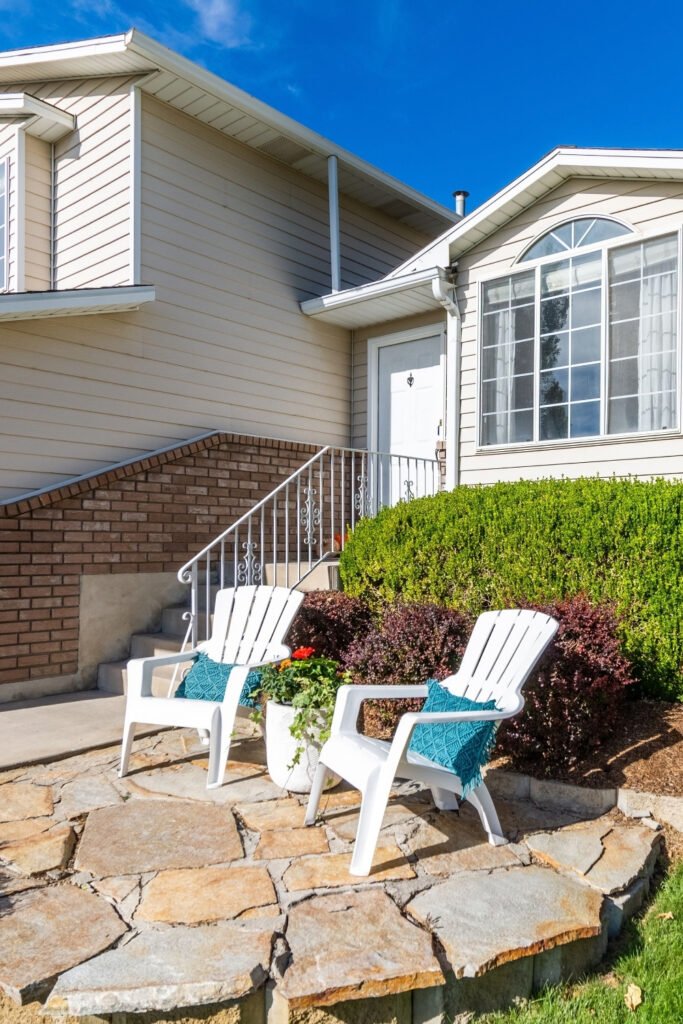
Photo by Get Lost Mike on Pexels
You don’t need much space. A bistro set, two Adirondack chairs or one bench next to a flower bed is enough. Set the seating on gravel, pavers or a small stone patio so the chair legs don’t sink into the lawn. If the spot feels exposed to the street, a row of tall grasses in containers or a short trellis with a climbing vine gives some privacy without blocking the view of the house. A few container plants around the edge make it feel private, and these patio decorating ideas on a budget work just as well in front of the house as behind it.
10. A small front yard makeover in 3 steps
Not every front yard needs a full renovation. With a small yard or a tight schedule, one focused weekend can make a visible difference.
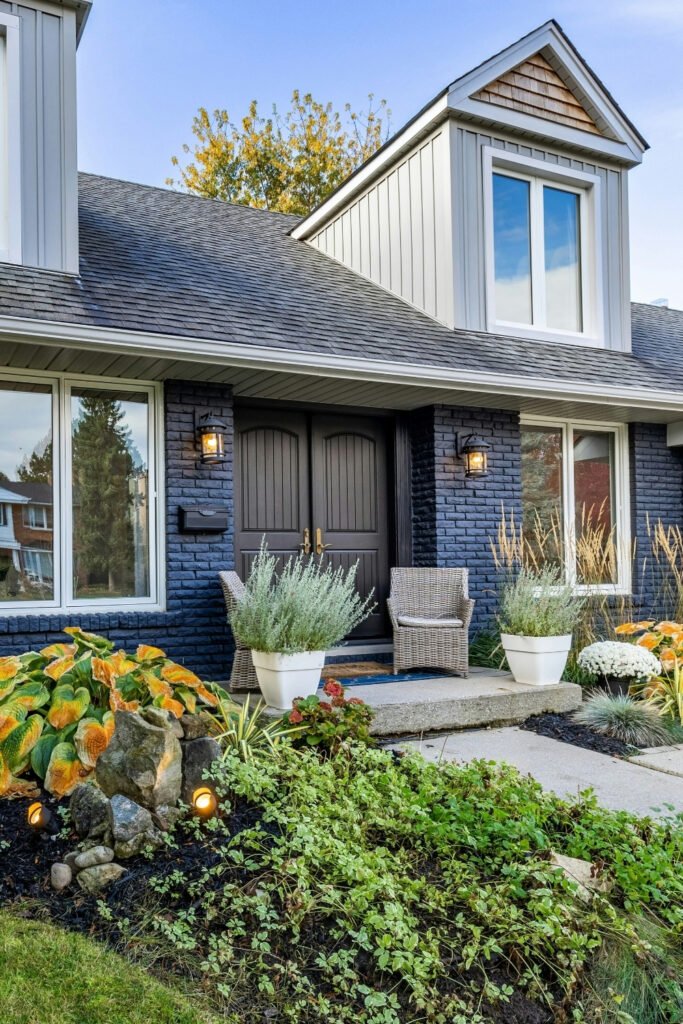
Photo by Venrick Azcueta on Unsplash
Step 1: Look. Walk out to the street and look at the house the way a visitor would. What do you notice first? Overgrown shrubs, a bare lawn, a cracked walk? Write down the one or two things that bother you most.
Step 2: Plan. Choose one idea from this list that fixes the biggest problem. If the yard lacks structure, add an edged bed or a path. If it looks flat, add layered plants or a wider mulched bed. Don’t try to do everything at once.
Step 3: Do it. Set a budget (even $50 to $100 goes a long way), buy the supplies and spend one weekend on that single project. One finished change makes a bigger impact than months of thinking about a dozen.
Front yard landscaping mistakes to avoid
A few common mistakes make a front yard look dated or neglected, even after a lot of effort.
Overgrown foundation shrubs are the biggest offender. When bushes cover the windows or crowd the walk, the whole house looks closed off. Keep them trimmed below the windowsills, or replace them with varieties that stay smaller.
Red or brightly dyed mulch looks vivid for a few weeks, then fades and clashes with natural greenery. Natural brown or black is the safer, more timeless choice.
Beds that are too narrow don’t register from the street. Wider beds with layered plants look far more intentional.
Skipping edging lets the lawn and the beds blur together. A simple stone or metal edge fixes that.
Planting too close to the house is another easy slip. Leave a gap of a couple of feet between shrubs and the wall for airflow, painting and gutter work, and keep soil sloping away from the foundation.
A simple care routine through the year
A front yard stays tidy with a little attention spread across the seasons. In early spring, cut back last year’s perennials and grasses, edge the beds and top up the mulch. In late spring, plant annuals once the frost danger has passed and feed hungry plants. Through summer, water deeply once or twice a week rather than a little every day, deadhead flowers to keep them blooming, and pull weeds while they’re small. In fall, plant spring bulbs, trim shrubs that bloom on new wood, rake leaves off the lawn and beds, and drain hoses before the first freeze.
How much does a budget front yard makeover cost?
You can do a lot without a big budget. A 2-cubic-foot bag of mulch costs roughly $4 to $6 and covers about 8 square feet at 3 inches deep, so a typical front bed needs 10 to 15 bags, or about $40 to $90. A pack of solar path lights is often around $20 to $40, and a flat of annuals is usually $15 to $25.
Bigger projects such as a flagstone path or a rock garden can run $200 to $500 in materials, depending on size and stone, which is still a fraction of a professional installation. Bulk mulch or gravel delivered by the cubic yard is usually cheaper than bags once a bed gets large.
If you ask me, the most manageable approach is one project per season: mulch and flowers in spring, a path in summer, lighting in fall. By the end of the year the front yard looks completely different, and the cost is spread out.
Pick one idea and get started
Whether it’s a fresh layer of dark mulch, a winding stone path or a complete redesign with mixed materials, every change adds up. You don’t need to tackle all ten. Pick the one that matters most for your house, give it a weekend, and let the first finished project build momentum for the next.
Which idea are you trying first? Tell me in the comments.

Leave a Reply