

A 4×6 patio slab and three pots from the dollar store can grow more food and color than most people’s entire front yards. You don’t need acreage. You don’t need a greenhouse. You don’t even need to know what you’re doing yet.
If you’ve been staring at a bare patio and wondering where to start, these container garden design ideas for patios are going to change the way you think about your outdoor space. Whether you’re working with a tiny apartment balcony, a townhome porch, or a full backyard deck, container gardening puts you in control of every detail. You pick the pots. You pick the plants. You move things around whenever you feel like it.
This post covers everything from the best plants for patio containers to layout tricks that make a small space look twice its size. Plus, I’m sharing budget setups that cost under $50 and simple DIY builds you can knock out in a single weekend. Let’s get into it.
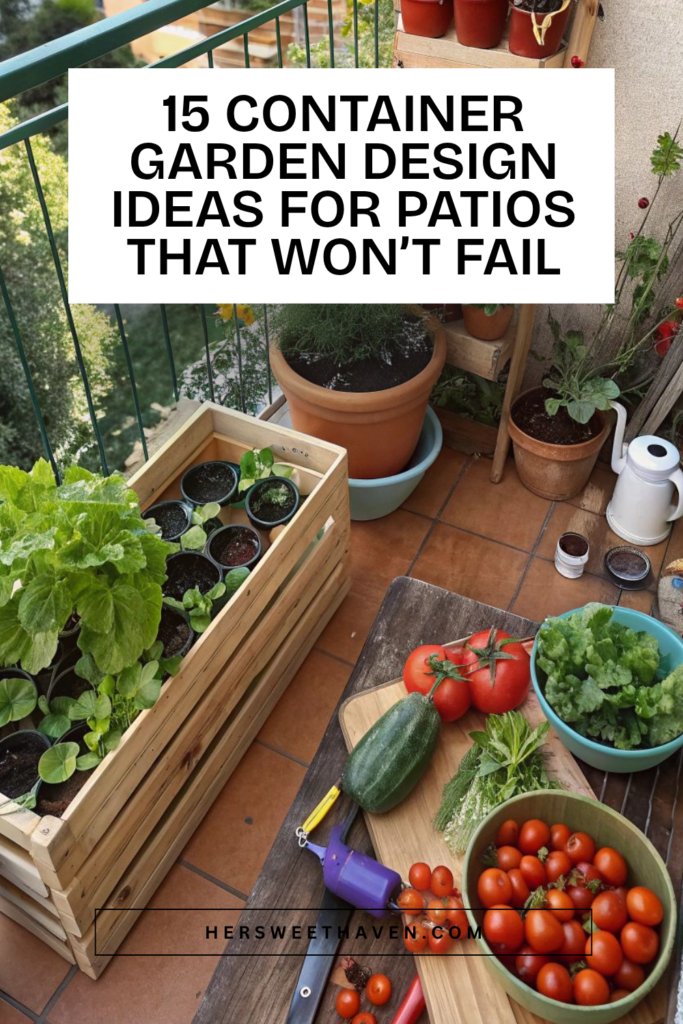
Why Container Gardens Work Better Than You Think for Patios
You Don’t Need a Yard to Grow Real Food (and Flowers)
Container gardening is one of the most flexible ways to grow anything, anywhere. A patio, balcony, rooftop, or even a sunny driveway works just fine. The Old Farmer’s Almanac recommends container gardening specifically because it lets you maximize every inch of available space, even if that space is only a few square feet.
The best part? You can move your containers to chase the sunlight or protect plants from wind. That kind of control is something traditional garden beds simply can’t offer.
What Makes Container Gardening Perfect for Beginners
If you’re new to gardening, containers take away most of the guesswork. There’s no tilling soil, no dealing with underground pests, and far fewer weeds. According to Rutgers University’s container gardening research, growing in pots reduces soil-borne diseases and makes the entire process more manageable for first-timers.
You also get to start small. One pot of basil on your patio counts. Two pots of cherry tomatoes? Even better. Container gardening for beginners is all about building confidence with easy wins before scaling up.
Which Plants Actually Thrive in Container Gardens for Patios?
Picking the right plants is where most people either succeed or get frustrated. Not every plant does well in a pot, and some need more room than a container can offer. Here’s the breakdown of what actually works.
Best Herbs for Patio Containers
Herbs are the easiest starting point for any patio container garden. They grow fast, they smell amazing, and you’ll actually use them in your kitchen.
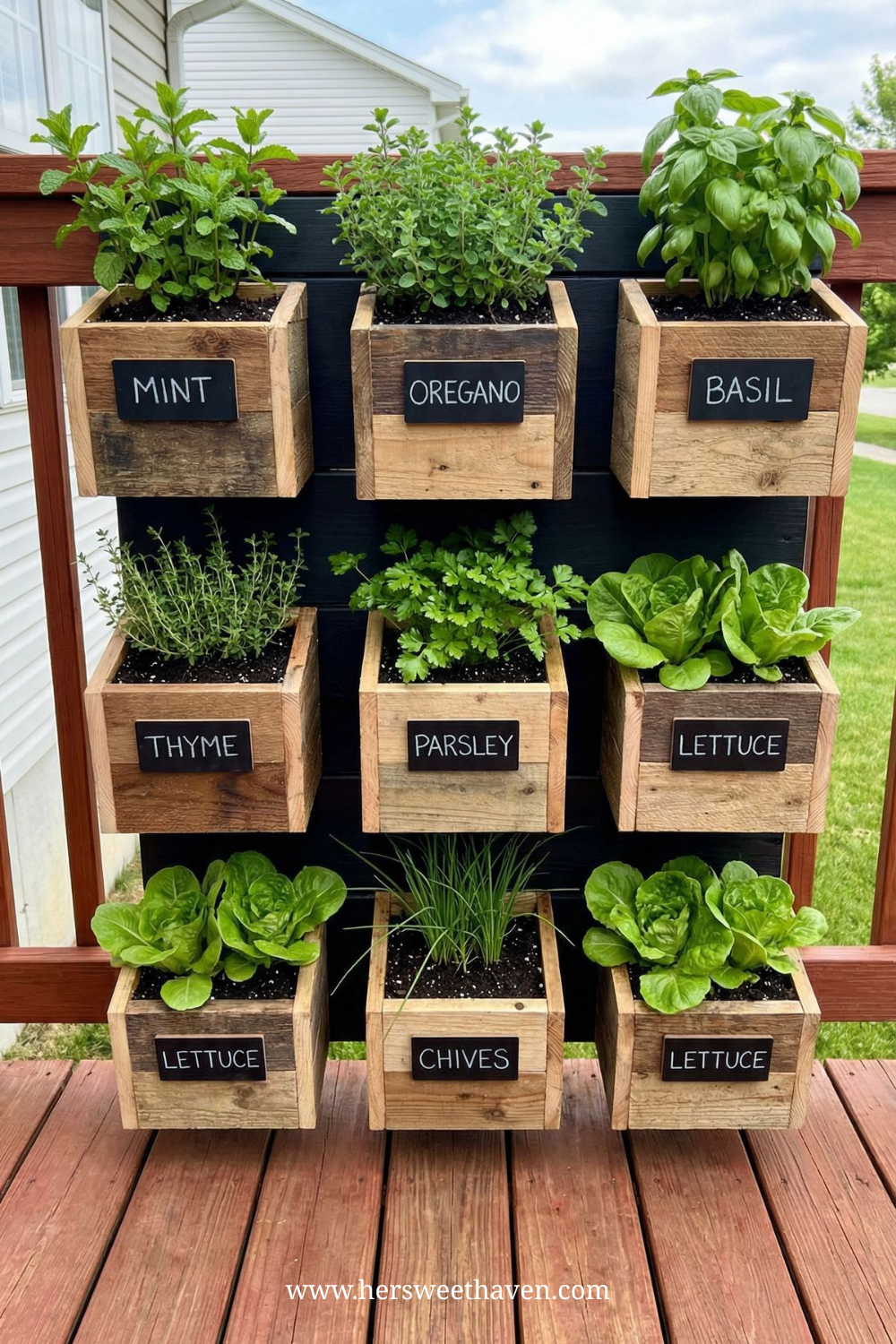
The best herbs for containers include basil, mint, oregano, thyme, parsley, and chives. Millcreek Gardens notes that most herbs need at least 4 hours of sunlight per day. Group herbs with similar water needs together: basil, parsley, thyme, and mint like consistently moist soil, while rosemary, sage, and tarragon prefer to dry out between waterings.
One tip: keep mint in its own pot. It spreads aggressively and will take over a shared container faster than you’d expect.
Vegetables That Do Well in Pots
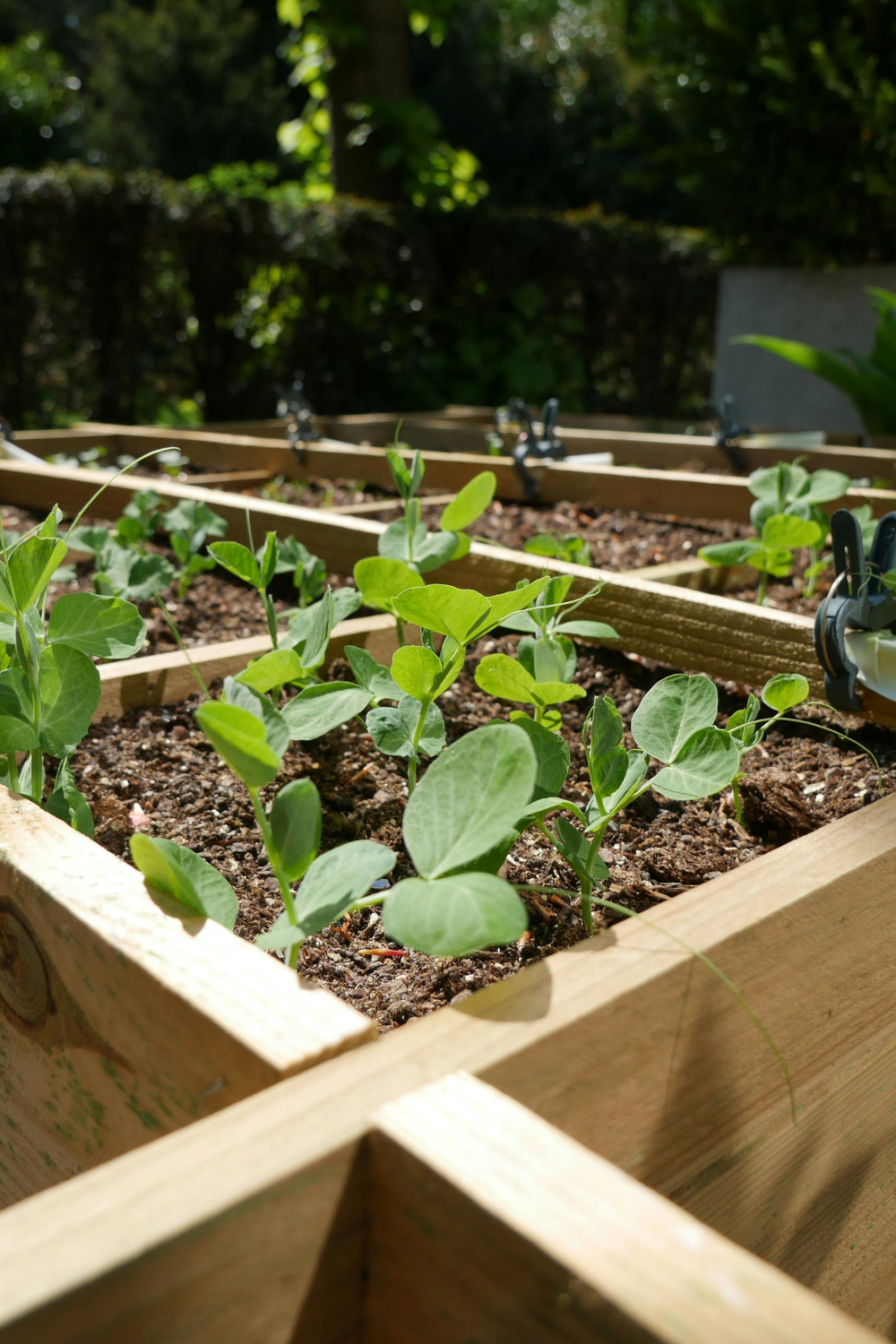
You can absolutely grow a container vegetable garden on your patio. The key is choosing compact varieties that don’t need a ton of root space.
Cherry tomatoes, peppers, lettuce, radishes, and bush beans are all strong picks. Rutgers University’s extension program breaks down sunlight needs simply: fruiting vegetables like tomatoes and peppers need about 8 hours of sun, root vegetables need around 6 hours, and leafy greens can produce well with just 4 hours.
Look for varieties labeled “patio,” “dwarf,” or “bush” when shopping for seeds or transplants. These are bred specifically for smaller spaces and won’t outgrow their pots halfway through the season.
Flowers and Greenery That Fill Out Your Containers
If you want flower pot arrangement ideas for your patio, think beyond single-plant pots. Mixing flowering plants with trailing greenery creates a layered, full look that feels intentional.
Petunias, marigolds, and geraniums are reliable bloomers for sunny patios. Pair them with trailing ivy or sweet potato vine for a finished look. If your patio gets mostly shade, impatiens and begonias hold up well in lower light conditions.
Container Garden Design Ideas That Cost Under $50
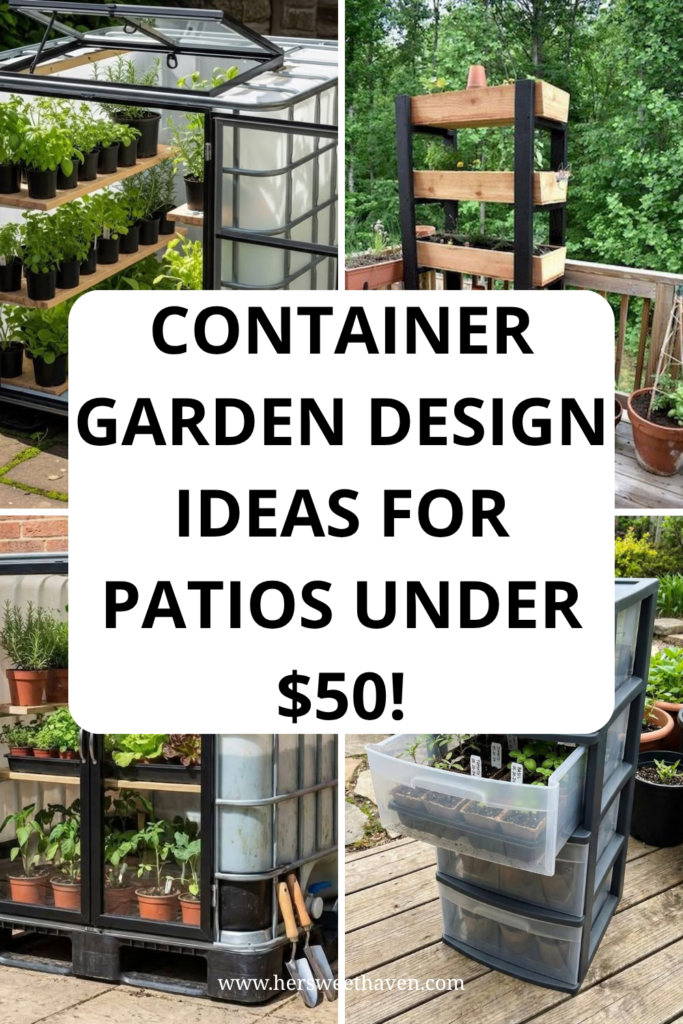
You don’t need fancy ceramic pots to build a great-looking patio garden. Some of the most effective setups use materials you already have (or can grab for next to nothing).
Repurpose What You Already Have
Old storage bins, 5-gallon buckets, wooden crates, and even gutters make perfectly good planters. Drill a few drainage holes in the bottom and you’re set. Gardening Know How points out that buckets, grow bags, and recycled nursery pots work just as well as expensive ceramics for most edible plants.
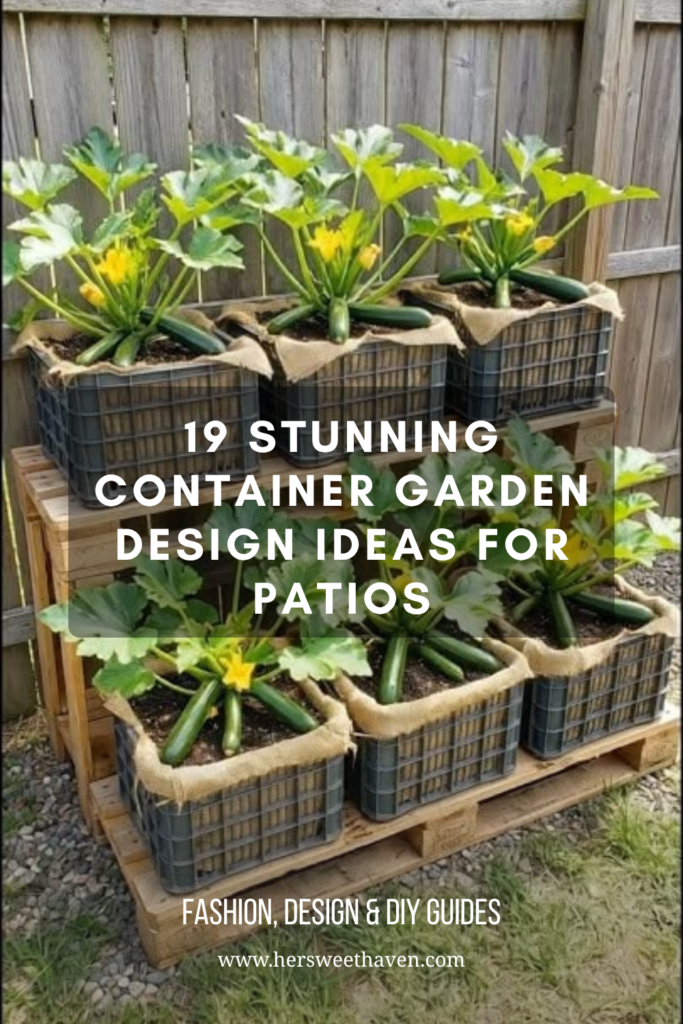
Milk crates lined with burlap or landscape fabric make surprisingly attractive raised planters. Stack them on a pallet and you’ve got a vertical garden for the cost of some potting mix.
Budget Containers That Still Look Great
If you want something a bit more polished without spending much, plain terracotta pots are inexpensive and look great grouped together. A quick coat of spray paint can turn mismatched plastic containers into a coordinated set.
Grow bags are another affordable option, especially for tomatoes, potatoes, and cucumbers. They fold flat when not in use and come in packs for just a few dollars. The real investment should go into quality potting mix, not the pot itself. That’s where your plants will actually notice the difference.
If you’re looking for more ways to style your outdoor space without breaking the bank, check out these patio decorating ideas on a budget.
How Do You Design a Container Garden Layout for a Small Patio?
This is where most people overthink things. Your container garden layout doesn’t need a master plan. It needs a few smart decisions up front.
The “3-Pot Rule” for Tiny Spaces
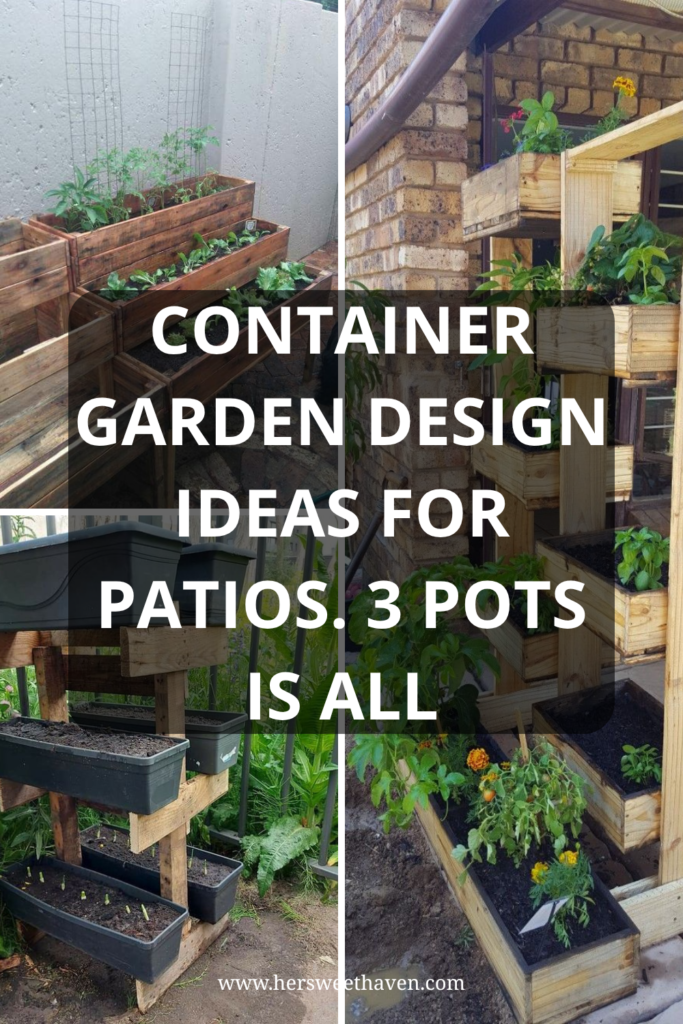
If you’re working with a small patio container garden, start with just three containers in different sizes. One large pot anchors the arrangement. One medium pot adds variety. One small pot fills in the gap. That’s it.
On Sutton Place recommends deciding what you actually want from your patio garden before buying anything. If flowers bring you joy, plant flowers. If you want something useful, go with herbs. If harvesting vegetables sounds fun, try compact varieties. Limiting your plant count keeps things manageable and looking clean.
Three well-chosen pots will always look better than a dozen random containers crowded into a corner.
Vertical Gardening When Floor Space Is Limited
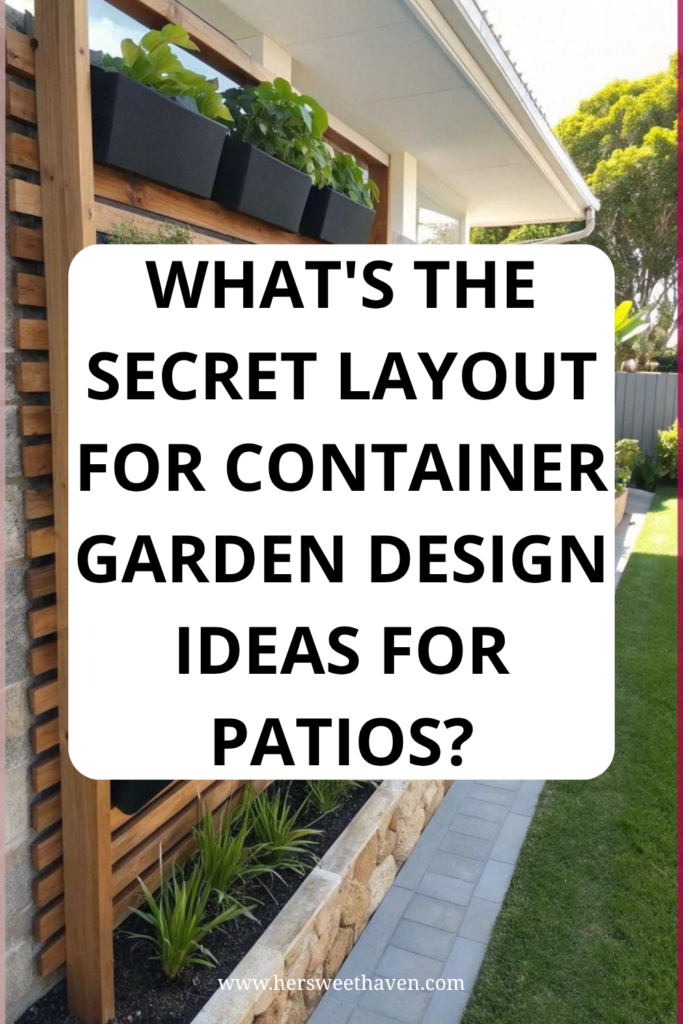
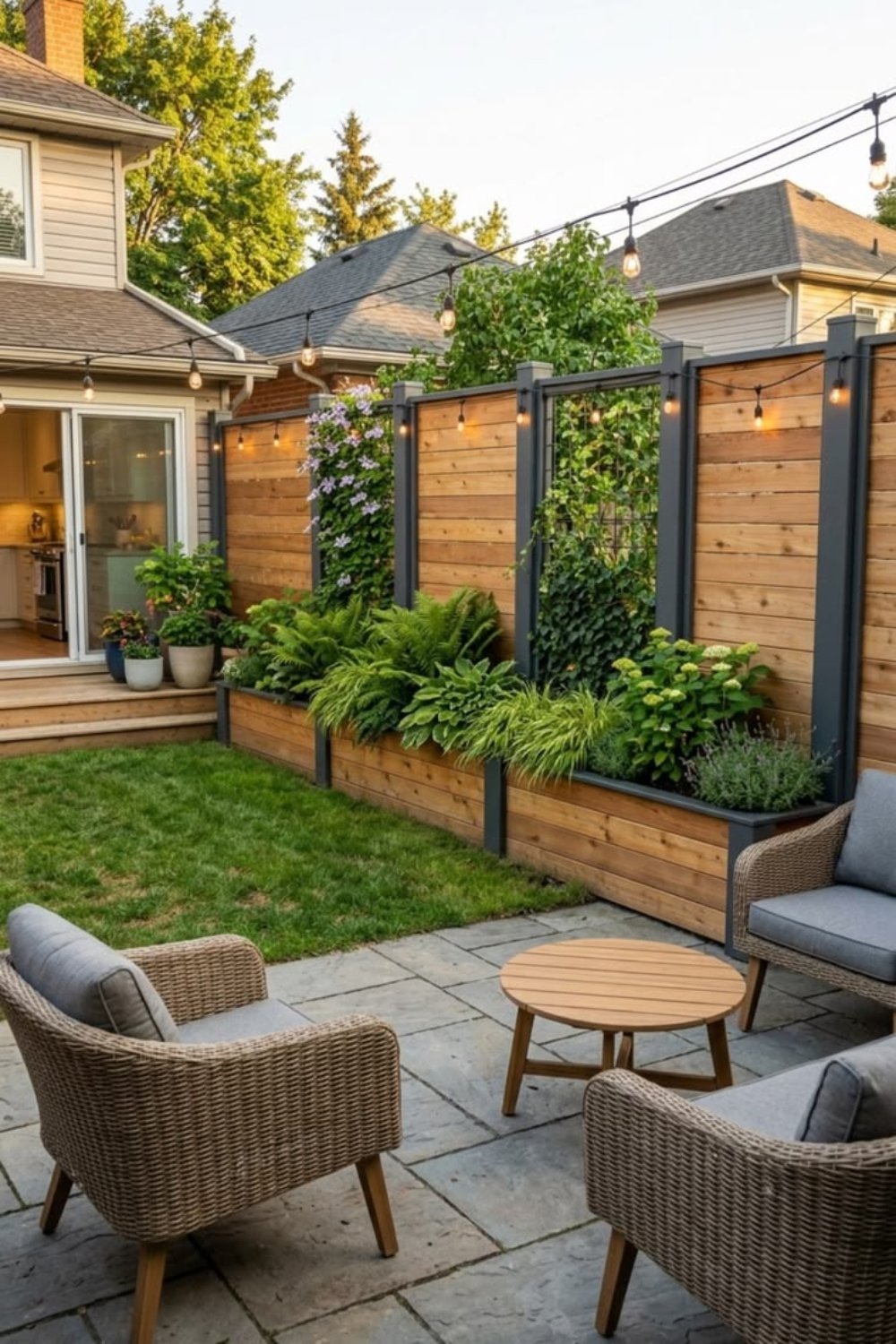
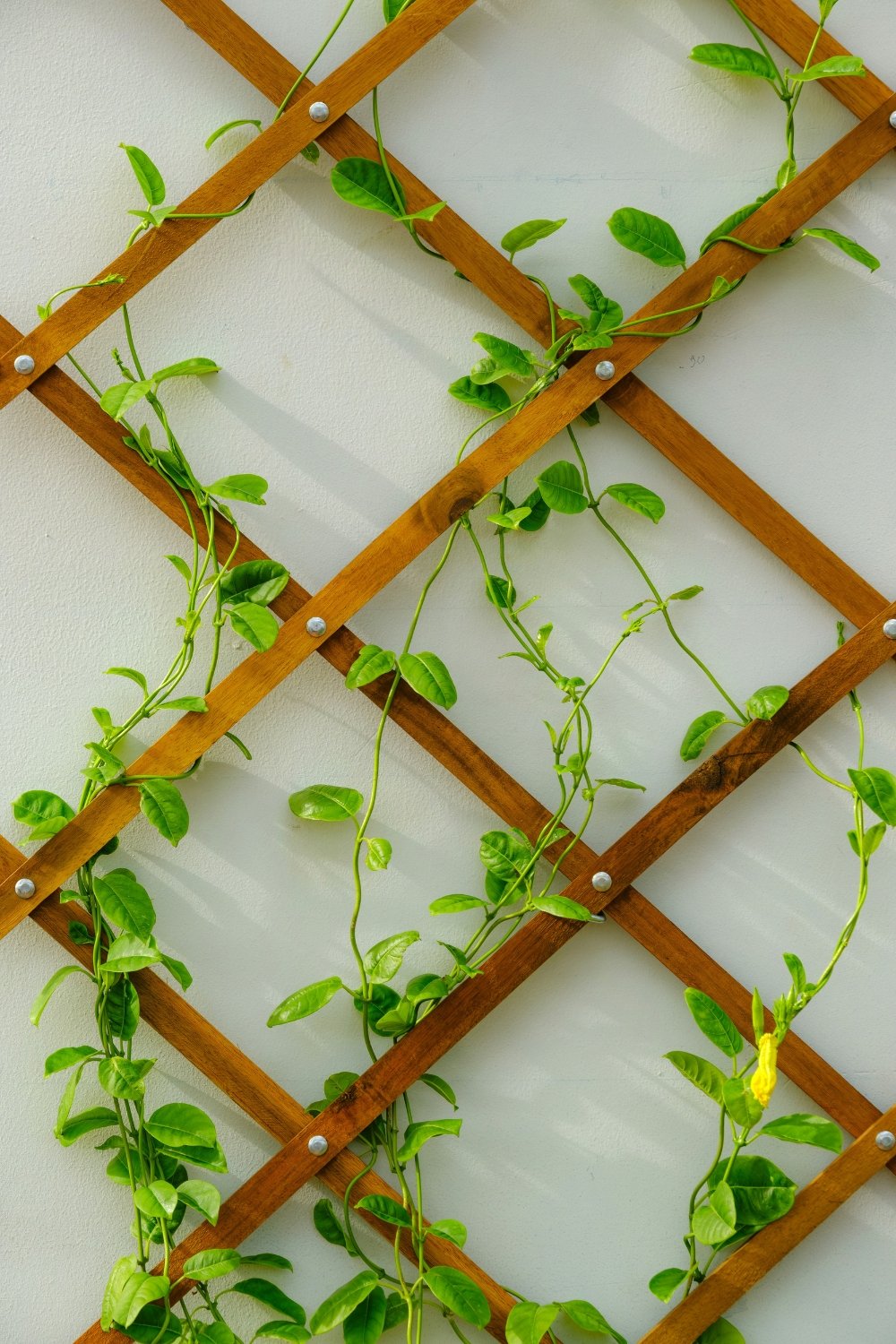
When your patio floor is already full of furniture, go vertical. Wall-mounted planters, hanging baskets, tiered stands, and trellises let you grow upward instead of outward.
A simple trellis leaned against a wall can support climbing beans, peas, or flowering vines without taking up any floor space at all. If you’re interested in adding vertical structure, take a look at these trellis ideas for your garden or try building a DIY tiered planter stand from crates.
Stop Crowding Your Containers
Here’s where most people get it wrong. Cramming too many plants into one pot feels productive, but it actually hurts every plant in the container. Roots compete for water and nutrients. Air circulation drops. Disease moves in.
Give each plant the spacing it needs. For herbs, that’s usually 6 to 8 inches apart. For tomatoes, one plant per 5-gallon container is the rule. Lettuce and greens are more forgiving but still need room to spread.
If you want big, healthy plants, resist the urge to overcrowd. Fewer plants per pot almost always leads to a better result.
What’s the Secret Layout for Container Garden Design Ideas for Patios?
Professional container garden designs look polished because they follow a few simple principles. None of them are complicated, but they make a noticeable difference.
Group by Sunlight and Watering Needs
This is the most practical layout decision you’ll make. Put your sun-loving plants together in the brightest spot on your patio. Keep shade-tolerant plants grouped separately. Lively Root suggests spending a full day observing where sunlight falls on your patio before placing anything permanently. It sounds simple, but most people skip this step and wonder why half their plants struggle.
Group herbs that like dry soil (rosemary, sage, thyme) in one cluster. Keep moisture-loving herbs (basil, mint, parsley) in another. This makes watering faster and keeps every plant happy.
Use Height to Create Depth
A flat row of same-sized pots looks boring. Varying the height of your containers adds depth and makes even a small patio feel more dynamic.
Garden Design experts recommend using tiered plant stands, stacked pots, or bricks hidden behind larger containers to raise some plants to eye level. Place your tallest pot at the back, medium heights in the middle, and low or trailing plants along the front edge. This layered approach is the same principle Homes & Gardens identifies as one of the top tricks designers use to make small patios look polished.
The Thriller, Filler, Spiller Formula
If you’ve never heard of this, it’s going to change how you plant containers forever. The idea is simple: every mixed container needs three types of plants.
The “thriller” is the tallest plant in the center. It adds height and draws the eye. The “filler” surrounds it with medium-height plants that fill out the pot. The “spiller” cascades over the edges and softens the look. Cozy Little House breaks this technique down with examples like Gerbera daisies as thrillers and purple verbena as spillers.
For a simple version, try ornamental grass (thriller), petunias (filler), and trailing ivy (spiller) in a single large pot. It looks like you hired a landscaper.
Easy DIY Patio Container Garden Setups You Can Build This Weekend
You don’t need power tools or carpentry skills for these. Each one uses affordable materials and takes an afternoon or less.
Raised Bed Alternatives With Storage Bins
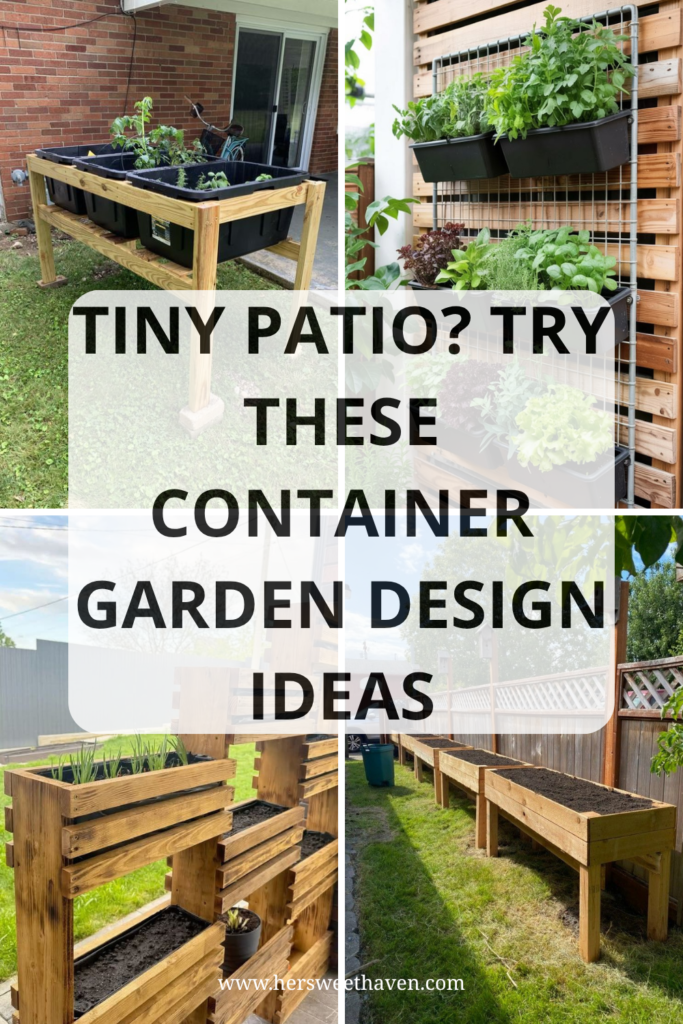
Large plastic storage bins (the kind you’d store holiday decorations in) work surprisingly well as raised planters. Drill drainage holes in the bottom, fill with potting mix, and set them on a simple frame made from cinder blocks or stacked wood. This gives you a deep planting area for tomatoes, peppers, or zucchini without the cost of a traditional raised bed.
If you want to explore more raised bed options, here’s a full guide on how to build raised garden beds on a budget.
Tiered Planter Stands From Crates
Wooden or plastic milk crates stacked in a staircase pattern create instant vertical planting space. Line each crate with landscape fabric, fill with soil, and plant herbs or lettuce in each tier. The total cost? Usually under $20 if you source crates secondhand.
This setup works especially well against a wall or fence where you want greenery without sacrificing floor space. For a detailed walkthrough, check out this post on DIY tiered planter stands from crates.
Gutter Gardens and Pallet Planters
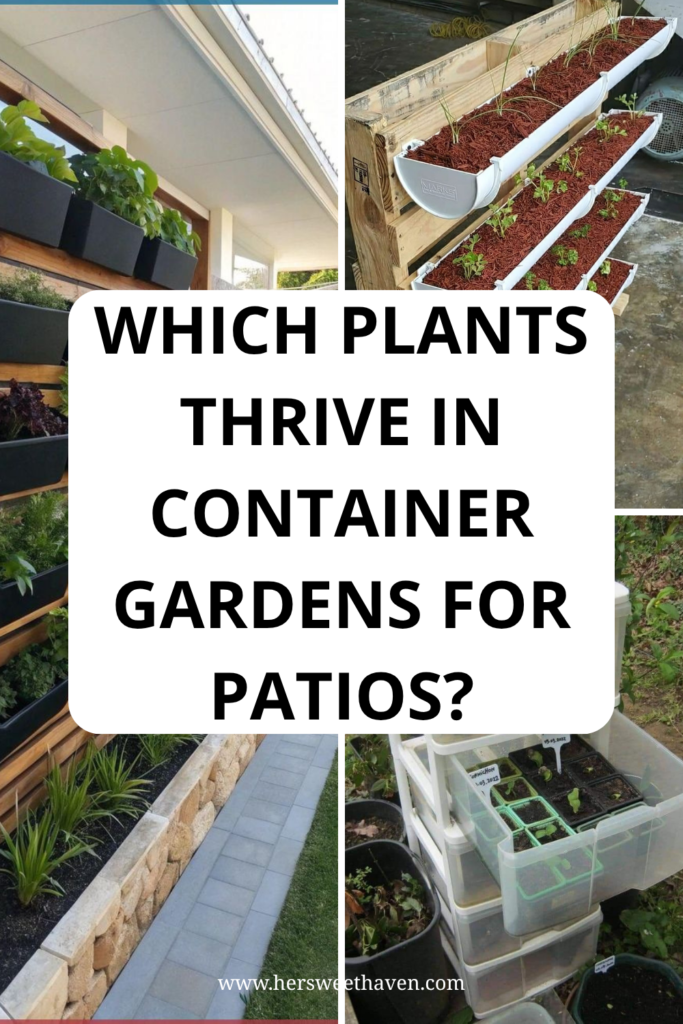
Rain gutters mounted horizontally on a fence or wall make a slim, space-saving planter for shallow-rooted herbs and lettuce. Cut sections to length, cap the ends, drill drainage holes, and mount with brackets. You get multiple growing rows in a footprint that’s only a few inches deep.
Pallet planters follow a similar idea. Stand a wooden pallet upright, staple landscape fabric across the back and bottom of each slat opening, fill with soil, and plant through the front. It’s a full vertical garden made from something most stores give away for free.
If you’re looking for more small patio container garden ideas, these small garden design tips cover additional ways to make the most of limited space.
Your patio is already enough space to grow something beautiful. You don’t need a bigger yard, a bigger budget, or a decade of gardening experience. You need three pots, some good soil, and the willingness to start.
Pick one idea from this post and try it this weekend. Start with herbs if you want something easy. Go with tomatoes if you want something rewarding. Mix flowers and greenery if you just want your patio to look alive.
Save this post for later, share it with a friend who’s been talking about starting a garden, and drop a comment if you have a favorite potted plant patio idea I didn’t cover. I’d love to hear what’s growing on your patio this season.
Leave a Reply