
A wedding ring stack starts with two rings: the engagement ring and the wedding band. Everything after that gets added over the years, usually one band per milestone, until one finger (sometimes two) carries a short history of the marriage. The questions are always the same: what each ring stands for, which finger it goes on, and how to keep the whole thing from looking like rings grabbed from a dish by the sink.
If the wedding itself is still on the to-do list, start with my guide to planning a whimsy wedding event. For the outfits, see my backless wedding dresses and bridesmaid dress styles that flatter every body.
What each band in a wedding ring stack stands for
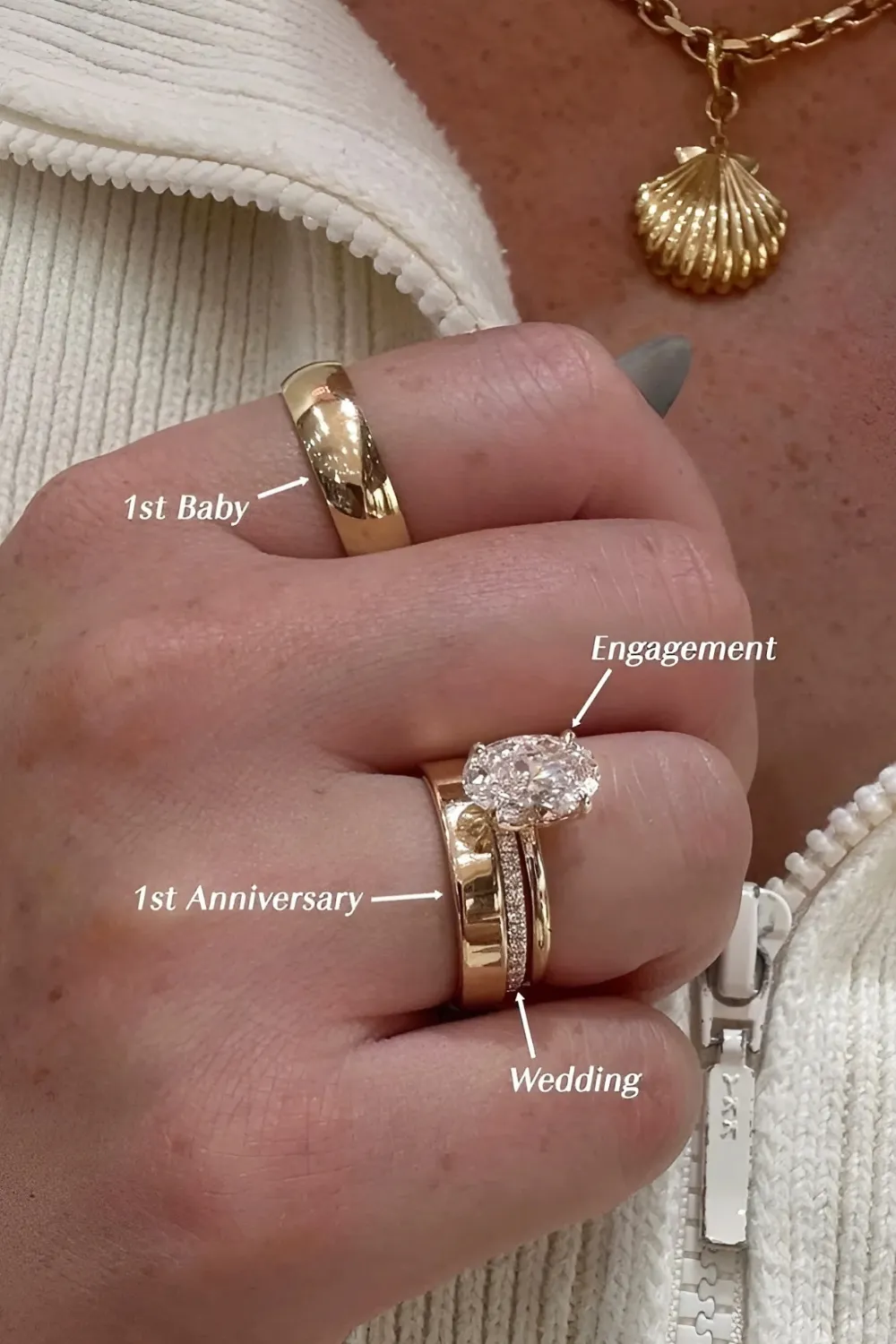
No rule says which rings belong in a wedding ring stack, but most are built from the same few pieces. Knowing the usual meanings helps when you’re deciding what to add next (or when someone asks why you’re wearing four rings on one finger).
- Engagement ring. The starting point and usually the loudest piece, with the center stone the rest of the stack gets planned around.
- Wedding band. Given at the ceremony. Often plain gold or platinum. Plenty of couples buy wedding ring sets so the band’s profile matches the engagement ring from the first day.
- Anniversary band. Added at a milestone anniversary: the first, the fifth, the tenth, whichever one feels worth marking. A thin row of small stones is the classic choice.
- Eternity band. Stones set all the way around (full eternity) or across the top half (half eternity). The unbroken circle is the symbolism, so it often marks a big anniversary.
- Baby bands. One band for each child, sometimes called a push present. Some people pick a birthstone; others choose a plain band in a different metal so each one stays easy to tell apart.
- The goal stack. The stack you picture wearing decades from now. Less a ring than a plan.
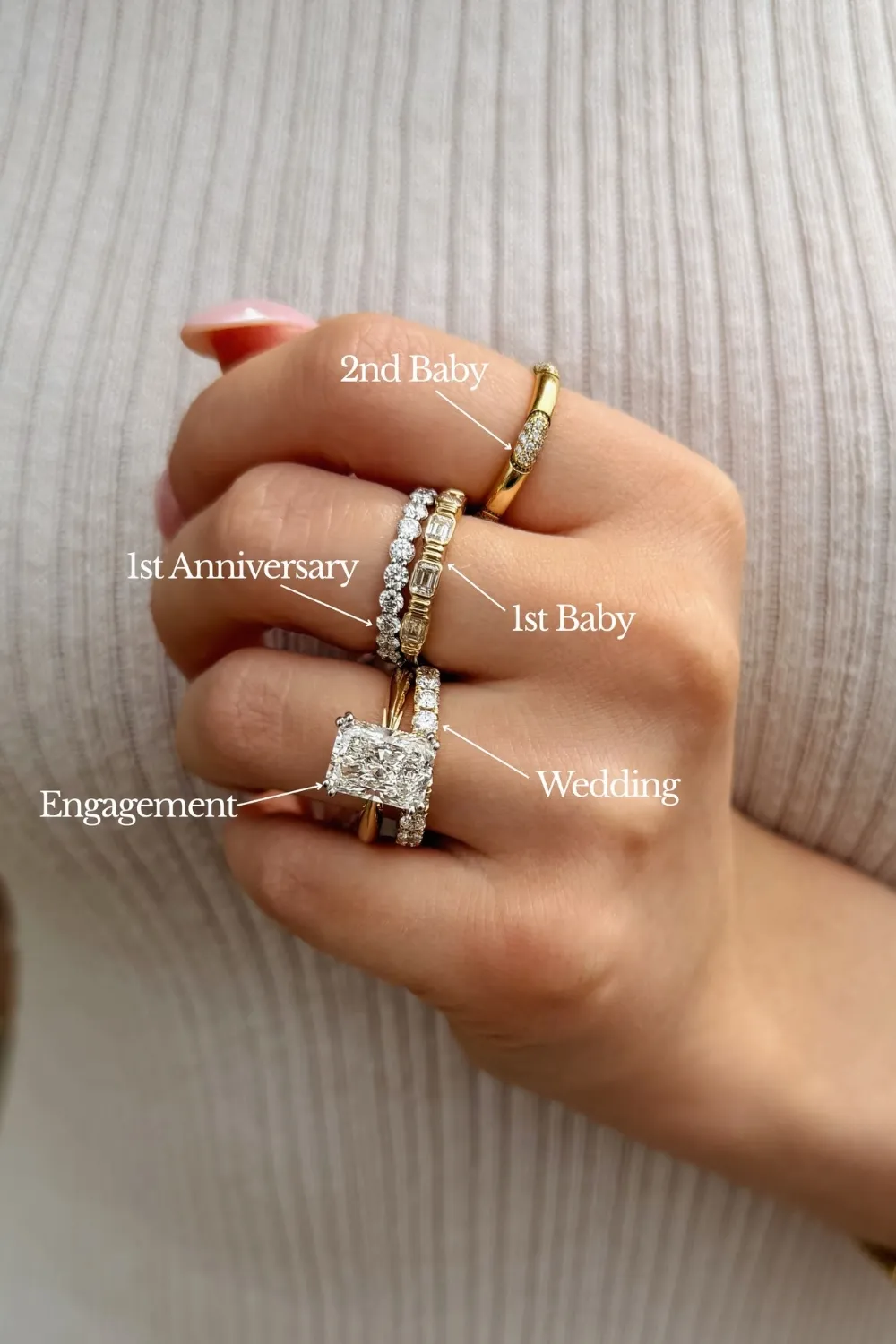
In my opinion, the meanings are the part of a ring stack to hold loosely. A “baby band” can just as well mark a first house, a hard year you got through together, or nothing at all except that you liked the ring.
What I’d borrow from the labeled stacks on Pinterest is the habit of giving every ring a reason. Even if nobody else knows what the third band means, you’ll know, and that keeps a ring stack from turning into a collection.
A wedding ring stack with kids’ birthstones is one of the most common versions of this: one slim band per child, each set with that child’s stone, added as the family grows.
Which finger each ring goes on
The traditional order puts the wedding band on first, closest to the hand, with the engagement ring sitting on top of it. The reasoning is old and romantic: the vena amoris, a centuries-old belief that a vein ran straight from the fourth finger of the left hand to the heart. Anatomy doesn’t agree, but the custom stuck. On the day, some brides wear the engagement ring on the right hand during the ceremony, then move it back on top of the band.
The left hand is the default in the US. In Germany, Norway, Spain, Greece and Russia, and in Orthodox Christian tradition, wedding rings go on the right hand instead.
A third ring brings the first proper decision. The classic layout keeps the engagement ring in the middle, framed by the wedding band below and an anniversary or eternity band above. Putting the engagement ring at the top works too, especially for an heirloom stone you want people to see first.
Once a ring stack reaches four or more bands, one finger fills up fast. A tall ring stack makes the finger harder to bend and rubs against the knuckle. That’s the point where splitting your wedding ring stack makes sense: keep the engagement ring and wedding band together, and move milestone bands to the middle finger or to the ring finger of the other hand.
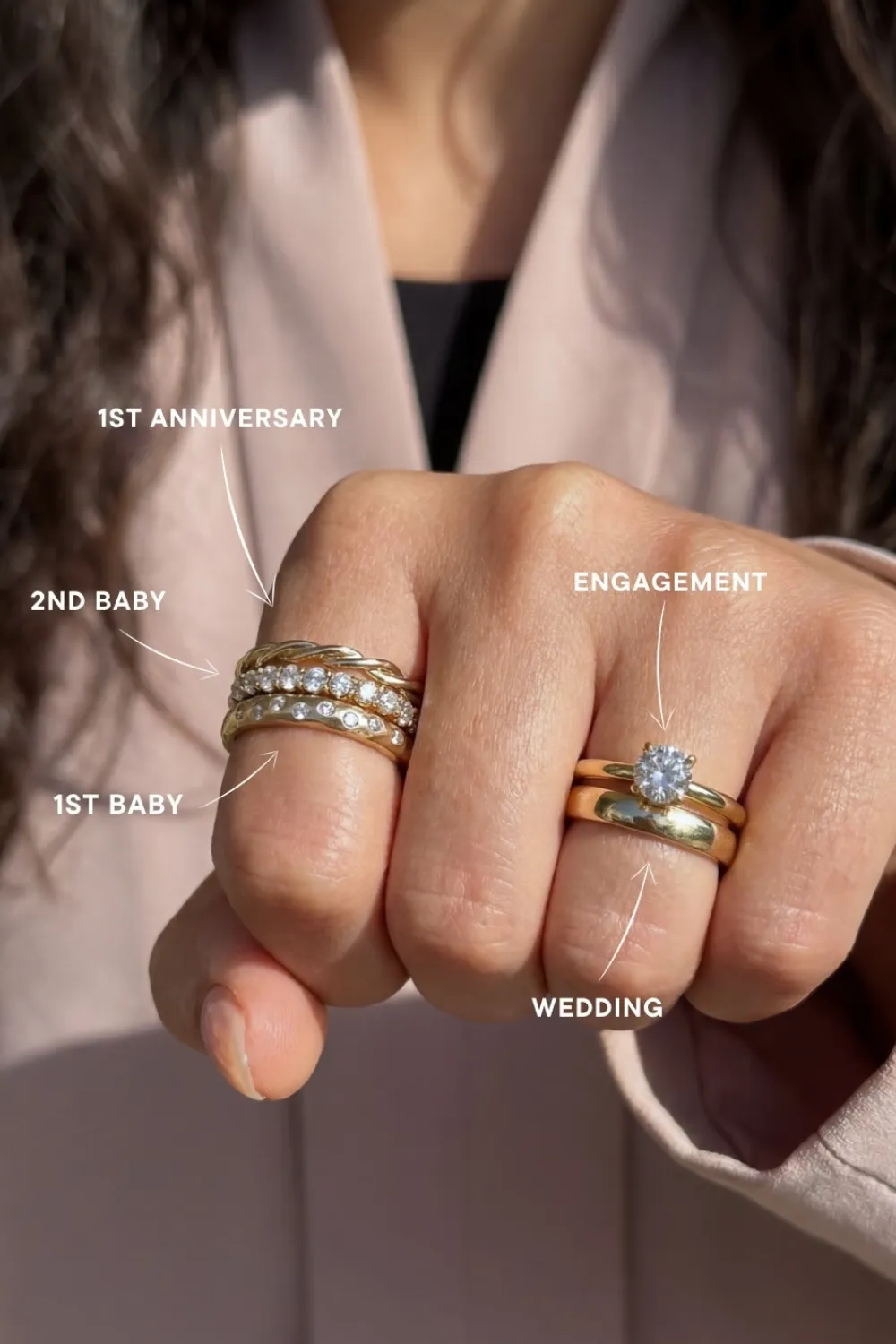
One catch with splitting: a band sized for your ring finger usually won’t fit the middle finger, which tends to run larger. Size each band for the finger it will live on.
Building a ring stack around the engagement ring you already have
The engagement ring sets the rules for the whole ring stack, since it’s the one piece you won’t swap out. Each idea adds more sparkle than the one before it, so you can stop wherever the stack feels finished.
If you’re wondering how a wedding ring stack works with a solitaire, it’s the easiest starting point there is: a round or emerald cut solitaire on a plain shank leaves room for almost any band, straight or curved. A wide emerald cut usually sits best next to slim, straight bands that don’t crowd its long lines.
Start with one plain band
The simplest wedding ring stack idea is also the easiest to live with: one plain band in the same metal as the engagement ring, roughly as wide as the engagement ring’s own band. The stone stays the focus, and a plain band goes with almost anything you add later.
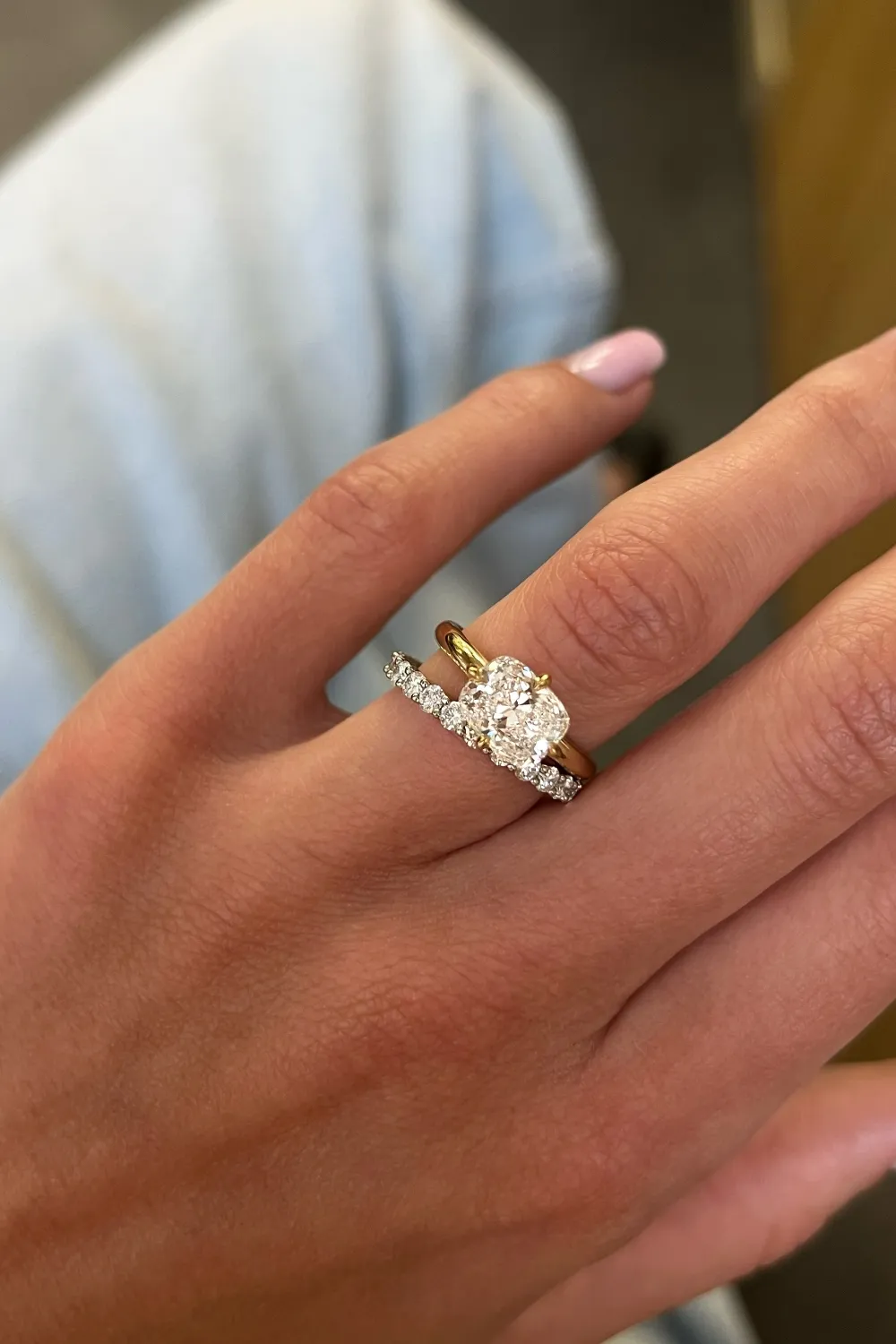
If you’re unsure about stacking at all, this is where I’d start, then wait and see what feels missing.
Add an eternity band next to an oval or marquise
Oval and marquise stones are long, and depending on how high the setting sits, a straight band can leave a small gap under the stone. Some people like that gap; others want everything lined up. Picking a wedding band with oval engagement ring settings comes down to that height: a low setting usually lets a straight eternity band sit flush, while a taller one often won’t. Take the engagement ring along when you try bands on; photos can’t show how the two meet on your finger.
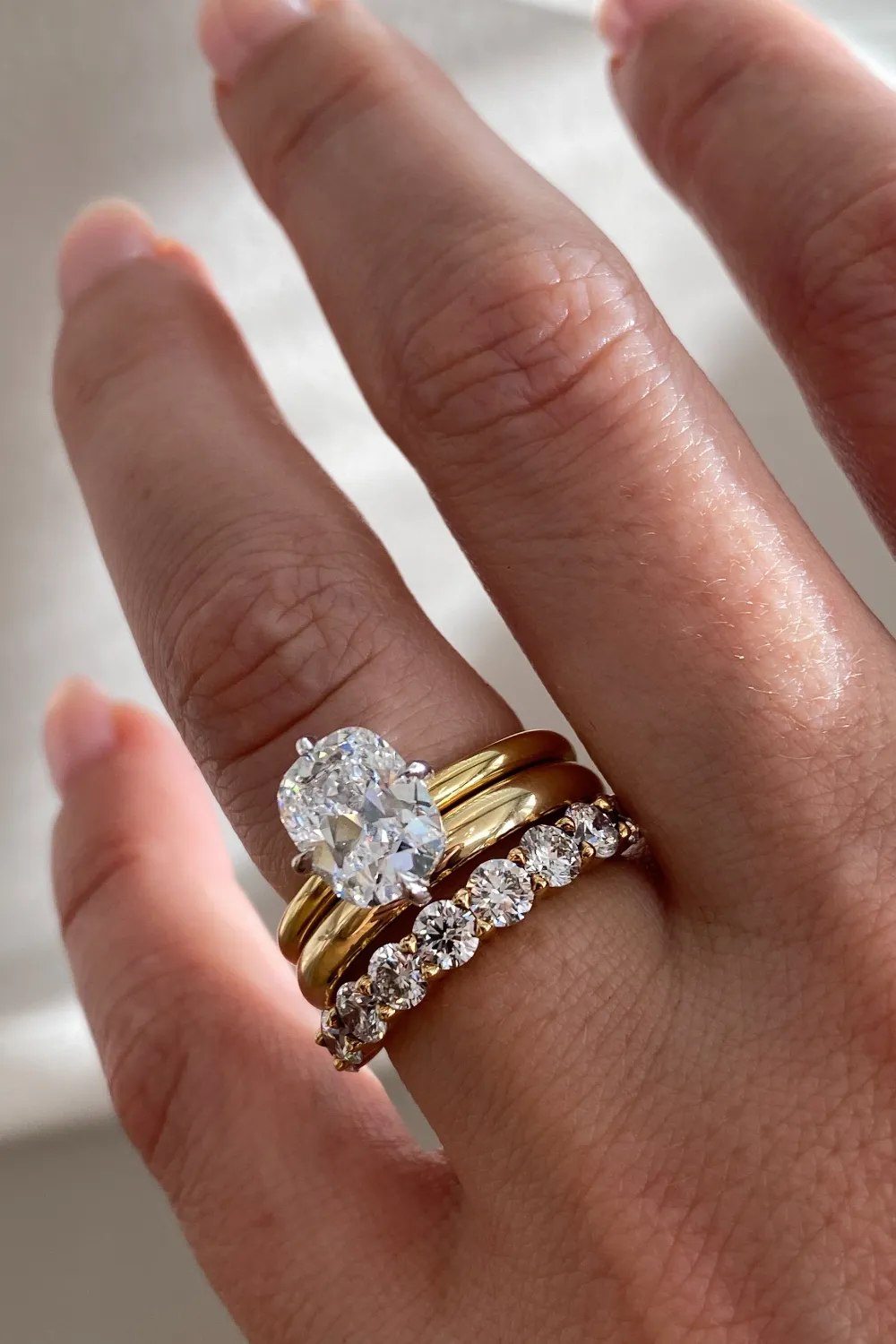
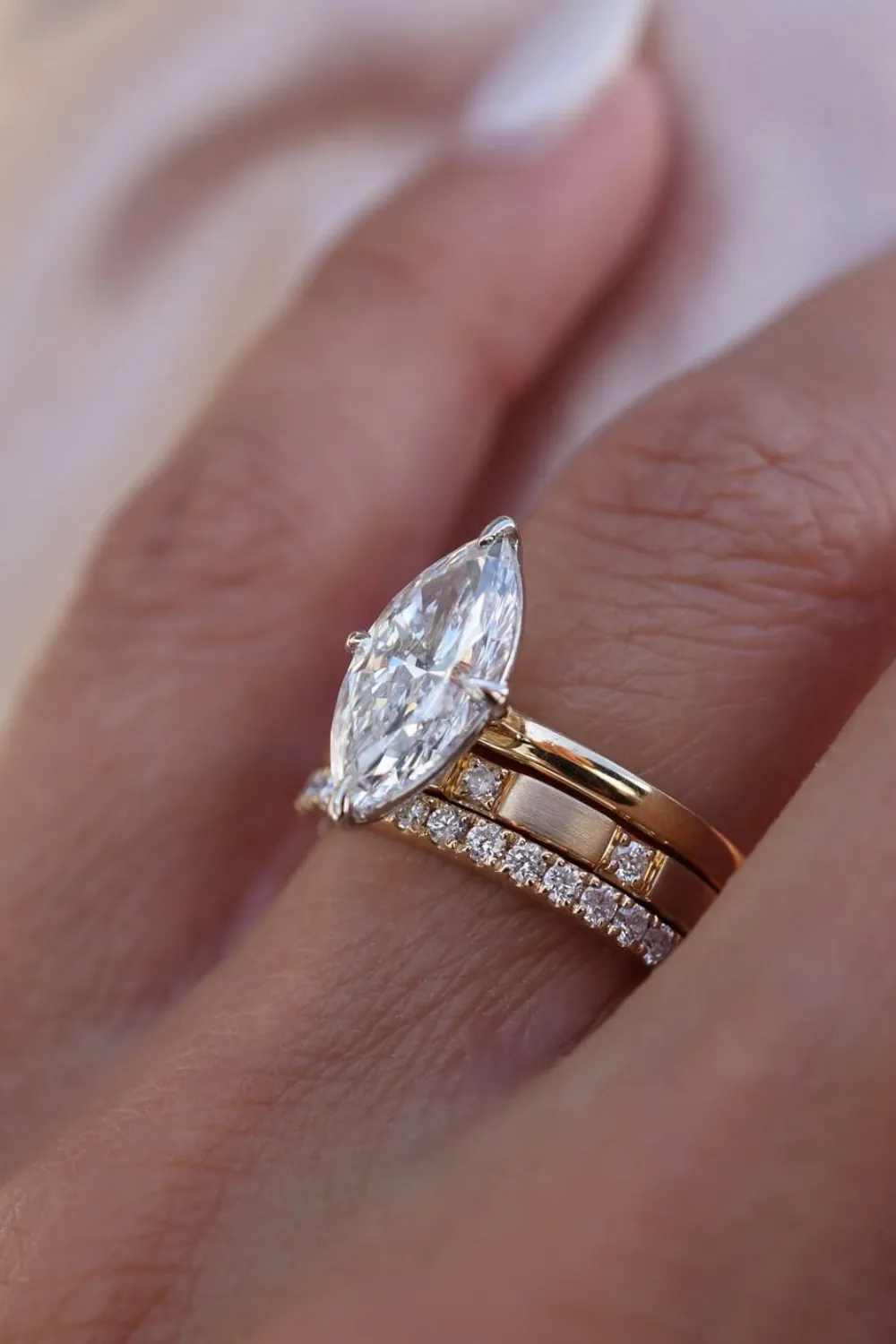
Full eternity bands are hard to resize, because the stones leave no plain metal for a jeweler to cut. If your ring size tends to change, a half eternity band is the safer bet.
Try a contoured band for unusual shapes
Contoured (curved) wedding ring bands bend around the stone instead of running straight under it. A sharp V shape follows a marquise or pear, and a softer curve hugs an oval. Wearing one above and one below the stone frames it from both sides, which works best with tall, pointed shapes.
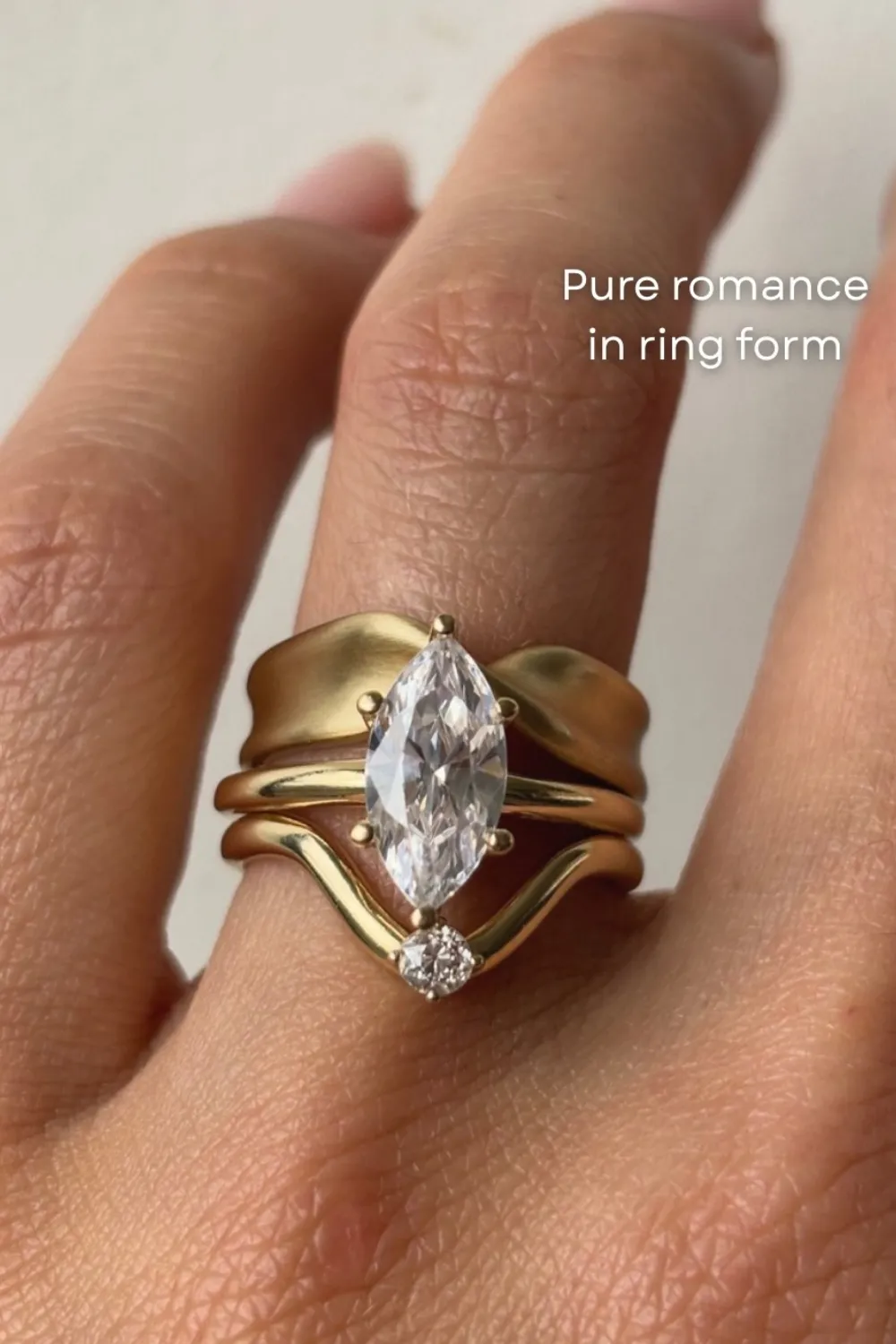
The downside: a contoured band is made for one specific engagement ring. It looks odd worn alone and won’t follow a different stone if you upgrade.
Go wide for contrast
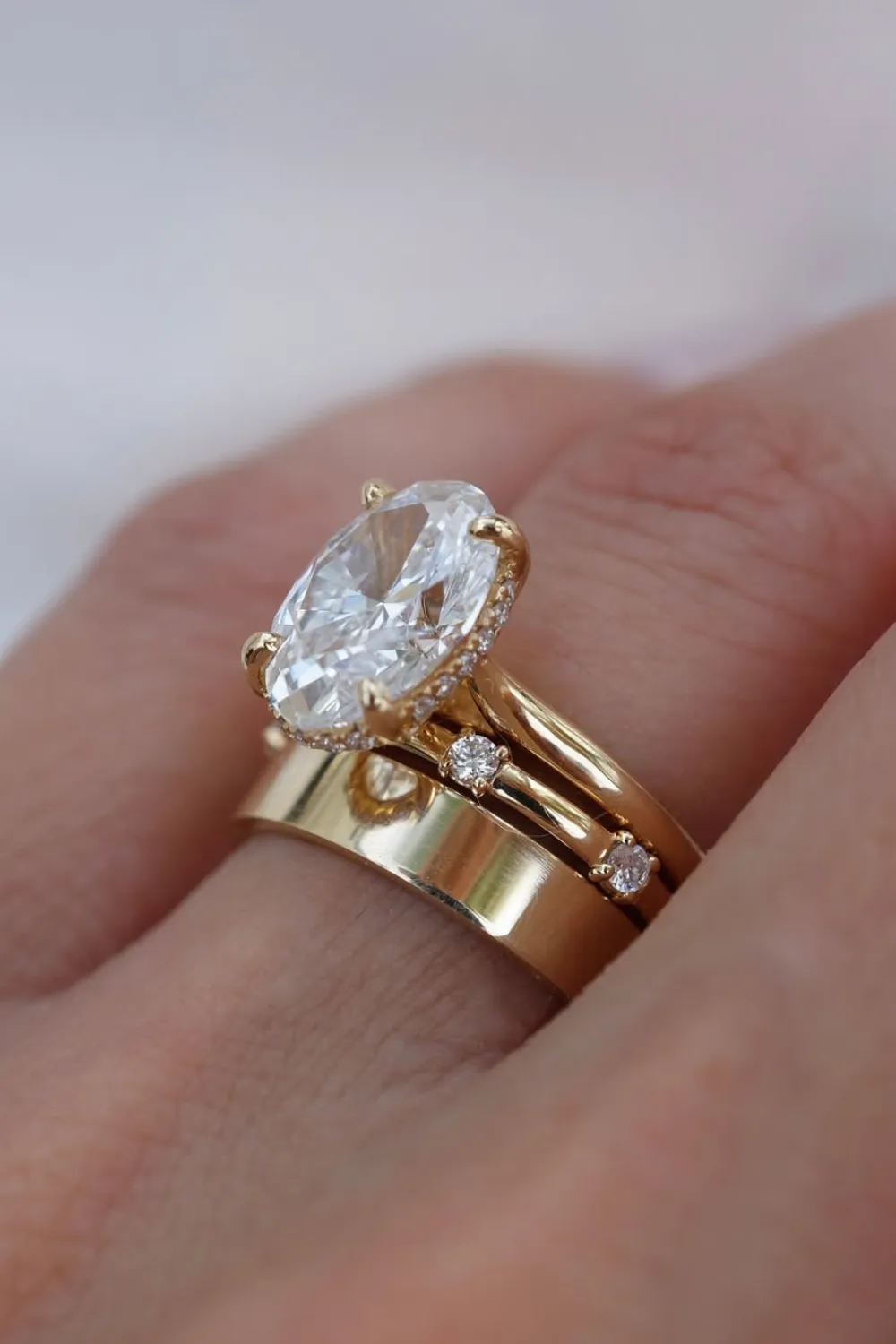
A wide gold band next to a delicate engagement ring is the boldest move in this list. The difference in width makes both pieces stand out, and gold wedding rings in a wide, flat style hold up well to daily wear. Keep in mind that wide bands feel tighter than thin ones at the same ring size, and they use up more of the finger, leaving less room for later bands.
Mixing gold wedding rings, white metals and pavé without it looking random
A mixed wedding ring stack looks planned when the rings share at least one thing: the same width, the same finish, or the same stone shape repeated small. Polished yellow gold next to a white-gold pavé band works when both bands are about the same width. Change the width, the metal and the finish all at once, and the stack starts to look like it came from three different jewelry boxes.
Silver wedding rings deserve a separate note. Sterling silver is soft and tarnishes, and next to gold and diamonds it scratches fast. For a daily silver look, white gold or platinum holds up better. White gold usually needs fresh rhodium plating every so often, since the coating wears off and the warmer gold underneath shows through. Softer metals also wear faster next to harder ones: 18k gold, for example, wears faster than platinum.
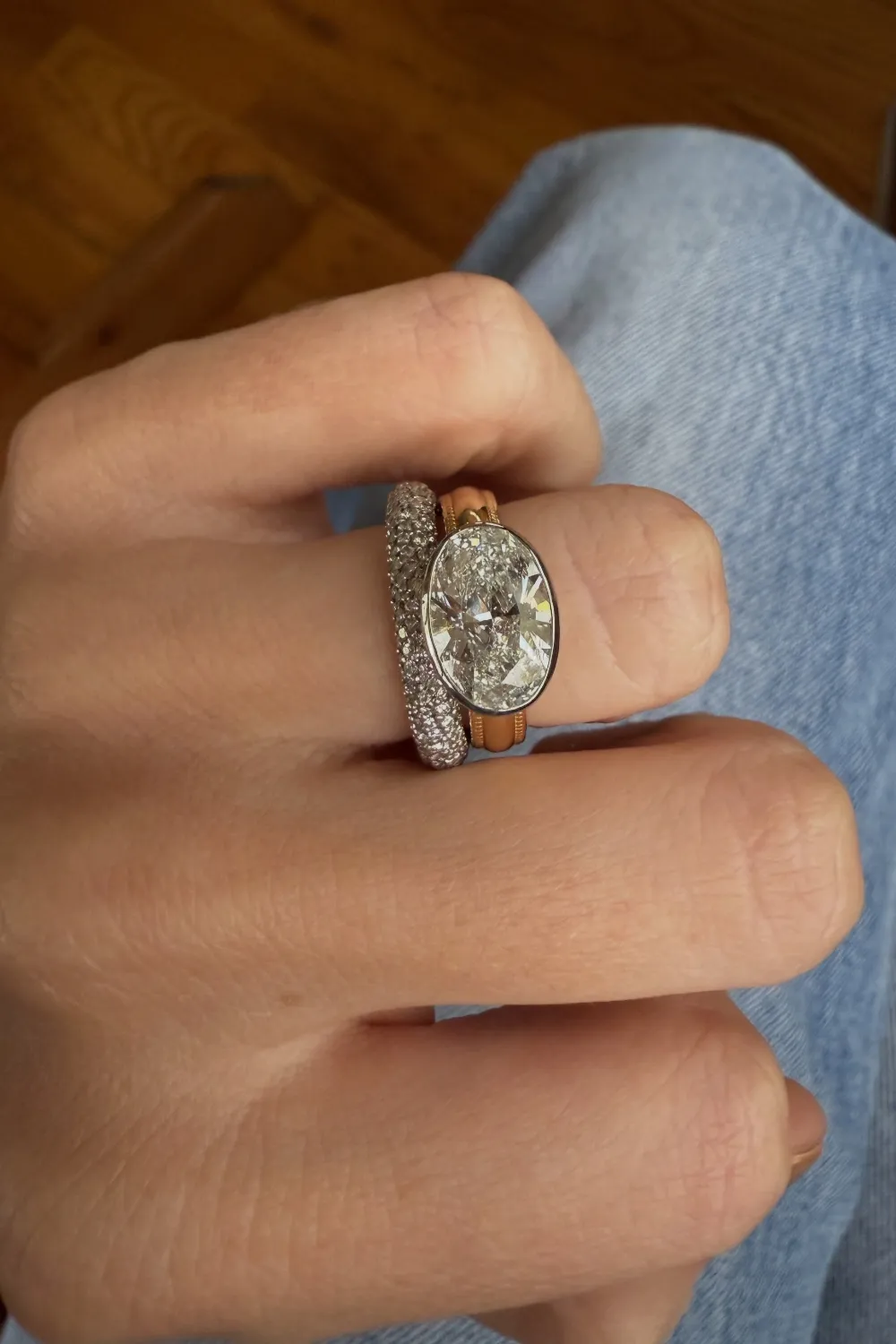
Texture is the other easy contrast. Pavé next to plain gold is the classic pairing, and one textured band in a row of smooth ones gives the eye somewhere to land. If you ask me, two metals is the comfortable limit. Three can work, but only when one of them shows up in at least two rings, so it reads as a choice and not an accident.
The practical side nobody puts on Pinterest
The prettiest wedding ring stack on a screen can be the least comfortable one to wear.
Start with comfort fit. A comfort-fit band has a slightly rounded inside, so it slides over the knuckle more easily and sits smoother against the skin. You’ll notice it most with wide bands.
Then rubbing. Pavé stones and prongs wear down when they grind against a neighboring band all day. A thin plain spacer band between them takes the friction, and it should be made from a metal at least as hard as the main rings so it doesn’t wear away first. If one ring keeps pressing into another, change the order instead of forcing the layout.
Sizing is the part most people get wrong. A ring stack of three or more bands on one finger usually needs sizing up slightly, often around half a size, because stacked rings feel tighter than a single band. Fingers also change: heat, salty food, pregnancy and a long day all make them swell, and cold makes them shrink. Measure late in the day, when your hands are warm. A good fit slides over the knuckle with a little effort and stays put when your hands are wet and soapy.
Have a jeweler check the settings now and then, especially after adding a band. A loose prong costs far less to fix than a lost stone.
Planning the long game
A goal ring stack works best as a loose plan. Buying everything in the first year is tempting, but leaving room keeps it flexible: choose an engagement ring and wedding band whose profiles leave space for at least one more band, and decide early whether future rings will stay on one finger or move to another.
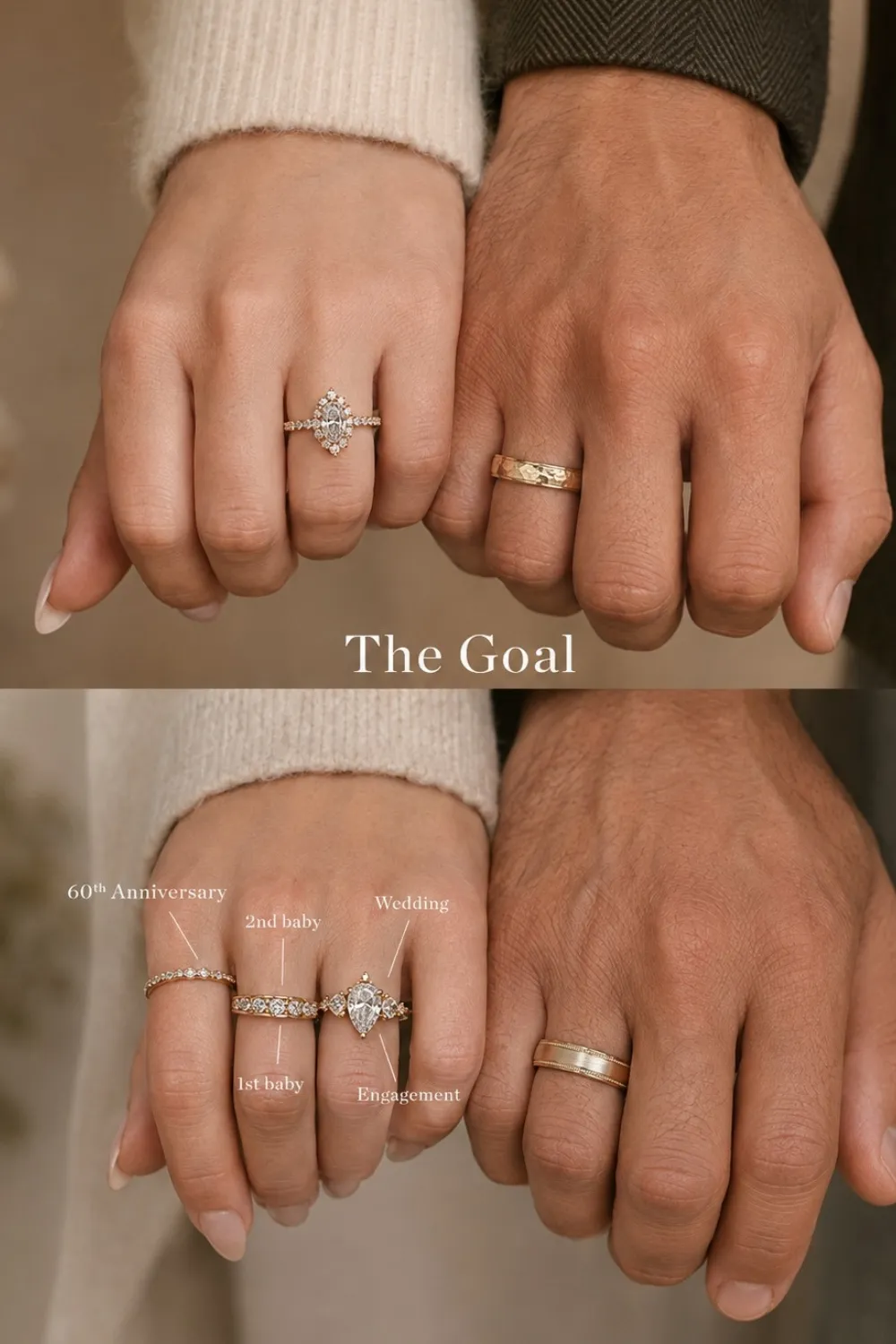
The sweetest wedding ring stack ideas tend to be the slow ones, where each band shows up when something worth marking happens. If your wedding is still ahead and the date isn’t set, this is why I think fall weddings win, and a fall anniversary makes a fine excuse for the next band.
Two rings to start your wedding ring stack, one more for each moment worth remembering, and a fresh ring sizing before every new band.

Leave a Reply