
During the ceremony, your guests spend most of their time looking at your back. That’s the simple argument for a backless wedding dress: it puts the most interesting part of the gown exactly where everyone’s eyes are. But “backless” covers a lot of ground, from a gentle scoop that shows your shoulder blades to a back that’s open all the way to the waist, and each level comes with its own support question.
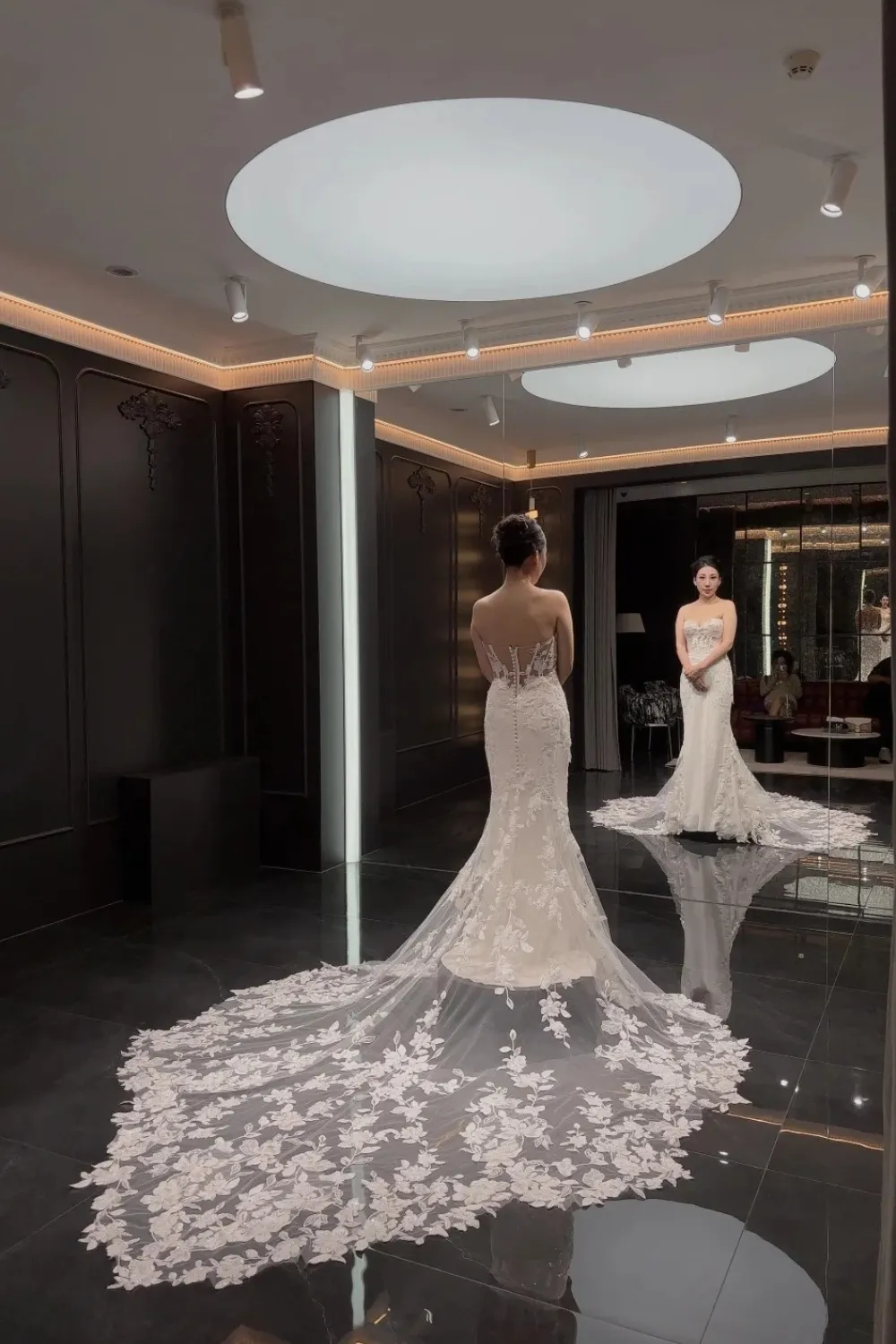
When a backless dress makes sense
A backless wedding dress is a good fit in a few situations:
When most of the ceremony happens facing away from the guests. In a church, at an altar or under an arch, guests see your back for twenty minutes or more. A detailed back gives them something beautiful to look at.
When the venue is warm. Summer weddings, beach ceremonies and destination venues all favor less fabric. An open back is one of the coolest options you can wear without going short or strapless.
When the front of the dress is simple. A clean, minimal front with a dramatic back is one of the most elegant combinations in bridal. It looks restrained as you walk in and then surprises everyone as you pass.
When you want photos with a focal point. Back shots during the vows, the first look and the walk back up the aisle all become more striking with an interesting back.
The pros and cons
Before you fall for the first open back you try on, it’s worth knowing what you’re signing up for.
The advantages:
- A striking aisle moment and memorable photos from behind
- Lighter and cooler to wear than a closed back
- Lets a simple front stay clean, without beading or lace competing for attention
- Works across styles, from slinky satin to a full lace ball gown
The disadvantages:
- You’ll need built-in support or a stick-on solution, since a regular bra won’t work
- The fit is less forgiving; an open back shows every gap and pull
- Winter weddings can be cold, especially for outdoor photos
- Some religious venues ask for covered shoulders and backs, so plan for a bolero, a jacket or a long veil for the ceremony
None of the downsides are deal-breakers, but they’re easier to solve when you know about them early. A sheer cape or a detachable lace jacket covers an open back wedding dress for a church ceremony and comes off for the reception. For a winter date, a faux fur stole or a long satin coat keeps you warm for outdoor photos, and you’ll still have the back reveal indoors.
Fabric and silhouette matter too
The same back cut looks very different depending on the fabric. Heavy satin and mikado hold their shape, so a scoop or a deep V stays crisp and sits close to the body. Soft crepe and silk drape and move, which suits cowl backs and fully open styles but shows every bump of an undergarment. Lace is the most forgiving: the pattern hides small seams and tape, which is one reason a lace wedding dress is such a popular choice for open backs.
Silhouette changes the effect as well. On a mermaid or column dress, a backless wedding dress draws the eye down the spine to the hips, which looks long and lean. On a ball gown, the bare back balances the volume of the skirt, so the whole dress looks lighter. If you’re torn between shapes, try the same back style in two silhouettes at one appointment and compare the photos from behind.
From a little back to all of it
The styles below go from the most covered to the most open. Each comes with a note on how it usually handles support, which is the first thing to ask about in the bridal shop.
Scoop back with buttons
The gentlest option. A rounded neckline dips to the middle of the back, often with a row of covered or pearl buttons running down the spine. It works with long sleeves, too, which makes it one of the most timeless wedding dress styles and a good choice for a religious ceremony or a winter date. It’s also the easiest backless wedding dress to wear if you’ve never worn an open back before.
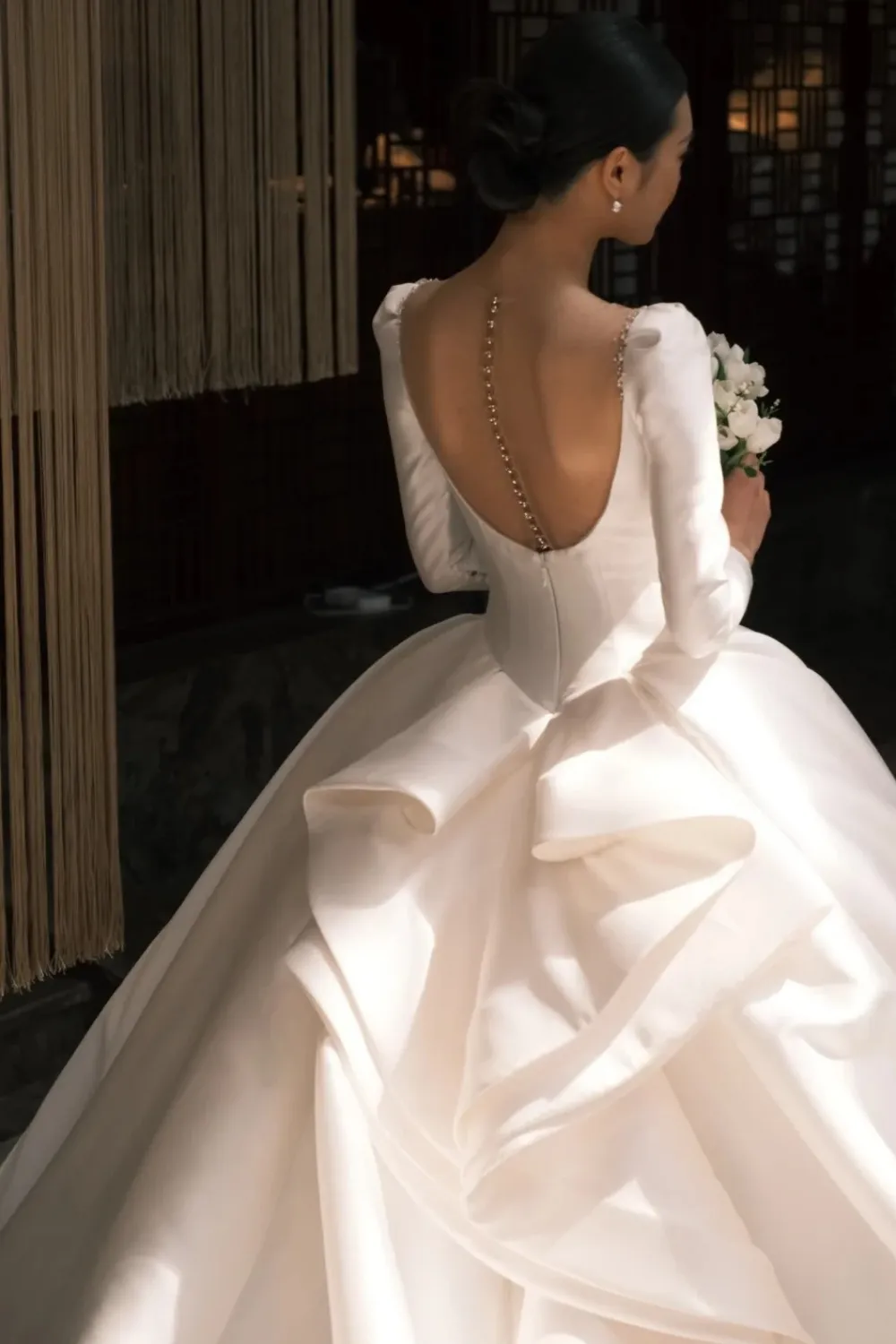
Support: structured bodice with built-in cups; most people can skip a bra entirely.
Illusion lace
Sheer mesh covers the back, with lace appliques placed to look like they’re sitting on bare skin. You get the look of an open back with the security of fabric holding everything in place. Illusion backs suit lace wedding dress styles especially well, since the appliques can continue into the train. Ask for mesh that matches your skin tone as closely as possible; the closer the match, the more the lace looks like it’s floating.
Support: the mesh holds the bodice in place, and boning or cups do the rest.
Cowl back
Fabric drapes in soft folds from shoulder to shoulder, dipping low across the back. It’s the signature of slinky bias-cut satin dresses, and it looks effortless and slightly old Hollywood. Of all the open back dresses here, a cowl is the one that moves most when you walk. Some cowl backs add straps that cross over the open area, like strands of pearls, or long ties that fall from the shoulders.
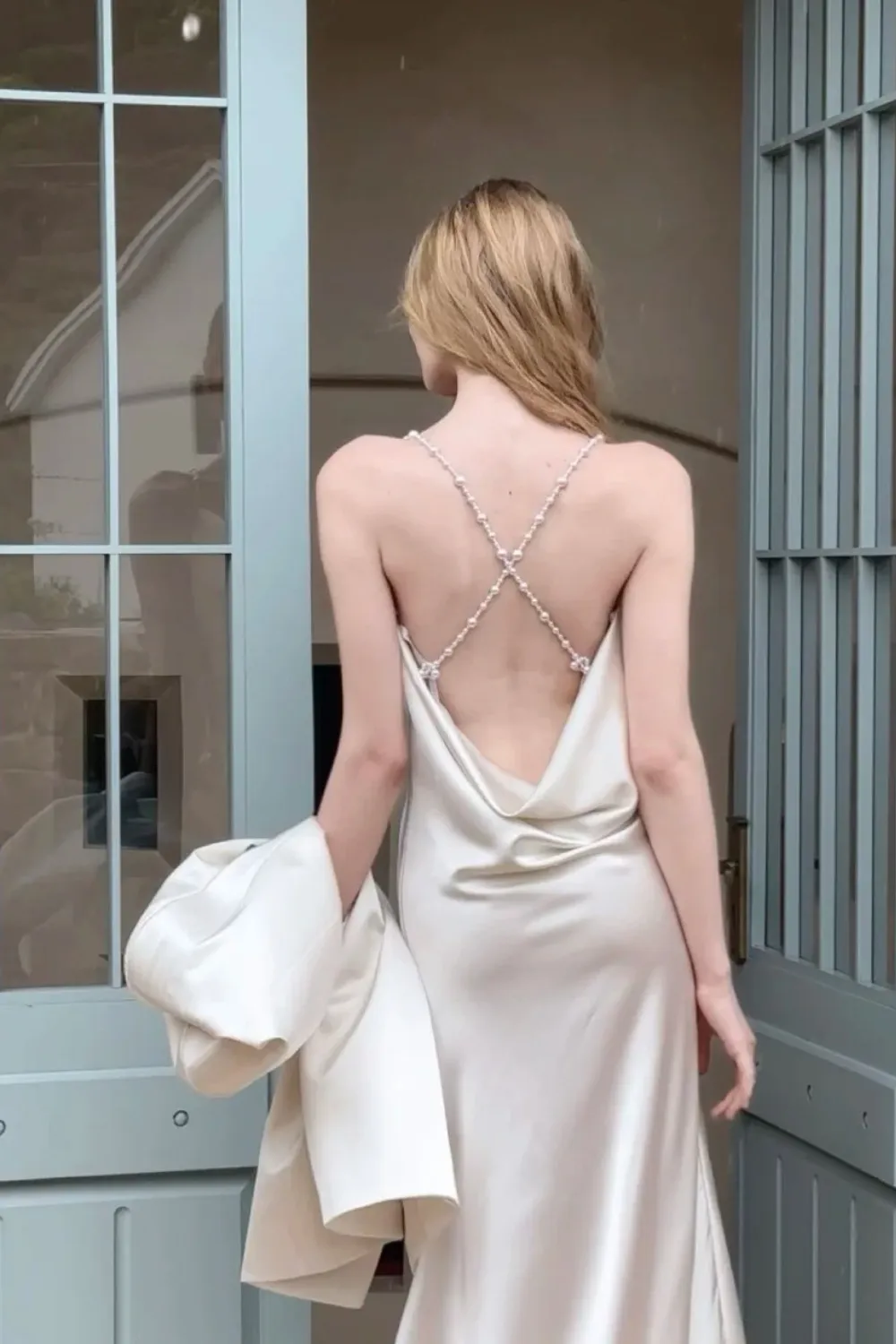
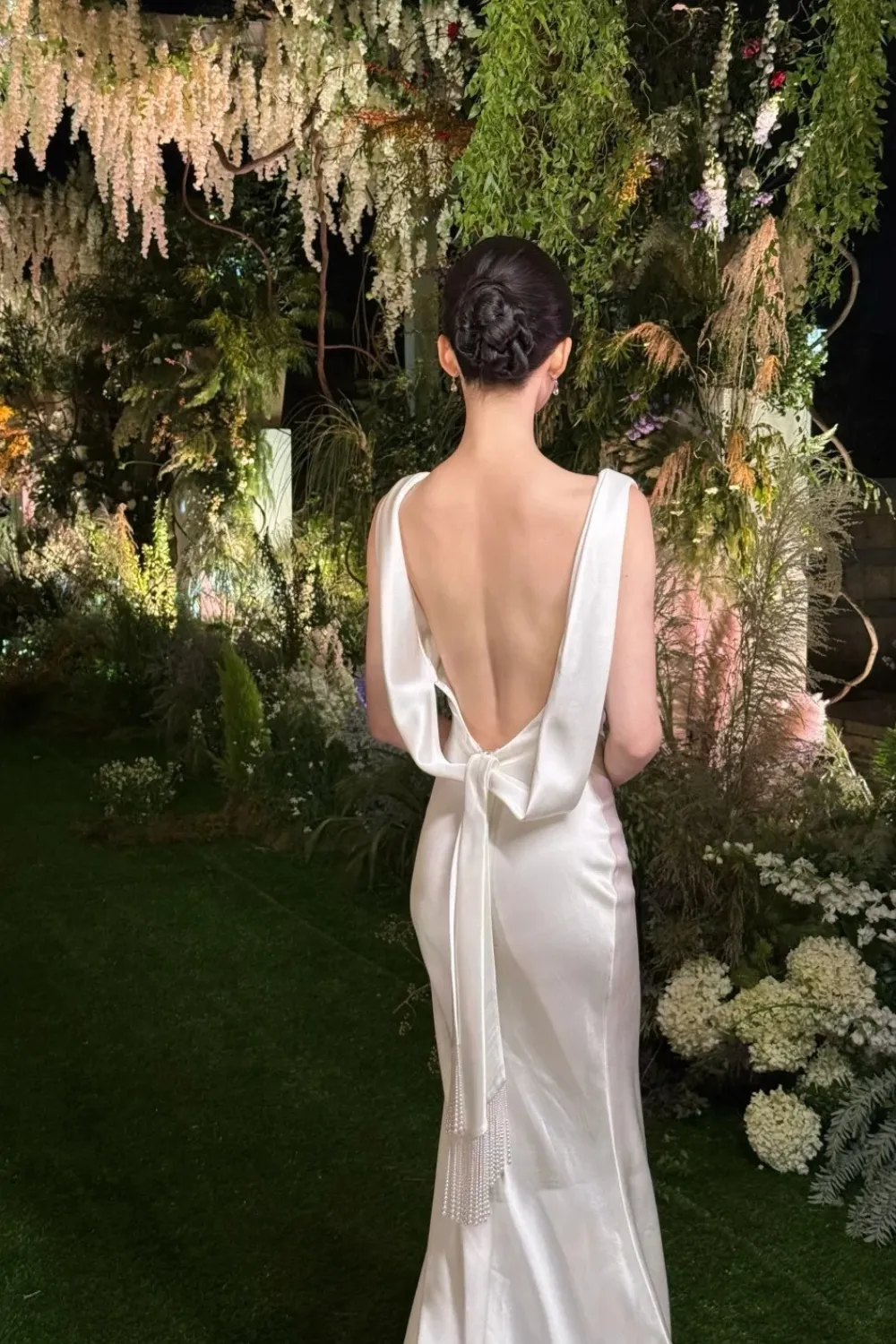
Support: limited. Small busts can go without; otherwise, stick-on cups or tape.
Deep V
A sharp V neckline at the back, usually ending at the waist or just above. It’s more dramatic than a scoop but still structured, and it works beautifully on lace and beaded gowns with a long train. Because the shoulders stay covered, a deep V feels secure even while it shows a lot of skin.
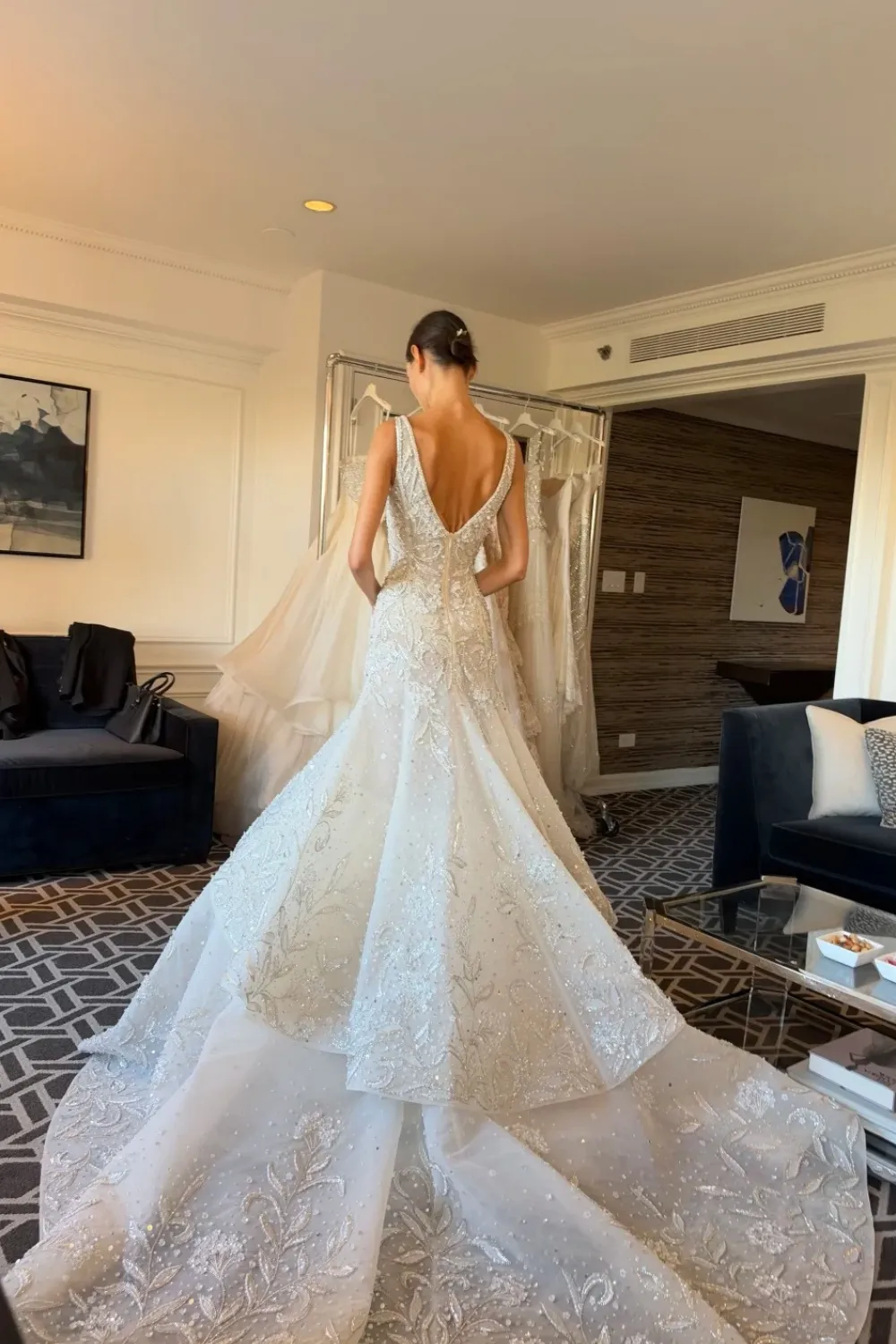
Support: a corset-style inner bodice with cups, anchored at the waist.
Corset lace-up
Ribbon or cord laced through loops down the back, either over skin or over a fabric panel. A lace-up back is adjustable, which is a big practical advantage: it can be tightened or loosened on the day if your size changed after the last fitting. It suits strapless ball gowns and mermaid shapes alike, and it’s the most practical backless wedding dress for anyone whose weight tends to change in the months before the wedding.
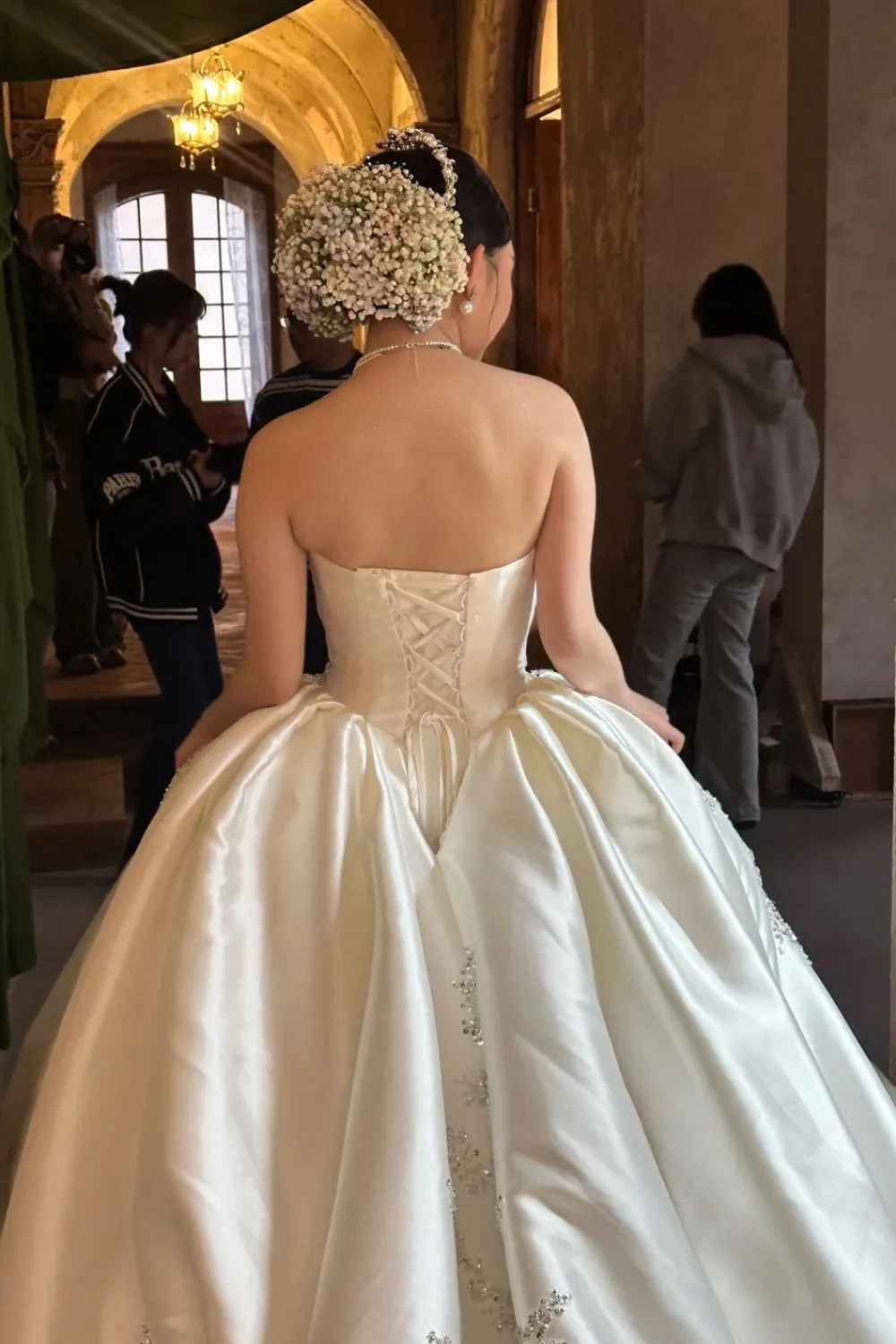
Support: excellent; the corset structure does the work of a bra.
Sculptural bow
An oversized bow placed at the small of the back, often on a strapless or open-back dress. It’s the most playful of the backless bridal gowns, and it gives a minimal satin dress a single, bold statement. Some bows are detachable, so you can remove them for the reception and dance in a simpler low back dress for the rest of the night.
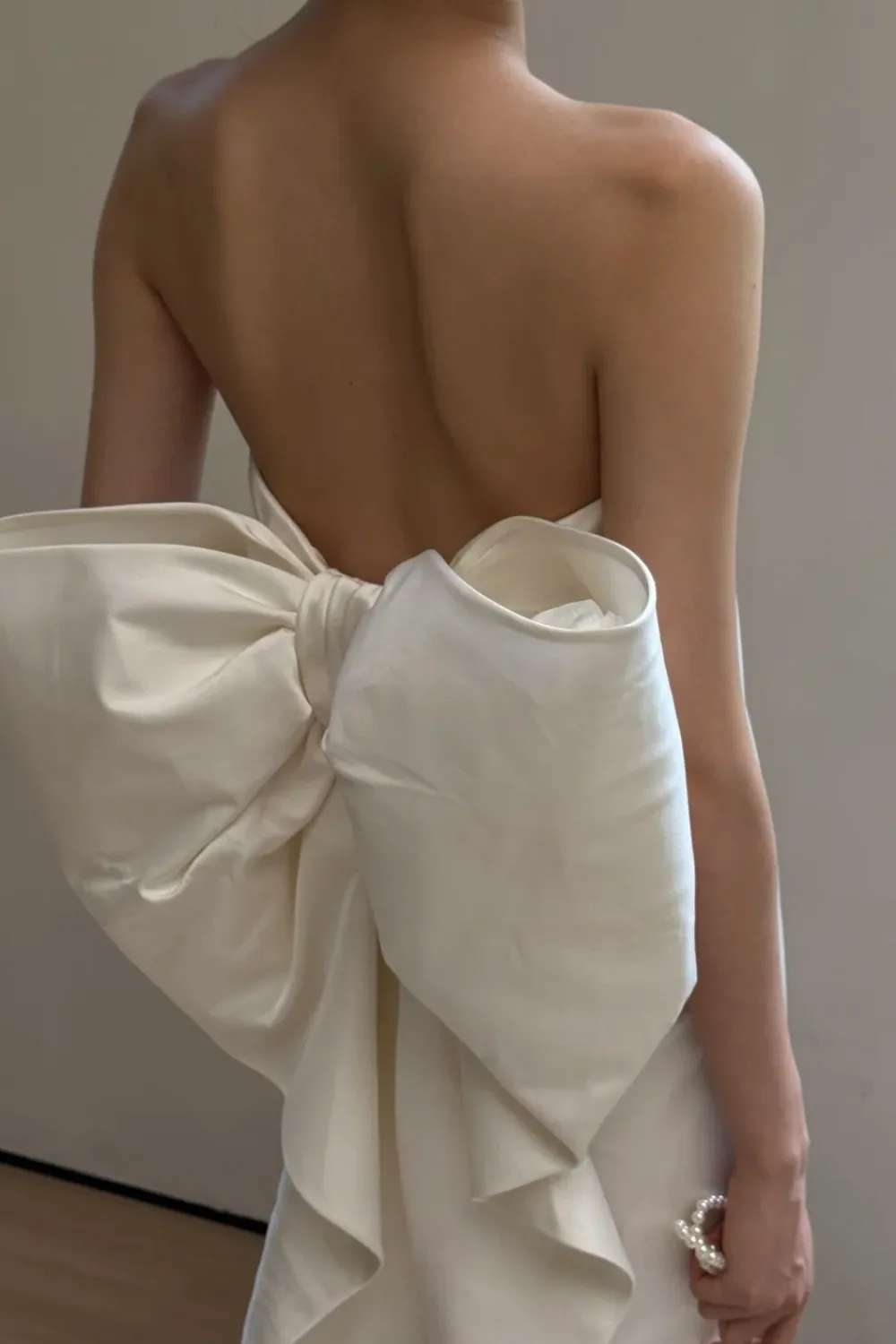
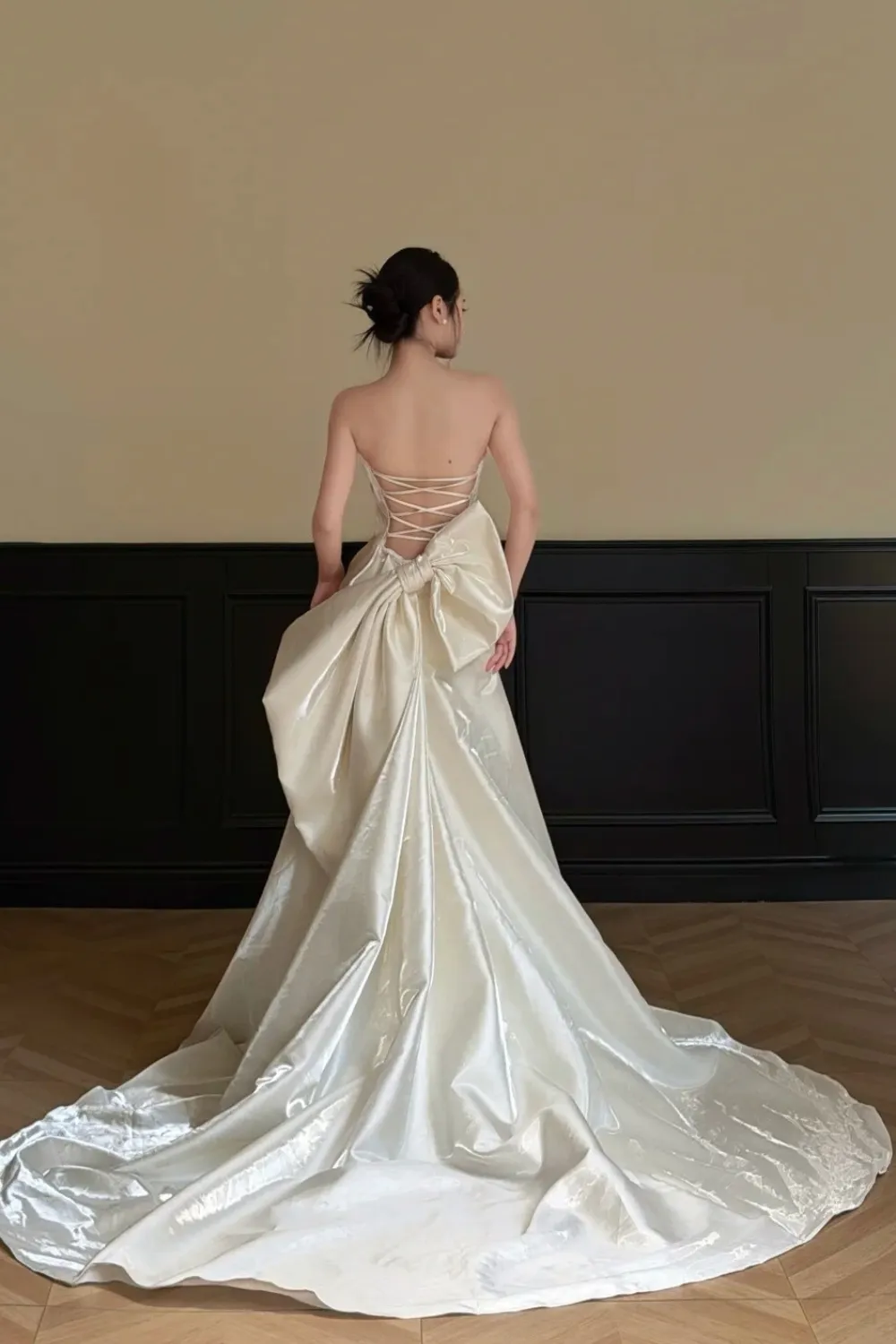
Support: depends on the bodice; strapless styles usually have boning and cups.
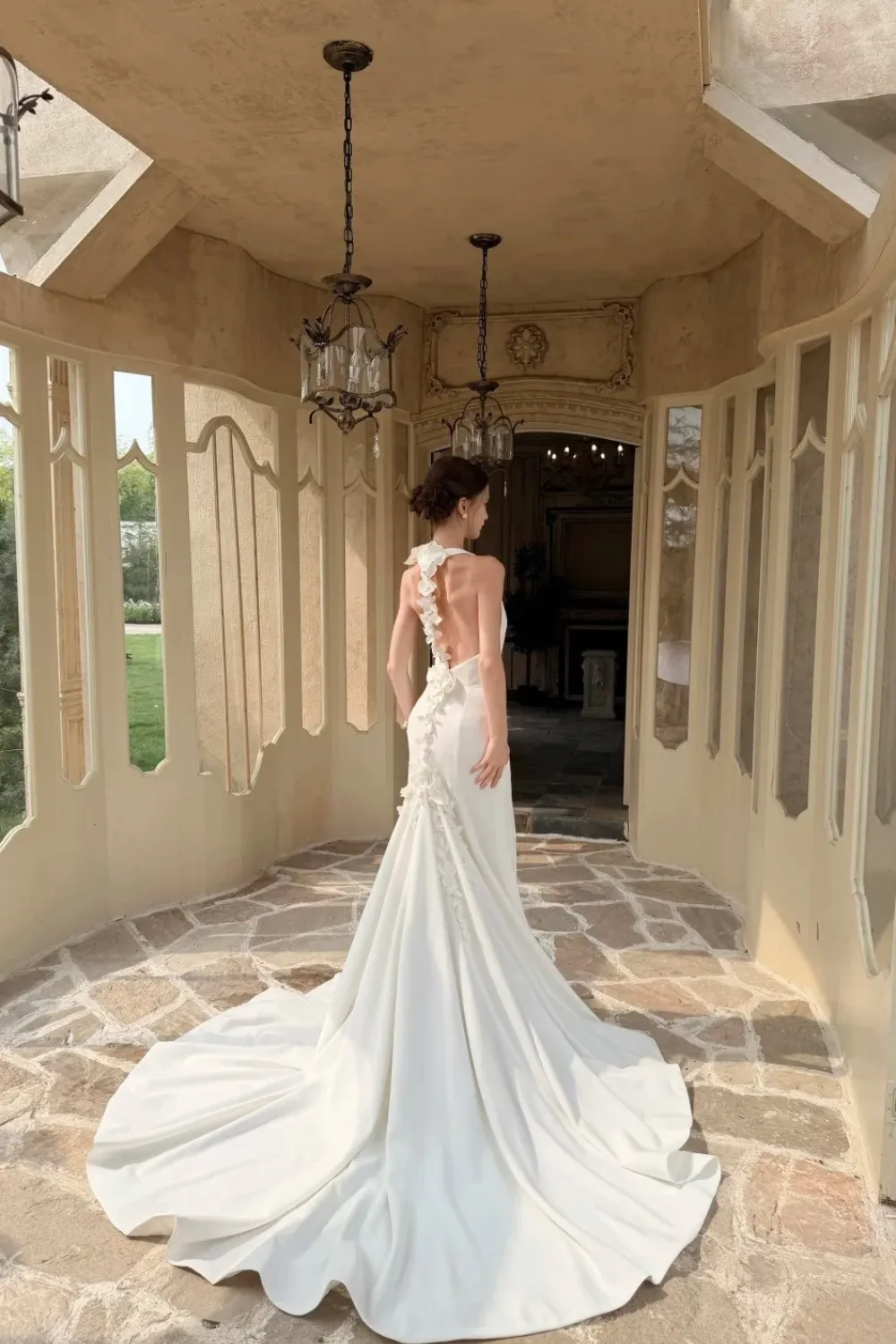
Fully open
The back is open from the shoulders to the waist, held up by thin straps or nothing at all. It’s the boldest backless wedding dress and the most demanding: the fit needs to be precise, and posture shows. It looks striking with a fitted lace or crepe dress and very little else. If you love the idea but feel nervous about it, try a fully open back wedding dress with thin crossed straps first; the straps add a little security without breaking the line.
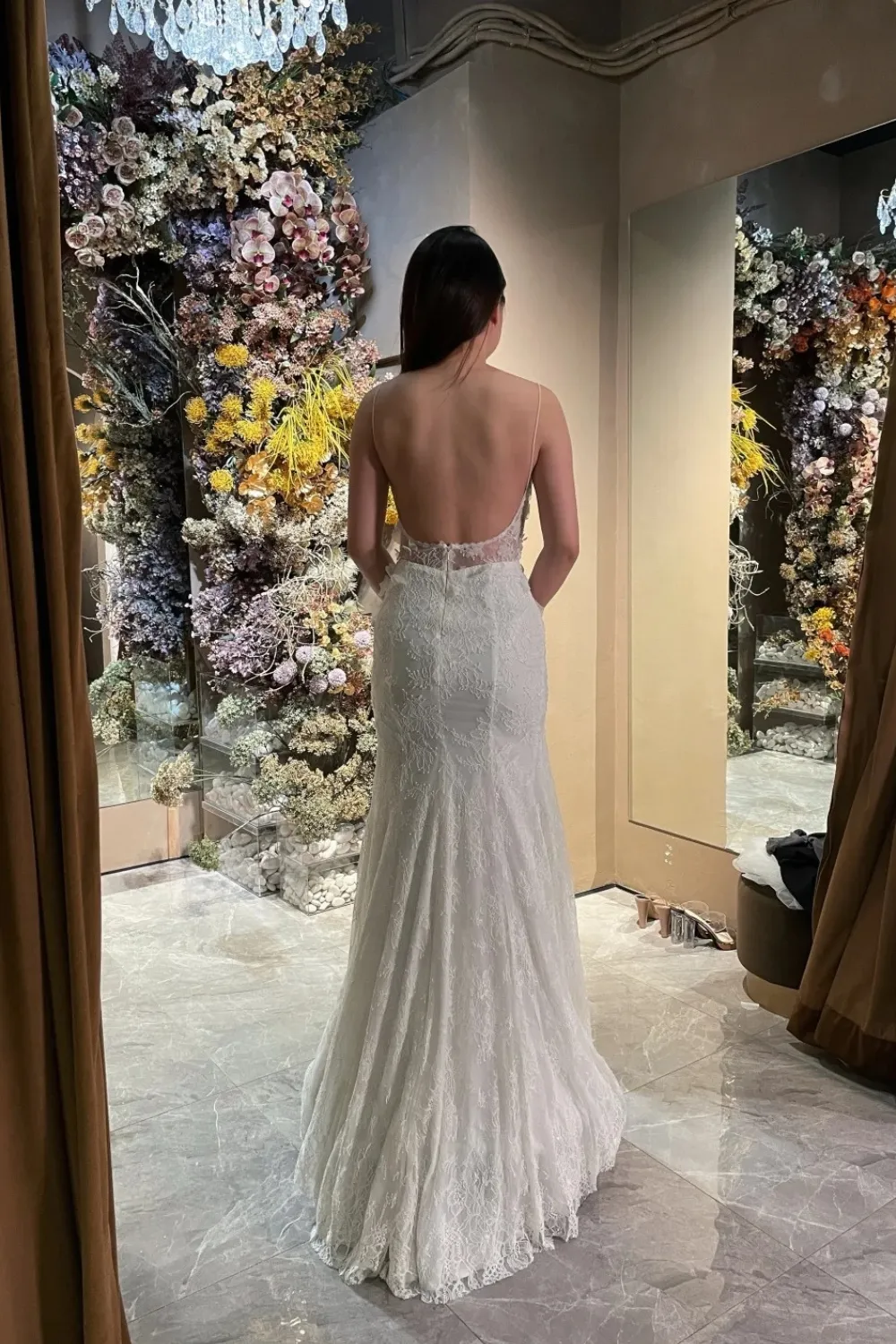
Support: stick-on cups, tape, or a dress with discreet cups sewn into the front panel.
What to check at your fittings
An open back wedding dress only looks as good as its fit. Most backless bridal gowns need at least two or three alterations appointments, so book them early. Bring the shoes and any undergarments you plan to wear to every fitting, and check the following:
- Support. Ask exactly what holds the bust up. If the answer is “nothing,” ask the seamstress to add cups or a hidden band.
- Sitting down. Sit in the dress. Low backs can gape or fold when you lean forward.
- Dancing and hugging. Raise your arms, hug someone and turn around. A strap that slips or a back that pulls away will do the same on the dance floor.
- The bustle. Long trains need to be lifted for the reception. Make sure the bustle points don’t interrupt the back detail you chose the dress for.
- Undergarments. Try stick-on bras, low-back shapewear and body tape at a fitting, not for the first time on the morning of the wedding.
- Skin care. Your back will be in a lot of photos; exfoliate and moisturize in the weeks before.
Ask about underwear early. The best underwear for a backless wedding dress is usually cups sewn into the bodice; a sticky bra or a low-back bodysuit are the backups, and each one should be tested at a fitting, sitting and dancing included. If you’d like less to manage, a backless wedding dress with no train or with a slit is easier to move in.
Hair and veil that show the back
A low back dress loses its effect if long hair covers it, so think about hair at the same time as the dress. A low bun, a sleek chignon or a textured updo keeps the back visible and draws attention to the neckline and shoulders. If you want to wear your hair down, a half-up style or a side-swept curl over one shoulder keeps at least part of the back clear. For outdoor and beach ceremonies, my beach wedding hairstyles post covers updos that hold up in wind.
A veil can work with an open back instead of hiding it. A sheer cathedral veil in plain tulle lets the back show through, and it adds a soft layer in photos. Avoid heavy lace edging that sits right across the open area, and attach the comb below the bun rather than on top, so the veil falls down the back in a straight line. My veil photoshoot ideas have plenty of shots that use this.
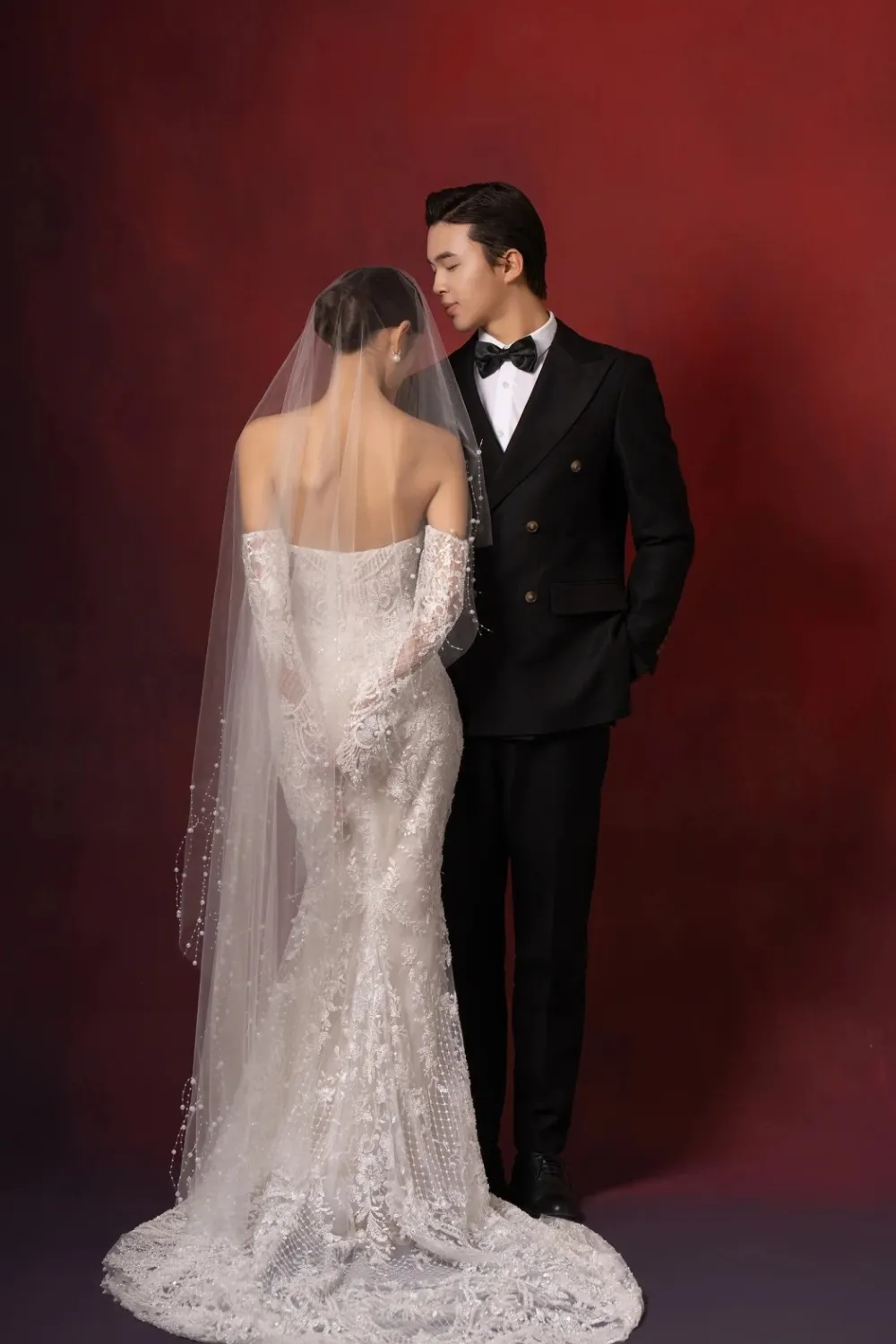
Keep the bouquet small enough that it doesn’t block the back in photos taken from behind; my guide to small bridal bouquets has options that suit a minimal dress.
Wear the shoes from the big day to your first fitting, and bring someone who will tell you the truth about how the back looks when you sit, dance and hug. Once the dress is settled, my posts on bridesmaid dress styles and wedding ring stack ideas can help with the rest of the look.


Leave a Reply