Bigger doesn’t automatically mean better for wedding flowers. Scroll through any wedding board on Pinterest lately and you’ll notice the change: small bridal bouquets are everywhere. They’re deliberate, they photograph well, and they let the dress do the talking.
You no longer need an oversized arrangement spilling out of your arms to feel like a bride. Many brides now carry compact, carefully arranged bouquets that feel personal and current. For a micro wedding, an elopement or a big celebration alike, a smaller bouquet can be exactly the right finishing touch.
Below: why small bouquets are taking over, which flowers work best, seven ideas for a minimalist bride, the mistakes that spoil photos, how to keep a small bouquet from looking cheap, a version for under $35, dried vs. fresh, and the combinations that look good in every shot.
Why small bridal bouquets are taking over
From oversized to intentional
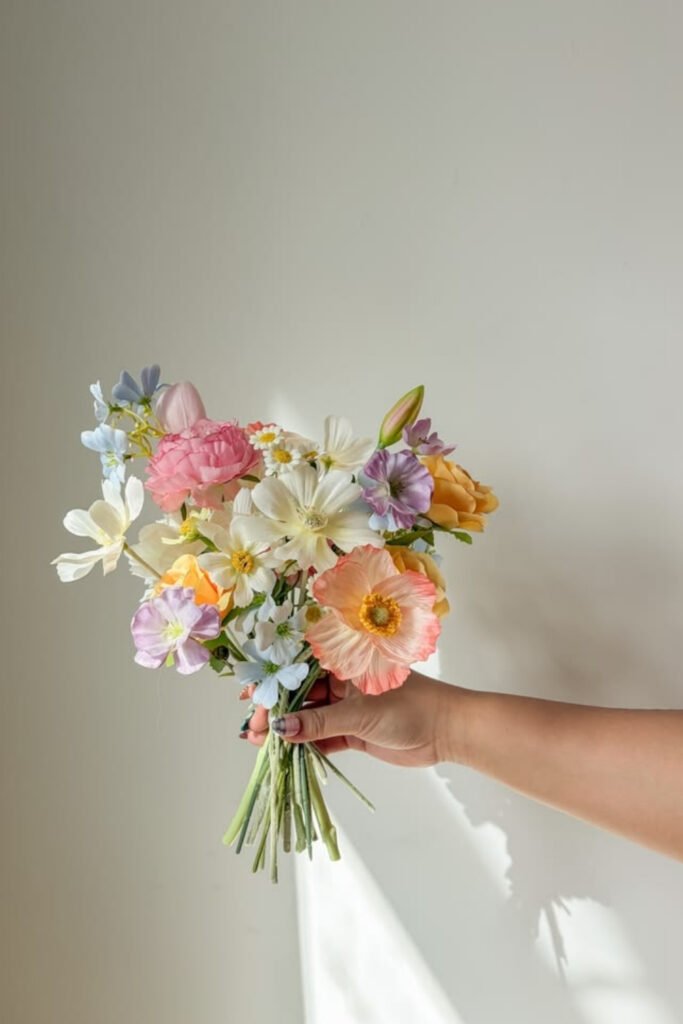
The wedding world is moving away from “more is more.” Bouquets are trending smaller across the board, with some brides carrying as little as a single stem. It isn’t about cutting corners. It’s about being deliberate with every detail.
Florists are leaning into it too. Who What Wear’s wedding trend roundup noted designers drawn to petite arrangements wrapped in fine ribbon, where every stem gets its moment. The focus is on the beauty of individual flowers rather than sheer volume.
Think of it this way: when you carry fewer flowers, each one matters more. You’re not hiding behind a wall of greenery; you’re making a choice with every stem.
Why a smaller bouquet photographs better
Your photographer will appreciate this one. A small bouquet doesn’t compete with you in photos. It frames your look instead of blocking it, drawing the eye to your face, your dress and your overall silhouette.
Large bouquets can overwhelm close-ups and hide the details of a bodice, a neckline or a necklace. A petite bouquet sits naturally in your hands and works in posed portraits as well as candid moments.
There’s a practical side too: you’ll be carrying it for hours. A lighter bouquet means relaxed arms, more natural poses and fewer moments of shifting it around mid-ceremony.
Which flowers work best in a small bridal bouquet?
Not every flower belongs in a petite arrangement. With fewer stems, each bloom has to pull its weight.
Roses, ranunculus and other compact blooms
Some flowers are made for small bouquets. Roses are the classic choice because they come in nearly every color and hold up well through a long day. Ranunculus, with their layered petals and soft texture, photograph beautifully and add depth without bulk. Peach roses and ranunculus together are a soft, warm pairing that suits spring and early summer.
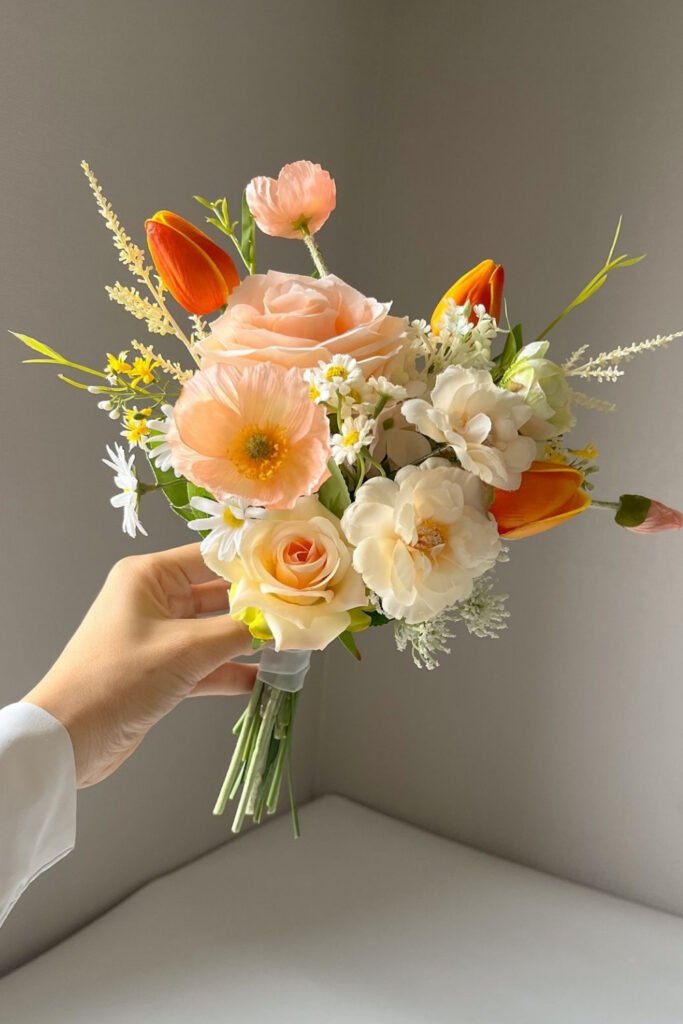
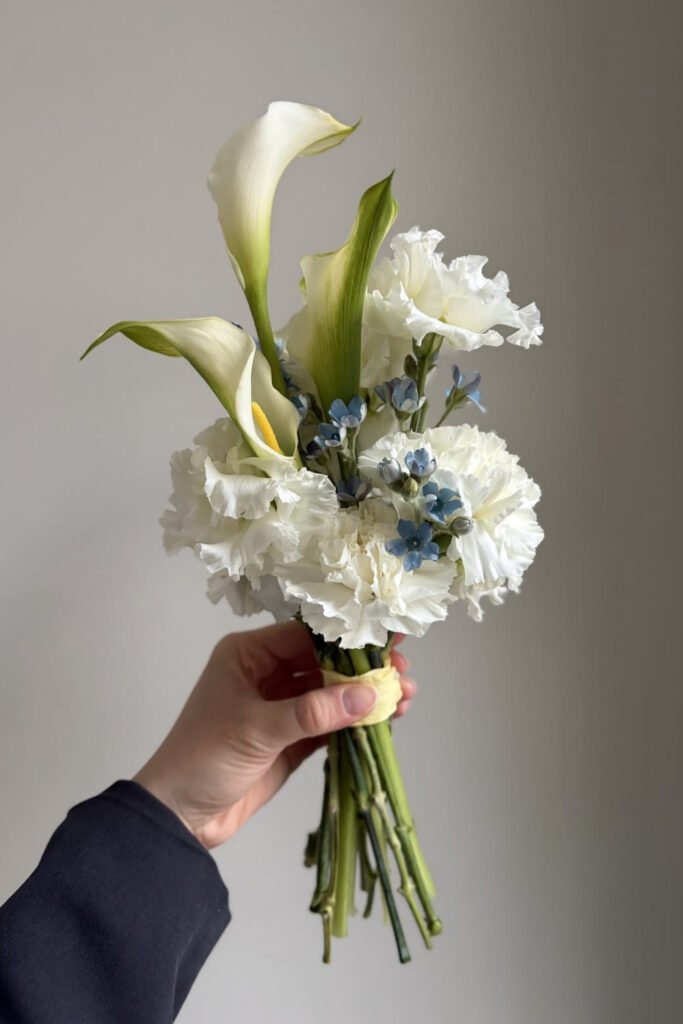
Calla lilies, tulips and lisianthus (which looks like a rose but has a lighter, ruffled feel) also work well in tight arrangements. Wezoree’s small bouquet guide suggests baby’s breath, lily of the valley and daisies for a delicate look, while peonies and dahlias bring lush texture in summer.
Proportion is what matters most. A giant sunflower head in a ten-stem posy looks out of place. Medium or small blooms that work together give the best result.
Wildflower bouquets for a relaxed feel
If you’re planning a whimsy wedding, a wildflower bouquet is a natural fit. It feels loose and organic, as if it were just gathered from a meadow, and it suits outdoor ceremonies and garden party celebrations.
A wildflower bouquet doesn’t have to look messy. Mix daisies, cornflowers, sweet peas and a few sprigs of greenery for structure. Think controlled chaos: relaxed at first glance, with a reason behind every stem.
Tony Dunn Flowers notes that texture is one of the biggest trends in wedding florals. Combining different sizes, shapes and surfaces in a small arrangement gives it depth even with a handful of stems.
Single-variety bouquets
One of the easiest ways to make a small bouquet look intentional is to use just one kind of flower. An all-tulip bouquet, a cluster of white ranunculus, a handful of garden roses or a few deep burgundy callas tied with silk ribbon all look clean and confident.
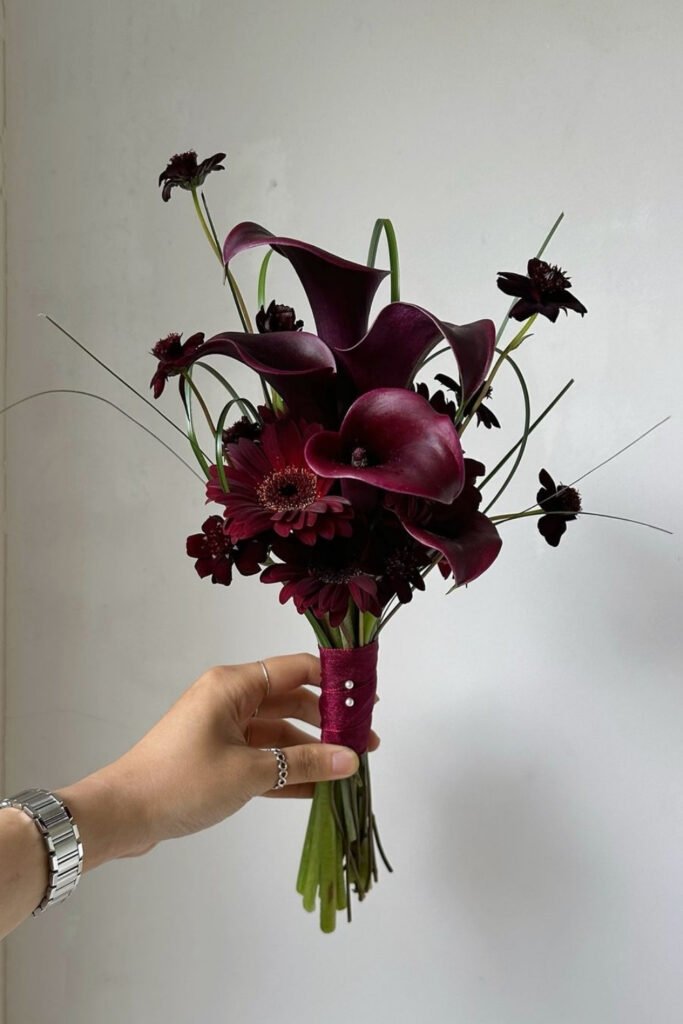
It also simplifies planning. There’s no need to balance colors across five different blooms. Choose one flower you love in the right color and build around it.
7 small bouquet ideas for the minimalist bride
A standard bridal bouquet often uses somewhere around 20 to 30 stems, while a small one might use 10 to 20, and bridesmaids’ or flower girls’ posies can be smaller still. Here are seven directions to consider:
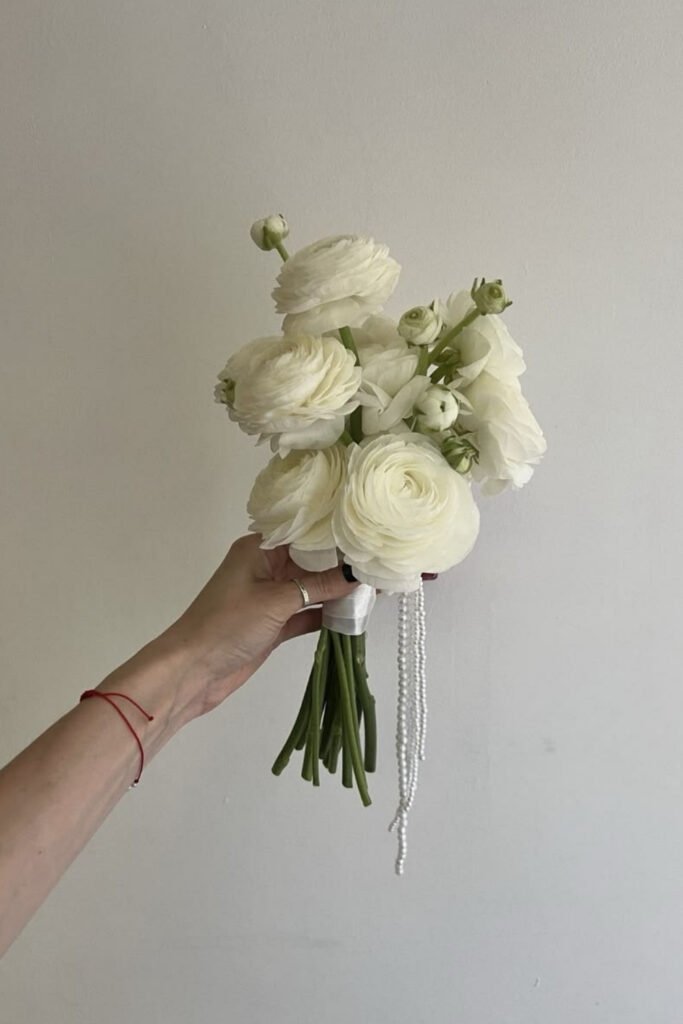
1. The all-white posy. White roses, white ranunculus or white peonies tied with satin ribbon. Timeless and very hard to get wrong.
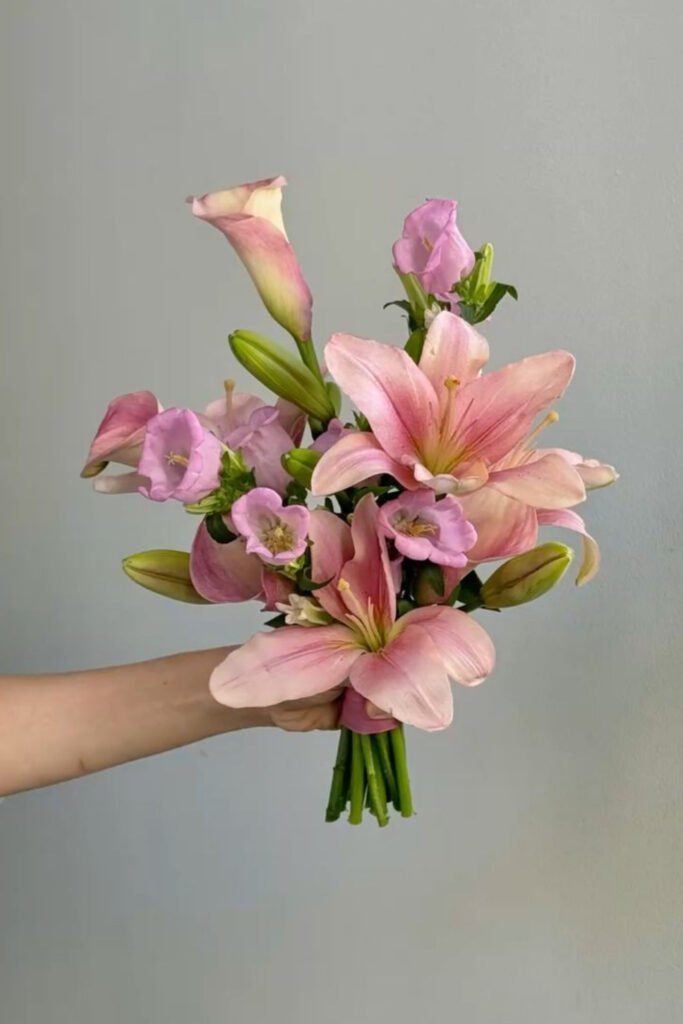
2. Pastel mix. Blush pink, soft lavender and cream blended together, lovely for spring and summer weddings.
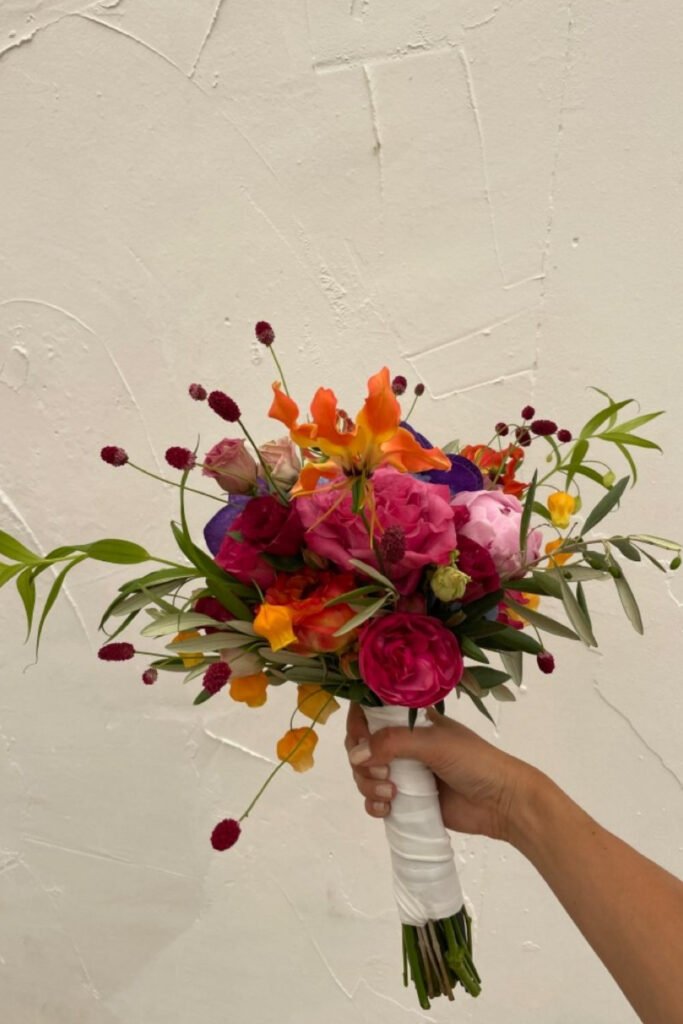
3. Bold, colorful mix. Bright orange, red, deep blue and hot pink. Small doesn’t have to mean quiet, and a vivid little bouquet turns heads.
4. Single-stem or mono-bloom. One type of flower, repeated, or even a single statement stem. It’s the most minimal you can go and looks very polished.
5. Baby’s breath cloud. A round cluster of baby’s breath is affordable, romantic and photographs softly. It does have a slightly earthy scent up close, so smell it before you commit.
6. Dried posy. Preserved lavender, bunny tails and dried roses give a boho, vintage feel and double as a keepsake.
7. The garden gather. A loose, hand-tied bundle that looks like it came from your own backyard: cosmos, sweet peas and a bit of trailing greenery.
Compasses Weddings describes the posy as the most compact bouquet style and one that’s growing in popularity for micro weddings, elopements and brides who want the focus on their dress and jewelry.
5 small bouquet mistakes that spoil photos
A small bouquet is forgiving in many ways, but a few pitfalls come up again and again.
1. Flowers that wilt in heat
At an outdoor wedding in July, some blooms simply won’t last. Hydrangeas can collapse quickly in direct sun because they drink so much water, tulips droop and keep growing toward the light, and sweet peas are fragile. Ask your florist about heat-tolerant options such as roses, orchids, callas or succulents for a warm-weather ceremony, and keep the bouquet in water and shade until the last minute.
2. Ignoring scale with the dress
A tiny posy can disappear against a ballgown with a full skirt, while an overly full arrangement can overwhelm a sleek, simple dress. The bouquet should balance your silhouette. With a simple, fitted gown, a small, refined arrangement works well. With volume in the skirt, go slightly bigger within the small range so it doesn’t look like an afterthought.
3. Skipping the wrap
With a small bouquet, everything is visible, so the stem wrap matters more than you’d think. Silk ribbon, a lace wrap or pearl pins turn a small arrangement into a bridal moment. Leave stems bare only if you’re going for a specific rustic look.
4. Colors that clash on camera
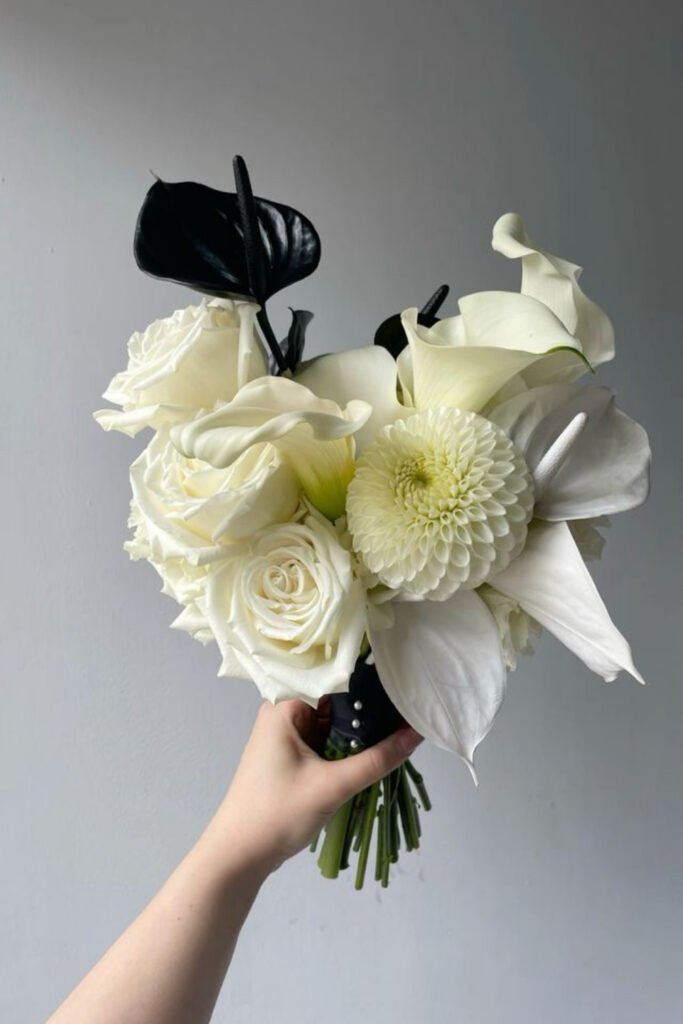
Colors can look different in photos than in person. Neon orange next to blush pink might look striking in the room and harsh on camera. An unexpected accent, like a black anthurium among white roses and dahlias, can look dramatic and editorial when it’s deliberate. Ask your photographer for input; they know what reads well in your venue’s light.
5. Going too small
There is such a thing. Three stems and a ribbon might look lovely in a flat lay but read as unfinished in your hands during the ceremony. Aim for at least 8 to 12 stems so the bouquet has enough presence.
Small doesn’t mean cheap
A small bouquet isn’t automatically a budget bouquet, unless you want it to be. Some of the priciest bridal flowers are sold by the stem: orchids, peonies and lily of the valley. A compact arrangement of premium blooms can cost as much as a large bouquet of standard roses.
Rinlong Flower’s trend analysis describes the current bridal bouquet as an accessory designed to balance the dress rather than compete with it. You spent months finding the gown. Why cover it up?
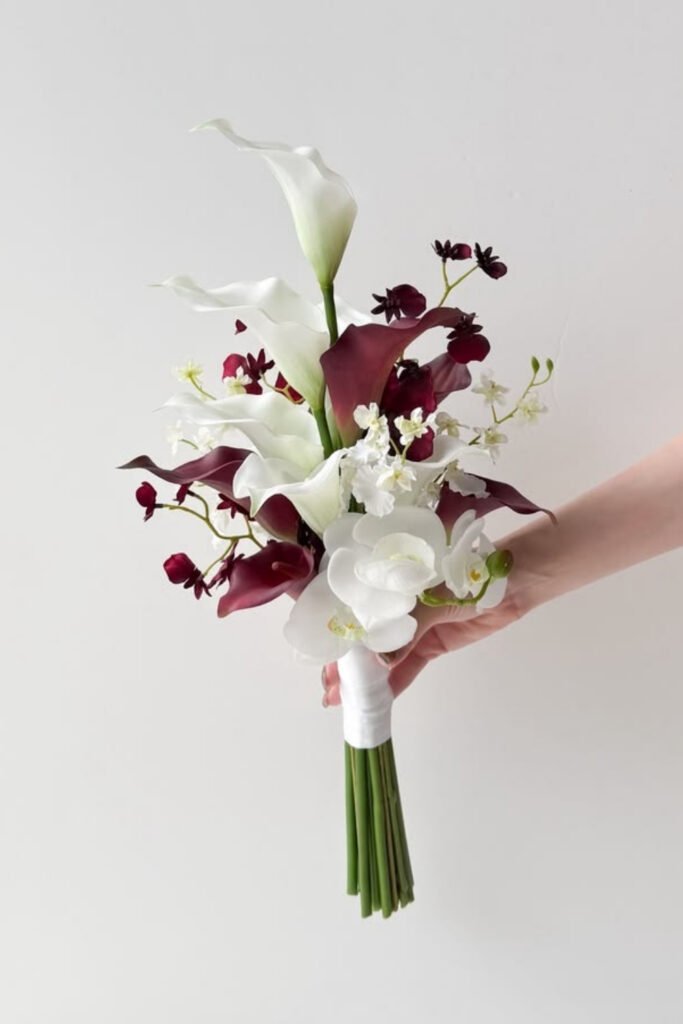
What makes a small bouquet look polished comes down to three things: flower quality, a mix of textures and finishing details. Choose blooms with rich, layered petals, add something unexpected like a trailing vine or a sprig of herbs, and pay attention to the wrap, because it’s the frame around the whole arrangement.
A bridal bouquet under $35
Not every bride has a $400 flower budget, and that’s completely fine. A small bouquet is one of the easiest places to save without giving up style.
Where to buy affordable flowers
Grocery store and warehouse club flower sections have come a long way. Many carry roses, ranunculus, lilies and seasonal stems that look lovely hand-tied. Total wedding flower budgets often run into the thousands, but that usually covers centerpieces, ceremony decor and boutonnieres too. A single small bouquet can be put together for under $35 if you shop smart.
Online wholesale flower sites ship directly to you, and buying even a small bulk order lowers the price per stem. If friends or family are handy, split the stems between the bridal and bridesmaid bouquets.
DIY tips for a budget bouquet
Start with one hero flower and surround it with affordable filler. Baby’s breath, eucalyptus and other greenery are cheap and add volume quickly. If you have a bit of outdoor space, growing flowers in a small garden adds a very personal touch.
Wrap the stems in a ribbon you already own. A piece of lace from a family member’s collection, a silk scarf or a strip of burlap adds character for free. Watch a few tutorials on hand-tying and practice a day or two before. Once you get the hang of it, a small bouquet takes about 20 minutes. Buy flowers two or three days ahead so blooms like roses and lilies have time to open, and keep them in cool water away from fruit, which speeds up wilting.
Keeping a fresh bouquet looking good all day
A few simple steps keep a small bouquet fresh from the first look to the last dance. Keep it in a vase of cool water whenever you’re not holding it, including during dinner. Trim the stems at an angle the morning of the wedding if you did it yourself. Mist delicate blooms lightly in hot weather, and keep the bouquet out of direct sun and away from car dashboards on the way to the venue. If you’d like to keep it afterward, hang it upside down in a dark, dry spot for a couple of weeks, or ask a florist about pressing or preserving services. In my opinion, a small bouquet is the easiest kind to dry and keep, because fewer stems dry faster and more evenly.
Dried or fresh flowers?
It’s one of the most common questions right now, and the answer depends on your priorities.
Pros and cons of each
Fresh flowers bring fragrance, color and that just-picked feeling, and they glow in photos. On the other hand, they need water, they wilt in heat and they last a day or two. For a long outdoor ceremony, plan around their limits.
Dried flowers last for months or even years and double as a keepsake. Luna and Wild points out that they’re allergy-friendly and season-independent, so you can carry a favorite flower even if it isn’t in bloom that month. The trade-off is a more muted palette and no fragrance.
Dried flowers aren’t always cheaper, either. The preserving process adds cost, and Blue Hill Flora notes that cheaper dried options are often mass-produced and dyed in unnatural colors.
Can you mix dried and fresh?
Yes, and it often looks great. Earth Within suggests pairing fresh blooms like peonies with dried elements such as bunny tails or palm spears for texture and life in one arrangement.
Make sure the dried pieces are sturdy enough to sit next to fresh stems. Fragile dried petals shed or crumble when handled a lot, so tuck delicate pieces toward the center.
Classic small bouquets that look good in every shot
Trends come and go, but some combinations never date. For a bouquet that looks as good in your photos in 20 years as it does today, stick to proven pairings.
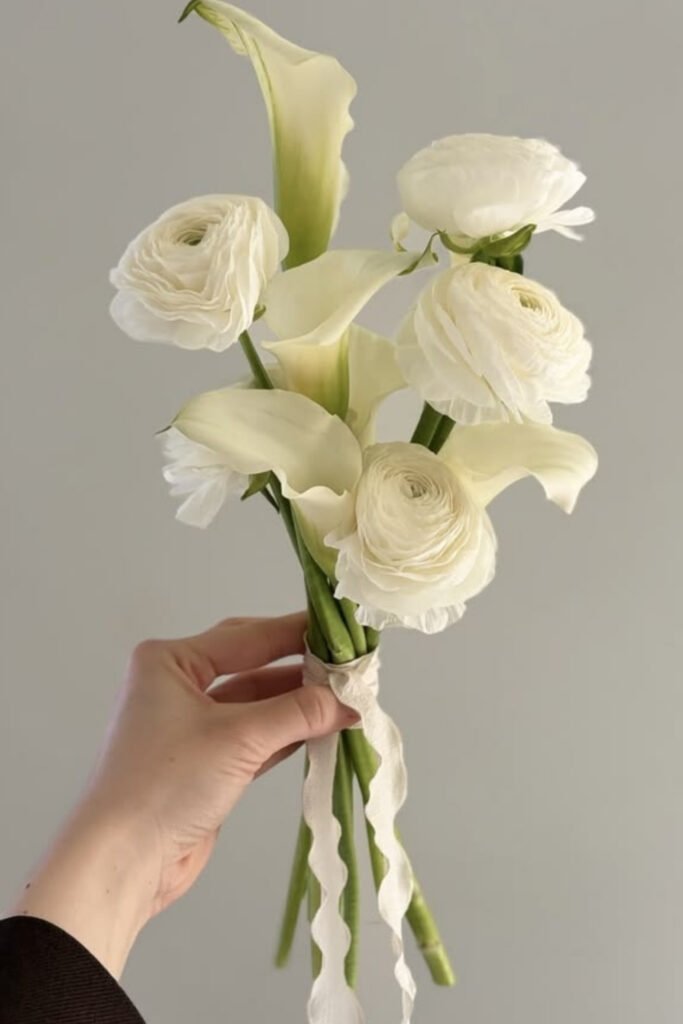
White roses with baby’s breath works for every season, venue and dress. White callas with white roses look clean and graceful. Blush peonies with a trailing ribbon are another safe choice, and garden roses with ranunculus in soft neutrals add a little more personality.
Plan a few dedicated bouquet shots with your photographer: a detail shot against the dress, a candid with the bouquet at your side and a flat lay before the ceremony. If you’re pairing your bouquet with an arch backdrop, match the color palettes for consistent ceremony photos.
Your bouquet will appear in almost every photo of the day, so choose something you love rather than whatever is trending this month. Classic blooms in a simple arrangement always look right.
Your small bouquet, your way
Small bridal bouquets aren’t going anywhere. They’re practical, they photograph well and they free up budget for the things that matter most to you. All-white and classic, bold and wild, or somewhere in between, the right small bouquet should feel like you.
My take: you don’t need 40 stems to walk down the aisle with confidence. A handful of flowers that mean something to you, wrapped in something lovely, is plenty. Still shopping for someone else’s wedding? These wedding guest dresses are a good place to start. If you’re the bride, share this with your florist and your bridal party, and build the bouquet you actually want.
Leave a Reply