

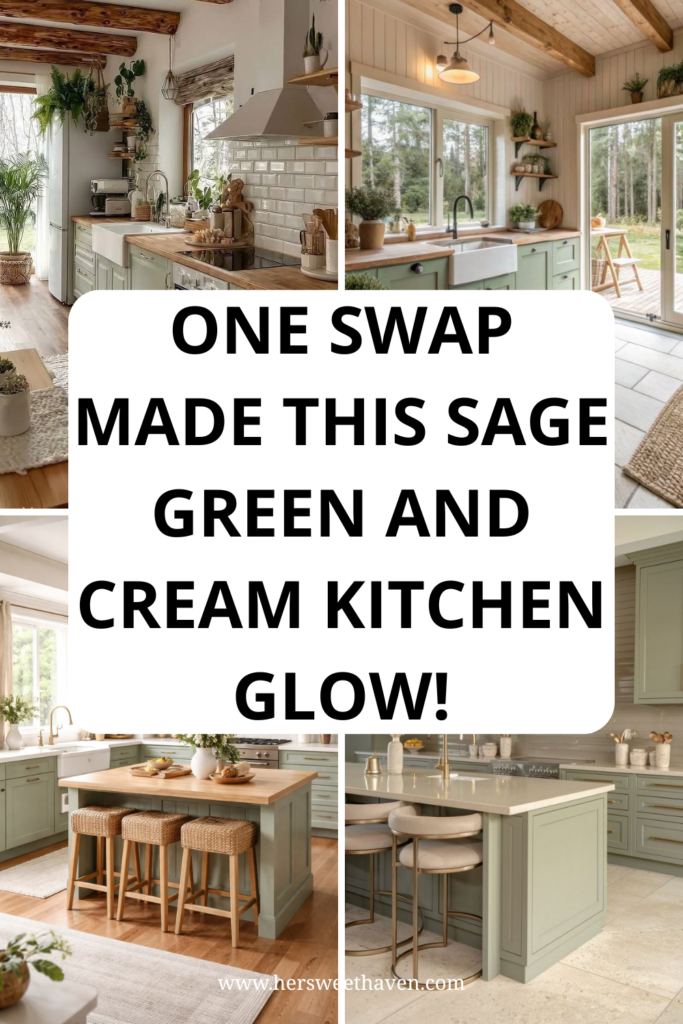
The sage green and cream kitchen has officially taken the top spot in 2026, and once you see how warm, layered, and personality-packed this color combo looks, you’ll wonder why anyone ever settled for plain white walls and cabinets.
This soft green paired with creamy neutrals creates a kitchen that feels calm without being boring, cozy without being dark, and on-trend without trying too hard. Whether you’re planning a full renovation or just looking for a weekend refresh, this guide is packed with real ideas for sage green kitchen cabinets, countertops, backsplashes, hardware, and decor that actually work in real homes.
You’re about to see exactly how to pull this palette off, step by step.
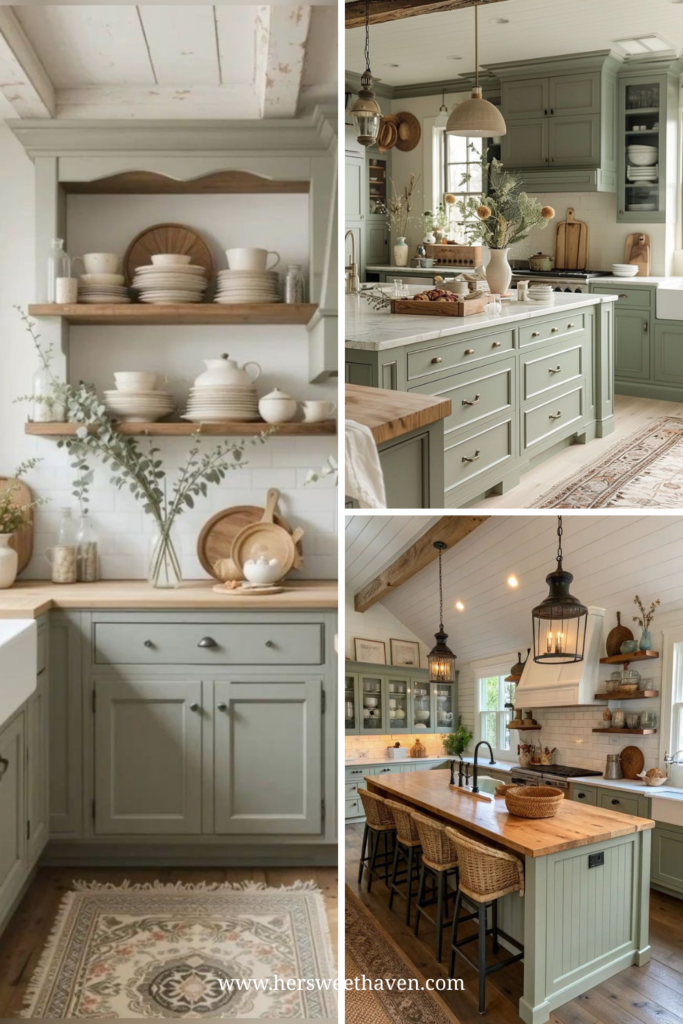
Why a Sage Green and Cream Kitchen Is the 2026 Trend You Need to Know About
Sage green kitchens have been building momentum for years, but 2026 is the year they fully arrived. According to Homedit’s 2026 kitchen design roundup, sage green is replacing plain white and predictable gray as the go-to cabinet color. It carries depth and personality while still functioning as a neutral.
So why does the sage green and cream combo work so well? It comes down to temperature. Sage green has warm, earthy undertones. Cream has warm, golden undertones. Put them together, and they create a palette that feels naturally balanced, like something you’d see in a countryside cottage or a well-loved farmhouse kitchen.
Interior designers often reference the 60-30-10 rule when building a color scheme. Wren Kitchens breaks it down nicely: your primary color takes up 60% of the space, the secondary color fills 30%, and a small accent handles the final 10%. For a sage green and cream kitchen, that might look like cream walls and ceiling (60%), sage green cabinets (30%), and brass or matte black hardware as your accent (10%).
This palette also works across a huge range of kitchen styles. If you love the soft, nostalgic feel of a grandma core kitchen, sage and cream fit right in. If you’re more drawn to cottagecore kitchen ideas, this combo feels like it was made for you. It even works in more modern, minimalist spaces when you keep the lines clean and the hardware sleek.
What makes this palette feel so timeless is its connection to nature. Green reminds us of plants, herbs, and outdoor spaces. Cream echoes natural linen, raw cotton, and unbleached wool. Together, they make a kitchen feel organic and grounded in a way that trendy neon accent walls or bold jewel tones simply can’t match year after year.

Best Sage Green Kitchen Cabinet Ideas That Look Amazing
Cabinets are the biggest visual element in any kitchen. They set the tone for the whole room. Here’s how to make sage green cabinets work in your space.
Shaker-Style Sage Green Cabinets with Cream Walls
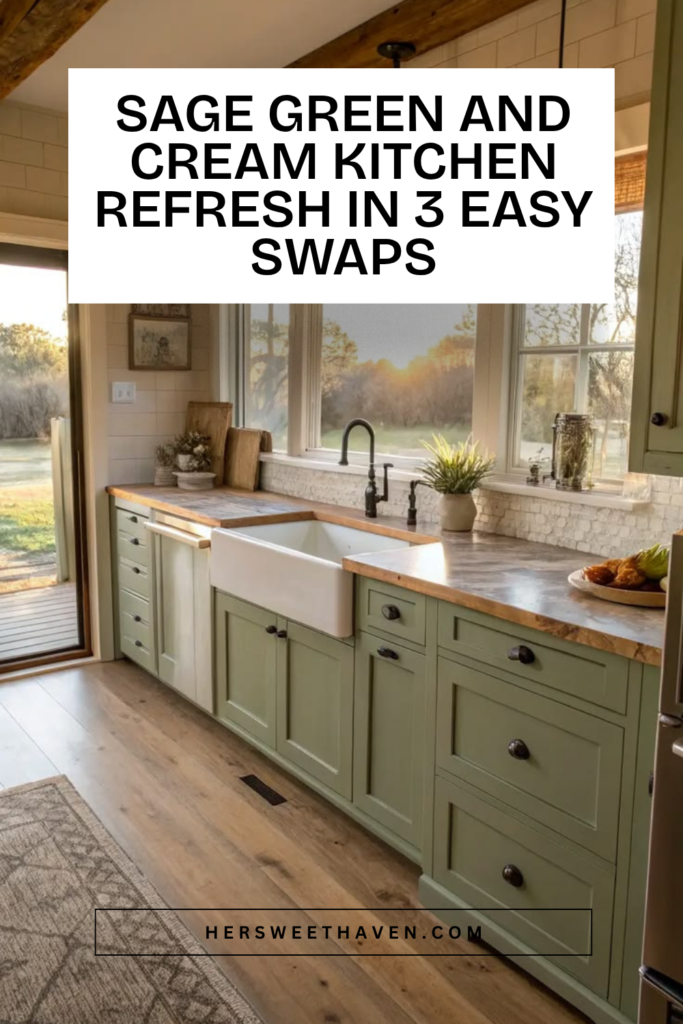
Shaker-style cabinets are the most popular door profile for sage green kitchens, and for good reason. The simple recessed panel looks clean enough for modern spaces but traditional enough for farmhouse and cottage aesthetics. Pair them with cream-colored walls and butcher block countertops, and the result is a kitchen that feels grounded and inviting.
Add cup-pull hardware in brushed brass to warm things up even more. A white farmhouse sink is the perfect finishing touch. For the flooring, hardwood in a medium oak tone or natural stone tile in warm beige keeps everything cohesive. This is the sage green kitchen aesthetic that fills Pinterest boards for a reason: it works in almost any home.
Two Tone Kitchen Sage Green: Sage Below, Cream Above
A two tone kitchen sage green approach is one of the smartest ways to use this palette. Moon Kitchens highlights how dual-toned designs work well with green and cream because they balance weight in the room. Sage green on the lower cabinets grounds the space, while cream or white uppers keep things light and airy.
This approach is especially effective in smaller kitchens where you don’t want the green to feel too heavy. Glass-front upper cabinets in cream are a nice detail that adds dimension without competing with the sage below.
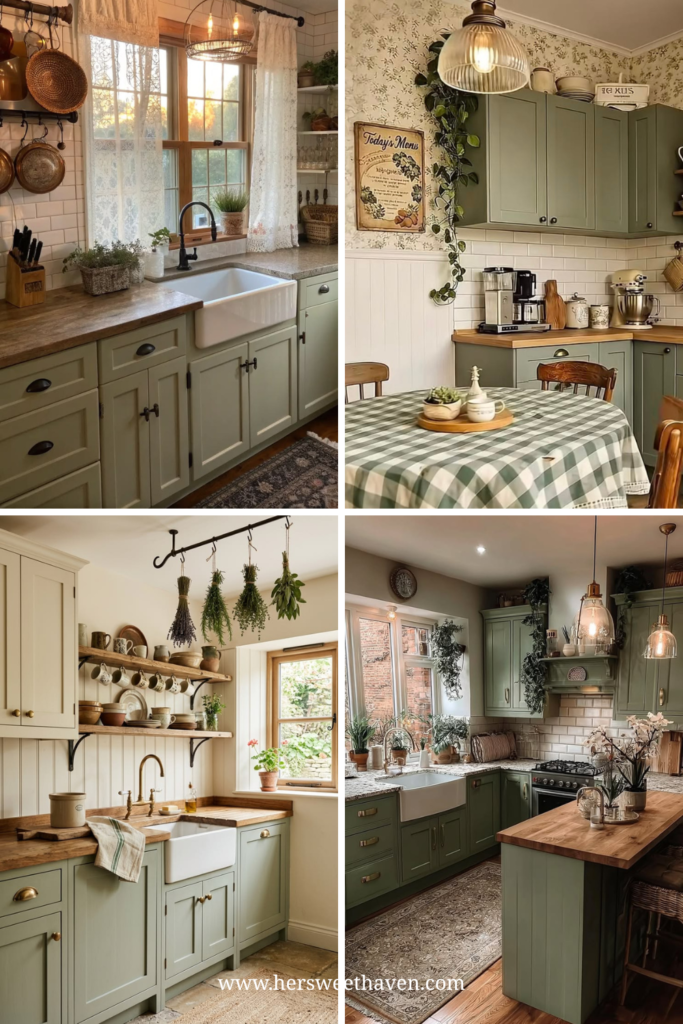
Sage Green Painted Kitchen with a Farmhouse Sink
If you’re not ready for a full cabinet replacement, a sage green painted kitchen is the most budget-friendly way to get this look. A good-quality cabinet paint (more on specific colors below) can completely change a kitchen in a single weekend.
Pair your freshly painted sage cabinets with a deep apron-front sink, some open wood shelving, and vintage-inspired hardware. This is the classic farmhouse sage green kitchen look that keeps dominating Pinterest boards.
If you’re still deciding between cabinet styles, this guide on choosing your kitchen cabinets walks you through the basics before you commit.
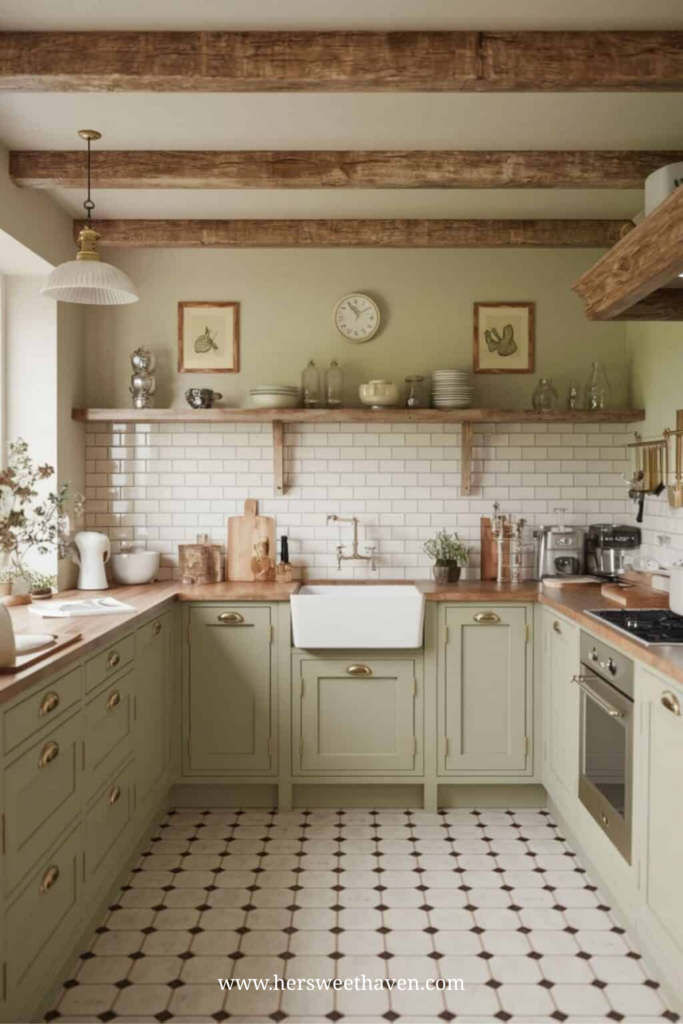
What Makes a Sage Green and Cream Kitchen Feel Flat?
Here’s where most people get it wrong. They pick a sage green for the cabinets, pair it with bright white walls, and wonder why the whole room feels off. The issue is almost always temperature mismatch.
Sage green is a warm color. Cool, blue-toned whites fight against it instead of supporting it. The fix is simple: swap that crisp white for a true cream or warm off-white. PlaceIdeal notes that switching to warm cream tile made an entire sage kitchen come alive. Temperature matters more than most people realize.
The second biggest issue is lack of texture. A sage and cream kitchen with all smooth, flat surfaces can look one-dimensional. You need something to break up the visual monotony. That could be open wood shelving, a textured tile backsplash, woven light fixtures, or even a jute rug underfoot.
Lighting plays a role too. Sage green shifts depending on the light in the room. In a north-facing kitchen with limited natural light, a lighter sage will read better than a deeper one. Always test your paint swatches at different times of day before committing.

Sage Green and Cream Kitchen Decor That Ties It All Together
Once your cabinets and walls are sorted, the decor is what takes a sage green and cream kitchen from “nice” to “wow, I need to save this.” Here’s what to focus on.
Best Backsplash Options for a Sage Green Kitchen
White subway tile is the classic choice, and it works. But if you want something with more character, look at handmade zellige tiles in soft white or cream. The uneven texture and slight color variation add warmth and depth that standard subway tile can’t match.
Herringbone layouts are another smart move. A cream or white tile laid in herringbone pattern behind your sage green cabinets adds visual interest without introducing a new color. TheCoolist’s 2026 kitchen roundup highlights patterned backsplashes as a top trend for sage kitchens this year.
For a bolder look, consider a natural stone backsplash. Travertine or marble with soft veining pairs beautifully with sage and cream tones.

Countertop Pairings That Work
Your countertop choice can make or break the sage and cream palette. Here are the top options:
Butcher block countertops bring warmth and that lived-in farmhouse feel. The honey tones of natural wood bring out the earthy side of sage green. Edward George London recommends pairing butcher block with sage lower cabinets and open shelving for a rustic, grounded look.
Creamy quartz with subtle veining is a more polished option that still keeps things warm. Avoid anything with heavy gray veining, as it can cool down the palette.
Marble (or marble-look porcelain) adds a touch of luxury. The soft movement in marble works well against the simplicity of sage green cabinets. George Cabinetry notes that cream-toned countertops offer a vintage-inspired look that pairs naturally with sage.
Hardware and Lighting
Hardware is the jewelry of the kitchen, and in a sage green and cream space, you have two main paths.
Brass and gold hardware warm up the green and give the kitchen a slightly vintage, collected feel. Think cup pulls on drawers and round knobs on cabinet doors. Moon Kitchens points out that gold hardware is the perfect finishing touch in any green kitchen.
Matte black hardware offers a more modern, graphic contrast. It sharpens the lines and adds definition, especially in lighter sage kitchens where things can feel too soft without a grounding element.
For lighting, glass globe pendants, woven rattan shades, or iron lantern-style fixtures all complement this palette. The key is to pick fixtures with warmth and texture rather than anything too industrial or clinical.
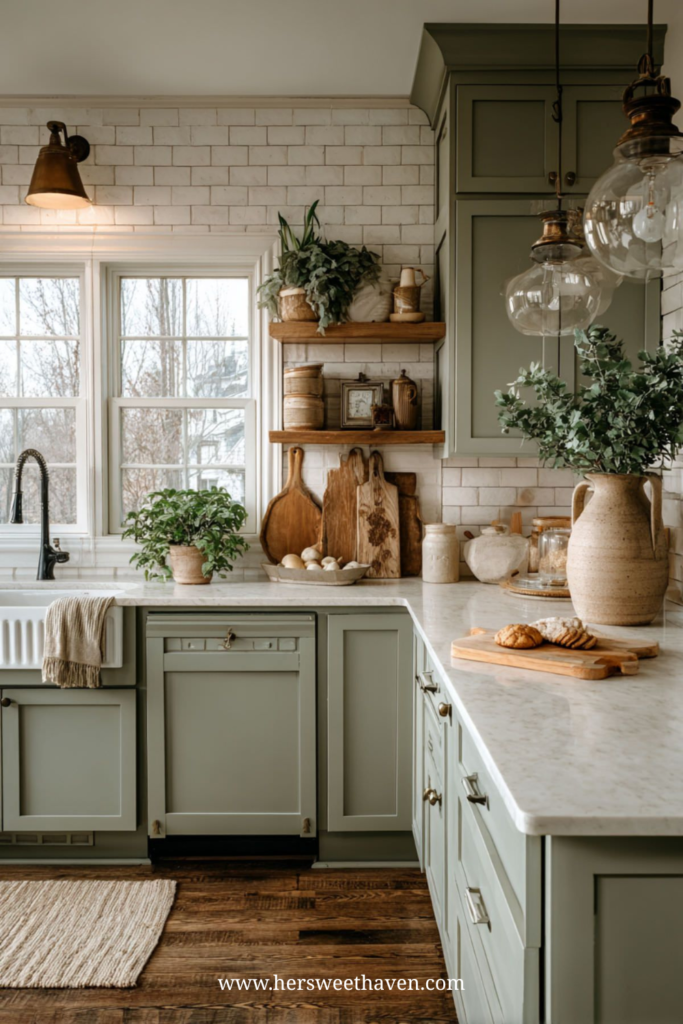
Does One Simple Swap Really Change a Sage Green and Cream Kitchen?
Yes. And here’s the swap: replace your cool-toned white elements with warm cream ones.
This sounds small, but the visual difference is dramatic. Cool whites create tension against sage green. Warm creams create harmony. That means your backsplash tile, your wall paint, your countertop, and even your dish towels and ceramics should lean warm, not cool.
If your kitchen already has sage green cabinets but something feels “off,” look at your walls and backsplash first. Repainting walls in a warm cream (think Benjamin Moore White Dove or Swiss Coffee) can shift the entire energy of the space. Swapping a bright white subway tile backsplash for a handmade cream tile makes a noticeable difference too.
Other quick wins: switch out chrome or silver hardware for brass. Trade a cool-toned pendant light for a woven or wood-accented one. Add a warm-toned runner rug. Layer in a few cream-colored ceramics on open shelves, or swap bright white dish towels for linen ones in natural tones.
These small changes add up fast. You might be surprised how different your sage green kitchen walls or cabinets look once the surrounding elements are pulling in the same warm direction.
How to Refresh Your Sage Green and Cream Kitchen in 3 Easy Steps
You don’t need a full renovation to get this look. Here’s a simple three-step approach that works on any budget.
Step 1: Pick the Right Shade of Sage Green
Not all sage greens are created equal. George Cabinetry recommends these popular paint colors for sage green kitchens:
Sherwin-Williams Clary Sage (SW 6178) is a soft, muted green with warm undertones that pairs well with wood accents and cream countertops. Benjamin Moore Saybrook Sage (HC-114) is a classic earthy green with subtle gray undertones that works in both traditional and modern kitchens. Farrow & Ball Lichen No. 19 is a richer, mossier option for anyone who wants more depth and drama.
Test at least two or three swatches in your actual kitchen. Look at them in morning light, evening light, and under your overhead fixtures. The right sage will look good in all conditions.
Step 2: Layer in Natural Textures
A sage and cream kitchen thrives on texture. Without it, the palette can fall flat.
Wood is your best friend here. Open shelving in reclaimed or natural wood, butcher block cutting boards propped against the backsplash, and a wooden island top all add warmth and visual weight. Rattan and wicker work too, whether that’s bar stools, pendant light shades, or a woven basket holding fruit on the counter.
Linen and cotton textiles round things out. A linen table runner, cotton dish towels in cream or sage, and a woven jute rug underfoot bring that layered, lived-in quality.
Step 3: Style with Intentional Accessories
The accessories are what make a sage green kitchen aesthetic feel complete. But “intentional” is the key word here. You don’t need a lot. You need the right things.
A few ceramic vases in cream or white. A couple of wooden cutting boards leaned against the wall. Fresh or dried eucalyptus in a simple glass jar. A woven bread basket. A stoneware crock holding wooden spoons. These are the details that make a kitchen feel like it was put together by someone who actually cooks and lives in the space.
If you love keeping your kitchen organized and beautiful at the same time, check out this guide to aesthetic pantry organization for even more ideas on making functional spaces look great.
Plants are another easy win. A small potted herb on the windowsill or a trailing pothos on an open shelf brings life and color that plays naturally with the sage green palette. Low-maintenance options like spider plants and succulents work well if you don’t have a green thumb.
And if you love exploring bold kitchen color ideas beyond sage, there are plenty of ways to bring personality into your kitchen with color.
Ready to Build Your Sage Green and Cream Kitchen?
The sage green and cream kitchen is more than a trend. It’s a palette that works across styles, budgets, and kitchen sizes. It brings warmth, personality, and a sense of calm into the one room where you spend the most time.
Start small if you need to. Paint your lower cabinets. Swap your hardware. Add a few warm-toned accessories. You don’t have to do everything at once to see a real difference. The beauty of this palette is that every small change moves you closer to a kitchen that feels like home.
Save this post for your next kitchen project, and drop a comment below telling me which idea you’re trying first. I’d love to hear what you’re working on.





Leave a Reply