

The all-white kitchen era is over. After nearly a decade of sterile marble countertops and squeaky-clean subway tile, people are finally craving personality in the heart of their homes. And the biggest proof? Dark cottagecore kitchen ideas just saw a 915% surge in searches on Pinterest’s Spring 2026 Trend Report, making it the single fastest-growing home design aesthetic on the platform this year.
That number isn’t a fluke. It signals a real shift in how people want their kitchens to look and feel. Rich, moody color palettes paired with rustic textures, vintage finds, and warm lighting are replacing the bright, polished look that dominated for years.
In this post, you’ll learn exactly why this trend took off, the common mistakes that make a dark cottagecore kitchen feel like a cave instead of a cozy retreat, and how to nail the look on any budget (even in a rental).
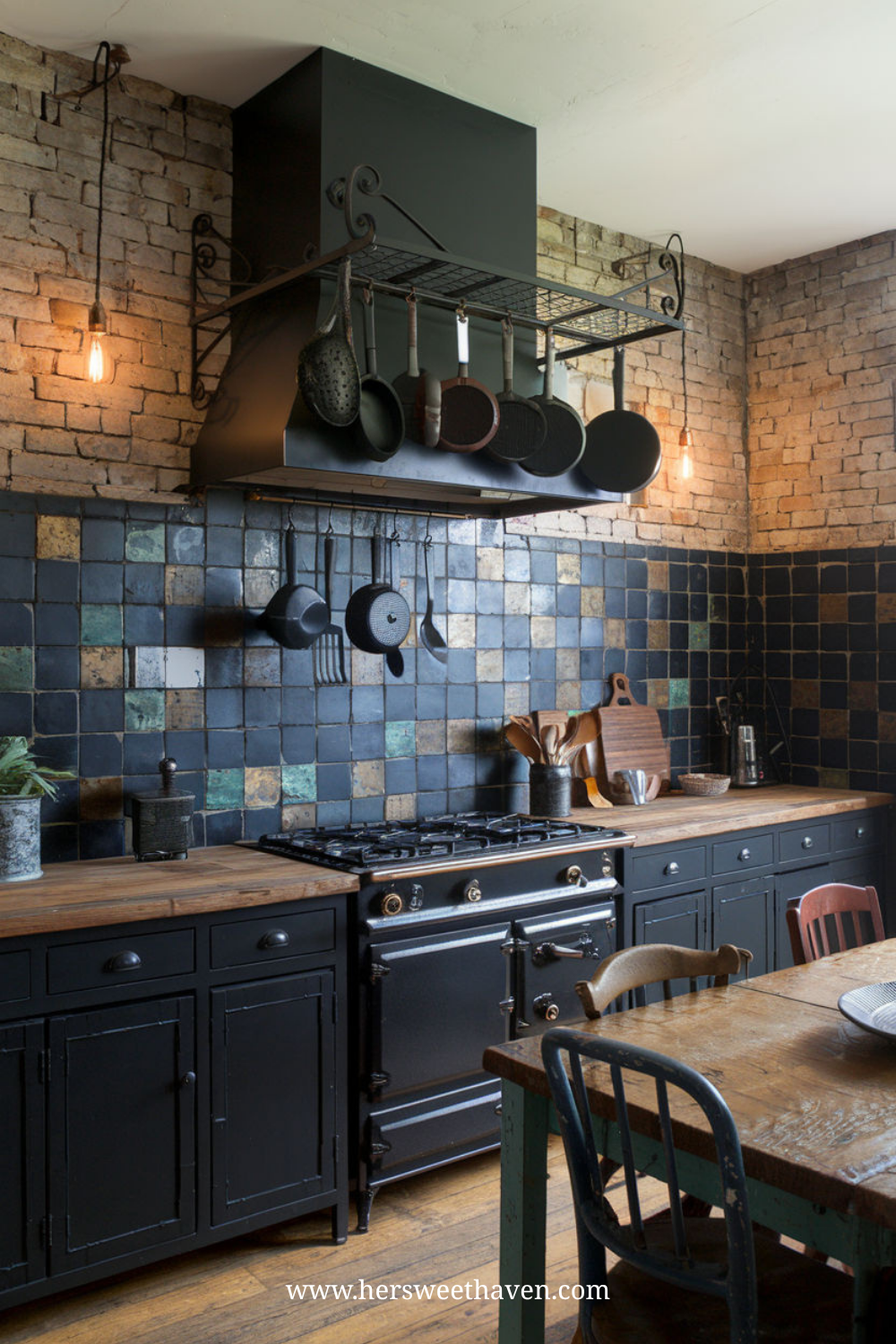
Why Are Dark Cottagecore Kitchen Ideas Blowing Up on Pinterest?
The short answer: people are done trying to live in a magazine spread. But the long answer is more interesting.
The “My Room, My Rules” Shift
Pinterest’s own data tells the story clearly. The platform’s Spring 2026 report, based on activity from over 600 million monthly users, framed this as a move toward comfort over status and individuality over rigid design rules. Searches for “my room, my rules” jumped 415% year-over-year.
Gen Z and younger millennials are leading the charge. They’re not waiting for the perfect house or a massive renovation budget. They’re painting cabinets, swapping hardware, and layering in thrifted finds to make their kitchens feel like theirs right now. The Pinterest Predicts report has an 88% accuracy rate over the past six years, so when 915% more people are searching for dark cottagecore kitchens, that’s not a passing fad. It’s a shift already in motion.
Nostalgia With an Edge
Classic cottagecore has been around for years. Think soft pastels, gingham curtains, and wildflower bouquets. It’s lovely, but it peaked. The dark cottagecore kitchen aesthetic is its moodier, more grown-up cousin.
Instead of sunny yellows and cream whites, you get deep forest greens, charcoal grays, and rich navy blues. Instead of bright open shelving, you get warm wood tones with flickering candlelight. There’s a crossover with witchy cottagecore kitchen vibes and dark academia that gives this trend real depth and personality.
It’s also not just about kitchens. Related styles are surging at the same time. Searches for aubergine kitchen ideas jumped 495%, and grandma core kitchen climbed 545%. People want kitchens that feel collected, lived-in, and full of character.
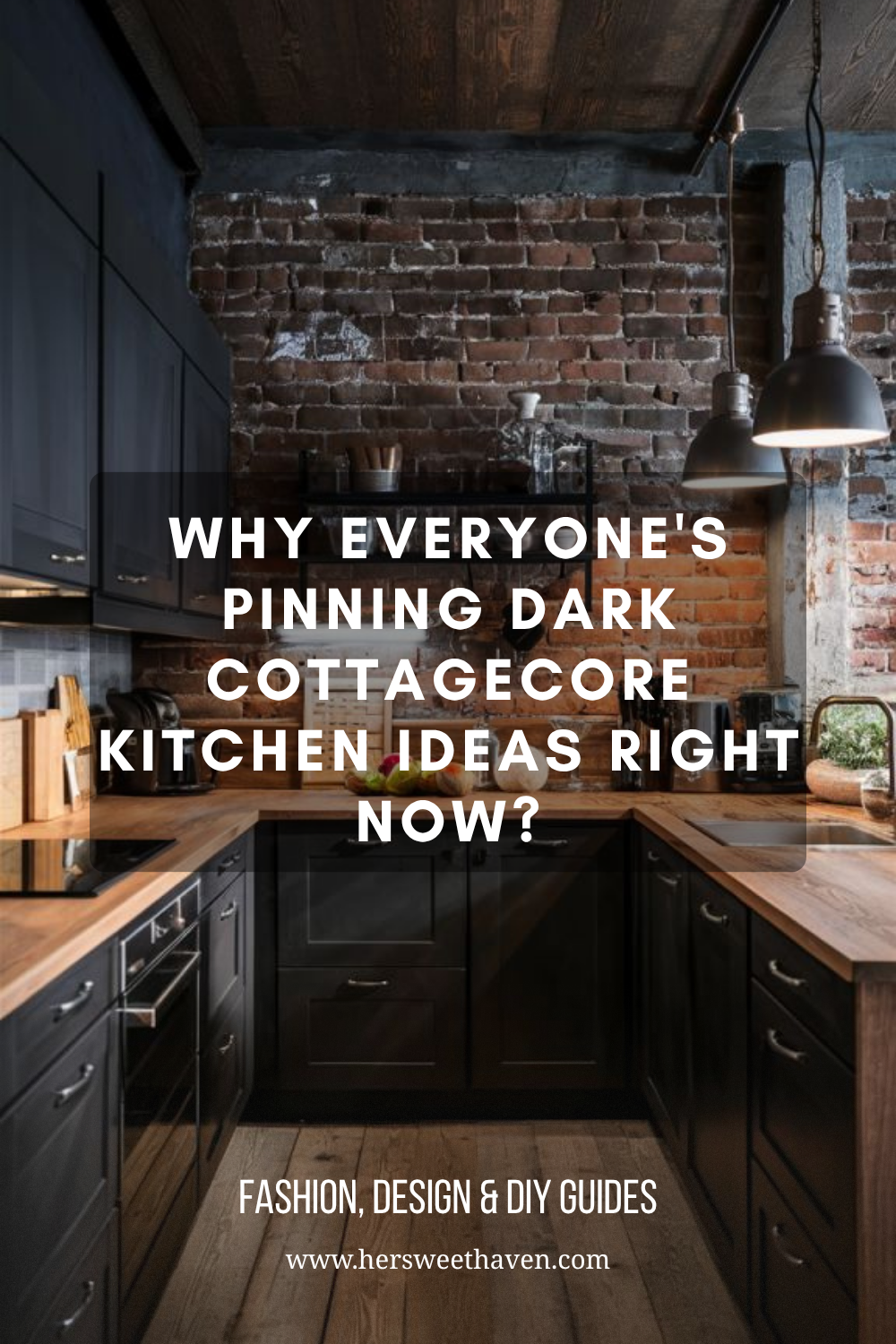
What Makes Dark Cottagecore Kitchen Ideas Feel Cozy, Not Cave-Like?
This is the question everyone worries about. You love the moody Pinterest photos, but you’re terrified your kitchen will end up feeling dark, heavy, and depressing. Here’s how to avoid that.
The Three-Tier Color Rule
The principle is straightforward: dark walls or cabinets, warm midtones (wood countertops, brass hardware, natural textures), and a light ceiling or backsplash. This three-tier approach makes sure your moody cottagecore kitchen still has a sense of lift and air.
Two-tone cabinetry is one of the most effective strategies here. Paint your lower cabinets in a deep shade like hunter green or charcoal, and keep the upper cabinets in cream, warm white, or natural wood. This creates visual breathing room at eye level and stops the darker color from taking over the entire space.
A white or cream backsplash (especially with handmade texture like zellige or subway tile with uneven edges) does the heavy lifting of bouncing light back into the room. You keep the moody vibe without losing the sense of space.
Why Lighting Is the Real Secret Weapon
Here’s where most people get it wrong. Dark cabinetry absorbs light. That means your dark cottage kitchen aesthetic needs a lighting plan that works at least twice as hard as a white kitchen would.
A single overhead fixture will never be enough. You need layers: under-cabinet LED strips to light your work surfaces, warm pendant lights over islands or tables, and decorative lighting like candles in mismatched holders or a vintage table lamp on the counter (yes, even in a kitchen).
The goal is to make the room glow, not just be “lit.” Warm-toned bulbs (2700K) are your best friend here. Cool white LEDs will make a dark kitchen feel clinical and flat. Warm light makes those deep cabinet colors come alive.
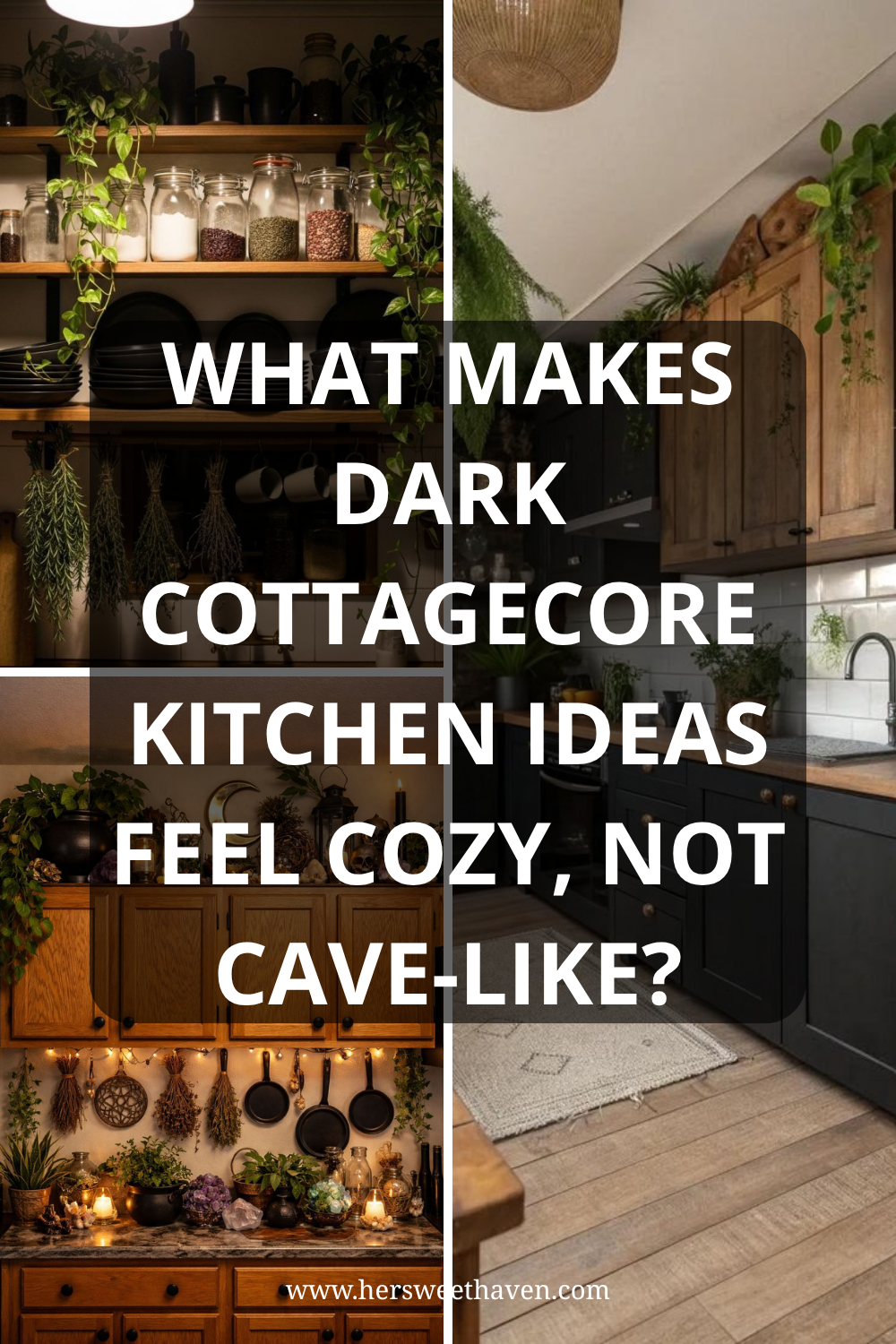
3 Dark Cottagecore Kitchen Ideas That Go Wrong Fast
Not every dark kitchen turns out dreamy. Some end up feeling oppressive. Here are the three mistakes that trip people up most often.
Going Dark on Every Single Surface
The most common error is letting dark tones dominate every surface: upper cabinets, lower cabinets, walls, backsplash, and floors. When that happens, the eye has nowhere to rest, and the room visually shrinks.
You need contrast somewhere. A light countertop, a bright backsplash, or even just open shelving with lighter ceramics and glassware breaks up the darkness. Think of it like seasoning. You want enough dark to set the mood, not so much that it overwhelms everything.
Relying on One Overhead Light
This is the second biggest mistake, and it’s an easy one to make. A single ceiling fixture paired with dark cabinetry creates deep shadows under cabinets, in corners, and along countertops. The result feels gloomy, not cozy.
Layer your lighting at three levels: overhead (pendants or recessed), mid-level (wall sconces or a counter lamp), and under-cabinet (LED strips). That combination fills the room with warmth and eliminates those dark dead zones that make a rustic dark kitchen feel heavy.
Forgetting Texture and Contrast
A dark kitchen that’s all one smooth, matte surface reads as flat and lifeless. The cottagecore kitchen decor magic happens when you layer textures: rough-hewn wood, woven baskets, hand-thrown pottery, wrought iron hooks, linen tea towels.
These tactile elements add dimension and warmth. Without them, you just have a dark room. With them, you have a space that tells a story.
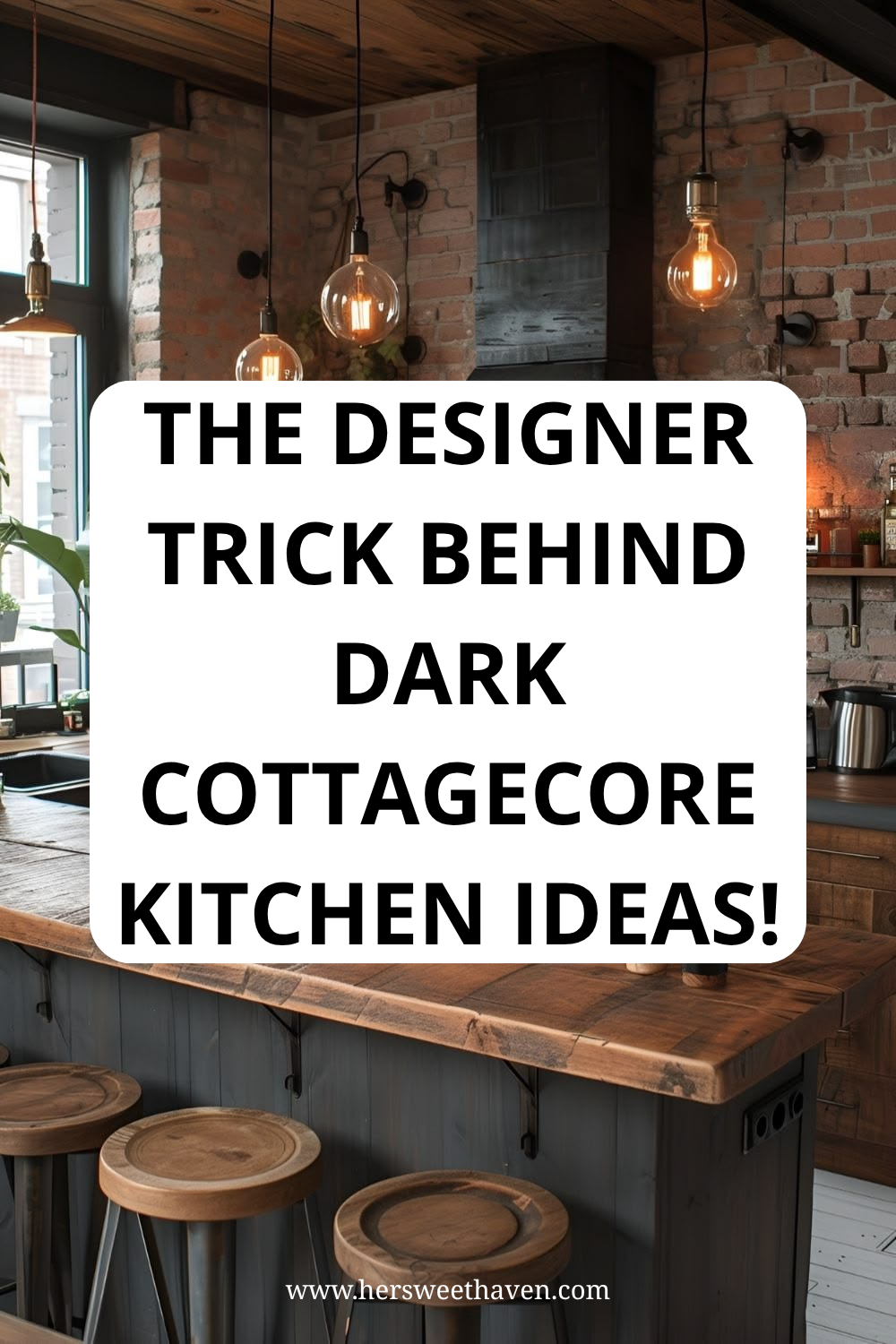
The Designer Trick Behind Dark Cottagecore Kitchen Ideas
Professional designers get dark kitchens right consistently, and they rely on two principles that most people overlook.
Warm Undertones Over Cool Ones
Not all dark colors are created equal. A charcoal with brown or green undertones reads as cozy and inviting. A charcoal with blue or gray undertones reads as cold and industrial. That one difference changes the entire mood of the room.
The best color picks for a dark cottagecore kitchen are shades found in nature: hunter green, deep navy, midnight blue, rich plum, and burgundy. Even near-black can work beautifully when it has that warm, earthy base.
Before committing, paint a large swatch on the actual cabinet door and live with it for a full week. Colors shift dramatically between morning and evening light, and what looks perfect at the paint store can feel completely different in your kitchen at 7 AM.
If you’re still deciding between cabinet styles and finishes, this guide on choosing the right kitchen cabinet walks you through the options.
Matte Over Gloss for That Lived-In Feel
High-gloss dark paint reflects light in harsh streaks and shows every fingerprint. A matte or eggshell finish absorbs light gently and gives your cabinets that handcrafted, lived-in quality that cottagecore is all about.
This is a small detail that makes a massive difference. Matte finishes also photograph beautifully (which matters if you’re planning to pin your own kitchen).
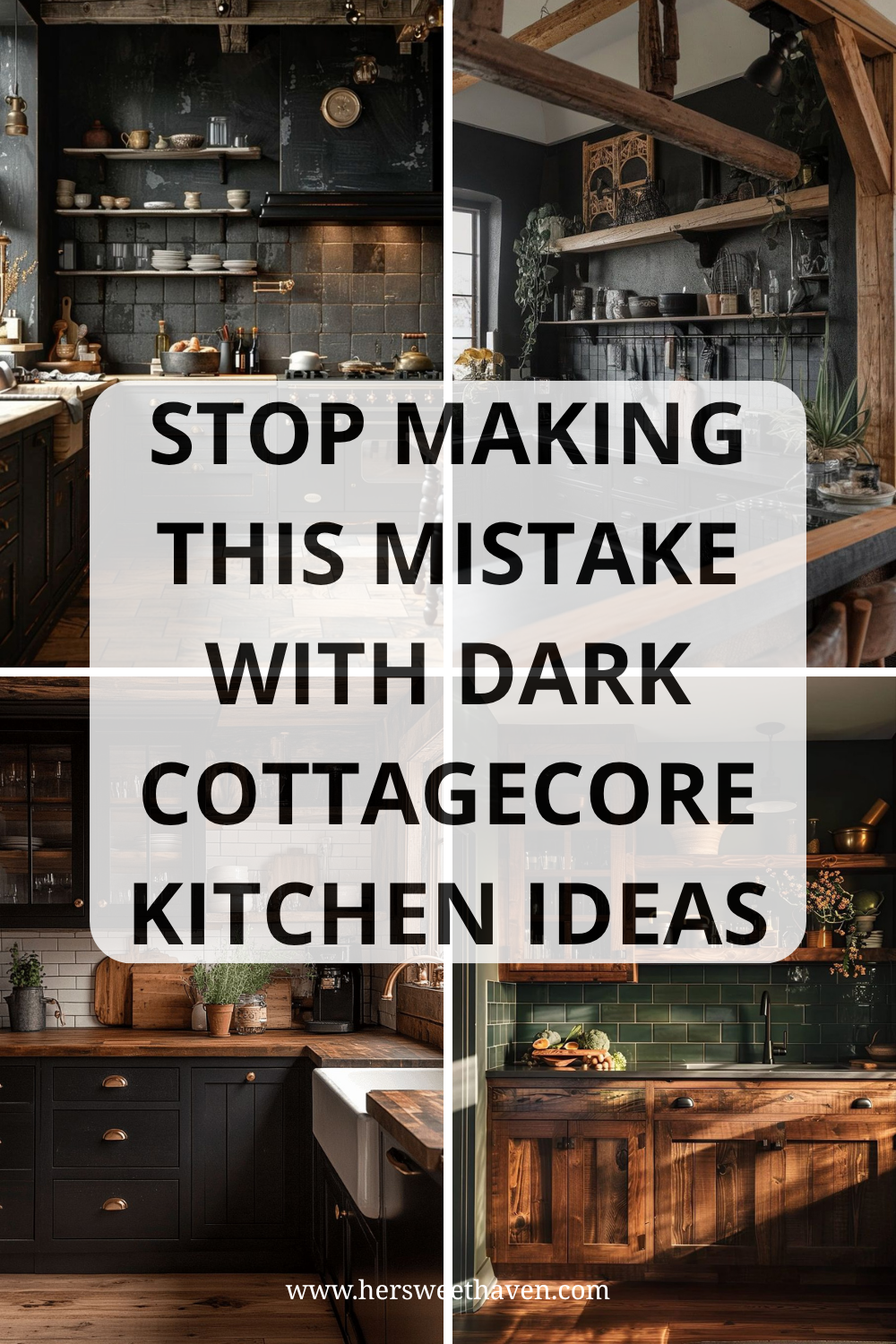
Stop Making This Mistake With Dark Cottagecore Kitchen Ideas
There’s one specific mistake that keeps popping up in dark kitchen designs, and it has nothing to do with color.
Skipping the Butcher Block Countertop
Wood is the backbone of any cozy cottagecore kitchen. In a dark kitchen, it’s absolutely non-negotiable. A butcher block or natural wood countertop provides the warmth that dark cabinets need to avoid feeling cold and heavy.
The beauty of wood countertops is their imperfection. Nicks, coffee stains, dough marks: they all add character over time. A perfectly smooth, brand-new stone countertop can feel out of place in a cottagecore kitchen. A wood surface that looks like it’s seen years of actual cooking? That fits perfectly.
If butcher block isn’t practical for your whole kitchen, even a wooden cutting board collection leaning against the backsplash or a reclaimed wood island top makes a big difference.
Hiding Everything Behind Cabinet Doors
The english cottage kitchen dark aesthetic thrives on display. Open shelving stacked with vintage ceramics, dried herb bundles hanging from hooks, cast-iron pans left out on the stove, apothecary jars filled with spices: that’s what makes a cottagecore kitchen feel alive.
You don’t need to display everything. But keeping a few carefully chosen items visible adds the “collected over time” quality that makes cottagecore kitchens so appealing. If it looks like something from a fairy tale grandmother’s kitchen, it belongs on the shelf.
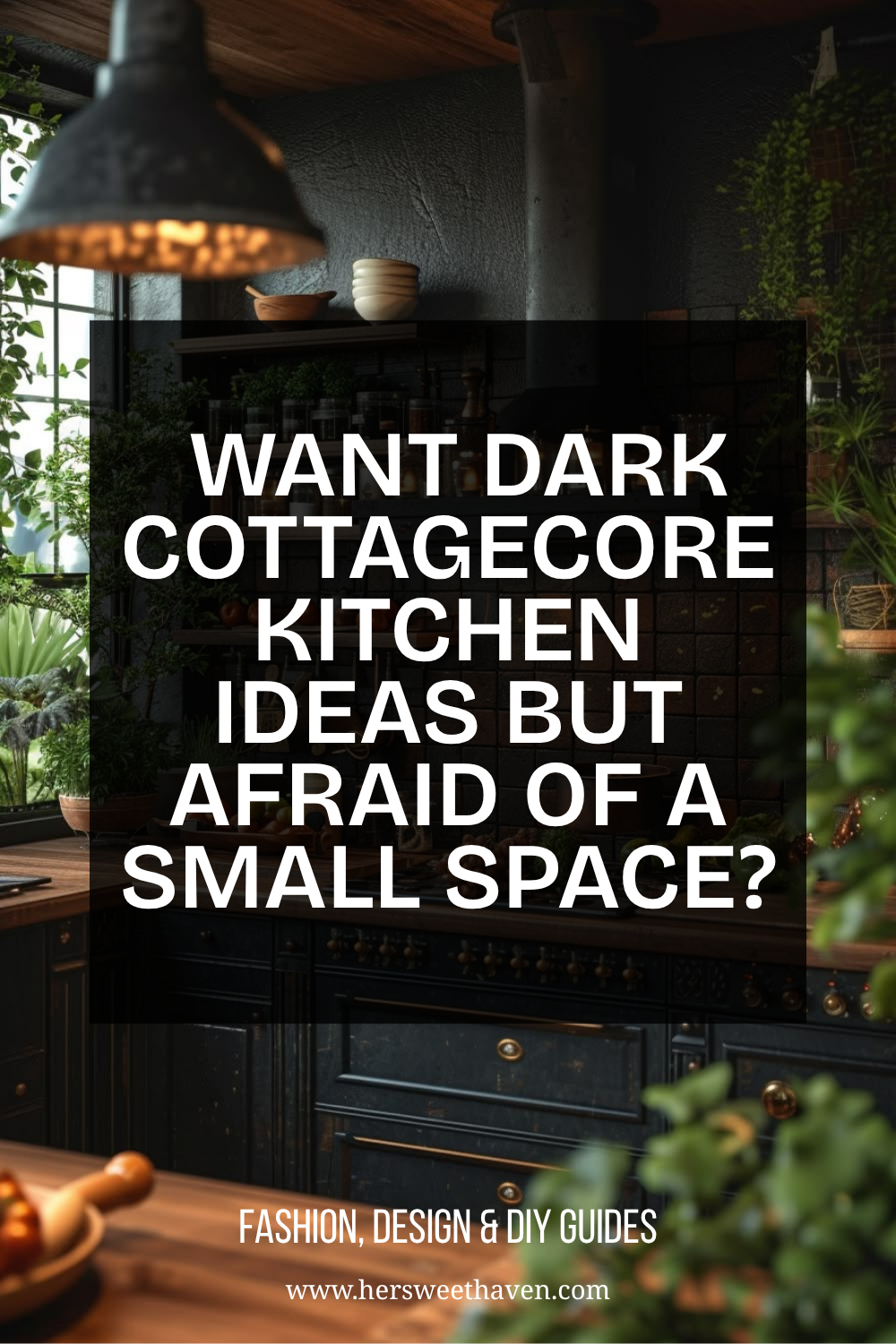
Want Dark Cottagecore Kitchen Ideas but Afraid of a Small Space?
Small kitchens and dark colors seem like a risky combination. But with the right approach, a compact dark kitchen can actually feel more intimate and intentional than a cramped white one.
Does a Dark Kitchen Make a Small Space Feel Smaller?
Not necessarily. The problem isn’t the dark color itself. It’s when dark surfaces cover everything without any contrast to break them up. When you balance dark cabinetry with lighter countertops, a bright backsplash, and layered warm lighting, a small kitchen can feel cozy instead of cramped.
Reflective surfaces help too. Glass-front cabinet doors, polished brass hardware, and even a small mirror on the wall opposite a window all bounce light around the room. These are small choices, but they stack up fast.
The Remove-the-Uppers Trick
Here’s a move that works brilliantly in small kitchens: remove your upper cabinet doors entirely and switch to open shelving. This instantly opens up the visual space above eye level while giving you a perfect spot to display cottagecore kitchen decor like handmade mugs, stacked plates, and herb jars.
The dark lower cabinets ground the room while the open uppers keep it from feeling closed in. It’s the best of both worlds.
If you love a similar approach with lighter palettes, sage green and cream kitchen ideas use a comparable strategy to keep small spaces feeling open.
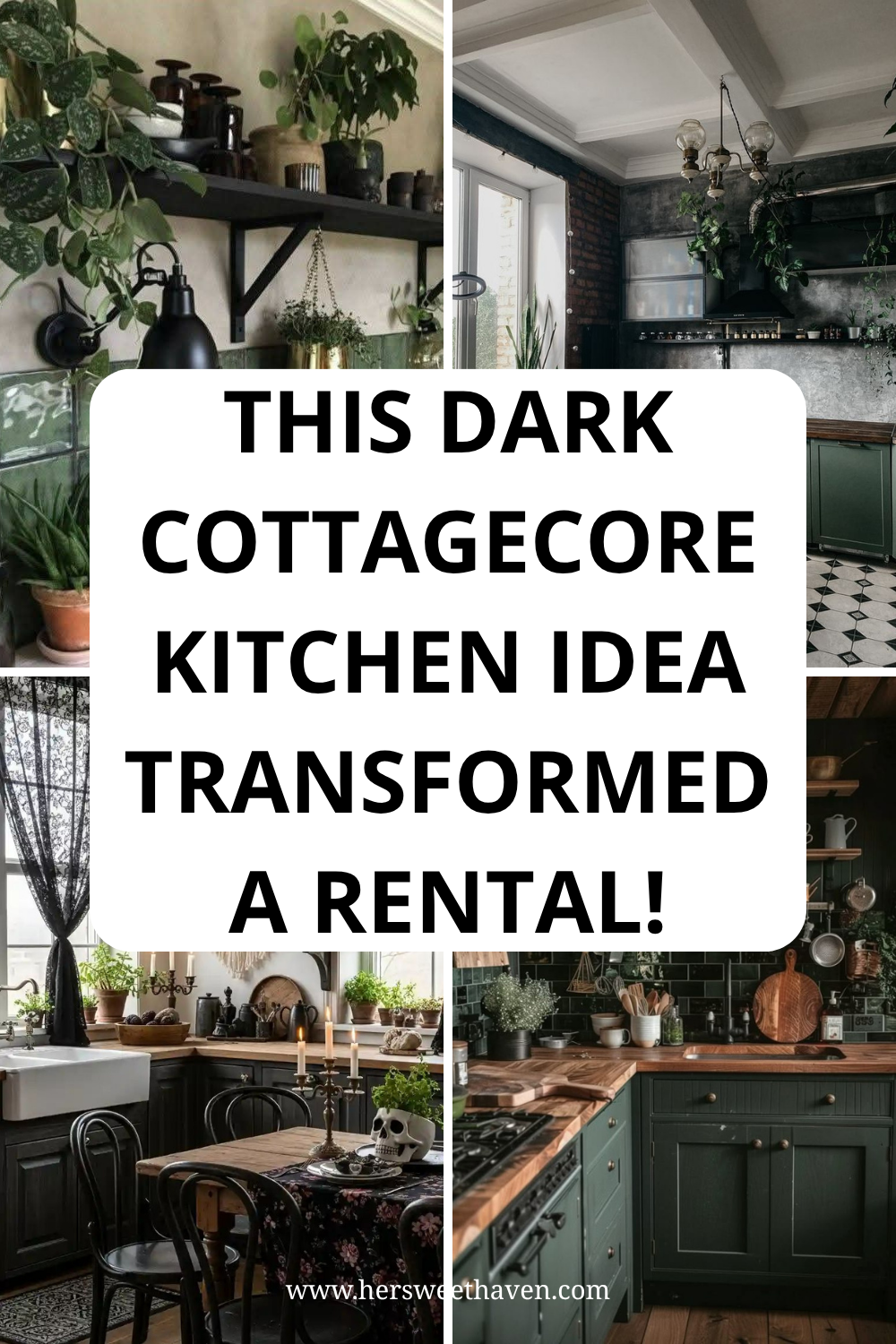
This Dark Cottagecore Kitchen Idea Transformed a Rental!
Renting doesn’t mean you’re stuck with a boring kitchen. Some of the best dark cottagecore kitchen ideas are completely renter-friendly and reversible.
Renter-Friendly Swaps That Make a Big Impact
Peel-and-stick wallpaper in dark floral or botanical prints can completely change the mood of a kitchen wall without any paint. Black or dark tile stickers can cover a plain backsplash and peel off cleanly when you move. A tension rod across the window with dried herb bundles hanging from twine adds that rustic cottage kitchen dark cabinets vibe in minutes.
If your rental has plain white upper cabinets, you can unscrew the doors and store them safely in a closet. Open shelving made from a simple dark-stained plank and black metal brackets gives you the cottagecore display factor without any permanent changes.
Cottagecore Kitchen Decor You Can Take With You
The real power of this aesthetic is in the portable details. Amber glass jars for storing spices and dried goods. Vintage ceramics from thrift stores. Mismatched candle holders in brass, iron, or dark clay. A dark patterned rug or woven runner in front of the sink. Linen tea towels in muted, earthy tones.
Every single one of these items moves with you. You’re building a collection, not a renovation. And that’s exactly the philosophy behind the witchy cottagecore kitchen trend: it’s personal, collected, and doesn’t require a landlord’s permission.
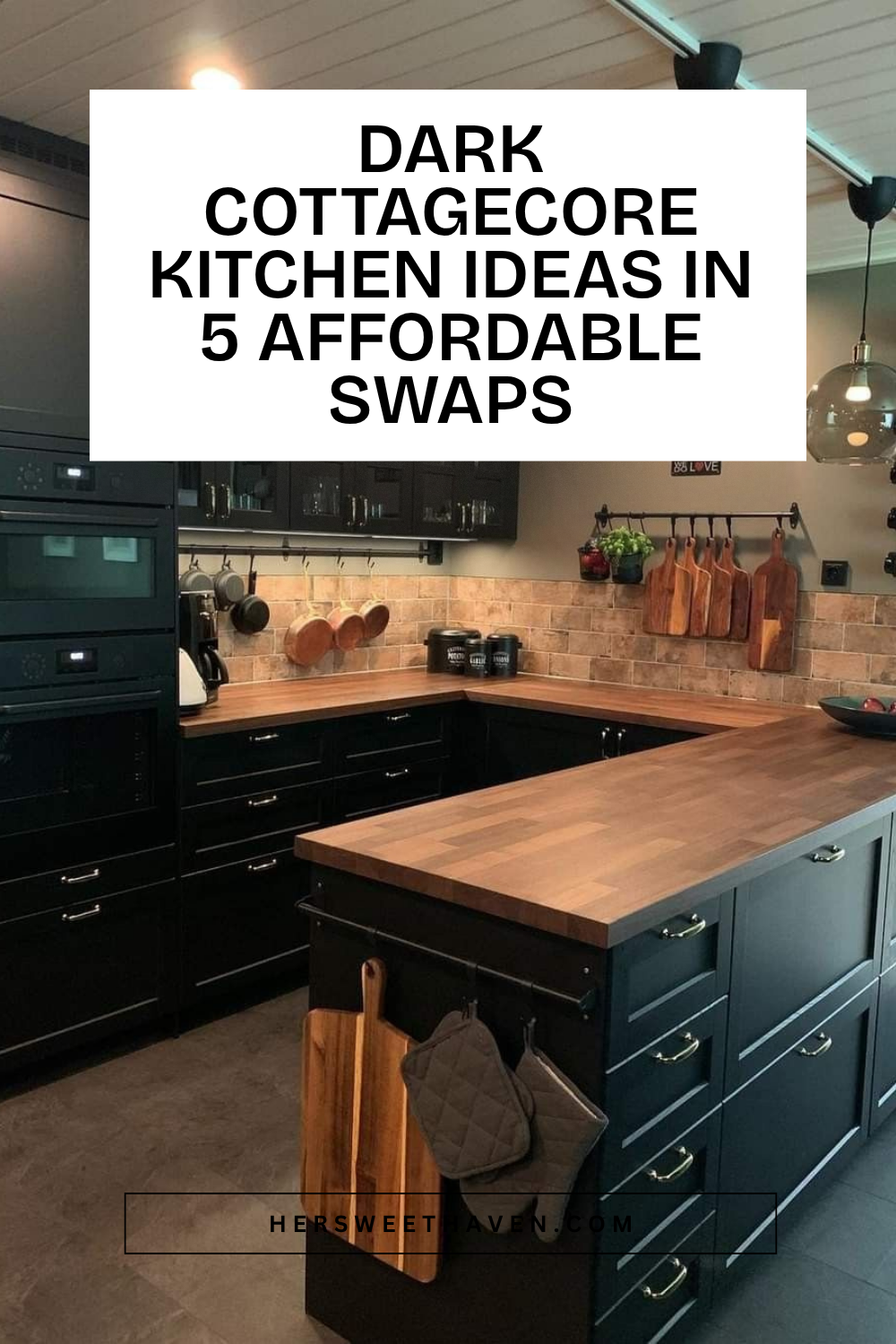
Dark Cottagecore Kitchen Ideas in 5 Affordable Swaps
You don’t need a full remodel to get this look. Here are five budget-friendly changes that make a real impact.
1. Paint Your Lower Cabinets
A can of paint in deep forest green, charcoal, or navy is the single most effective swap you can make. Keep the uppers light or remove the doors for open shelving. Make sure to choose a shade with warm undertones so it reads as cozy rather than cold.
2. Swap Hardware for Brass or Antique-Style Knobs
Replacing standard chrome or brushed nickel handles with brass cup pulls, antique bronze knobs, or wrought iron handles instantly shifts the mood. This takes about an hour and costs very little.
3. Add Under-Cabinet LED Strip Lights
Warm-toned LED strips under your cabinets are one of the most affordable lighting upgrades available. They plug in, stick on, and immediately solve the shadow problem that makes dark kitchens feel gloomy. Look for 2700K warm white strips for the coziest glow.
4. Layer in Thrifted Vintage Decor
Thrift stores are a goldmine for cottagecore kitchen ideas. Look for hand-painted ceramic mugs, vintage spice tins, old wooden cutting boards, cast-iron trivets, and mismatched floral plates. A few well-chosen pieces on open shelving can set the entire aesthetic.
5. Hang Dried Herbs and Add Potted Greenery
Dried lavender, rosemary, and eucalyptus bundles hanging from hooks or a ceiling rack add instant rustic charm. Fresh potted herbs on the windowsill and trailing plants on top of cabinets bring life and a pop of green against the dark tones. This is one of the easiest ways to make a moody cottagecore kitchen feel alive and connected to nature.
The Dark Cottagecore Kitchen Trend Has Real Staying Power
This isn’t just another Pinterest phase that’ll disappear by fall. The dark cottagecore kitchen movement reflects something deeper: people want their homes to feel personal, collected, and real. Not perfect, not pristine, not Instagram-sterile.
The beauty of this trend is that it meets you where you are. You can paint one set of cabinets, swap your hardware, hang some dried herbs, and already feel the difference. You don’t need a designer’s budget or a homeowner’s freedom. You just need to start.
If you’re looking to bring that same cozy, personal energy to other rooms in your home, here’s how to start creating a cozy retreat in your home with the same layered, collected approach.
Pick one swap from this list. Try it this weekend. And when your kitchen starts to feel like a moody, candle-lit fairy tale, save this post so you remember where you got the idea.

Leave a Reply