

Business attire gets overcomplicated fast. You start looking for one good work outfit and suddenly you are comparing blazer lengths, trouser rises, heel heights, office dress codes, and whether a white sneaker is somehow career-ending.
I have found that the women who always look polished at work usually are not wearing wildly different outfits every day. They have a handful of shapes that fit well, a small color palette, and a few combinations they know they can put on without thinking too hard.
That is the system I would build around. Good fit first, repeatable pieces second, and enough personality that you still feel like yourself when you walk into the office.
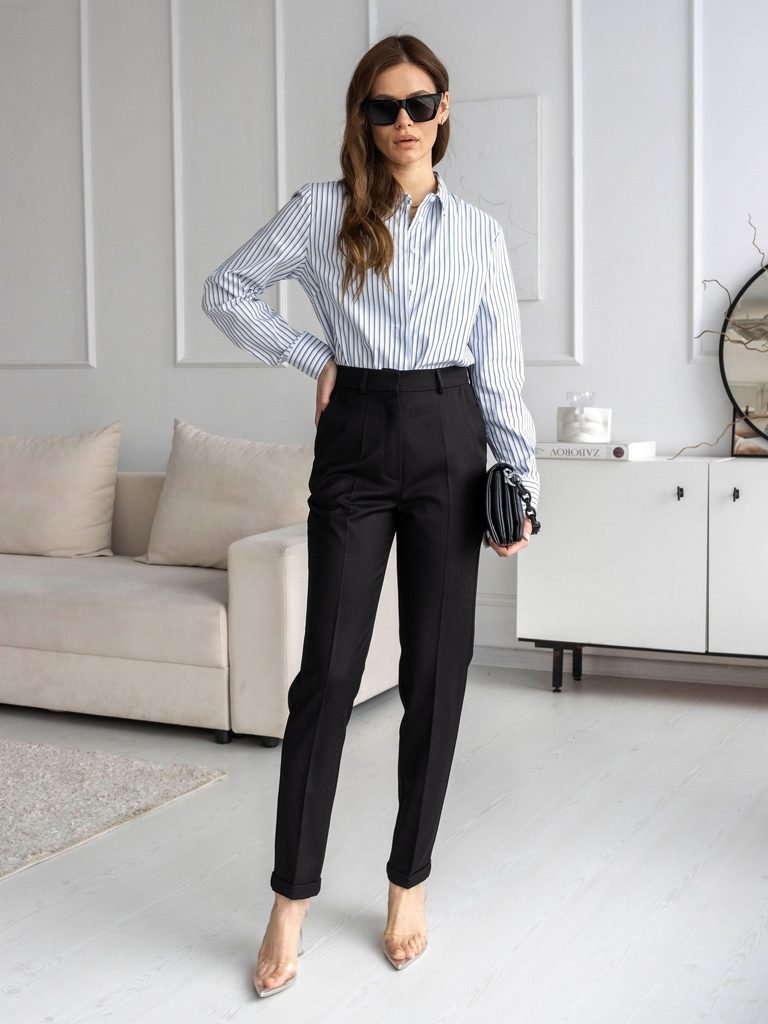
Photo by Александр Слесарев on Pexels
A crisp shirt is a good example of why simple pieces still work. The outfit does not need five layers or a dramatic trend to look intentional. Clean lines, a good fit, and one or two stronger details can carry the whole thing.
Rule #1: Fit Beats Fancy
The easiest way to make work clothes look more expensive is to make sure they actually fit you. A blazer can be beautifully made and still look awkward if the shoulders sit in the wrong place or the sleeves cover half your hands.
The same thing happens with trousers. I want the waistband to sit comfortably, the fabric to fall cleanly, and the hem to make sense with the shoes I actually wear. If I have to keep pulling, folding, pinning, or adjusting something all day, it is not helping me look polished.
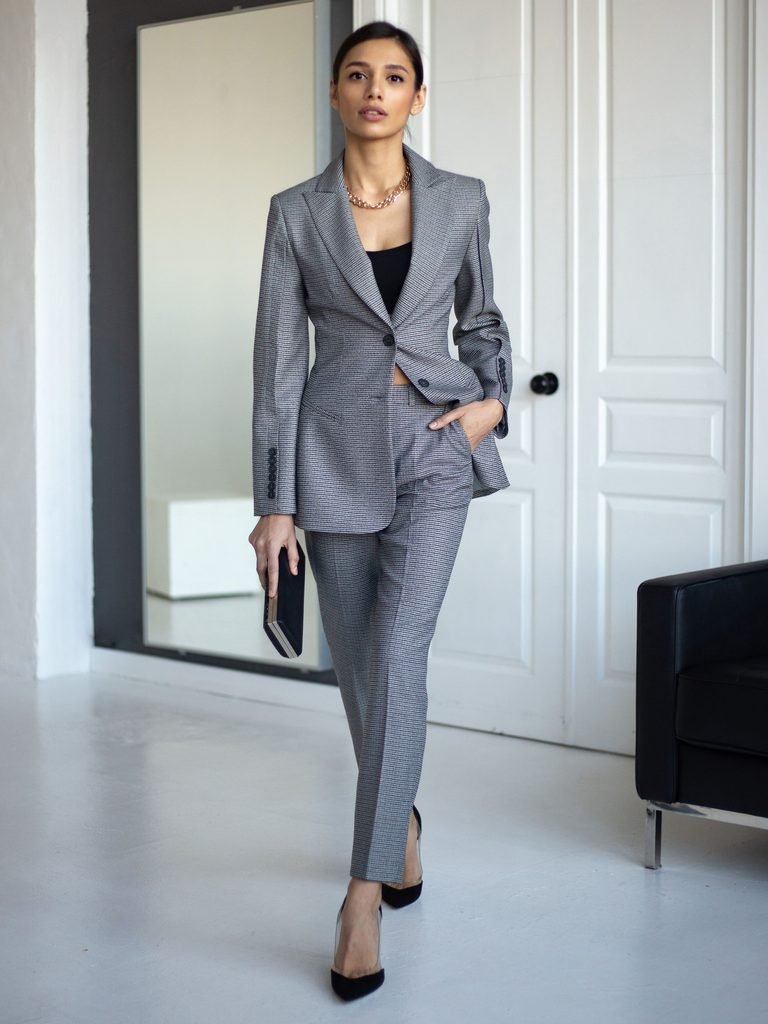
Photo by Александр Слесарев on Pexels
A gray suit like this works because the silhouette does most of the talking. The color is quiet, but the outfit still looks strong because the jacket and trousers feel deliberate together.
This is why I would spend money on tailoring before buying another random work top. Even basic hemming or a sleeve adjustment can make something you already own look much better, though the cost obviously depends on where you live and how much work the garment needs.
Wrinkles matter too. A well-fitted shirt that looks like it spent the night crushed under a suitcase is still going to feel unfinished. A steamer is one of the least exciting workwear purchases and one of the most useful.
Rule #2: Build Around Three Reliable Pieces
If I had to rebuild a work wardrobe from almost nothing, I would start with three things: a blazer, tailored trousers, and a white or cream shirt.
Not because everyone needs to dress like a corporate uniform, but because those three pieces give you a base you can keep changing. Wear them together, split them up, add a knit, swap the trousers for a skirt, or throw the blazer over a dress.
The White Shirt Still Earns Its Place
A white shirt can look strict if you button it all the way up with a matching suit, or much softer if you wear it slightly relaxed with a skirt or looser trousers.
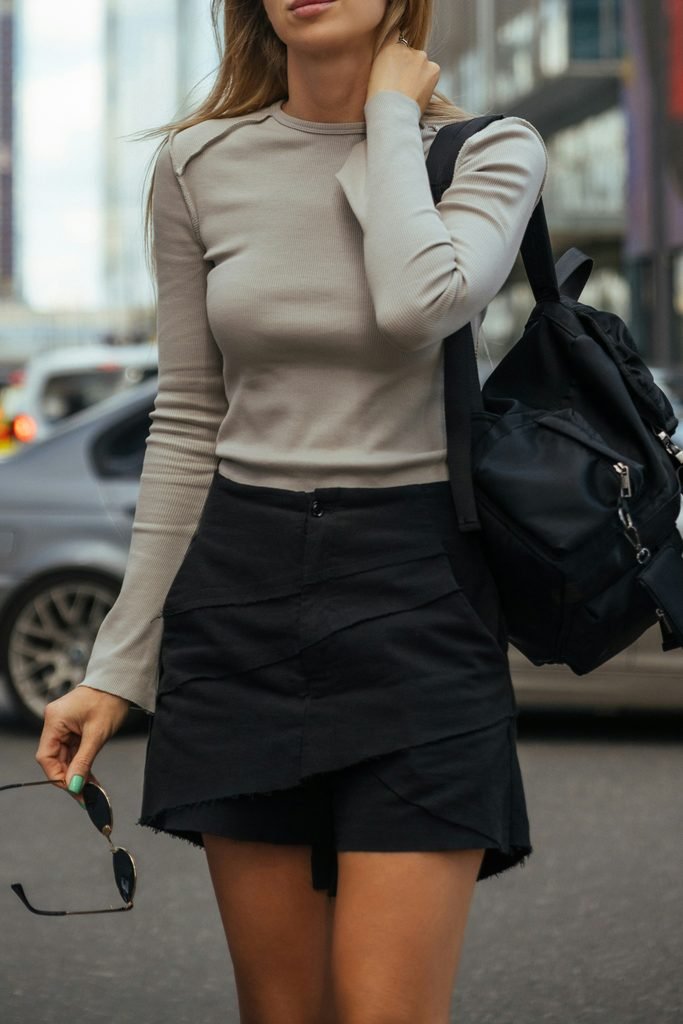
Photo by Vladimir Fedotov on Unsplash
I like this kind of combination because it proves the base does not have to mean trousers every single day. A white shirt with a dark skirt is still extremely easy to repeat, but it changes the shape of the outfit enough that your wardrobe does not feel like one endless suit.
If bright white feels too sharp on you, cream, soft ivory, pale blue, or a very subtle stripe can fill the same role.
Keep the Base Palette Easy on Purpose
Black, navy, gray, camel, cream, chocolate, and white are useful because they cooperate with each other. You do not need all of them. Pick a small group that already matches the shoes and bags you own.
The point is not to make your wardrobe boring. It is to stop every morning from becoming a color puzzle.
Then add interest through shape, texture, and one stronger piece. A fine knit, satin blouse, pinstripe trouser, leather loafer, textured bag, or slightly oversized blazer can make neutrals feel much less predictable.
Rule #3: Stop Inventing an Outfit Every Morning
Decision fatigue is real at 7 a.m. I do not want to stand in front of my closet creating a completely new fashion concept before coffee.
I would rather have three or four outfit formulas that I already know work and simply rotate the pieces inside them.
Formula A: Tailored, but Not Too Corporate
Start with trousers, add a softer top, then bring the structure back with a blazer. Fine knits, fluid blouses, fitted tees in the right office, and simple sleeveless tops can all work underneath depending on your workplace.
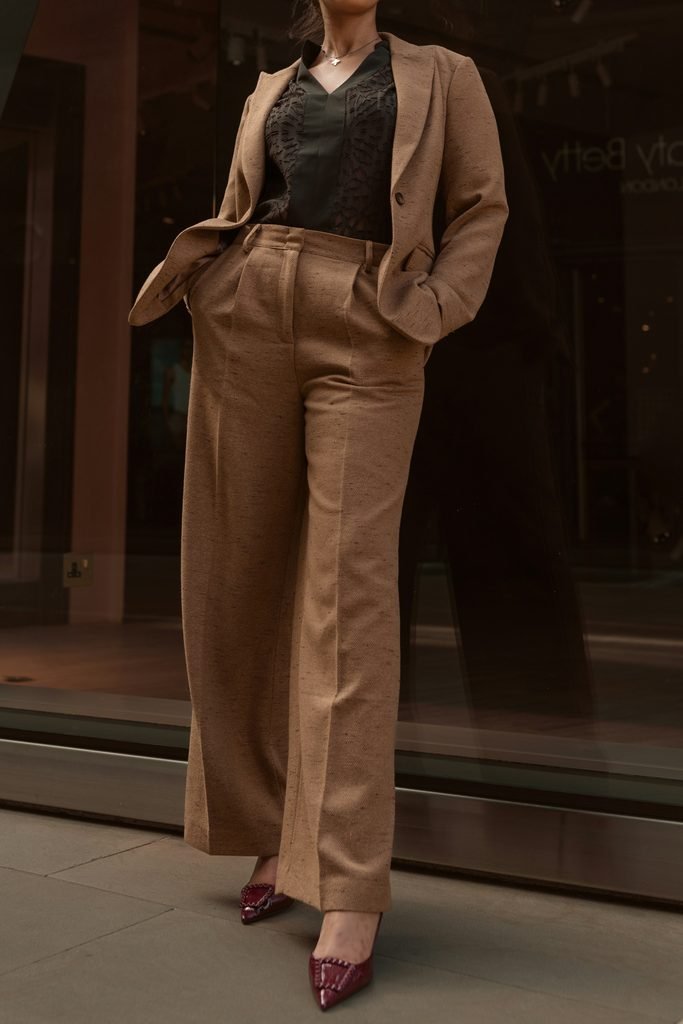
Photo by Alekon pictures on Unsplash
A pantsuit can look very formal, but styling changes the mood quickly. The same suit with a simple top, relaxed hair, and minimal accessories feels much less stiff than a fully traditional shirt-and-pump combination.
This formula is useful because you can adapt it during the day. Keep the blazer on for a meeting, take it off at your desk, and the rest of the outfit still makes sense.
Formula B: The Polished City Look
Not every office outfit needs to be a matched suit. A blazer with different trousers often feels more modern, especially when the colors are still related.

Photo by Larysa Stratiichuk on Pexels
This is the kind of outfit I like for a normal office day, coffee meeting, or work lunch. It still reads professional, but it does not look like you are headed into a board meeting every time you leave your desk.
A structured bag and simple shoes finish this formula better than piling on jewelry. If the clothes already have a clear silhouette, I usually keep the accessories quiet.
Business Professional, Decoded
Business professional is the more formal end of workwear. Think coordinated suiting, polished shoes, restrained accessories, and pieces that hold their shape.
The exact expectations vary by company, industry, country, and even the team you work with. Law, finance, interviews, formal client meetings, and traditional offices may lean stricter, while another workplace can call a much softer look “professional.”

Photo by Omar Ramadan on Pexels
A navy blazer and trouser combination is one of the safest examples because it looks polished without depending on black. Navy also works beautifully with cream, pale blue, camel, burgundy, and most metallic jewelry.
If I am dressing for an interview and I genuinely do not know the office culture, I would rather start slightly more polished and adjust after I have seen how the team actually dresses.
Business Casual, Decoded
Business casual is where the rules get fuzzy because every company seems to use the phrase differently. In one office it means trousers and loafers without a blazer. In another, dark jeans and clean sneakers are completely normal.
That is why I would watch the actual workplace instead of treating one internet checklist like law.
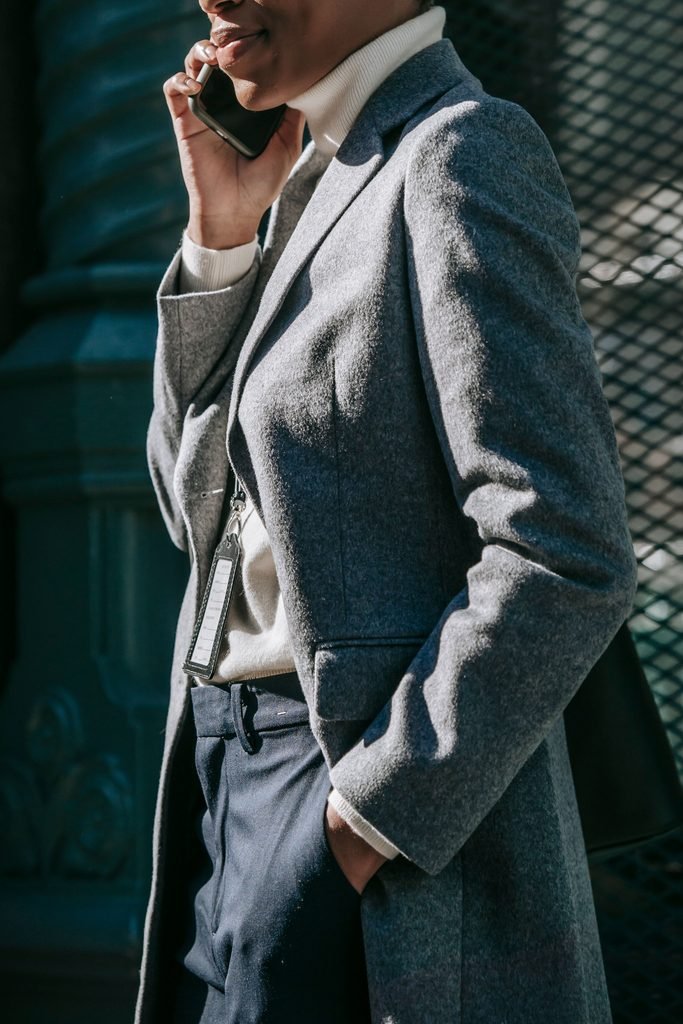
Photo by Ono Kosuki on Pexels
For me, the easiest business casual outfits still have one polished anchor. Maybe the blazer is doing the work while the trousers are more relaxed. Maybe the top is simple, but the shoes and bag are clean and structured.
That one anchor keeps “casual” from turning into “I accidentally wore my weekend outfit to a meeting.”
Can You Wear Sneakers to the Office?
Sometimes, absolutely. Clean, minimal sneakers can look great with tailored trousers or a simple suit in workplaces where the dress code allows them.
I would not assume that means every sneaker works everywhere. A bulky running shoe reads differently from a sleek leather or leather-look pair, and a formal office may still expect loafers, flats, heels, or another traditional work shoe.
If you are new, look at what your coworkers and managers actually wear and check the written dress code if there is one.
The Commute Outfit Counts Too
One thing most business-attire guides ignore is that you have to get to work in these clothes. If your commute includes walking, trains, buses, school drop-off, or grabbing coffee on the way in, the outfit needs to survive more than an office chair.
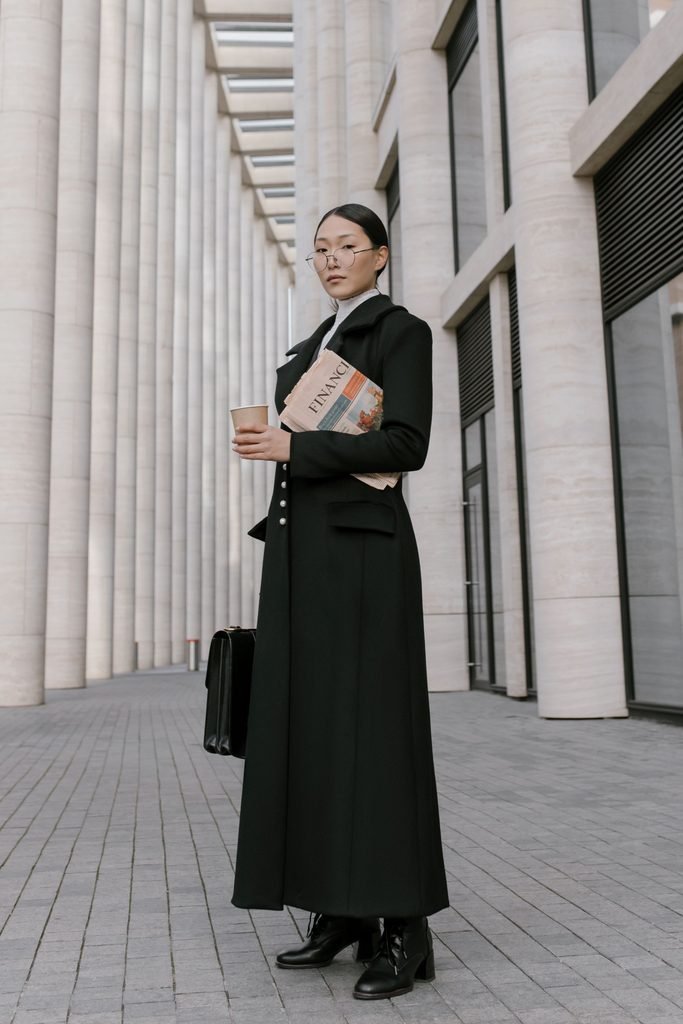
Photo by cottonbro studio on Pexels
A good coat can do a lot of work because it is the first thing people see for half the year in colder climates. I would rather own one coat that fits well over blazers than three trendy ones that only work over thin tops.
The same goes for shoes. There is nothing wrong with commuting in a comfortable pair and changing at the office if that is what your day requires.
The Little Details That Make Workwear Feel Finished
Once the outfit itself works, I do not add much. A watch if you wear one, small earrings, a simple necklace, and a bag that holds what you actually need are usually enough.

Photo by August de Richelieu on Pexels
I care more about whether the bag looks good after daily use than whether it has a designer label. Work bags get put on floors, shoved under desks, carried through rain, filled with chargers, and asked to hold far more than the product photo ever suggested.
If you carry a laptop every day, make sure the bag actually fits it comfortably. A beautiful tiny tote is not useful if you also need a second bag for the thing you brought to work to use.
How I Would Build a Work Wardrobe on a Budget
I would not buy ten complete outfits. I would buy a few pieces that can keep meeting each other in different combinations.
Start with one blazer, one pair of trousers, two tops, and either a skirt or a simple dress depending on what you actually wear. If those five pieces all work together, you already have more options than five unrelated “work outfits.”
Thrift stores and resale platforms can be especially good for blazers, wool coats, trousers, and structured bags because those categories often hold up well. Just check condition, lining, buttons, zippers, and whether alterations are realistic before buying something only because the price is good.
Build Slowly Instead of Buying the Whole Closet at Once
The fastest way to waste money is to decide you need a “professional wardrobe” and buy an entirely new identity in one weekend.
Wear the first few pieces. Notice what you reach for. Then fill the real gaps.
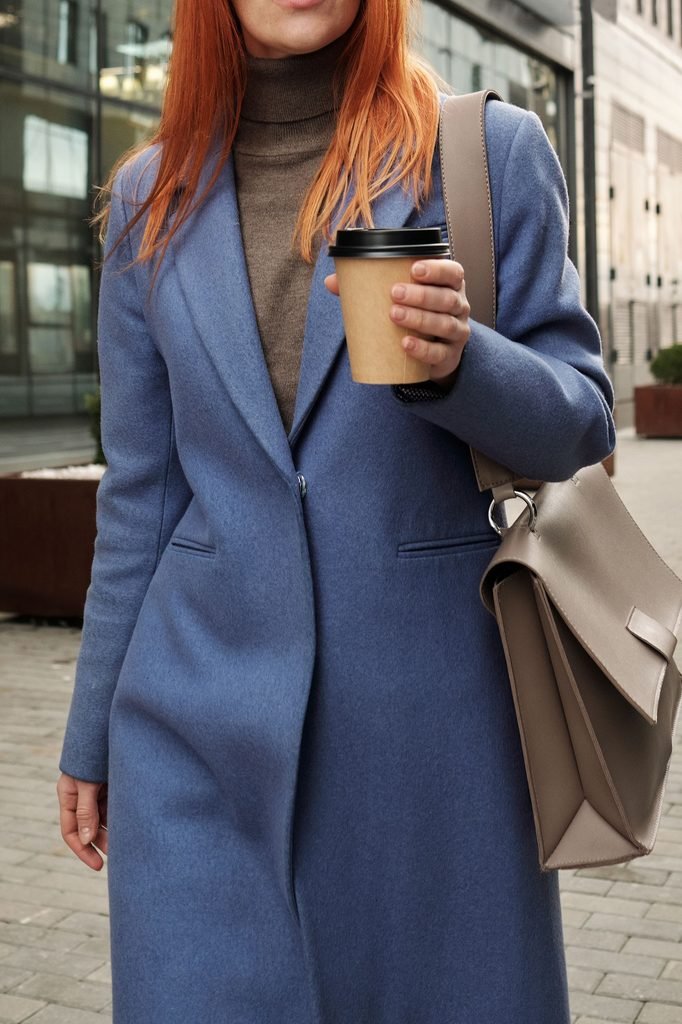
Photo by Jack Sparrow on Pexels
The goal is a wardrobe that works on an ordinary Tuesday, not just one that looks impressive hanging neatly in a closet. If you can get dressed, grab coffee, commute, sit through meetings, and still feel like yourself by the end of the day, the clothes are doing their job.
Where I Would Save and Where I Would Spend
I am happy to save on simple tops, trend pieces, and things I know will be rotated often. I am also happy to thrift a blazer if the fabric and construction are good.
I am more willing to spend on shoes, bags, and the pieces I wear several times a week. Those items take more abuse, and a comfortable shoe you genuinely reach for is more useful than four cheaper pairs that hurt.
Tailoring belongs somewhere in the middle. You do not need to alter every item you own, but fixing the hem on a great pair of trousers can be more useful than buying another pair that almost fits.
That’s the Whole System
Fit first. Pick a small group of pieces that cooperate. Keep a few outfit formulas ready. Learn what your actual workplace means by business professional or business casual instead of guessing from the label alone.
Then repeat what works.
You do not need a huge wardrobe, and you definitely do not need to reinvent yourself every Monday morning. You need clothes that fit, shoes you can live in, a bag that does its job, and enough combinations that getting dressed stops feeling like a negotiation.
That is what polished workwear looks like to me.


Leave a Reply