

Here’s something most plant guides won’t tell you upfront: Huernia succulents are not cacti. They look like cacti, they’re often sold alongside cacti, and they’re commonly called “lifesaver cactus” at garden centers. But they’re actually members of the milkweed family, native to eastern and southern Africa, where they grow underneath shrubs in dappled shade rather than in full desert sun. That single piece of information changes everything about how you care for them, and it’s the reason so many people accidentally kill their first one.
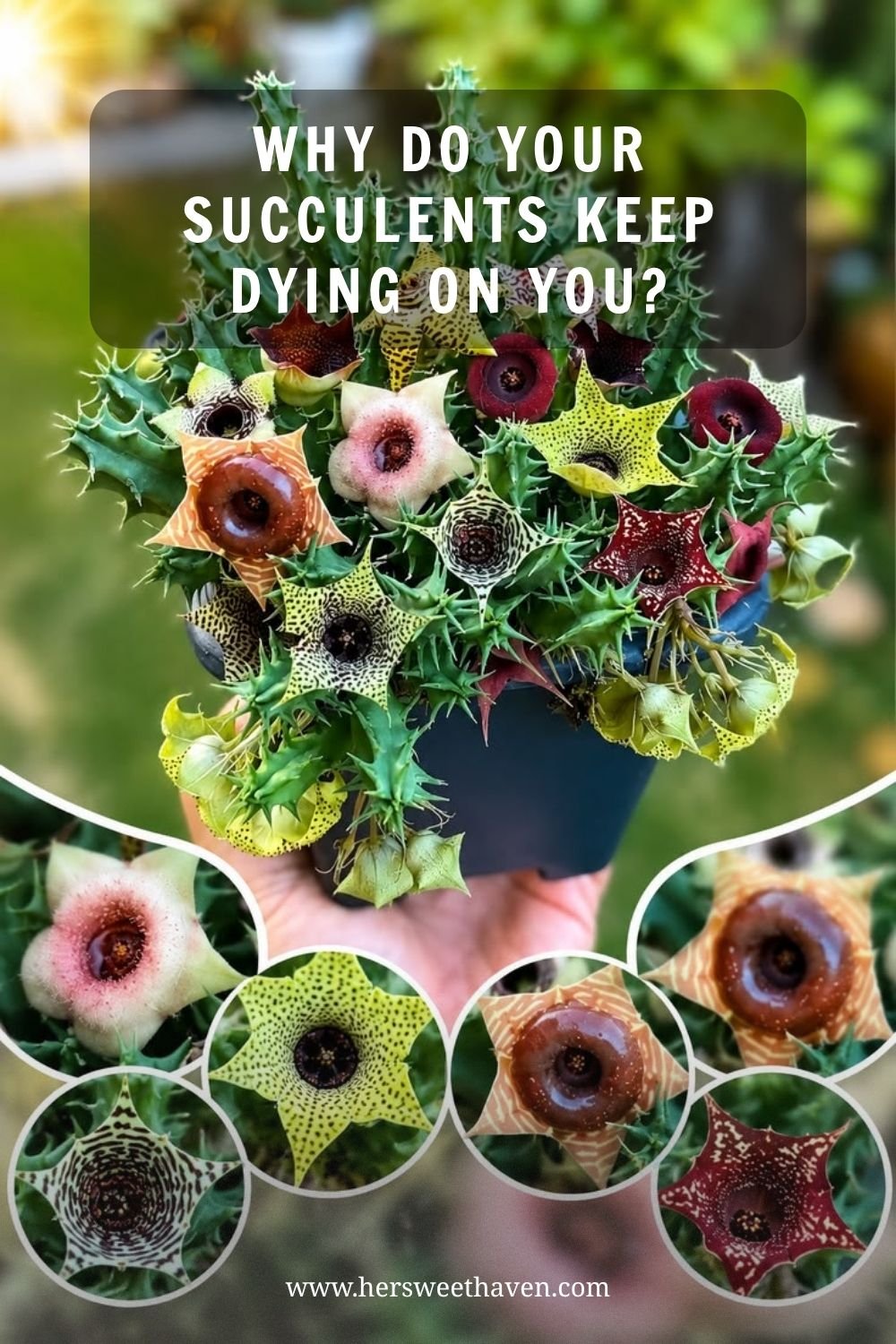
Huernia succulents are grown for their bizarre, beautiful star-shaped flowers that look like something from another planet. The blooms come in deep reds, creamy yellows, leopard-spotted patterns, and zebra stripes, often with a raised ring in the center that looks exactly like a lifesaver candy. Once you get the care right (and it’s not hard once you know the basics), these plants reward you with flowers that will stop every visitor in their tracks. This guide covers the care secrets that actually matter, the watering mistakes that kill these plants, how to grow them indoors, why they keep dying on beginners, and whether they can survive without direct sunlight.
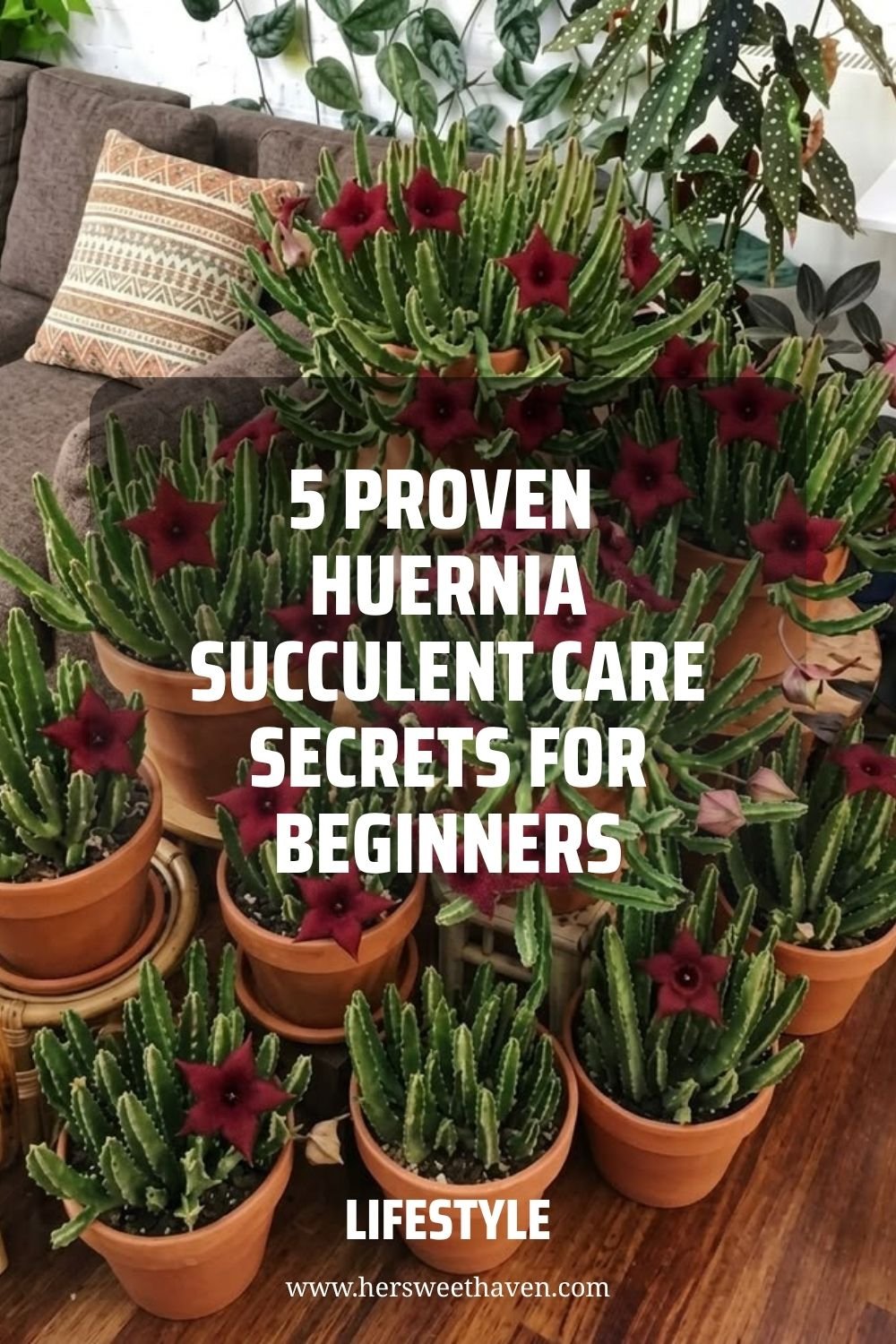
5 Proven Huernia Succulent Care Secrets for Beginners
The biggest misconception about Huernia care is that it’s complicated. It’s not. But it does require understanding a few specifics that differ from how you’d care for a typical succulent like an Echeveria or a Jade plant.
Bright Indirect Light, Not Full Sun
This is the care secret that trips up the most people. Unlike most succulents, Huernias don’t want to bake in direct afternoon sun. In their natural habitat, they grow under the canopy of larger shrubs, receiving filtered or dappled light. World of Succulents’ care guide confirms that too much direct sun causes stems to develop a stressed reddish-purple pigmentation and can scald the plant.
The sweet spot is bright indirect light or gentle morning sun. An east-facing window is ideal for indoor growing. If you only have a south-facing window, pull the plant back a foot or two from the glass or use a sheer curtain to filter the intensity. If the stems are stretching and getting thin, the plant needs more light. If they’re turning red or brown, it’s getting too much.
The Right Soil Mix Makes or Breaks It
Huernias absolutely require fast-draining soil. A standard potting mix will hold too much moisture and rot the roots within weeks. Succulent care specialists recommend a mix of 50 percent pumice or perlite, 25 percent peat or organic mulch, and 25 percent coarse sand. This combination lets water flow through quickly while still providing enough nutrients for growth.
If you don’t want to mix your own, a commercial cactus and succulent mix works as a base, but it’s usually better when amended with extra perlite or pumice to speed up drainage. The soil should feel gritty between your fingers, not spongy or smooth.
Shallow Pots with Drainage Holes
Huernias have shallow root systems, so deep pots are a problem. The bottom half of a deep pot stays wet long after the top has dried out, and those soggy lower layers are where root rot starts. Experienced Huernia growers recommend shallow terracotta pots because they dry out faster than plastic or glazed ceramic, and they provide stability for the top-heavy stems.
Always make sure your pot has at least one drainage hole. No exceptions. A pot without drainage is the fastest way to kill any succulent, and Huernias are especially sensitive to sitting in water. If you want to display your plant in a decorative pot without holes, keep it in a plain nursery pot inside the decorative one and remove it for watering.
Feeding Lightly During the Growing Season
During spring and summer when Huernias are actively growing, a light feeding once a month supports healthy stems and better flower production. Succulent care guides recommend a high-phosphorus, low-nitrogen fertilizer diluted to half strength. Phosphorus encourages blooming, while too much nitrogen causes leggy, weak growth.
Stop fertilizing completely in fall and winter when the plant enters dormancy. Feeding a dormant plant forces growth at a time when the plant should be resting, and that stressed growth is vulnerable to rot and disease. If you enjoy growing unusual plants, these raised garden bed ideas can help you create a dedicated succulent garden area outdoors during warm months.
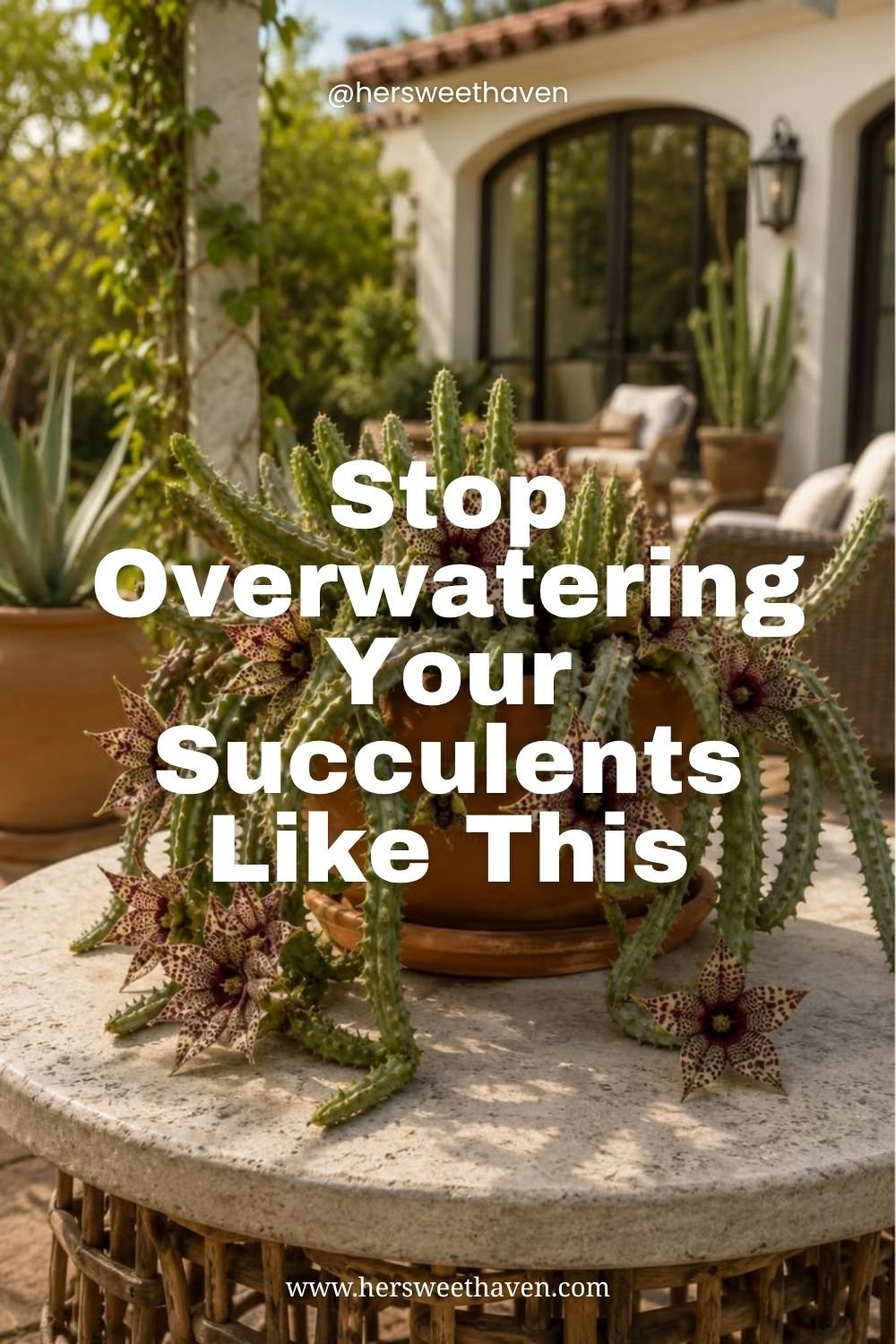
Stop Overwatering Your Succulents Like This
Overwatering is the number one killer of Huernia succulents. Not pests, not cold, not poor soil. Water. Getting this one thing right will solve about 80 percent of the problems people have with these plants.
How to Water Huernias Correctly
The rule is simple: water thoroughly, then wait until the soil dries out before watering again. During the active growing season (spring and summer), this usually means watering once every seven to ten days depending on your climate, pot size, and soil mix. During winter dormancy, cut back to once every three to four weeks, or even less if the plant is in a cool, low-light spot.
Detailed Huernia care guides recommend the finger test: push your finger an inch into the soil. If it feels dry, water. If it feels cool or damp at all, wait. When you do water, soak the soil thoroughly until water runs out the drainage hole, then let it drain completely. Never leave the pot sitting in a saucer of water.
Signs You’re Overwatering
The earliest warning sign is soft, mushy stems, especially near the base of the plant. Dark spots or black discoloration on the stems is another red flag. By the time you notice a foul smell, the rot has usually spread to the roots and the plant may be beyond saving.
Succulent health resources note that wrinkled stems can actually mean two different things: either the plant is thirsty (which is fixable) or the roots are already damaged from overwatering and can’t absorb water anymore (which is harder to fix). Always check the soil before adding water. If the soil is bone dry and the stems are wrinkled, water normally. If the soil is damp and the stems are still wrinkled, pull the plant out and inspect the roots for rot.
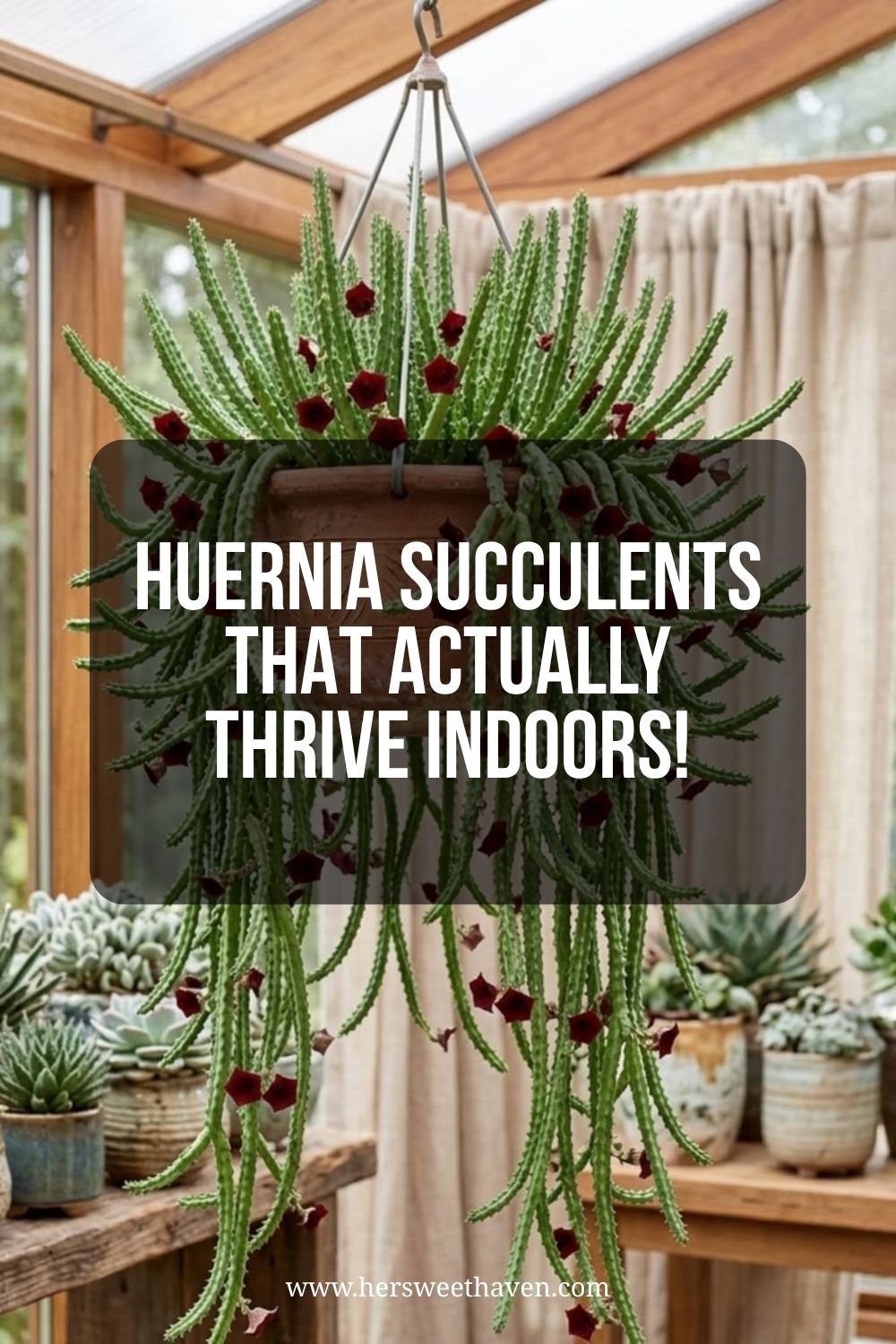
Huernia Succulents That Actually Thrive Indoors
Not all succulents are good houseplants, but Huernias are actually well-suited to indoor growing because they don’t need intense direct sun. Their compact size and trailing growth habit make them perfect for windowsills, shelves, and hanging planters.
Best Varieties for Indoor Growing
Huernia zebrina (the lifesaver plant) is the most popular indoor variety because of its striking flowers and compact growth habit. Huernia schneideriana is another excellent choice for indoors, producing clusters of deep red, bell-shaped flowers on trailing stems that look gorgeous in a hanging basket. Huernia keniensis has longer, trailing stems that drape beautifully over the edge of a shelf or high planter.
Indoor succulent guides recommend placing Huernia in the brightest available position indoors, ideally near a south-facing or east-facing window. If your home doesn’t get enough natural light, a simple grow light positioned a few inches above the plant will fill the gap.
Creating the Right Indoor Environment
Huernias like warm, dry air, which happens to be exactly what most homes provide. They grow best between 65 and 85 degrees Fahrenheit and tolerate the low humidity of heated or air-conditioned rooms without any issues. No misting required. In fact, misting can cause stem rot by keeping the plant surfaces too wet.
Good air circulation matters, especially after watering. A gentle fan or an open window nearby helps the soil surface dry faster and prevents the stagnant moisture that leads to fungal problems. Small garden design tips can also help you create a compact indoor succulent corner that maximizes light and airflow in a small space.
Why Do Your Succulents Keep Dying on You?
If you’ve killed more than one Huernia (and plenty of experienced plant parents have), the cause is almost always one of these three issues. The good news is they’re all preventable.
Too Much Water, Too Little Drainage
This is the combination that kills more Huernias than anything else. Even if you’re watering on a perfect schedule, the wrong pot (no drainage hole) or the wrong soil (too dense, too moisture-retentive) can keep the roots wet for days after watering. Succulent experts emphasize that Huernia survives short drought better than soggy roots, so when in doubt, wait another day or two before watering.
Too Much Direct Sun
People see “succulent” and assume “full sun.” With Huernias, that assumption leads to scorched, discolored stems and a stressed plant that stops flowering. Remember that these are shade-loving plants in nature. Bright indirect light keeps them healthy and green. Direct afternoon sun, especially through a window that magnifies heat, can damage them quickly.
Ignoring Winter Dormancy
Huernias need a rest period in winter. If you keep watering and fertilizing at the same rate year-round, the plant never gets the dormancy it needs to reset and prepare for the next blooming cycle. Seasonal care guides recommend reducing watering significantly in winter, stopping all fertilizer, and keeping the plant in a cool (but not freezing) spot. This rest period is often what triggers flowering in the following spring and summer.
Can Succulents Survive Without Direct Sunlight?
This is one of the most common questions from people considering Huernias as houseplants, and the answer is surprisingly encouraging.
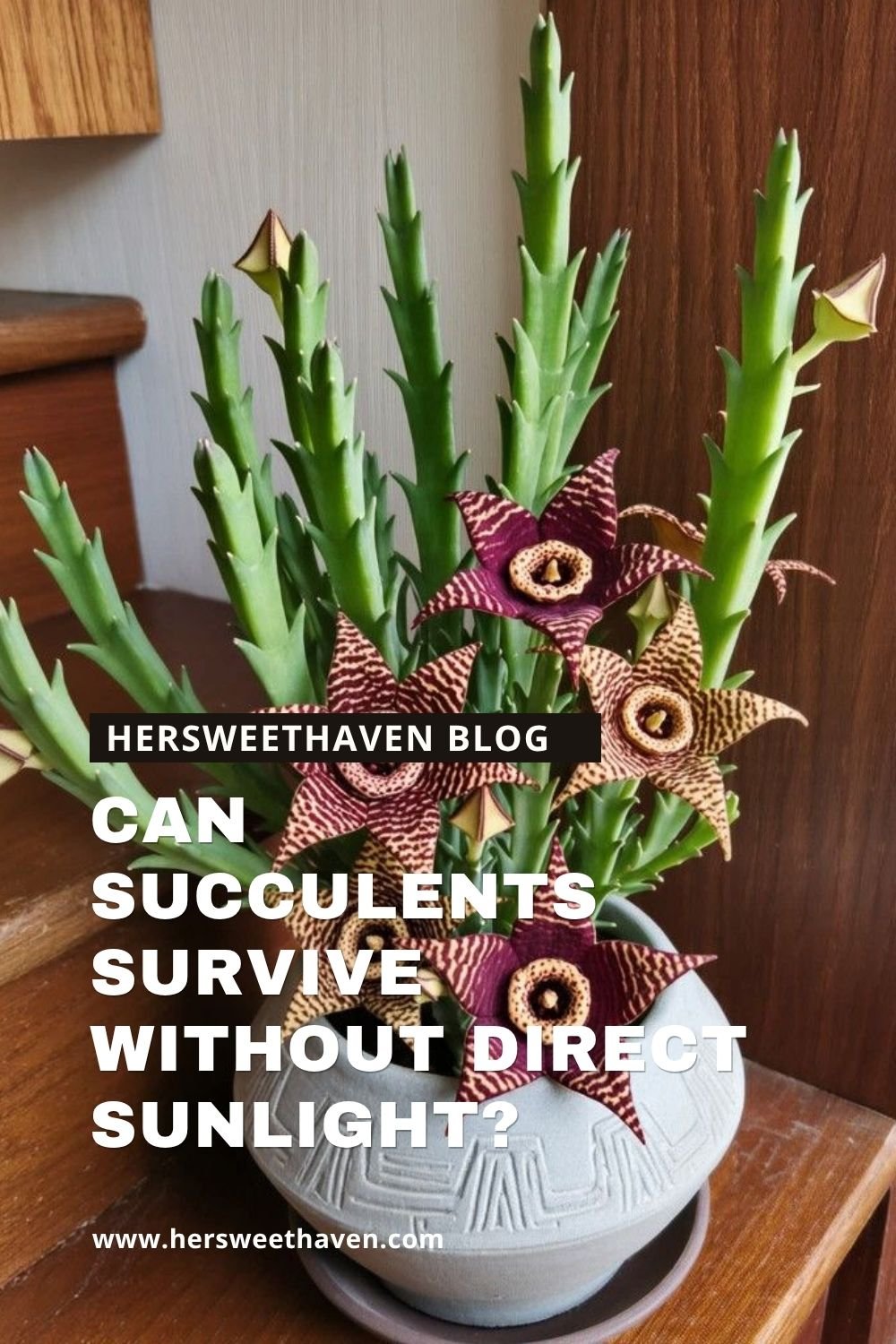
Huernias Are Built for Filtered Light
Yes, Huernia succulents can absolutely thrive without direct sunlight. They need bright light, but it doesn’t have to be direct. A room that gets plenty of ambient light from large windows, even without direct sun hitting the plant, is often enough to keep a Huernia healthy and growing.
Beginner succulent guides confirm that an east-facing or west-facing window provides the gentle morning or late-afternoon light that Huernias prefer. If your only option is a room with no windows or very low natural light, a grow light on a timer (12 to 14 hours per day) can substitute effectively.
How to Tell If Your Huernia Needs More Light
The signs of insufficient light are easy to spot. The stems will stretch and become long and thin (a process called etiolation), reaching toward whatever light source is available. The color may fade from deep green to a pale, washed-out tone. Flower production will slow down or stop entirely because the plant is putting all its energy into growing toward light rather than blooming.
If you notice these signs, move the plant to a brighter spot gradually. Don’t go from low light to a bright windowsill overnight, as the sudden change can shock and scorch the stems. Increase light exposure over a week or two so the plant has time to adjust.
Pairing Huernias with Other Indoor Plants
Huernias pair well with other low-to-medium light succulents like Haworthia, Gasteria, and small Sansevieria varieties. These plants have similar watering needs and light preferences, making them easy to group together on a windowsill or shelf without worrying about conflicting care requirements. Avoid grouping Huernias with tropical plants that need frequent watering, because the splash and humidity from those plants can cause issues for the drought-tolerant Huernia.
If you’re building out a broader plant collection at home, these bathroom plant decor ideas cover which plants handle humidity well and which (like Huernia) should stay in drier rooms.
Huernia succulents are one of those rare plants that reward you with something truly spectacular (those alien-looking flowers) in exchange for very little effort. The care comes down to three things: bright indirect light, fast-draining soil, and watering only when the soil is dry. Get those three right, and everything else falls into place. Your next step is finding a healthy Huernia zebrina or Huernia schneideriana at your local nursery or online, potting it up in gritty soil and a terracotta pot, and placing it near your brightest window. A few months from now, when those first star-shaped flowers appear, you’ll understand why people get hooked on these plants.




Leave a Reply