

Breakfast nook ideas are trending across Pinterest, Instagram, and home renovation shows because they solve a real problem: most families don’t eat in the dining room. They eat in the kitchen, standing at the counter or hunched over the island. A breakfast nook gives you a dedicated spot to sit down, slow down, and actually enjoy a meal without taking up the space a full dining table would require. Whether your kitchen is tiny or spacious, this guide covers the cozy nook ideas that work for small kitchens, the layout mistakes that waste space, how to build one in a single day, what to do when you think you don’t have room, and how to pull it off for under $100.
5 Cozy Breakfast Nook Ideas for Small Kitchens
Small kitchens benefit the most from breakfast nooks because the built-in seating approach uses space that would otherwise go empty. These are the configurations that work best when square footage is limited.
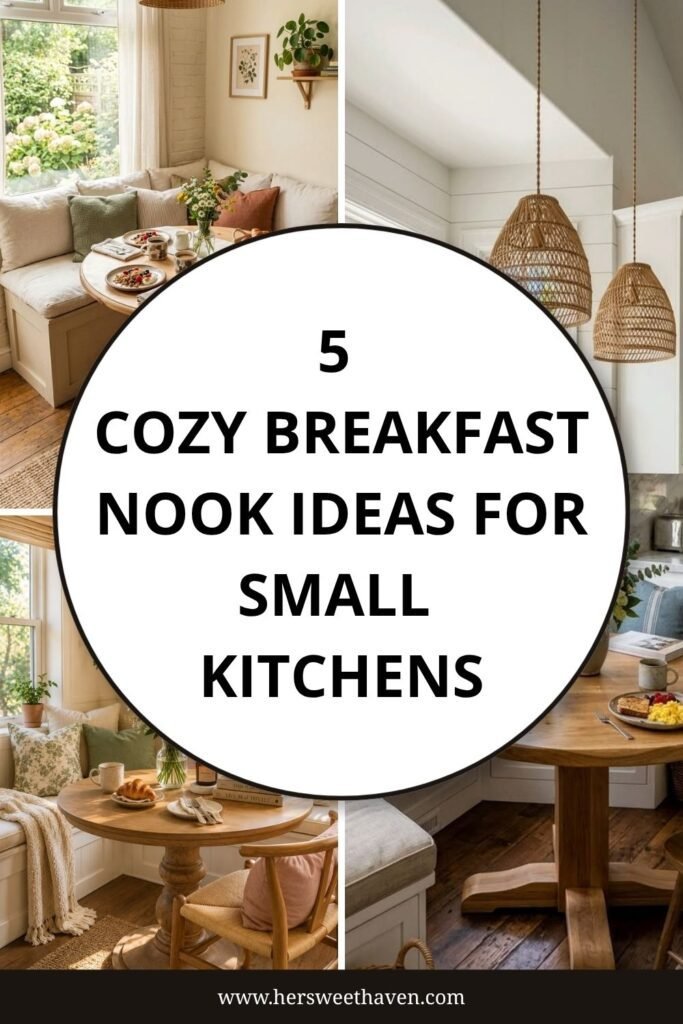
Corner Banquette with a Round Table
The L-shaped corner banquette is the most popular breakfast nook layout for small kitchens because it tucks into a corner that’s usually wasted space. HGTV’s breakfast nook showcase features dozens of examples where a custom or prefab bench built into a kitchen corner, paired with a small round pedestal table, creates seating for three or four people in a footprint that a standard dining set could never fit.
A round table works better than a rectangular one in tight nooks because there are no sharp corners to bump into and no dead space at the edges. A pedestal base (rather than four legs) makes it easier to slide in and out of the bench. Add two or three cushions in coordinating fabrics, a pendant light overhead, and the nook looks like it was always part of the original kitchen design.
Window Seat Nook with Built-In Storage
If your kitchen has a window along one wall, building a bench beneath it creates a dual-purpose nook: a place to sit for meals and a hidden storage area underneath for linens, cookbooks, or kids’ supplies. The Everyday Farmhouse’s nook guide highlights the bay window configuration as ideal because the curved or angled window adds natural light and a panoramic view, making the nook feel larger than it is.
The bench lid lifts up (or drawers pull out from the front) to access the storage compartment inside. This solves two problems at once: where to eat and where to store all the kitchen overflow that doesn’t fit in your cabinets. A simple cushion pad on top and a few pillows against the wall complete the setup.
Floating Shelf Nook with Lightweight Chairs
For kitchens where a built-in bench isn’t practical (rental apartments, open floor plans, or very narrow spaces), a wall-mounted floating shelf or a small drop-leaf table attached to the wall creates a breakfast surface without taking up floor space. Pair it with two lightweight chairs that can be pushed fully under the table when not in use, and you have a functional breakfast nook that essentially disappears when you need the floor space back.
Small kitchen nook resources confirm that this freestanding approach works well in open-concept kitchens and apartments where modular furniture that can be rearranged is more practical than permanent built-ins.
Avoid These Breakfast Nook Mistakes That Waste Space
A breakfast nook should make your kitchen feel bigger and more functional, not smaller and more cramped. These are the design errors that work against you.

Choosing a Table That’s Too Large
The table is the most common sizing mistake in breakfast nooks. A table that’s too wide blocks the bench, makes it hard to slide in and out, and dominates the entire corner. Kitchen nook designers recommend measuring your available space and then choosing a table that leaves at least 12 inches of clearance between the table edge and the bench back on all sides. For most small nooks, a round table between 36 and 42 inches in diameter is the sweet spot.
Pedestal tables are strongly preferred over four-legged tables in nooks because the legs of a standard table interfere with bench seating and make it awkward to get in and out. A single center pedestal keeps the floor open and makes the whole nook feel more spacious.
Skipping the Lighting
A breakfast nook without its own light source feels like an afterthought. The kitchen’s overhead lighting often doesn’t reach the nook properly, leaving it dim and uninviting. A single pendant light hung directly over the center of the table defines the nook as its own zone and provides focused light for eating, reading, or working.
Nook lighting guides recommend a dimmable pendant so you can adjust the mood from bright morning light to softer evening ambiance. Woven rattan pendants, glass globes, and simple linen drum shades are all popular choices that add character without overwhelming a small space.
Forgetting About Comfort
A beautiful bench that’s uncomfortable to sit on means nobody will use the nook. Hard wooden benches without cushions look clean in photos but feel punishing after five minutes. Invest in a bench cushion (even a simple foam pad covered in washable fabric) and add back support with a few pillows against the wall. The difference in how often the nook gets used is dramatic. If you enjoy creating cozy corners in your home, these reading nook ideas apply many of the same comfort principles to other small spaces.
Empty Corner to Cozy Breakfast Nook in One Day
You don’t need a contractor or a week of construction to create a breakfast nook. With a few smart purchases and a Saturday afternoon, you can turn an empty kitchen corner into a functional, cozy eating spot.
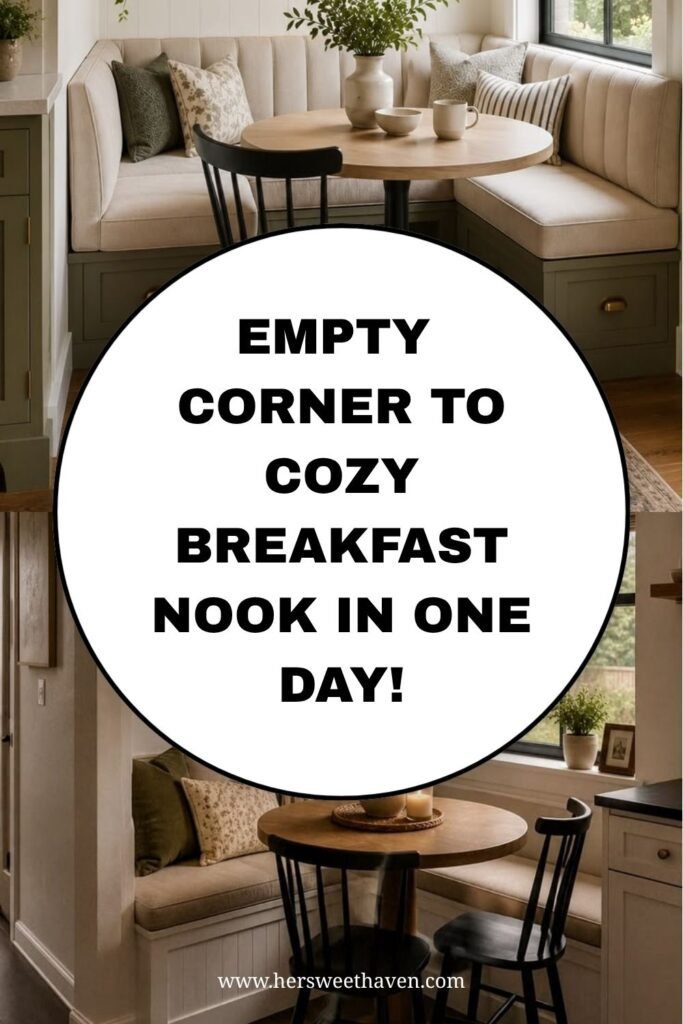
The Simple Setup Formula
The fastest route to a breakfast nook is a three-piece approach: a bench (or two chairs), a small round table, and a pendant light. A prefab storage bench from a home goods store ($80 to $150) placed against the wall with a cushion on top gives you the banquette effect without any building. A round pedestal table ($100 to $200) placed in front of the bench, plus one or two chairs on the open side, completes the seating.
Hang a pendant light from the ceiling directly above the table (most pendant kits come with everything you need for a simple swap from an existing fixture), add a small rug underneath to define the zone, and dress the bench with two or three throw pillows. The total setup time is about three to four hours, including hanging the light.
Adding the Finishing Touches
The details that make a breakfast nook feel designed rather than assembled are small but meaningful. A vase with fresh flowers or greenery on the table, a framed print or shelf with a small plant on the wall above the bench, and a woven basket or tray on the table for napkins and salt and pepper give the space warmth and personality.
Kitchen nook stylists at Jane at Home recommend blending the nook’s color palette with the rest of the kitchen so it feels integrated rather than tacked on. If your kitchen has warm wood tones, carry those into the nook with a wooden table and natural-fiber cushions. If your kitchen is white and modern, a clean-lined bench with neutral upholstery keeps the flow consistent. For tips on choosing kitchen finishes that coordinate with a nook, this guide to kitchen cabinet decisions covers the broader design thinking.
No Room for a Breakfast Nook in Your Kitchen?
If you’ve looked at your kitchen and concluded there’s no space for a nook, you might be underestimating what can fit in a small area. Some of the best breakfast nooks on Pinterest occupy less than 16 square feet.
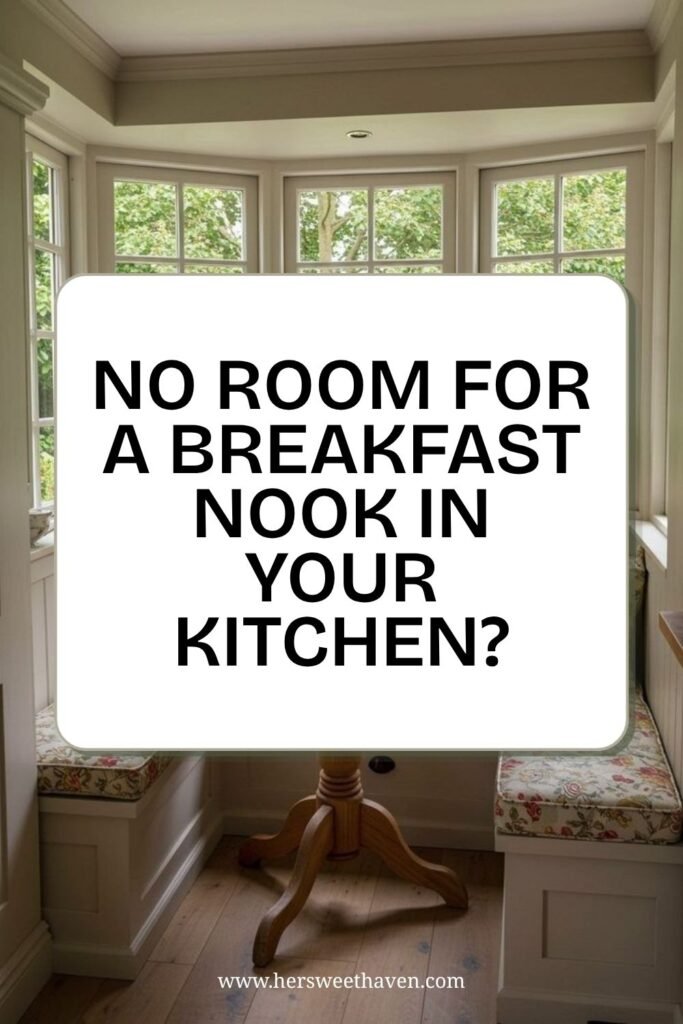
Bay Windows and Bump-Outs
A bay window is basically a breakfast nook waiting to happen. The recessed area created by the window provides natural seating depth without taking space from the kitchen’s main footprint. A custom bench built to fit the window’s curve (or even a few cushions placed on the existing window ledge if it’s wide enough) plus a small table is all you need.
Homedit’s 2026 breakfast nook roundup shows that built-in banquettes following window lines are one of the defining trends this year, treating the nook as a permanent architectural element rather than a furniture grouping. Even if you’re renting and can’t build in, a freestanding bench placed in front of a window creates the same visual effect.
Using the End of a Kitchen Island
If your kitchen has an island, the end of it can double as a breakfast nook wall. Place a small bench against the island’s end panel, add a pedestal table in front of it, and use one or two chairs on the opposite side. This approach works especially well in open-plan kitchens where a dedicated nook corner doesn’t exist but the island provides a natural boundary.
Hallway and Alcove Nooks
Don’t limit yourself to the kitchen. A hallway between the kitchen and a living room, an underused alcove, or even a wide landing at the top of stairs can become a breakfast nook with a small table and two chairs. The proximity to the kitchen matters more than being inside it. As long as you can carry a plate of toast and a cup of coffee without a major commute, the nook works.
How to Build a Breakfast Nook Under $100
A beautiful breakfast nook doesn’t require custom carpentry or a designer budget. These strategies keep the cost under $100 while still delivering a result that looks polished and intentional.

Repurposing What You Already Own
Before buying anything, check what’s available around your house. A wooden bench from the entryway can move to the kitchen. A side table that’s too small for the living room might be the perfect nook table. Cushions and pillows from a guest bedroom can dress a bare bench. The frame of a breakfast nook costs nothing if you relocate furniture you already have.
Family Handyman’s breakfast nook ideas confirm that the best small-space nooks often use a mix of repurposed and budget items rather than matched sets. A thrift-store bench ($15 to $30), a foam cushion pad from a fabric store ($20), and a small pedestal table from a garage sale ($20 to $40) give you the complete nook for well under $100.
Budget Breakdown for a New Nook
If you’re starting from scratch, here’s a realistic budget: a storage bench or simple wooden bench ($40 to $60 from discount furniture stores), a bench cushion ($15 to $25), two to three throw pillows ($10 to $15 total from a discount store), and a small round table ($30 to $50 secondhand or from a budget retailer). That’s $95 to $150 for the full setup, and the thrift-store route can bring it closer to $60 to $80 total.
Add a pendant light kit ($15 to $25) if your nook needs dedicated lighting, and a small rug ($10 to $20 from a discount store) to define the space. Even with every accessory included, you’re looking at well under $200 for a breakfast nook that feels like it was designed with intention. If you love the idea of creating cozy spots throughout your home, these cozy bedroom retreat tips use the same approach of combining comfort, light, and soft textures to make a space feel warm and inviting.
Here’s your quick-start plan: measure the emptiest corner of your kitchen, find a bench that fits, add a small round table, hang a pendant light, and dress it with cushions and a plant. That’s a breakfast nook. It takes one afternoon, costs less than a dinner out, and gives you a spot that will become your favorite seat in the house within a week. Start this weekend and thank yourself every morning after.

Leave a Reply