
Late afternoon, third week of June. Somebody’s uncle is guarding the grill like it’s federal property. There’s a red drink sweating onto a folding table, and that table has a cloth on it in red, black and green that somebody clearly thought about.
That table is why the day feels like a day instead of just a barbecue.
That’s the thing about Juneteenth decoration ideas. They’re not really about decoration. They’re about signaling that this gathering means something, before anyone says a word about it. And you don’t need a big budget or an event planner to do that. You need a palette, one focal point, and a table that looks like someone cared.
I’m going to walk you through it in four steps, in the order that actually works: understand the colors, lock the palette, build one big moment, then set the table. Plus the mistakes I made personally, which I’ll get to, because they were instructive.
By the end you’ll have a plan you can execute in an afternoon for under fifty dollars. Let’s go.
Start With What the Colors Mean
Don’t skip this part. It’s the difference between decorations that look thoughtful and decorations that look like generic party supplies.
The Juneteenth Flag
The flag is red, white and blue, and it’s more recent than most people think. Ben Haith created it in 1997 with illustrator Lisa Jeanne Graf, and it was revised in 2000 into the version we use now.
Every piece of it means something specific. The white star stands for Texas, where the news finally reached the last enslaved people, and for freedom across all fifty states. The burst around it is a nova, an astronomical new star, standing for a new beginning. The arc splitting the background is a new horizon.
The date “June 19, 1865” was added in 2007, so nobody could forget what it was for.
Red, Black, Green (and Gold)
Then there’s the other palette, and here’s the part that confuses people: both are correct. The Pan-African colors come from the flag Marcus Garvey and the UNIA created, and they show up in Juneteenth celebrations constantly. Red for the blood of ancestors, black for the people, green for the land.
Gold gets added as a fourth, standing for prosperity.
And red is the thread running through all of it. Red foods became a Juneteenth staple partly because, as culinary historian Michael Twitty explains, red treats were rare and special during enslavement when most food was white, green or brown, and partly because red carried meaning in the West African cultures those families came from.
So when you put a red cloth on a table, you’re not picking a color. You’re continuing something. (Which is a much better reason than “it matched the napkins,” which was my reason the first time.)
Step 1: Pick One Palette and Stop There
Now the actual work. Choose red-white-blue OR red-black-green-gold. Not both.
I know that sounds restrictive when both are legitimate. But mixing them gives you five or six competing colors and the whole thing turns to visual noise. Pick the one that fits your gathering and commit.
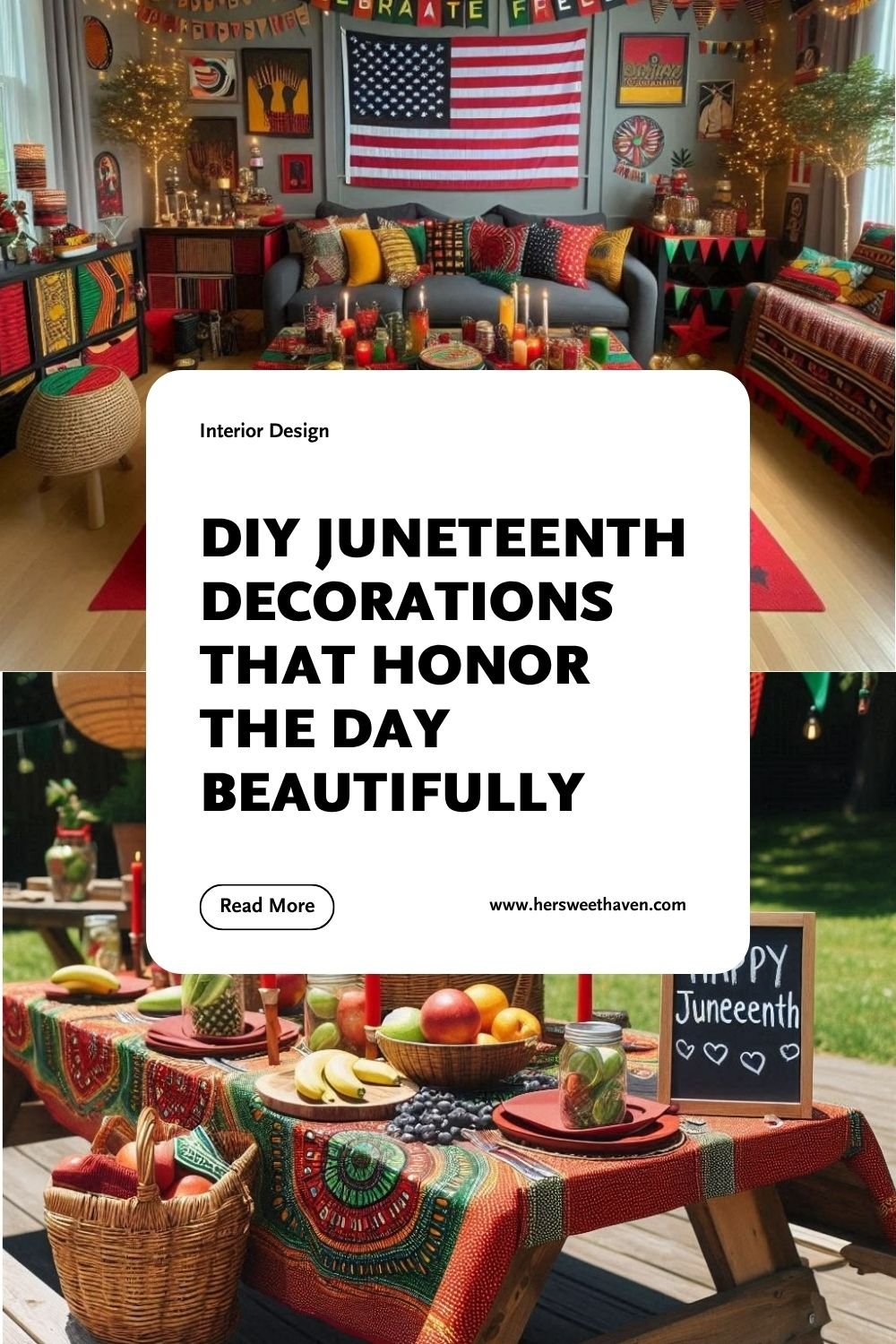
My honest take: red, black, green and gold photographs better and feels warmer in a backyard. The flag palette is sharper and works better indoors, or when the flag itself is the centerpiece of your setup.
Then layer that palette across your linens, balloons and centerpieces so everything agrees with everything. That repetition is what reads as intentional. It’s also free, which is my favorite kind of design principle.
Write your three or four colors on your phone before you shop. Buy nothing outside them. That’s the whole step.
Step 2: Build One Focal Point
One. Not four. Pick the spot people will see first and put your money there.
The Door
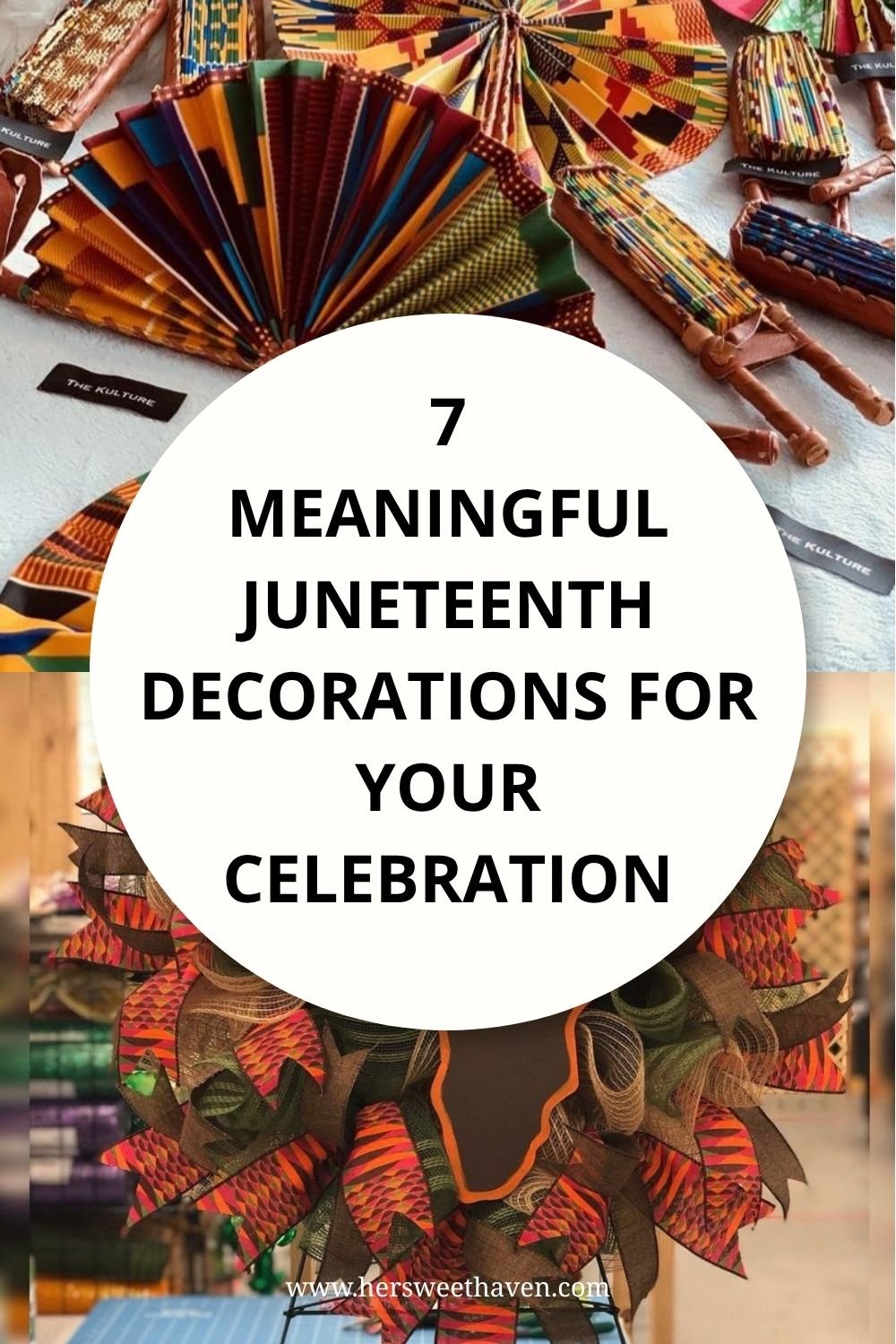
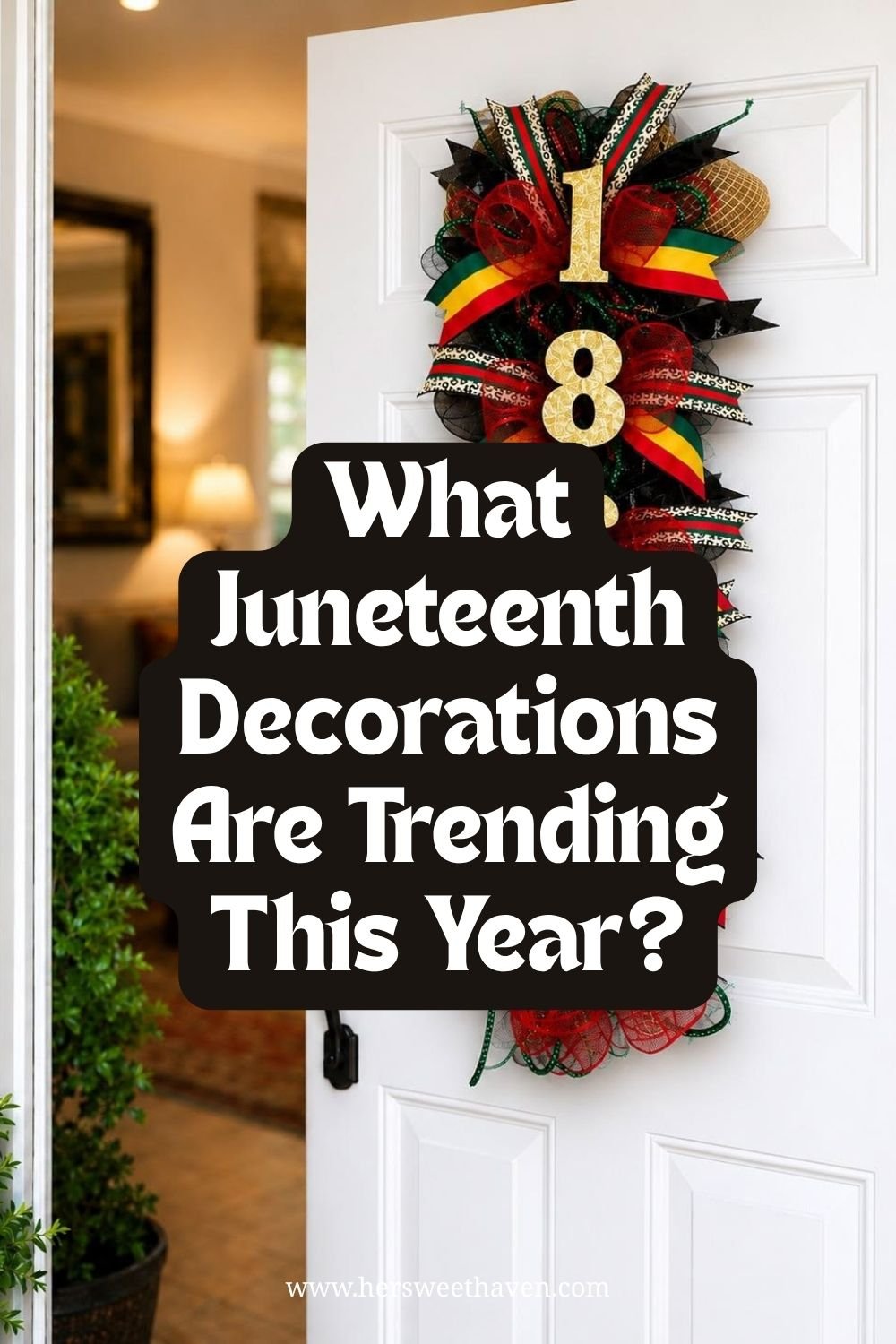
The highest-impact, lowest-effort option. A wreath with red, black and green ribbon welcomes people before they’re even inside, and it sets the tone for everything behind it.
A custom banner does similar work. It’s arguably the most decor you get per dollar spent, and it goes on a door, a mantel, or a fence with equal ease.
The Backdrop
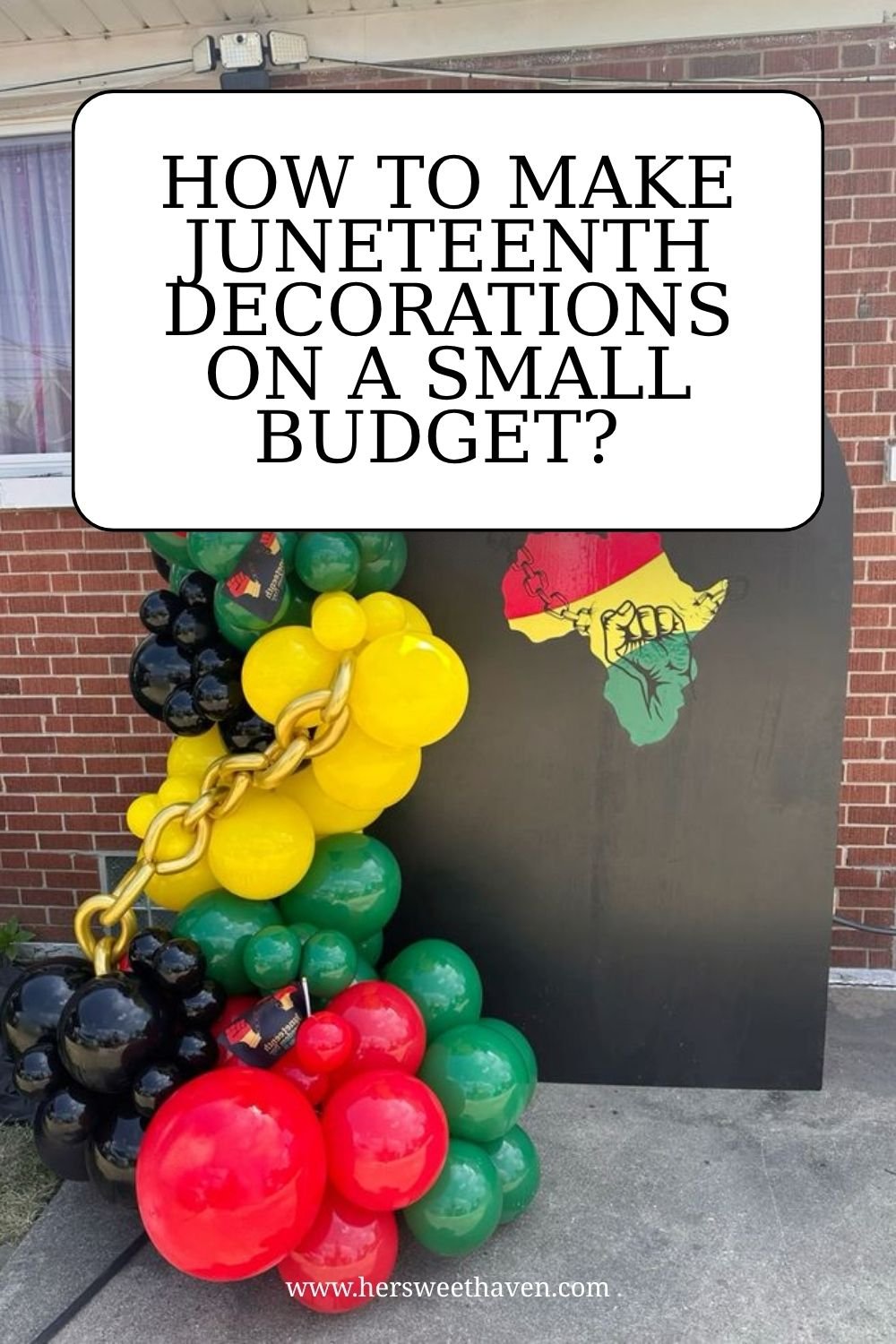
If you want the photo moment, this is it. A balloon garland in your palette framing the door or a blank wall is the biggest visual impact for the least money, and you don’t need a professional. Pre-made garland kits exist and they’re genuinely easy.
A garland in red, yellow, black and green also works as your statement piece if you’d rather not do a wreath at all.
The one rule: don’t overdo it. Sticking to the color scheme matters more than volume. A tight, restrained garland beats a giant chaotic one every time. (Also, wind exists. Ask anyone who has ever built a balloon arch outdoors.)
Step 3: Set the Table
This is where the day actually happens, and it’s the part people underinvest in.
Start With the Cloth
The tablecloth is your foundation and everything else sits on top of it. Get this right and you can be lazy about the rest.
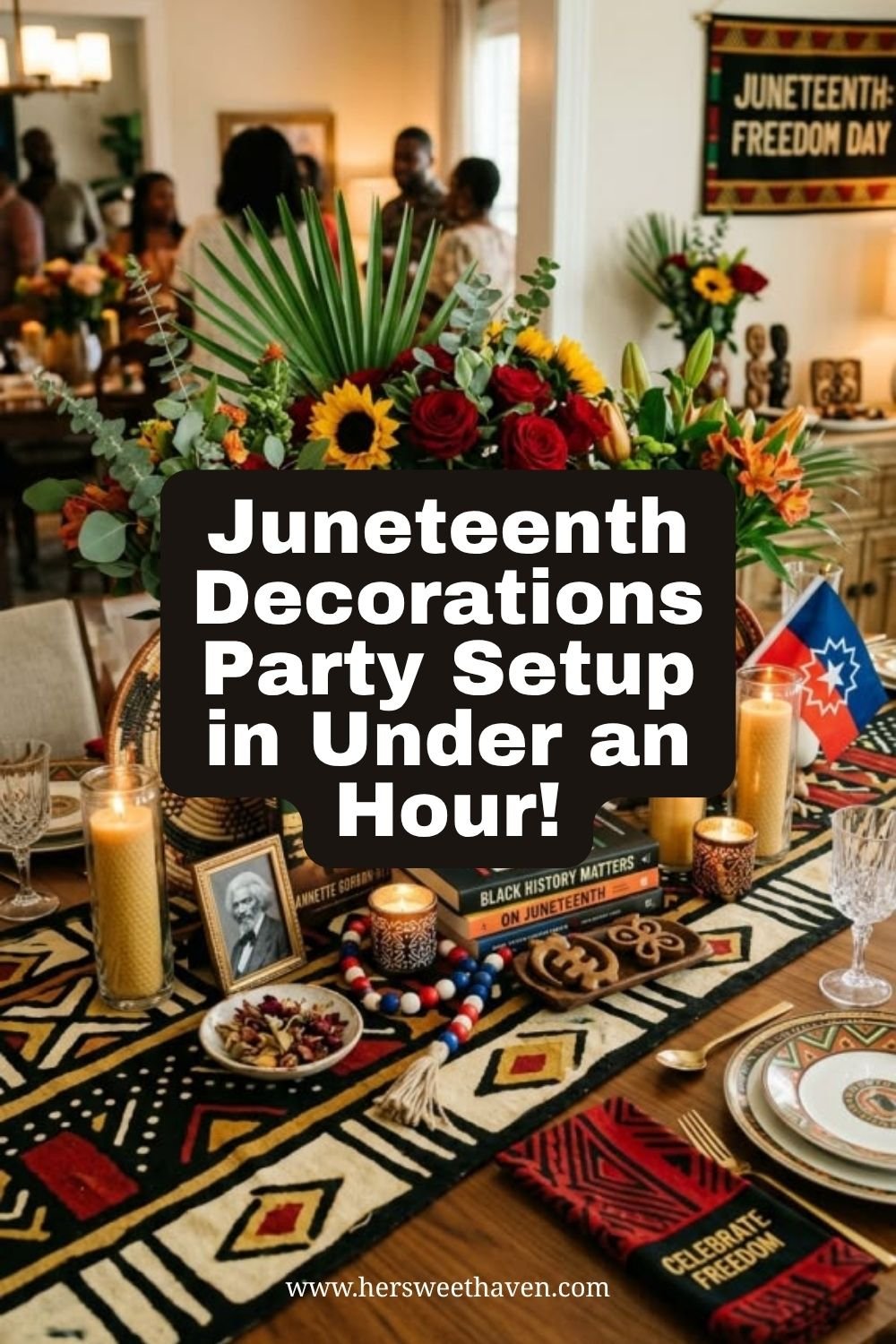
Simplest version that works: a red cloth, green napkins, gold flatware if you have it. That’s the whole formula and it takes ten minutes. Mud cloth or African-print fabric as a runner over a plain cloth is the upgrade, and a couple of yards costs less than a bouquet.
The Centerpiece That Says Something
Here’s where you get to be specific instead of generic.
Sunflowers and greenery soften the bold graphic colors and keep the table from feeling like a corporate diversity poster. Hibiscus arrangements are a nice nod, since hibiscus is where a lot of red drinks come from. Potted plants and fresh greenery also keep the whole thing relaxed and connected to outside.
Then add one thing that isn’t decorative. A stack of books. A framed photo. A small card with the date on it. One object that gives people something to ask about is worth more than five that don’t.
Step 4: The Details That Cost Almost Nothing
The last hour. This is where it goes from “decorated” to “unforgettable,” and it’s basically free.
Signage and Banners
Small signs do disproportionate work. A chalkboard by the food. A card at the drink station explaining why the drink is red. A banner over the doorway.
Mason jars wrapped in twine and painted in your palette make cheap centerpieces that guests can take home, which means your decor doubles as a favor and you don’t have to store it. (Storage is the silent cost of every holiday. Nobody talks about this.)
Let the Food Do the Work
This is my favorite tip in this entire post because it costs zero dollars.
Let the food be part of the decor. Red velvet cake on a stand. Strawberry soda in glass bottles instead of cans. Watermelon cut and arranged instead of hidden in a bowl. The red is already doing symbolic work, so put it where people can see it.
Put the drinks on a raised surface. Put the cake at eye level. You just bought a centerpiece for the price of dessert, which you were buying anyway.
Where Do People Get Juneteenth Decorations Wrong?
Time for my confession, since I promised.
Years ago a friend invited me to her family’s Juneteenth cookout and I offered to bring decorations. I turned up with my Fourth of July box. Red, white and blue plates, a star banner, the whole thing. I genuinely thought I was helping.
Her mom was extremely kind about it. She also gently pointed out that the star on the Juneteenth flag isn’t that star, and that the red on the table isn’t there because it’s patriotic. I have thought about that conversation every June since.
So the biggest mistake isn’t ugly decor. It’s decorating for a day you haven’t bothered to learn about. Everything else on this list is fixable in an afternoon. That one isn’t.
Second most common: too many palettes at once. Third: a beautiful setup with nothing in it that explains anything. A table can be gorgeous and still say nothing, and on this particular day that’s a real miss. One book, one photo, one card. That’s all it takes to fix.
How Much Should This Actually Cost?
Under fifty dollars, honestly. A balloon garland kit runs about fifteen. Fabric for a runner, ten. Mason jars and twine, another ten. Flowers, whatever you want to spend.
The expensive-looking part isn’t the money. It’s picking one palette and repeating it, which costs nothing at all.
Next June, you’ll open one box instead of five. The wreath will already exist, the runner gets folded and reused, and you’ll spend that Saturday cooking instead of running to three stores.
That’s the real payoff of doing it properly once. The table gets easier every year, and the day it’s for stays exactly as heavy and as joyful as it was the first time you understood it.
Start with the colors. The rest follows.
Leave a Reply