

The idea that jumpsuits only look good on tall people? A myth. The one about green being a “difficult” color that washes everyone out? Also a myth, and honestly a slander campaign against the best shade in the store.
I believed both for years, which is why my closet was a sea of safe black things and my mornings were a low-grade crisis. Then one green jumpsuit happened, and… well, the title of this post tells you how that went. What surprised me most wasn’t that I liked the color or even that the jumpsuit was comfortable. It was how quickly one piece solved the exact problem I had been creating for myself every morning: too many separate decisions, too many combinations, and somehow still nothing I actually wanted to wear.
So here’s the whole arc: the before, the piece that flipped it, the green jumpsuit styles for every occasion on your calendar, and how to find the shade that loves your skin tone back. I’m also getting into fit, shoes, layering, proportions, and the little details that make a jumpsuit feel intentional instead of like you accidentally left the house in a mechanic uniform. And yes, the pockets alone are reason enough to keep reading.
Before: A Closet Full of Clothes and Nothing to Wear
Picture the before: a closet physically full of clothing, and a person standing in front of it saying “I have nothing to wear” with total sincerity. Every outfit required assembling three to five separate decisions, and by 7:40 a.m., decision fuel was gone. Which top works with these pants? Do these shoes make this look too casual? Is this cardigan helping or making me look like I’m headed to a parent-teacher conference? By the time I found something acceptable, I was already annoyed with it.
So I defaulted. Black top, jeans, repeat. Safe, fine, invisible. The kind of dressing that never goes wrong because it never really goes anywhere. And there is absolutely nothing wrong with black, I still love it, but I was using it less as a style choice and more as a hiding place.
The thing about outfit ruts is that they don’t feel like ruts from inside. They feel like practicality. You tell yourself you’re just buying versatile pieces, neutral pieces, things that “go with everything,” and then one day you realize everything technically goes together but none of it excites you. It usually takes one accidental purchase to expose the whole system, and mine was olive green, had a zipper, and cost less than dinner.
The Green Jumpsuit Styles That Started It
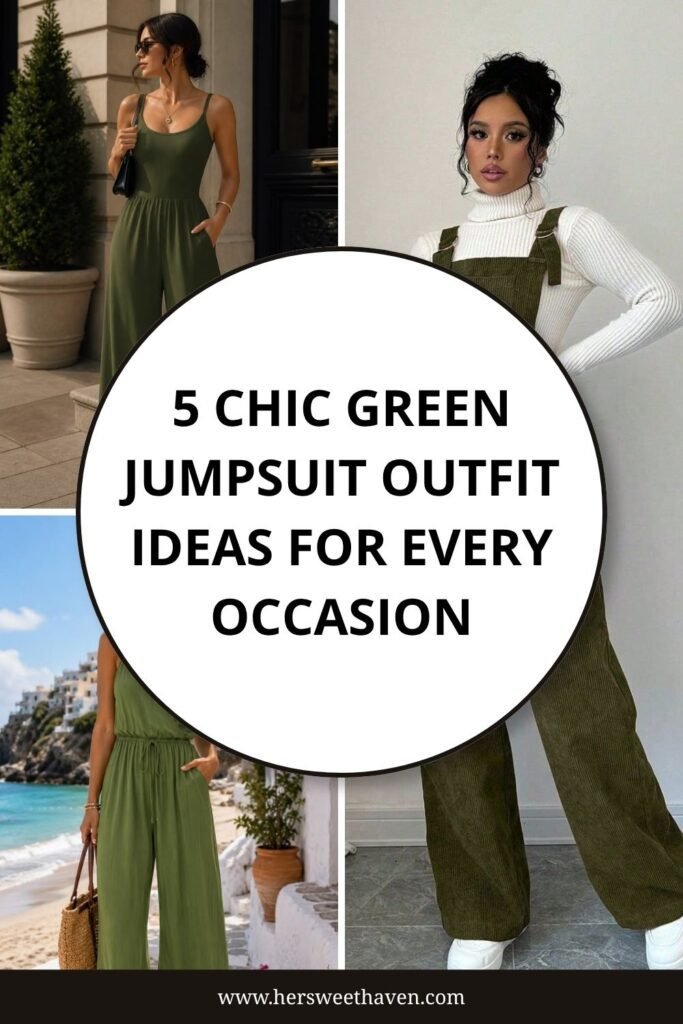
One garment, one decision, whole outfit done. That’s the jumpsuit pitch in a sentence. But the green part matters too: it’s a neutral that doesn’t feel like one, richer than black, friendlier than beige, and somehow it plays with nearly every other color I own. Tan leather, cream, white, black, denim, gold, tortoiseshell, even burgundy, green quietly gets along with all of them.
The first thing I noticed was how much easier getting dressed became. I didn’t need to “build” an outfit anymore. I could put on the jumpsuit, add shoes and one accessory, and stop there. That simplicity made me wear it more often, which in turn made me realize I had been overcomplicating clothes for years.
Olive and Utility: The Everyday Workhorse
The gateway piece is the olive utility jumpsuit in a structured fabric: tailored cotton, ponte, twill, linen blend, or anything with enough body to skim instead of cling. Wide leg, fitted or gently shaped torso, ideally a drawstring, tie waist, or belt loops. Roundups like Outfit Trends’ green jumpsuit outfit ideas are full of this exact silhouette because it works on school runs, lunch dates, errands, travel days, and casual offices without asking much from you.
Olive reads casual by default, which makes it the low-stakes entry point. It’s the jeans of jumpsuits, if jeans came with built-in put-togetherness. I especially like versions with slightly cropped legs because they make sneakers, loafers, ankle boots, and sandals all work without awkward bunching at the hem.
And about that tall-girls-only myth from the intro: fit kills it, not height. Petite frames want a defined waist and either a cropped or hemmed leg, so the fabric doesn’t pool. Taller frames usually need enough rise through the torso so the waist actually lands where it should. Curvier shapes often look best when the fabric has a little structure and the waist can be adjusted rather than being completely straight through the middle. A jumpsuit that fits at the waist and through the torso flatters at every height. The unflattering ones were usually just the wrong cut all along.
Emerald and Sleek: The Occasion One
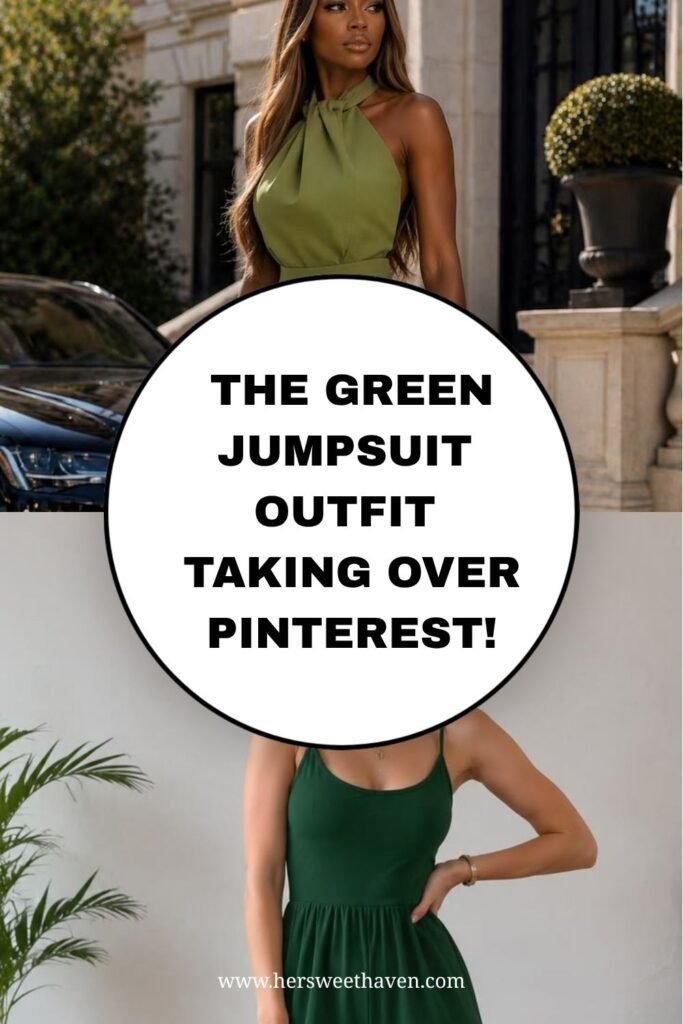
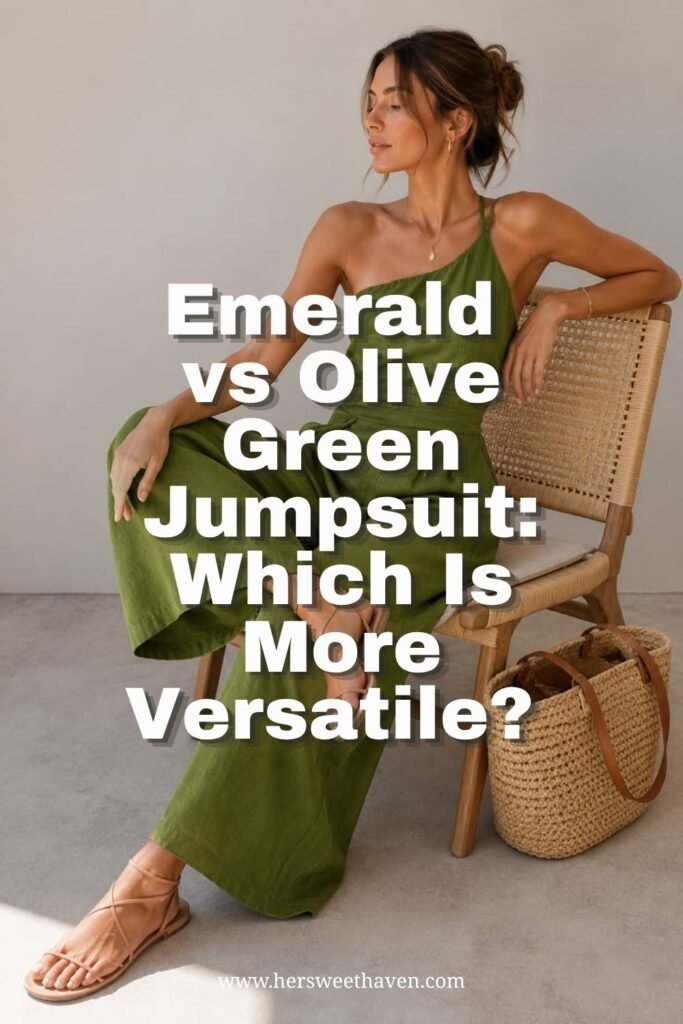
Then there’s the emerald version: smooth fabric, cleaner lines, maybe a halter, draped neckline, one-shoulder shape, or a wide-leg silhouette with very little extra detail. This is the wedding guest, date night, holiday party, “I have an event and don’t want to wear another dress” piece, and it photographs like it cost quadruple its price.
Emerald against gold jewelry is one of fashion’s oldest cheat codes. Add simple heels and suddenly the whole thing feels intentional. Two or three pieces, zero effort at the event, endless compliments. Feel free to feel a little smug at the reception.
The other reason emerald works so well is that it gives you drama without needing a dramatic silhouette. A simple jumpsuit in a saturated green can feel more memorable than a complicated dress because the color does the work for you.
How Do You Style a Green Jumpsuit for Any Occasion?
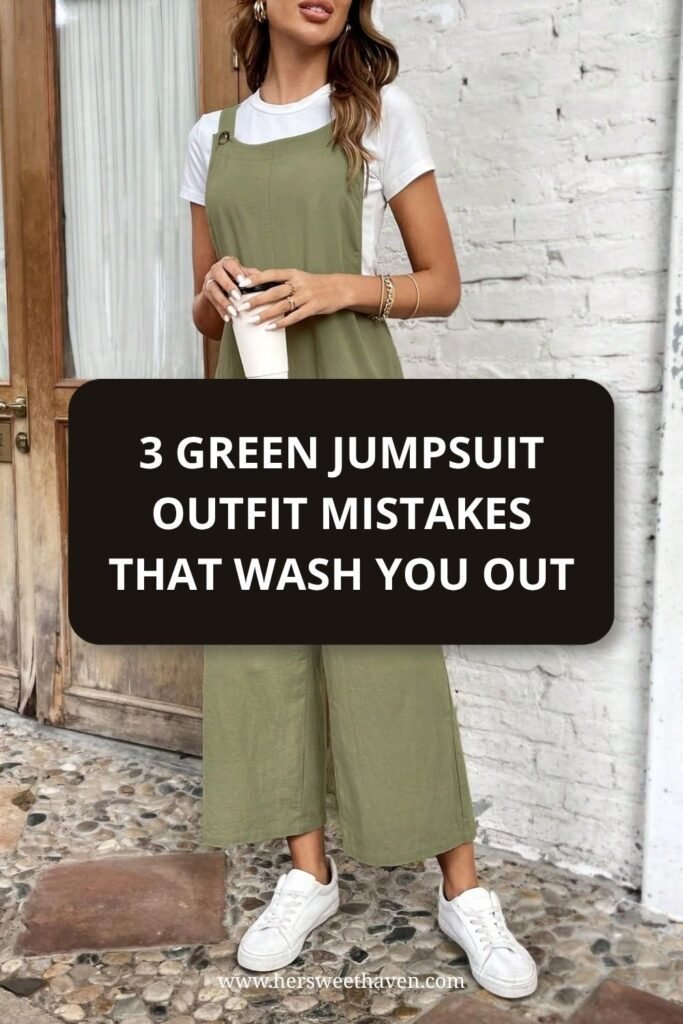
Fair question, and the answer is my favorite part: one jumpsuit can cover three completely different lives depending on what you park around it. The jumpsuit itself can stay exactly the same while the shoes, layers, bag, and jewelry move it from coffee run to office to dinner.
For a casual daytime look, I like a white tee layered under the straps or under an unzipped utility style, clean white sneakers, and a woven or tan crossbody bag. Sunglasses on head, done in ninety seconds. The layered tee trick also makes sleeveless jumpsuits work in three seasons instead of one. Swap the tee for a fitted turtleneck when it’s cold, or a striped long sleeve if you want a little more interest without adding color chaos.
For work, a structured blazer changes everything. Add loafers or low heels, then use a thin belt if the jumpsuit needs more definition at the waist. A belt is the single biggest upgrade for a loose jumpsuit because it turns “comfy” into “deliberate” in one buckle. I’d stick to a neutral blazer, camel, black, cream, navy, or even a subtle plaid, and let the green become the interesting part instead of competing with it. This is the version that gets you “you always look so put together” from the coworker who has never seen your 7:40 a.m. self.
At night, strip away the practical layers and simplify. Nude, tan, black, or metallic heels all work, and I usually keep the jewelry warm because gold looks especially good against olive, forest, and emerald. A small clutch or shoulder bag is enough. Styling guides like Who What Thinks’ green jumpsuit ideas repeat the same footwear rule: keep the shoes neutral and let the green be the entire show.
The accessory count matters more at night than people think. One pair of earrings and a bracelet can look expensive. Earrings, necklace, stacked bracelets, statement bag, patterned shoes, and a belt all at once can tip the outfit into costume territory. Green already has presence, so I’d rather give it space.
The Shoes Change the Whole Mood
If I had to explain jumpsuit styling with only one trick, it would be this: change the shoes before you change anything else. White sneakers make olive feel casual and current. Loafers make it look smarter. Flat sandals take it straight into vacation mode. Brown ankle boots make it feel autumnal, while heels turn the same silhouette into dinner or event dressing.
This is especially helpful if you’re trying to get more wear out of one piece. Instead of buying three different green jumpsuits, you can make one good one behave like three different outfits. A utility jumpsuit with sneakers feels completely different from the same jumpsuit with a belt, blazer, and loafers.
Proportion matters here too. If the leg is wide and long, I like a shoe with a little visual weight so it doesn’t disappear. If the jumpsuit is cropped, a lower-profile sneaker, loafer, or slim sandal usually keeps the ankle area clean. And if the jumpsuit has a lot happening up top, straps, pockets, buttons, a collar, simple shoes balance it better than another statement piece.
Which Shade of Green Actually Suits You?
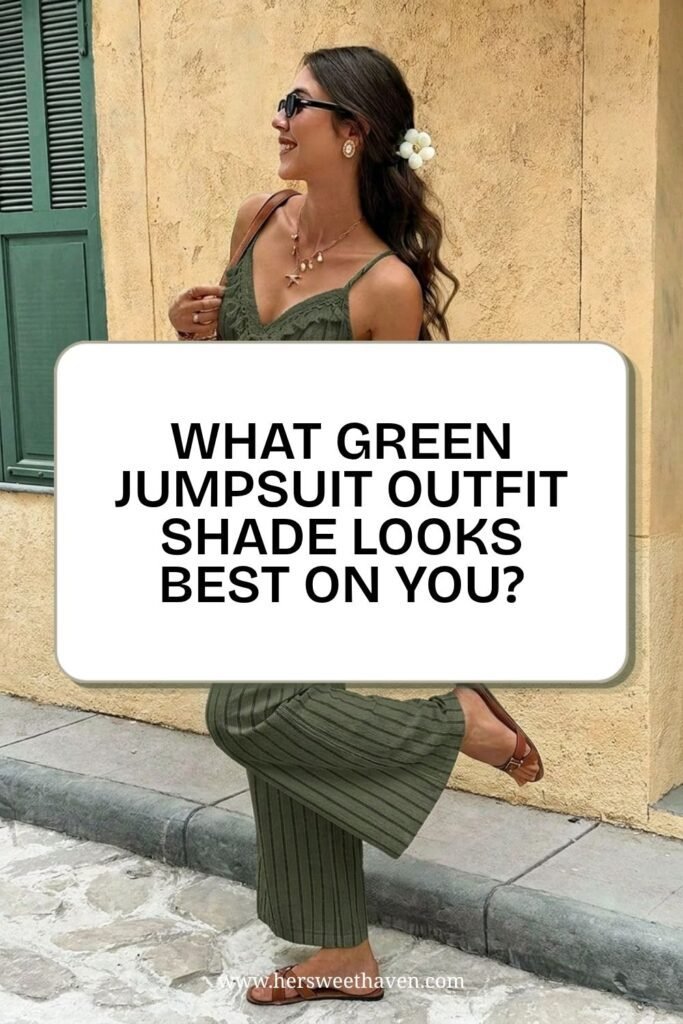
Quick answer: emerald is one of the easiest greens to wear, so it’s where I’d start if you’re nervous. It tends to look bright and intentional rather than muddy, which is why color guides like Sumissura’s green styling guide often treat jewel-toned greens as an approachable option.
From there, follow your undertone loosely rather than treating color theory like a law. Warm undertones often look beautiful in olive, moss, khaki, and sage because those shades echo the warmth already in the skin. Cooler undertones tend to shine in emerald, forest, blue-green, and deeper teal-leaning greens. Neutral undertones get the unfair advantage of being able to move between both sides pretty easily.
And the nuclear option if you can’t decide: try it in daylight near a window, no mirror filters. Hold the color close to your face and watch what happens. If your skin suddenly looks brighter, your eyes look clearer, and you notice your face before you notice the garment, you’re probably in a good zone. If the color seems to pull all the life out of your complexion, try a different green. Your face will tell you faster than a complicated chart.
Hair color plays too, although again, not as a strict rule. Redheads look incredible in nearly every earthy green because of the contrast. Brunettes can carry both olive and jewel tones beautifully. Blondes often pop against deeper forest and emerald shades, while softer sage can give a lighter, more tonal effect. The point isn’t that there’s one “correct” green for each person. It’s that there’s almost always a green that works, the shade shifts, never the verdict.
Fabric Matters More Than People Realize
A green jumpsuit can look expensive or strangely flat depending on the fabric, even when the cut is almost identical. Structured cotton and twill give utility styles that crisp, intentional look. Linen and linen blends make olive and sage feel relaxed and summery. Satin or crepe pushes emerald toward evening immediately. Ponte and soft suiting fabrics are great if you want something that can move between work and dinner without wrinkling the second you sit down.
I’m also much more careful now about thin fabric in lighter greens. Sage and pale olive can become clingy or transparent if the material is too flimsy, especially around pockets and seams. A slightly heavier fabric usually hangs better and makes the piece feel more polished.
If comfort is your priority, look for a little stretch through the waist and hips, but not so much that the fabric loses shape. The best jumpsuits feel easy without looking like loungewear.
What to Layer Over a Green Jumpsuit
Green is surprisingly cooperative with outer layers. A denim jacket makes almost every shade feel more casual. Camel and tan coats warm up olive beautifully. Black leather sharpens emerald or forest green. Cream blazers make the whole outfit look lighter and more polished, while a cardigan gives it that softer, more everyday feel.
I also like monochrome-adjacent layering, especially in fall. An olive jumpsuit under a darker forest jacket looks much more interesting than it sounds because the shades are close enough to feel intentional but different enough to show depth. The same idea works with sage and cream for spring.
The one thing I avoid is adding too many competing earthy shades at once. Olive jumpsuit, rust cardigan, mustard bag, brown boots, tan hat, technically all “fall colors,” but suddenly the outfit starts looking like a leaf pile. Two or three tones usually feel cleaner.
A Quick Fit Check Before You Buy
Jumpsuits are one of those categories where trying the right size matters more than the number on the tag. I always check three things first: where the waist lands, whether I can sit comfortably, and whether the torso pulls when I raise my arms. If one of those is off, the jumpsuit usually ends up hanging in the closet no matter how good it looked standing still in the fitting room.
Then I look at the hem. If it’s supposed to be full length, I want it to skim the top of my shoe rather than drag. If it’s cropped, I want the crop to look intentional, usually somewhere around the narrowest part of the ankle rather than an awkward mid-calf stop.
And yes, I check the bathroom situation. Glamorous advice, I know, but a complicated back zipper or twelve tiny buttons can turn a beautiful jumpsuit into an enemy by hour three. Convenience matters.
It Was Never Really About the Jumpsuit
Zoom out with me for a second. The “new personality” joke is a joke, but the thing underneath it is real: one piece that works removed a daily decision, and removing that decision gave me back my mornings. That’s not fashion, that’s quality of life wearing a zipper.
We hang onto safe wardrobes because deciding feels risky. But the risk math is backwards. The black-outfit rut can cost you a little confidence every single day, while one green jumpsuit is one small experiment. If it works, suddenly you have a repeatable outfit, a color you know you like, and a much easier starting point for the rest of your closet.
So if your closet is full and your mornings are still a crisis, maybe don’t buy more pieces. Buy one that ends the deciding. Mine happened to be green, had pockets, and made me rethink half the things I thought I “couldn’t wear.”
Clearly, I have no regrets.

Leave a Reply