

Imagine handing your toddler a bin filled with dyed rice, tiny scoops, and plastic animals, and watching them stay completely focused for forty-five minutes straight. No screen, no fussing, no asking you to play with them every thirty seconds. Just hands in the rice, scooping, pouring, sorting, and narrating a little adventure to themselves. That’s what a well-made sensory play kit does, and it’s the reason parents and early childhood educators are calling sensory bins one of the best developmental tools for kids ages one through five.
Sensory play kits are containers filled with materials specifically chosen to engage a child’s senses through touch, sight, sound, and sometimes smell and taste. They promote fine motor skills, language development, problem-solving, emotional regulation, and creativity, all while looking like nothing more than a fun mess. The best part? Most can be assembled from items you already have in your kitchen pantry. This guide covers the sensory activities toddlers actually love, the setups they tend to reject, ideas they’ll play with on repeat, what to do when you’re struggling to keep them busy, and how to build a full sensory kit for under $10.
Easy Sensory Activities Toddlers Will Be Obsessed With
The sensory activities that hold a toddler’s attention the longest share a few traits: they involve pouring or scooping, they include something to find or sort, and they have a strong visual or tactile contrast (like black beans mixed with yellow rice). These are the setups that consistently keep little hands busy.
Construction-Themed Sensory Bins
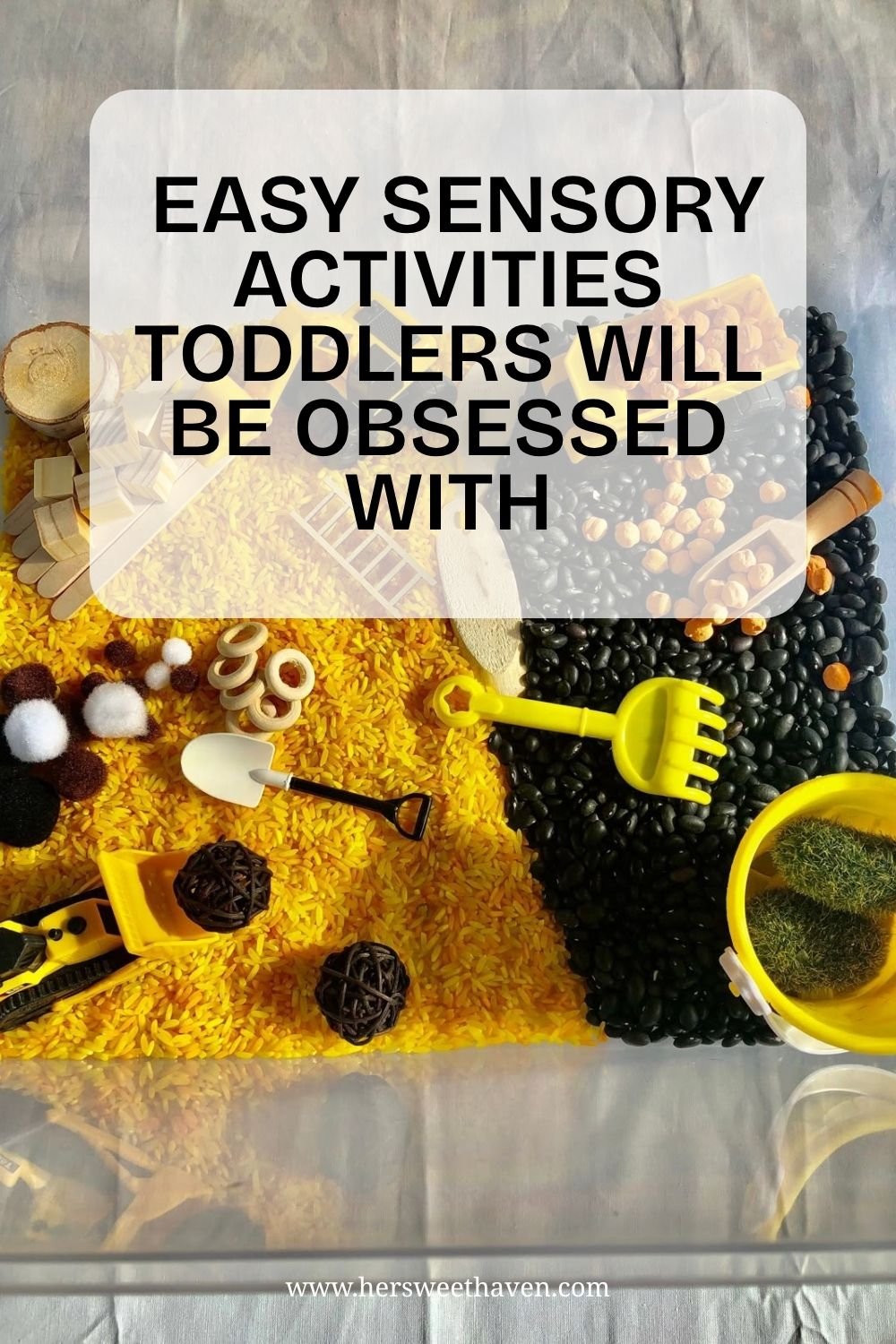
A construction bin is one of the most popular sensory play ideas for toddlers because it combines two things they already love: digging and trucks. Fill a large plastic container with dyed yellow rice (a few drops of food coloring mixed with vinegar and dried overnight) on one side and black beans on the other. Add small construction vehicles, scoops, wooden blocks, and pom poms. The color contrast between the yellow and black creates a visually striking setup, and the trucks give the bin a clear play purpose.
Occupational therapists at NAPA Center confirm that sensory bins promote problem-solving, imitation, and fine motor development during unstructured free play. The construction theme works because it gives toddlers a framework for imaginative play (loading, dumping, building) without requiring adult direction.
Rainbow Rice Bins
Dyed rice is the gold standard of sensory bin fillers because it’s cheap, easy to make, visually appealing, and provides a satisfying crunchy texture. DIY sensory bin guides walk through the process: combine uncooked rice with a few drops of food coloring and a tablespoon of vinegar in a ziplock bag, shake well, and spread on a baking sheet to dry overnight.
Fill a bin with rainbow rice (use multiple bags in different colors for a multicolor effect), add funnels, cups, spoons, and a few hidden small toys buried in the rice. Toddlers will pour, scoop, and search for the hidden objects for surprisingly long stretches. The activity builds hand-eye coordination, grip strength, and early counting skills as they find and count the buried items.
Nature-Inspired Sensory Trays
A nature tray uses real outdoor materials: sand or soil as the base, with pinecones, smooth stones, leaves, sticks, wood slices, and dried flowers arranged on top. Add small wooden figures, a magnifying glass, and a few cups for sorting. Spring sensory play guides recommend this setup for introducing toddlers to natural textures and encouraging outdoor curiosity without the unpredictability of actual outdoor play.
The nature tray works well as a calming activity because the earthy tones and natural materials create a quieter sensory experience compared to the bright colors and louder textures of rice or pasta bins.
3 Sensory Activities Toddlers Hate (Try These Instead)
Not every sensory activity is a winner. Some setups that look great on Pinterest fall flat with real toddlers. Here’s what tends to go wrong and what works better.
Overly Complicated Themed Bins
A bin with fifteen different elements, a complex theme, and too many rules (“don’t mix the colors,” “keep the water on this side”) overwhelms toddlers rather than engaging them. Sensory play experts stress that simpler bins with one base filler and three to five tools or additions perform better than elaborate setups because toddlers can focus without being overstimulated.
The fix: start with one filler (rice, pasta, or beans), add one or two tools (a scoop and a funnel), and one category of small objects (animals, letters, or vehicles). That’s it. If the child stays engaged, you can add more. If they walk away from a complex bin, strip it down to fewer elements.
Wet or Slimy Textures for Touch-Sensitive Kids
Some toddlers love slime, cooked spaghetti, and water beads. Others hate them immediately and refuse to touch the bin at all. If your child pulls away from wet or slimy textures, don’t force it. Developmental play resources recommend starting with dry, predictable textures (dry rice, dried pasta, dry beans) and gradually introducing wetter textures over time as the child becomes more comfortable with sensory input.
Bins with Choking Hazards for Young Toddlers
Water beads, small buttons, and tiny figurines are popular sensory bin additions, but they’re not safe for children who still put things in their mouths. For toddlers under two, stick to taste-safe options: cooked pasta, puffed cereal, large dried noodles, oatmeal, or cloud dough (flour mixed with baby oil). These provide the same sensory experience without the safety risk.
Sensory Activities Toddlers Can’t Stop Playing With
These are the activities that get requested over and over, the ones where the toddler runs to the bin the moment they see it being pulled out of the closet.
Sand and Wood Fraction Puzzles
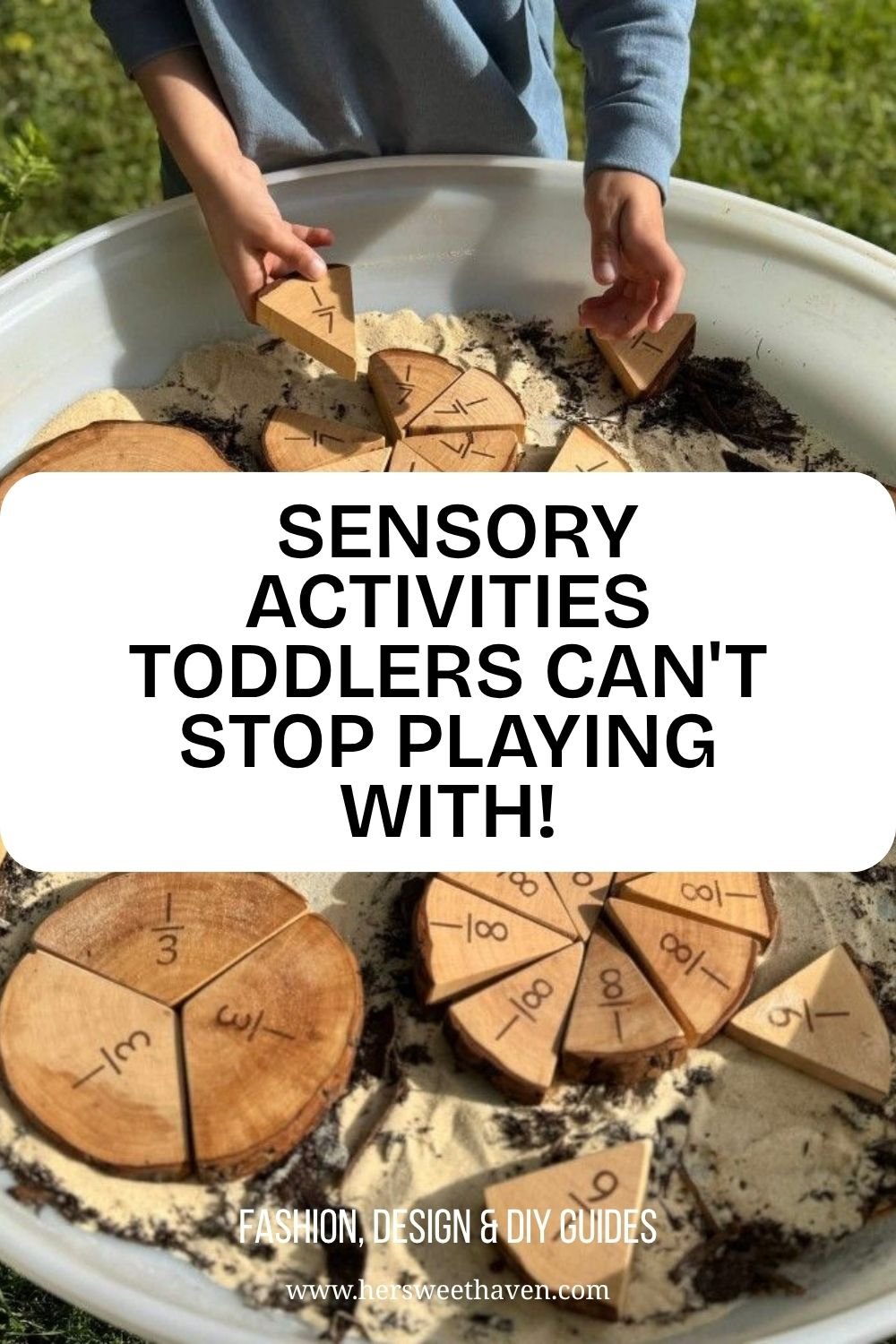
A large shallow tray filled with sand or kinetic sand with wooden puzzle pieces (circles cut into halves, thirds, and quarters) buried inside combines sensory play with early math concepts. Toddlers dig for the pieces, then try to fit them back together on a flat surface. The sand provides the tactile input, the puzzle provides the cognitive challenge, and the combination keeps them engaged far longer than either activity alone.
This setup works especially well for older toddlers (ages three and up) who are ready for more structured play but still need the sensory component to stay focused. The wooden pieces are durable, washable, and can be reused with different base fillers for variety.
Pasta Bins with Scooping Tools
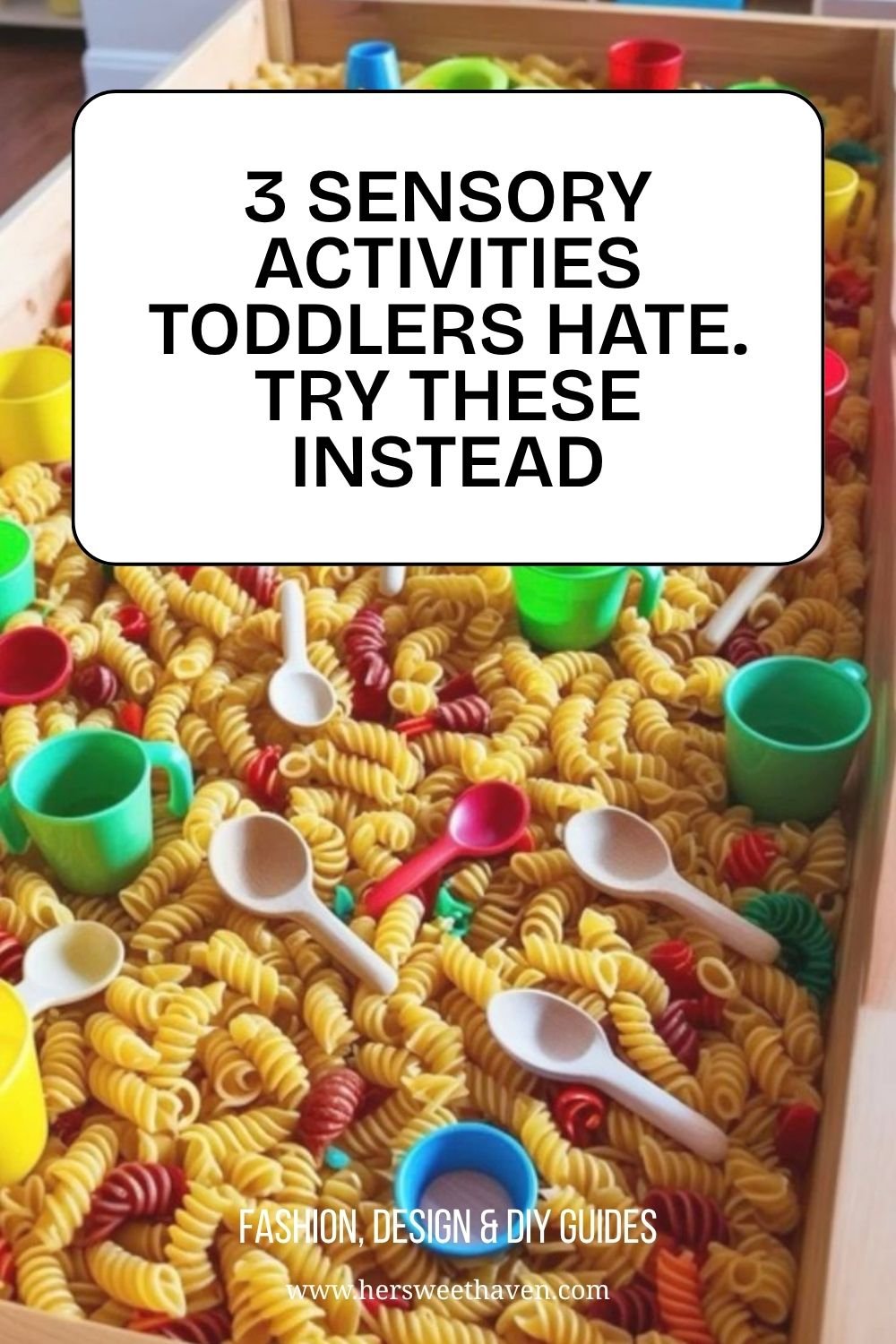
Dried pasta (rotini, penne, or farfalle) in a bin with colorful cups, spoons, and small bowls is one of the simplest setups that gets the strongest response. The pasta shapes are interesting to handle, they make a satisfying sound when poured, and they’re large enough to be safe for younger toddlers. Budget sensory bin guides confirm that pasta bins cost almost nothing (a $1 box of pasta fills an entire bin) and provide the same developmental benefits as more expensive sensory materials.
Add a few drops of food coloring to the pasta before drying for a rainbow effect that makes the bin even more visually appealing.
Struggling to Keep Your Toddler Busy?
If you’re reading this while your toddler is climbing the furniture or asking for screen time for the fifth time today, a sensory bin might be exactly what your afternoon needs. Here’s how to set one up in the next ten minutes using what’s already in your kitchen.
The Pantry Raid Sensory Bin
Open your pantry and grab whatever you have: dried beans, rice, oats, dried pasta, or even popcorn kernels. Pour it into any waterproof container (a baking dish, a storage tub, a roasting pan). Add a few measuring cups, wooden spoons, and plastic containers from the recycling bin. Set the bin on a towel on the floor or on a low table, and let your toddler go.
That’s a sensory bin. No special supplies, no Pinterest-perfect setup, no trip to the store. The entire assembly takes less than five minutes, and the play typically lasts twenty to forty-five minutes depending on the child’s age and interest level.
Rotating Themes to Prevent Boredom
The trick to keeping sensory bins fresh is rotating the contents every few days. Monday’s rice bin becomes Wednesday’s pasta bin becomes Friday’s water-and-soap bin. Same container, same tools, different filler. Sensory bin rotation guides confirm that changing the base material is usually enough to re-engage a toddler who’s lost interest in a previous setup.
Seasonal themes work well too: a spring gardening bin with “soil” (black beans) and toy vegetables, a summer beach bin with sand and shells, a fall harvest bin with dried corn and small pumpkins, and a winter snow bin with white rice or shaving cream. If you’re setting up a play area for your child, these baby room furniture tips can help you create a space that supports sensory play and independent exploration.
How to DIY Sensory Activities for Toddlers Under $10
You don’t need to buy a premade kit or order specialty materials. The most effective sensory play setups cost next to nothing when you use household items creatively.
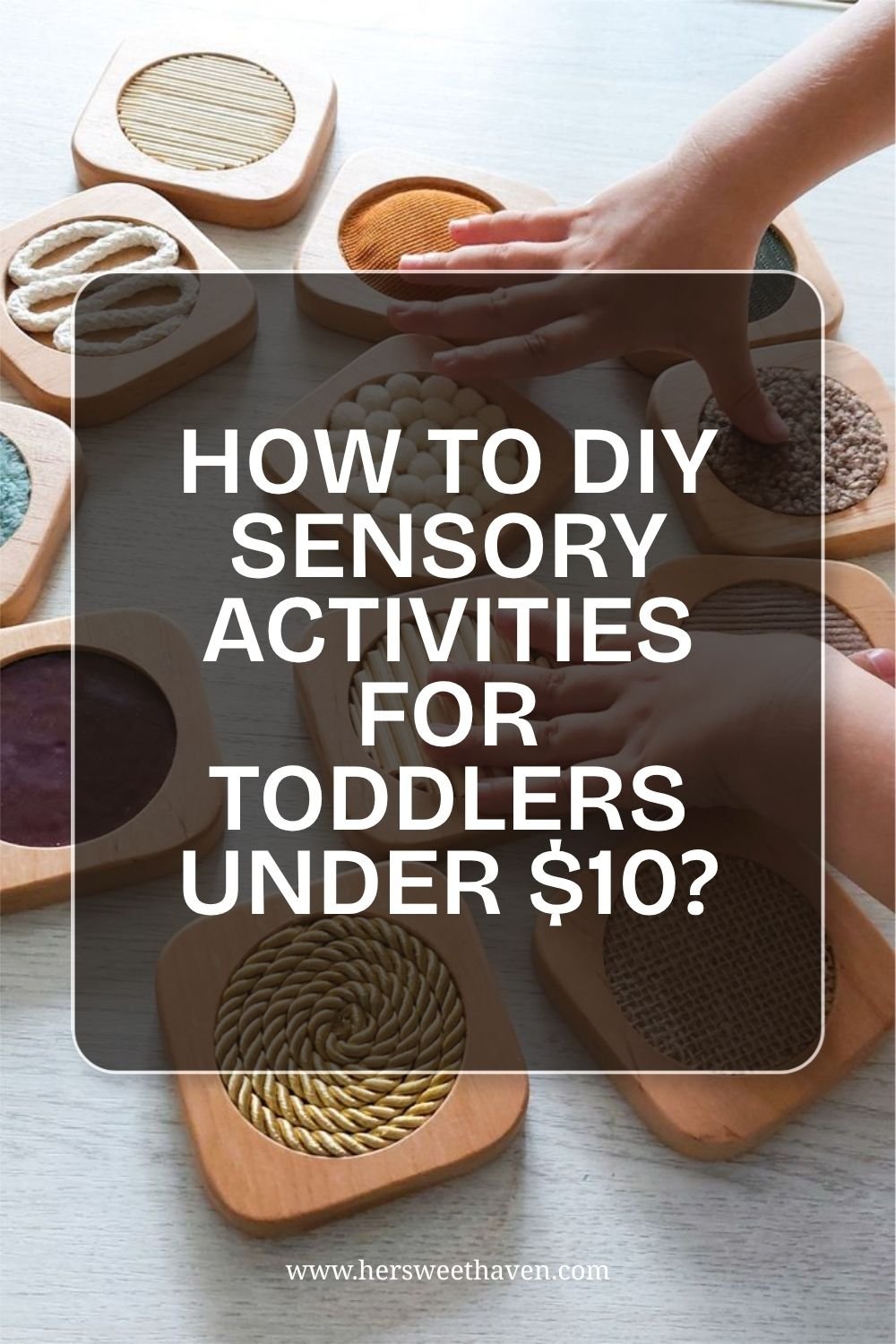
Texture Boards from Scrap Materials
A texture board is a flat surface (a piece of cardboard, a wooden cutting board, or a tray) with different textured materials glued onto it: a square of sandpaper, a piece of velvet fabric, a section of bubble wrap, a patch of faux fur, a strip of corrugated cardboard, and a piece of smooth tile. Toddlers run their hands over the different surfaces, comparing how each one feels.
The entire project costs nothing if you use scraps from around the house. Rope, burlap, aluminum foil, cotton balls, and dried pasta all work as texture options. Mount them with hot glue or strong tape, and the board is ready for years of use.
Scented Sensory Trays
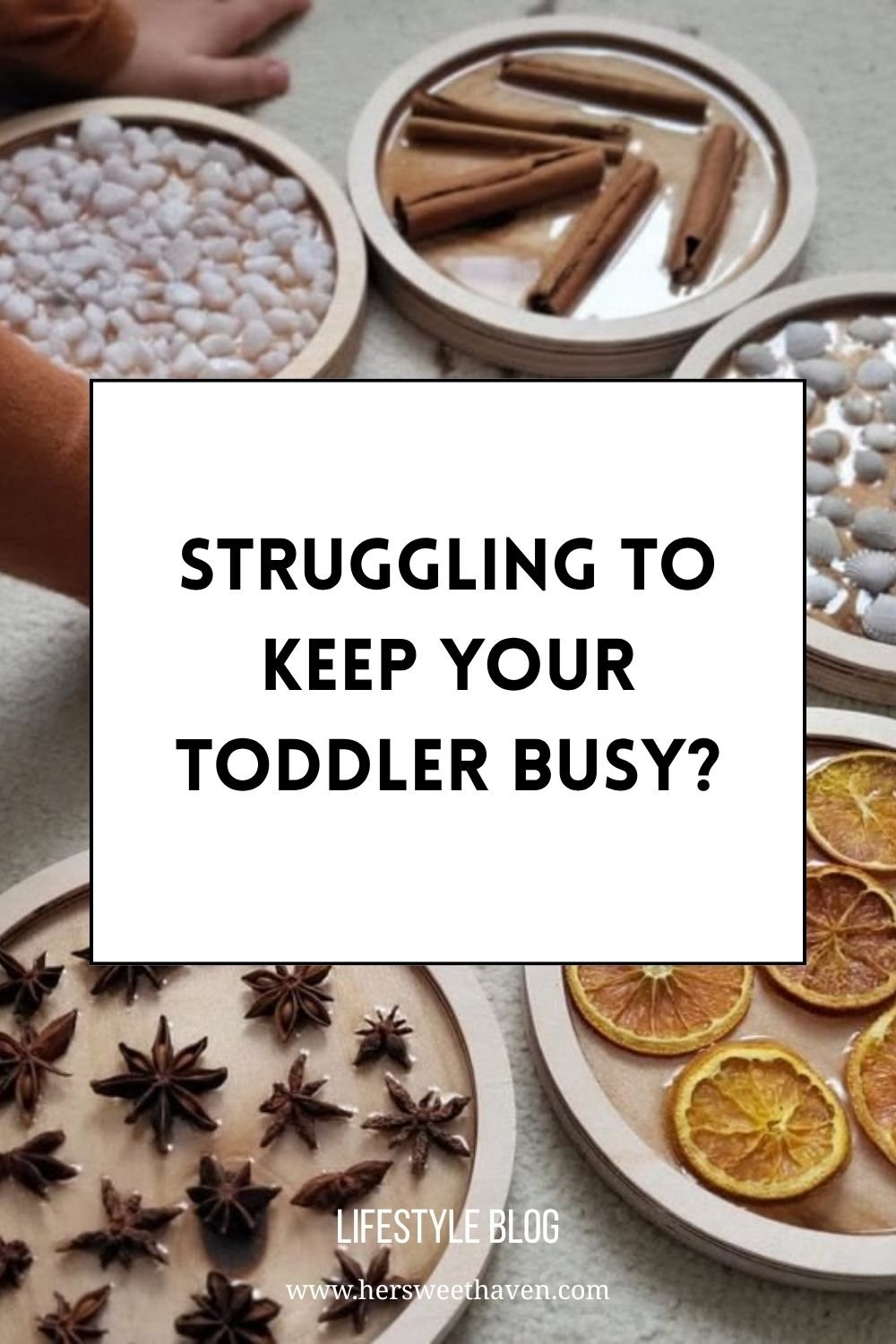
Fill small bowls or wooden trays with scented materials: cinnamon sticks, dried orange slices, star anise, dried lavender, whole cloves, and vanilla beans. Let the toddler explore by touching, sniffing, and sorting the materials. This engages the sense of smell (often overlooked in sensory play) alongside touch and sight, and introduces vocabulary like “spicy,” “sweet,” “rough,” and “smooth.”
The supplies come from your spice cabinet and cost under $5 even if you need to buy a few items fresh. For a full sensory play corner in your child’s room, these Hello Kitty room design ideas show how themed spaces can include dedicated activity areas.
Cloud Dough for Taste-Safe Sculpting
Mix eight cups of flour with one cup of baby oil or vegetable oil and stir until the mixture holds its shape when squeezed but crumbles when released. This creates “cloud dough,” a moldable, crumbly material that’s completely taste-safe and provides a unique sensory experience that’s different from both wet and dry fillers. Add cookie cutters, spoons, and small containers for a sculpting station that costs under $3 to make. Cloud dough keeps in a sealed container for weeks, making it one of the most reusable sensory materials available. You can also add food coloring or cocoa powder to change the color and scent, giving the same batch a completely different feel each time you pull it out. Some parents make a double batch and store half for next week, rotating between plain white and chocolate brown versions that both feel new to the toddler.
Your next step is the easiest one in this entire guide: grab a container, fill it with something from your pantry, toss in a few scoops and cups, and put it in front of your toddler. Don’t overthink the theme, don’t worry about making it Instagram-perfect, and don’t stress about the mess (put a towel down and you’re covered). The only thing that matters is that little hands are busy, little minds are working, and you get a few minutes of peace while your child plays, learns, and grows. Try it today.

Leave a Reply