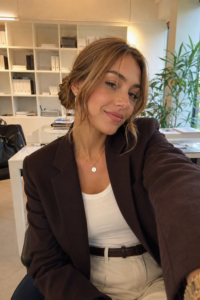
Curtain bangs are bangs parted in the middle and swept to both sides, shortest at the center and longer toward the ears. They frame the eyes and cheekbones, they work on straight, wavy and curly hair, and when you get bored of them they grow out into face-framing layers instead of an awkward phase. That low commitment is a big part of why they’ve stayed popular.
Below: how to pick the right length for your face, ten styles from wispy to bold, what to ask your stylist, and how to style them at home in a few minutes.
What makes curtain bangs work
It all comes down to the tapered edge. The center pieces usually sit around the bridge of the nose or the brows, and the sides lengthen down toward the cheekbones or jaw. That angle is what makes them fall open like curtains instead of straight across like a blunt fringe.
Which length suits your face?
- Round faces: longer bangs that end at or below the cheekbones add length.
- Square faces: soft, wispy ends blur a strong jawline.
- Heart-shaped faces: bangs that sweep out at cheekbone level balance a wider forehead.
- Long or oval faces: a slightly shorter, fuller center shortens the face visually.
Texture matters as much as shape. Curly and wavy hair shrinks when it dries, so curly curtain bangs are usually cut dry and a bit longer than you’d expect. Fine hair looks fuller with a lighter, wispier version. Tell your stylist about any cowlick at the hairline, since a center part can hide it or make it stand out, depending on where it sits.
10 curtain bangs styles to try
1. The ’70s shag
Full, choppy layers all over the head with curtain bangs that blend right into them. It’s the most textured version and suits wavy hair, which already has the movement this cut needs. Air-drying with a little texture spray is often enough. It needs a trim every six to eight weeks to keep the layers from losing shape.
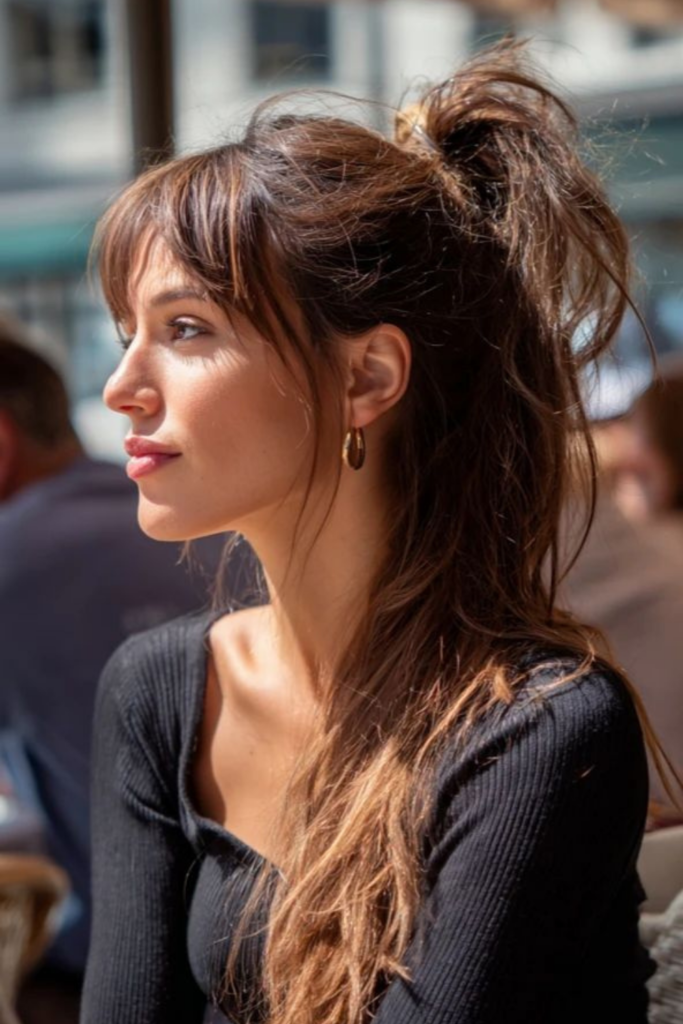
2. Soft, wispy fringe
Very thin bangs with see-through ends. They’re the easiest entry point if you’re nervous: barely there, and easy to pin away if you change your mind. They suit fine hair and oval faces. They also need trims least often, roughly every six to eight weeks.
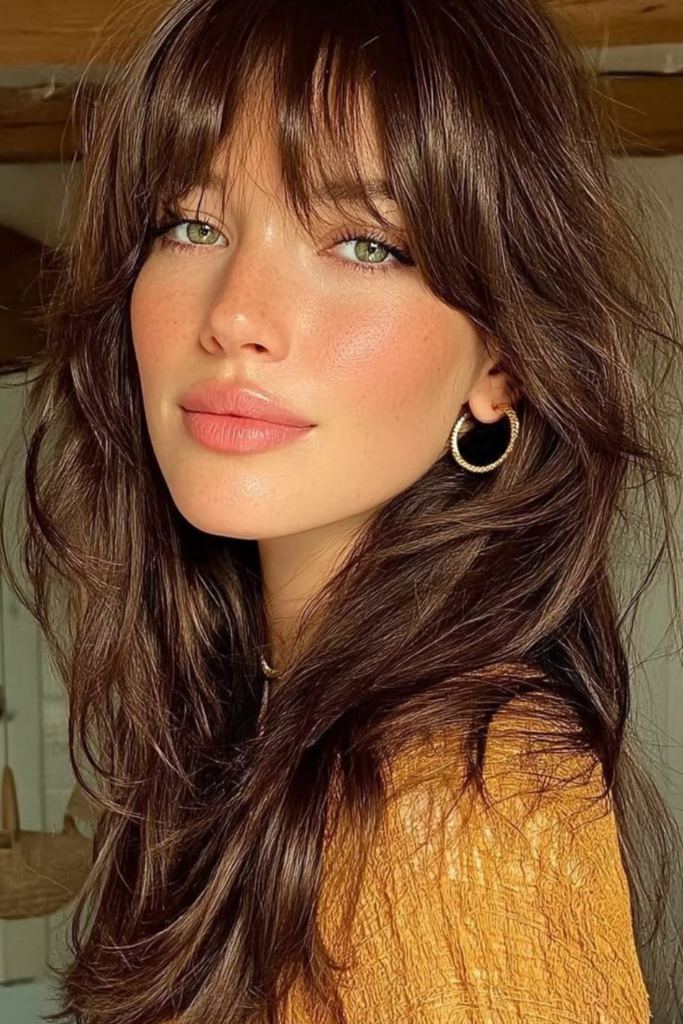
3. The cheekbone grazer
Bangs that end right at the cheekbone highlight it without any makeup, a bit like a soft contour line. This is the most common length to ask for, and it still works with hair pulled back. It’s also the length that blends most easily into layers later.
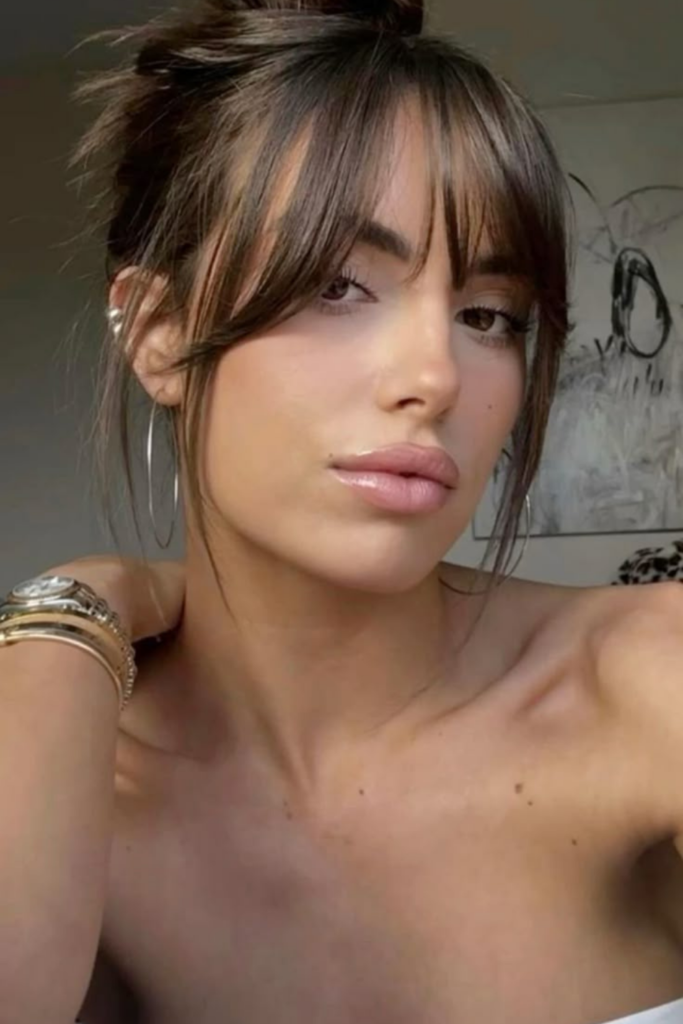
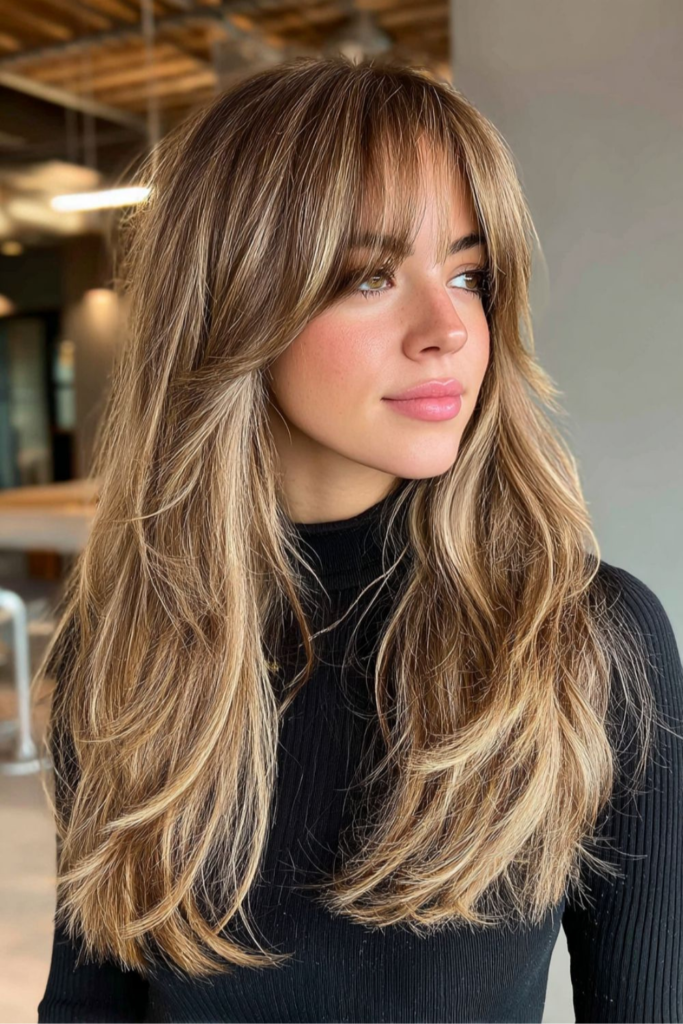
4. Long layers with face-framing
If you love your length, you don’t have to lose it. Long curtain bangs that melt into face-framing layers keep the overall length and add movement around the face. It’s the lowest-maintenance option on this list. Trims can stretch to eight weeks or more, because the ends blend into the rest of the hair.
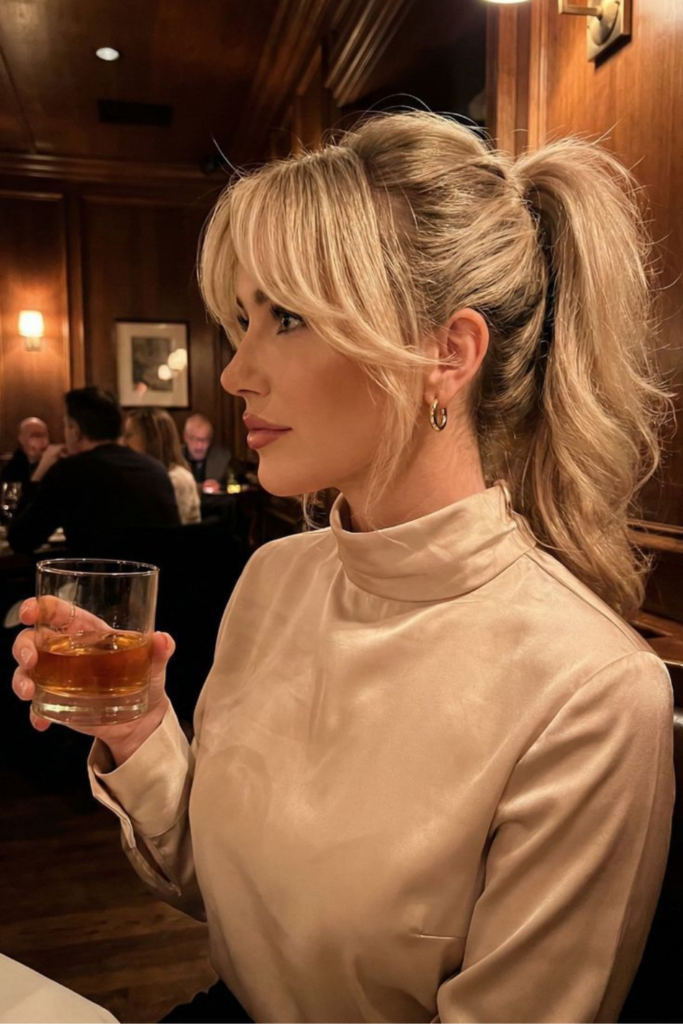
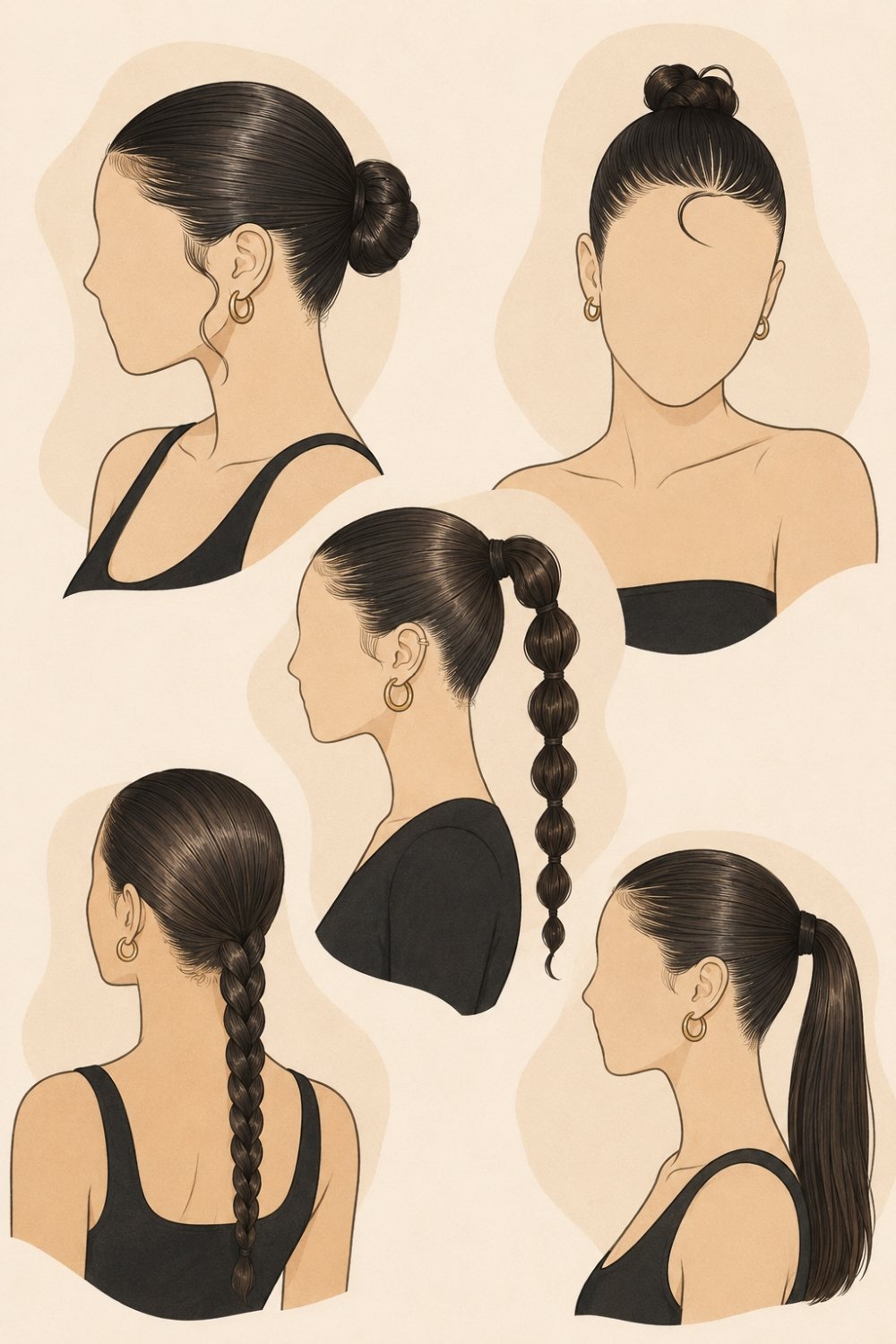
5. Curtain bangs with a sleek ponytail
Bangs left out of a high, smooth ponytail make a basic hairstyle look finished. A round brush or a few minutes with a curling iron on the bangs is all it takes. For another pulled-back option, these slicked-front hairstyles take the opposite approach.
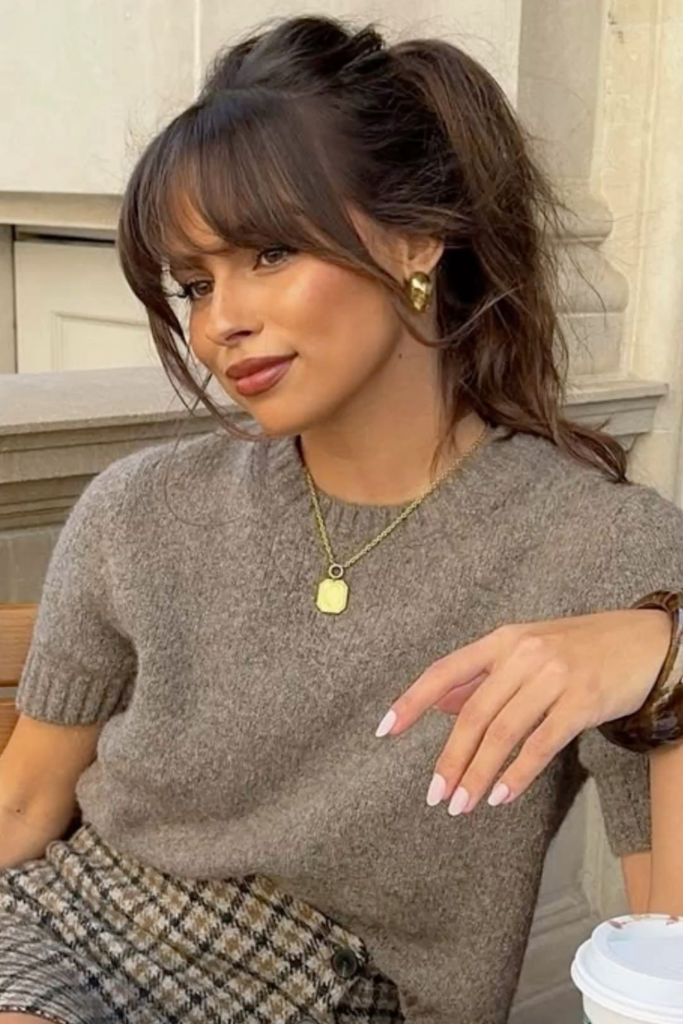
6. Thick and bold
For thick hair, a heavier curtain fringe that covers more of the forehead looks very French. It needs more frequent trims (often every four to six weeks) because it falls into the eyes faster. Expect five to ten minutes of styling most mornings, usually a quick round-brush blow-dry.
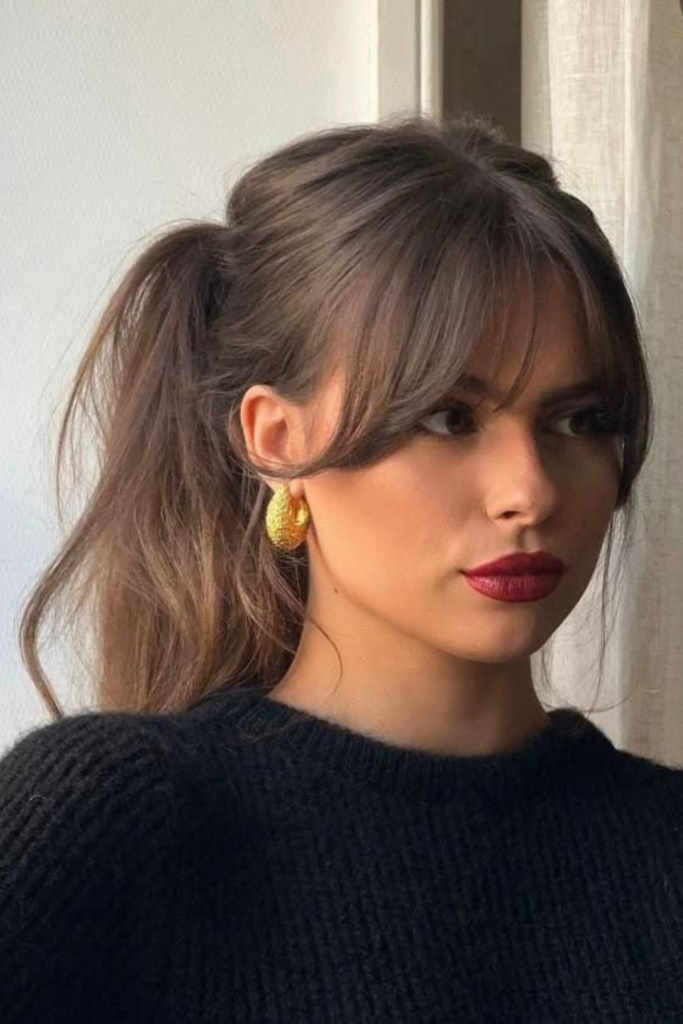
7. The romantic flip
A gentle outward curl at the ends softens the whole look. A flat iron or a large barrel curling iron turned away from the face gives the flip in under five minutes. Velcro rollers do the same job without heat if you set them while you do your makeup.
8. The wolf cut
A mix of a shag and a mullet, with lots of short layers on top and length at the back. Curtain bangs keep it wearable. It’s the edgiest option here and needs texture products to look intentional. A sea salt spray or a light paste on dry hair gives the piecey finish.
9. Half-up with bangs out
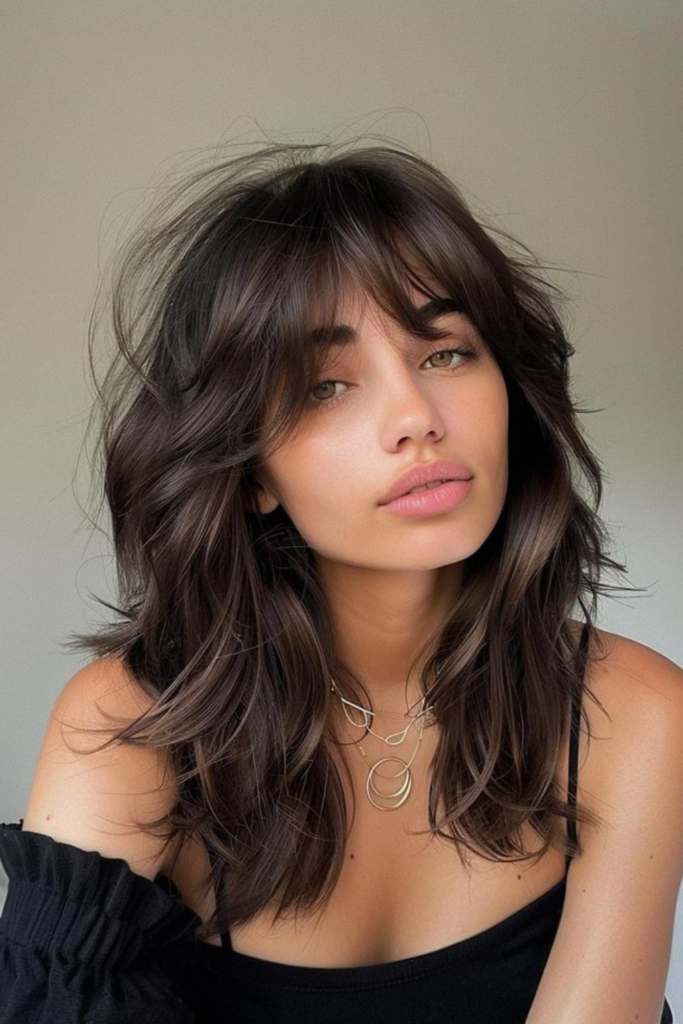
Pin back the top half of your hair and leave the bangs loose. It’s a quick fix on second-day hair, because the bangs keep the face framed while the half-up hides the rest. A bandana works too; these bandana hairstyles are made for exactly those days.
10. Dark and sleek
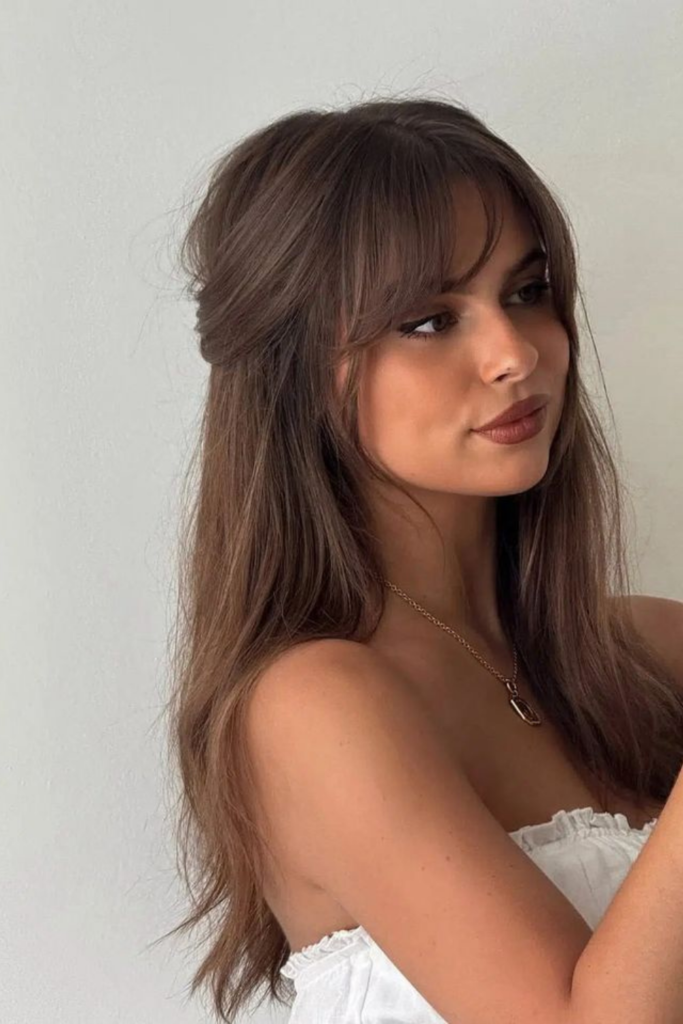
Straight, glossy bangs that hit the brow bone look polished and a little dramatic on dark straight hair. They show every kink, so a quick flat iron pass is part of the routine. A drop of light serum on the ends keeps the shine without weighing them down.
What to ask your stylist
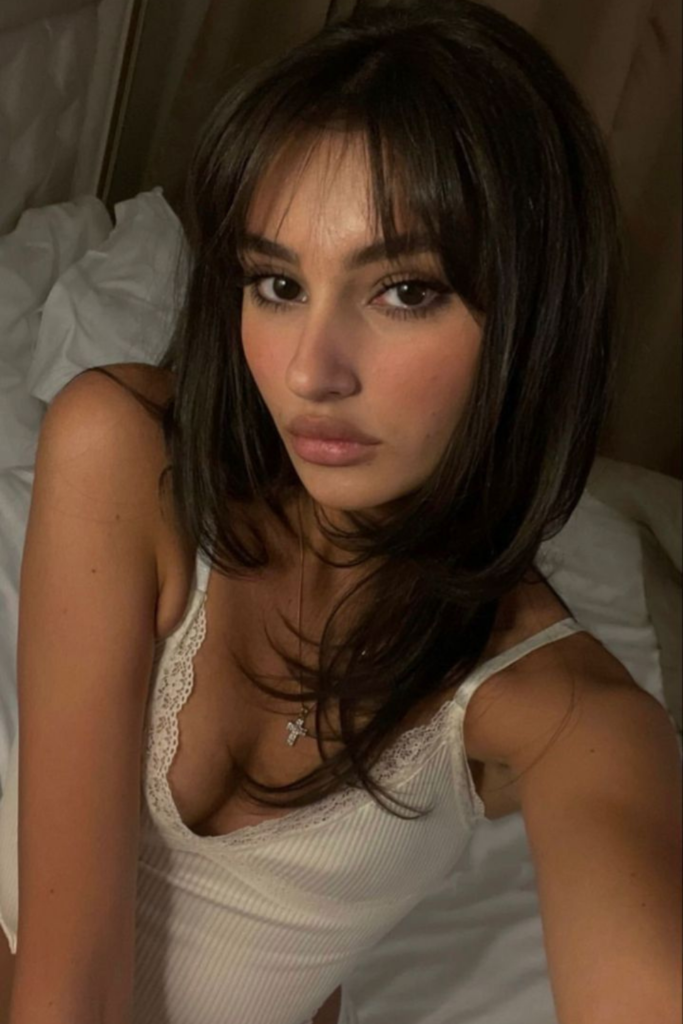
- Bring photos, but talk about length in landmarks: “center at my brows, sides at my cheekbones” is clearer than “medium”.
- Ask for point cutting or slide cutting: it softens the ends so the bangs fall open instead of sitting in a hard line.
- Start longer than you think: you can always take more off at the next visit. Cutting your own bangs at home is the fastest way to end up shorter than planned; if you do it, cut dry, below the length you want, and point-cut into the ends.
- Mention your cowlicks and your routine: a strong cowlick at the hairline changes where the bangs can sit, and if you work out a lot, ask for enough length to pin back.
In my opinion, the free bang trim many salons offer between appointments is worth using. It keeps the shape without waiting six weeks for a full cut.
How to style curtain bangs at home
Round brush blow-dry
Blow-dry the bangs forward over your face first, then split them in the center and brush each side back and away with a small round brush. The forward step sets the root, so they don’t stick straight up later.
Go easy on product
Bangs sit on your forehead and pick up oil fast. A tiny bit of light mousse or hairspray is enough. Dry shampoo at the roots in the morning keeps them fresh on day two or three. Keep heavy moisturizer and sunscreen away from the hairline in the morning, since they transfer straight onto the bangs.
The flat iron twist
No time for a blow-dry? Clamp a flat iron at the root, twist it away from the face and pull it through slowly. You get a soft bend in about a minute. Use a heat protectant first.
Rescue tricks
If they dry flat or split weirdly, wet just the bangs with a spray bottle and start over: the rest of your hair doesn’t need to be restyled. Velcro rollers on the bangs while you do makeup add volume with no heat. They work best on bangs that are completely dry.
Growing them out
Curtain bangs grow out more gracefully than a blunt fringe, but there’s still a stage where they hit the eyes. Sweep them deeper to one side, tuck them behind the ears, or pin them with a small clip until they reach the cheekbones. Ask your stylist to keep cutting the sides longer than the center as they grow, so they blend into face-framing layers instead of turning into a ledge. Most people find they’re past the awkward length in two to three months, depending on how fast their hair grows. Small clips and a headband are the easiest way through the in-between weeks.
Curtain bangs on curly hair
Curly curtain bangs work best when they’re cut curl by curl, dry, in your natural pattern. Style them with the same routine as the rest of your hair: a curl cream or gel, then a diffuser on low heat or air-drying. Skip brushing them once they’re dry, since that breaks up the curl and leaves frizz.
That’s the gist of it: choose the length by face shape, ask for soft ends and a little extra length, blow-dry forward before you sweep them back, and keep product light. If the bangs don’t work out, they’ll grow into layers that frame the face anyway.
Leave a Reply