

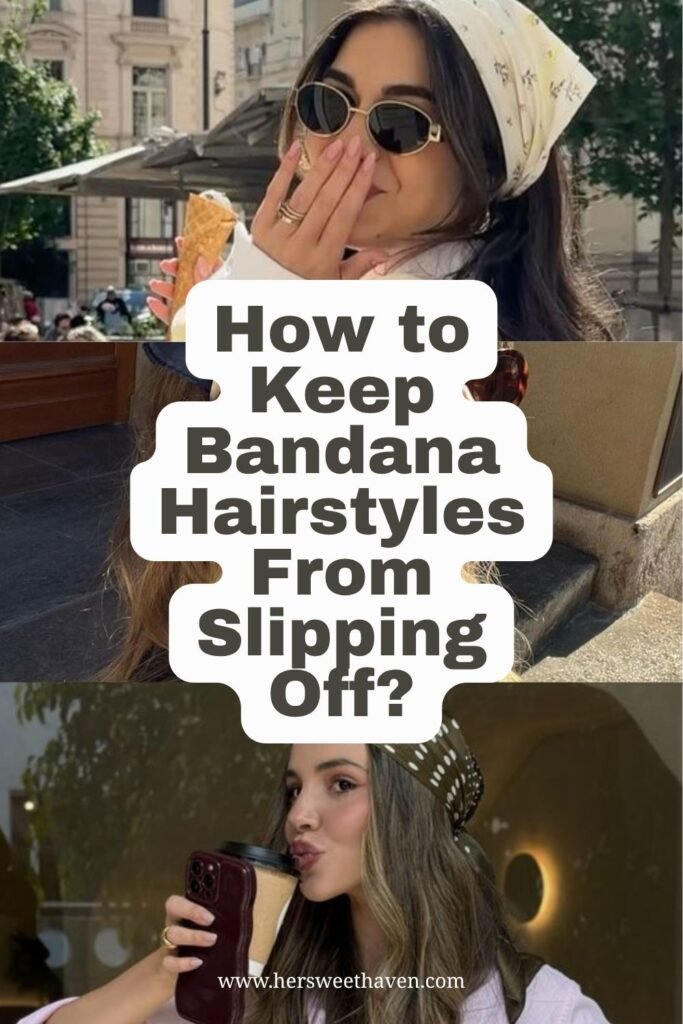
8:00 a.m.: day-three hair, roots gone shiny, avoiding your own reflection. 8:03 a.m.: satin square tied at the nape, two loose strands pulled out front, and suddenly the whole thing reads as intentional.
Three minutes. That’s the entire distance between “I give up” and “she woke up like this on purpose,” and it’s why bandana hairstyles are the hardest-working trick in the bad hair day playbook.
I’m not gonna lie, this post is less about fashion and more about damage control that happens to look cute. So here’s the how-to: why bandanas love uncooperative hair, the three styles that hide everything, the slip-proofing tricks, and which version fits your hair type.
Why Bad Hair Days Are the Best Bandana Days
Counterintuitive but true: bandanas actually work better on unwashed hair. Freshly washed strands are slippery and fine, while day-two-or-three hair has grip, texture, and exactly the kind of imperfections a bandana was born to cover.
Think about what a bandana physically hides: greasy roots, gone. Frizz halo, contained. Grown-out color line, invisible. Roundups like L’Oréal’s hairstyles for greasy hair treat the headscarf as the number one oily-roots rescue for a reason: it covers the exact zone where grease shows first.
And the psychology matters too. A messy bun says “ran out of time.” A messy bun with a bandana says “styled.” Same bun, two dollars of fabric, completely different verdict. (Tools required: one square of fabric. That’s the whole list.)
There’s a protective bonus hiding in here as well: fabric between your hair and the sun, wind, or a convertible ride means less dryness and tangling later. The bandana covers today’s problem and quietly prevents tomorrow’s.
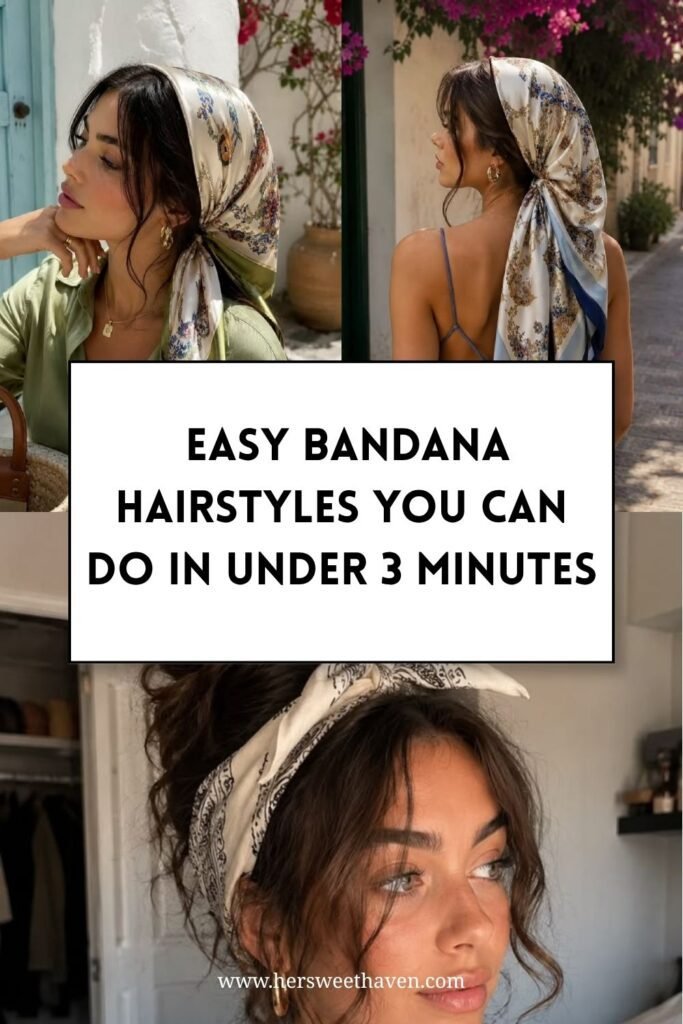
Three Bandana Hairstyles That Hide Everything
Three styles cover every crisis level. Learn all three and no hair day is beyond saving.
The Full-Coverage Headscarf
The maximum-coverage option, for maximum-crisis days. Fold the bandana into a triangle, drape the point toward the back of your head, wrap the ends around your crown, and tie at the nape, under your hair. Guides like Headcovers’ how to tie a bandana walk the basic fold plus knot variations.
Pull a few face-framing strands out and let the rest live under fabric. Roots hidden from crown to hairline, and the whole look leans European-vacation instead of emergency. Grease level: irrelevant. (Zero judgment on how many days we’re talking. We’ve all lost count.)
Print choice does the styling work here: a silky paisley or floral square reads polished, a classic black or white bandana reads cool-girl-casual. Same fold, two different outfits.
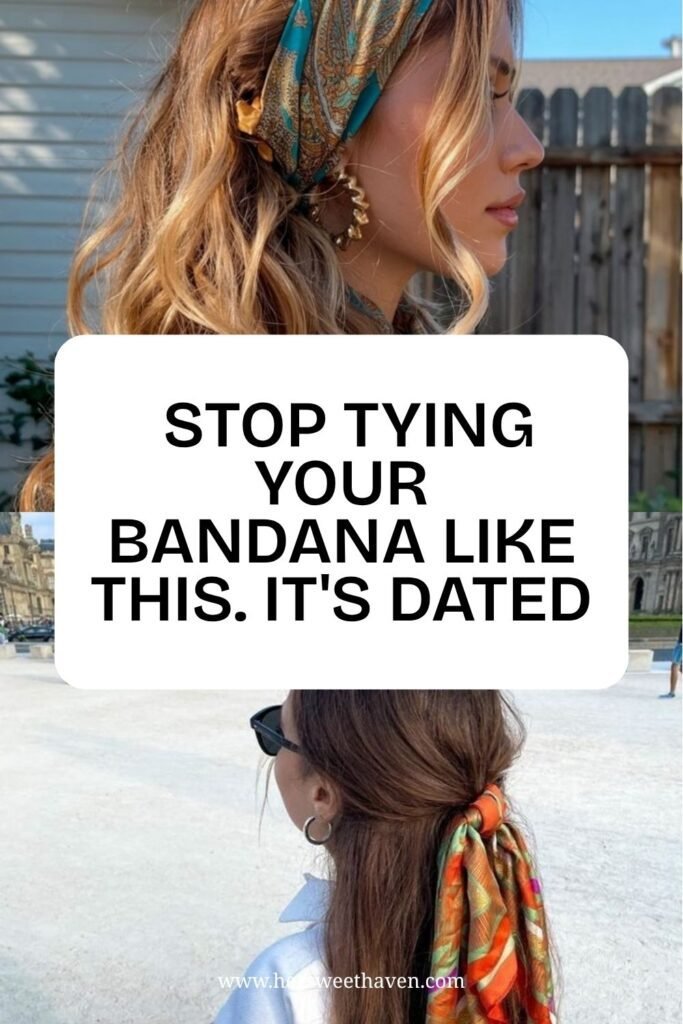
The Headband Twist and the Bun Wrap
For medium-crisis days, fold the bandana into a long strip and wear it headband-style: over the hairline, tied under your hair at the nape, ends tucked. It pushes back the greasy front section, frames the face, and turns air-dried chaos into a look.
The bun wrap is the third weapon: throw everything into a high messy bun, then wrap the strip around its base and knot it, letting the ends stick out like a bow. It upgrades the world’s laziest hairstyle into the world’s cutest one in about forty seconds.
Both versions leave most of your hair out, so they read more casual-cool than covered-up. Perfect for the days when the situation is bad but not classified.
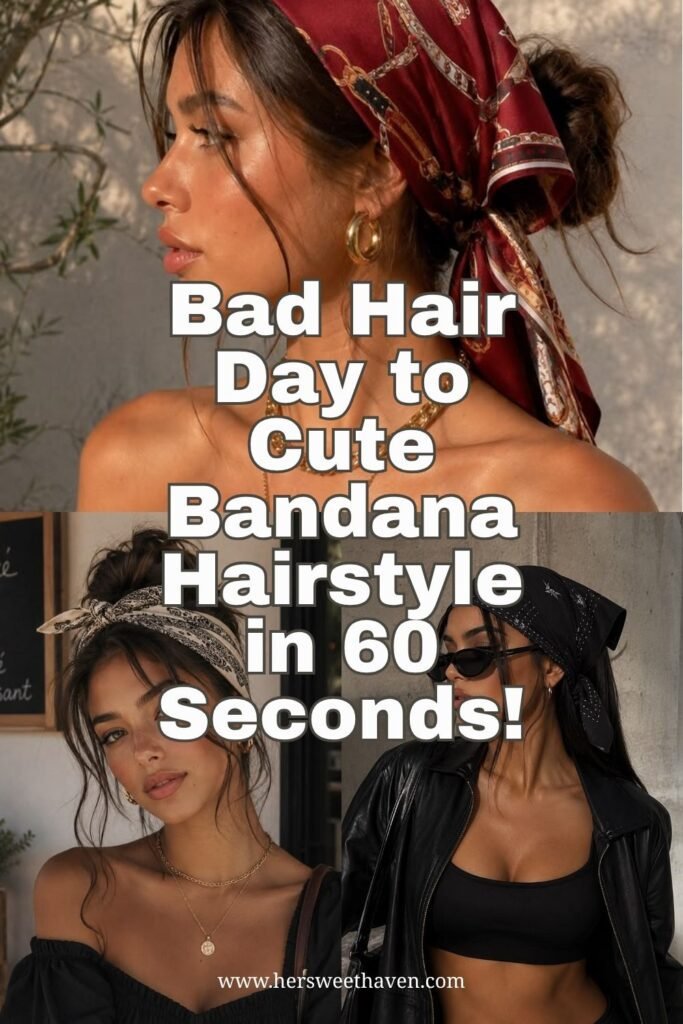
How Do You Keep Bandana Hairstyles From Slipping Off?
The slipping problem is real, and it has real fixes. Two categories: grip and technique.
Grip First: Dry Shampoo, Pins, and Fabric Choice
Slippery hair is the root cause, so create friction before tying anything. A blast of dry shampoo or texture spray at the roots gives the fabric something to hold, which conveniently is the same product your greasy roots wanted anyway. Two birds, one spray.
Fabric matters just as much: cotton grips better than silky materials, so save the pure silk for good hair days and use cotton or a satin-cotton mix when hold is the priority. And bobby pins are legal. Two pins crossed over the fabric behind each ear, hidden under hair, anchor everything through a full day.
Tying Tricks That Actually Hold
Tie tighter than feels natural, because every knot loosens within ten minutes as fabric settles. Start snug, let it relax into comfortable.
Double-knot always, position the knot under your hair at the nape where it can’t work itself loose, and tuck the tail ends under the band. For the headband twist, tying underneath your hair instead of on top of it makes the whole structure self-anchoring. Slippage solved, mostly forever.
Size is the quiet culprit too. A standard 22-inch bandana barely reaches around some heads with hair, and a too-short tie will never hold no matter the knot. If yours slips constantly, try a 27-inch square or a rectangular scarf before blaming your technique.. sometimes the fabric was just outmatched.
Which Bandana Hairstyles Fit Your Hair Type?
Same accessory, different rules by texture. Here’s the honest breakdown.
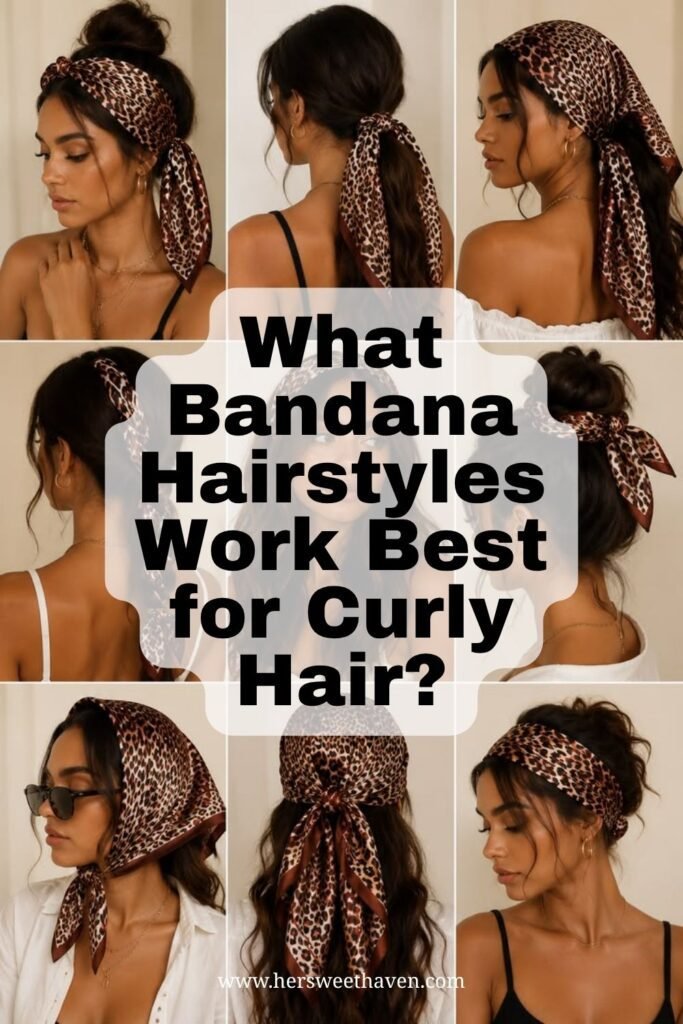
Curly, Thick, and Textured Hair
Curly hair and bandanas are a natural match, with one non-negotiable: fabric choice. Cotton creates friction and drinks moisture, which equals frizz and disrupted curl pattern, so go satin or silk-lined, as Royal Bandana’s curly hair bandana guide lays out. Tie loosely, never tight enough to dent the curls or stress edges.
The pineapple-plus-scarf combo is the power move: curls piled high, bandana wrapped around the base, definition protected all day. Thick hair also holds every style best, so consider the whole menu open.
Fine, Flat, or Short Hair
Fine hair needs the grip chapter above, doubled: texture spray first, always, and cotton over silk. The headband twist is your best style, since it adds visual volume at the crown while the fabric covers flat roots.
Short hair, don’t sit this out: the front twist knot, tied above the forehead with the ends tucked, works on bobs and pixies beautifully. It’s the retro diner-waitress look, and it needs almost no hair to anchor to. (Okay, it also requires a little confidence. Maybe more than a little.)
What the Bandana Can’t Fix
Honesty corner: the bandana is a stylist, not a shampoo. An itchy, genuinely uncomfortable scalp needs a wash, not a cover-up, and no fabric fixes that feeling. Two rescue days is the bandana’s healthy limit before your scalp files a complaint.
It also has a formality ceiling. Job interviews and black-tie events call for the sleek-bun-and-dry-shampoo route instead of the headscarf, adorable as it is.
But for everything between those edges, school runs, coffee dates, errands, casual Fridays, the office on a normal Tuesday, a two-dollar square of fabric buys you three extra days of good hair. Keep one in your bag, one in the car. Future you says thanks.

Leave a Reply