

Curtains are one of those things you can ignore for months and then suddenly realize they are the reason your living room still feels unfinished. You can have the sofa, rug, coffee table, lamps, and wall art exactly where you want them, but if the curtains are too short, too narrow, too heavy, or hanging right on top of the window frame, the whole room can still feel a little off.
The good news is that choosing living room curtains is not nearly as complicated as it looks. You really only need to get a few things right: what you need the curtains to do, how long and wide they should be, which fabric fits the room, and where you hang the rod. Once those pieces are working together, even inexpensive ready-made panels can look surprisingly polished.
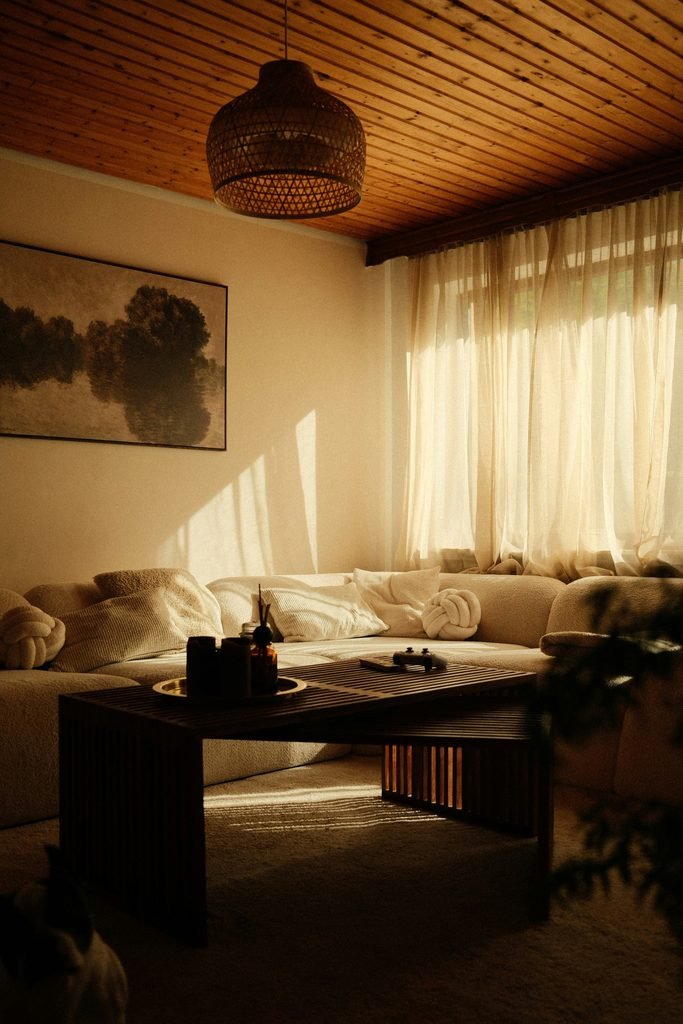
Photo by Kevin Lieder on Unsplash
That soft light coming through a full-length curtain is exactly why window treatments make such a difference. They do not just cover the glass; they soften the room, frame the window, and change how the entire space feels. So before you buy the first curtains that happen to match your couch, let’s make sure you are choosing the ones your living room actually needs.
Why Your Living Room Curtains Matter More Than You Think
Curtains take up a huge amount of visual space, which is easy to forget when you are shopping because they are basically just long pieces of fabric. Once they are hanging, though, they can cover several feet of wall from almost ceiling to floor. That means the wrong curtains can make a room feel shorter, darker, smaller, or busier than it really is.
The right ones can do the opposite. They can make the ceiling look taller, make a narrow window look wider, soften a room full of hard furniture and straight lines, and make a basic living room feel much more finished without changing anything else.
But style is only half of it. Your curtains also need to work with the way you actually use the room.
They Control Light, Privacy, And The Entire Mood
Start here before you think about color: how much light do you actually want coming into the living room during the day? If you love a bright room and do not need complete privacy, lighter curtains or sheers may be enough because they soften direct sunlight without making the space feel closed off.
If your windows face a sidewalk, another house, or a busy street, you may need more coverage. And if afternoon sun makes it impossible to see the TV, a heavier panel or layered setup can give you more control when you need it.
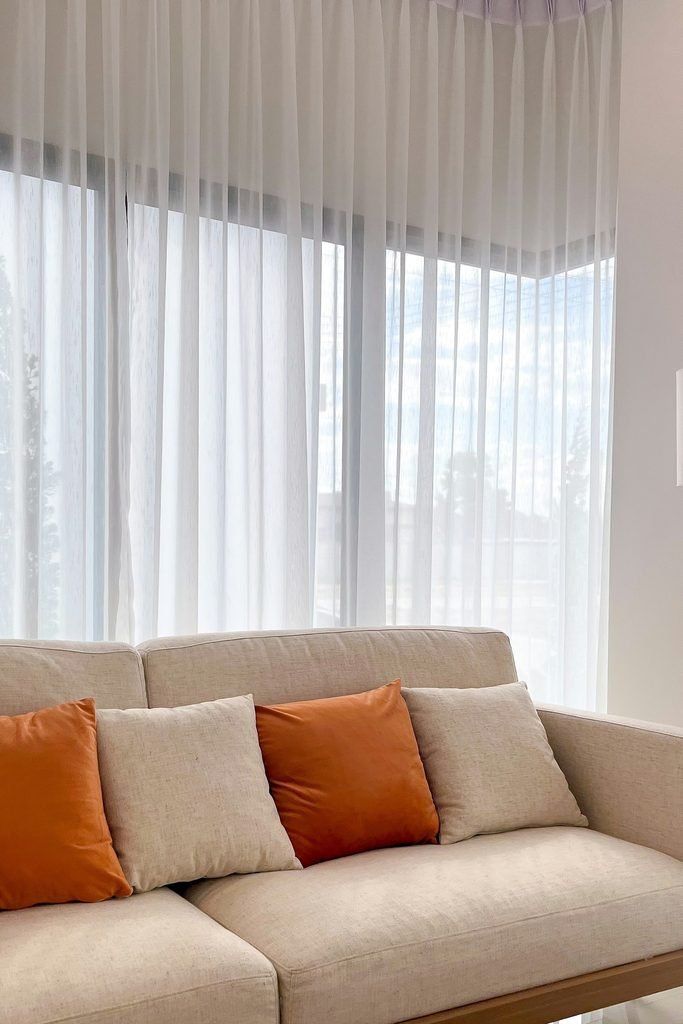
Photo by Jetts Thanatip on Unsplash
This is why I always think about the window and the seating area together. The curtains are not separate from the living room; they affect the light falling on the sofa, the color of the walls, how warm the room feels, and even whether you want to sit there in the afternoon.
A bright room with simple furniture can handle soft, airy panels beautifully, while a darker room usually needs you to be more careful. Heavy curtains in the wrong color can eat up the little natural light you already have. Before shopping, decide what matters most: more light, more privacy, more softness, or better light control. That answer will make almost every decision after this easier.
What Length Should Your Curtains Be?
Curtain length is where a lot of otherwise pretty rooms go wrong. You find a panel you love, hang it from a rod right above the window, and then realize the bottom stops several inches above the floor. Suddenly the whole window looks shorter.
For most living rooms, floor-length curtains are the easiest way to get a polished look. I like panels that just reach the floor or lightly skim it. You can also let them puddle slightly if you want something softer or more romantic, but that comes with more maintenance.
If you have pets, kids, a robot vacuum, or curtains that get opened and closed constantly, a dramatic puddle may become annoying very quickly.
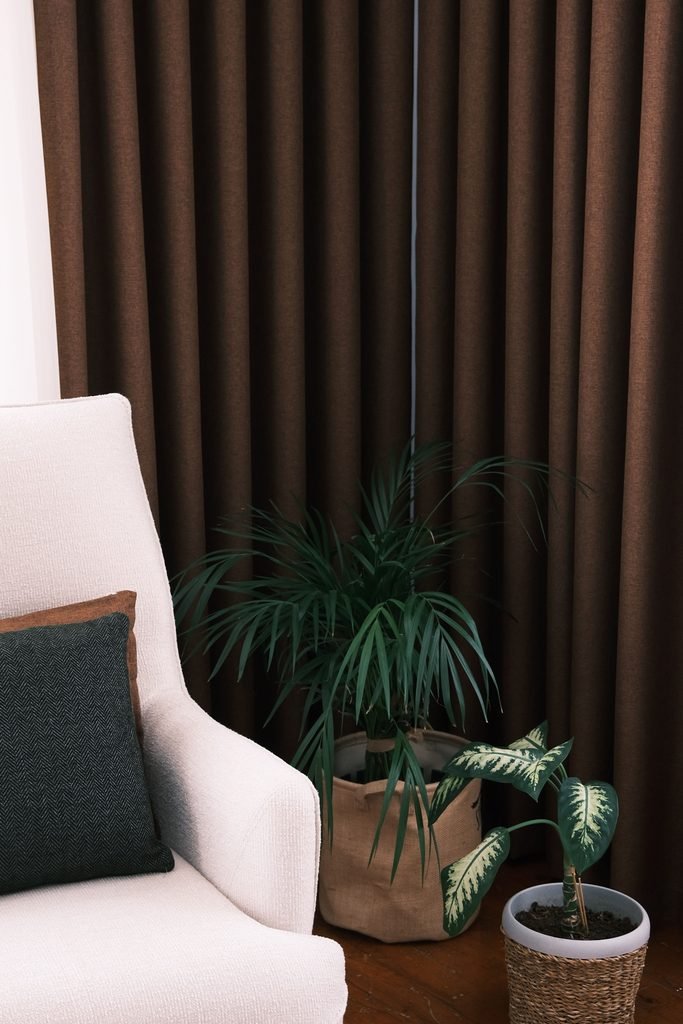
Photo by Rahime Gül on Pexels
Look at the curtains as part of the whole wall, not just the window. Long panels create one continuous vertical line, which is why they tend to make a living room feel taller and calmer.
There are exceptions, of course. If you have a radiator directly below the window, built-in furniture, a window seat, or another practical reason that floor-length panels do not make sense, shorter treatments can absolutely work. But if nothing is blocking the space below the window, curtains that stop awkwardly halfway down the wall usually make the room look less finished.
Measure Before You Fall In Love With a Pair
Please do not guess this part. Measure from where the rod will actually sit to the floor, not from the top of the window frame. Those are not always the same measurement, especially once you start hanging the rod higher.
Then check the curtain dimensions before ordering. A beautiful 84-inch panel is not a bargain if your room actually needs 96 inches. It is much easier to choose the right length from the beginning than to design your entire rod placement around curtains that are already too short.
How Wide Do Curtain Panels Need To Be?
Length gets most of the attention, but width makes just as much difference. Curtains should still look full when they are closed. If two panels barely stretch across the window, they lose all of those soft folds that make curtains look expensive and start looking more like flat sheets pulled from both sides.
As a general styling rule, you want the total curtain width to be noticeably wider than the window itself so the fabric can gather naturally.
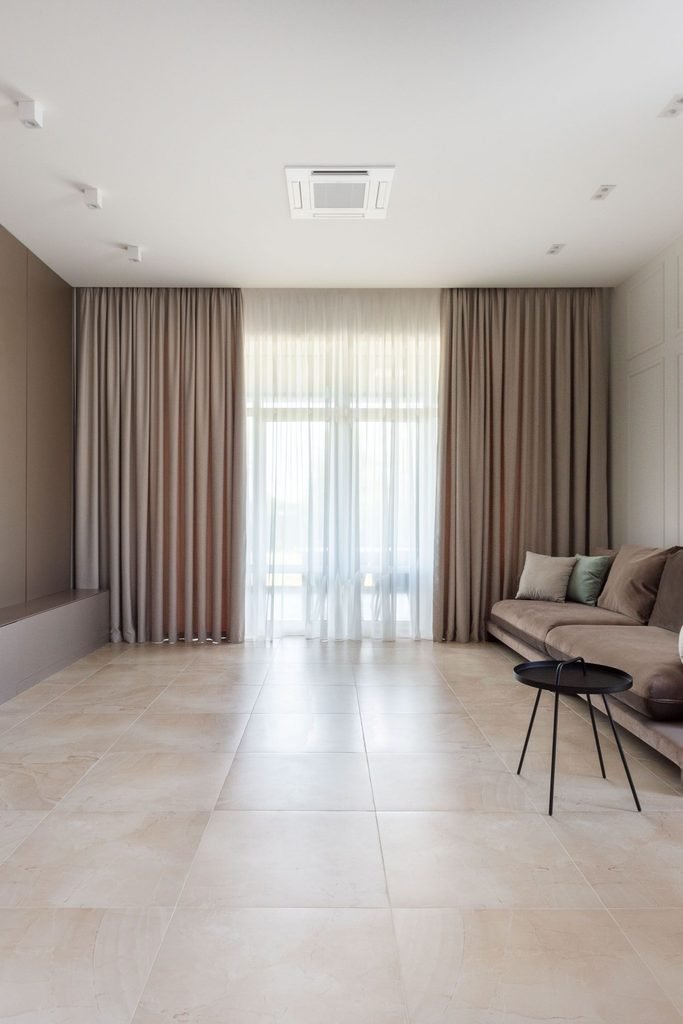
Photo by Max Vakhtbovych on Pexels
Those folds are doing more work than you think. They add texture, soften the wall, and keep the curtains from looking thin even when the fabric itself is inexpensive. This is also why sometimes buying four inexpensive panels instead of two creates a much better result.
If your window is wide, or you simply want a fuller designer look, adding another pair can completely change the way the curtains hang. Just make sure all the panels are from the same color batch when possible. Slight differences in white, beige, or gray become much easier to notice once the fabric is hanging side by side.
Which Curtain Fabric Is Best For A Living Room?
Fabric changes everything. Two curtains can be the exact same color and length and still look completely different because one is linen and the other is velvet. That is why I would choose the fabric based on the feeling you want in the room before worrying about tiny details like the header style.
Light Fabrics vs. Heavy Fabrics (And When To Use Each)
Lightweight fabrics make a living room feel relaxed. Linen-look panels, cotton blends, and sheers work especially well in bright rooms where you want the window to feel soft without becoming the main feature. They move more easily, let more light through, and usually make small rooms feel less visually heavy.
Heavier curtains create a different effect. Velvet, lined panels, and dense woven fabrics feel more structured. They can make a large living room feel warmer and more grounded, and they are useful when privacy or light control matters more.
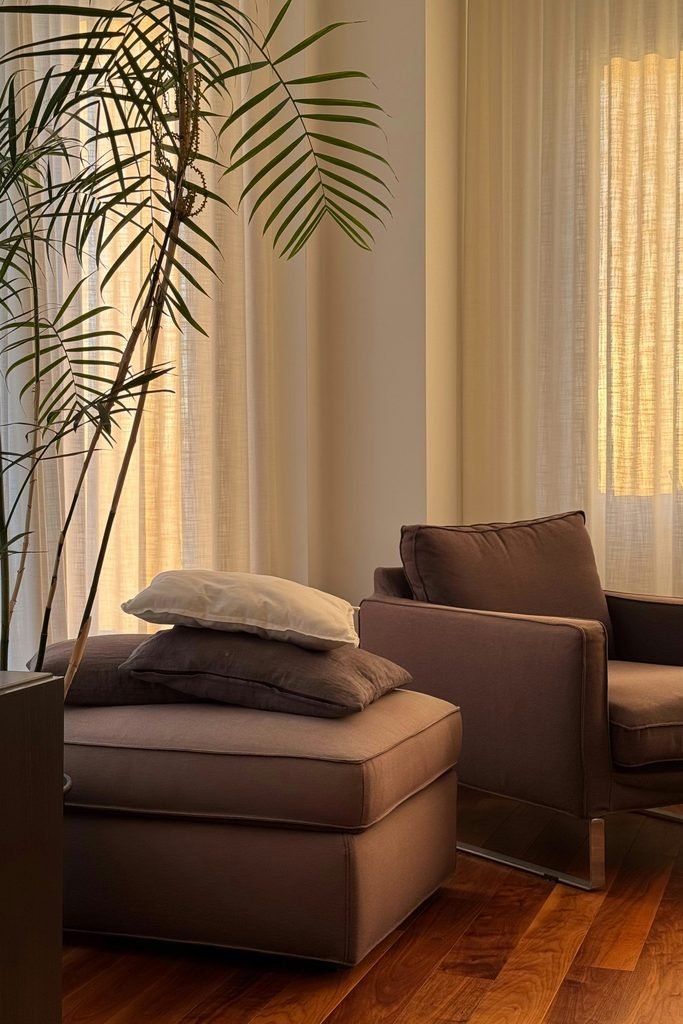
Photo by Olivier Collet on Unsplash
The trick is matching the visual weight of the curtain to the rest of the space. If your living room already has dark furniture, a large sectional, a heavy rug, and lots of deep colors, very heavy curtains can make the whole room feel weighed down. In that case, a lighter curtain may actually create better balance.
But if the room is large, bright, and a little cold, a more substantial fabric can be exactly what it needs. There is no single fabric that works in every living room, so ask yourself whether the room needs more airiness or more coziness, and choose from there.
What Curtain Color Should You Choose?
This is the part everyone wants to start with, and I get it because color is more fun than measurements. But choosing the right curtain color becomes much easier once you already know the length, fullness, and type of fabric you want.
For most living rooms, you have two easy directions: you can let the curtains blend into the room, or you can let them become part of the statement.
Neutral Curtains Are Hard To Mess Up
White, cream, oatmeal, beige, soft gray, and warm taupe work because they do not demand a lot of attention. They frame the window and add softness without competing with your rug, furniture, artwork, or pillows.
If your living room already has several colors or patterns, neutral curtains are usually the safer choice. And no, neutral does not have to mean boring. Texture can do all the work. A warm linen-look cream panel is completely different from a flat bright-white polyester curtain even though both are technically neutral.
When To Go Bold (And When To Keep It Simple)
Bold curtains look best when the rest of the room gives them space. If your sofa, rug, and walls are fairly simple, a stronger curtain color can make the room feel intentional instead of plain.
Think deep green, rust, navy, dusty rose, warm terracotta, or even a pattern that pulls colors from the rest of the room.

Photo by Seda Maviş on Pexels
The part that matters is repetition. If you introduce a bold curtain color and that color appears nowhere else in the room, the curtains can feel random. But if the shade connects to a chair, pillow, artwork, throw, or small decorative detail, suddenly it makes sense.
You do not need an exact match. Actually, I prefer when it is not exact because using related tones usually looks more collected and less like you bought the entire room from one display. Patterns work the same way: if the room is already busy, keep the curtains simple; if everything else is quiet, the curtains can carry more personality.
How Do You Make Affordable Curtains Look Expensive?
This is my favorite part because you do not need custom curtains to get a custom-looking result. The biggest difference usually comes from how you hang them, not how much you paid for them.
You can buy beautiful curtains and ruin the effect with the wrong rod placement. Or you can take very basic ready-made panels and make them look dramatically better with a few small changes.
Hang High, Hang Wide
Do not automatically attach the rod right above the top of the window frame. Raising it higher draws your eye upward and makes the window feel taller. Extending the rod beyond the edges of the window also gives the curtain somewhere to sit when it is open.
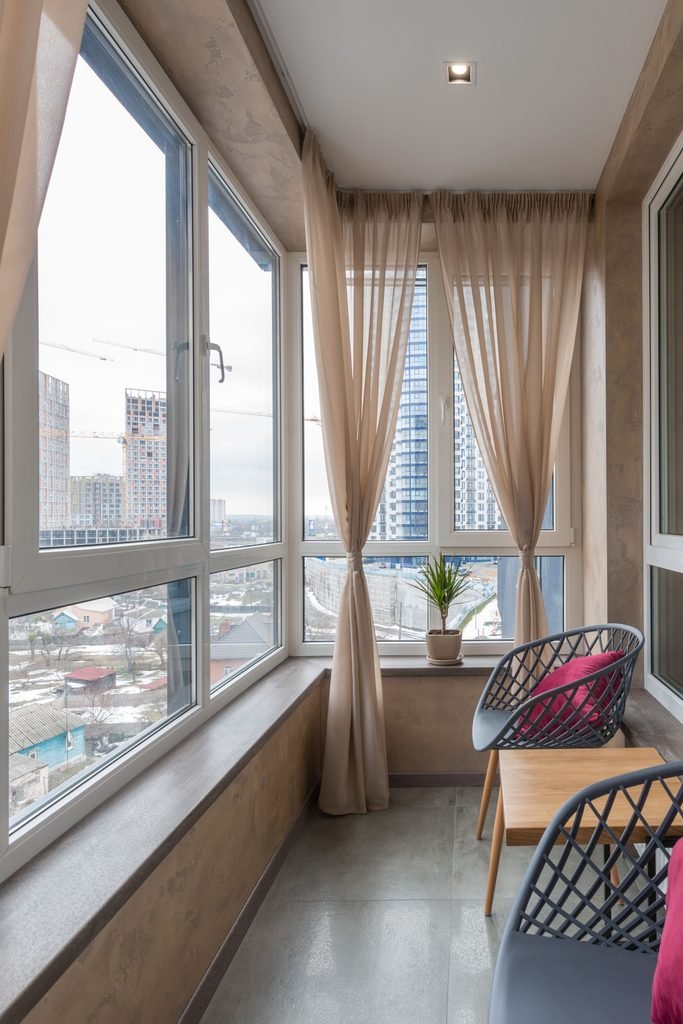
Photo by Max Vakhtbovych on Pexels
This matters because you do not want the open curtains covering half the glass. If the panels can stack mostly outside the window, you keep more natural light and the window itself looks larger.
That combination (higher rod, wider rod, long curtains) is one of the easiest ways to make a living room feel more polished. But use the room as your guide. You do not have to force the rod against the ceiling if there is crown molding, unusual architecture, or another detail that makes a slightly lower placement look better. The goal is visual height, not following a rule just because someone on the internet told you to.
Steam Them Before You Judge Them
New curtains can look terrible straight out of the package because the folds are stiff, the creases are obvious, and the panels refuse to fall properly. Give them a chance.
Steam the fabric according to its care instructions and arrange the folds while the curtains are hanging. This tiny step can make inexpensive panels look so much better.
Should You Layer Living Room Curtains?
If you want the most flexibility, yes. Layering gives you two completely different window treatments in one setup. You can keep a sheer closed during the day for softness and some screening, then close a heavier outer curtain when you want more privacy or less light.
It also adds depth to the window. Instead of one flat layer of fabric, you get texture, movement, and contrast.
Sheers + Drapes: The Winning Combo
This combination works especially well in living rooms because your needs change throughout the day. Morning light might be beautiful, harsh afternoon sun might not be, and at night you may want the room completely closed off from outside.

Photo by Iban Lopez Luna on Pexels
Layering lets you adjust without committing to one extreme. During the day, the sheer layer can soften the window while still keeping the room bright. Later, the outer panels can add privacy and make the room feel cozier.
I especially like a white or warm ivory sheer behind a slightly darker neutral outer panel, but you can also use the outer curtain for color. A soft sheer with olive, rust, blue, or patterned drapes can look beautiful when the rest of the living room is fairly neutral.
Just remember that two layers mean more fabric around the window. If the room is very small or already visually busy, keep the colors simple so the treatment does not become too heavy.
How Should You Hang Curtains In A Small Living Room?
Small living rooms are exactly where curtain placement matters most. The instinct is often to buy small curtains for a small room, but usually that makes the room feel even smaller.
Instead, use the curtains to exaggerate the height and width you already have.
Where To Place Your Rod For Maximum Impact
Start by looking above the window. If you have empty wall space between the frame and the ceiling, use some of it. Mounting the rod higher creates a longer vertical line and makes your eye read the window as taller.
Then look at the wall space on each side. Extending the rod outward allows the curtains to frame the glass instead of covering it when they are open.
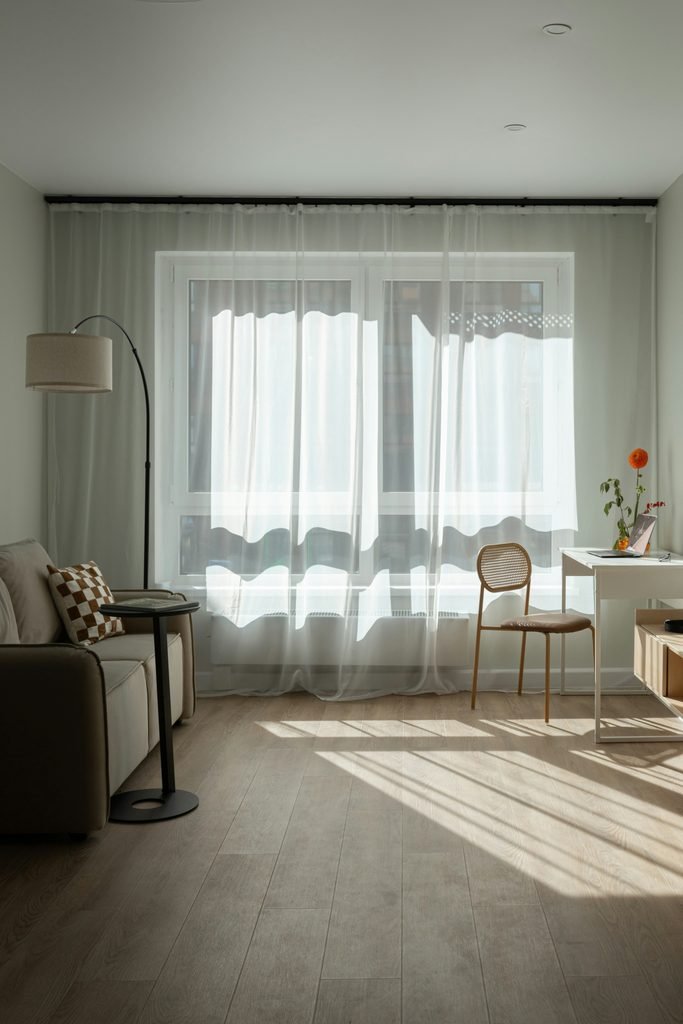
Photo by Aleksandra Dementeva on Unsplash
That soft, uninterrupted light is exactly what you want to protect in a smaller room. Heavy fabric sitting over half the glass can make the room feel darker before you have even added furniture.
So if your living room is small, I would usually start with lighter colors, enough width for nice folds, and a rod placement that lets the open curtains sit mostly outside the window. You are not trying to hide the window; you are trying to frame it.
What About Curtains Behind A Sofa?
This is another place where people get stuck. If the sofa sits under or very close to the window, you may worry that floor-length curtains will disappear behind it, but that is not automatically a problem.
If there is enough space for the fabric to fall naturally, full-length panels can still make the wall look much more finished. Just avoid crushing a huge amount of fabric tightly between the sofa and the wall.
If your furniture sits directly against the window area with no room for curtains to move, that is when a different window treatment may make more sense. The room has to function first. Pretty curtains that you cannot open, close, clean, or live with are not the right curtains.
What Curtain Style Makes A Living Room Look Bigger?
If your goal is a bigger, brighter-looking room, keep the overall treatment visually simple. Long vertical lines help, light or medium-weight fabric helps, and allowing as much of the glass to remain visible as possible when the curtains are open makes a huge difference.
You can still use color, but I would be careful with very dark, dense fabric in an already small and dim room. A curtain close to the wall color is another easy trick because it reduces visual breaks, so your eye moves across the wall more smoothly instead of stopping at a high-contrast rectangle around the window.
None of these things literally make the living room larger, but they can stop the curtains from making it feel smaller, which is usually the real goal.
The Curtain Mistakes I Would Avoid
There are a few mistakes that show up over and over: buying curtains before measuring, choosing panels that are wide enough to technically cover the window but not wide enough to look full, using curtains that stop several inches above the floor for no practical reason, and hanging the rod so close to the window that the curtains cover a huge amount of glass even when they are fully open.
None of these are disasters, but fixing even one or two of them can make the entire room look noticeably better.
I would also avoid buying curtains based only on how the fabric looks folded on a store shelf. Hold it up to light if you can, because a beige curtain can turn almost transparent in a sunny window, a white panel can suddenly look gray, and a rich color can become much brighter once sunlight comes through it.
The window changes the fabric, so always keep that in mind.
So, Which Curtains Are Best For Your Living Room?
The best curtains are not automatically the most expensive ones. They are the ones that solve the problems your specific room has.
If your living room is dark, you probably want lighter fabric and a rod placement that keeps the glass exposed. If privacy is the problem, you may need denser panels or a layered sheer-and-drape combination. If the room feels short, longer curtains hung higher can help stretch the wall visually. And if everything feels a little plain, color or texture might be the missing piece.
Start with function, then get the measurements right, then choose the fabric and color. Only after that should you worry about the small styling details. It is much easier than trying to choose from hundreds of curtains based on which one looks cutest in the product photo.
Because once the proportions are right, the fabric suits the room, and the rod is in the right place, the whole window starts looking intentional. And when the windows look intentional, the entire living room does too.



Leave a Reply