

Be honest: how many plants have you killed in your bathroom? One? Three? A whole shelf’s worth? You’re not alone and you’re definitely not bad at plants. The problem is that most people pick bathroom plants based on how they look on Pinterest, not on whether they can actually survive in that specific environment. And bathrooms are tricky. They’re humid, sure. But they’re also often dark, poorly ventilated, and subject to wild temperature swings every time someone takes a hot shower.
I learned this the hard way when I bought a gorgeous little maidenhair fern for my windowless bathroom. I figured the humidity would be perfect for it, like giving it a mini tropical vacation. Two weeks later, it was brown, crispy, and very much dead. Turns out, humidity without light is still a death sentence for most plants. That one stung. So I did the research, tried a bunch of different species, and figured out which ones actually work. Here’s everything I know about bathroom plant decor that doesn’t end in disappointment.
Why Your Bathroom Plants Keep Dying
The biggest reason bathroom plants fail is a mismatch between the plant’s needs and what your bathroom actually offers. Most bathrooms have limited natural light, inconsistent temperatures, and humidity levels that spike during showers and then drop back down between uses. That’s not the steady, tropical environment most people imagine.
Plants that need consistent bright light will slowly decline in a dim bathroom, even if the humidity is perfect. Succulents, cacti, and aloe vera are especially poor choices because they need dry air and lots of sun. Putting them next to a steamy shower is basically the opposite of what they want. And yet, those are some of the most commonly recommended “easy” houseplants. Easy in a living room, maybe. In a bathroom? They don’t stand a chance.
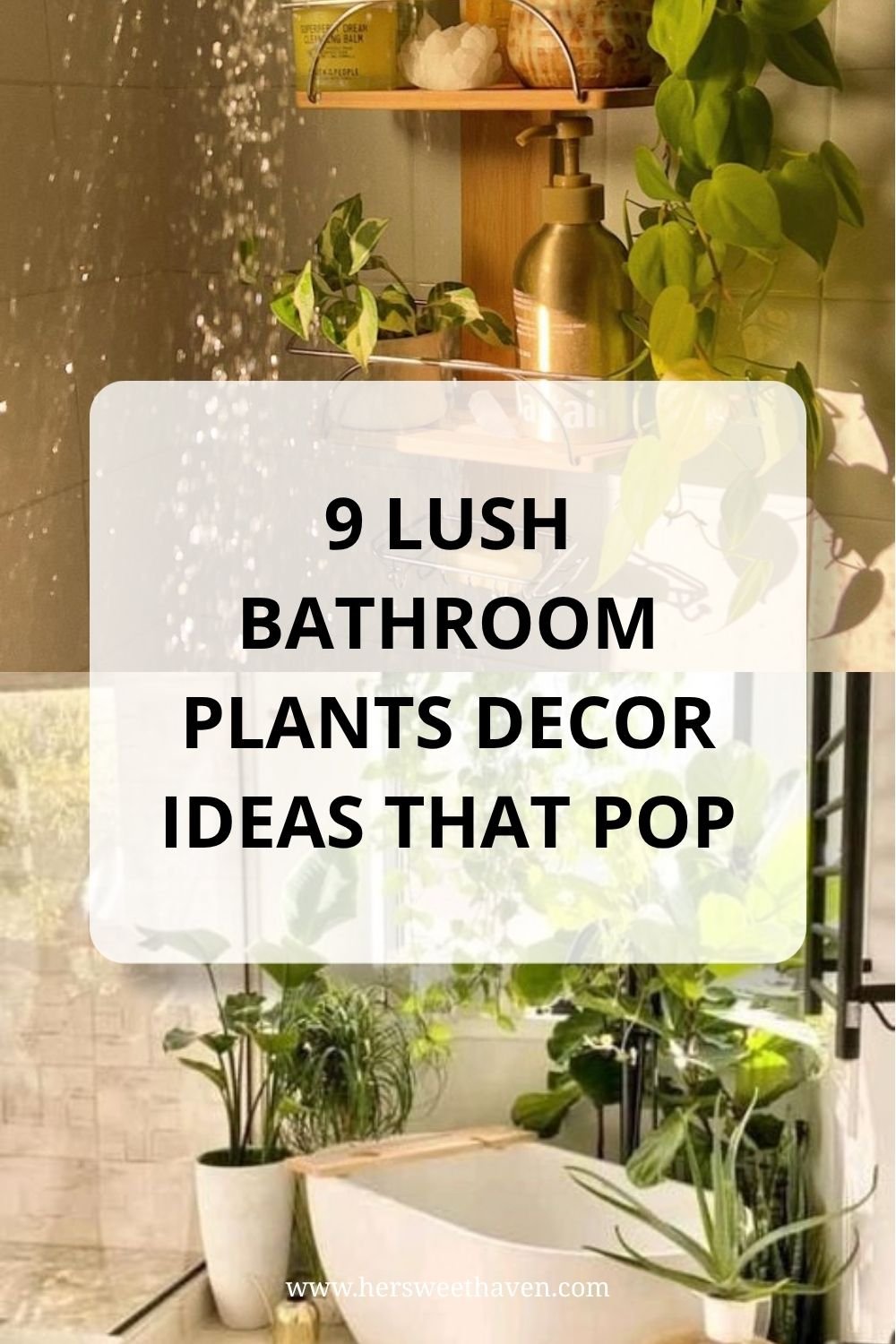
The Humidity Myth That’s Killing Your Plants
Here’s where it gets frustrating. Everyone says bathrooms are great for plants because of the humidity. And that’s partially true. But humidity alone doesn’t keep a plant alive. Plants still need light to photosynthesize, and most bathrooms, especially interior ones without windows, get almost none.
The combination of high humidity and low light creates a very specific environment that only certain plants can handle. If you put a plant in your bathroom that needs bright indirect light, it will slowly lose color, stretch toward whatever faint light source it can find, drop leaves, and eventually give up. The humidity might keep the leaves from drying out for a while, which tricks you into thinking the plant is fine. But underneath, it’s struggling. And by the time you notice the decline, it’s usually too late to save it.
So the real question isn’t “which plants like humidity?” It’s “which plants like humidity AND can handle low light AND won’t mind temperature fluctuations?” That narrows the list significantly, but the plants that make the cut are genuinely tough.
Plants That Thrive in Low-Light Bathrooms
If your bathroom has a small window or no window at all, these are the species that will actually survive long term. They’re not just tolerating the conditions. They’re built for them.
Pothos
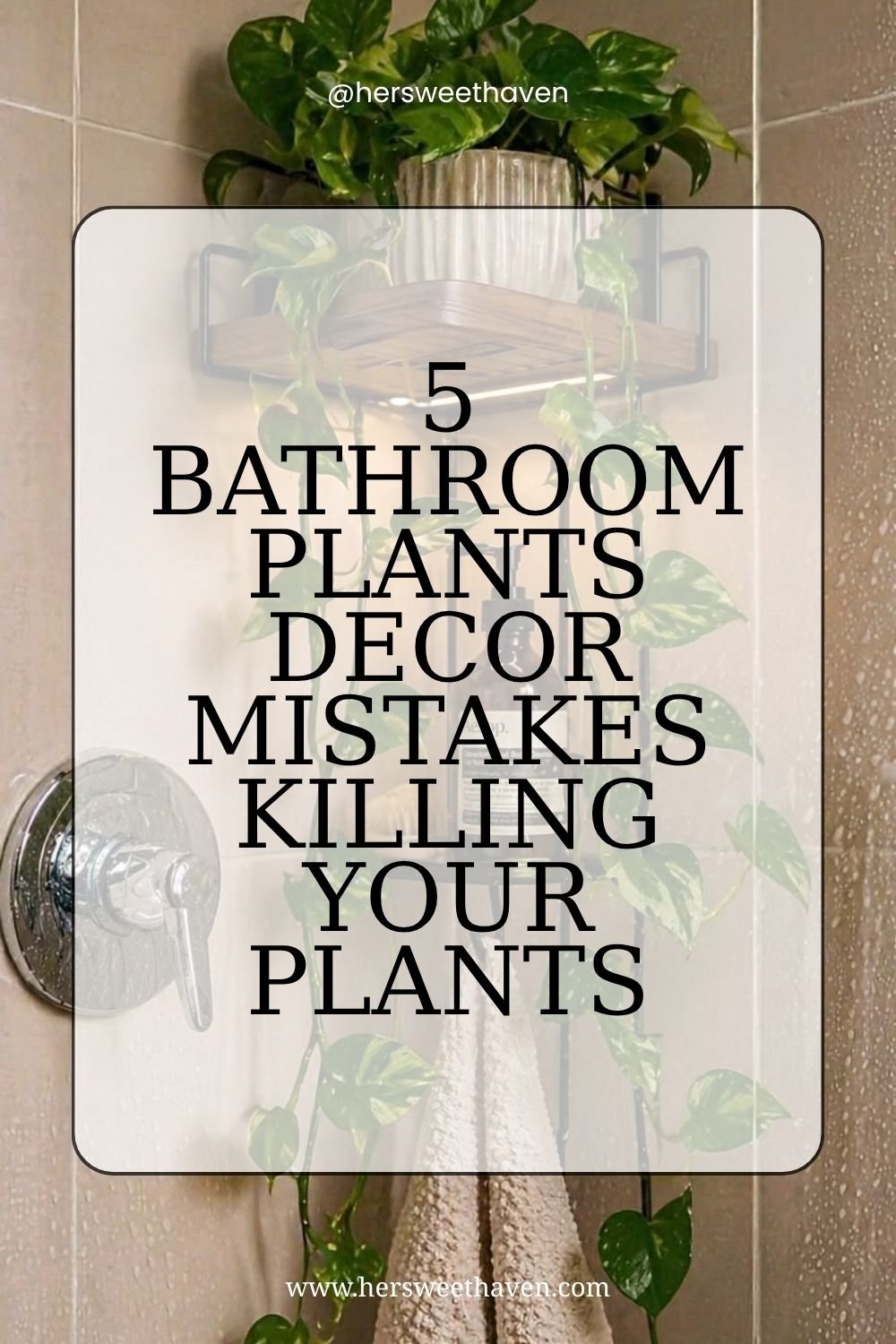
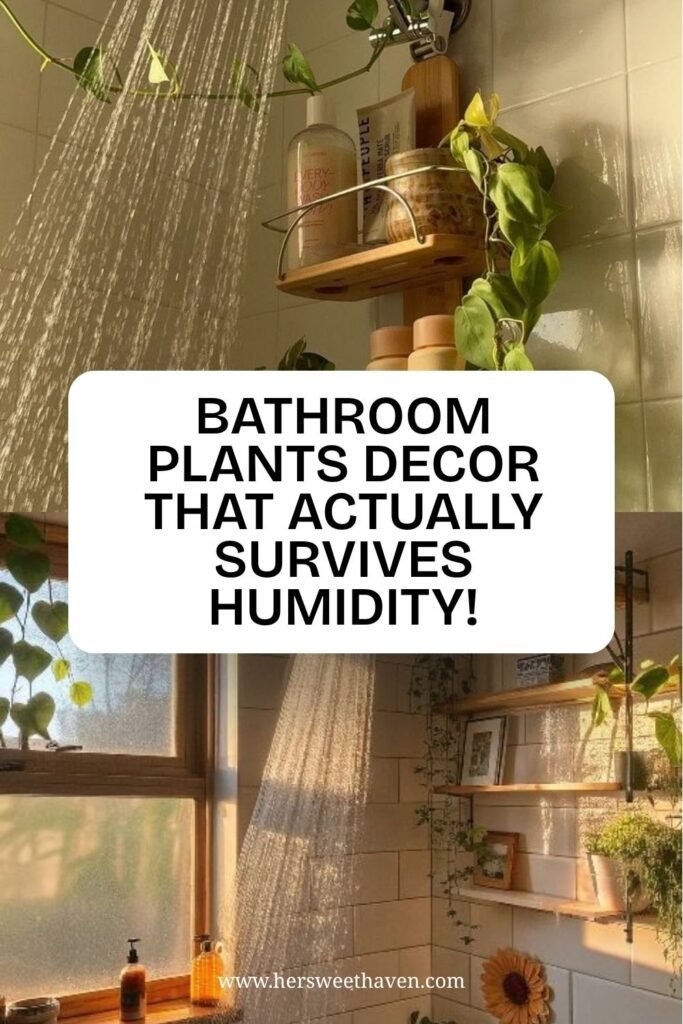
Pothos is the undisputed champion of bathroom plants. It thrives in low light, loves humidity, and is incredibly forgiving if you forget to water it. The trailing vines look beautiful draped over a shelf or hanging from a macrame planter, and they grow fast enough that you’ll actually see results within a few months. Golden pothos, marble queen, and neon pothos all do well in bathrooms. If you can only pick one plant for a dark bathroom, this is the one.
ZZ Plant
The ZZ plant is practically indestructible. It survives weeks without water, handles artificial lighting just fine, and has a sleek, architectural look that works in modern bathrooms. The glossy dark green leaves reflect whatever light is available, which makes the plant look vibrant even in dim conditions. It grows slowly, so you won’t need to repot or prune often. Just set it on a vanity or in a corner and let it do its thing.
Peace Lily
Peace lilies are one of the few plants that will actually bloom in low light. The white flowers add a spa-like elegance to any bathroom, and the plant itself thrives in warm, steamy environments where the air is moist after showers. They do best with indirect light, so a bathroom with even a small frosted window is ideal. If your bathroom is completely windowless, you can rotate the peace lily between the bathroom and a brighter room every couple of weeks to keep it happy.
Best Picks for Bright, Humid Bathrooms
If you’re lucky enough to have a bathroom with a decent window, your options open up significantly. These plants love humidity and will reward you with lush, dramatic growth when they get enough light.
Boston Fern
Boston ferns are the classic bathroom plant for a reason. They absolutely love humidity, and a bright bathroom gives them the indirect light they need to produce those full, cascading fronds. Hang one near the shower or place it on a high shelf where it can drape downward. The catch? They need consistently moist soil and regular misting to stay happy. They’re not a set-and-forget plant, but the payoff is worth the effort.
Bird’s Nest Fern
If you want the fern look without the fussy maintenance of a Boston fern, the bird’s nest fern is your answer. It handles higher humidity well and adapts to lower light levels more gracefully than most ferns. The wavy, rippled fronds add an interesting texture to bathroom shelving, and the plant stays relatively compact so it won’t take over the space.
Orchids
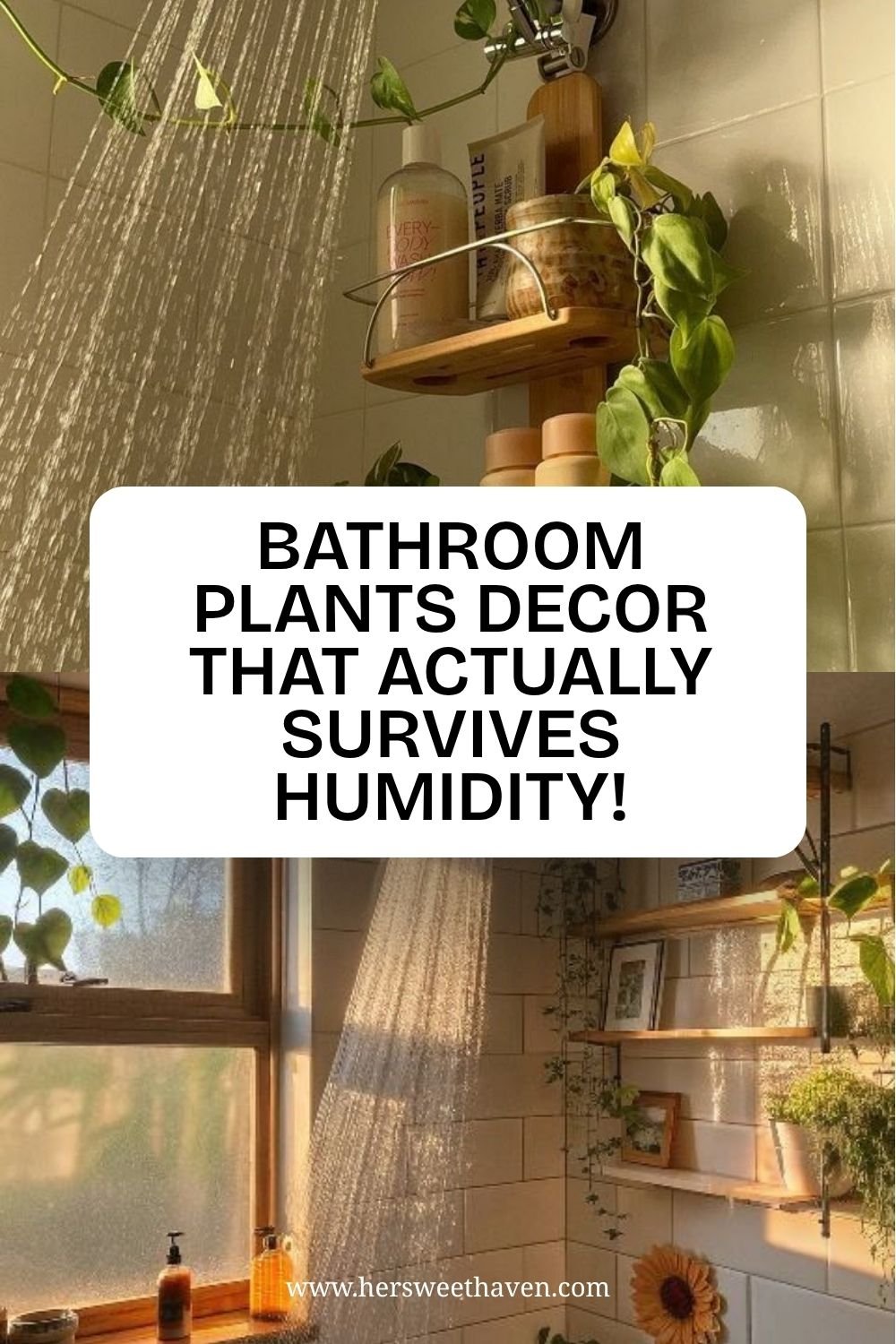
Most people think orchids are fragile and high-maintenance, but phalaenopsis orchids actually thrive in the humidity and indirect light of a bright bathroom. They’re used to growing in the shade in their native habitat, so a windowsill with filtered light is perfect. The flowers last for weeks, and a single orchid on a bathroom counter instantly makes the space feel more polished and intentional. (Not sponsored, just obsessed.)
How Do You Style Bathroom Plant Decor Without Killing Anything?
Getting the right plants is half the equation. The other half is putting them in the right spots and giving them the care they actually need in a humid environment.
Placement Matters More Than You Think
Don’t just put plants wherever there’s empty counter space. Think about light and airflow. Plants near a window should be the ones that need more light, like ferns and orchids. Low-light tolerant plants like pothos and ZZ plants can go on shelves, vanities, or in darker corners. Hanging plants work especially well in bathrooms because they free up counter space and create a layered, lush look without cluttering your surfaces.
If your bathroom has no natural light at all, consider adding a small grow light on a shelf. Even a basic clip-on grow light running a few hours a day can make the difference between a plant that survives and one that thrives.
Watering in a Humid Environment
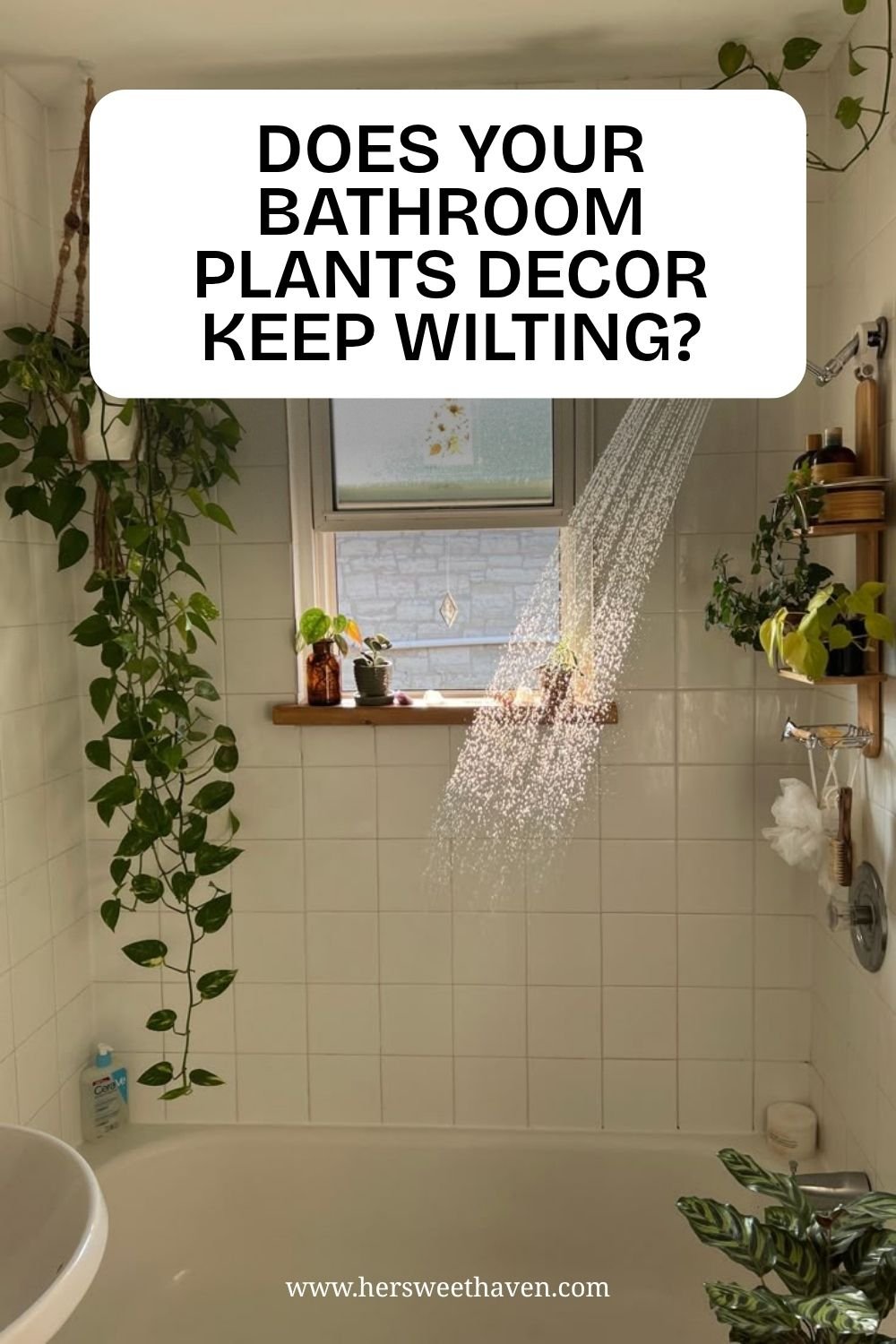
Here’s something that trips people up: plants in humid bathrooms generally need less watering than the same plant would need in a dry living room. The moisture in the air keeps the soil damp longer, so your regular watering schedule might be too much. Overwatering is actually a bigger risk in bathrooms than underwatering. Always check the soil before adding water. If the top inch still feels moist, skip it and check again in a few days.
For plants like pothos and ZZ plants, letting the soil dry out between waterings is the safest approach. Boston ferns and peace lilies prefer consistently moist (not soggy) soil, so check them more frequently.
Pots and Drainage
This is the detail people overlook the most. Every bathroom plant needs a pot with drainage holes. Sitting in standing water is a guaranteed path to root rot, and in a humid room where soil dries slowly, that risk is even higher. If you want to use a decorative pot without holes, put your plant in a plastic nursery pot inside the decorative one. That way you can lift the inner pot out to water and drain it before putting it back. (No shame.) It looks just as good and keeps your plant alive way longer.
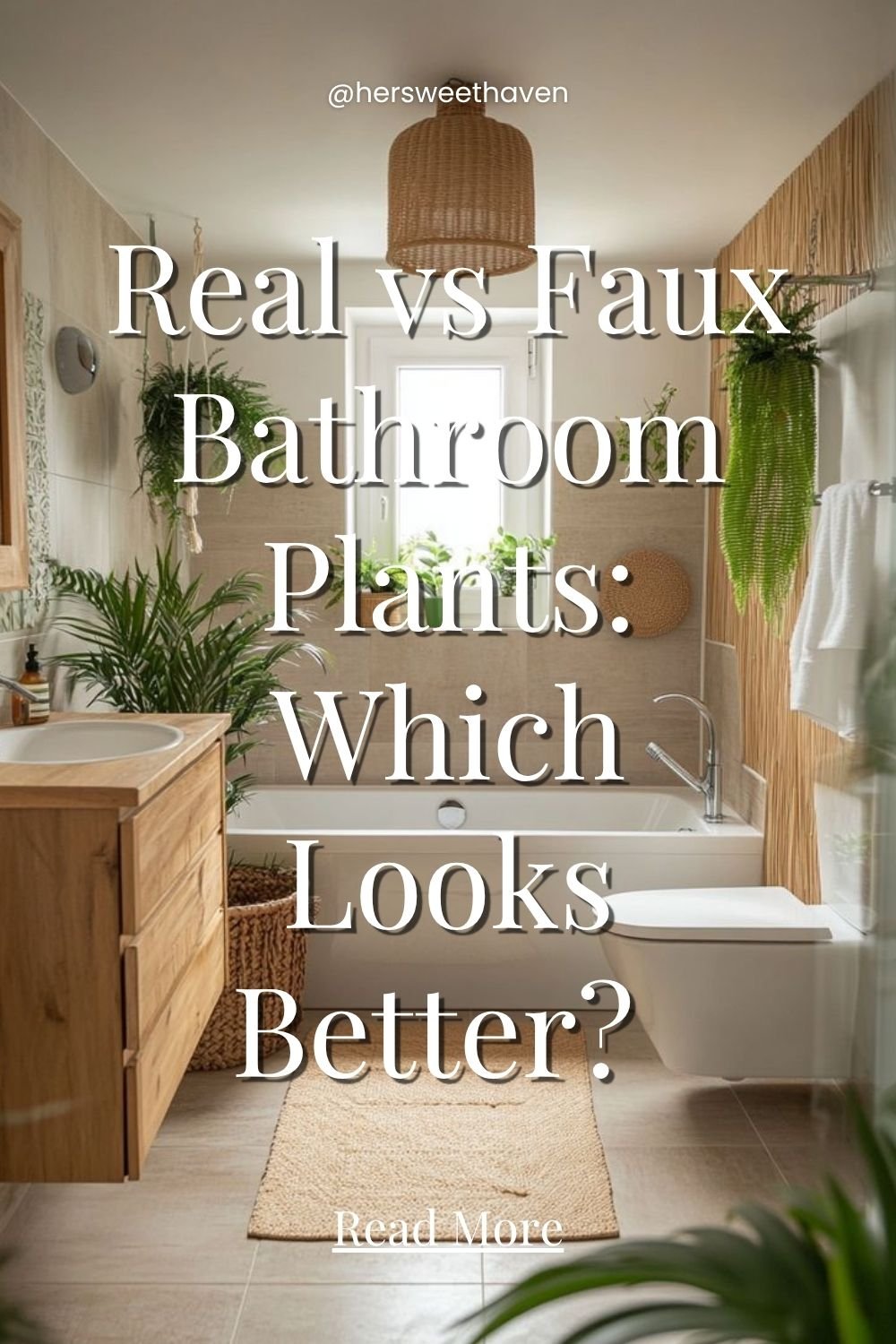
Should You Use Real or Faux Plants in a Bathroom?
This is one of those questions that gets people surprisingly passionate, but the honest answer is: it depends on your bathroom.
If you have some natural light and you’re willing to check on your plants occasionally, real plants are the better choice. They purify the air, they change and grow over time, and they bring a living, breathing quality to the room that faux plants can’t replicate. There’s something about watching a pothos vine slowly trail across a shelf that a plastic plant will never give you.
But if your bathroom is truly windowless, or if you travel a lot, or if you’ve tried real plants and they consistently die, faux plants are a completely valid option. High-quality artificial plants can look remarkably realistic, especially in a bathroom where the humidity and steam give them a slight sheen that makes them harder to distinguish from the real thing. The key is investing in quality. Cheap faux plants with shiny plastic leaves look fake from across the room. Better quality ones with realistic textures and natural color variations can absolutely hold their own in bathroom plant decor.
You can also mix real and faux together. Put a real pothos in the spot with the best light and fill in darker corners or high shelves with high-quality artificial trailing plants. Nobody will know the difference, and your bathroom will look consistently green and lush year round.
You don’t need a green thumb or a perfect bathroom to pull this off. You just need the right plants in the right spots, a pot with a drainage hole, and the willingness to let go of the idea that any plant will work in any room. Once you match the plant to your actual conditions instead of your ideal conditions, everything changes. Your bathroom gets greener, your plants stay alive, and you finally get to stop replacing dead ferns every six weeks. You’ve got this.









Leave a Reply