

What do the best-dressed women you see every October have in common? It’s not new clothes. Almost everything they’re wearing is years old.
That took me an embarrassingly long time to figure out. Every September I’d buy a haul of trendy fall outfits, wear each piece twice, and still stand in front of my closet feeling like I had nothing. Meanwhile the women I kept screenshotting were rewearing the same camel coat, the same boots, the same chunky knit.. and looking better than me every single time.
So a few years ago I stopped shopping for new and started building a lineup of fall outfits I could repeat on a loop. Same pieces, different combinations, zero panic. This post is that lineup: the exact ten outfits I come back to every year, the formula that makes them work together, and how I keep the pieces alive season after season.
Fair warning: none of this is groundbreaking. That’s kind of the point.
Why Your Fall Outfits Fail You Every October
Let’s start with the uncomfortable part. If you feel like you have nothing to wear every fall, the problem usually isn’t a shortage of clothes. It’s a closet full of clothes that were never meant to work together.
And it happens to the smartest shoppers. Because the way we’re encouraged to shop is designed to create exactly this problem.
The Trend Piece Trap
Every fall there’s a new “it” item, and every fall it goes on sale, and every fall we bite. The thing is, trend pieces are usually loud. Loud pieces don’t mix, they demand a whole outfit built around them.
So you end up with five statement items and nothing to wear them with. Sound familiar? (Been there, done that, got the impulse-buy burgundy coat to prove it.)
The Cost-Per-Wear Math Nobody Does
Real talk: a $30 top you wear twice costs $15 a wear. A $90 sweater you wear forty times a year for three years costs pennies. We compare price tags when we should be comparing how often we’ll actually reach for something.
The outfits in this post all pass the cost-per-wear test. Every piece earns its spot by showing up constantly.
When Nothing in Your Closet Talks to Each Other
Here’s the quiet killer: you can own thirty nice pieces and still have zero outfits, because none of them share a color story or a vibe. One is neon, one is pastel, one only works with a specific skirt you lost.
A wardrobe is a team, not a collection of solo artists. That mindset shift changed everything for me.
The Rewear Formula Behind Every Fall Outfit I Own
With the problem named, here’s the fix. My whole fall wardrobe runs on three rules, and they’re the reason the ten outfits below work year after year.
If you want the deeper version of this system, this fall capsule wardrobe stylist guide walks through the same logic step by step: fewer pieces, chosen so everything pairs with everything.
Start With a Palette, Not Pieces
Everything I buy for fall lives in the same family: cream, camel, chocolate, black, and denim. That’s it. When every piece shares a palette, you can get dressed with your eyes closed and still match.
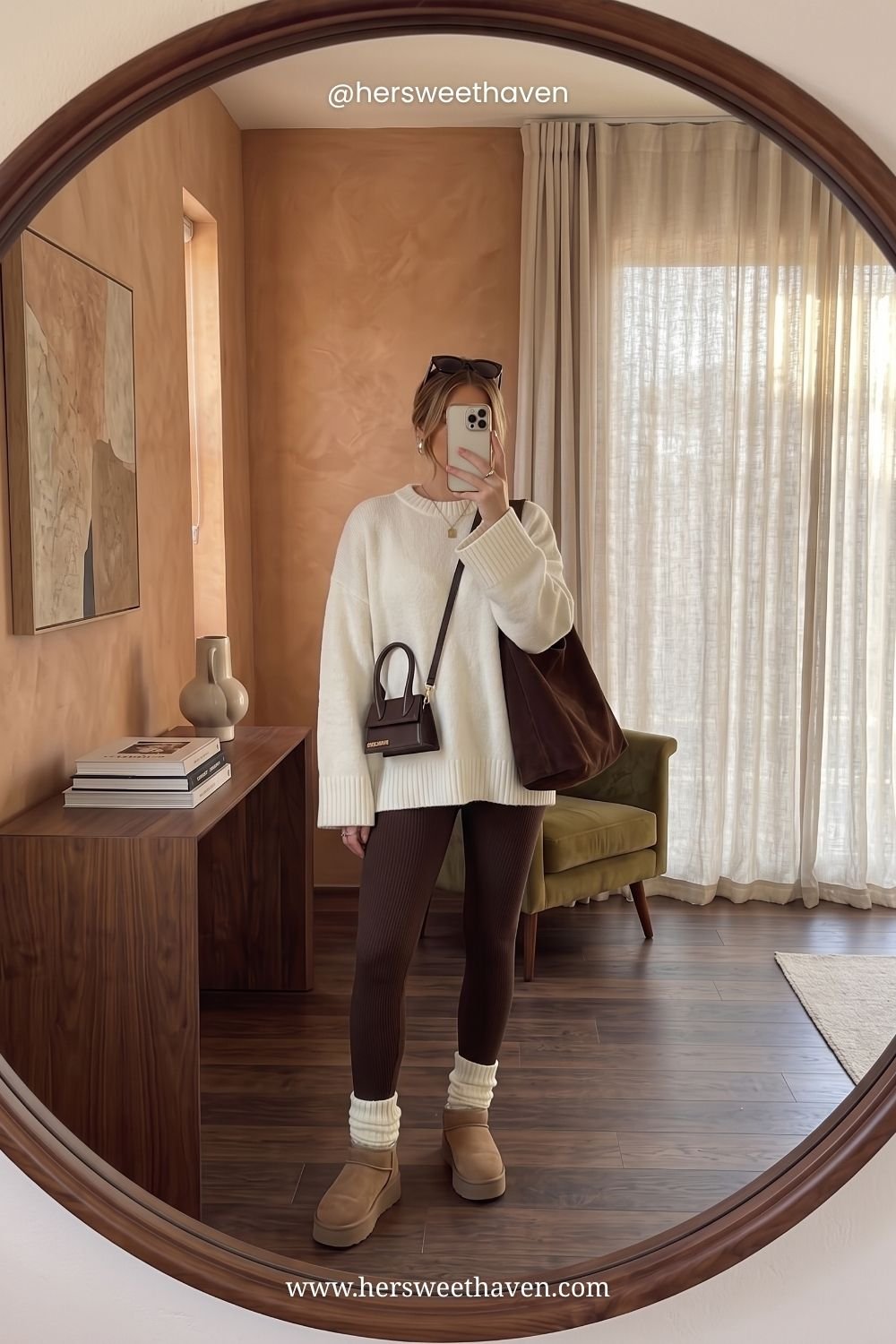
This is my default: an oversized cream knit, chocolate leggings, cozy socks, and tan boots. It’s the outfit equivalent of a deep breath. Five pieces, one palette, and it’s been my most-worn look for four falls running.
One Hero Piece Per Outfit
Every outfit gets exactly one piece that does the talking: the plaid skirt, the shearling jacket, the printed sweater. Everything else stays quiet. One hero, a supporting cast, no fighting for attention.
This rule is also what makes rewearing invisible. Nobody remembers your basics.. they remember the hero. Swap the hero, and the same base reads as a brand-new outfit.
Let the Boots Do the Talking
I own three pairs of fall boots: tan suede, chocolate knee-highs, and black chunky ones. Between them, they finish every single outfit in this post. Boots are where I spend real money, because they’re the piece that gets worn daily and judged first.
If you’re only budgeting for one upgrade this season, make it boots. Trust me on this one.
The Everyday Uniforms I Reach for First
Now for the outfits themselves. These first two are what I call uniforms: looks so easy they’re basically muscle memory, but with enough personality that nobody clocks them as lazy.
The Sweater Vest and Plaid Skirt Moment
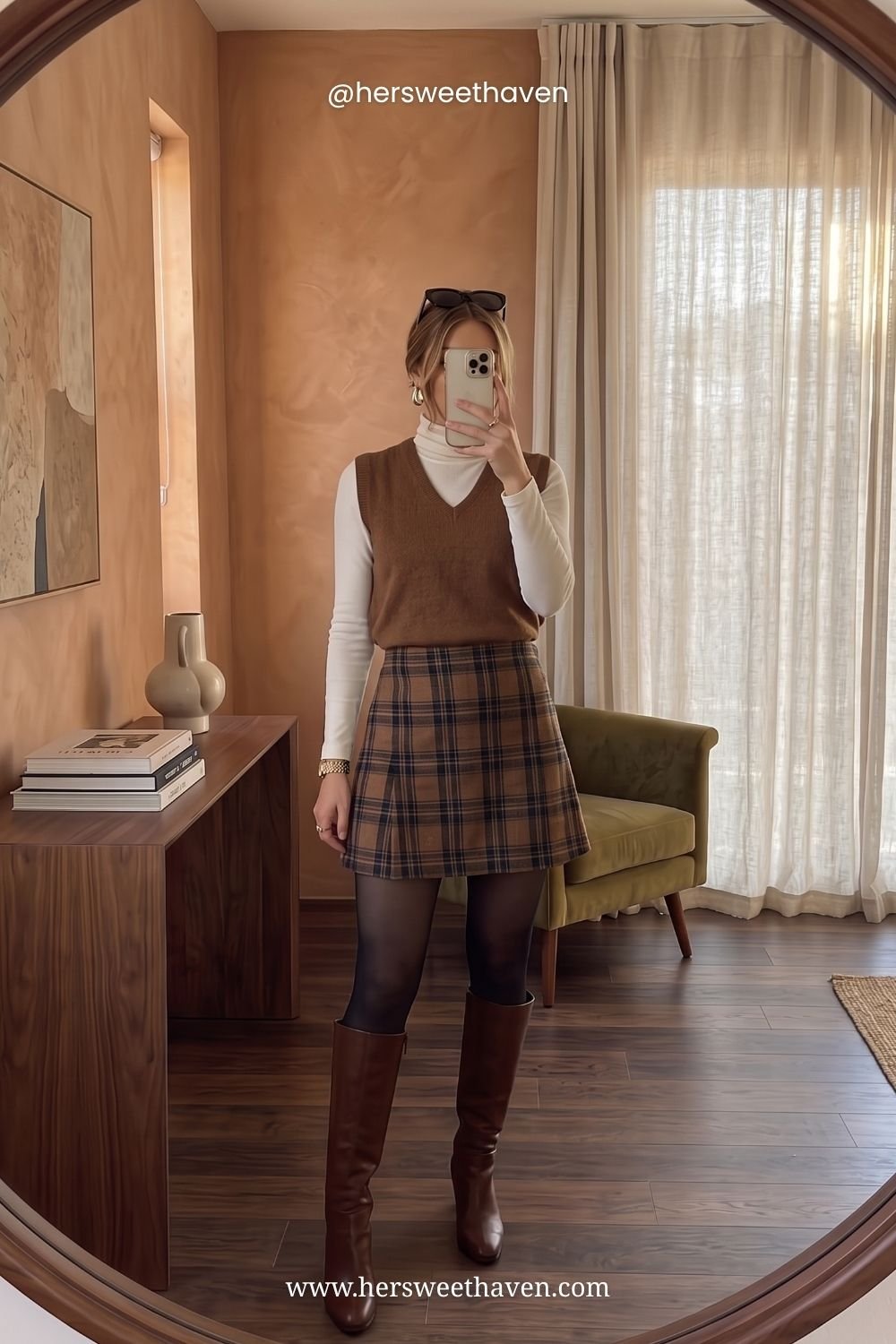
A white turtleneck, a brown sweater vest, a plaid mini, tights, and knee-high boots. This one gets more compliments than anything else I wear, and it’s honestly the least effort. The vest is the hero, the plaid echoes the brown, and the tights make the mini October-appropriate.
I bought that sweater vest secondhand three years ago. It has outlasted every trendy piece I bought the same season.
The Puffer Vest and Black Jeans Formula
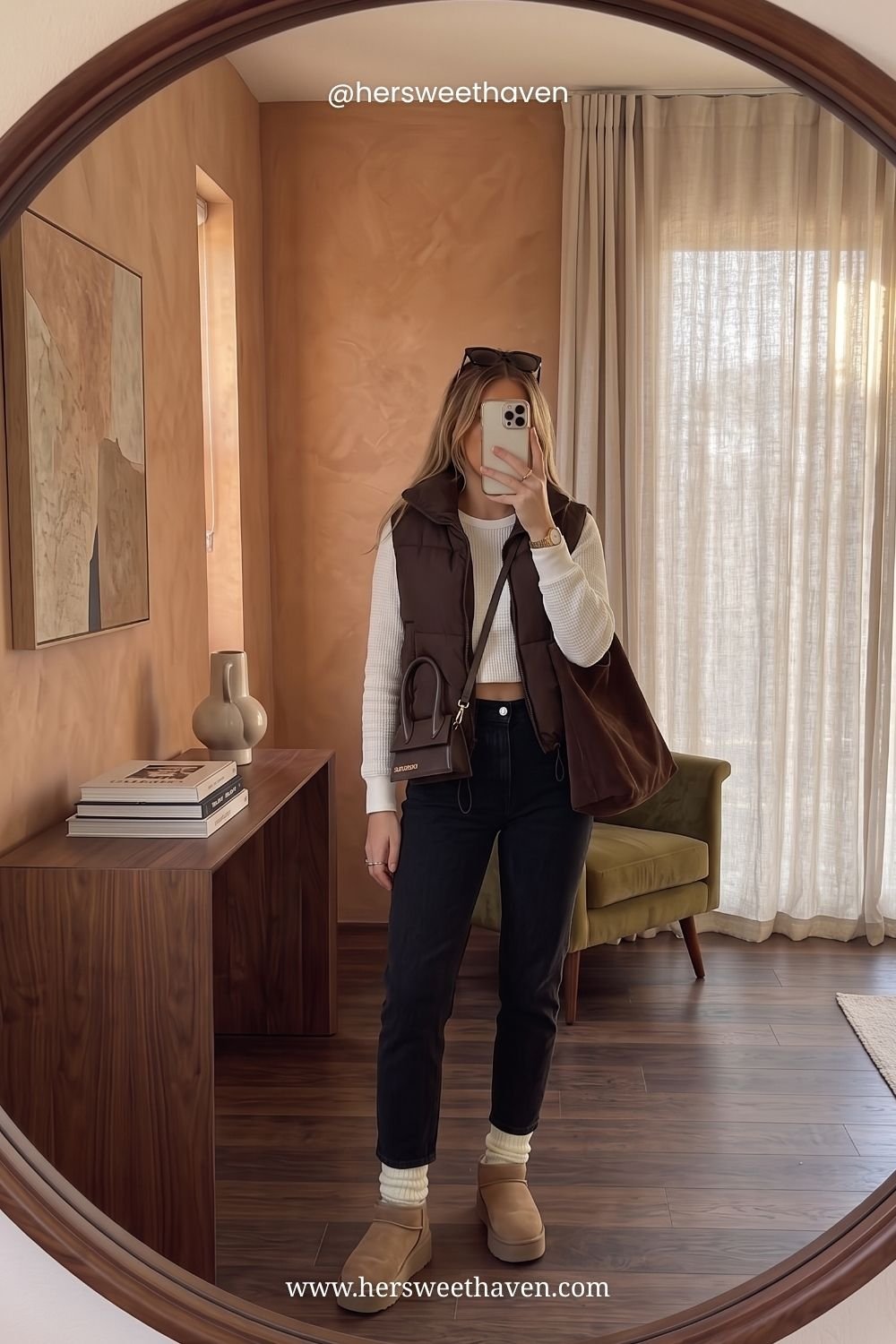
White long sleeve, brown puffer vest, black jeans, white socks, tan clogs. This is my errand-day armor: warm enough for a chilly morning, layered enough to look intentional, comfortable enough to live in.
Vests in general are the most underrated fall piece. They add the “I tried” factor without the bulk of a full jacket.
The Layering Heroes That Do the Heavy Lifting
October weather has commitment issues, and layers are the only answer. These four outfits are my proof that layering is a skill you learn once and use forever. (I know, I know. “Layering” sounds like fashion homework. But hear me out.)
For the mechanics of it, this guide on how to style a fall capsule wardrobe breaks down base, middle, and outer layers better than I ever could.
The Shearling Jacket and Pleated Mini
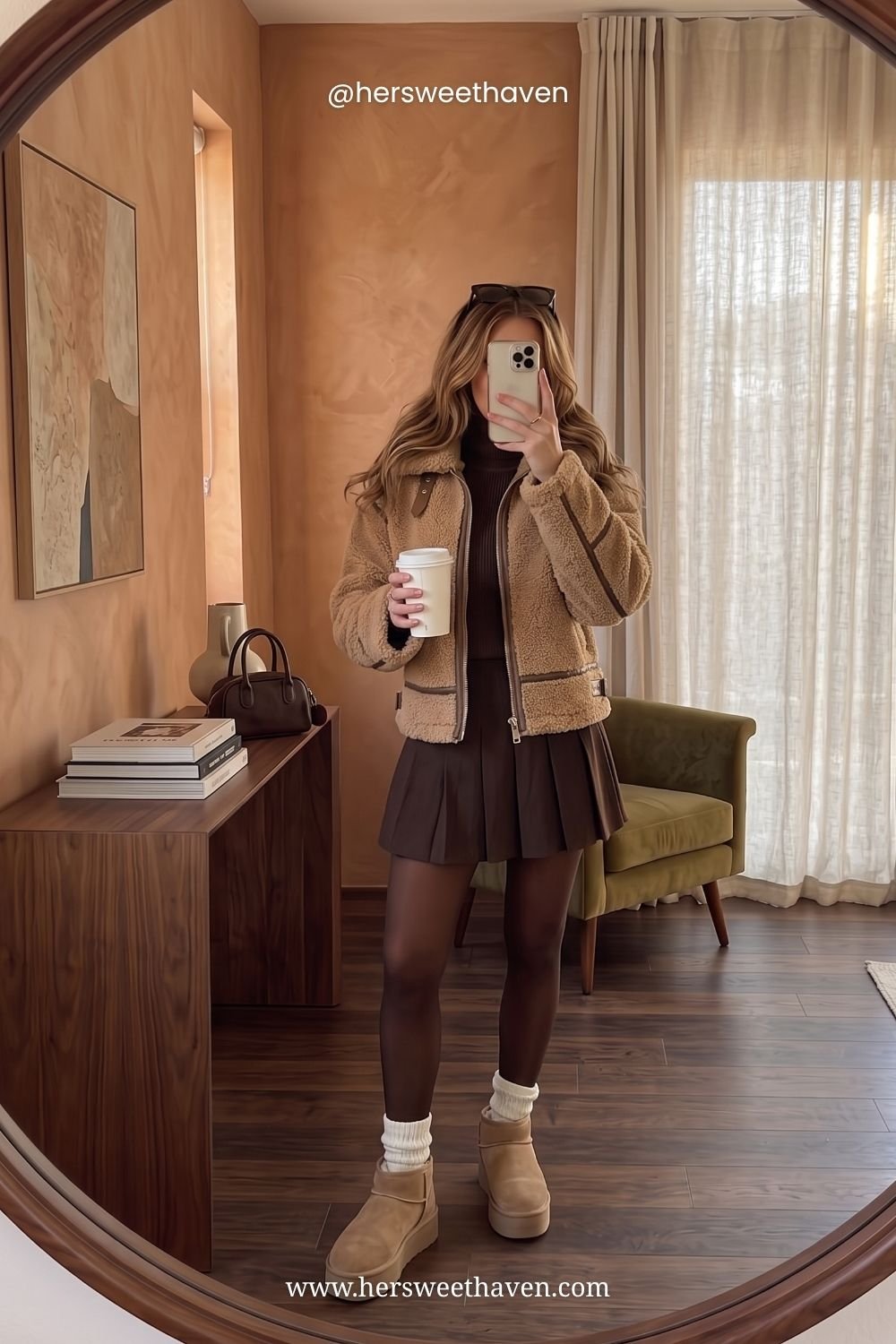
A brown shearling zip-up over a dark top, a pleated mini, tights, socks, and suede boots. The jacket is the obvious hero here, and it’s the piece I get asked about most. Shearling looks expensive even when it isn’t.
The mini keeps the whole thing from feeling bulky. Balance a heavy top half with something light on the bottom, always.
The Plaid Shacket Over Cream
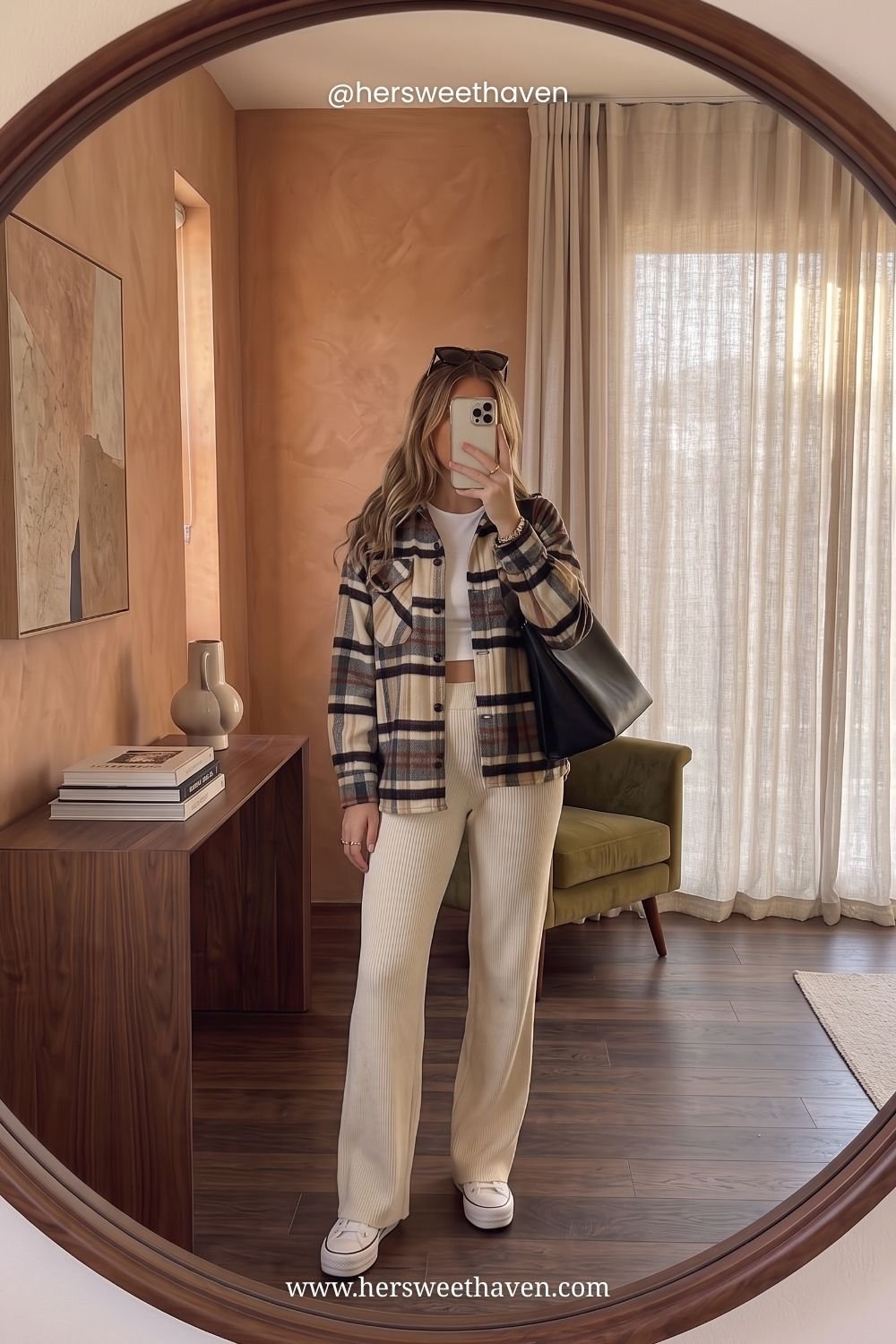
Brown plaid shacket, cream wide-leg pants, white sneakers, black bag. A shacket is the perfect in-between layer for those weeks when a coat is too much and a cardigan is too little. I’ve written a whole post on the jacket outfits I reach for on repeat, and the shacket is the undisputed star of it.
The cream pants dress it up. Same shacket with leggings reads cabin-cozy, with cream trousers it reads put-together. One piece, two personalities.
The Fair Isle Sweater and Light Denim
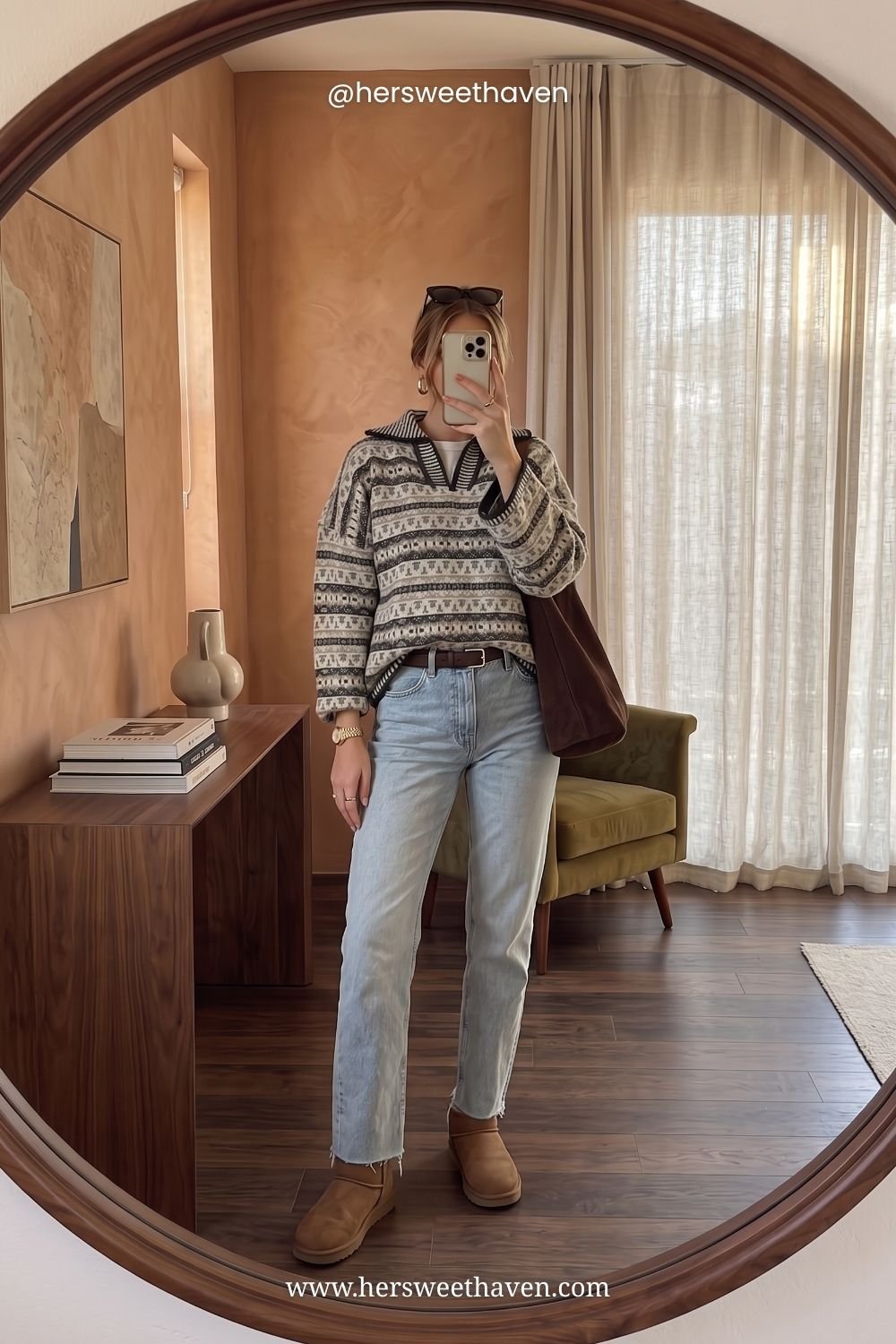
A patterned fair isle knit, light-wash straight jeans, and tan clogs. The sweater is doing all the work, so the rest stays simple. This is also the outfit I get the most wear out of at pumpkin patches, apple orchards, and every other place fall demands a photo.
Patterned knits age beautifully, by the way. Mine came from a thrift store and looks better slightly broken in.
The Cami, Jacket, and Wide-Leg Denim Layer-Up
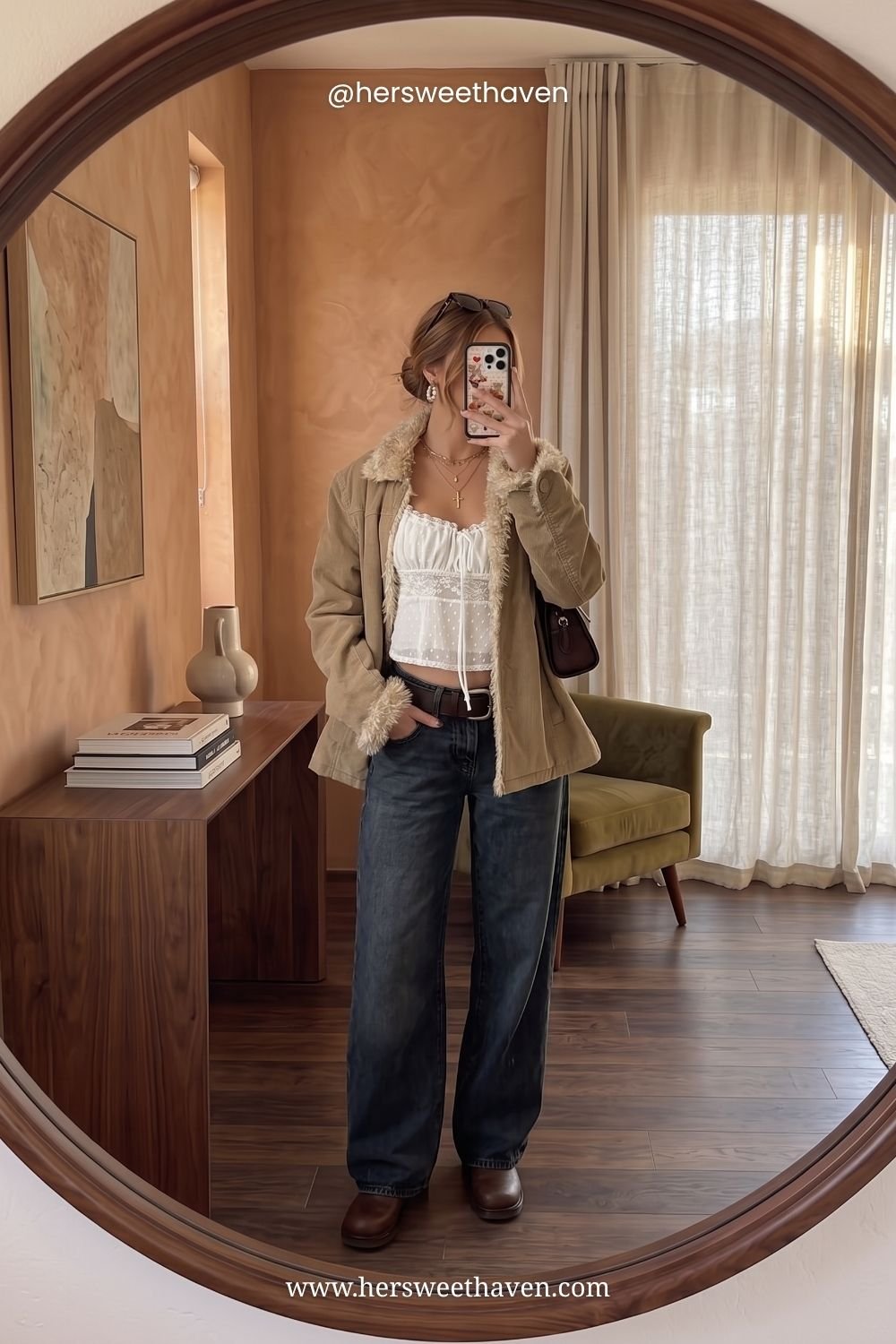
A white ruffled cami, a tan collared jacket, dark wide-leg jeans, and western boots. The cami under the structured jacket is the trick: it softens the whole look and works indoors when the jacket comes off.
Wide-leg denim deserves its comeback. If you’re still unsure how to wear the roomier cuts, my guide to styling extra baggy jeans covers the proportions that make them flattering instead of shapeless.
The Dressed-Up Fall Outfits That Still Feel Like Me
Some days call for more than a uniform. These three are my dressed-up fall outfits: date nights, birthday dinners, any event where jeans feel like a cop-out but a gown would be unhinged.
The Collared Shirt Under a Sweater
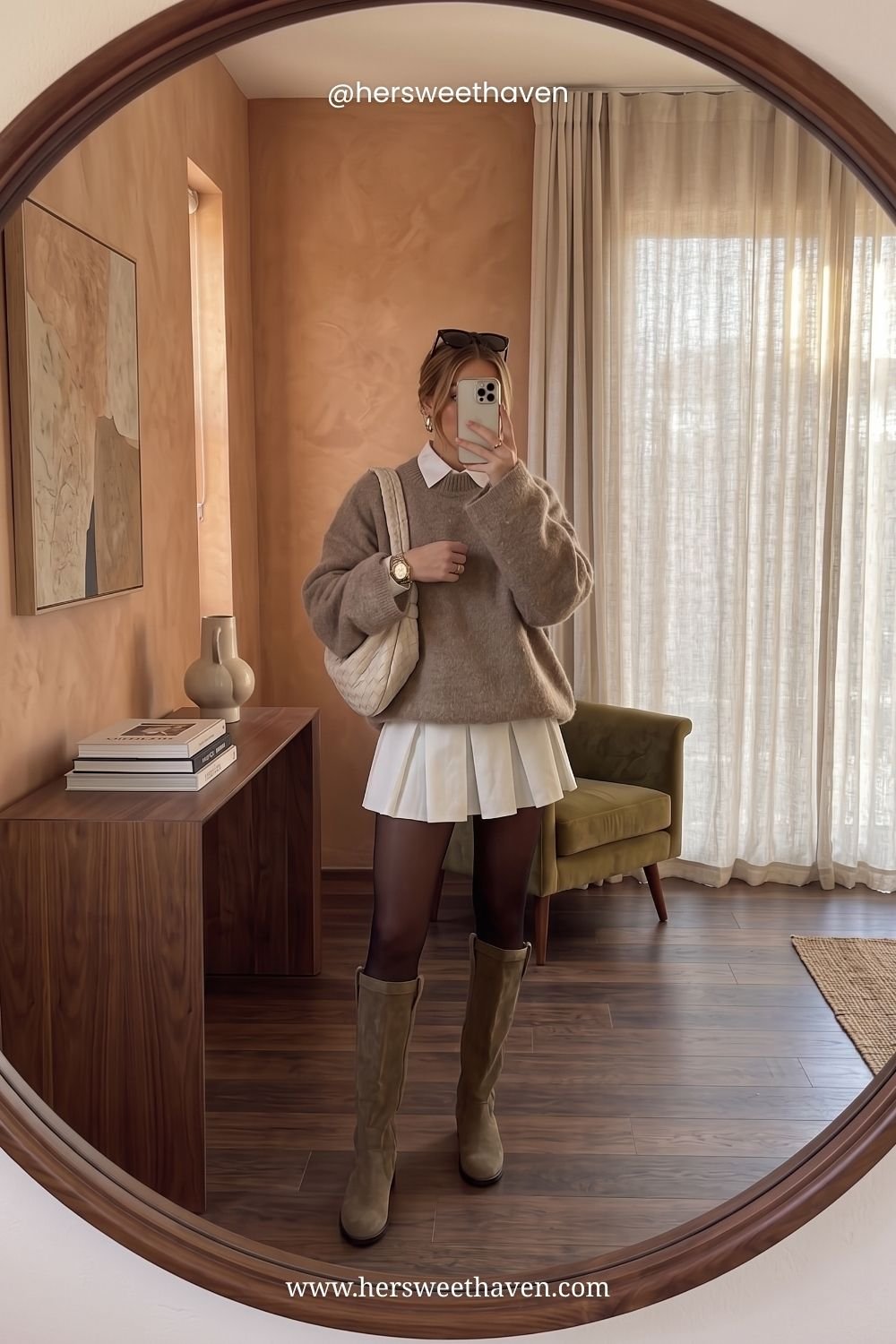
A taupe crewneck over a white collared shirt, a white pleated mini, sheer tights, and olive knee-high boots. The peeking collar is one of those details that makes a $40 outfit look styled. No fancy pieces required.
This is my go-to for anything described as “smart casual,” which remains the most confusing dress code ever invented.
The Scarf That’s Basically Outerwear
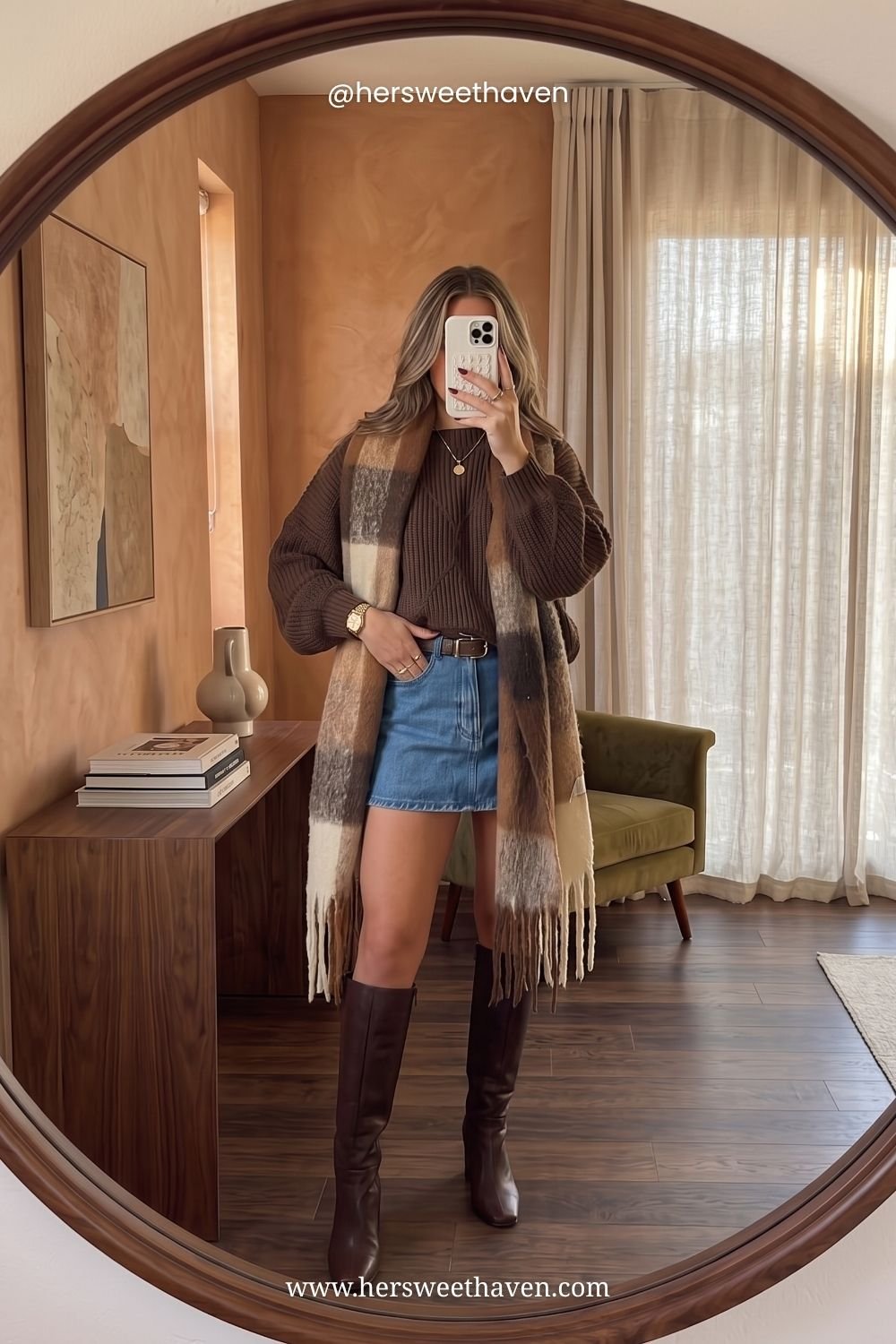
A chocolate chunky knit, a giant plaid scarf, a denim mini, and brown knee-highs. The scarf isn’t an accessory here, it’s the outfit. Drape it open so it hangs long, and it does the work of a coat in photos while costing a fraction of one.
Denim skirt plus brown knits is a combination I will defend forever. It shouldn’t be interesting, and yet.
The Camel Coat Over a Black Dress
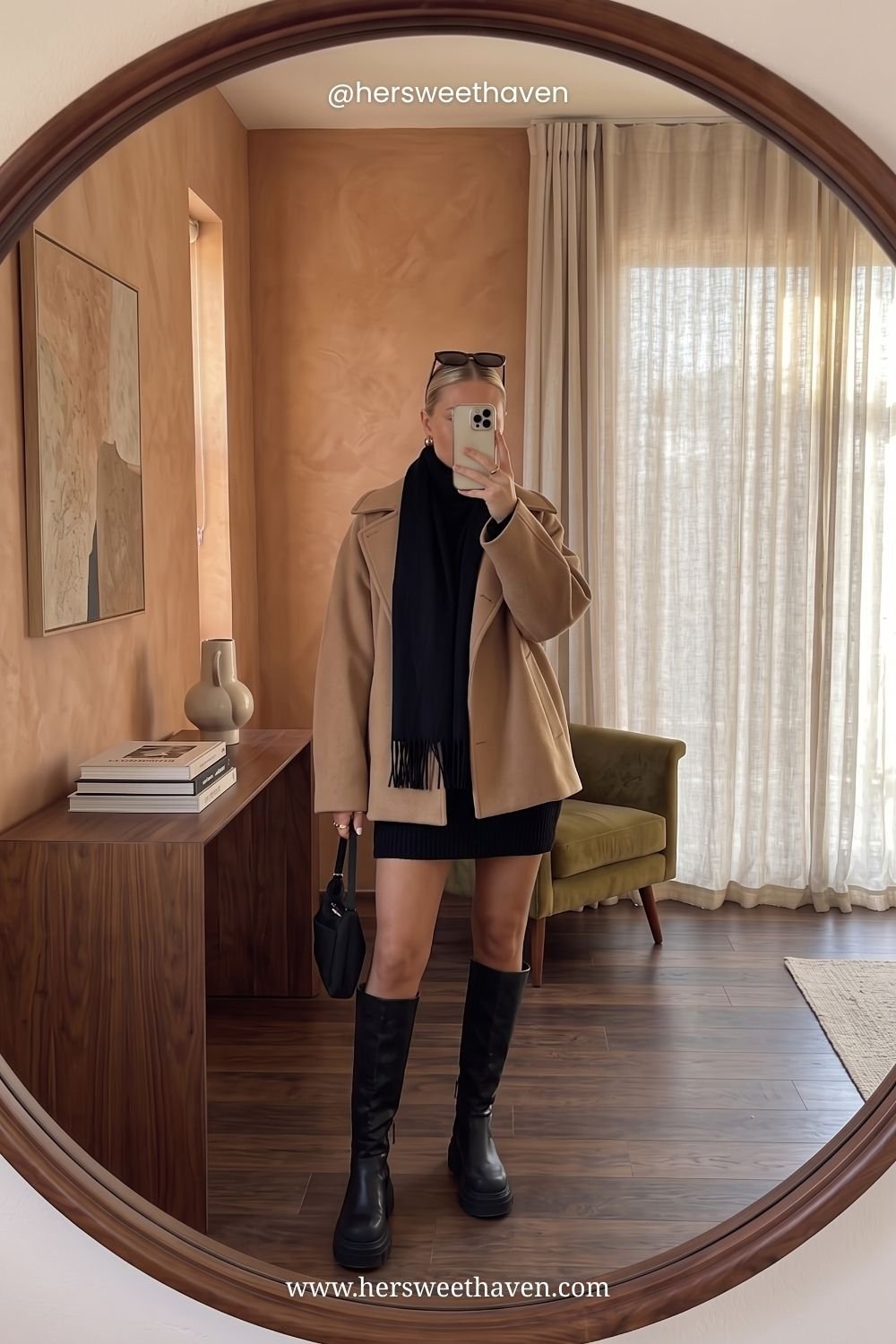
A camel teddy coat, a little black dress, a black scarf, and chunky black boots. This is the most grown-up outfit I own and also the easiest: two main pieces, done. The camel-and-black contrast photographs beautifully every single time.
If I could only keep one outfit from this whole post, it’s this one. It has carried me through four years of fall events and still feels current.
How Do You Wear Skirts When It’s Cold?
Fair question, since half these outfits involve a mini in October. The answer is tights, and specifically layering them: sheer over fleece-lined when it’s brutal, plus tall boots that close most of the gap.
Cold legs are a styling problem, not a fact of fall. Once I figured out fleece-lined tights existed, skirts stopped being a September-only thing.
How I Keep These Pieces Alive Year After Year
Rewearing only works if the pieces survive. And knits, suede, and shearling all have opinions about how they want to be treated. The good news: keeping them nice takes less effort than replacing them every year.
Wash Less, Air More
Sweaters don’t need washing after every wear, they need airing. Overwashing is what kills knits: it stretches them, pills them, and fades the color. I wash mine every four or five wears and spot-clean in between.
A sweater comb for pilling costs a few dollars and adds years to a knit’s life. Seriously, it’s the best money-to-results ratio in my whole closet.
Storage That Doesn’t Wreck Your Knits
Fold sweaters, never hang them (hangers give them shoulder horns and stretch the neckline). Boots get stuffed with paper to hold their shape, and suede gets a protectant spray at the start of each season.
Twenty minutes of care in September saves you a hundred dollars in replacements by November. It adds up.
The One-Weekend Seasonal Reset
Every September I do a closet changeover: summer packed away, fall pieces front and center, and an honest cull of anything I didn’t wear last year. It’s the single habit that makes getting dressed easy for the next three months.
I’ve written the full process in my one-weekend wardrobe reset guide if you want the step-by-step version.
Fall Outfit Questions You Keep Asking
Two questions land in my inbox every single September. Answering them both here.
How Many Pieces Do You Actually Need for a Whole Season?
Fewer than you think: my ten outfits above come from roughly 20 pieces total, boots included. For a tighter version, this 10-piece fall capsule guide squeezes six solid outfits out of ten pieces, which is a great starting point for beginners.
The number matters less than the overlap. Twenty pieces that all match beat fifty that don’t.
Won’t I Get Bored Wearing the Same Fall Outfits?
I expected to. I wasn’t. Boredom comes from wearing the same combination, not the same pieces, and ten outfits from 20 pieces means weeks without repeating an exact look.
And the secret nobody tells you: rewearing reads as style, not laziness. A repeated outfit signals you know what works on you. That’s the whole aesthetic.
Next October, You’ll Thank Yourself
Picture the first cold morning of next fall. You open your closet, and instead of the annual panic, there’s a row of pieces that all work together and ten outfits you already trust. You’re dressed in five minutes, you look like you tried, and you didn’t spend a dollar in September.
That’s the entire payoff of building fall outfits you rewear year after year. Not a trendier closet.. a calmer one. Start with the palette, put your money in the boots, and let the repeats do their thing. Your future self, standing in front of that closet with coffee in hand, is already grateful.



Leave a Reply