

The thing that makes Sailorcore work isn’t the stripes.
I know. That’s the whole aesthetic in most people’s heads: navy stripes, anchor buttons, a little red scarf, done. But you can wear every single one of those things and still end up looking like you’re about to hand out life jackets on a tour boat. Ask me how I know.
What actually makes Sailorcore land is the color palette and the restraint. Navy, white, one hit of red. That’s the engine. The stripes are just the most obvious passenger.
Once you see it that way, the whole trend gets easier, because you stop shopping for costume pieces and start noticing you already own most of it. A white tee. Dark jeans. Something red.
So here’s the full breakdown for this summer: where the look actually came from, why it’s back right now, the pieces that do the real work, outfits by occasion, and the one line you don’t want to cross. Plus what I’d personally reach for, at the end.
Nautical is one of those trends that comes back every year the second it gets warm. Might as well get it right.
What Sailorcore Actually Is
Strip away the aesthetic name and you’ve got one of the oldest ideas in fashion: a uniform that got borrowed.
Where Did the Nautical Look Come From?
Straight off a boat, and more recently than you’d think. The Breton shirt became official French Navy uniform in 1858, and the original had 21 stripes, one for each of Napoleon’s victories. The high contrast wasn’t decorative either: it made a sailor easier to spot in rough water if he went overboard.
Then Coco Chanel got hold of it in the early 20th century and turned a rigid military piece into resort wear. The sailor suit had its own moment even earlier, in 1846, when Queen Victoria had one made for her son and the portrait went around. That single picture is more or less why every child on earth got dressed as a tiny sailor for the next century.
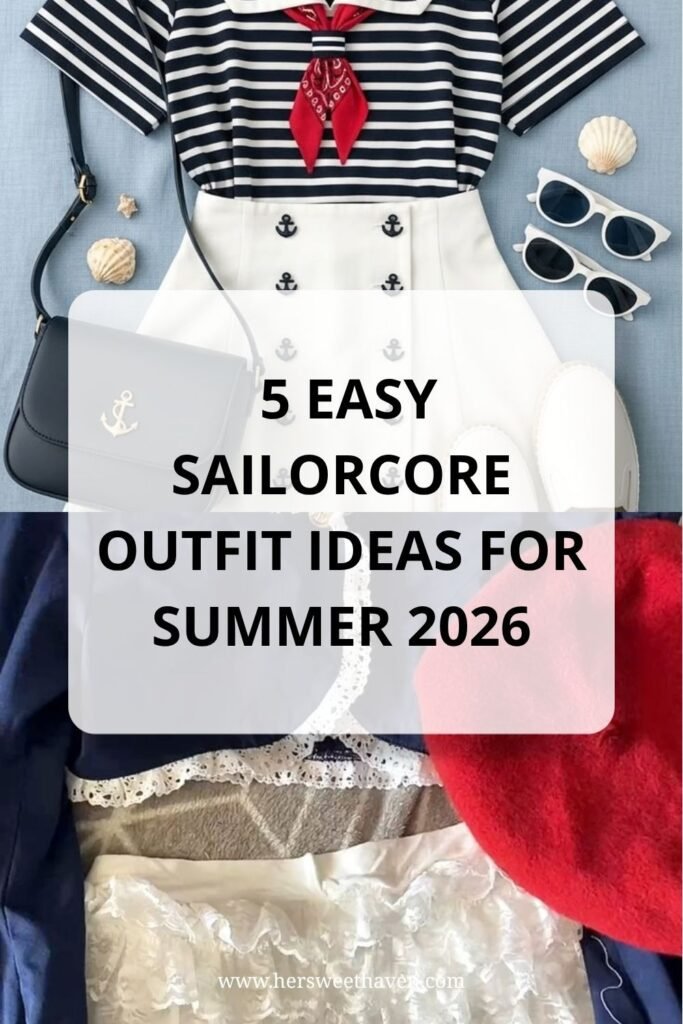
Which is genuinely useful to know, because it explains why the look holds up. Nautical clothing sits under classicism in fashion, not novelty, despite how kitsch it can get. It was designed to be functional and it never fully left.
Why Is Sailorcore Everywhere Right Now?
Because the runways went fully overboard, and it’s been building. The spring collections put Breton stripes at Prada and Dior, sailor suits at Chanel and Moschino, and yacht-ready looks at Alaïa all in the same season.
That’s the trigger, but the staying power is simpler. A striped sailor top comes back every single year the moment the weather turns, whether or not a designer says so. Sailorcore is just this year’s name for it.
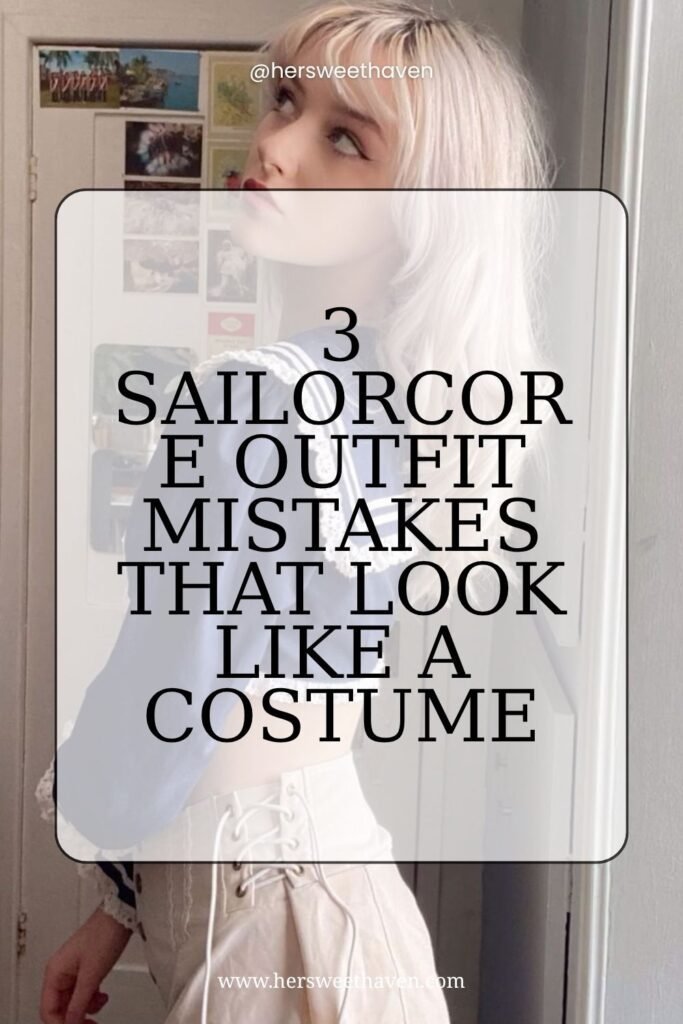
The version of it that’s landing now is a bit more grown up. Familiar pieces, used in a fresher way, rather than a full themed outfit. That distinction is going to come up a lot in this post.
The Sailorcore Starter Kit
Here’s what actually earns its place. Five things, and you probably own two of them already.
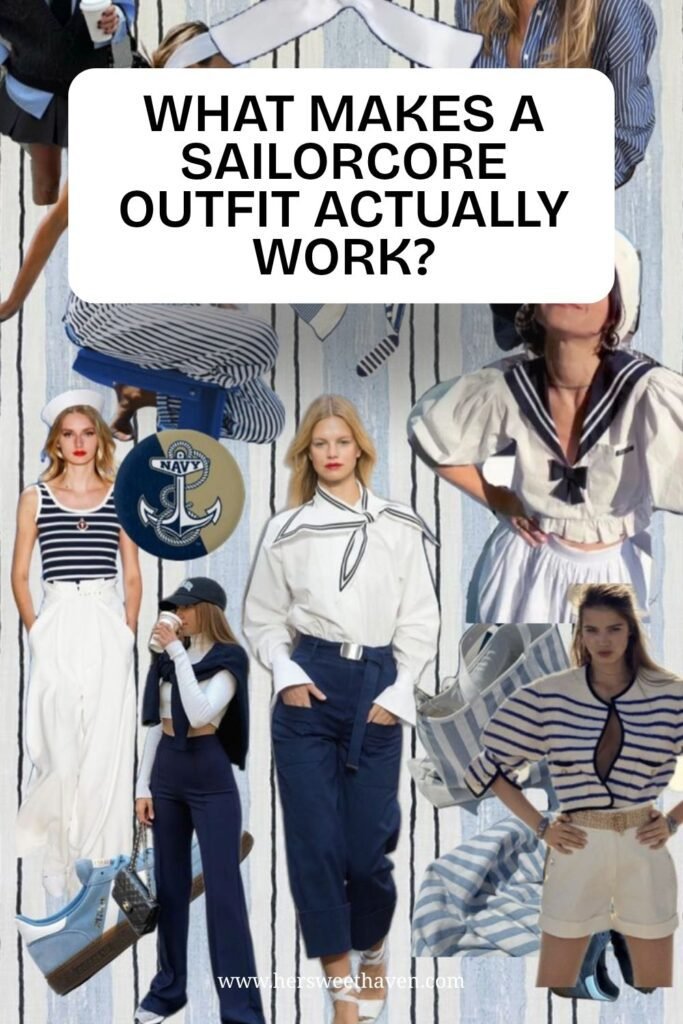
A Breton or striped top. The cornerstone, and there’s no getting around it. Navy and white, horizontal, boat neck if you can find one. This is the one piece worth spending on because a striped top is a smart long-term buy that outlives the trend cycle by roughly forever.
Something in navy that isn’t the top. Wide-leg trousers, a blazer, a cardigan. Navy is the foundation of the whole palette, standing in for the ocean, and it does the heavy lifting that black can’t here.
Crisp white. White jeans, white trousers, a white shirt. This is the sail, basically. It’s what keeps navy from reading as corporate.
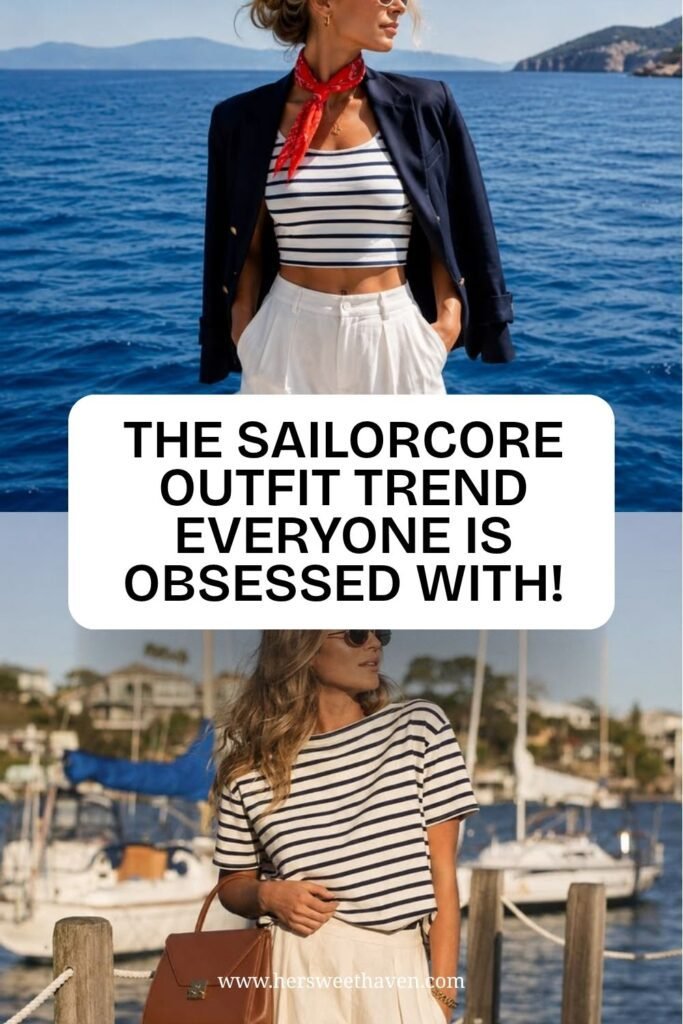
One red thing. Not a red outfit. One red thing. Marie Claire’s fashion editor suggests pops of red through ballet flats or lipstick, which is exactly the right dose. Red mirrors maritime flags and it’s what stops the whole look from going flat.
Gold hardware. Buttons, chunky earrings, a belt with a metallic finish. This is the difference between “nautical” and “naval.”
Notice what’s not on the list: anchor prints, sailor collars, actual sailor hats. They’re not banned. They’re just advanced, and we’ll get to why.
A note on the striped top itself, since it’s the one thing you might actually go buy. Wider stripes read more casual and more modern. Thin stripes read more classic and slightly more formal. Neither is better, but the width changes the outfit more than the color does, and nobody tells you that before you’re standing in a fitting room.
Fabric matters too. Nautical clothing was built out of cotton, linen and wool because those hold up on a boat, and a heavier cotton Breton hangs cleanly while a thin jersey one clings and reads cheap. This is one of the rare cases where the historically correct choice is also the one that looks better on a Tuesday.
Sailorcore Outfits by Occasion
Four combinations, sorted by where you’re going. All of them use the same five things above.
Errands and coffee. Striped tee, worn-in denim, chunky gold earrings, a belt with a bit of shine. That’s the whole outfit and it’s the current take almost verbatim: familiar pieces, one twist that keeps it from being a costume. Add white sneakers.
Lunch or a nice afternoon. Striped top tucked into wide-leg white trousers, navy blazer over the shoulders, red flats. This is the version that gets compliments, and it costs you nothing extra if you already own a blazer.
Actual seaside. Go monochrome. Navy and white stripes, navy shorts, fisherman sandals, no red at all. Restraint reads as expensive when you’re already standing next to a boat. (The setting is doing half the work, so you don’t have to.)
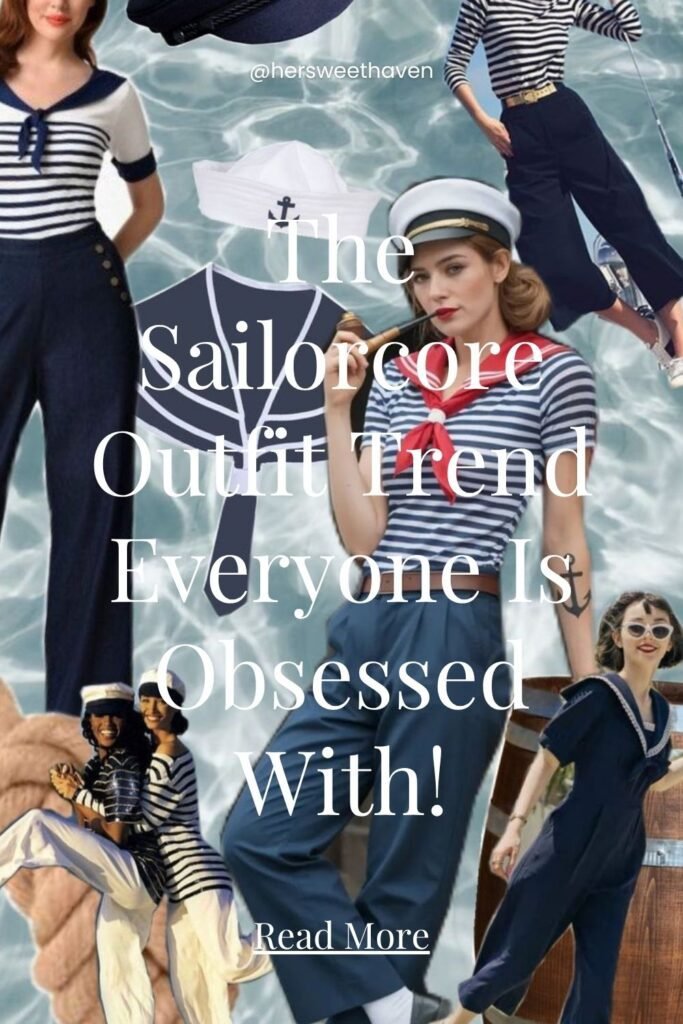
Dinner. Striped top, dark denim or a navy midi skirt, red lip, gold hoops. Notice the red moved to your face. That’s the trick when you don’t want an outfit shouting.
And if navy-white-red feels too on-the-nose for you, swap the base. Stripes with beige, khaki or camel is a quieter version of the same idea and it works just as well in July.
The pattern across all four? The stripes never change. The context does. That’s why this trend is cheap to try: you’re buying one top and then rearranging things you already own around it.
The Line Between Sailorcore and Sailor Costume
Alright, the important part. This is where I have to admit something.
I once wore the full kit to brunch. Sailor collar top with anchor buttons, white pleated skirt, red neckerchief, boat shoes. I thought I looked amazing. Then a tourist stopped me on the street to ask which pier the ferry left from, and my friend laughed for the entire rest of the meal.
The problem wasn’t any individual piece. Every one of them was cute. The problem was that I wore four nautical references at once, and four references stop being a style and start being a uniform.
So here’s the rule I use now. One nautical piece. Two if one of them is small.
Striped top plus regular jeans: style. Striped top plus sailor collar plus anchor buttons plus a neckerchief: you work here now. The stripes are already the reference. Everything else you add is arguing with them.
A quick pre-door checklist, because I know myself:
Count your references. Stripes, anchors, sailor collars, rope details, boat shoes, navy hats. If you can count more than two, take one off. (Yes, the fun one. That’s usually the culprit.)
Check the red. One item. Shoes or lips or a bag, not all three.
Balance the shape. A Breton tucked into high-waisted wide-leg denim or a clean midi skirt is the reliable formula. Stripes plus volume plus a shapeless everything is where “boat” happens.
Ask if you’d wear it without the theme. If the outfit only makes sense as a Sailorcore outfit, it’s a costume. If it would look good with the stripes swapped for a plain white tee, you’re fine.
That last one is the real test. The best nautical outfits are just good outfits that happen to be navy.
There’s a fun-ruining exception, and I’ll be honest about it: full costume is completely fine when the occasion is a costume. A themed party, a boat wedding, a photoshoot, a summer where you’ve decided you simply don’t care. The point of the rule isn’t that anchors are illegal. It’s that if you want to wear this on a regular Wednesday and be taken seriously, references need a budget.
And the budget is small on purpose. Two references and everything else plain is what gives the eye somewhere to rest. Take that away and there’s nothing for the outfit to be about except the theme.
Two More Sailorcore Questions
The ones I get asked most.
Does Sailorcore Work If You Live Nowhere Near the Ocean?
Yes, and honestly it works better. The whole starter kit is stripes, red, and knitted accessories in a navy-white-red palette, which is just.. clothes. None of that requires a coastline.
The thing to watch is the literal stuff. An anchor-print dress in a landlocked city reads as theme. A navy blazer and a striped tee in the same city reads as someone who dresses well. Same trend, wildly different result, and the only variable is how many nautical nouns you’re wearing.
Also worth saying: this look is genuinely affordable. Thrift stores are full of navy blazers and striped tees, and a red scarf costs about four dollars. It’s one of the cheapest trends going, which is a rare sentence for me to type.
What Shoes Actually Work With Sailorcore?
More than you’d think, and boat shoes are not the only answer.
White sneakers are the default and they’re never wrong. Ballet flats in red are the fashion-editor move and they add the pop without a single anchor in sight. Fisherman sandals work if you’re leaning coastal, especially with navy shorts and a monochrome top half.
What I’d think twice about: actual boat shoes with an actual striped top and actual white trousers. That’s three references again, and you know where this is going.
If I had to pick one Sailorcore outfit and wear it all summer? Striped Breton tee, high-waisted white trousers, red lipstick, gold hoops, white sneakers. That’s it.
No anchors. No collar. Nothing that could be mistaken for a uniform. It works for coffee, for lunch, for dinner if I swap the sneakers, and it doesn’t cost anything if you already own a striped tee and white trousers (which, statistically, you do).
The neckerchief stays in the drawer. I’ve made my peace with it. It’s a genuinely cute piece and it will never be worn again in this house, and I think we’re all better off.
Start with what you have, count your references, and let navy do the work.





Leave a Reply