

Finding a wedding guest dress sounds easy until you actually start shopping. Then suddenly every dress is either too casual, too bridal, too uncomfortable, too formal, or somehow perfect in photos and completely wrong the second you imagine wearing it for six hours.
Summer makes it even harder because the dress has to do two jobs at once. It needs to look polished enough for the wedding, but it also has to survive heat, outdoor ceremonies, long dinners, and a dance floor without making you regret every life choice that led to that outfit.
I have stopped looking for the most dramatic dress in the room. I would rather wear something that feels good when I sit down, moves when I walk, works with the actual dress code, and still makes me excited to get dressed.
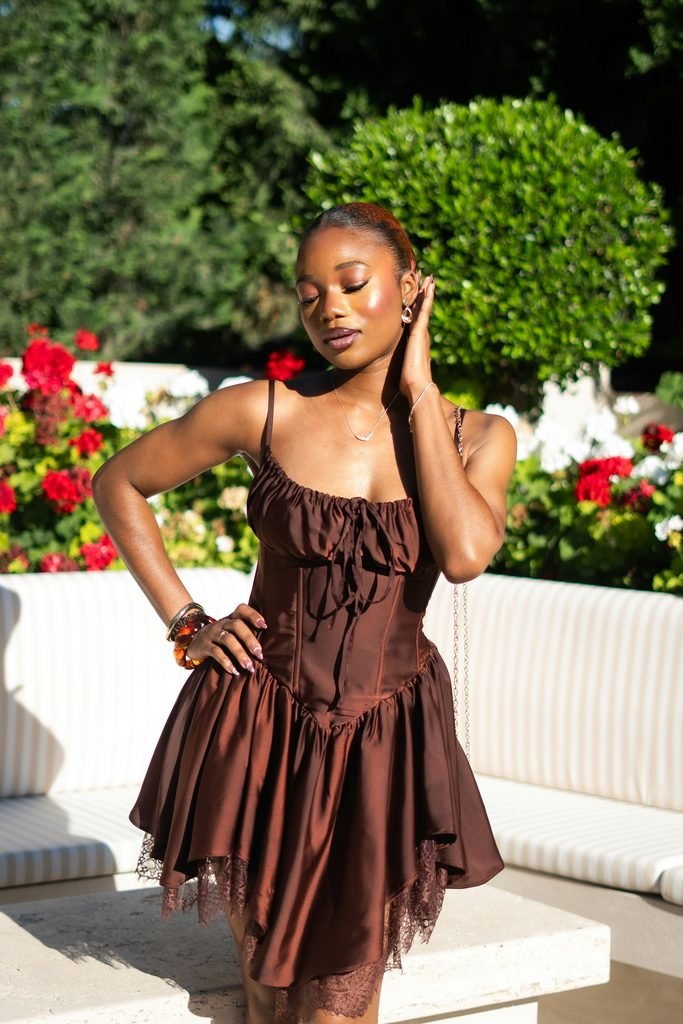
Photo by sammy swae on Unsplash
A warm brown dress in a garden setting is exactly the kind of look I mean. It is noticeable without feeling like it is trying to compete with the event, and it works with the setting instead of looking like a random party dress dropped into a wedding.
What I’m Actually Looking for in a Summer Wedding Guest Dress
Before I care about trends, I want to know where the wedding is, what time it starts, and how formal the invitation sounds. A dress that works beautifully for a garden ceremony can feel underdressed in a ballroom, while a full formal gown can look completely out of place at a relaxed afternoon reception.
Then I think about heat. I want fabric that moves, a shape that gives me room to breathe, and a neckline or sleeve situation that I will not spend the whole day adjusting.
Color comes after that. Summer is one of the easiest seasons to wear stronger shades, soft pastels, florals, warm earth tones, and anything that looks good in natural light.
The Colors I’d Pick This Summer
I am seeing a lot more color in wedding guest outfits, and I am very happy about it. Soft pink still works, but so do chocolate brown, cobalt blue, olive, coral, red, peach, and the kind of green that looks almost brighter once you step outside.
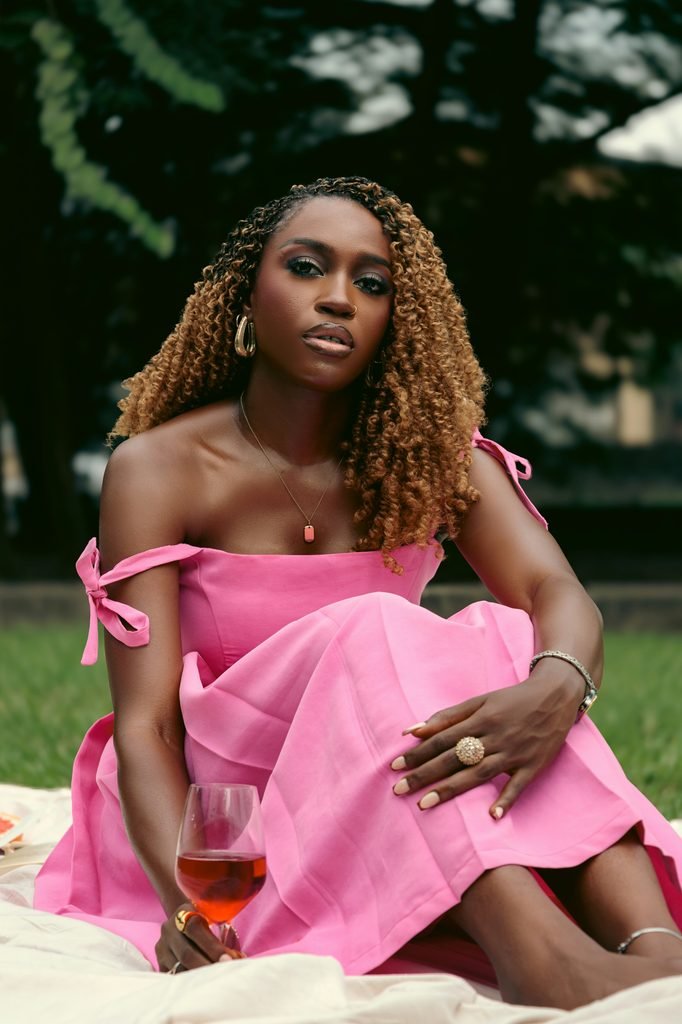
Photo by Ben Iwara on Unsplash
Pink is an easy choice because it can go romantic or modern depending on the cut. A simple pink dress with minimal jewelry feels very different from a heavily ruffled one, so the color itself does not decide how formal the outfit looks.
I also like deeper colors in summer more than people expect. Brown, rust, plum, and dark green can look amazing at evening weddings, especially when the fabric has a little movement or sheen.
Fabric Matters More Than People Think
A beautiful dress can become a terrible summer wedding dress if the fabric is stiff, heavy, or traps heat. I always check how much the material moves and whether the lining feels breathable before I get attached to the color.
Satin is still one of my favorite options for an evening reception because it catches light without needing a lot of extra detail. Chiffon, soft crepe, lightweight linen blends, and airy woven fabrics can also work beautifully depending on the dress code.
I am more careful with anything extremely clingy. It can look great standing still and feel much less forgiving after dinner, humidity, and several hours of sitting.
Cocktail and Semi-Formal Wedding Dresses
Cocktail is probably the easiest dress code to have fun with because you have room to look polished without going full gown. A midi is the obvious choice, but I would also wear a shorter dress if the cut still feels intentional and the venue is relaxed.
One strong color can do most of the styling for you. Add simple heels or dressy flats, a small bag, and one or two pieces of jewelry and the outfit is basically finished.
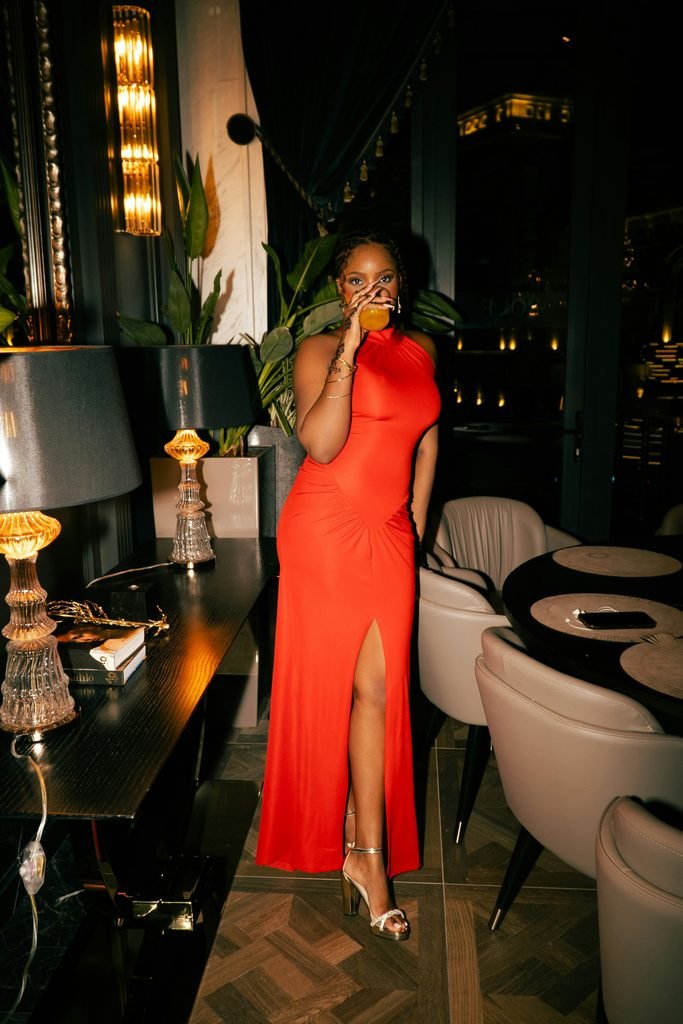
Photo by Christian Agbede on Unsplash
Red is a perfect example. It already has enough presence, so I would not pile on a complicated necklace, oversized earrings, and a statement bag at the same time. Let the dress be the main thing.
For an evening cocktail wedding, I would lean toward a sleeker fabric and a slightly stronger shoe. For daytime, I would soften it with lighter accessories and a more relaxed bag.
The Midi Dress Is Still the Safest Bet
If I had to buy one wedding guest dress without knowing every detail of the event, I would probably choose a midi. It is formal enough for most cocktail weddings, easy enough for a garden setting, and much less likely to feel too much or too little.
The exact hemline matters less than whether you can move comfortably in it. If you are constantly pulling it down, checking the slit, or trying to keep the skirt from twisting, it is not the right dress no matter how good it looked in the fitting room.
Garden Wedding Guest Dresses
Garden weddings are where I want the outfit to feel a little softer. Florals make sense, but I do not think you have to wear flowers just because there are flowers behind you.
A solid dress in brown, pink, green, blue, or warm red can look just as beautiful outside. What matters more is that the fabric has movement and the whole look feels light enough for the setting.
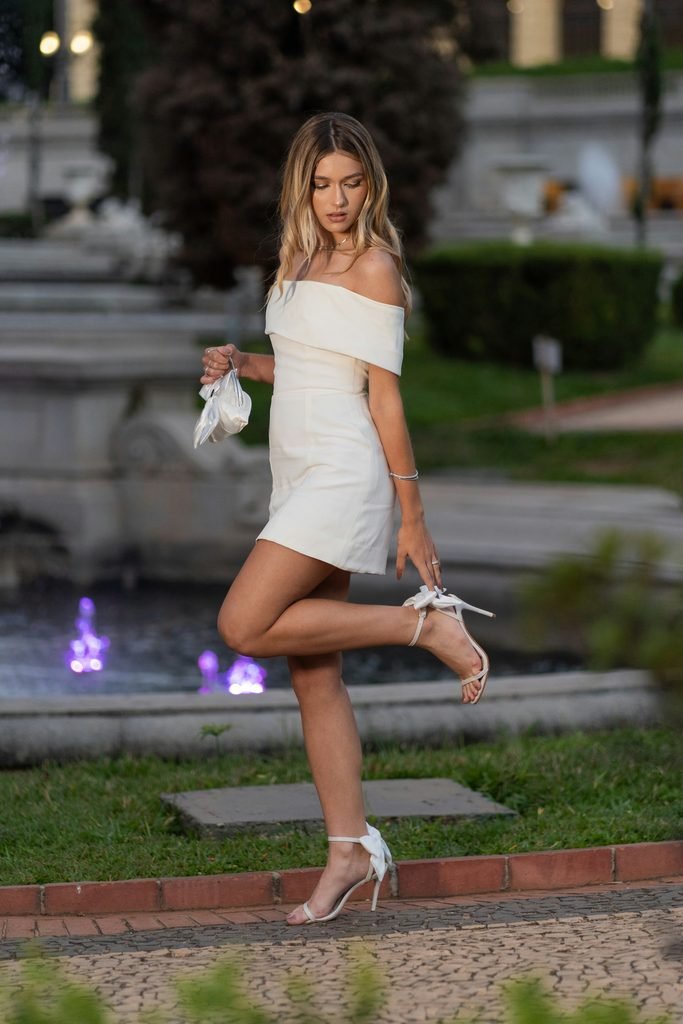
Photo by Rodrigo Rodrigues | WOLF Λ R T on Unsplash
A dress near a fountain or landscaped venue is a good reminder to think about shoes too. Thin stilettos and soft grass are not friends, and I do not want to spend cocktail hour slowly sinking into the lawn.
Block heels, dressy flats, wedges, or a wider heel usually make much more sense outside. If I know the ceremony is on grass, I plan the shoe first instead of hoping the ground will cooperate.
Florals Can Be Pretty Without Feeling Predictable
The easiest way to make a floral dress feel current is to keep the rest of the outfit simple. Let the print do the work, then choose a bag and shoes that pull from one of the quieter colors in the fabric.
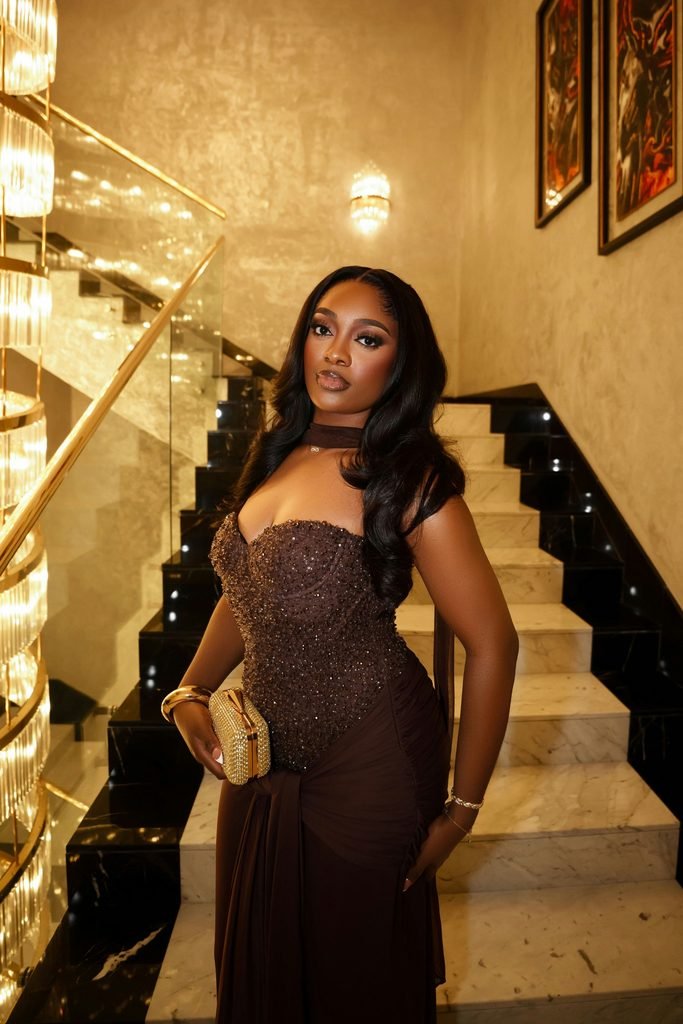
Photo by gabbiistudios on Unsplash
I also like earthier prints and brown-based dresses for late-summer weddings. They still work outside, but they feel a little richer than the usual pastel floral.
This is especially good when the wedding starts in the afternoon and runs into evening because the outfit does not feel locked into one time of day.
Formal and Black-Tie Weddings
This is where I would go longer, cleaner, and a little more dramatic. A formal dress does not need to be covered in beads or have a train. Sometimes a strong color and a beautiful silhouette are enough.
I like full-length dresses that have one clear feature, such as a draped neckline, a strong shoulder, a low back, a defined waist, or a skirt with movement.
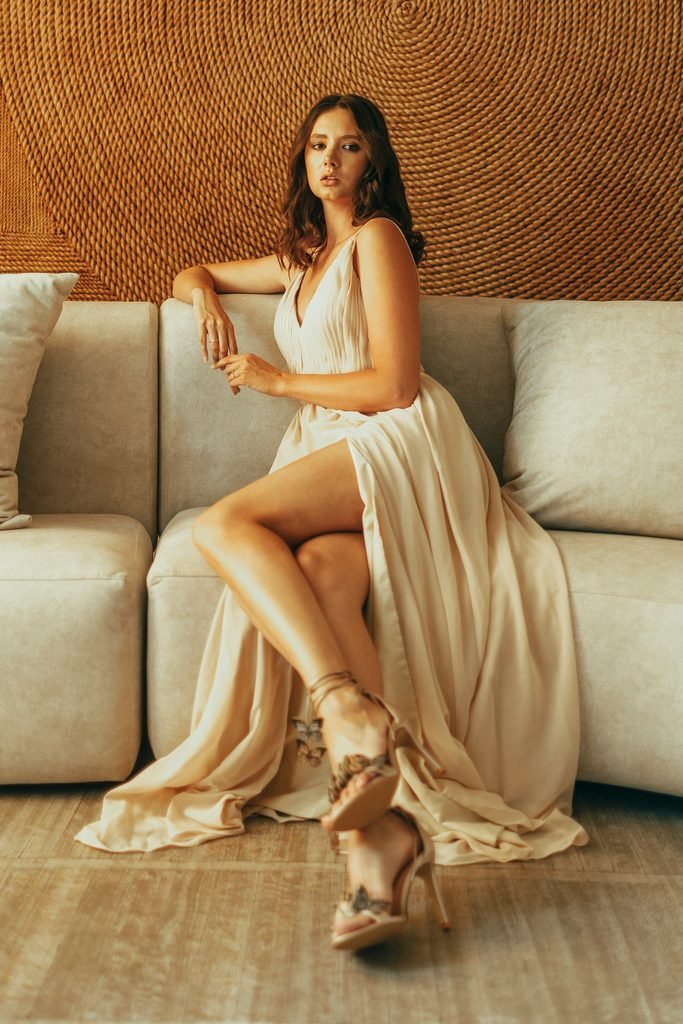
Photo by alex Roosso on Unsplash
A flowing dress already has enough drama when the fabric moves well. I would rather have that than a dress with ten different details fighting each other.
Formal also does not mean you have to wear black. Blue, green, red, bronze, plum, and deeper pinks all work beautifully at evening weddings.
Blue Is One of the Easiest Formal Colors
If I am stuck between colors for a formal summer wedding, blue is one I keep coming back to. It photographs well, works for evening, and gives you plenty of room with metallic accessories.
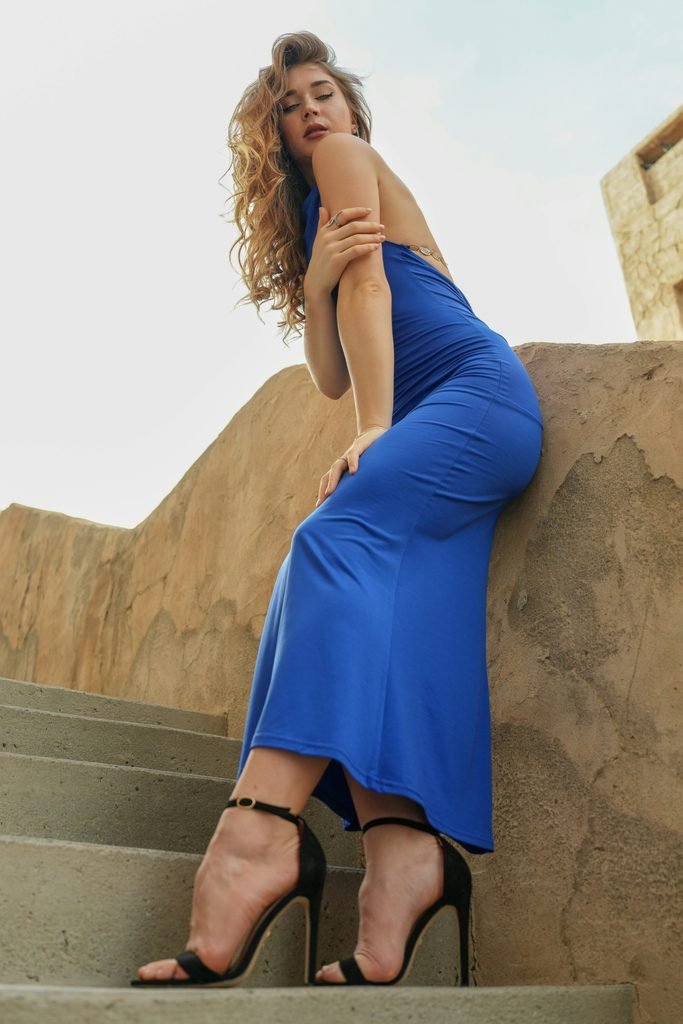
Photo by gulfam tabriz on Unsplash
A blue dress with a clean shape can handle silver, gold, nude, or even a contrasting bag. That makes it useful if you want something you can wear again instead of buying a dress that only makes sense for one wedding.
I would keep the jewelry lighter if the neckline or skirt already has a lot happening.
Which Silhouettes Are Actually Easy to Wear?
I do not think there is one dress shape that flatters everyone, because bodies, comfort levels, and personal style are too different for that. What I care about is whether the dress sits properly without constant adjusting.
A-line dresses are easy because they give you room through the skirt. Wrap-inspired shapes can be comfortable if the neckline stays secure. Column dresses work well if you like a cleaner line, and softly fitted dresses can look beautiful when the fabric skims instead of squeezing.
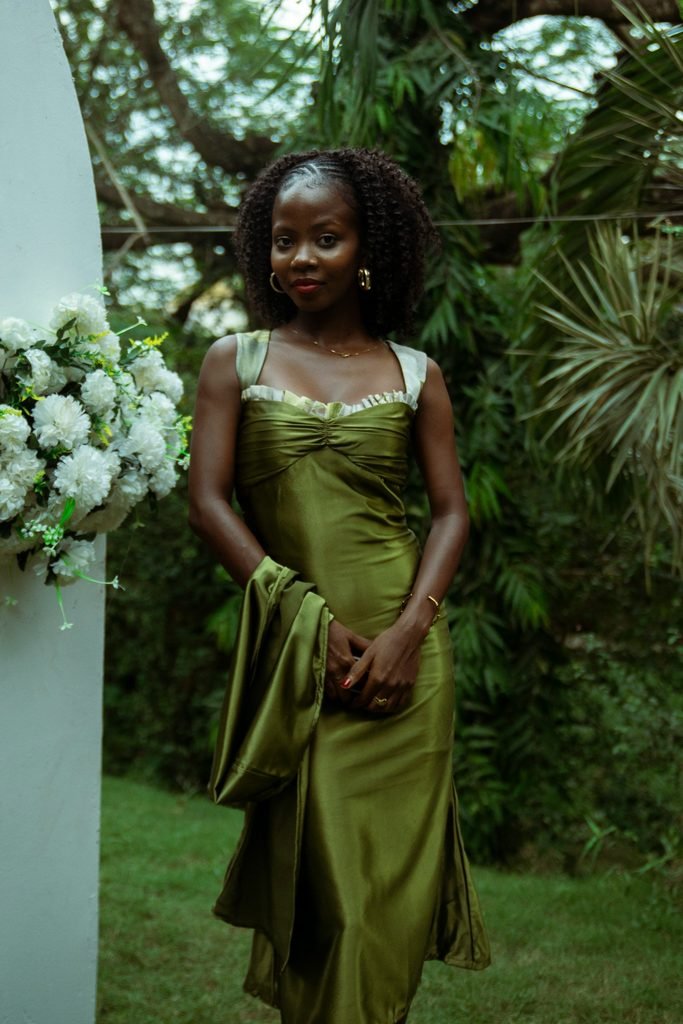
Photo by Moon Bouy on Unsplash
A long green dress like this shows why I care more about proportion than a list of body-shape rules. The dress has a clear line, the color does enough visually, and there is no need to make the styling more complicated.
The best test is still practical. Sit down. Walk around. Lift your arms. Check the back. If you can forget about the dress for ten minutes, that is a very good sign.
Necklines Matter Because You Have to Live in Them
One-shoulder dresses can feel modern without needing much jewelry. V-necks are easy to style with a pendant or no necklace at all. Square necklines give statement earrings more room, while halters can look beautiful with the hair pulled back.
I do not choose a neckline based on a rule about what I am “supposed” to wear. I choose the one that stays where it should and lets me move without checking it every five minutes.
That is also why I am careful with very low backs or complicated straps. They can be worth it, but I want to know what bra, tape, or support situation I am signing up for before the wedding day.
Accessories Can Change the Whole Dress
I think bags get ignored until the last minute, which is strange because they can completely change how formal a simple dress feels.
A structured mini bag or clutch can make a clean midi look much dressier. A woven or softer bag works better for a daytime garden wedding. Metallic bags are useful because they work with several dress colors without needing an exact match.
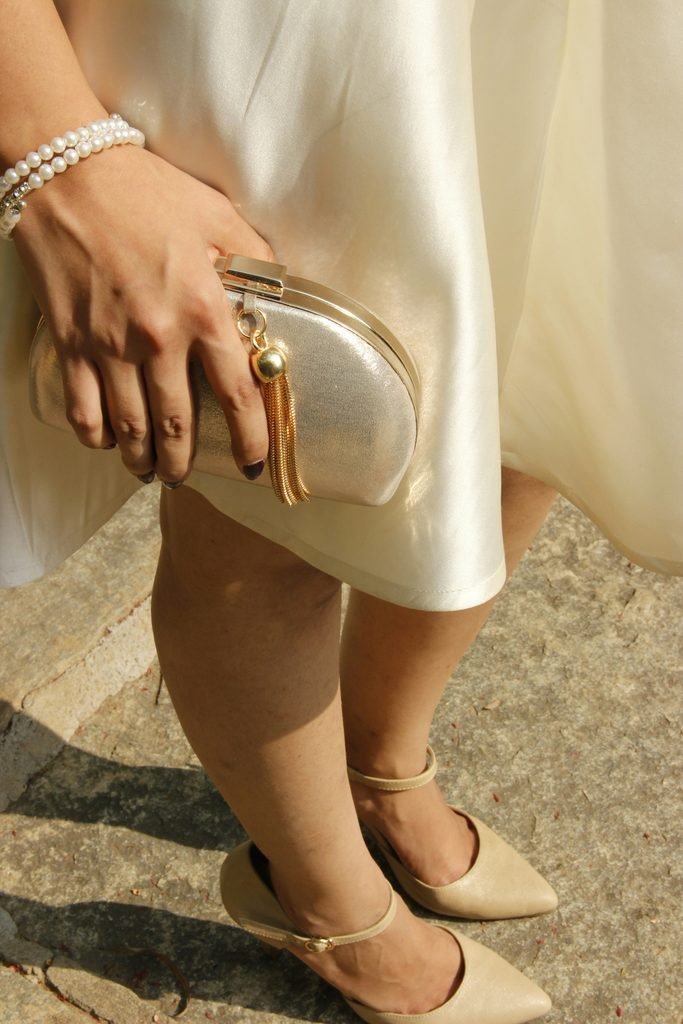
Photo by Abundantprism on Unsplash
I only need the bag to hold my phone, cardholder, lipstick, and whatever tiny emergency item I know I will want later. I do not want to carry a huge tote through dinner because I convinced myself I needed my entire life with me.
Shoes work the same way. If I cannot stand in them through the ceremony and walk to the reception without pain, they are not wedding shoes for me.
The White-Dress Question
This is the easiest rule in the whole post. If the dress reads white, ivory, bridal cream, or very close to a traditional bridal shade, I would choose something else unless the couple has specifically asked guests to wear white.
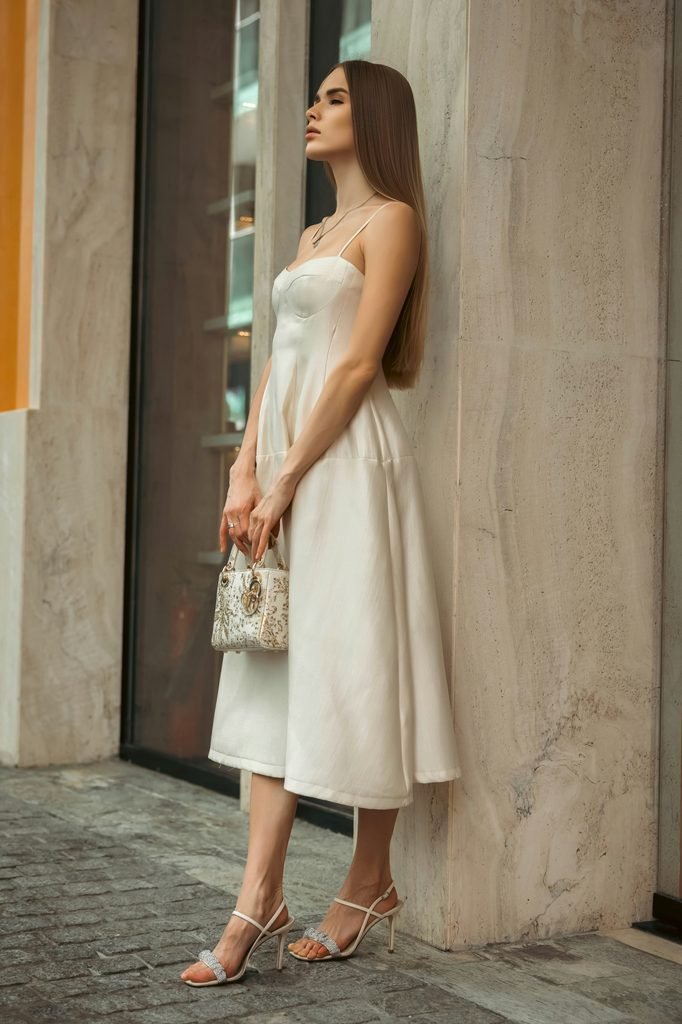
Photo by alexanderafan on Unsplash
The dress itself can be gorgeous and still not be the right wedding guest choice. I would rather wear that same shape in blue, pink, green, red, brown, or almost any other color than spend the whole event wondering whether it looks too bridal.
This is one of those situations where I do not think being technically correct is worth the awkwardness. If I have to explain why my dress is “actually more champagne than white,” I already know I should pick another one.
And Yes, Some White Dresses Look Very Bridal
There are white dresses that are clearly casual, and then there are white dresses that instantly look ceremony-ready because of the shape, fabric, or setting.
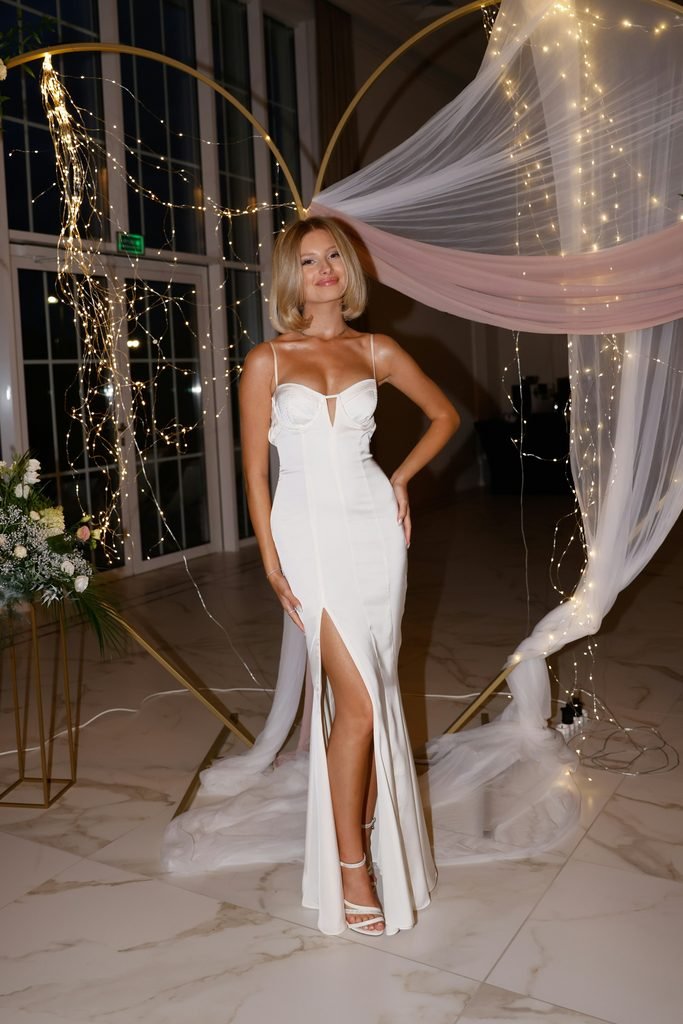
Photo by ola szkolda on Unsplash
This is exactly the kind of visual I would save for bridal inspiration, a white-party dress code, or another event entirely. For a normal wedding guest outfit, there are too many good colors available to make white worth debating.
I would apply the same caution to very pale blush or silver if the fabric photographs almost white. Take a quick photo in daylight if you are unsure.
The Dresses I’d Save First
If I were shopping for several weddings this summer, I would not buy a completely different personality for every invitation. I would choose a few dress formulas that can change with accessories.
A simple midi in a strong color works for cocktail and semi-formal weddings. A long green, blue, brown, or red dress can cover most formal invitations. A softer printed dress can handle garden weddings and daytime events.
The more wearable the dress is, the less I care whether it is the loudest trend of the season.
Your Wedding Season Game Plan
Before I buy anything, I check the invitation, venue, start time, and dress code. Then I choose the length and level of formality. Only after that do I let myself fall in love with color.
I also try the whole outfit on together before the wedding. Dress, shoes, bag, jewelry, underwear, and whatever I am doing with my hair. A dress can feel completely different once the actual shoes and accessories are involved.
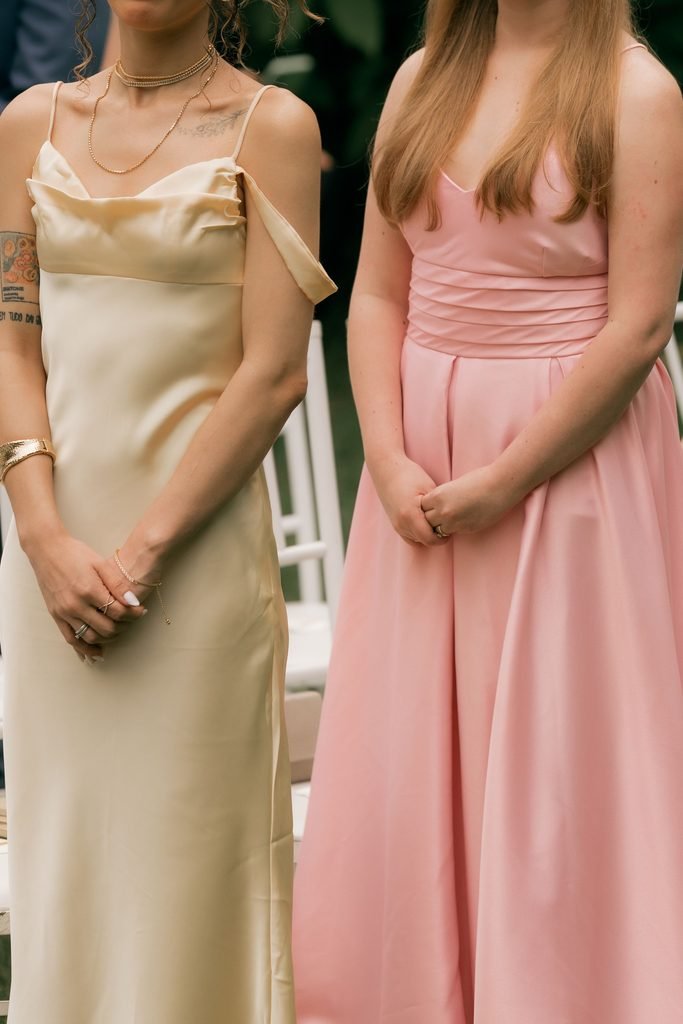
Photo by Alexander Mass on Pexels
Seeing several elegant summer dresses together is also a good reminder that there is no single “correct” wedding guest look. Different colors, necklines, lengths, and styling can all work at the same event when the level of formality feels right.
The dress I would actually wear is the one that fits the invitation, feels good after dinner, survives the dance floor, and still looks like me.
That is a much better standard than buying something just because it looked perfect on a product page.
Got an autumn invite as well? Here’s why I think fall weddings win. And if a baby shower is next on the calendar, this is what I’d wear as a guest.

Leave a Reply