

Two girls walk into the same coffee shop wearing the same black track pants. One looks like she’s on day three of a cold. The other looks like she just left a fashion week street style shoot.
Same pants. Completely different outcome.
The difference is not money, and it’s not genetics. It’s a formula, and sport-luxe street style runs on it: comfortable athletic pieces framed by sharp, intentional everything-else. Once you see the formula, you can’t unsee it, and you can build it out of things already hanging in your closet.
So here are the four rules that make the whole thing work, plus the honest answer to when you’re allowed to break them. No gatekeeping, no $400 sweatpants required. (And no, you don’t need to be a fashion person to pull this off.)
Rule #1: One Sporty Piece Per Outfit
The sporty item is the seasoning, not the meal. One athletic piece per outfit: track pants OR sneakers OR a zip-up. Never the whole gym bag at once.
This is the rule that separates sport-luxe from “I gave up.” Track pants with a crisp shirt and heeled boots reads as a choice. Track pants with a hoodie, running shoes, and a puffer reads as an errand you got dragged into.
Think of it as a ratio. One part sport, three parts polish. The sporty piece stands out because everything around it is doing something different, and that tension is the whole point of the trend.
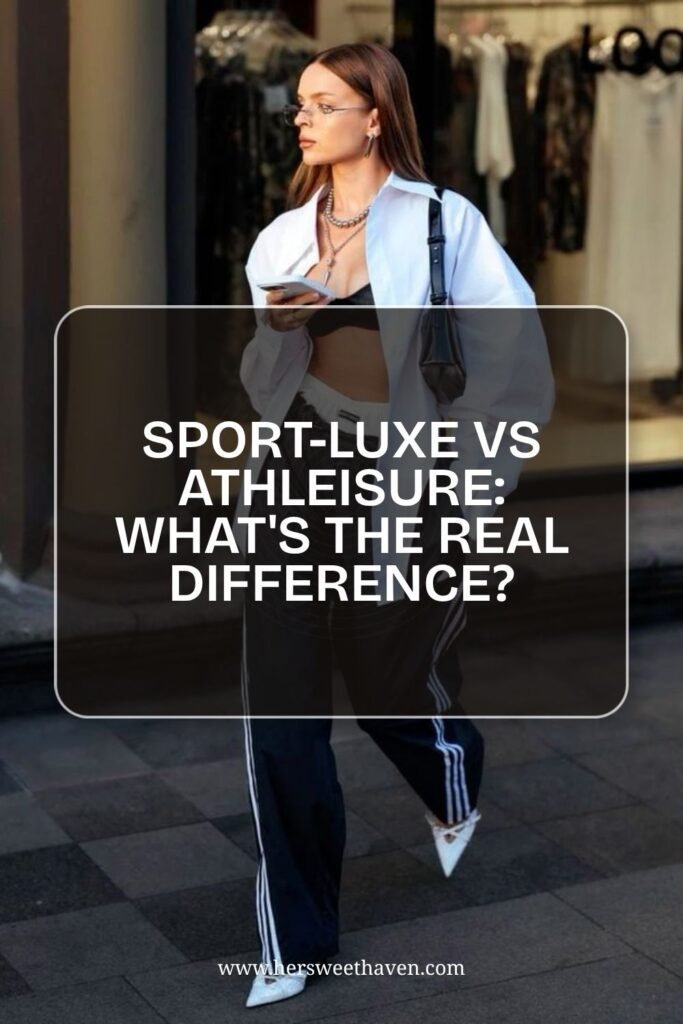
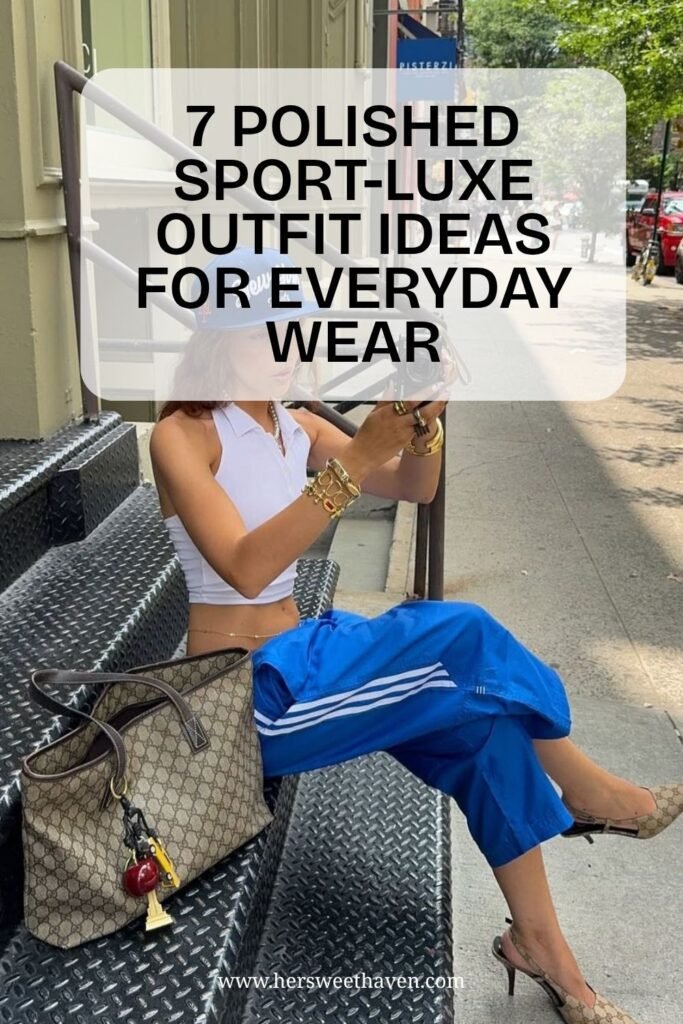
A concrete example, because ratios are abstract until they’re an outfit: navy track pants, a white button-down tucked loosely in front, slingback flats, gold hoops. Every piece besides the pants could go to a work lunch. That’s why the pants suddenly look like a styling decision instead of a shortcut.
Run the same check on your own outfit before leaving the house. Count the athletic pieces. If the number is higher than one, swap something out and watch the whole look snap into focus.
Rule #2: Let the Fabric Do the Talking
Here’s where it gets real: fabric decides whether your outfit whispers expensive or yells clearance bin. Cut matters, color matters, but fabric is the first thing the eye reads.
Fabrics That Read Expensive
You want materials with body. Thick, smooth jersey that holds its shape. Satin-finish track pants that catch light like trousers. Dense knits, structured cotton, anything with a flat, clean surface.
The test from this guide to athleisure that looks expensive is simple and brutal: does it hold shape, stay opaque, and lie flat at the seams and waistband? If yes, it’ll photograph like it cost triple. Matte beats shiny, heavy beats flimsy, plain beats logo’d, almost every time.
Fabrics That Scream Gym Bag
The flip side? Thin shiny polyester, leggings going sheer at the thigh, pilling fleece, and anything with a giant logo across the chest. These drag the whole outfit back to the locker room no matter what you pair them with.
I’m not gonna lie, this rule costs the most to follow, because better fabric usually costs more upfront. But one pair of solid, heavyweight track pants outworks five flimsy ones, and it’s the piece you’ll reach for four days a week. Buy fewer, buy denser.
And protect the fabric you paid for. Air dry the good pieces instead of tumble drying them, because heat is what turns smooth jersey into pilled, wavy-seamed jersey. Half the “cheap-looking” athletic wear out there started out fine and got cooked in a dryer.
Rule #3: Sharpen Everything Around It
Your sporty piece is slouchy by design. Every other piece needs to pull the opposite direction. Structure is what makes slouch look intentional.
The Blazer Move
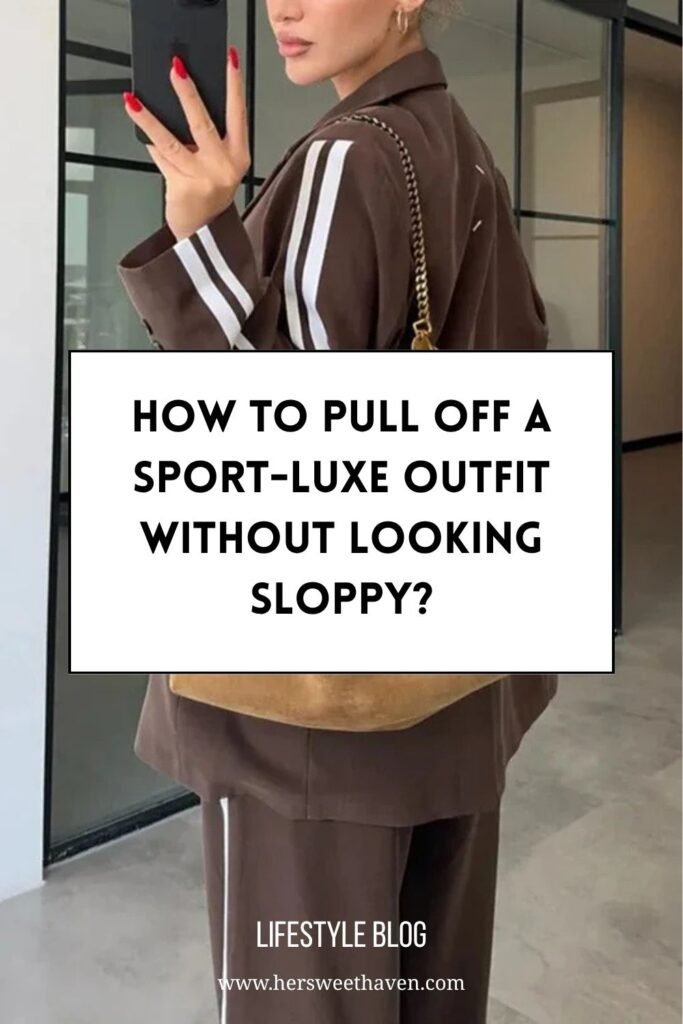
The fastest version of this rule is a blazer over anything athletic. Track pants and a fitted blazer. Bike shorts and an oversized blazer. A zip-up under a sharp coat. PORTER’s guide to smartening up athleisure calls tailoring the single most reliable way to pull sporty pieces into real-clothes territory, and they’re right.
The blazer doesn’t need to be expensive. It needs to have shoulders that hold their shape. That’s it. (Don’t worry, thrift racks are full of them.)
Shoes and Bags With Structure
Swap the running shoes. A pointed flat, a heeled boot, a clean leather sneaker, a loafer.. any of these next to track pants creates that “wait, this works?” contrast that makes people look twice.
Same logic for the bag. A structured leather bag, even a small cheap one, beats a slouchy nylon tote here. Two soft things next to each other melt into pajamas. One soft, one sharp, and suddenly it’s styling.
Jewelry Is the Cheat Code
Gold hoops with a track jacket. Layered necklaces over a plain athletic tank. A watch and stacked bracelets against a matte zip-up sleeve.
Jewelry costs the least of any move in this post and does a stupid amount of work. It signals that you finished the outfit, that it’s an actual look and not just what was clean. If you do nothing else from this rule, do the earrings.
Grooming counts as structure too, by the way. A slicked bun or fresh blowout next to track pants sends the same signal a blazer does: this was on purpose. Messy hair plus athletic pieces tips the read back toward sick day, no matter how good the bag is.
Rule #4: Keep the Palette Quiet
Loud colors plus athletic pieces equals sports fan. Quiet colors plus athletic pieces equals street style. Unfair, maybe, but that’s how the eye works.
Start With Neutrals
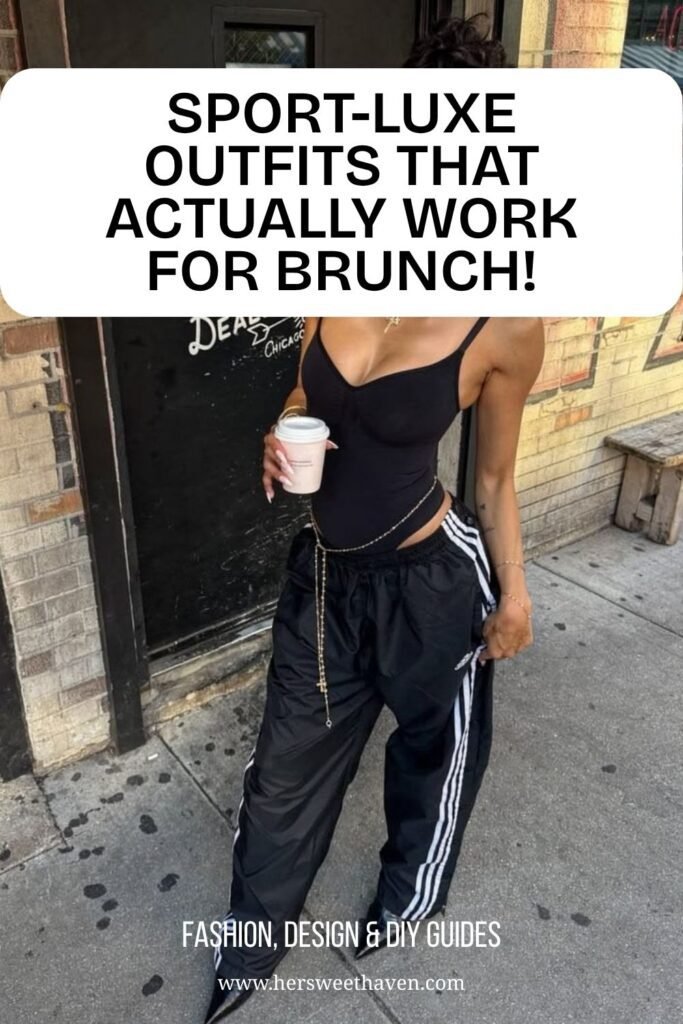
Black, cream, espresso, navy, gray, deep green. Build the outfit entirely inside that family and it’s nearly impossible to look sloppy, even in the comfiest pieces you own.
Neutrals also hide the price tag. A $30 black track pant and a $300 one look shockingly similar in photos. A neon version announces its origin story immediately.
This is also where the budget math tilts in your favor. Building a quiet palette means almost everything you buy works with almost everything you own, so a small closet stretches into weeks of outfits. Loud pieces need supporting casts. Neutrals just show up and cooperate.
Go Tonal When in Doubt
The single easiest expensive-looking move: make everything one color family. All black with texture differences, all cream, all gray. Who What Wear’s track pants outfit roundup leans hard on this trick, pairing tonal track pants with long coats in the same shade range for that continuous, mile-long line.
Tonal dressing takes zero color theory. Match the family, vary the texture, done. (Okay, it feels like cheating. That’s because it is.)
One Accent, Maximum
Want the red bag? Great. Then the rest stays neutral. The accent piece only works when it’s alone on stage.
Two accents compete. Three accents and the outfit starts vibrating. One pop against a quiet base is the entire trick behind half the street style photos you’ve saved.
When Can You Break the Sport-Luxe Street Style Rules?
Honest answer: when one piece is strong enough to carry the risk. A full matching tracksuit technically breaks Rule #1 twice, but with heels, gold jewelry, and a structured bag, it becomes the whole point of the outfit. The rules bend when the polish around them doubles.
Confidence is the other exception, and I mean that practically, not as a poster slogan. An outfit you feel great in gets worn upright, styled with intention, and it shows. The same look worn apologetically falls apart.
The palette rule is the safest one to bend, for what it’s worth. A cherry red track jacket over an otherwise neutral outfit can be the best thing you wear all month. Rule #3 is the one I’d never touch: lose the structure and there’s nothing holding the look together.
Break one rule at a time, though. Break all four and you’re not doing sport-luxe street style anymore.. you’re just in sweats. Which is fine! But it’s a different activity.
Is Sport-Luxe Street Style Just Athleisure With Extra Steps?
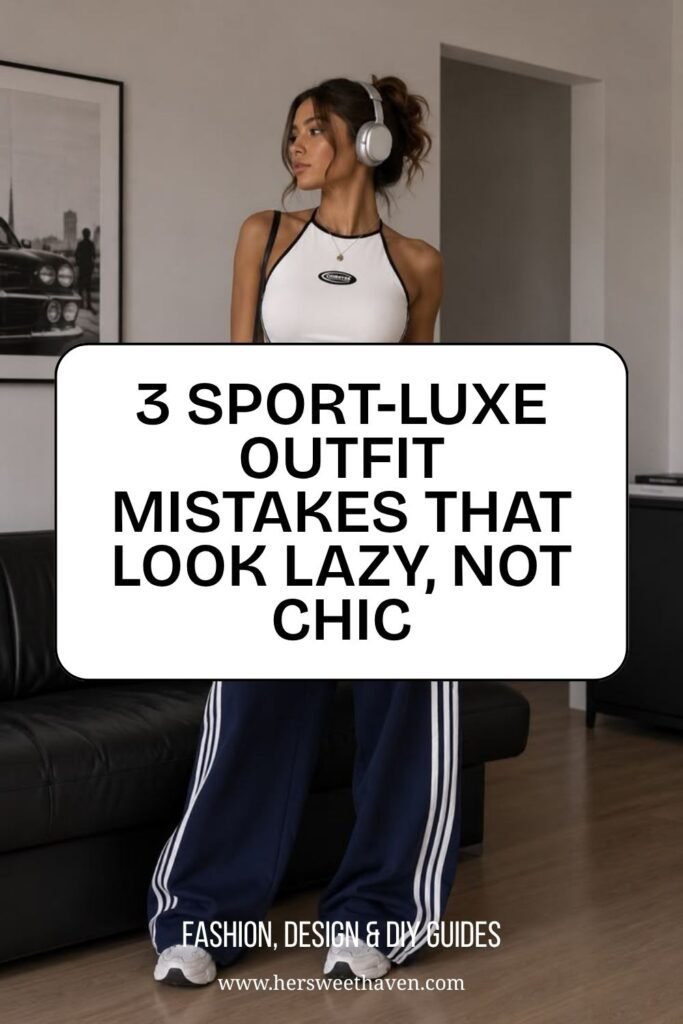
Sort of, and the steps are the point. Athleisure is comfort-first: real workout clothes styled to be acceptable in public. Sport-luxe flips the priority. It’s fashion-first, borrowing athletic pieces as design elements, with zero intention of ever jogging in them.
The overlap is real, and plenty of outfits live in both camps. The dividing line is usually the styling around the sporty piece: athleisure pairs it with more comfort, sport-luxe pairs it with tailoring, leather, and jewelry.
Neither one is better, for the record. Athleisure wins school runs and long flights, and sport-luxe wins brunch, dates, and any day you want to look assembled without wearing actual trousers. Knowing which one you’re dressing for just makes both easier to get right.
So if you’re standing in leggings and a blazer wondering which team you’re on, check your shoes. Sneakers, athleisure. Anything else, welcome to sport-luxe.
The label matters less than the intention behind it. Both styles took over street style for the same reason: nobody wants to choose between comfortable and put-together anymore. The four rules above just make sure you’re getting both instead of neither.
The Formula, On One Sticky Note
The short version, for the next time you’re staring into the closet:
- One sporty piece per outfit, never the whole gym bag
- Dense, matte, logo-free fabrics over thin and shiny
- Sharpen the rest: blazer, structured shoes and bag, jewelry
- Quiet palette, tonal when in doubt, one accent max
That’s the entire formula. Comfy on your body, expensive to the eye, built from things you mostly own already.
Save this for your next “nothing to wear” morning. Track pants are sitting right there, and now you know exactly what to do with them.

Leave a Reply