
Scroll any nail feed in September and 9 out of 10 fall manicures are the exact same burgundy. Beautiful? Sure. But when every hand at brunch matches, “seasonal” starts to feel like a uniform.
I say this with love, as a reformed burgundy-by-default girl myself. For years my entire autumn personality was one wine-colored bottle. Then I started paying attention to what actually made me stop scrolling, and it was never the burgundy.. it was the chocolates, the ambers, the rusts, the weird-in-a-good-way finishes.
So here are my fall nail colors for this year, organized as five simple rules. Follow them and you’ll have a palette that feels like autumn without looking like everyone else’s, whether you’re a salon regular or a paint-at-home-on-Sunday person. Burgundy still makes an appearance, don’t worry. It just doesn’t get the whole season anymore.
The First Rules of Fall Nail Colors: Brown Is the Headliner
Two rules kick off the system, and they’re the ones that changed my whole rotation.
Rule 1: Chocolate Brown Is the New Neutral
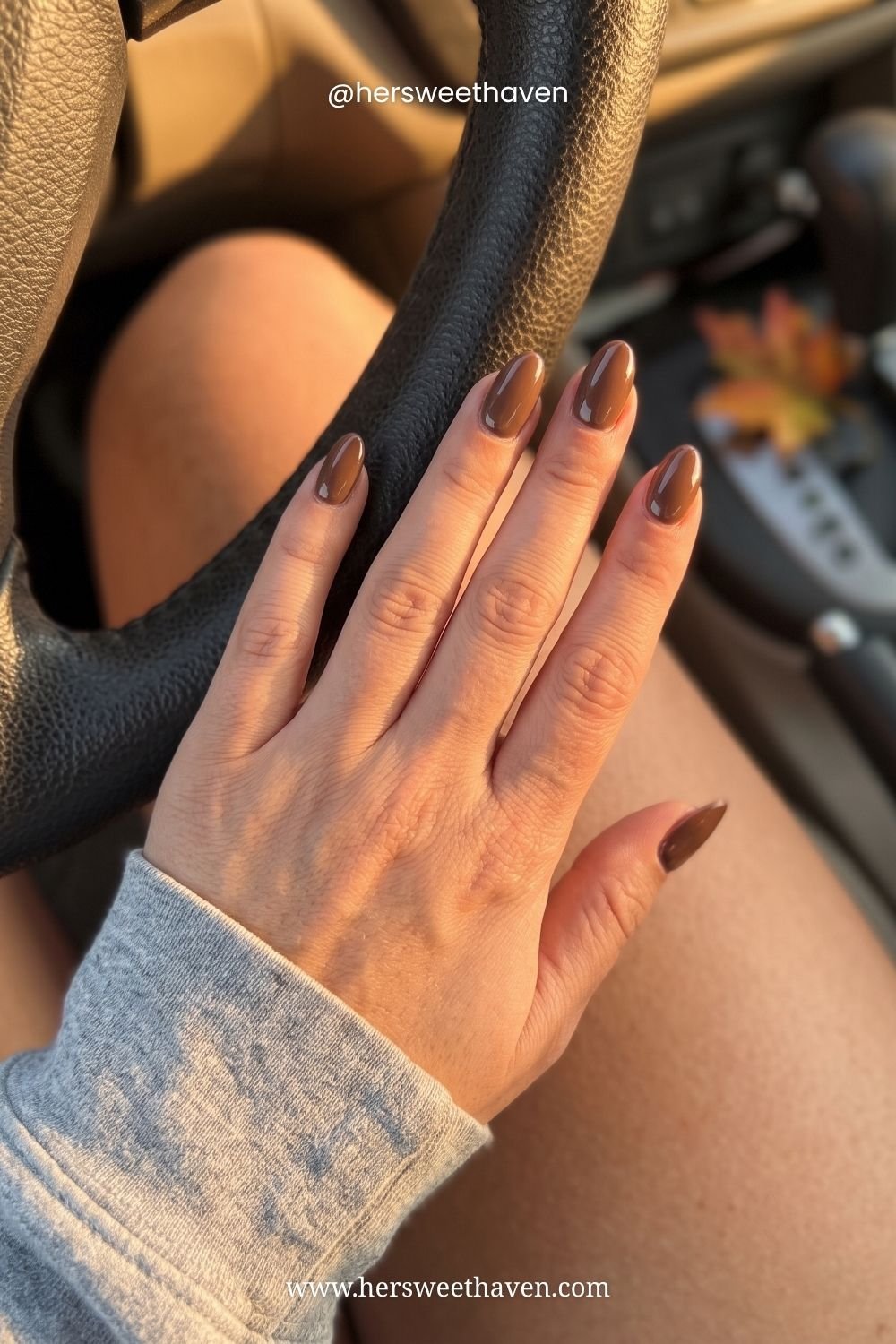
Milk chocolate, glossy, rounded, done. This is my most-worn shade of the entire season, and it behaves like a neutral: it works with denim, camel coats, gold jewelry, and every sweater I own. Burgundy makes a statement. Chocolate makes an outfit.
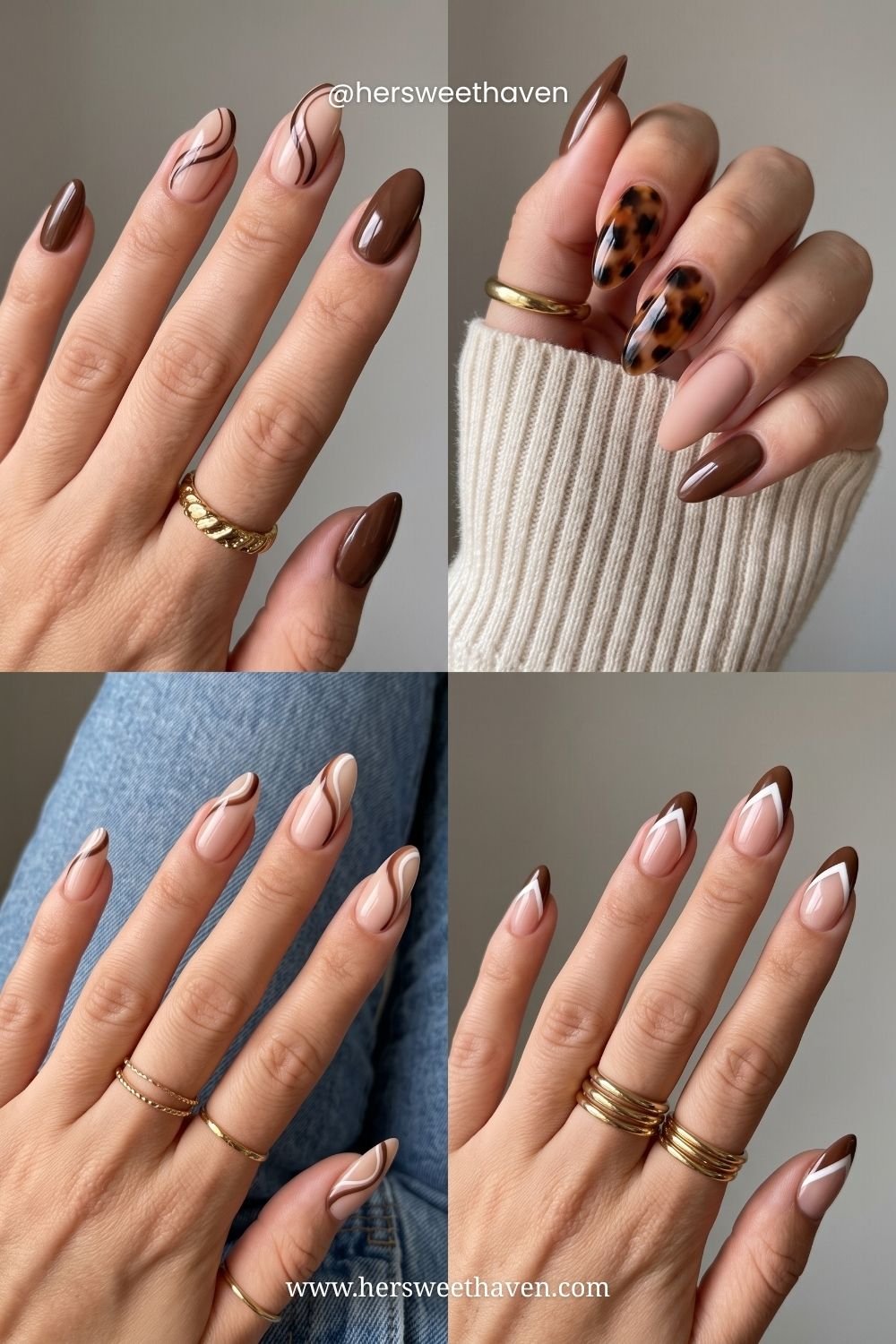
And brown is endlessly remixable. Swirls over nude, tortoiseshell accents, half-and-half designs, chevron french tips: one color family, four completely different sets. When you find your brown, you’ve basically found your fall.
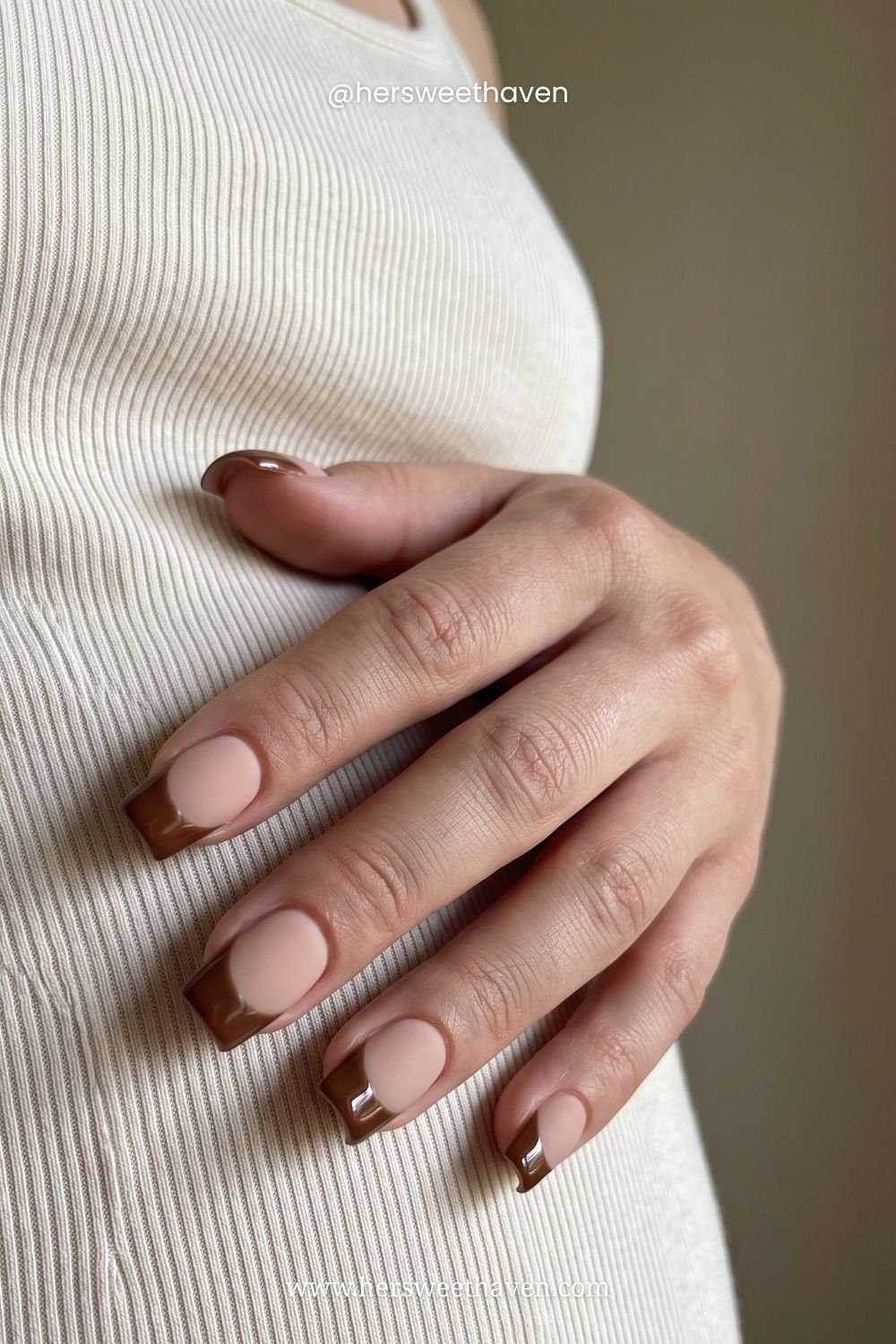
The gateway version is the brown french tip: matte nude base, glossy chocolate tips. It reads polished at work and cool everywhere else. (Results may include: compliments from strangers at the coffee shop.)
The matte-base-glossy-tip contrast is the detail to request specifically, by the way. Same two colors in all-gloss is pretty; the mixed finish is what makes people ask where you got them done.
Rule 2: Texture Counts as Color
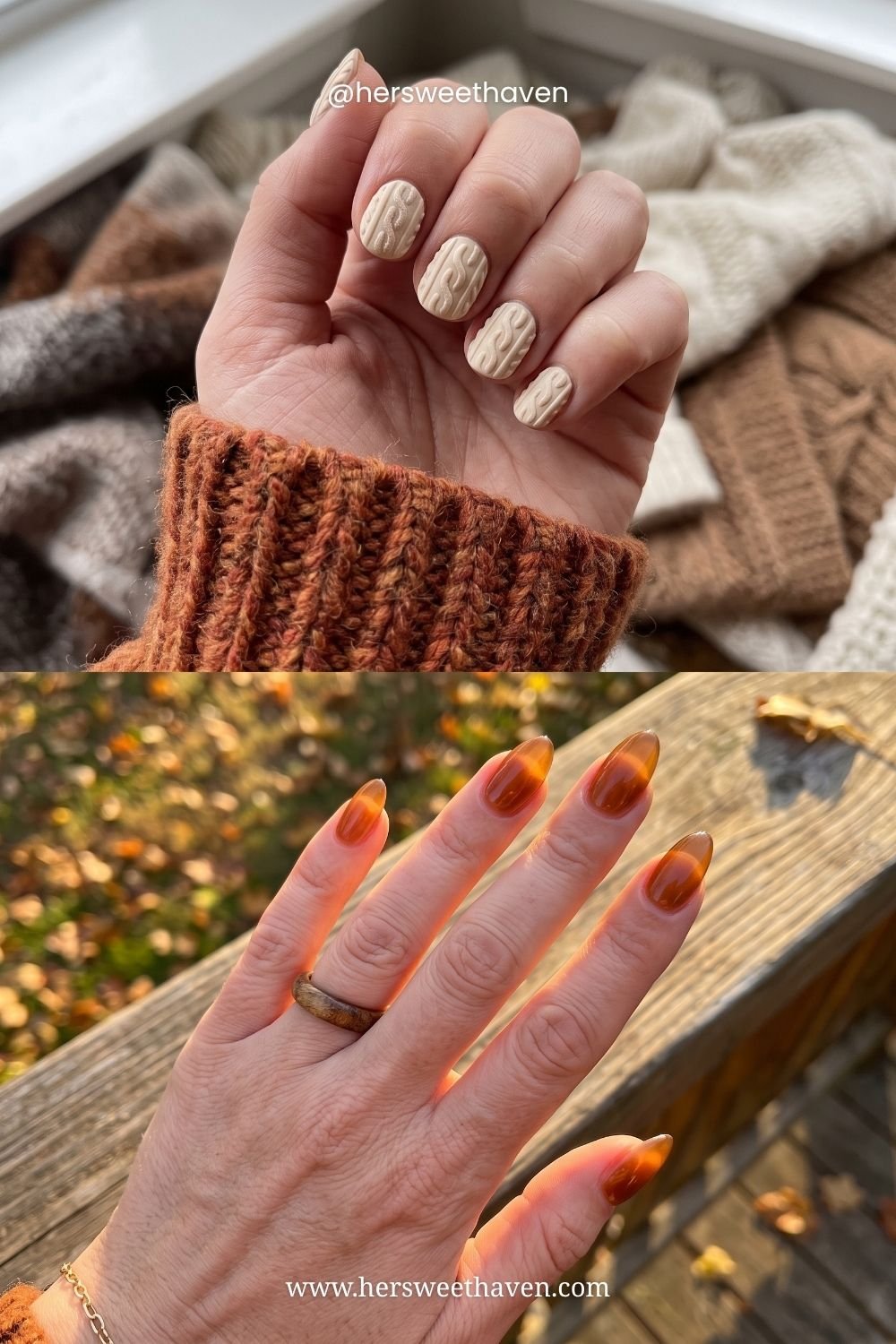
A “boring” shade in an interesting finish beats an exciting shade in plain gloss. Exhibit A: cream polish sculpted into cable-knit sweater texture. Exhibit B: amber jelly polish that glows like maple syrup in sunlight.
Neither uses a wild color, both stop people mid-sentence. Finish is a flavor, not an afterthought.
The sweater texture is a salon job (it’s sculpted builder gel), but the jelly is drugstore-achievable: two to three thin coats of a sheer amber and you’re glowing. Jellies also make grow-out nearly invisible, which is a quiet superpower nobody mentions.
Rule 3: Burgundy Stays, But On Purpose
I know, I know. The title promised not-all-burgundy, and I meant it: the rule isn’t banning the shade, it’s using it deliberately instead of automatically.
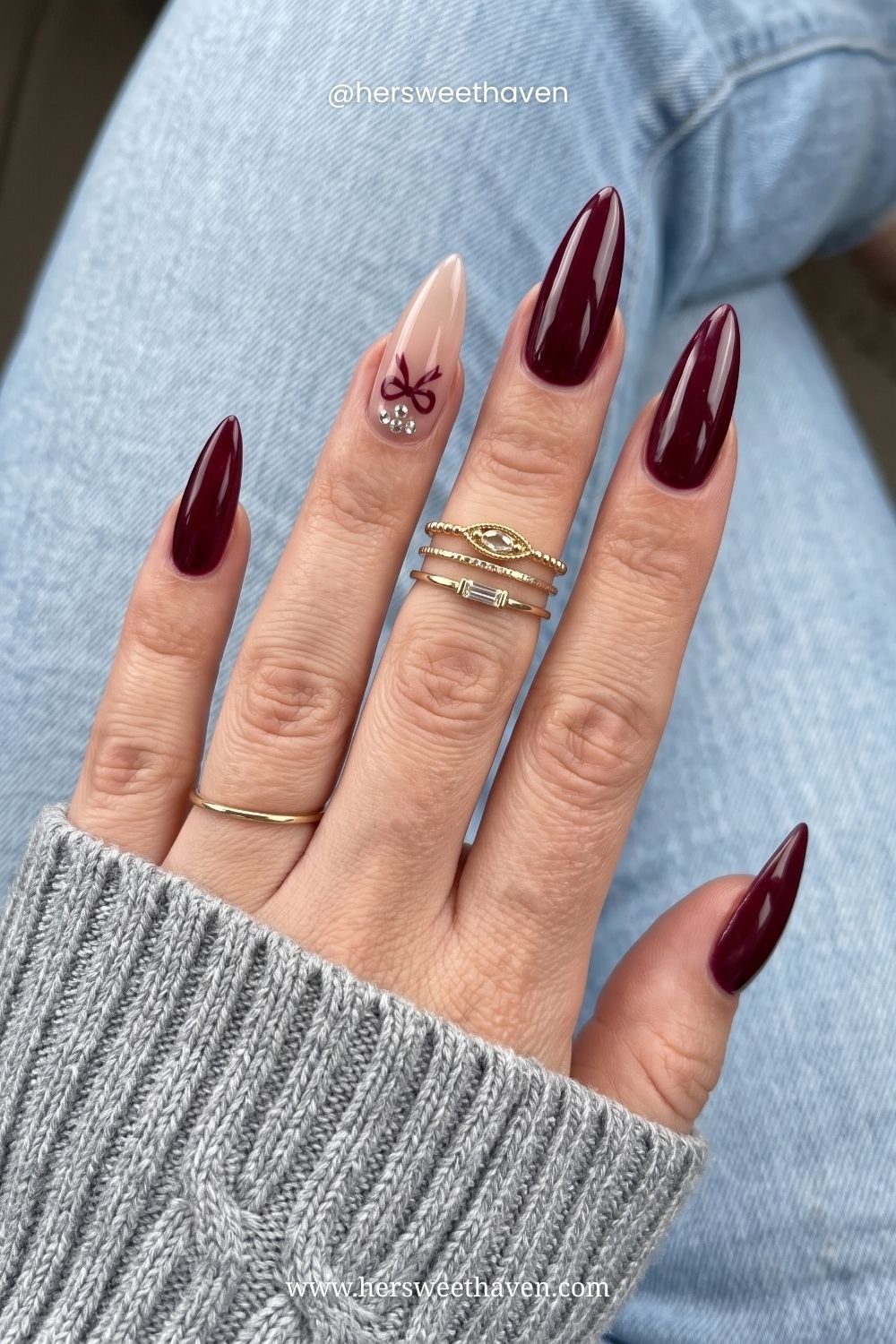
Deliberate looks like this: deep wine on long almond nails with one nude accent nail wearing a tiny drawn bow. The accent nail is doing the heavy lifting, turning default-burgundy into a considered set. Almond shapes flatter dark shades most (my whole almond nail design roundup leans on that trick).
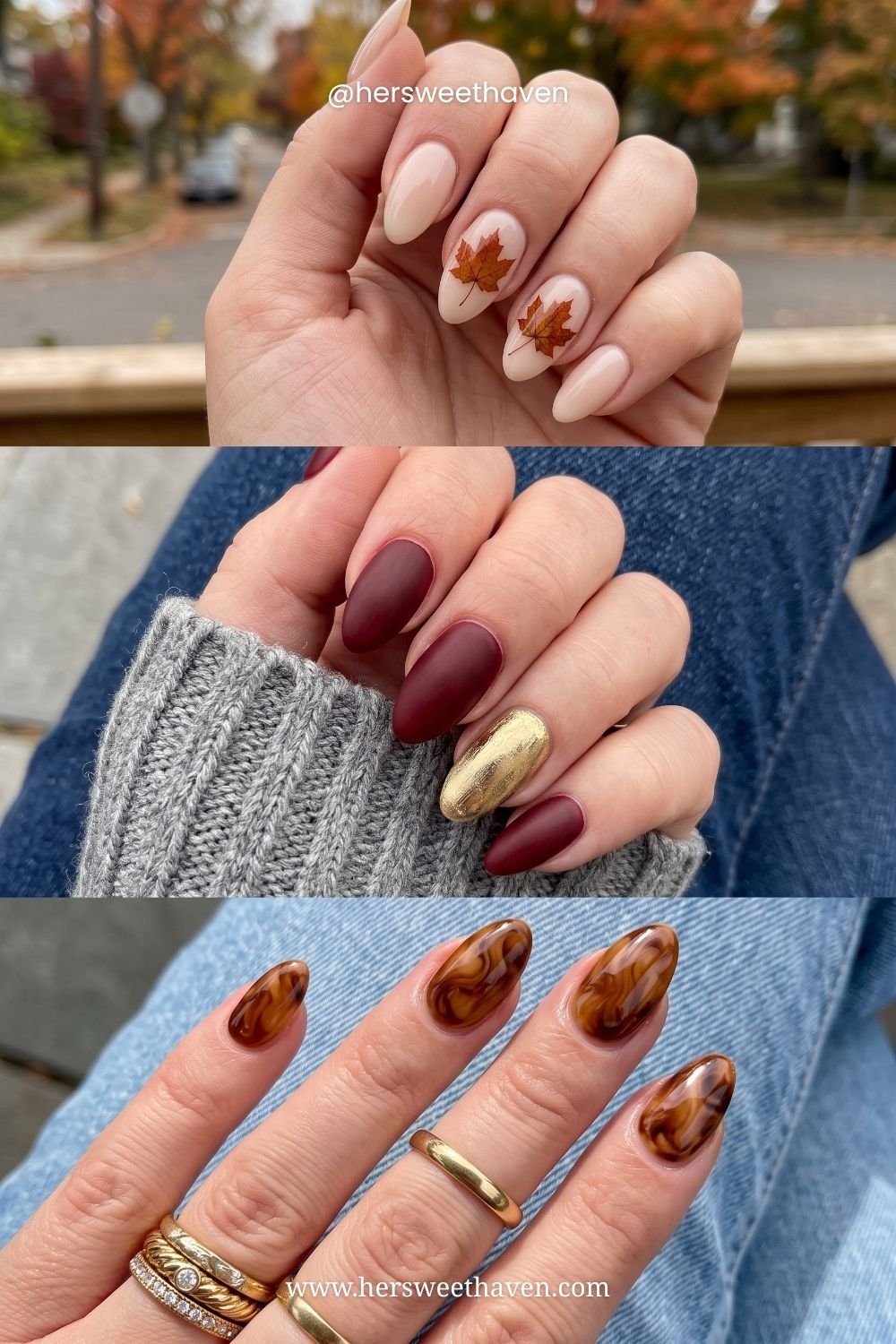
Or style it three ways: pressed maple-leaf art on neutral nails, matte burgundy with a single gold foil nail, tortoise-marble amber. That tortoiseshell effect looks advanced and isn’t.. this tortoiseshell nails tutorial breaks it into seven layering steps a patient beginner can follow.
Burgundy as one voice in the choir: lovely. Burgundy as the whole choir, all season: that’s how we got here.
Rules 4 and 5 (and When to Break All of Them)
The last two rules round out the palette, and then we talk about ignoring everything I just said.
Rule 4: Rust Is the Underrated One
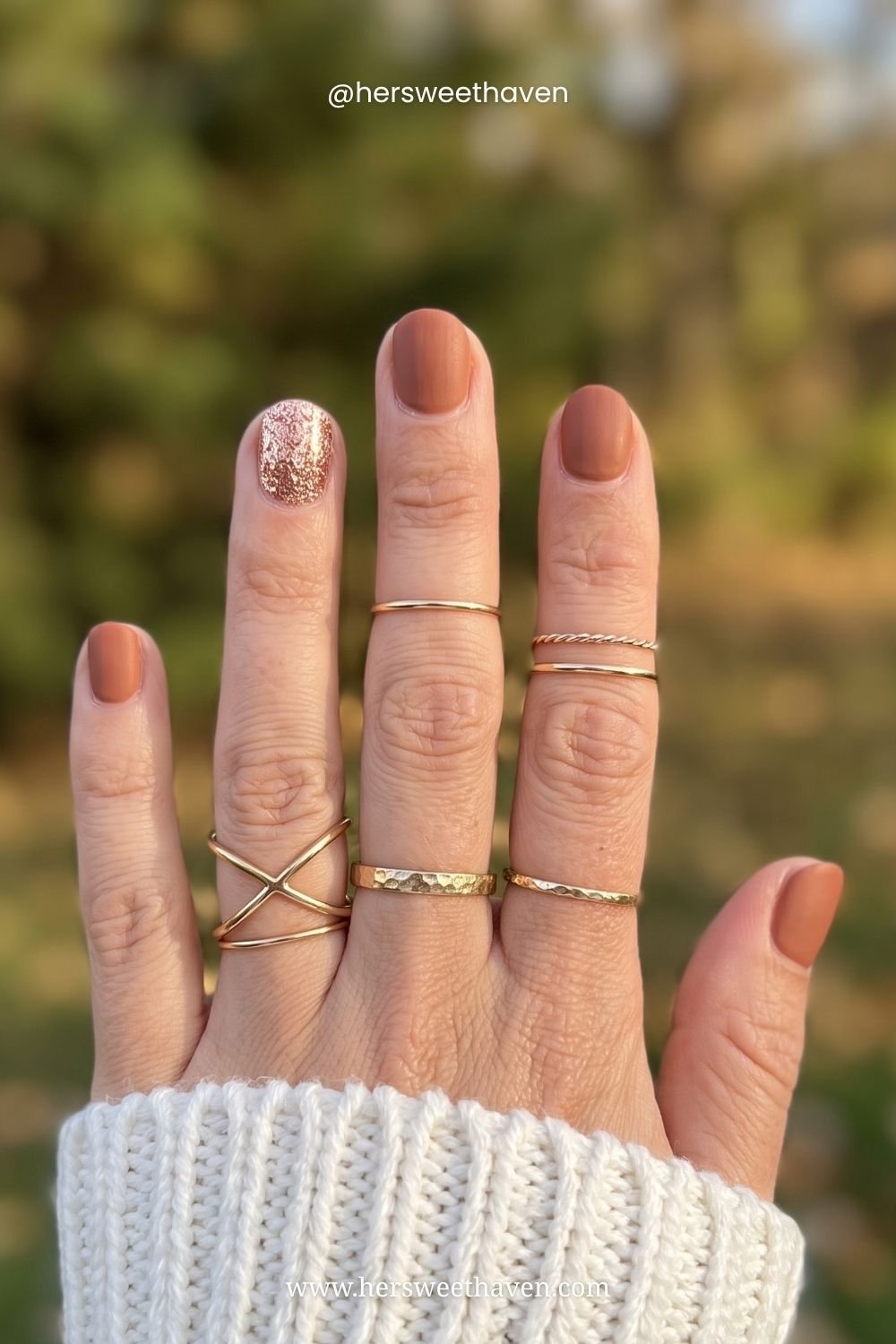
Terracotta and rust are the shades nobody plans and everyone compliments. Matte rust on short nails with one rose-gold glitter accent is my October errand manicure: warm, low-stakes, and it hides chips better than any dark shade. Real talk: short matte nails are also the most practical choice of this entire post, and practical deserves a rule of its own.
Rust also flatters every skin tone in a way people don’t expect. It pulls warmth to the hands the same way a rust sweater pulls warmth to the face, and it photographs beautifully against falling-leaves backgrounds, which October will hand you daily.
Rule 5: One Effect Accent, Maximum
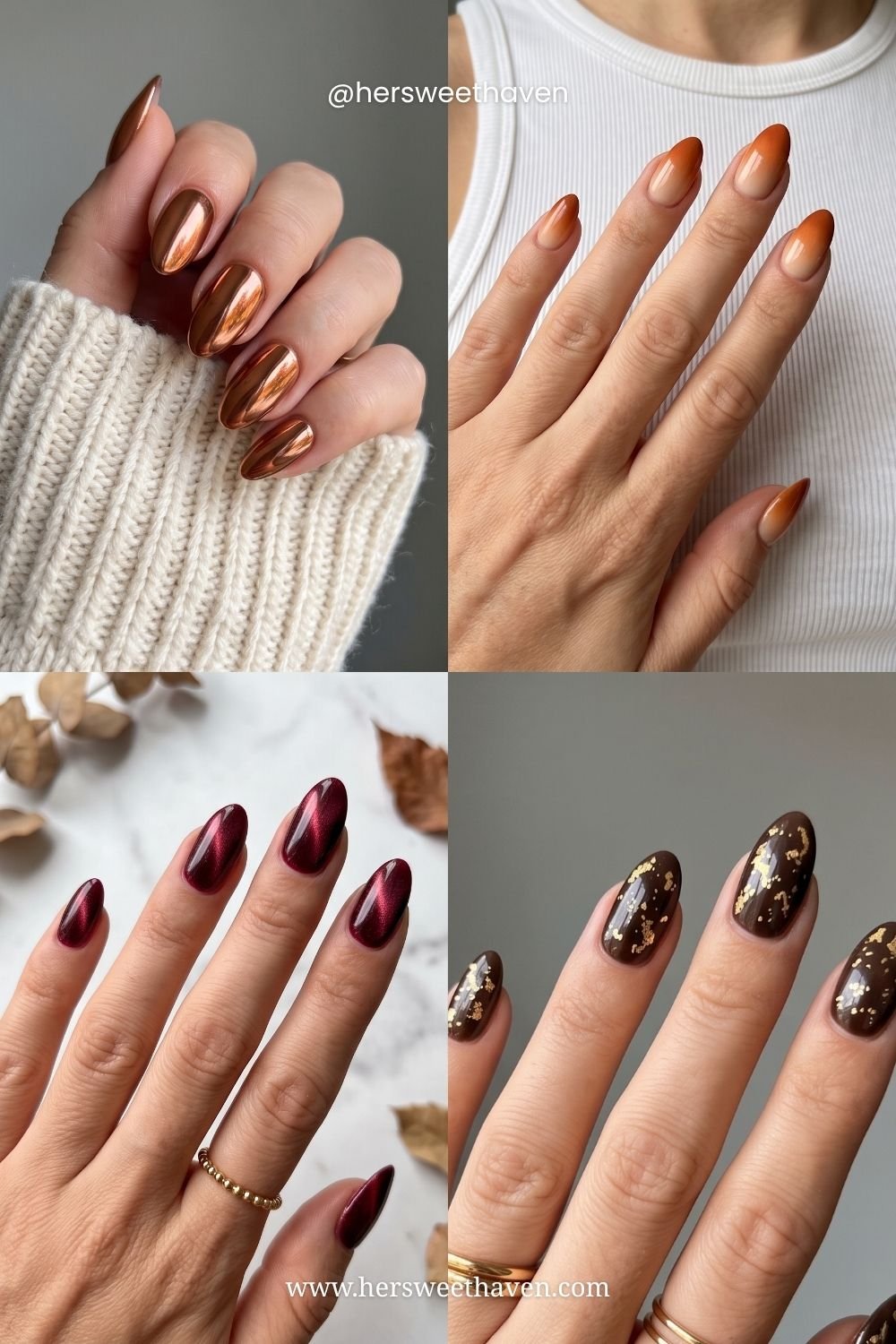
Copper chrome, burnt-orange ombre, wine cat-eye, chocolate with gold flakes: the effect finishes are spectacular, and the rule is pick ONE per set. An effect on every nail fights itself. An effect on an accent nail (or as the whole set in a single finish, like that copper chrome) looks intentional.
The cat-eye deserves a special mention because it’s burgundy’s coolest upgrade: same color family, magnetic depth, zero basic. I went deep on the finish in my cat eye nails post if you want the full science. And for the ombre route, this fall ombré looks guide has a couple dozen gradient takes worth screenshotting.
When to Break the Rules
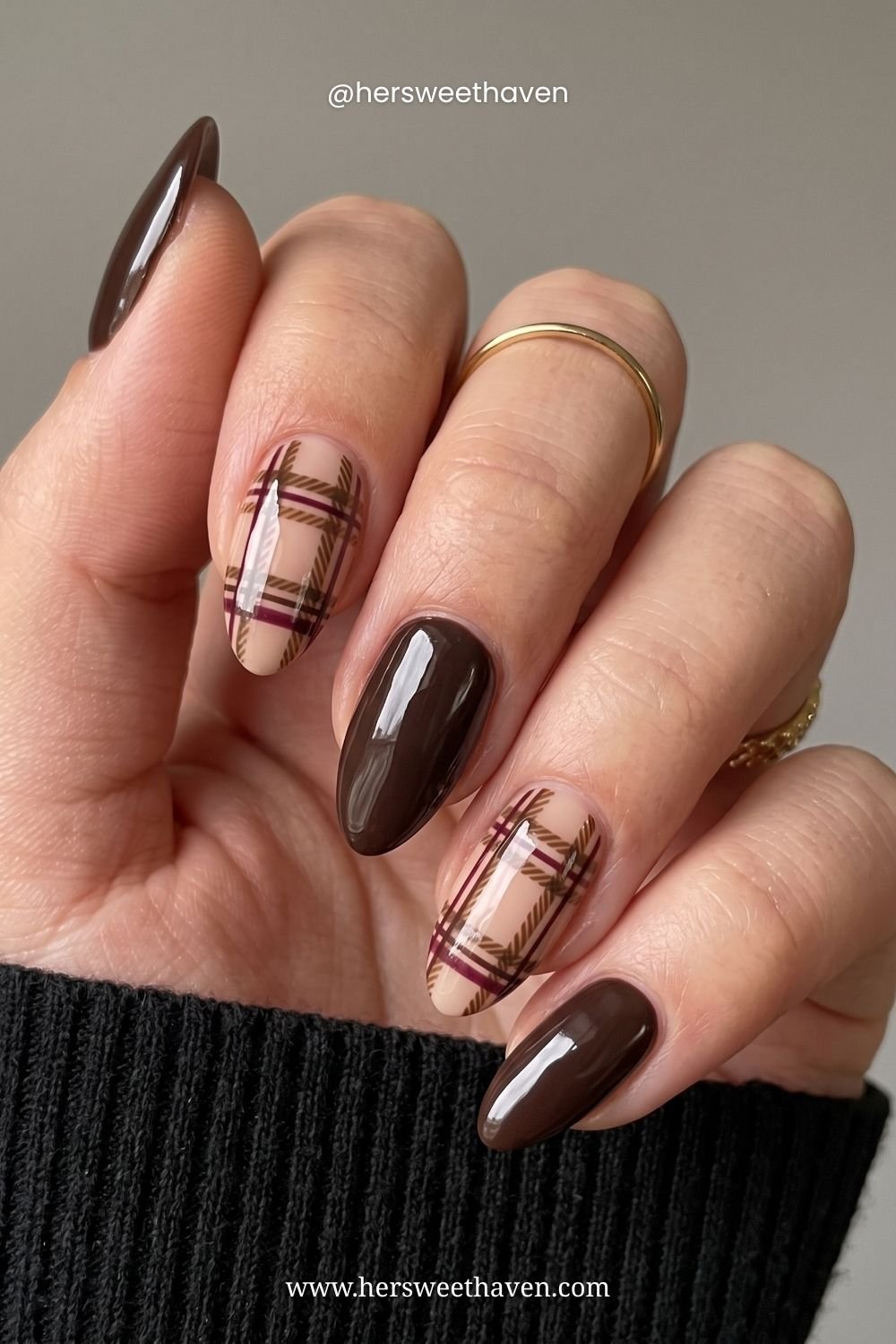
Some sets ignore the whole system and win anyway. Brown plaid nails break the one-effect rule with hand-drawn lines on two accent nails, and they’re my favorite thing in this entire post. Rules are a floor, not a ceiling.
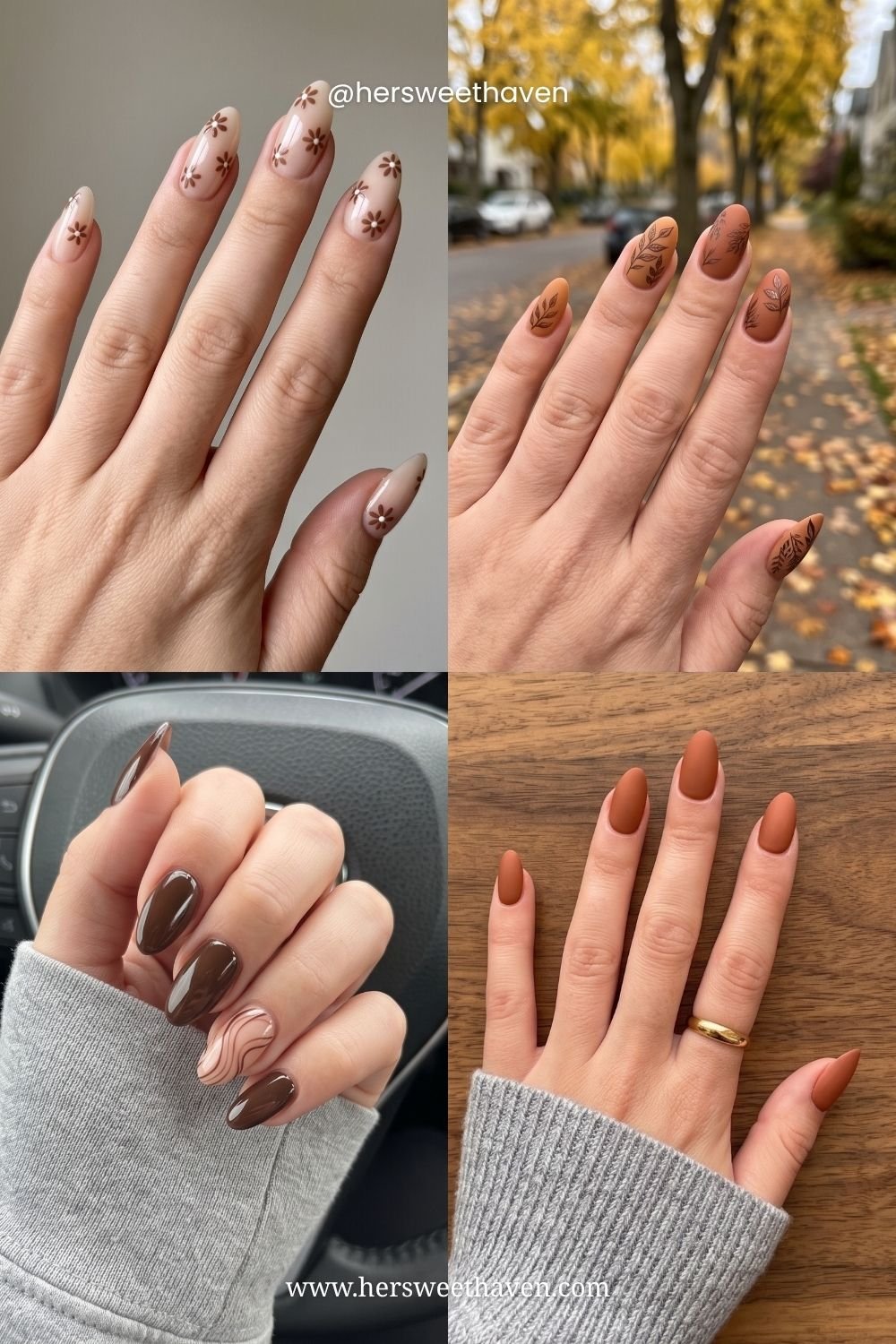
Same for retro daisies, leaf line-art, swirls, and full matte terracotta. If a set makes you happy, that’s the rule that outranks the others. (We’ve all worn a “wrong” manicure we loved. No regrets.)
Notice they all still live in the fall color family, though. Break the styling rules freely.. the palette rules are the ones quietly holding everything together.
Your Fall Nail Color Questions
The three questions I get every September, answered honestly.
Which Fall Nail Color Is the Most Low-Maintenance?
Chocolate brown, and it’s not close. Dark enough to hide tip wear, neutral enough to survive three weeks of outfits, and grow-out is gentler than burgundy’s harsh line. If you book one salon set for the whole season, make it chocolate.
Runner-up: the matte rust, purely because chips in matte finishes blend in instead of glinting at you. Between those two, you’re covered from September through Thanksgiving without a single emergency repaint.
Can You DIY the Fancy Finishes?
Some, yes. Jellies, mattes, and glitter accents are regular-polish friendly, and even tortoiseshell works without a lamp: this no-gel tortoiseshell tutorial uses layered sheer polish and patience. Chrome and cat-eye genuinely need salon products, so save those for appointments. (Not as scary of a split as it sounds, I promise: the DIY half of this post covers eight of the ten looks.)
How Many Polishes Do You Need for the Season?
Four: a chocolate, a rust, a burgundy, and a sheer nude for bases and accents. That tiny lineup remixes into every set above except the salon effects. Add a matte topcoat as the fifth “shade” and you’ve doubled your options for six dollars.
You’ve Got This (and a Better Palette Now)
Quick recap, because you now know more about fall nail colors than most of your feed: chocolate is the neutral, texture counts as color, burgundy earns its spot on purpose, rust is the sleeper hit, and one effect accent is plenty. Five rules, ten sets, endless remixes.
Don’t overthink the start. Pick one shade this weekend (chocolate, if you want my honest vote), paint it in gloss or matte, and see how it feels against your sweaters. That’s the whole entry fee. And when October’s second half rolls around and you’re ready to add a little creep to the cozy, my Halloween nails with just enough spook are the natural next chapter. Your fall hands are going to be so well dressed.

Leave a Reply