

Last September my front entry was a bare door, a doormat that had seen things, and one dead planter I kept meaning to deal with. Six weeks later it was the thing my neighbor stopped to compliment on her walk.
The gap between those two states cost about forty dollars and one Saturday afternoon. That’s the honest version nobody puts in the caption.
Here’s what I learned getting there. The door is the highest-impact square footage in your whole house and most of us leave it bare until December. And the porches you screenshot aren’t working because of pumpkins, they’re working because of layers and warm light.
So this is both halves, in the order I’d actually do them. First the wreath, because it’s one hook and ten minutes and it changes everything. Then the full porch: the layer-and-light formula, the pumpkin debate settled, and how to make it last to Thanksgiving.
Step One: Start at the Door
Picture your front door right now. Bare, probably a little weathered, maybe still holding onto a summer something you forgot about.
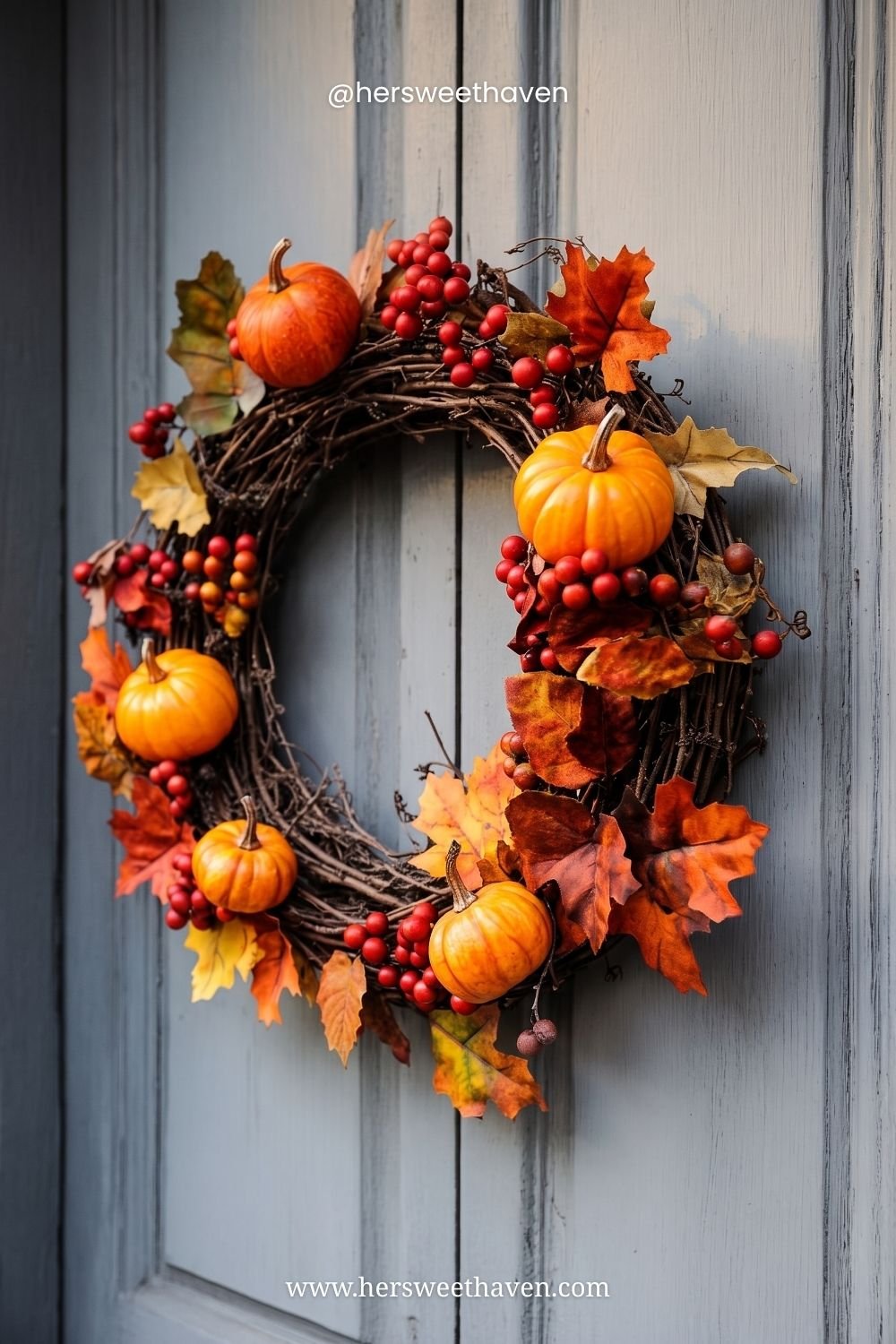
Here’s the after: a grapevine wreath dotted with mini pumpkins, red berries, and autumn leaves. Same door, completely different energy. A wreath does the work of an entire display in one piece.
I resisted these for years, thinking they were too grandma-coded for me. Then I hung one and my entryway finally looked intentional. Lesson learned, ego intact.
A wreath frames your door the way jewelry frames a face. It draws the eye, adds color at eye level, and signals welcome before anyone knocks. It also fixes the awkward in-between: if your paint has seen better days, a wreath pulls attention to the pretty part and quietly hides the rest.
Get the Size Right Before You Get the Style Right
This is the part that trips people up, and it’s the one thing that makes a wreath look bought-for-this-door instead of leftover from somewhere else.
Aim for a wreath roughly half the width of your door. On a standard 36-inch door that’s an 18 to 22 inch wreath, which is bigger than most people instinctively reach for. Too-small wreaths are the single most common mistake, and they read as an afterthought no matter how pretty they are.
Hang it a little higher than feels natural too, roughly at the upper third of the door rather than dead center. Eye level from the sidewalk sits higher than eye level from your doorstep, and that’s the view that matters.
One more thing: check your door swing before you commit to a chunky wreath. Anything more than about four inches deep can catch on a storm door, and finding that out mid-hang is a bad afternoon.
The Muted Modern Wreath
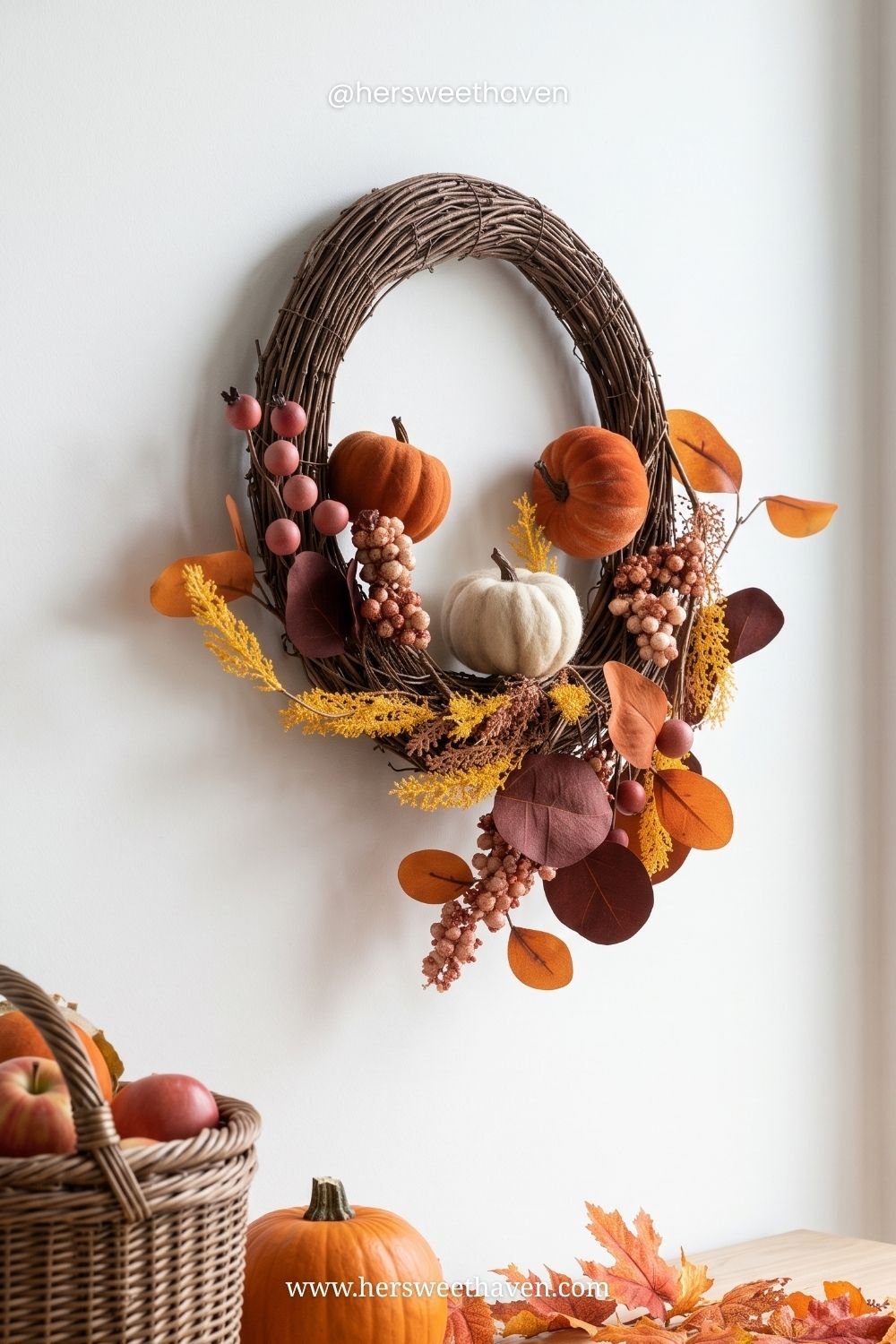
The biggest shift this season is toward soft palettes instead of loud orange. Dusty terracotta, cream, mustard, and burgundy on an asymmetrical grapevine base, with a single velvet white pumpkin as the anchor.
The off-center design is the trend marker. Everything clustered to one side feels current, while perfect symmetry now reads a little dated.
Muted is also secretly practical. Soft tones work against far more door colors than bright orange does, so this looks right whether your door is navy, sage, black, or white.
If you own exactly one wreath and want it to work everywhere, buy this one. It also transitions best: pull the pumpkin off in late November and the base still reads as winter neutral.
The Dried and Natural Wreath
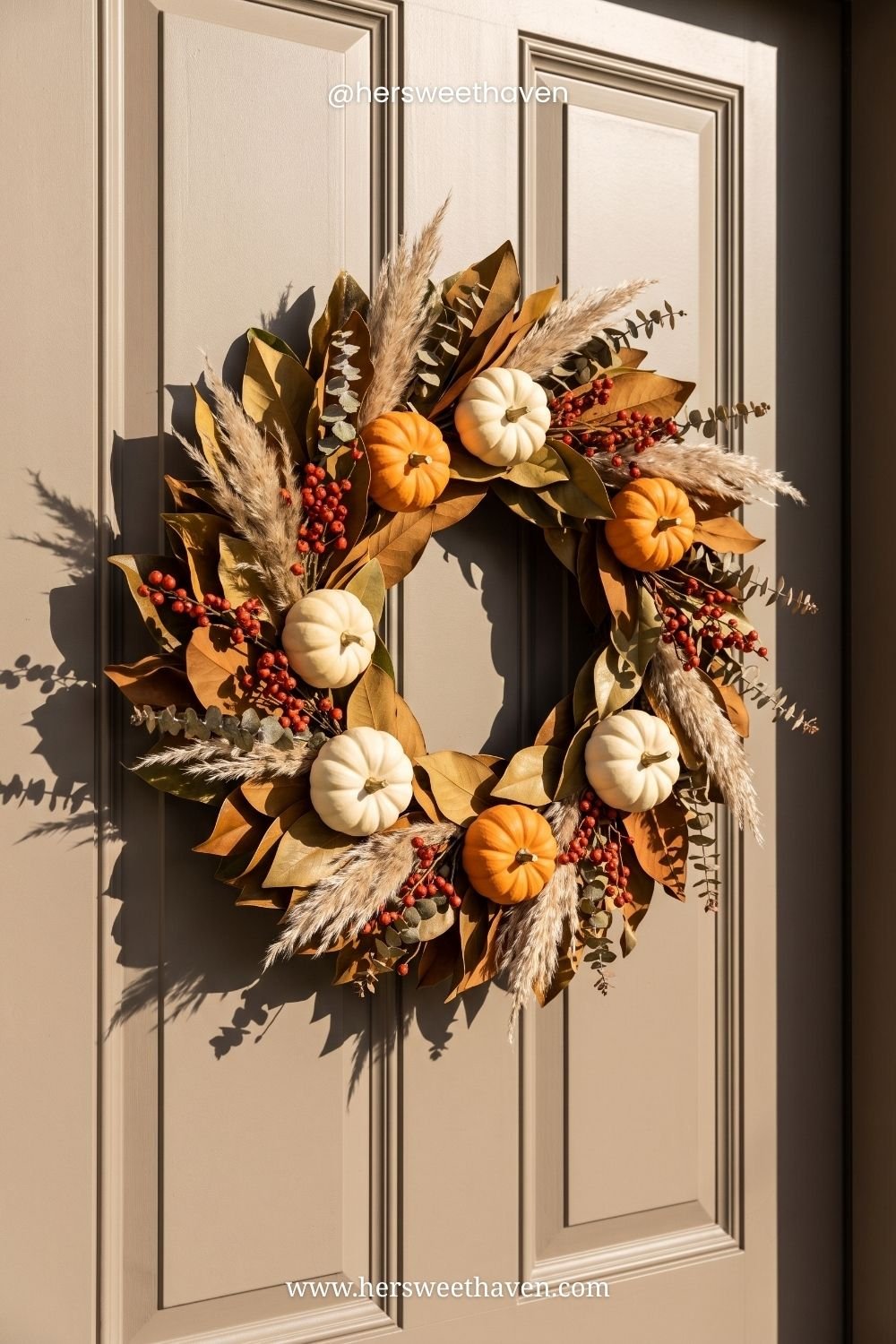
The one that photographs like a magazine cover: dried magnolia leaves, pampas grass, real mini pumpkins, rust-red berries. Warm, textural, slightly wild.
The best part is longevity. Dried naturals don’t wilt, so this holds all season and leans straight into Thanksgiving. This fall wreath ideas guide has dozens more in the same direction.
The Designer Mix
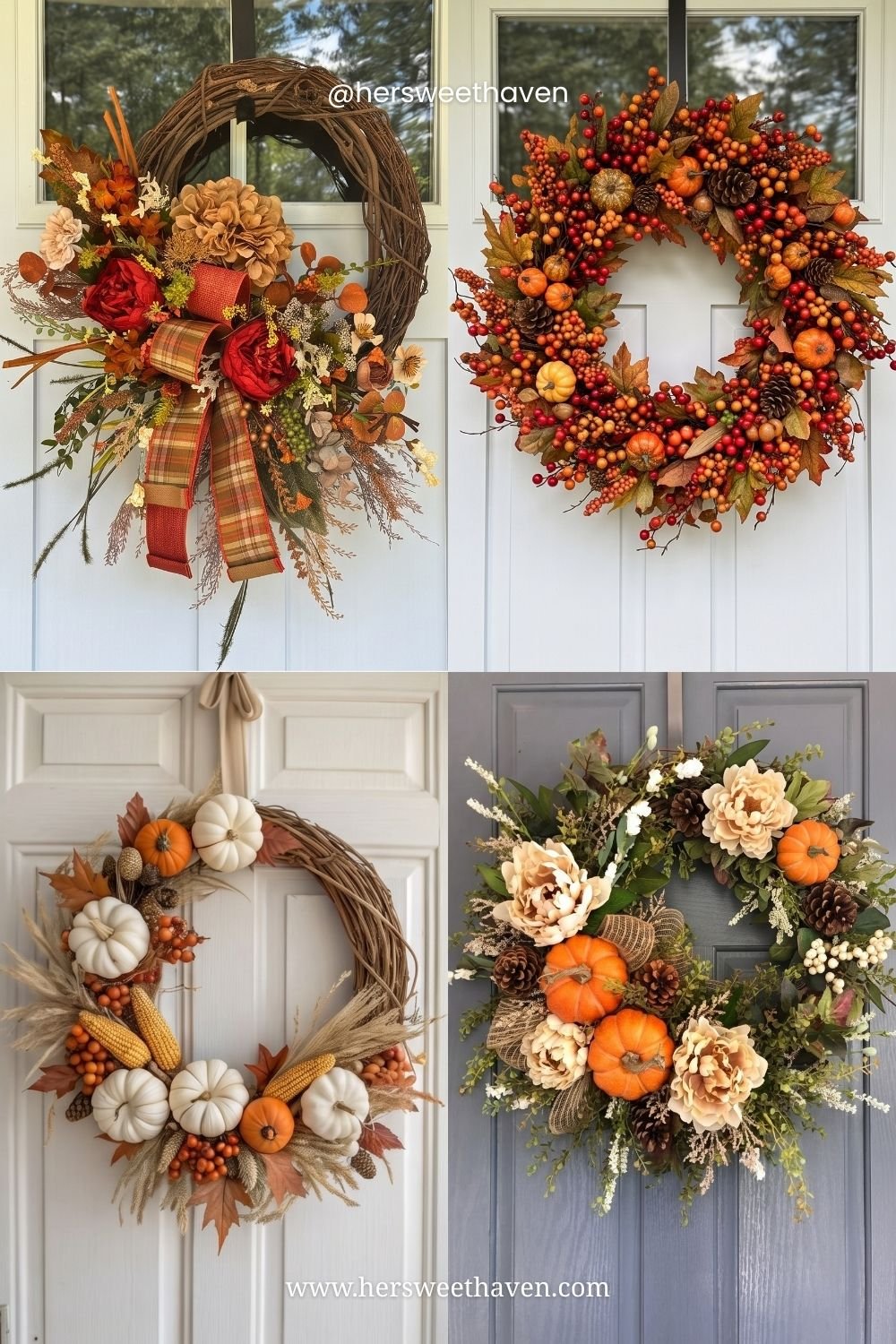
For maximalists, the layered “a florist made this” look is having a moment. Silk peonies and mums, plaid ribbon, berry clusters, eucalyptus, and pumpkins all piled onto one base. It’s a lot, in the best way.
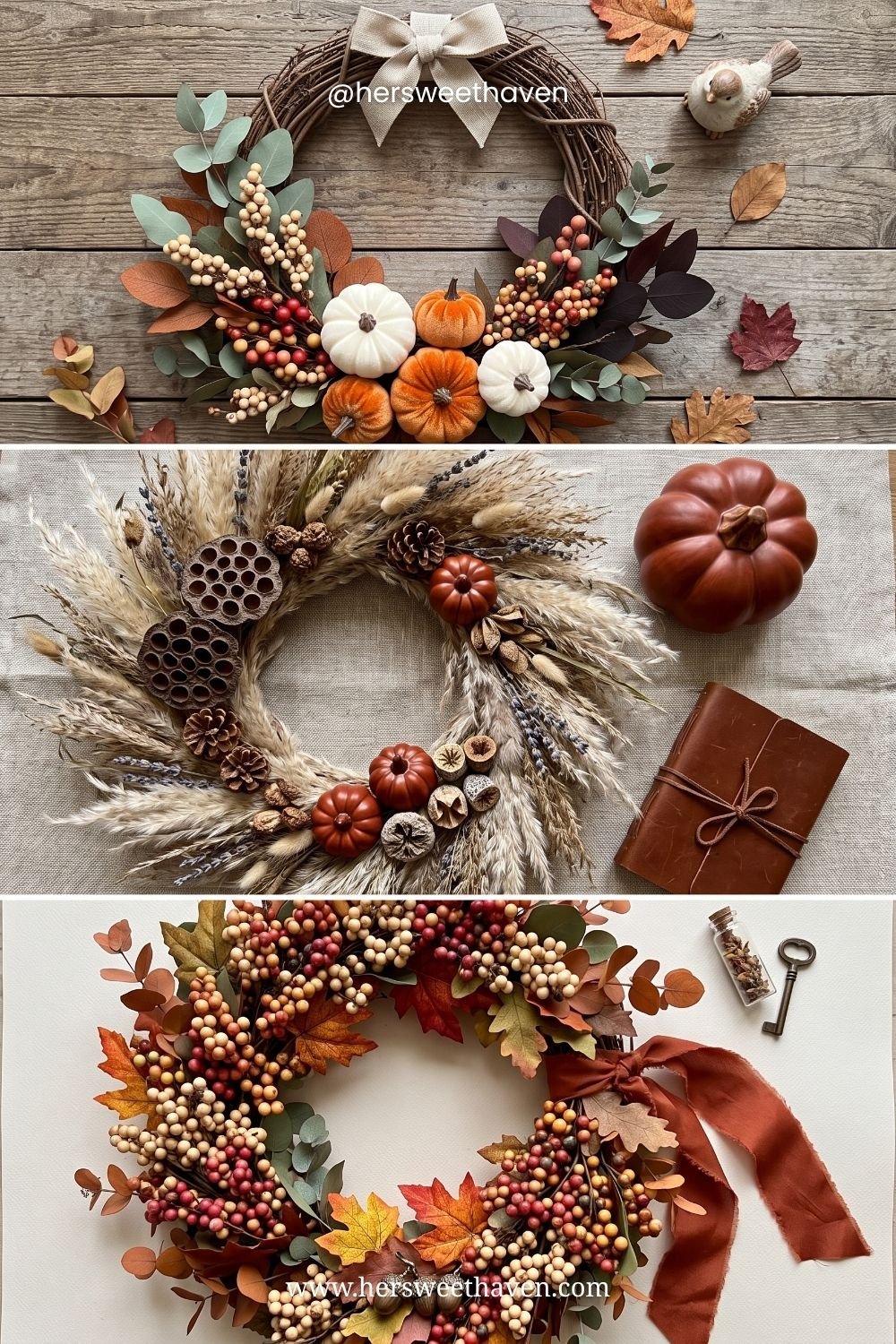
The moodier version swaps in dried lotus pods, lavender, wheat, and matte rust pumpkins for a harvest-table feel. Both prove the same point: texture variety is what separates a designer wreath from a craft-store one.
The DIY Route
The wreaths above cost a fortune at boutiques and are genuinely simple to make. If you can tie a knot, you can do this.
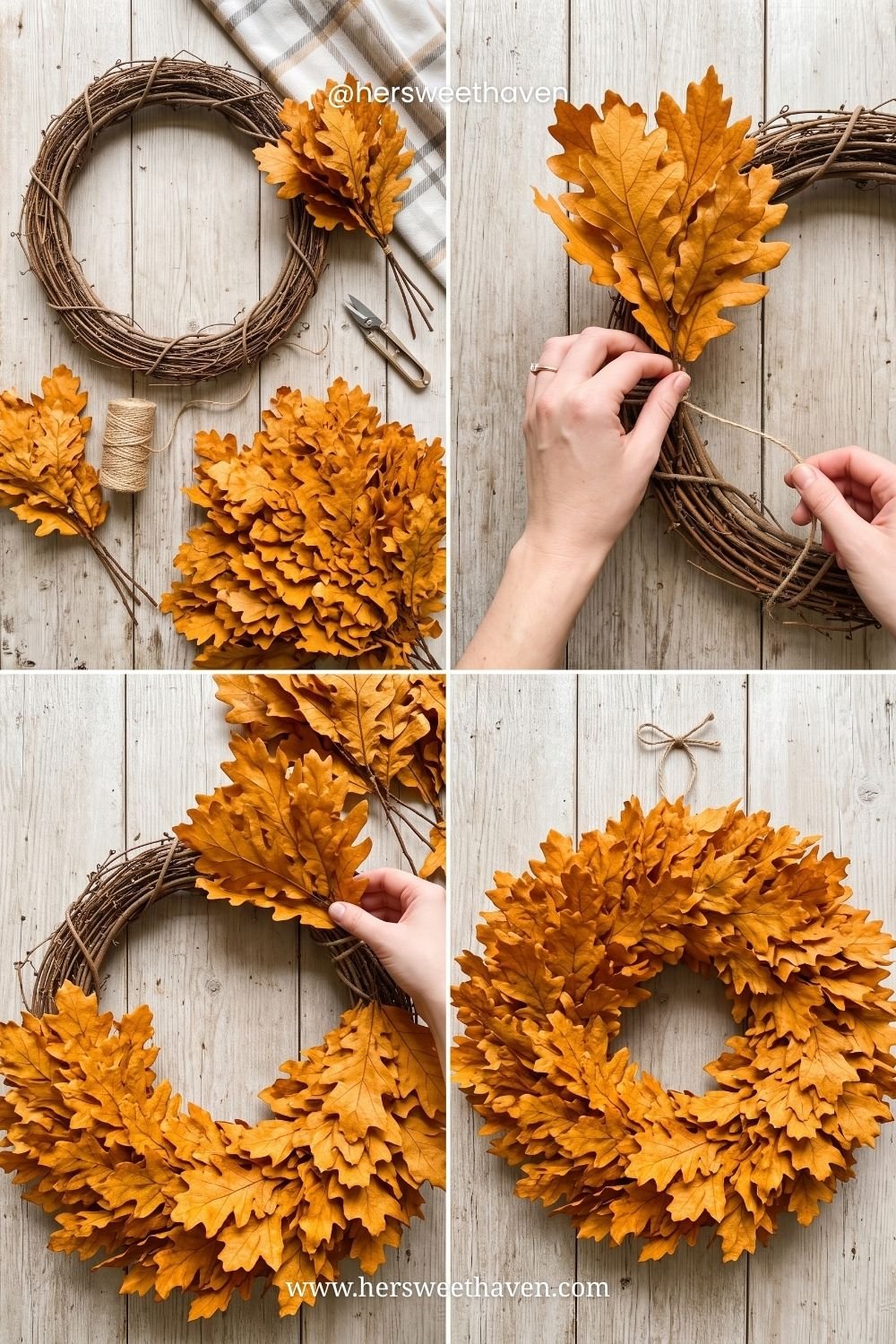
Start with the classic: a grapevine base and a bundle of preserved oak leaves. Wire small clusters and attach them around the form, overlapping as you go, until it’s full. This DIY oak leaf wreath tutorial does the whole thing in about fifteen minutes. (With faux leaves it costs less than a fancy coffee.)
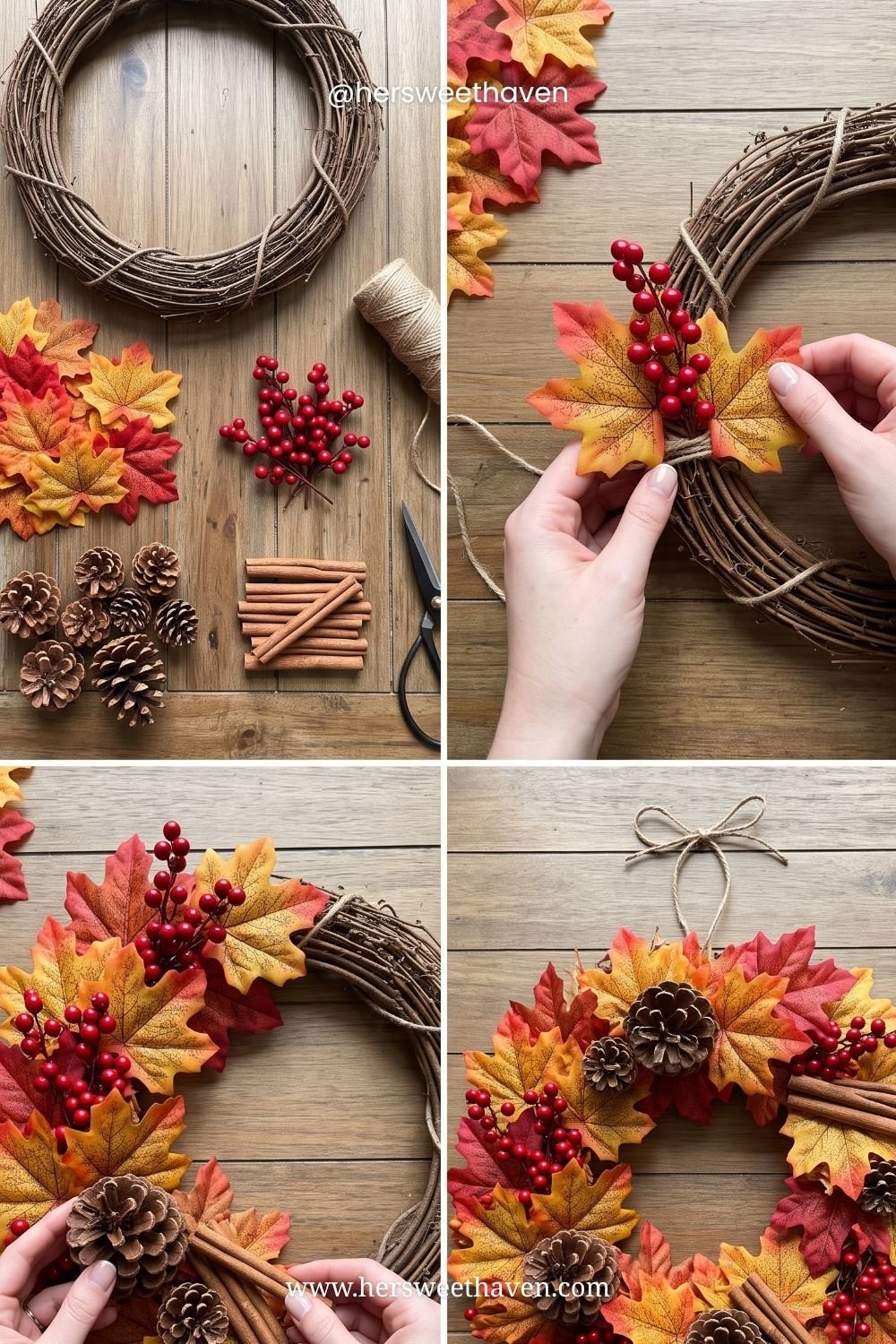
Want more color? Layer faux maple leaves, red berry sprigs, cinnamon sticks, and pinecones instead, working in one direction so it looks deliberate. This easy DIY fall wreath tutorial walks through the technique. The cinnamon sticks are the secret weapon: your porch smells like fall every time the door opens.
Three More, By Vibe and Budget
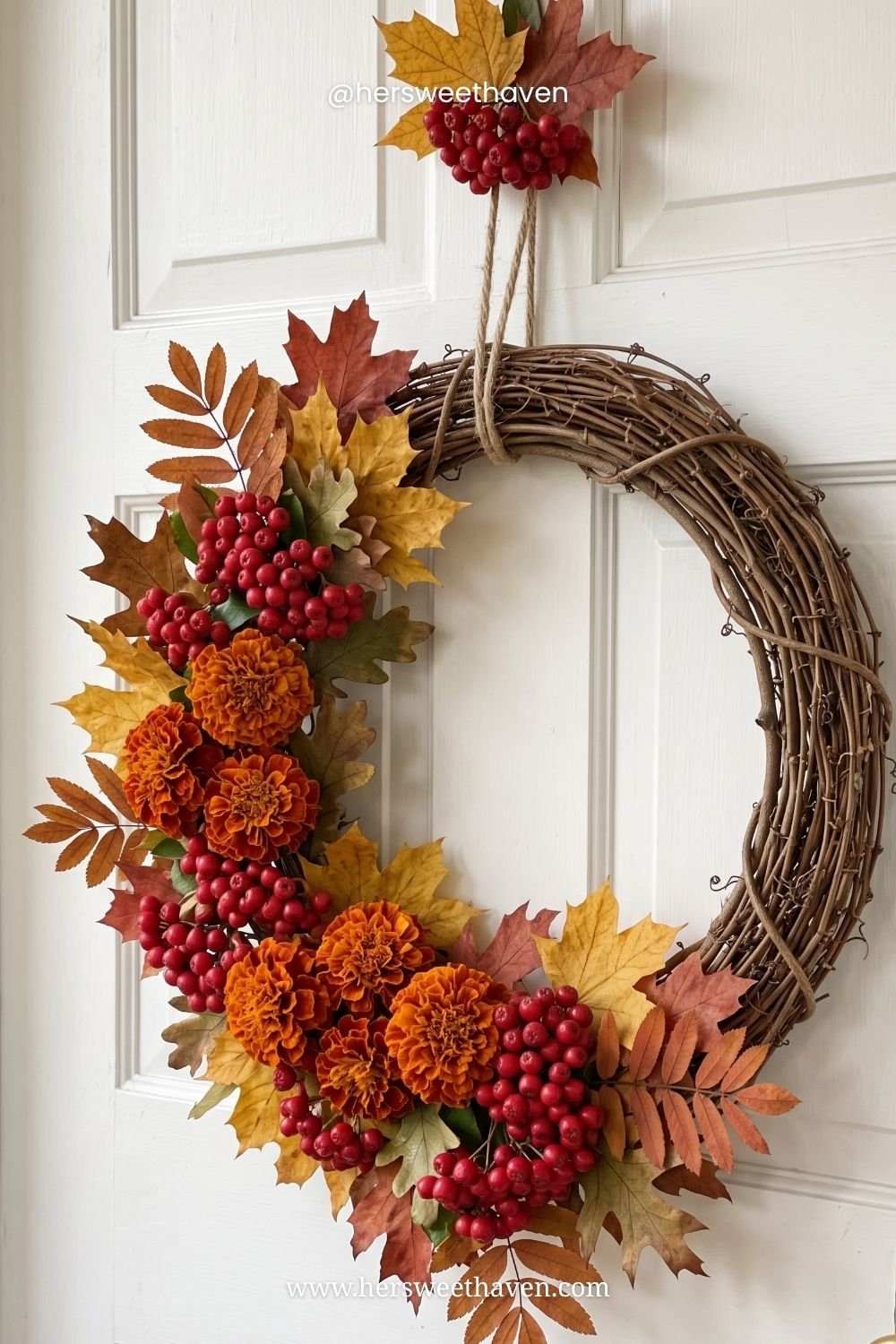
The cottage garden. Orange marigolds, red rowan berries, and mixed autumn leaves on a half-dressed base. Cheerful, a little old-fashioned in the sweetest way, and the budget pick since a few faux florals stretch a long way.
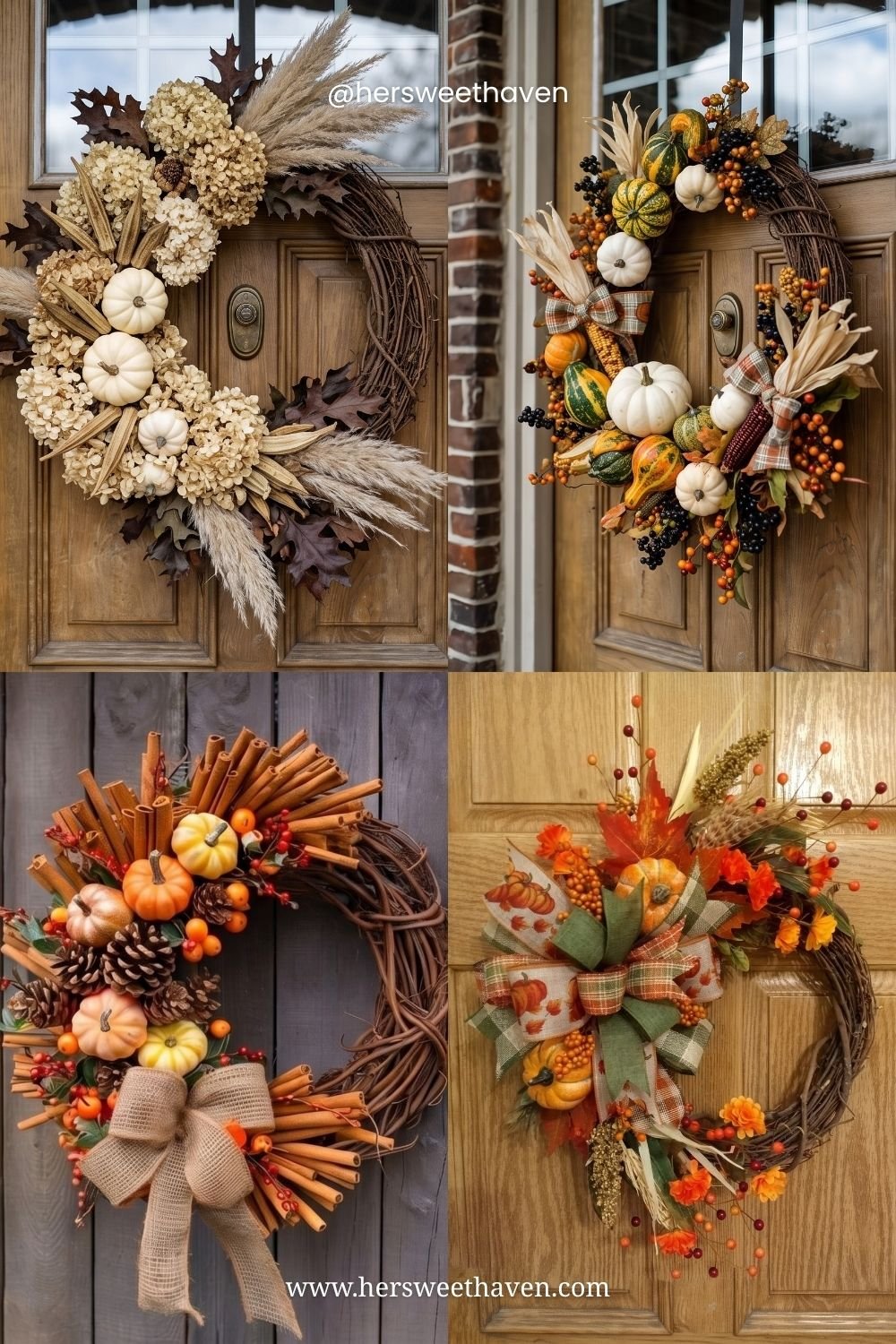
The go-big statement. Dried hydrangeas and corn husks, gourds and black berries, cinnamon bundles with burlap bows, pumpkin-print ribbon. These cost more or take more time, but they carry the whole entrance solo.
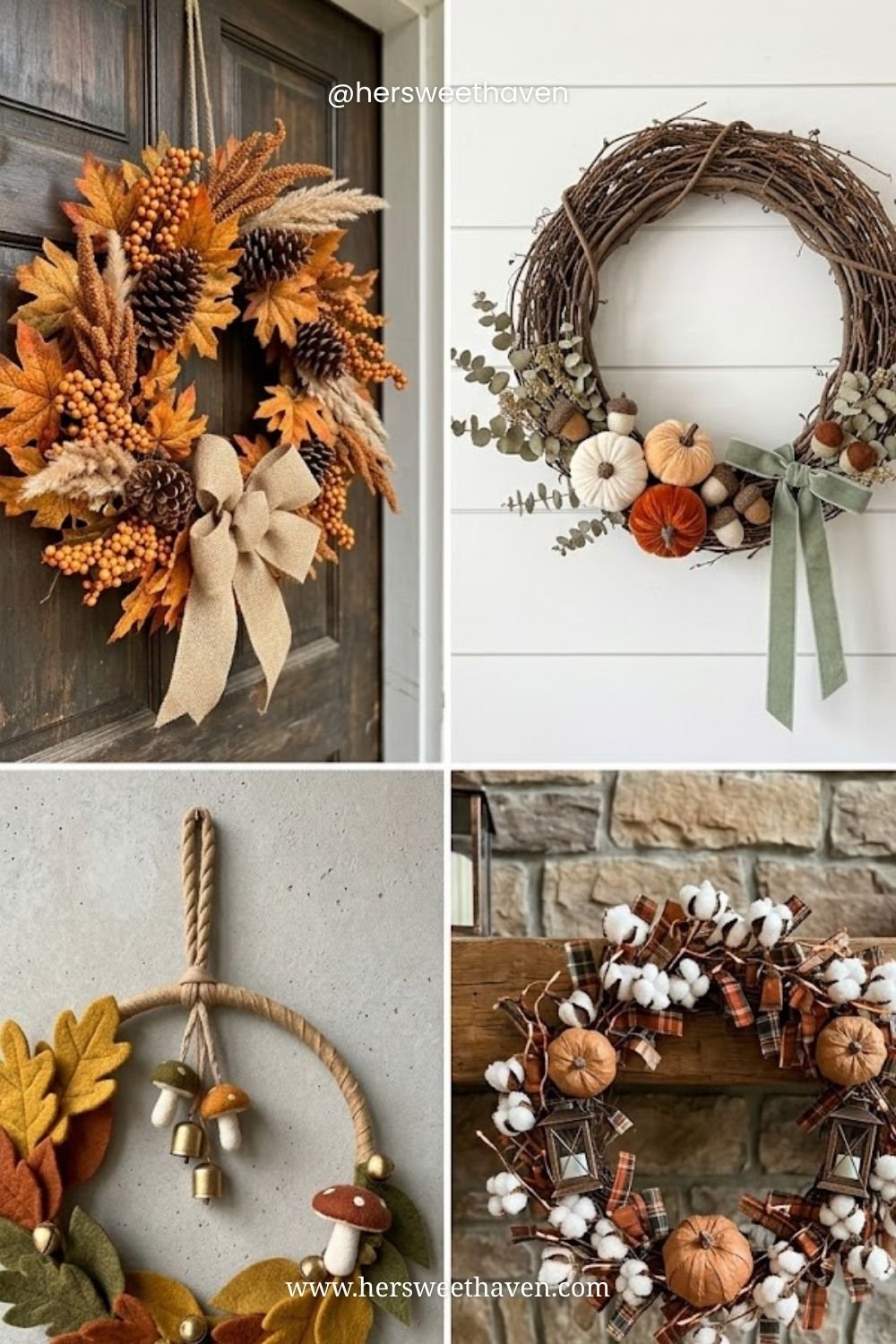
The textured neutral. Pinecones, eucalyptus, felt pumpkins, and a couple of little mushroom accents on a natural base. That whimsical mushroom touch is everywhere this year, and my mushroom decor ideas carry the theme indoors. Add a sage or rust ribbon and it feels soft and grown-up.
Step Two: Now the Rest of the Porch
Door handled. Now the harder question, and the one I got wrong for years.
What do the best fall porches have in common? It isn’t the pumpkins. For a long time my strategy was “buy more pumpkins,” and every October my steps looked like a pumpkin patch had a yard sale. Pretty, sure. Cluttered, expensive, and rotting by Halloween.
The actual formula is layers of texture plus warm light. Pumpkins are optional decoration on top.
Layers Are the Real Secret
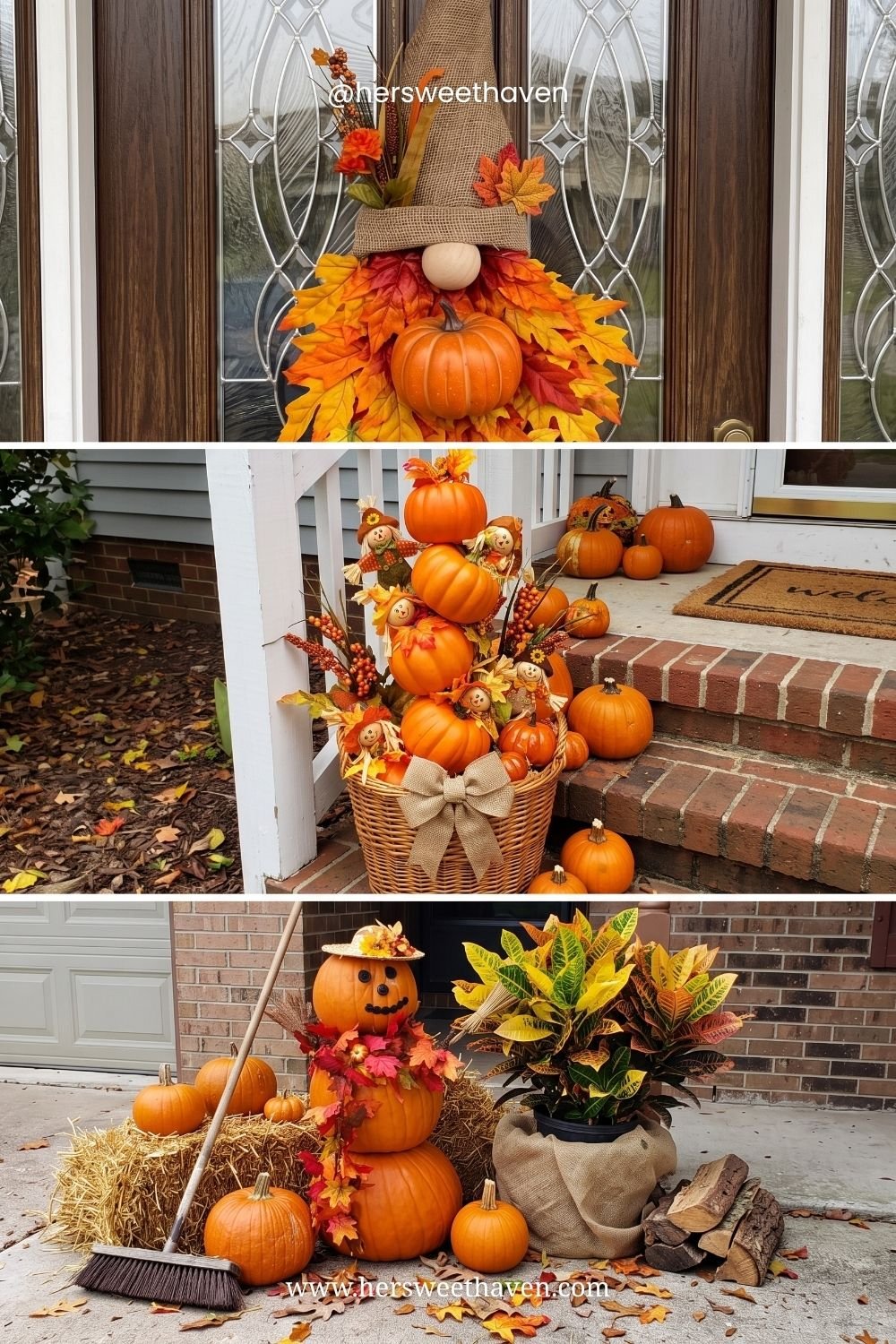
Look at a porch you love and count the layers: something tall, something mid-height, something on the ground, something soft. A leaf gnome by the door, a basket of stacked pumpkins, a little scarecrow-pumpkin character. It works because of the height variation, not the pumpkin count.
Flat displays read as boring. Layered ones read as styled. This quick fall porch guide leans on the same principle.
Warm Light Does the Rest
The second half is glow. String lights, a lantern with a flameless candle, or a lit sign turns a daytime-only display into a porch that looks cozy at 6pm when you actually come home.
One glowing element per porch, minimum. This is the step beginners always skip, and it’s the one that makes people slow down at dusk. (Your future self, pulling into a dark driveway, will love you for it.)
Pumpkin-Forward or Pumpkin-Free?
Both work, so this is about matching the look to your life.
Go pumpkin-forward if you have a big porch, love the classic palette, and enjoy the patch outing. The trick that separates styled from yard sale: group in odd numbers, vary the sizes, and stack. Three pumpkins of different heights beat six in a sad row. Add one non-pumpkin element for contrast, like a mum or a lantern, and the pile looks intentional.
The one mistake is overload. When every surface has a pumpkin, nothing stands out. Pick a few heroes and stop, even when the store has a great sale. (Especially then.)
Worth knowing on the practical side: uncarved pumpkins last six to eight weeks outside, carved ones maybe five days once the weather warms up mid-afternoon. If you want the classic look to survive to Thanksgiving, keep them whole and save the carving for the last week of October.
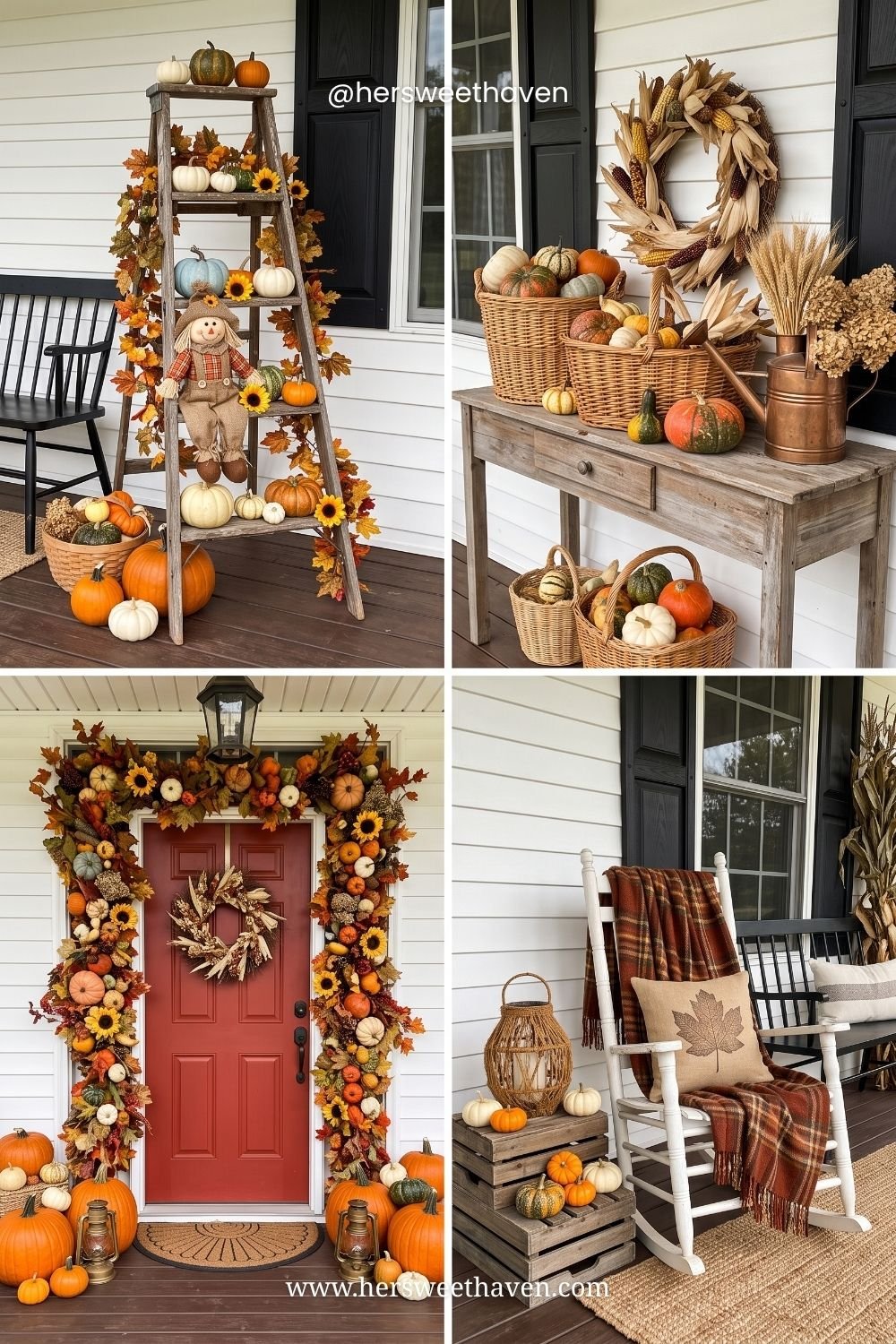
Go pumpkin-free if you want low maintenance and a display that lasts. Texture does the heavy lifting: a weathered ladder draped in leaf garland, baskets of gourds on a rustic console, a corn-husk wreath, a rocking chair with a plaid throw and a burlap leaf pillow. Not a carved pumpkin in the bunch, and it still reads deeply autumn. The 2026 porches are leaning exactly this way, as this simple porch styling guide shows.
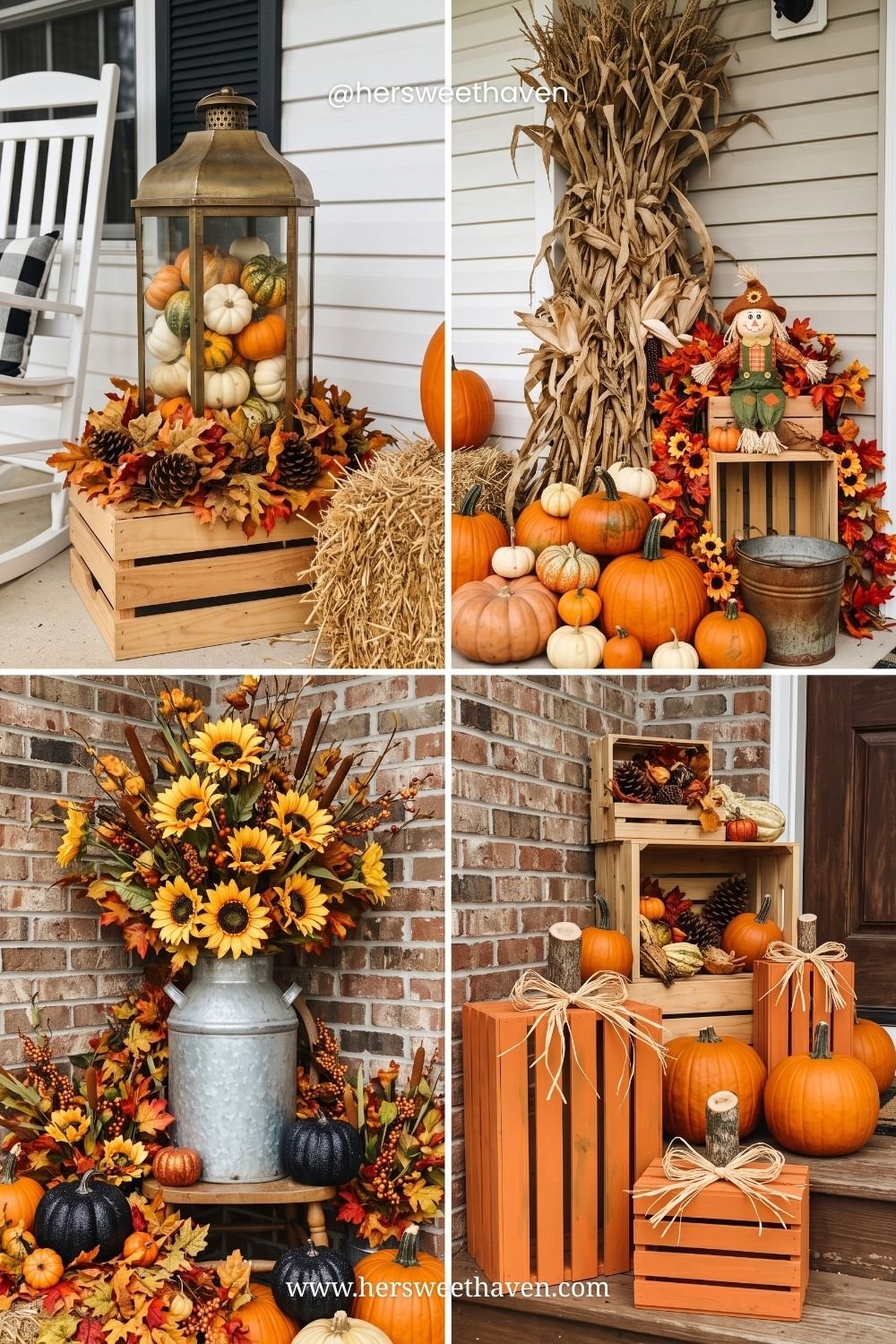
Reach for these instead: a brass lantern filled with fairy lights, a bundle of cornstalks in the corner, a galvanized milk can stuffed with sunflowers, crates for instant height. Mums, wheat, dried hydrangeas, and a potted croton bring living color a pumpkin never could.
These hold up for weeks longer than a carved pumpkin. (Been there, done that, never scrubbed pumpkin rot off my steps again.)
The Hybrid Formula I Actually Use
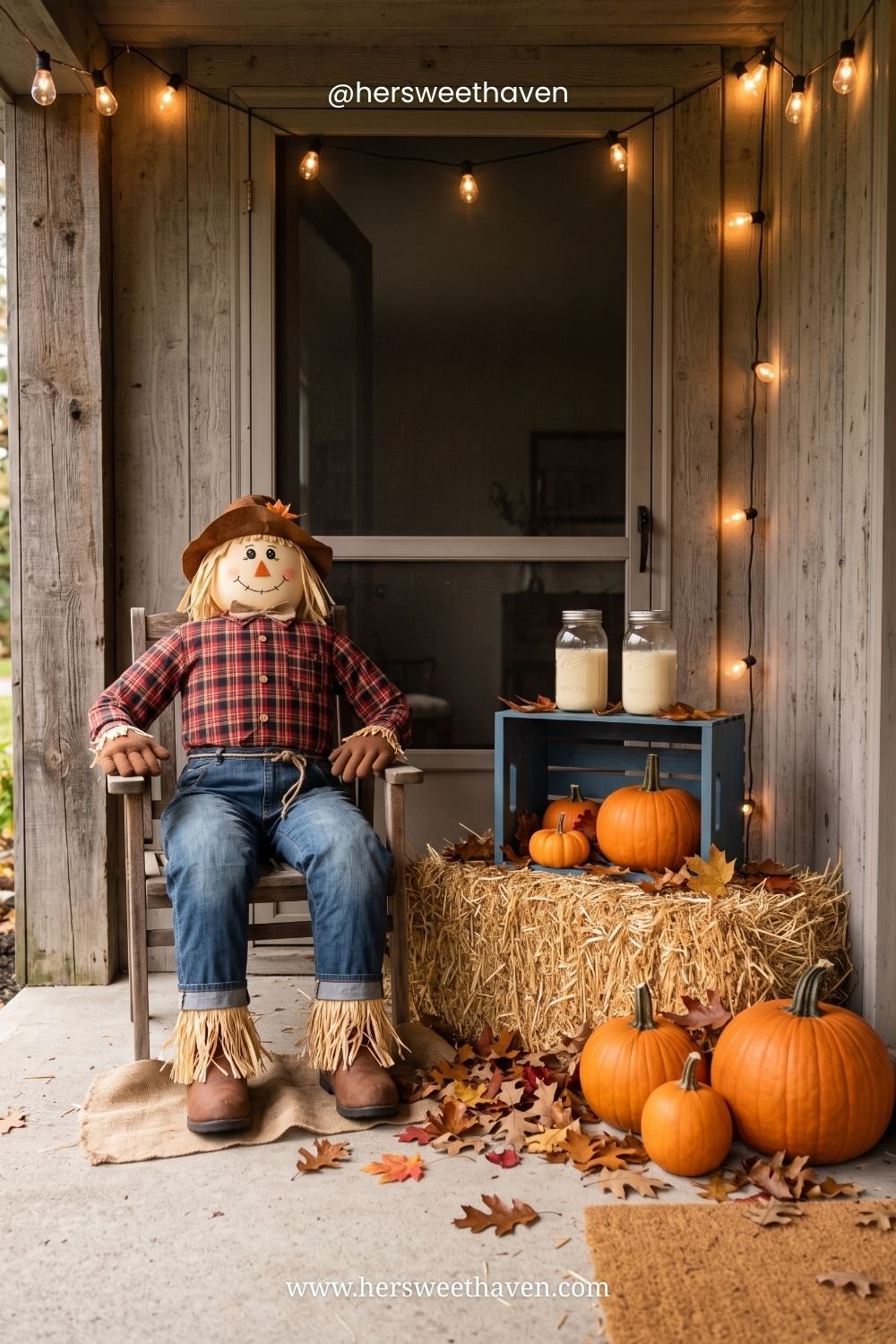
Most of us want both, so here’s the order that works: tall first, then mid, then ground, then soft. A scarecrow in a chair, mason jars on a blue crate, pumpkins and hay on the ground, string lights overhead.
See how the pumpkins are just one layer of five? That’s the whole point. Build from big to small and the porch composes itself, and this fall porch decorating guide is full of layered examples if you want to train your eye.
Then mix your textures: wood, woven baskets, burlap, metal, greenery. The more you layer, the less any single pumpkin has to carry. Texture is what makes a cheap porch look expensive.
Real numbers: a lantern, a plaid throw, and string lights run about $40 total and last for years. A truckload of fresh pumpkins costs the same every fall and ends up in the compost.
If You’re Starting From Nothing
Buy in this order, and stop whenever the porch looks right to you.
First: the wreath and a string of warm white lights. Those two alone take a bare entry to finished, and both come back out every year.
Second: one tall thing and one soft thing. A wooden crate, a galvanized bucket, an old ladder, plus a plaid throw or an outdoor pillow. Height and texture, the two ingredients the formula runs on.
Third: a lantern and a doormat. The lantern is your glow at ground level, the doormat is the detail people notice while they wait for you to answer the door.
Only then: pumpkins, mums, and seasonal filler, in whatever quantity makes you happy.
Shop your own house before any of this, by the way. Baskets, throws, lanterns, and crates you already own cover most of the list, and a bunch of grocery-store mums finishes it for under thirty dollars. (Spoiler: it’s not the expensive stuff that makes it work.)
Your Fall Porch and Wreath Questions
How Long Does a Fall Wreath Last Outside?
Depends on materials. Faux and dried wreaths last from September through Thanksgiving easily, especially under a covered porch. Real florals and fresh pumpkins fade in a few weeks.
If your door gets direct sun or rain, go faux and thank yourself later.
Should You Buy or DIY?
Buy if you want it done in five minutes and don’t mind $40 to $80 for a nice one. DIY if you want a custom look for $15 to $25 and enjoy a cozy craft afternoon. The finished difference is honestly small.
There’s a middle path too: buy a plain grapevine base and a couple of florals, then add to it a little each year. Your wreath grows with your supply bin and you never pay boutique prices all at once.
How Do You Hang One Without Damaging the Door?
An over-the-door hanger is the no-damage answer. No drilling, no marks, works on almost any door. For glass storm doors, a strong suction hook does the job.
Renters, this is your green light. Nothing here leaves a trace.
Can You DIY the Porch Decor Too?
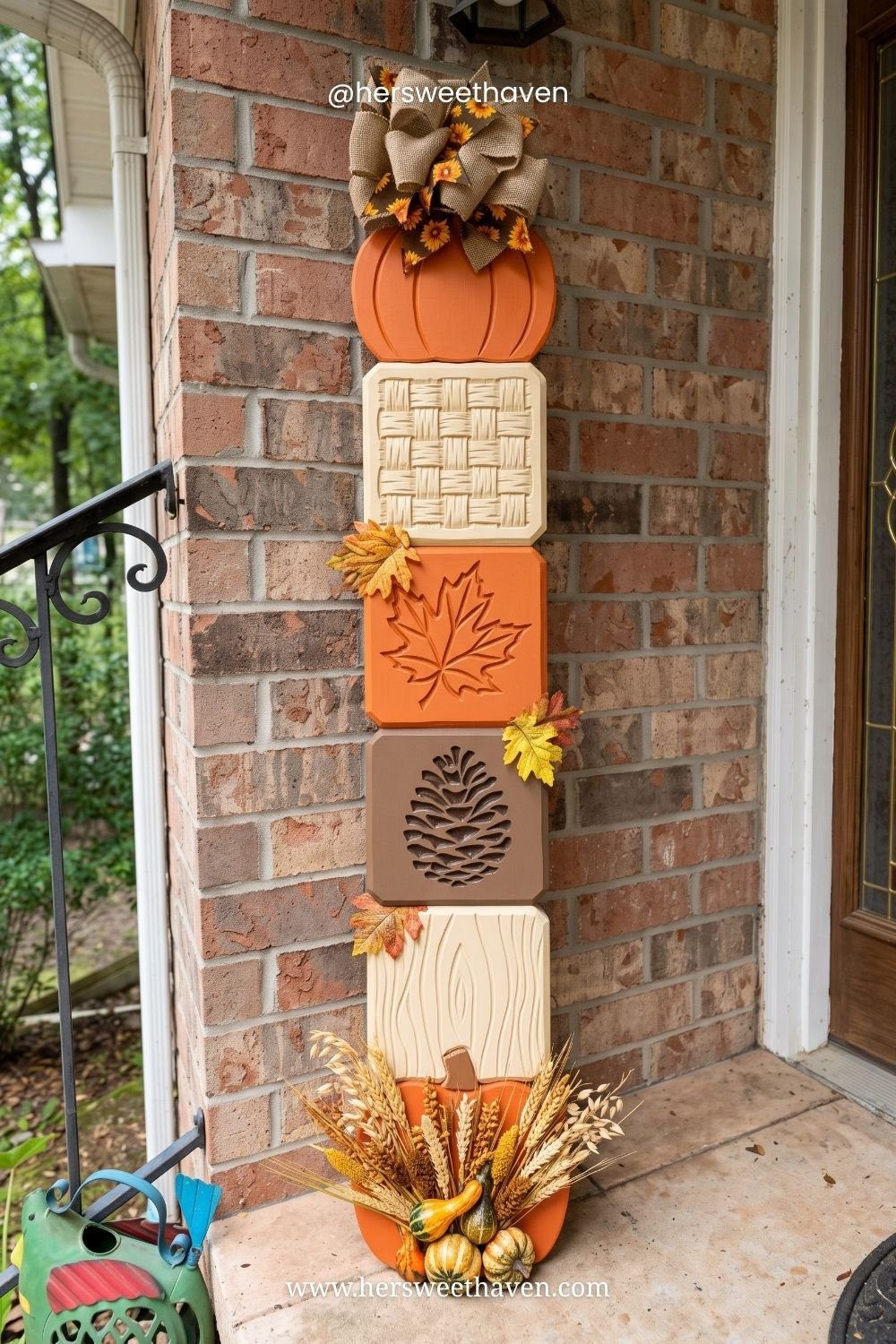
For sure, and it’s genuinely fun. This vertical wood-plank sign (painted pumpkin, basket-weave, maple leaf, pinecone, and wood grain, stacked and hung by the door) is a weekend project that costs pocket change and comes back every year.
Add a burlap bow and a few tucked-in gourds and it’s a whole focal point. Homemade pieces are the ones people ask about most, because they’re personal.
How Do You Keep It Looking Good All Season?
Lean on the pieces that don’t rot. Faux stems, dried wheat, lanterns, and textiles hold from September through Thanksgiving, so you’re not restyling every week. Swap a few real elements as they fade and the base display carries on.
That longevity is why your porch can roll straight from fall into the holidays. When Thanksgiving nears, my guide to setting your Thanksgiving table early picks up where the porch leaves off.
Go Hang One Thing This Weekend
Not the whole porch. One thing.
Pick the wreath style that made you pause while scrolling this post, order it or grab a grapevine base and a bundle of faux leaves, and get it on the door Saturday morning. That’s a ten-minute job and it’s the single biggest visual change available to you right now.
Everything else builds from there, one layer at a time, whenever you feel like it. Add the lantern next weekend. Drag a crate over the weekend after. Pumpkins whenever, or never.
Your front door has been waiting all year for its moment. Give it one, then come inside for one of my cozy fall recipes. You earned it.




Leave a Reply