
Which burgundy hair color should you pick? If you want a change people notice but don’t stare at, go for a brown-based shade like cherry cola or soft burgundy brown. If you want the full red wine moment, go deeper: wine, plum or black cherry. Everything else depends on your skin’s undertone and the color you’re starting from, and both are easier to read than they sound.
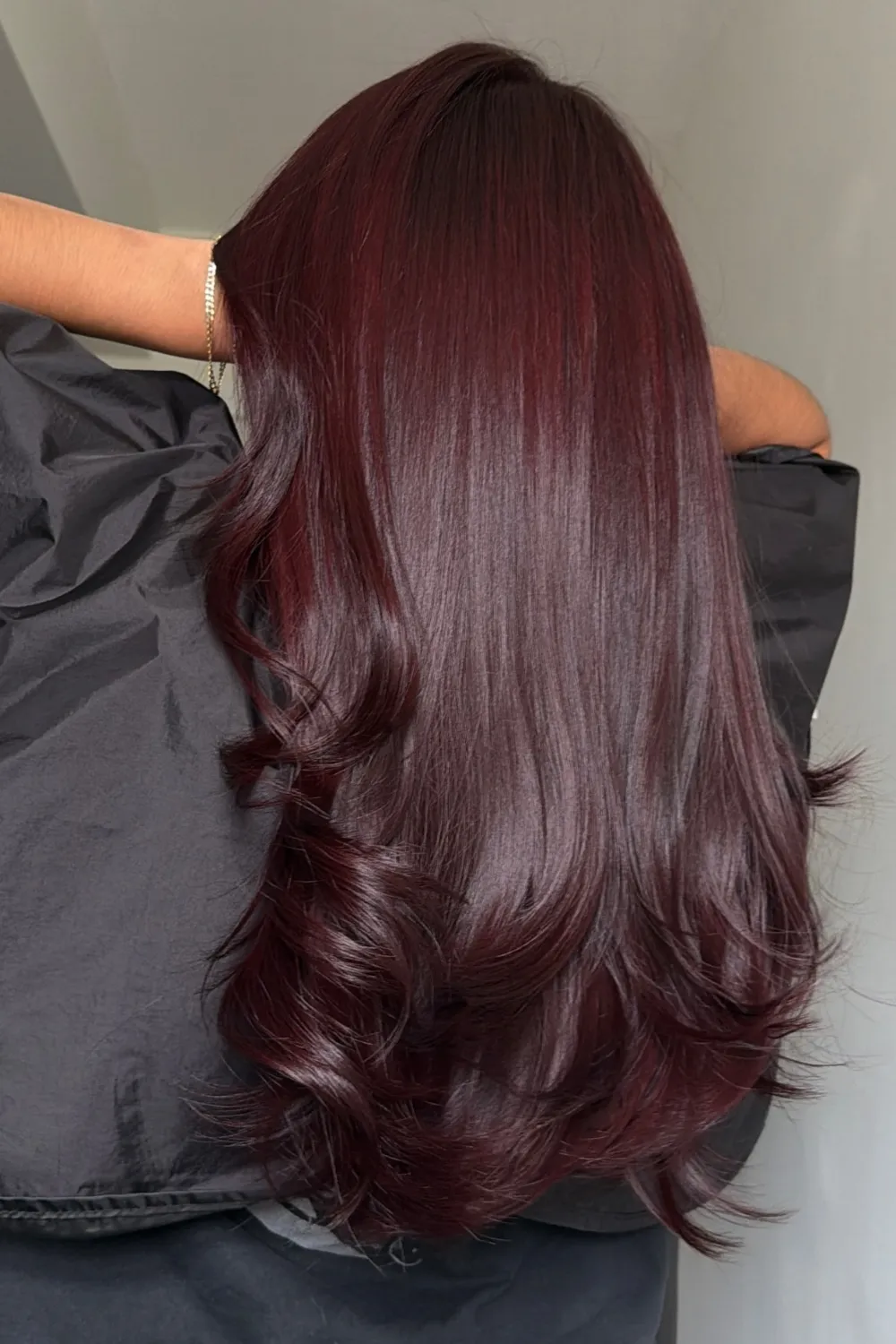
Fall is when burgundy hair makes the most sense. The shade repeats what’s already in your closet this time of year (wine knits, brown leather, rust and plum), and the low, warm light of October afternoons brings out the red in a way flat summer sun doesn’t. Burgundy hair is also a color that looks richer as the days get shorter, since indoor lighting deepens it rather than washing it out. If you’re planning your nails to match, my fall nail colors post has a few that sit right next to these shades.
Which burgundy hair color shades are there?
From the lightest and warmest to the darkest and coolest, these are the shades worth knowing by name. Using the names helps at the salon, too, because “red but not too red” means something different to every colorist.
Mahogany copper
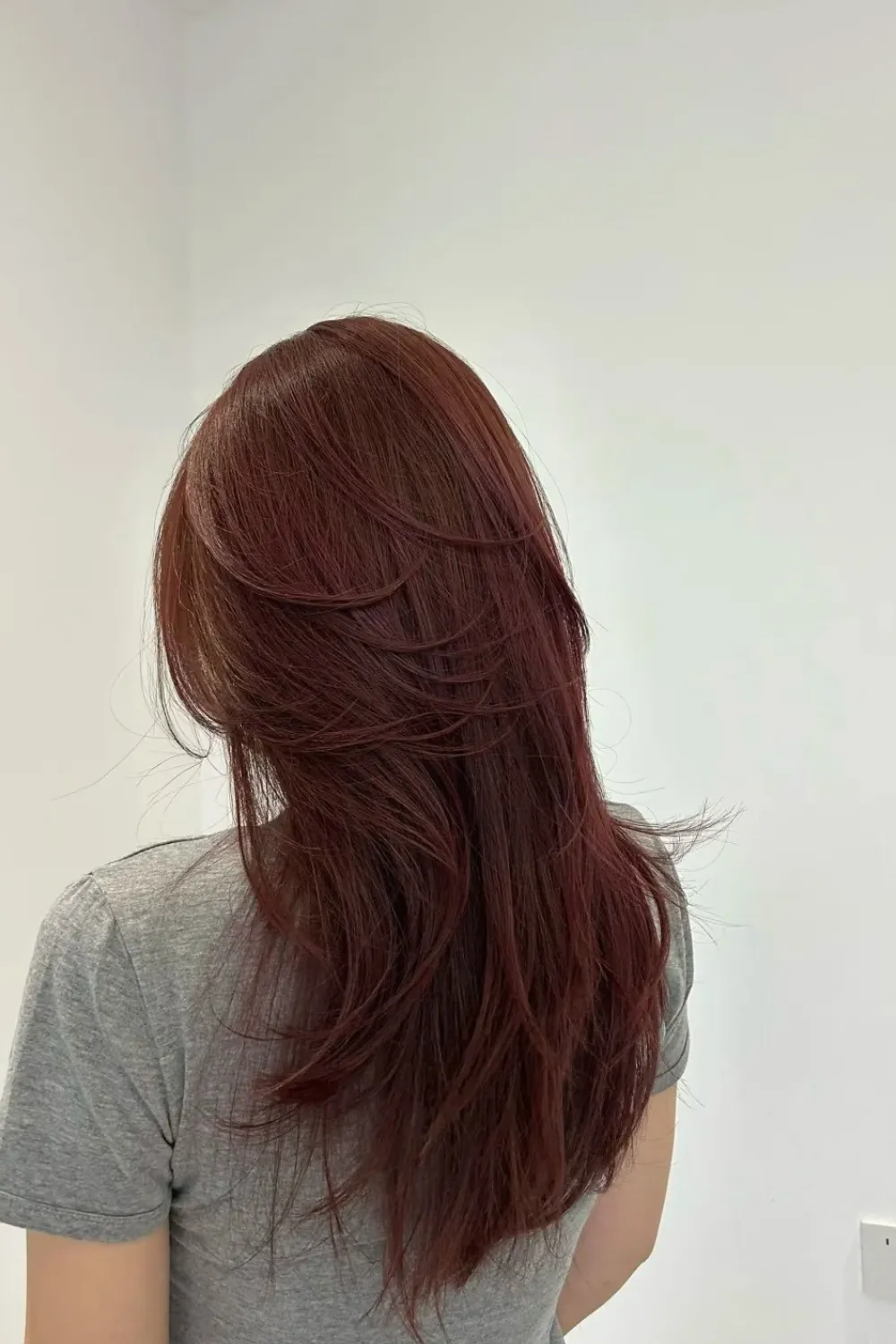
The lightest and warmest of the burgundy family: brown with a copper and red glow. It looks almost natural on medium brown hair and reads as red only in sunlight. A good first step if you’ve never had red before.
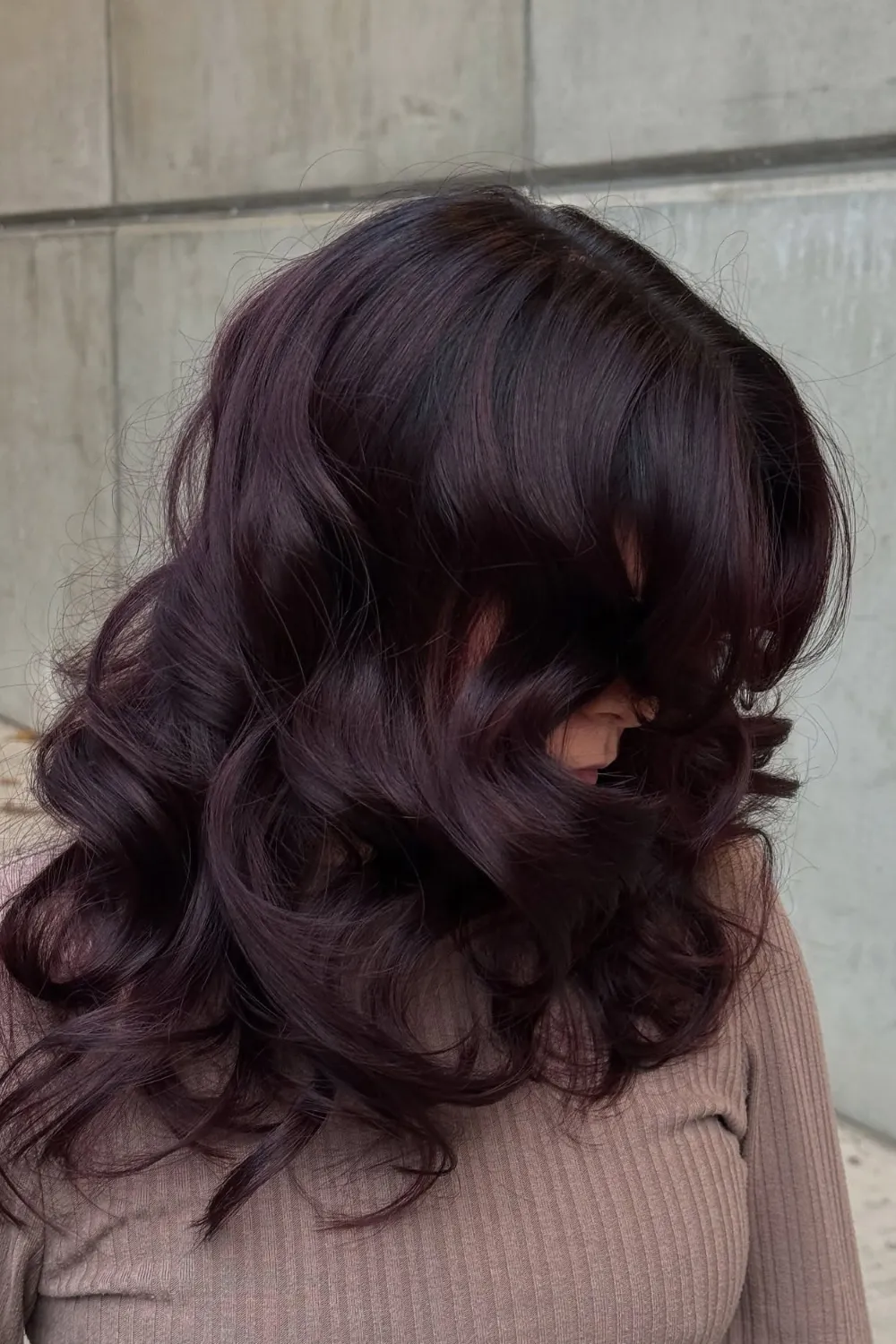
Cherry cola brown
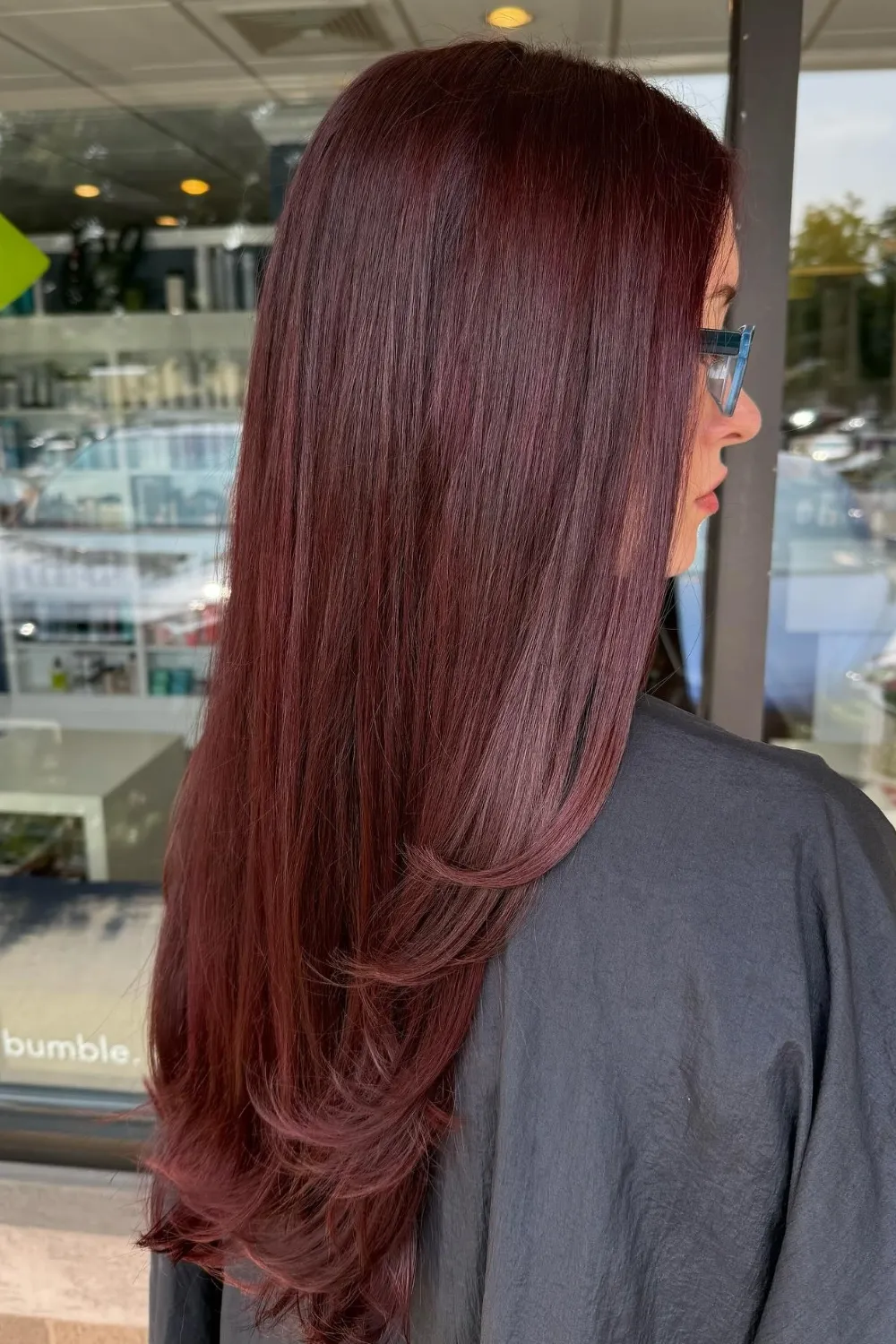
A dark brown base with a red-violet tint, like cola held up to the light. It works especially well as a balayage on dark hair, where the cherry tone sits in the lengths and the roots stay close to your natural color. This is the shade I’d point most brunettes to first.
Rosewood
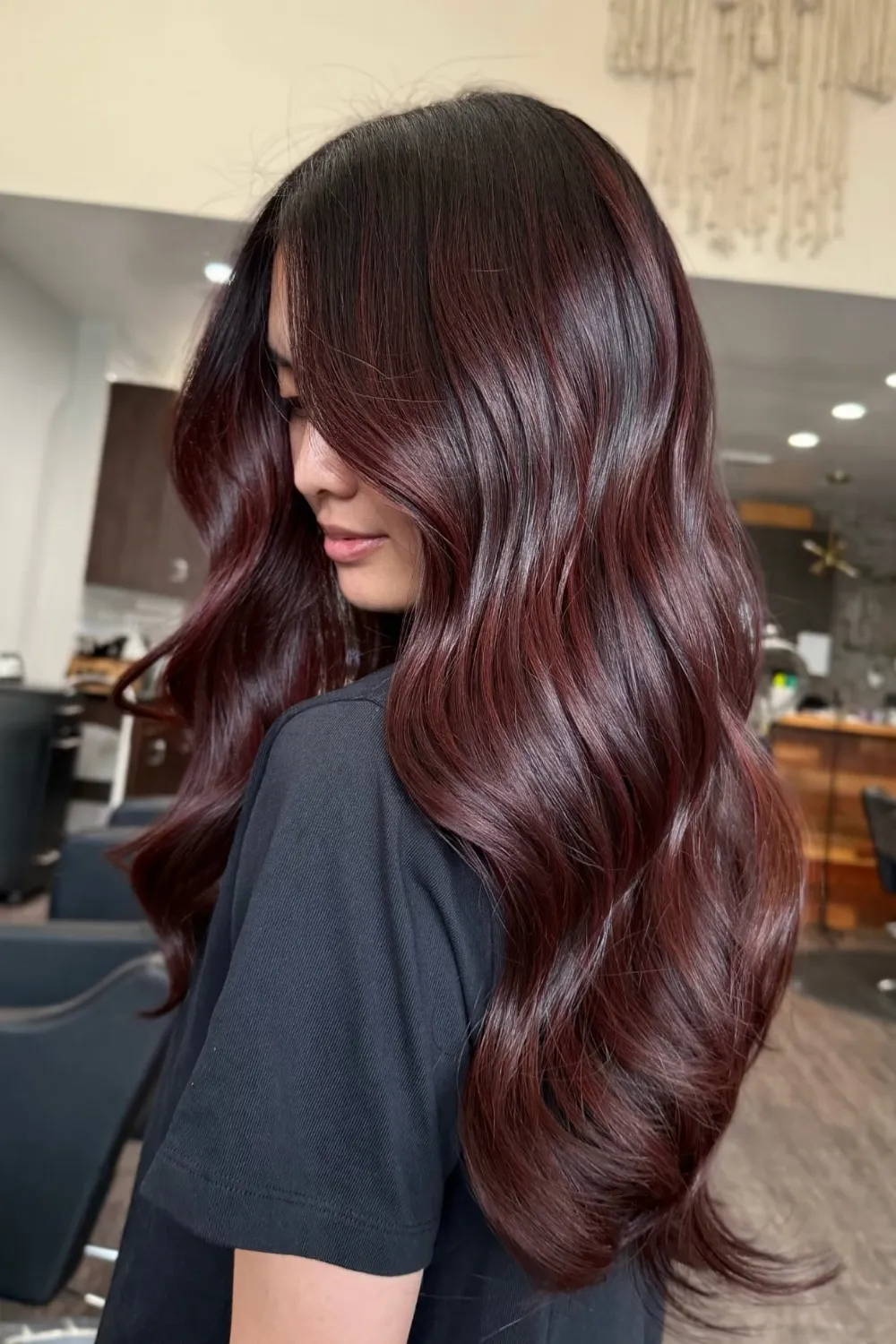
A muted, dusty red-brown with a pink undertone. Softer than cherry cola and less brown than mahogany, it suits anyone who finds bright red too much. It also grows out gently, since the contrast with natural brown roots is low.
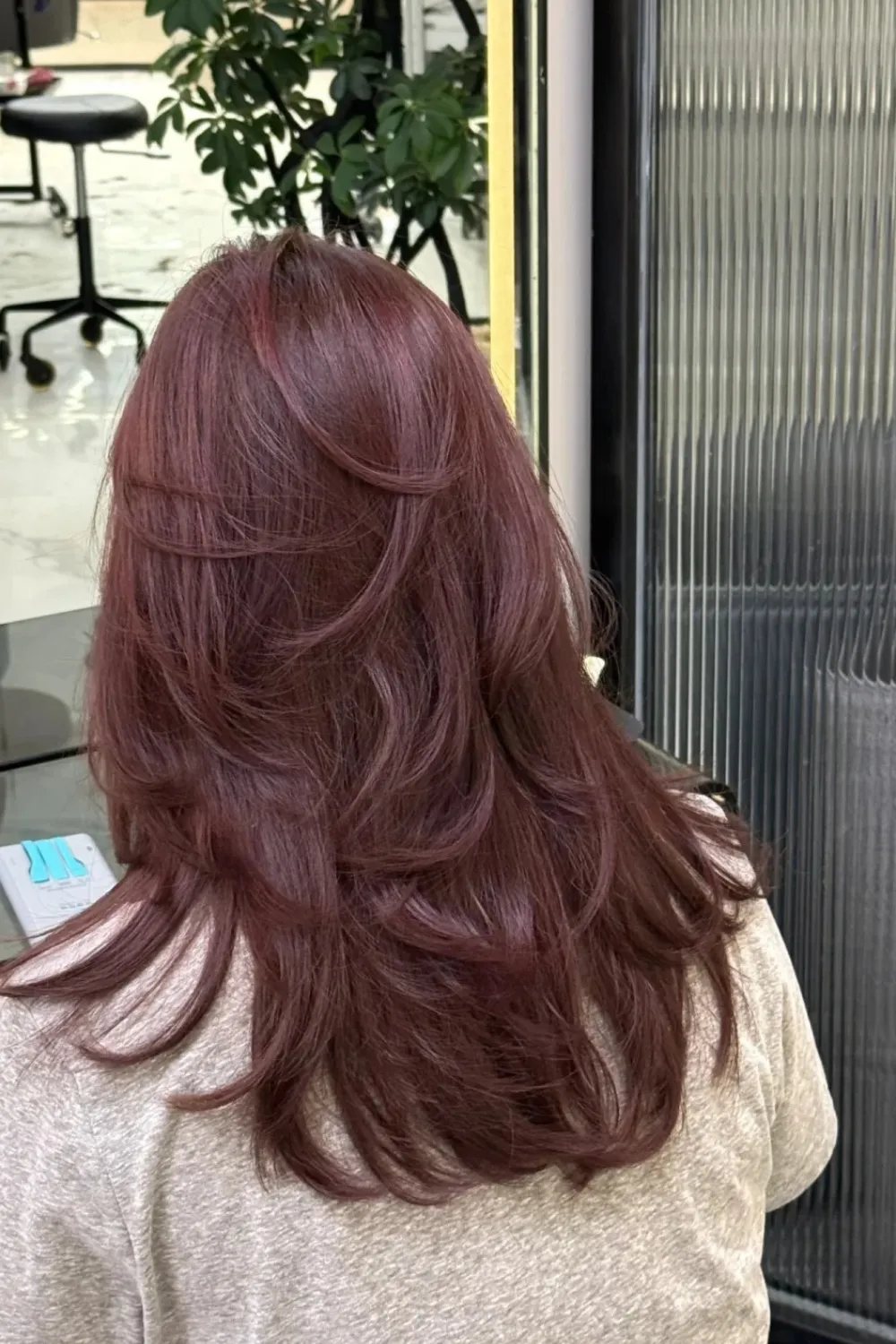
Soft burgundy brown
Medium burgundy brown hair is brown first and burgundy second. Indoors, it looks like a warm brown; outdoors, the burgundy shows. It’s the easiest shade to wear to work and the easiest to return from, if you change your mind.
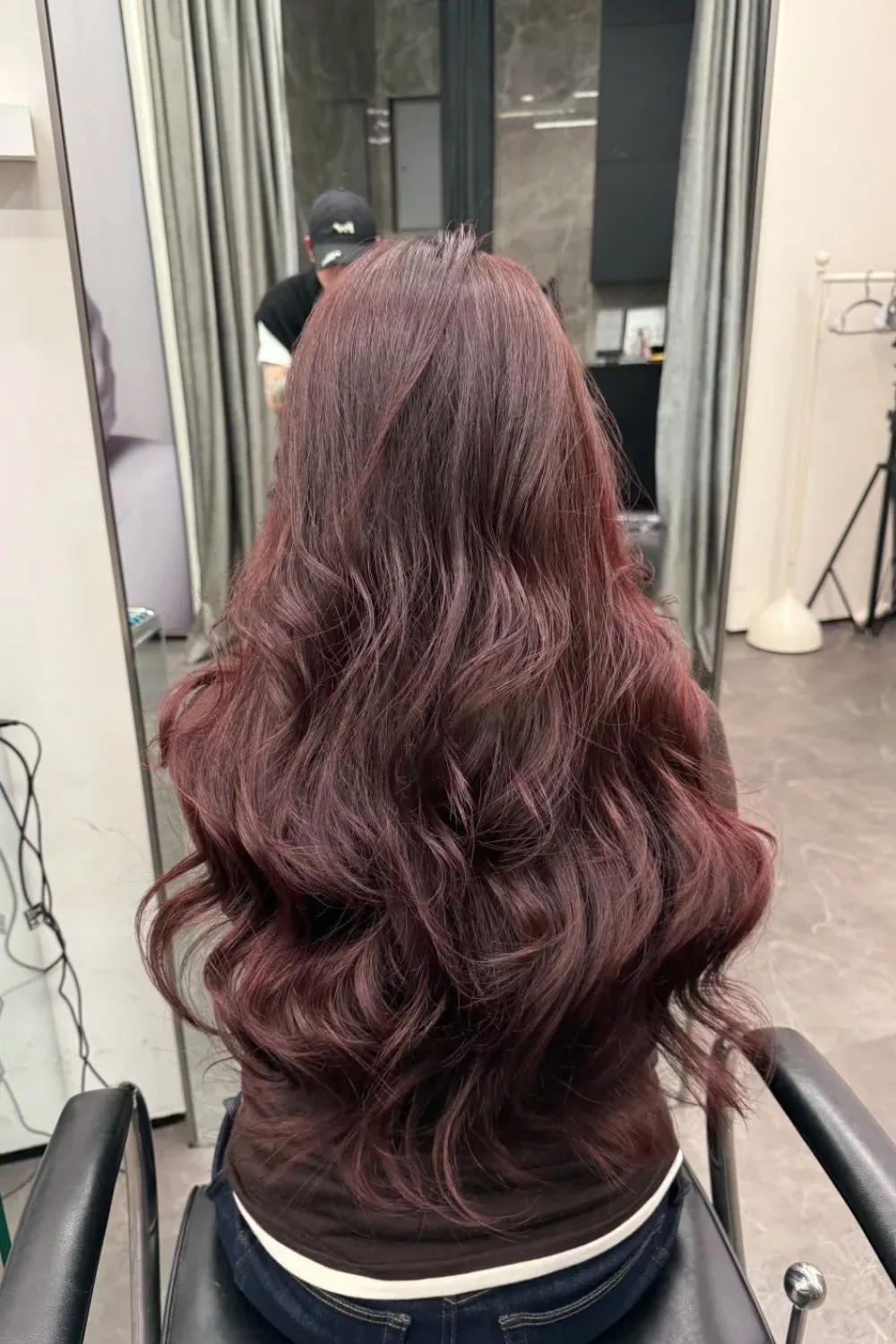
Wine
Here the red takes over. Red wine hair color is a clear, deep burgundy that looks red in every light. A deep version looks rich and grown-up; a brighter version with more red in it is the bold one in this list. Maroon hair color sits right next to wine, with a touch more brown, and it’s the version to ask for if pure wine feels too red for your skin.
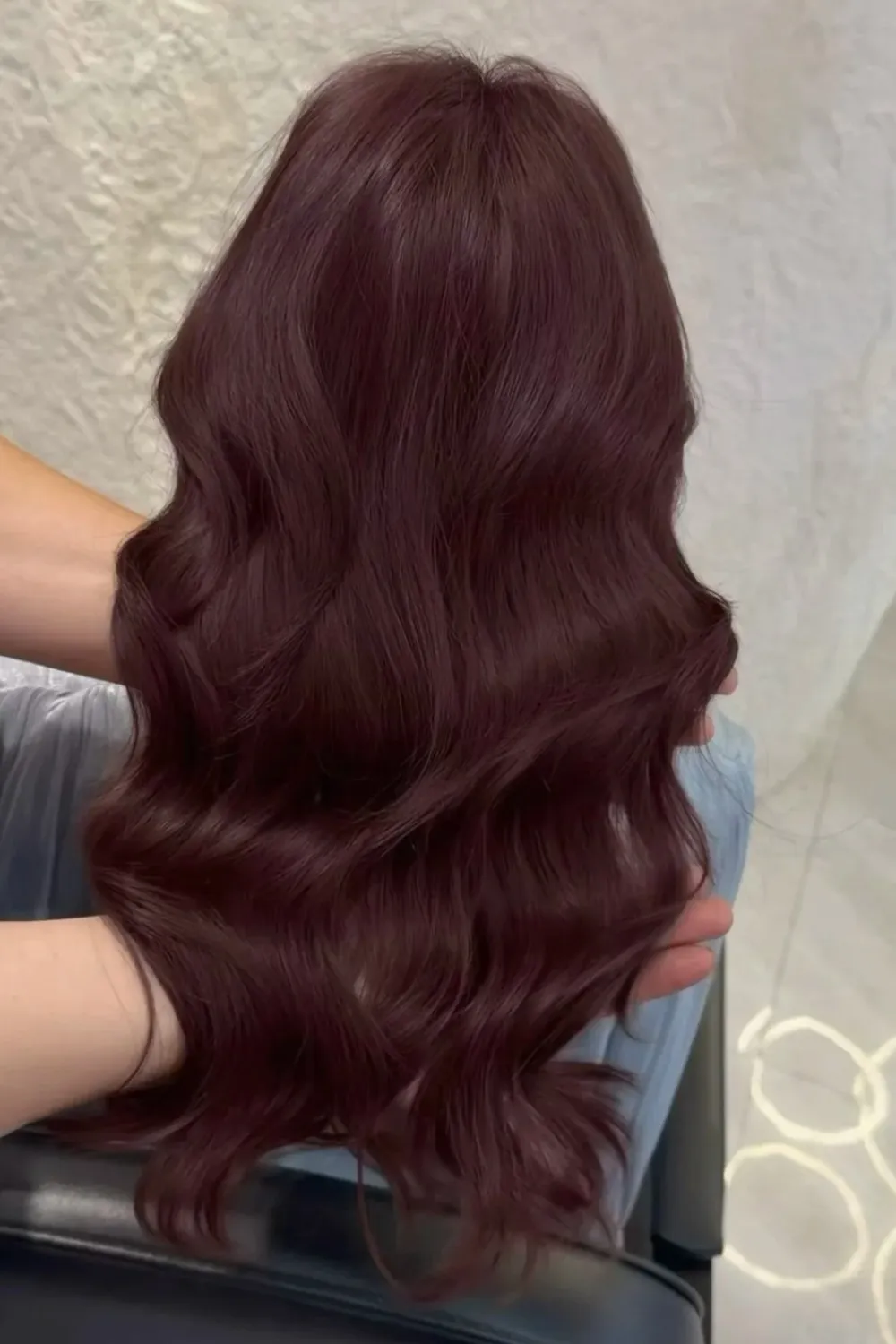
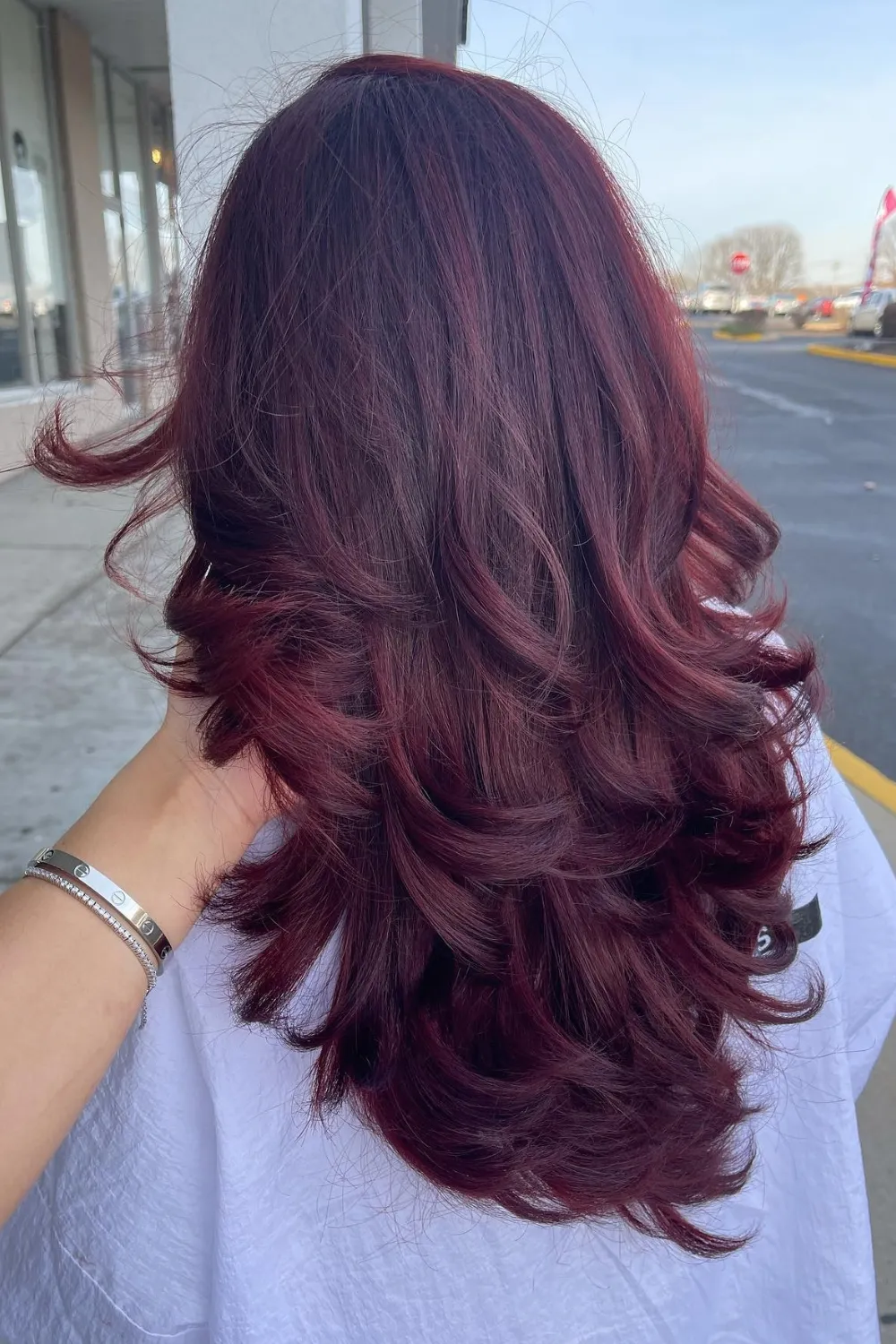
Plum burgundy
Burgundy with a violet lean. It’s cooler than wine and looks especially good with layers, since each layer catches the light at a different angle and shows a slightly different shade of purple-red. If you’re thinking about a cut to go with it, easy layered haircuts show off this color better than one-length hair.
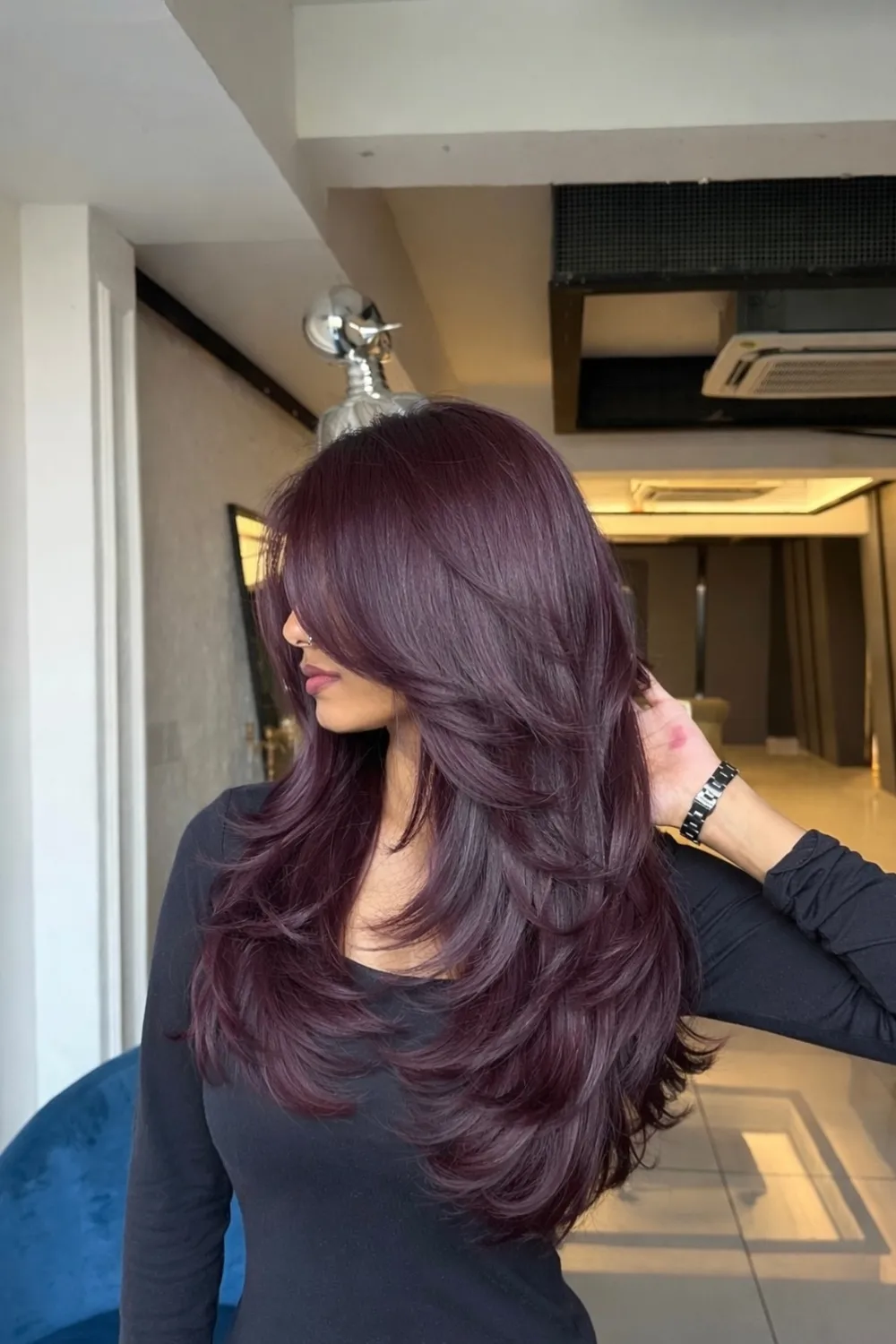
Black cherry
The darkest of them all: nearly black indoors, with a dark red-violet that appears only in direct light. Dark maroon hair like this suits people with very dark natural hair, because it needs little or no lightening and grows out with almost no visible line.
If you’re stuck between two neighbors on this list, pick the darker one. Every burgundy hair color lightens and warms up as it fades, so the shade you leave the salon with is the darkest it will ever be, and a slightly deeper start lands closer to what you wanted after a few washes.
Which burgundy hair color suits your skin tone and natural color?
Your undertone is the first thing to check. As a rough test, look at the veins on your inner wrist in daylight: greenish veins usually mean a warm undertone, bluish or purple veins a cool one, and a mix means neutral. Another quick test is jewelry: if gold looks better on you, you probably lean warm; if silver does, cool.
Warm undertones look best with the warmer end of the range: mahogany copper, cherry cola and soft burgundy brown. Cool undertones suit wine, plum and black cherry, because the blue in those shades echoes the cool in the skin. Neutral undertones can wear almost any of them, and rosewood is a safe middle point.
Eyes and makeup play a part too. Burgundy makes green and hazel eyes look brighter, since red and green sit opposite each other on the color wheel. Blue eyes look clearer next to the cooler wines and plums. Once the color is in, your usual makeup might need a small change: a warmer blush or a berry lip often sits better with burgundy hair than a cool pink. For a full look in the same warm family, try one of these olive green makeup looks.
Your natural color decides how much work it takes. On dark brown and black hair, deep burgundy hair color and black cherry show up with a single application of color, since they don’t need to be much lighter than your base. Brighter wine or mahogany on dark hair usually needs some lightening first. On light brown hair, almost every shade on the list is within reach.
Blonde and burgundy hair is its own category. Going from blonde to burgundy is easy in one sense, because red grabs well on light hair, but it can come out much brighter than the swatch, and a red on blonde fades toward pink. A blonde base with burgundy lowlights, or burgundy through the underneath, is a softer way in. Brown and burgundy hair works the same way: burgundy pieces woven through a brown base give dimension without committing the whole head. If you want to keep it even more low-key, my post on subtle hair color ideas covers underlayers and other hidden placements.
All-over burgundy hair color or balayage on dark hair?
All-over color covers your whole head in one shade. It gives the boldest result and the most even shine, especially with deep shades like wine burgundy hair or black cherry. The tradeoff is regrowth: every few weeks a band of your natural color shows at the root, and how visible that band is depends on how far the burgundy is from your base. With black cherry on black hair, you’ll barely see it. With bright wine on dark brown, you will.
Balayage paints the color through the lengths and ends and keeps the root close to natural. It’s softer, it grows out without a hard line, and it needs fewer appointments. The downside is that it reads less as “burgundy” and more as “brown with red,” which suits some people exactly and feels too quiet to others. A cherry cola balayage on dark hair is the most popular middle ground, in my opinion, because it gives you red in photos and a grow-out you can live with for months.
Burgundy hair color without bleach is possible on dark hair, but it shows as a tint in the light, not as a bright wine red; the vivid shades need some lightening first. If you want contrast, burgundy with blonde highlights around the face looks brighter, while a few black lowlights make it deeper.
What should you tell your colorist?
A few things make the appointment go smoothly and keep the result close to what you pictured:
- Bring three photos, not one. Say what you like in each: the shade in one, the placement in another, the shine in a third.
- Bring a photo of what you don’t want. “Not this pink” or “not this orange” is often clearer than any description of what you do want.
- Look at the photos in daylight. Salon photos are often shot under warm lights or edited, and the same burgundy looks different outdoors.
- Say how much upkeep you’re up for. Every four weeks or every three months changes which shade and technique make sense.
- Ask what it will look like as it fades. Some burgundies fade to copper, some to brown, some to pink. Pick the one whose fade you like too.
- Mention past color. Old box dye or previous lightening affects how burgundy takes, even if it’s months old.
- Ask for a strand test if you’re unsure about the shade. A small hidden section shows how the color takes on your hair before the whole head is done.
How do you keep burgundy hair from fading?
Red tones tend to fade faster than browns, so burgundy needs a bit more care than most colors. The good news is that the fixes are simple.
Book a gloss between color appointments. A gloss is a sheer layer of color that refreshes the tone and adds shine without a full recolor, and many colorists suggest one every four to six weeks for reds. Wash with lukewarm or cool water instead of hot, and wash less often if your hair allows it. Use a color-safe, sulfate-free shampoo and conditioner, and add a color-depositing conditioner in a burgundy or red shade once a week to top up the pigment at home. Heat protectant before styling and a hat in strong sun help too, since heat and UV both speed up fading. Chlorine pulls color out quickly, so wet your hair with clean water and use a leave-in conditioner before swimming.
One practical warning for the first few washes: fresh burgundy hair can bleed color onto towels and pillowcases. Use a dark towel for the first week and sleep on an old pillowcase until the rinse water runs clear.
The deeper the shade, the slower it seems to fade, so black cherry and deep wine usually hold longer than bright red or mahogany copper.
A brown-based burgundy for an easy first step, a deep wine or plum for the full fall look, and a gloss on the calendar to keep it there.
Leave a Reply