

I used to think getting an ear piercing was one of those decisions you could make in five minutes. Pick a cute spot, choose a tiny stud, sit through a quick pinch, and move on with your life. Then I started paying attention to how different lobe and cartilage piercings actually heal, and I realized the appointment is the shortest part of the whole process.
The placement you choose affects how long you will be babying it, which jewelry will fit, how you sleep, whether your headphones suddenly become annoying, and how easy it is to build the ear stack you are picturing. None of that makes piercing complicated. It just means the prettiest result usually starts with a little planning.
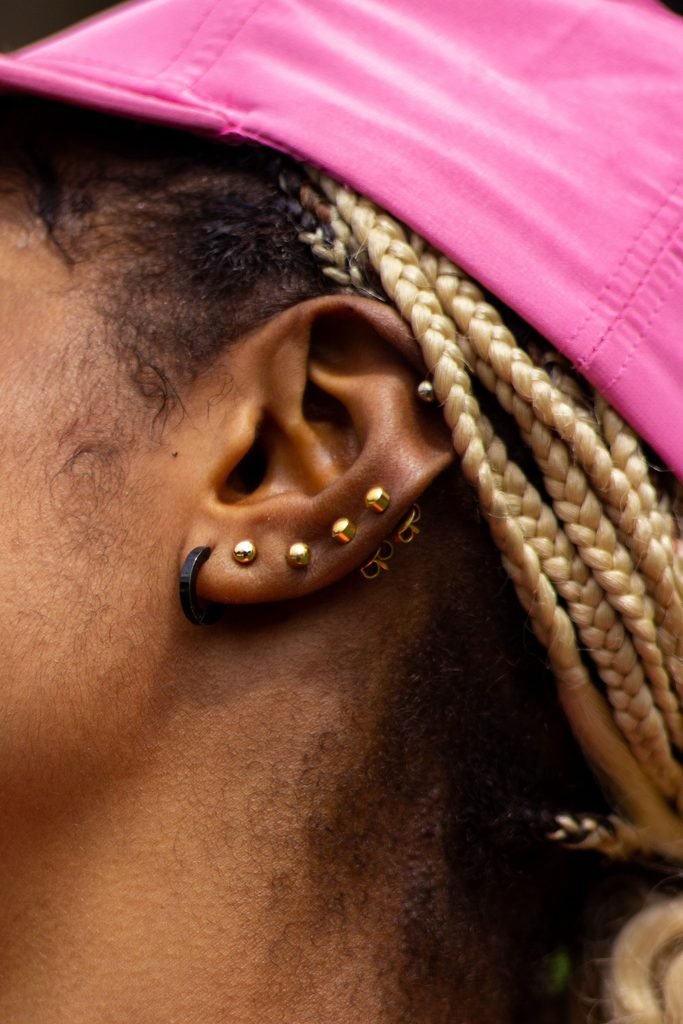
Photo by pexels by ardarh on Pexels
I still love the finished look, especially when the jewelry feels like part of someone’s style instead of a row of identical earrings. But I would rather spend ten extra minutes choosing the right piercer and placement than spend the next six months wishing I had.
Ear Piercing Types and Placements Explained
The first thing to understand is that an ear is not one flat surface. The soft lobe at the bottom behaves very differently from the firmer cartilage that makes up most of the upper and inner ear.
That one distinction changes a lot. Lobe piercings generally heal faster and tend to be easier for first-timers, while cartilage piercings need more patience and can be much more sensitive to pressure, snagging, and sleeping on them.
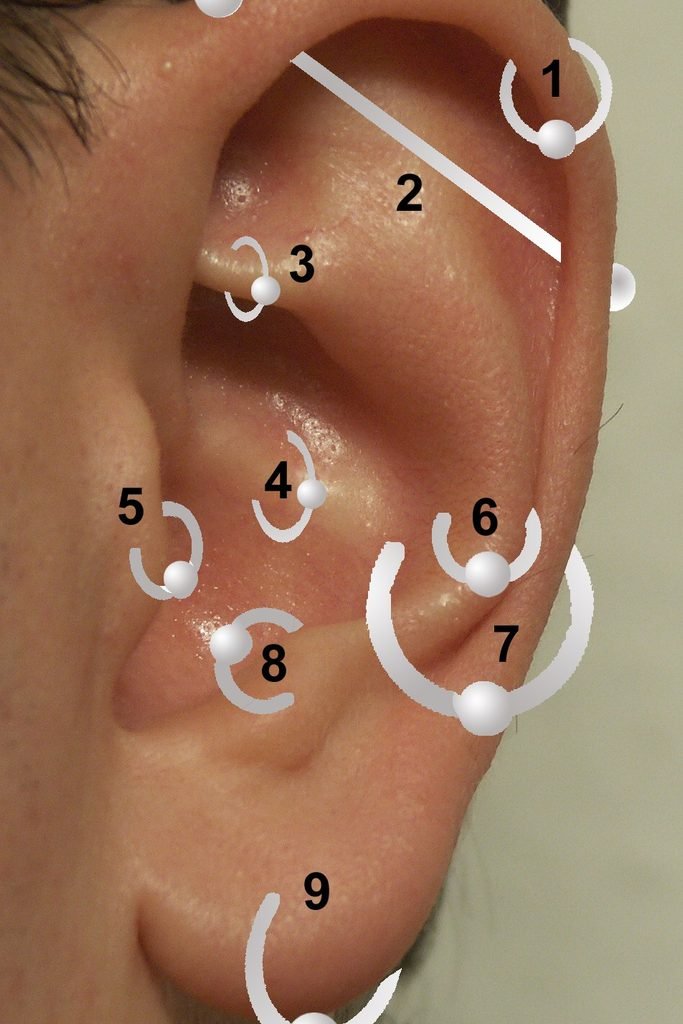
Positions of earrings by Peter Niemayer, modified by Nicor, via Wikimedia Commons, licensed under CC BY-SA 3.0.
The diagram makes the names much easier to understand. Helix sits along the upper outer rim, conch is in the bowl of the ear, tragus is the small piece of cartilage near the ear canal, and rook and daith sit in the inner folds. An industrial is different again because it connects two piercings with one bar.
Not every ear can comfortably support every placement. Anatomy matters, especially for industrials, rooks, daiths, and some conch or forward-helix setups. A good piercer should look at your actual ear instead of promising a placement just because you brought in a reference photo.
Lobe Piercings: The Easiest Place to Start
If this is your first piercing, the lobe is still the obvious place to begin. It gives you the most jewelry options later, it is easy to style with hoops or studs once healed, and it usually asks less of you during the healing stage than cartilage does.
The Association of Professional Piercers lists an average healing time of about six to eight weeks or longer for earlobes. I would treat that as a minimum, not a deadline. A piercing can look calm on the outside while the channel inside is still settling.
Second and third lobe piercings are also a nice way to build a stack without jumping straight into cartilage. The spacing is what makes them look intentional, so I would have the piercer mark everything first and look at it from a normal distance before saying yes.
Helix, Flat, Conch, Tragus, Rook, and Daith
Cartilage is where ear piercing starts to feel more architectural. A tiny helix stud can add height, a conch can become the center of the whole stack, and a tragus or rook can make a fairly minimal ear look much more considered.
The tradeoff is healing time. The APP lists ear cartilage at roughly six to nine months or longer, and some placements can take more time than that. That is why I would not book a cartilage piercing right before a trip full of swimming, a season of contact sports, or a month when you know you will be sleeping badly and living in over-ear headphones.
Pain is also too personal for the neat little one-to-ten charts people love online. Placement matters, but so do your anatomy, your stress level, the piercer’s technique, and your own pain tolerance. I would expect a sharp, quick sensation and some tenderness afterward rather than trying to predict an exact number.
The Ear Piercing Look I Like Right Now
The ear stacks that catch my eye lately are not the ones with every possible space filled. I like a little breathing room, one piece that carries more visual weight, and smaller jewelry that supports it.
A double lobe with a helix can look just as finished as seven piercings if the proportions are right. A conch stud with two tiny lobe hoops can do the same thing. More holes do not automatically create a better stack.
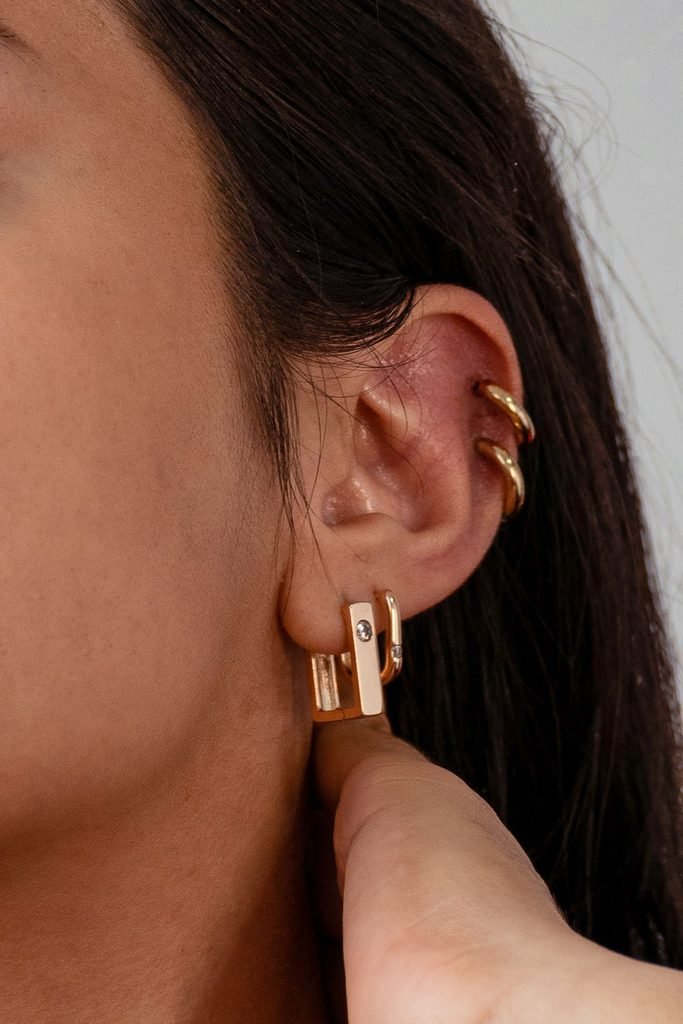
Photo by David Mosquera on Pexels
This is the kind of balance I mean. The jewelry is noticeable, but it still belongs to the whole look instead of making the ear feel crowded.
If you are starting from scratch, I would pick one anchor area first. Maybe you want a clean row of lobes. Maybe you know you eventually want a conch hoop. Maybe the whole idea is one tiny helix sitting above your everyday earrings. Planning around that one thing is much easier than collecting random piercings and trying to make them cooperate later.
Before You Get Pierced, Check the Studio Before the Jewelry
I know the jewelry case is the fun part, but I would look at the studio and the piercer first. Piercing breaks the skin, so hygiene and technique are not details you save for after you have chosen a pretty gem.
A professional piercer should be willing to explain what they are doing, assess your anatomy, talk through jewelry size and material, and answer questions without making you feel rushed. The Association of Professional Piercers recommends a brand-new sterile single-use needle and appropriately sterilized equipment. It also advises against reusable piercing guns, including for earlobes.
I would also ask how tools are sterilized, what jewelry material they use for fresh piercings, and what their aftercare instructions are. If the answers are vague or the studio feels careless, leaving is a perfectly reasonable choice.
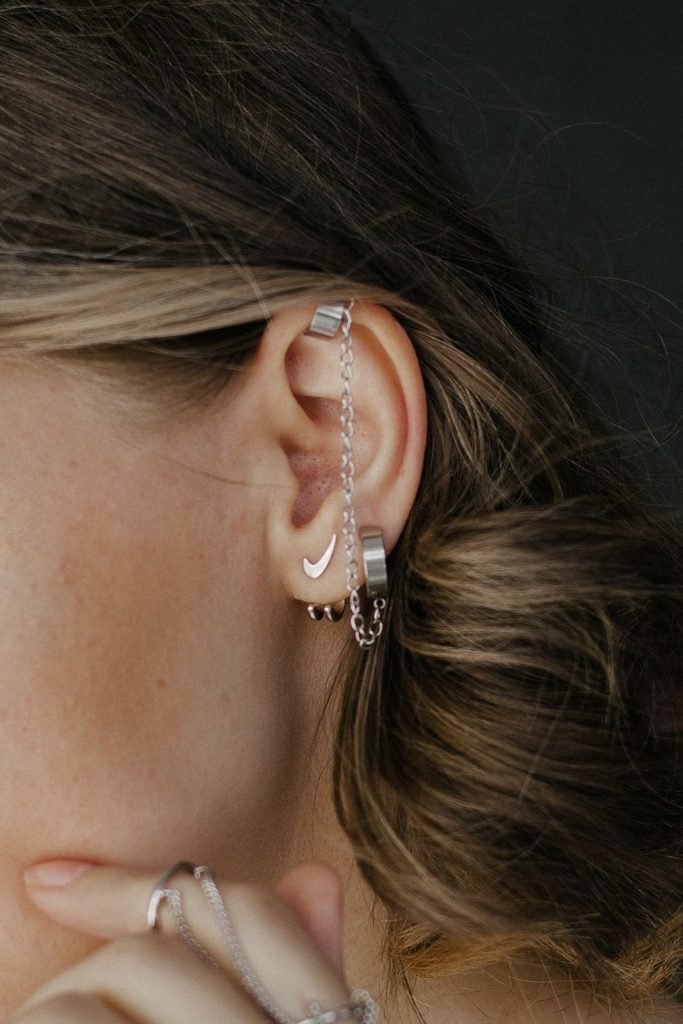
Photo by aliona zueva on Pexels
The finished piercing is what you will see every day, but the part you do not see in the final photo matters more at the beginning. Good placement, sterile technique, and correctly fitted jewelry make the next few months much easier.
Eat Something and Show Up With a Real Plan
I would not arrive hungry, dehydrated, or after a night of barely sleeping. You do not need a complicated pre-piercing routine, but feeling normal and steady makes the appointment less dramatic.
Wear your hair in a way that keeps it out of the piercer’s workspace, and think about the things that touch your ears every day. Glasses, helmets, earbuds, over-ear headphones, hats, work headsets, and the side you sleep on can all affect which placement will be easiest to live with.
If you are planning several new piercings, ask the piercer how many they are comfortable healing at once. There is no prize for doing an entire ear in one afternoon if every part of your routine is going to irritate it afterward.
The Complete Aftercare Guide, Without the Ten-Step Routine
My biggest aftercare lesson is that more effort is not always better. A fresh piercing does not need to be scrubbed, spun, soaked in five homemade mixtures, and checked every hour.
The APP recommends sterile saline wound wash, typically a 0.9% sodium chloride solution, for body piercing aftercare. Look at the ingredient list and keep it simple. You do not need alcohol, hydrogen peroxide, iodine, harsh antibacterial soap, or thick ointment on a routine healing piercing unless a medical professional has specifically told you otherwise.
Rinse or spray as directed by your piercer, let softened debris come away gently, and dry carefully with a clean disposable product if needed. The goal is clean and calm, not squeaky, dry, and irritated.
The No-Touch Rule Is Boring Because It Works
Most of the time, I leave the jewelry alone. I do not twist it to “keep the hole open,” rotate it because it feels stuck, or move it back and forth to see whether it still hurts.
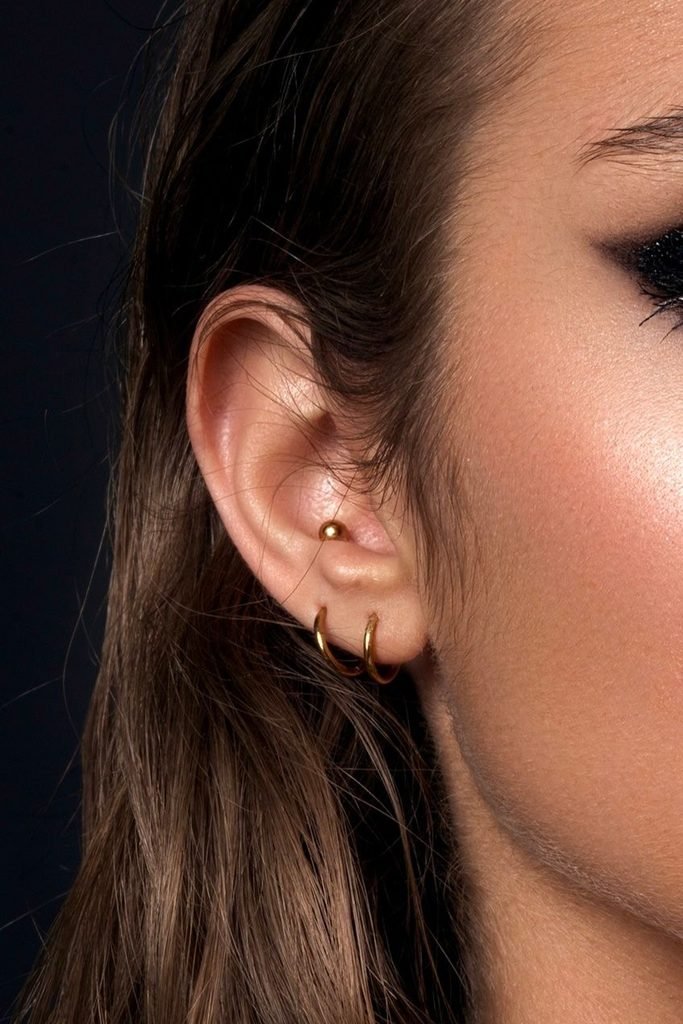
Photo by Milad Farhani on Pexels
Hands pick up plenty of bacteria during a normal day, and movement can keep irritating tissue that is trying to settle around the jewelry. If I need to touch the area for cleaning, I wash my hands first and keep the contact minimal.
I am just as careful with hair, makeup, sunscreen, hair spray, and skin care around a healing ear. It is surprisingly easy to do everything right during cleaning and then spend the rest of the day brushing a hairbrush or phone against the same spot.
Sleep Positioning Matters More Than I Expected
Sleeping directly on a healing cartilage piercing can keep it irritated and may even encourage the angle to shift. This is one of those problems that sounds minor until you realize you put pressure on the same ear for six or eight hours at a time.
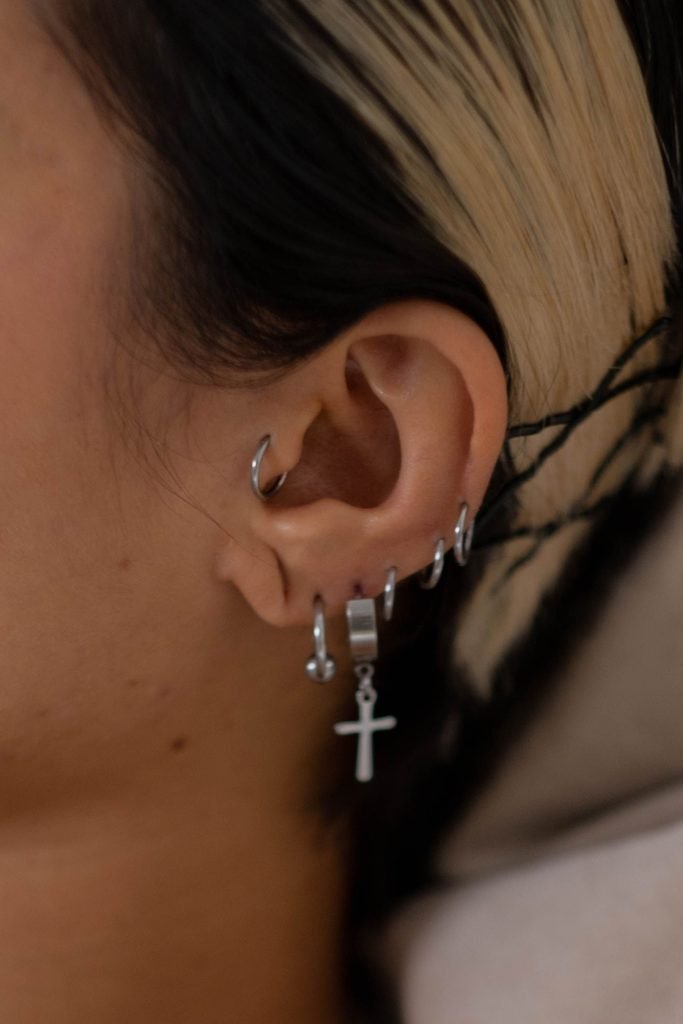
If you are a dedicated side sleeper, a clean travel pillow can help because your ear can sit in the center opening instead of taking the full weight of your head. Clean pillowcases matter too, especially while a piercing is fresh.
This is also why I would think carefully before piercing both sides of the cartilage at the same time. If you already know you cannot sleep on your back, leaving yourself one comfortable side can save a lot of irritation.
What Is Normal While an Ear Piercing Heals?
A new piercing can be tender, mildly swollen, itchy, or a little discolored while it settles. A small amount of pale fluid that dries into light crust can also happen during normal healing.
What I pay attention to is the direction things are moving. Normal healing should gradually become easier, even if it has an occasional irritated day after getting bumped or caught on something.
Increasing heat, worsening swelling or pain, spreading redness or dark discoloration, pus, fever, chills, or feeling generally unwell are different. Those can be signs of infection and deserve medical attention rather than another home remedy.
If you think a piercing may be infected, do not automatically take the jewelry out on your own. Medical guidance, including the NHS, advises leaving jewelry in unless a doctor tells you to remove it. A clinician can tell you what the safest next step is for your situation.
Piercing Bump Does Not Automatically Mean Keloid
Every bump around a piercing gets called a keloid online, and that is not accurate. Irritation bumps and other localized changes can happen for several reasons, including pressure, snagging, jewelry fit, or aftercare that is too harsh.
A true keloid is an overgrowth of scar tissue that extends beyond the original wound and is a medical issue, not something I would try to diagnose from a photo. If a bump is persistent, growing, painful, or worrying you, talk to a qualified piercer and a healthcare professional when appropriate.
Jewelry Guide: What I Would Put in a Fresh Piercing
Fresh-piercing jewelry has a different job from the earrings you wear in a fully healed lobe. It has to fit your anatomy, leave appropriate room for initial swelling, have a smooth finish, and be made from a material suitable for healing tissue.
Implant-grade titanium is one of the easiest materials to ask about, especially if nickel sensitivity is a concern. The APP also lists specific implant-compliant steels, niobium, platinum, certain biocompatible glass, and solid 14k or higher nickel- and cadmium-free gold among suitable options when the piece meets the proper standards.
Gold-plated, gold-filled, and vermeil jewelry are not what I would choose for a fresh piercing. The coating can wear, and the material underneath may not be appropriate for a healing channel.
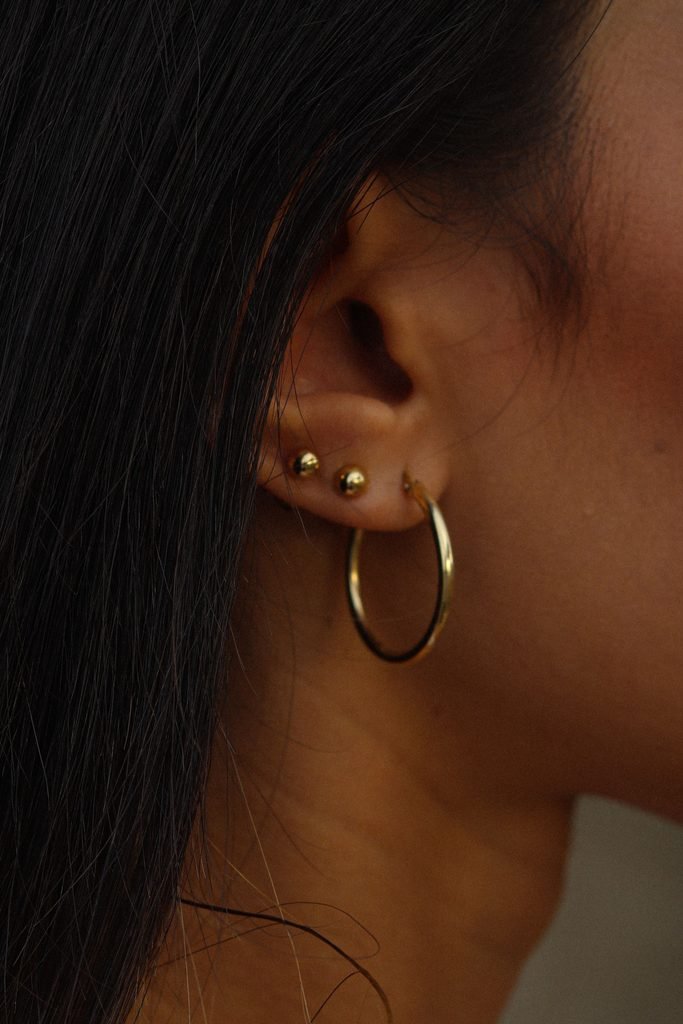
Photo by ren lavsad on Pexels
Once everything is healed, the fun part opens up. You can play with hoops, studs, huggies, chains, charms, and mixed shapes without asking one tiny piece of jewelry to handle swelling and healing at the same time.
For the first piece, I would let the piercer choose a style and length that suit the placement. The cute hoop you eventually want may not be the best starter for that exact piercing.
Downsizing Is Not the Same Thing as Changing Your Jewelry for Fun
Some fresh piercings start with a longer post to allow for swelling, then need a professional downsize after that swelling has settled. That does not mean the piercing is fully healed.
A shorter properly fitted post can reduce movement and snagging, but the timing depends on the piercing and how your body is doing. I would go back to the piercer for that rather than guessing based on a calendar.
This is another reason I like studios that expect to see you again. A good piercing appointment is not just the five minutes when the needle is involved.
Building an Ear Stack Without Making It Look Busy
I think the easiest ear stack starts with one anchor. That might be a slightly larger first-lobe hoop, a conch piece, or one detailed stud that gets most of the attention.
Then I scale things down around it. A smaller second-lobe earring, a tiny helix stud, or one simple piece higher on the ear gives the eye somewhere to move without making every piercing compete.
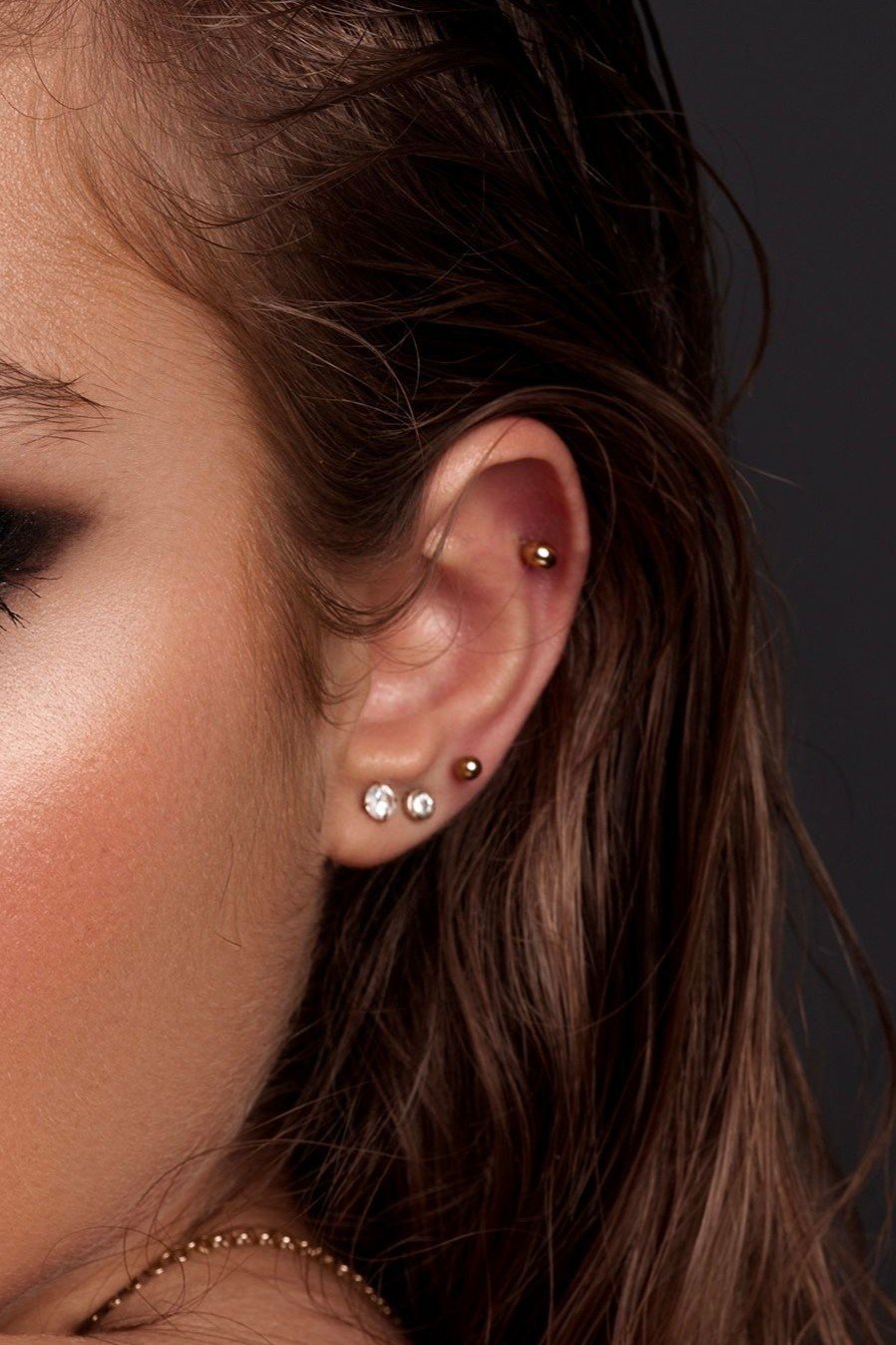
Photo by Milad Farhani on Pexels
I also like leaving some space. Three well-placed pieces can look much more deliberate than six pieces that are all the same size and fighting for the same visual spot.
If you know you want several piercings eventually, tell your piercer that before the first new one is marked. A few millimeters can affect what you have room for later, and your ear anatomy may make a slightly different plan look better than the reference you saved.
You Do Not Need Matching Ears
Symmetry is optional. One ear can have a stronger cartilage stack while the other stays mostly lobe-focused, and the two can still feel connected through metal color, gemstones, or repeated shapes.
This is useful for healing too. You can build one side gradually, enjoy it, then decide later whether the other ear actually needs the same amount of jewelry.
I would rather end up with two ears that suit their own anatomy than force a mirror image that does not sit naturally.
Sensitive Ears Need Better Jewelry, Not More Guessing
If inexpensive earrings regularly leave your lobes itchy, sore, or irritated, tell your piercer before choosing jewelry. Nickel sensitivity is common enough that I would not treat repeated reactions as something you just have to tolerate.
Implant-grade titanium is often a useful option because it is lightweight and is recommended by professional piercing guidance for people concerned about nickel sensitivity. But irritation can also come from fit, pressure, moisture, a snagged piercing, or a product touching the area, so material is not the only thing worth checking.
If a previously calm piercing suddenly becomes painful or swollen, I would look for a reason instead of throwing random products at it. Sometimes the solution is as simple as changing pressure or jewelry fit with help from a professional.
So, Is Getting an Ear Piercing Worth It?
For me, yes, as long as I am choosing it for the way I actually live and not just for the photo I want on day one.
A lobe piercing can be a very low-maintenance way to change your jewelry options. A cartilage piercing asks for more patience, but it can completely change the shape and balance of an ear stack once it is healed.
The part I would never rush is the setup. Choose a piercer who takes hygiene seriously, let them check your anatomy, use appropriate starter jewelry, and be realistic about the healing period.
Then leave it alone more than you think you need to.
That is the least glamorous advice in the entire piercing process, but it is also the advice I would want before booking mine.

Leave a Reply