

I stood in front of my closet last month with everything I own and felt absolutely nothing. Dozens of pieces. Hundreds of dollars worth of clothing. And I couldn’t find a single thing to wear.That’s when I realized the problem wasn’t what I didn’t have. It was what I was keeping. So I instantly realized I might need a wardrobe reset ritual ASAP!
Most of us wear about 20 percent of what’s in our closets. The other 80 percent? Those are the “maybe someday” pieces. The clothes that fit the person you used to be. The trendy items you bought on impulse. The things you’re keeping “just in case.” They take up physical space, but more importantly, they take up mental space. Every time you open your closet, you’re not seeing possibilities. You’re seeing clutter.
A wardrobe reset ritual isn’t about buying new things. It’s about finally loving what you have. It’s about simplifying your mornings, building confidence, and creating a closet that actually reflects your real life, not some aspirational version of yourself.
This weekend, you’re going to do this. And I promise you, it will change everything.
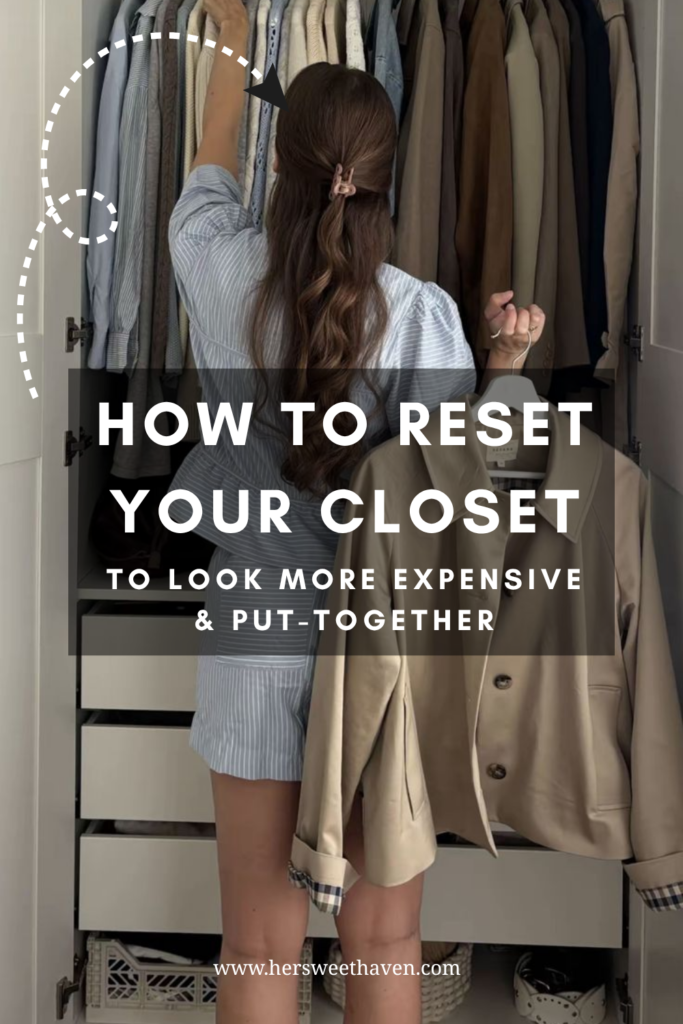
Why Your Closet Is Causing Morning Anxiety (And What That Means)
There’s a direct line between closet chaos and decision fatigue.
Every morning, you’re standing in front of a sea of options and feeling paralyzed. You’re changing outfits multiple times. You’re second-guessing yourself. You’re leaving the house feeling less confident than you could be. And none of it is because you don’t have nice clothes. It’s because you can’t see the nice clothes you do have.
This is what I call “closet anxiety.” It’s that heavy feeling when you open your closet doors. It’s the frustration when you can’t find what you’re looking for. It’s the guilt when you realize you paid for something you never wear.
Here’s what’s actually happening: your brain is experiencing decision overload. When you have too many options, especially options that don’t work well together, your brain has to work harder to process them. It exhausts you before your day even starts. Psychologically, this affects your confidence and your mood.
The clothes that are silently draining your energy are usually the ones that don’t fit your life anymore. Maybe they’re from a job you left. Maybe they’re from a body that was different. Maybe they were trends you bought into but never actually felt like yourself wearing. These pieces aren’t just taking up space. They’re telling a story that doesn’t match who you are now.
How many items should be in my closet?
There’s no magic number. Some people thrive with 35 pieces (capsule wardrobe approach). Others do better with 60 or 80. What matters is that every single piece serves you. Every item should either get worn regularly or make you feel genuinely good when you see it. If you’re keeping something “just in case” or because you spent money on it, that’s not serving you. That’s serving guilt.
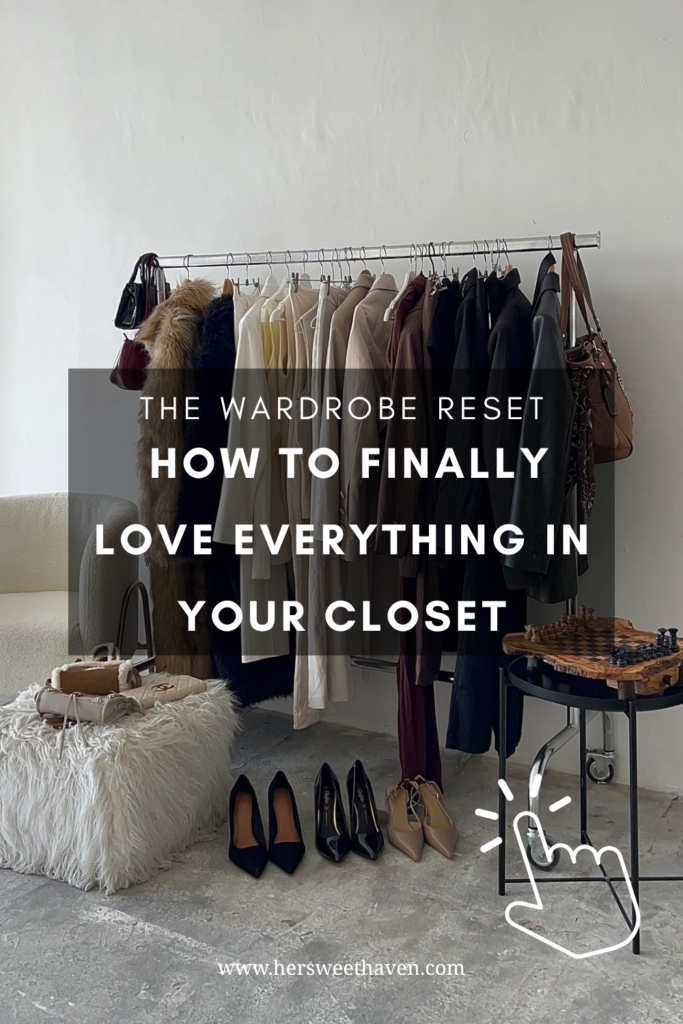
The Reset Ritual: Your Step-by-Step Game Plan
This isn’t a complicated process. But it does require intention and clear thinking. That’s why I recommend doing this over one weekend when your mind is fresh and you have natural light.
Day 1: Pull Everything and Assess
Set a specific time. Make it morning when you have good natural light. (This matters more than you think. Fluorescent bathroom light will make you second-guess everything.) Put on music. Open all your closet doors wide.
Before you touch a single piece, set your intention. Not “I want to look perfect.” Not “I want to own less stuff.” Your intention should be specific: “I want a closet where getting dressed takes five minutes instead of twenty.” Or “I want to feel confident in what I’m wearing.” Or “I want to stop feeling guilty about unworn clothes.”
Now, start pulling. Yes, everything. Lay it on your bed, on a chair, on the floor. Don’t think yet. Just pull.
Day 2: The Three-Pile Method
This is where the real work happens, and this is where it gets emotional.
Create three piles: Keep, Donate, and Maybe.
Keep: These are the pieces you wear regularly and pieces that make you feel good. No overthinking. If you reach for it, it stays.
Donate: These are the pieces that don’t fit, aren’t your style anymore, or have been untouched for over a year. Be honest. If you haven’t worn it in a year, you’re probably not going to wear it next year either.
Maybe: These are the tricky pieces. The ones that fit but don’t quite feel like you. The ones that might be sentimental. The ones you spent a lot of money on. Put these aside. Don’t make a final decision on these yet.
Here’s the psychology trick: give yourself permission to let go of “versions of you.” That cocktail dress from when you went out every weekend? That formal suit from your corporate job? Those pieces represent people you were. They’re not bad. They’re just not who you are now. And that’s okay. Letting them go isn’t failure. It’s growth.
Day 3: Organization That Actually Works
Once you have your Keep pile, organize it in a way you can actually see everything.
Hang items by type (tops together, pants together, dresses together). Within each category, organize by color. This simple system means you can see every option at a glance. It sounds basic, but most people organize by season or by shelf, which hides things.
Fold items you can’t hang (sweaters, knits, jeans) and stack them so the top is visible. Don’t stack them in a tower. Stack them so you can see the color of each piece.
Put seasonal items away. Your heavy winter coats don’t need to live in your closet year-round. Use clear storage bins and rotate seasons. This alone will make your closet feel less chaotic.
What should I do with clothes I’m not getting rid of but don’t wear?
Those “Maybe” pieces? Store them separately. If you love it enough to keep it, it should be stored properly, not shoved in a corner. Use archival-quality storage (cotton garment bags, cedar blocks for protection). But here’s the important part: if you don’t go back to get something from that storage within six months, it goes. No guilt. It had its chance.
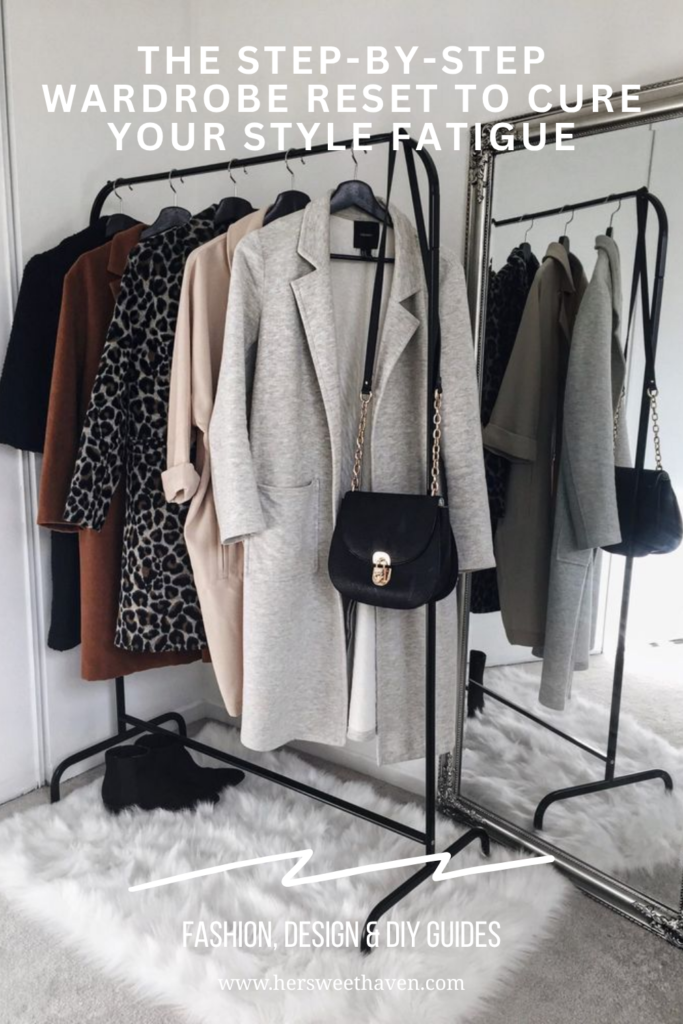
Stop Buying New Clothes—Start Loving What You Have
This is where the magic happens.
After you’ve reset your closet, you’re going to make a discovery: you have way more outfit options than you realized. When everything is visible and organized, you start seeing combinations you never saw before.
I had a cream linen shirt in my maybe pile for two years. I thought it was boring. Then I organized my closet and suddenly saw it paired with a patterned skirt I’d forgotten about, a belt I never wore with that shirt, and shoes that instantly elevated the whole thing. An outfit I didn’t even know I had.
This is what happens when you can actually see your clothes.
There’s a trending method called the “Influencer Method” that’s incredibly effective. Go through your organized closet and create outfit combinations. Take pictures of them. Keep them in a folder on your phone or create a Pinterest board. Now when you get dressed, you’re not staring at individual pieces trying to figure it out. You have a visual reference of combinations that already work. It’s like having a personal stylist living in your phone.
The quality-over-quantity revolution is real for 2026. People are finally understanding that five well-made pieces you love beat twenty trendy pieces you tolerate. A well-made linen shirt will hold its shape and color for years. A cheap knockoff fades and wrinkles after three washes.
When you reset your closet, you’re not just organizing. You’re making a promise to yourself: I’m going to buy intentionally from now on. Before buying anything new, you’re going to ask: Does this work with what I already have? Will I wear this? Is this quality enough to justify the space it takes up?
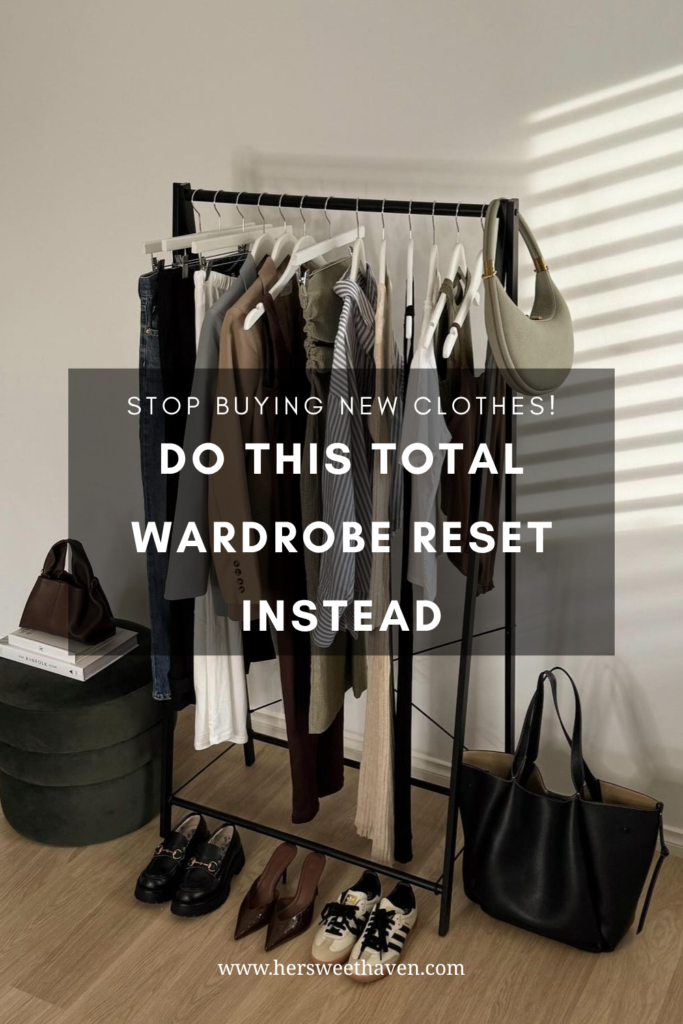
The Psychology of Letting Go (Because It’s Not Just About Hangers)
Here’s something nobody talks about with closet resets: they’re emotional.
You’re not just getting rid of clothes. You’re letting go of past versions of yourself. That dress from your wedding symbolizes joy. Those work pants symbolize an identity. That trendy piece symbolizes a time when you thought you’d be someone different. Holding onto these pieces isn’t about the fabric. It’s about holding onto a version of your story.
This is why decluttering stalls. Women don’t get stuck because they can’t decide if something is too small. They get stuck because throwing it away feels like throwing away that version of themselves.
Here’s the reframe: you’re not losing her. You’re honoring her. You had that experience. You wore that dress. You showed up in that life. Now you’re creating space for who you are now.
The guilt is real, and it’s normal. But guilt is a terrible reason to keep something. Guilt takes up just as much closet space as fabric does.
How do I stop feeling guilty about clothes I’m not wearing?
First, honor the purchase. You paid for it. Maybe it was wasteful. Maybe you learned something about your taste. But punishing yourself by keeping it doesn’t undo the purchase. Donating it to someone who will wear it is the best possible ending for that piece.
Second, recognize that keeping something you don’t wear isn’t loyalty to your purchase. It’s self-punishment. Your closet isn’t a museum of past decisions. It’s a functional space for your present life.
Third, donate with intention. Many items can go to thrift stores where they’ll be bought and worn. Some pieces go to consignment. Some go to women’s shelters or workforce development nonprofits where they help people in transition. Knowing where your clothes are going makes letting go easier.
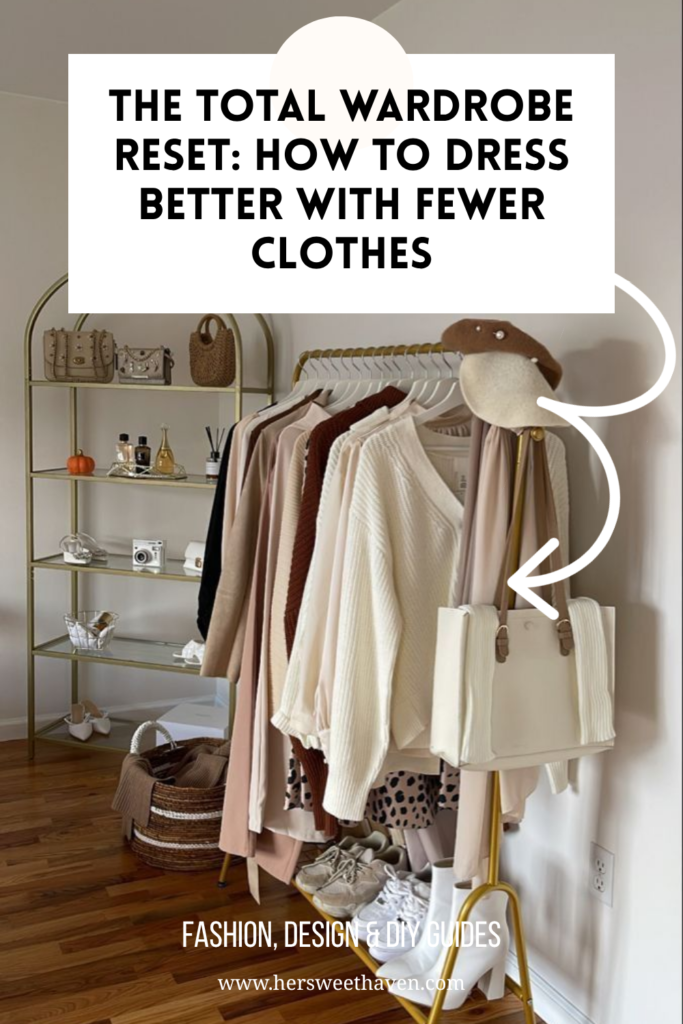
After the Reset: Maintaining Your New Closet Reality
Here’s the hard truth: a closet reset isn’t a one-time project. It’s a ritual you’ll repeat seasonally because life changes.
But the good news? Once you’ve done it once, it’s so much faster the second time. And the payoff compounds.
Your new shopping rule has to be different. When you see something you want, you ask: Does this work with my current wardrobe? Will I wear it at least 30 times? Is it quality enough to last? If the answer to any of these is no, you don’t buy it.
This sounds restrictive. It’s actually liberating. You’re not fighting decision fatigue every time you shop. You’re being intentional. You’re buying pieces that actually belong in your life.
Do seasonal touch-ups instead of massive overhauls. When seasons change, pull everything out again. But this time, it’s a quick assessment. Do these pieces still fit? Are they still your style? This takes an hour, not a weekend.
Keep your closet working for your actual life, not for Instagram. Your real life means you wear your favorite jeans three times a week. It means you need more basics than statement pieces. It means comfort matters. It means a boring cardigan you actually wear beats a gorgeous coat you’re too nervous to wear.
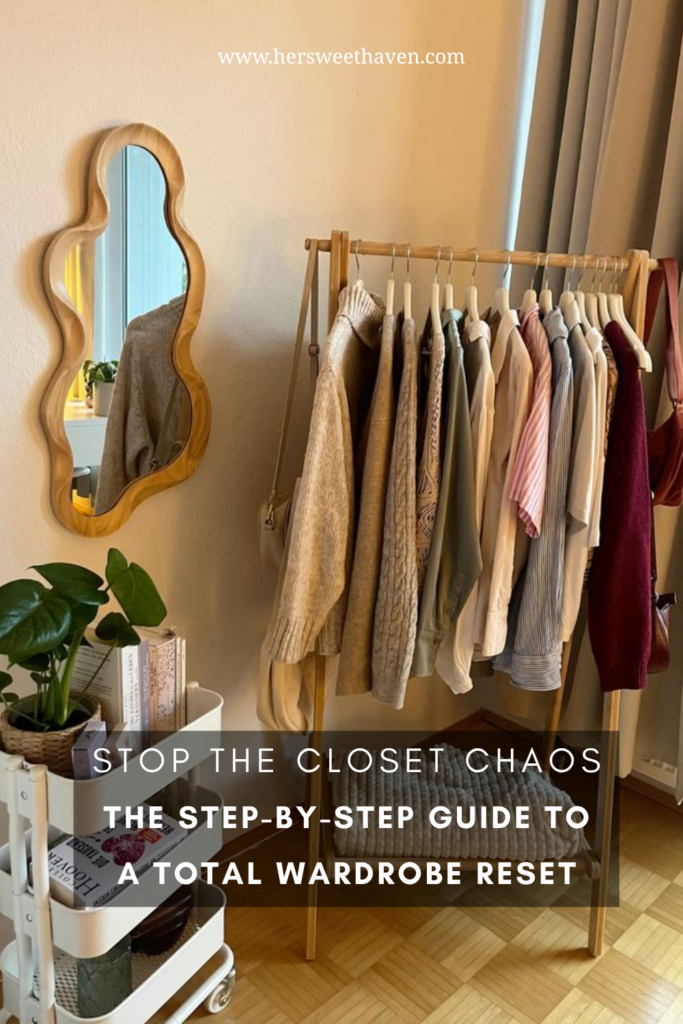
The Bottom Line: Your Closet Should Support Your Life
A wardrobe reset isn’t about achieving perfection. It’s not about minimalism or looking like a fashion blogger.
It’s about alignment.
It’s about your closet finally supporting how you actually live. It’s about opening your doors and seeing options instead of feeling overwhelmed. It’s about getting dressed in five minutes because every piece works. It’s about confidence that comes from wearing things you genuinely love.
When I finished my reset, I had maybe 40 pieces hanging in my closet. Just 40. But I could create dozens of outfits from those 40 pieces. Everything matched. Everything fit. Everything made me feel like myself.
My mornings changed. Instead of that sick feeling of “nothing to wear,” I had clear options. Instead of second-guessing myself all day, I felt put-together. That sounds like a small thing. But when your closet finally supports you instead of draining you, it changes how you move through the world.
This weekend, do this. Pull everything. Be honest about what serves you. Let go of the rest. Organize what remains.
Then subscribe for more fashion wisdom. Because keeping your closet as a reflection of your real life is an ongoing practice, not a destination.
You’ve got this.
Leave a Reply