
The best bedding set ideas share one quiet feature: they don’t depend on you making the bed. A small print, a fabric that’s meant to be a little crumpled and fewer pillows do the tidying for you, so a bed you left in a hurry still looks like a choice at 6 p.m. Pick bedding that forgives, and the bedroom looks pulled together on the mornings you don’t have five spare minutes, which, if your mornings are anything like most people’s, is most of them.
Small patterns hide what smooth fabric shows
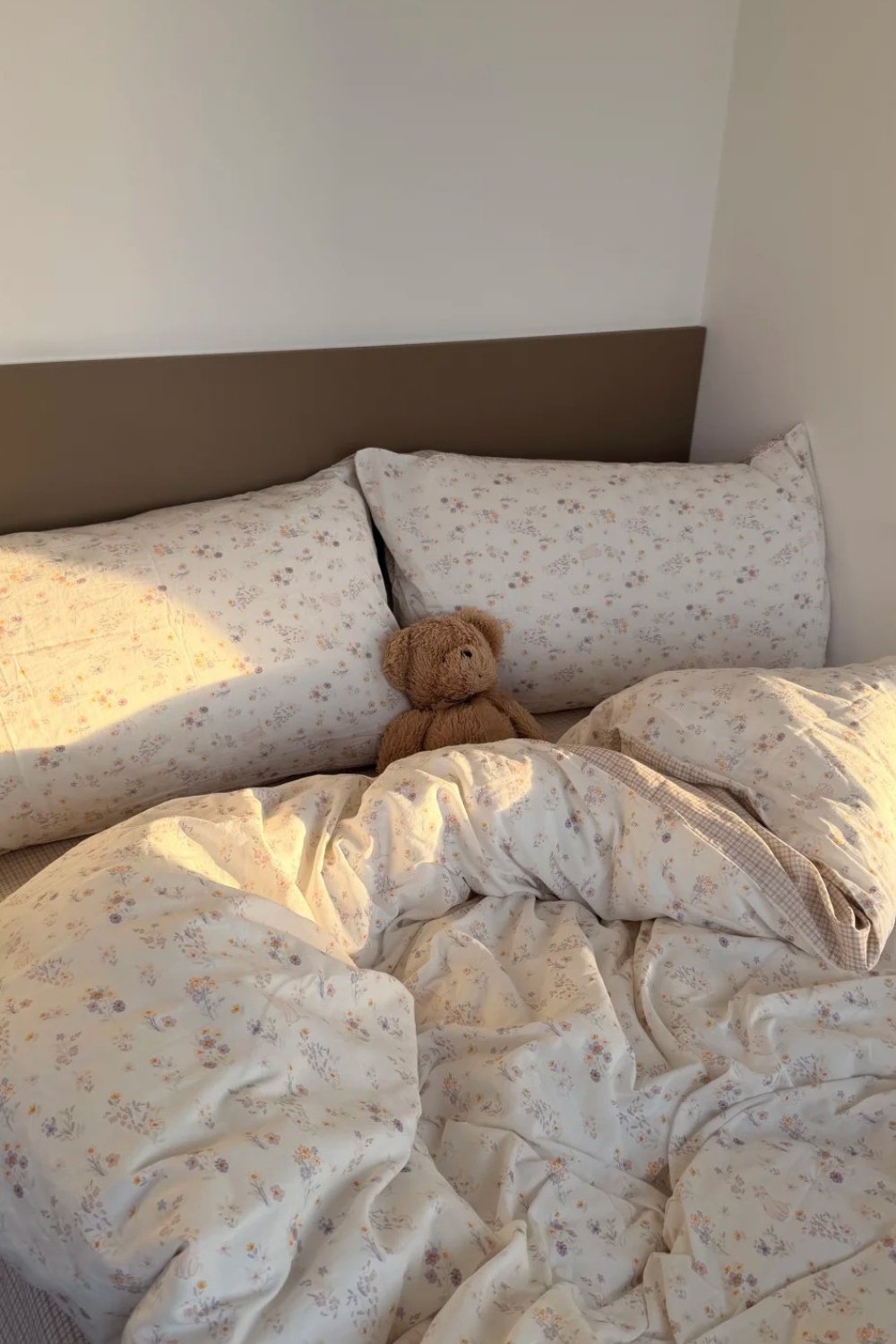
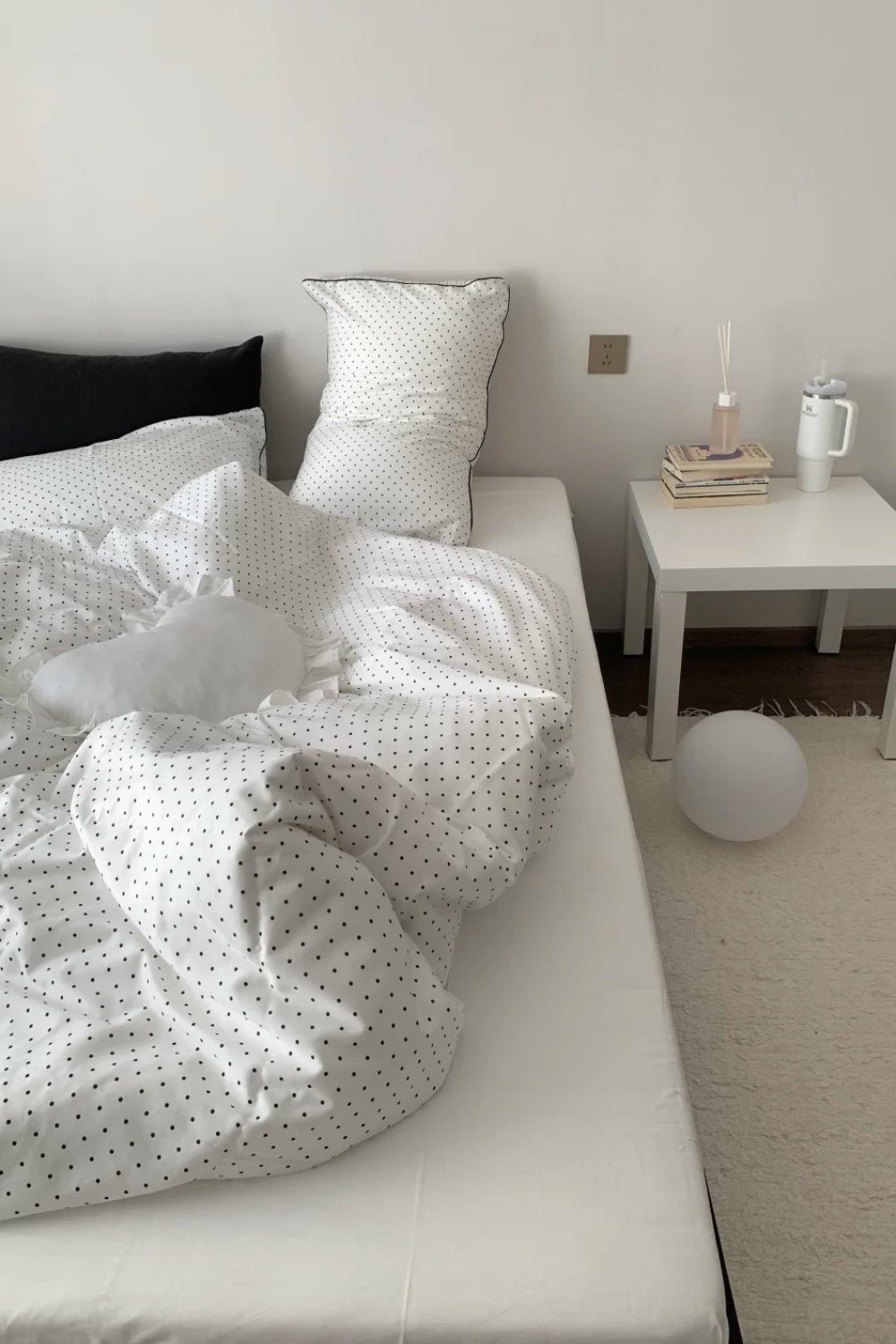
A plain white duvet shows every wrinkle, every dent where you sat to put on socks, and every spot where the cover twisted around the insert. A small, repeating print breaks up the surface, so the eye reads the pattern first and the creases second. That’s the whole reason polka dots and ditsy florals keep showing up in bedding ideas that look relaxed instead of messy.
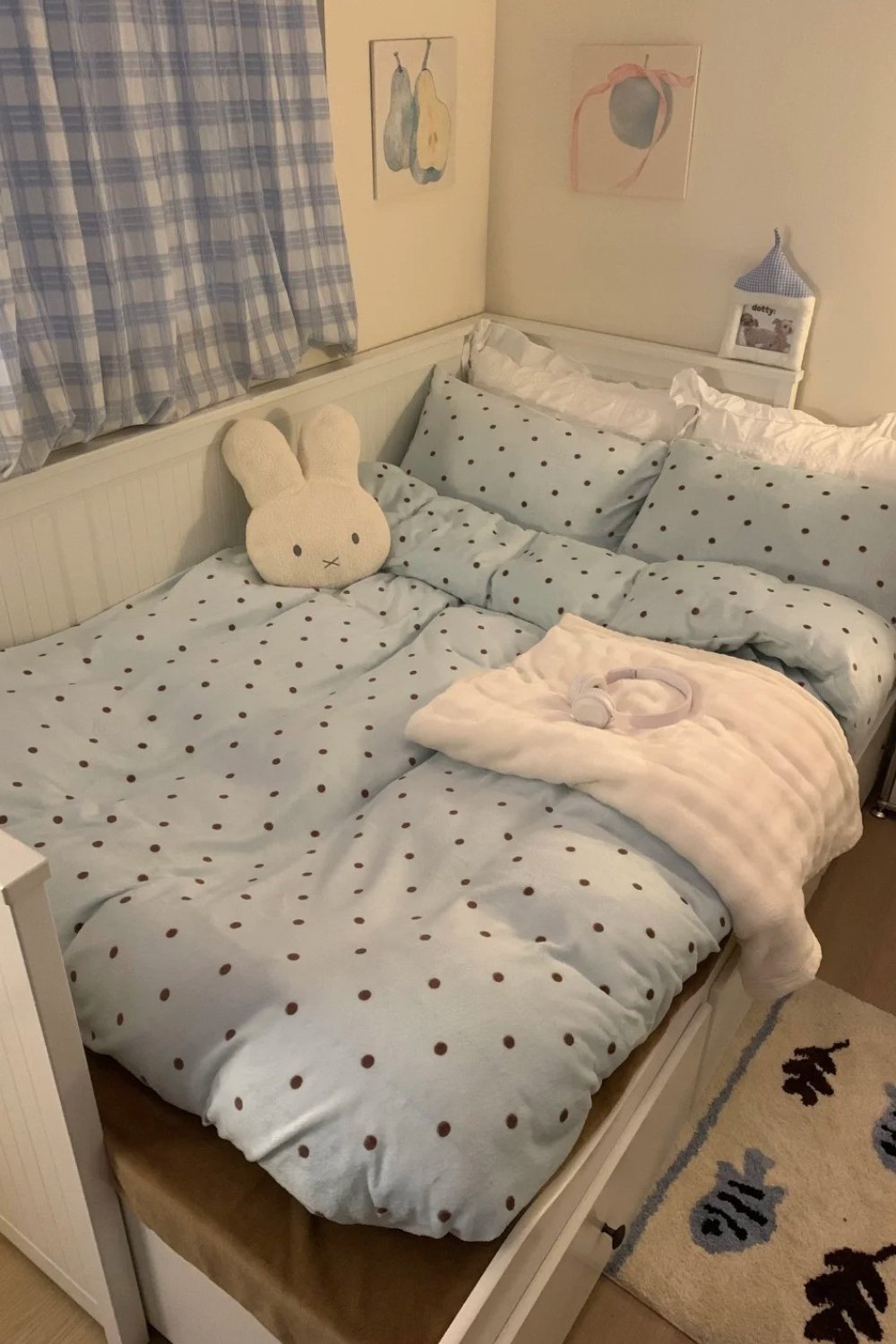
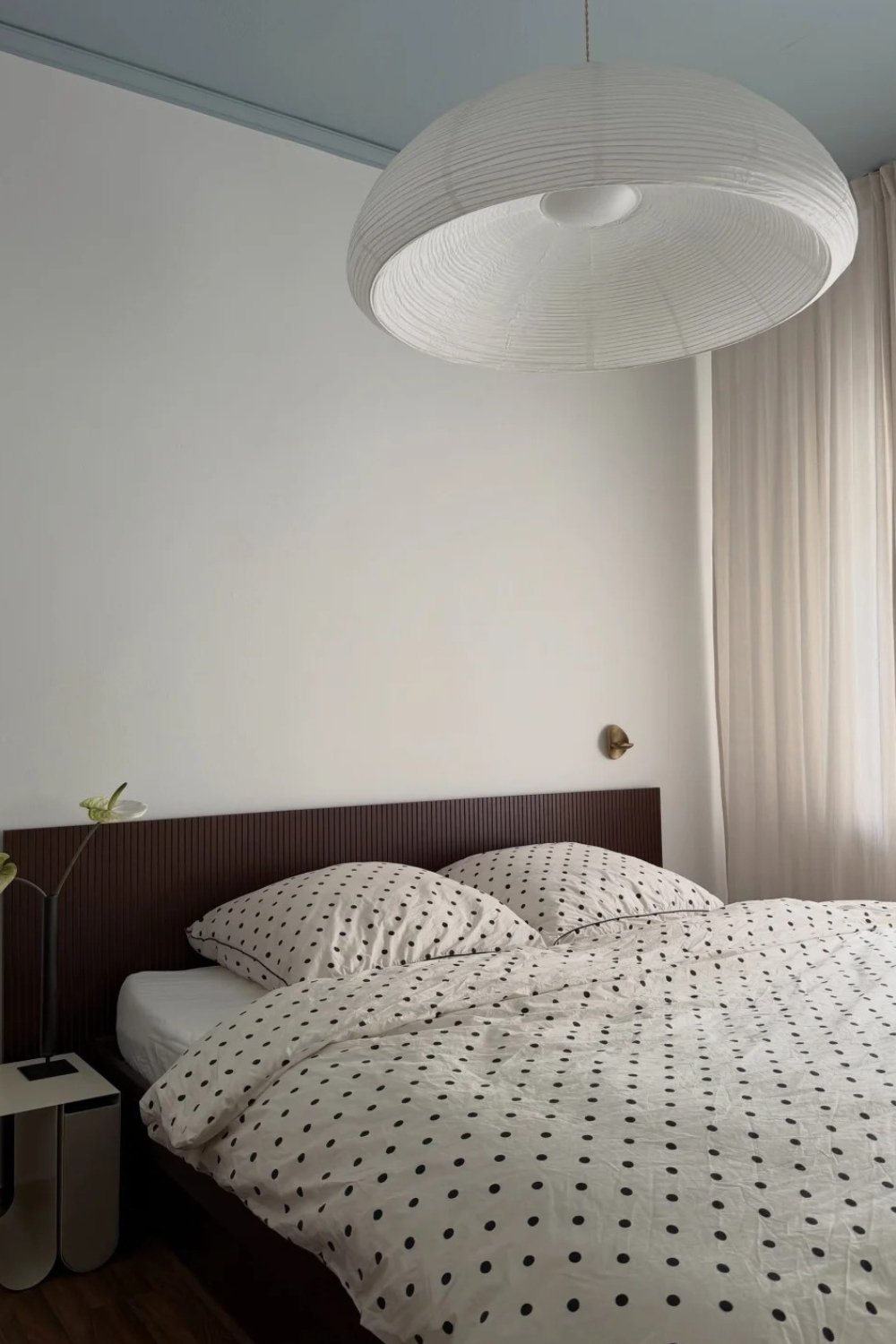
Polka dots are the easiest place to start. Small dark dots on a pale background, like brown on powder blue or navy on white, give the bed a graphic look that holds up whether the duvet is smoothed flat or pushed to one side. They’re also one of the few patterns that work in a playful room and a minimal one. In a room with white walls and a single pendant lamp, a dotted bedding set adds just enough detail without turning busy.
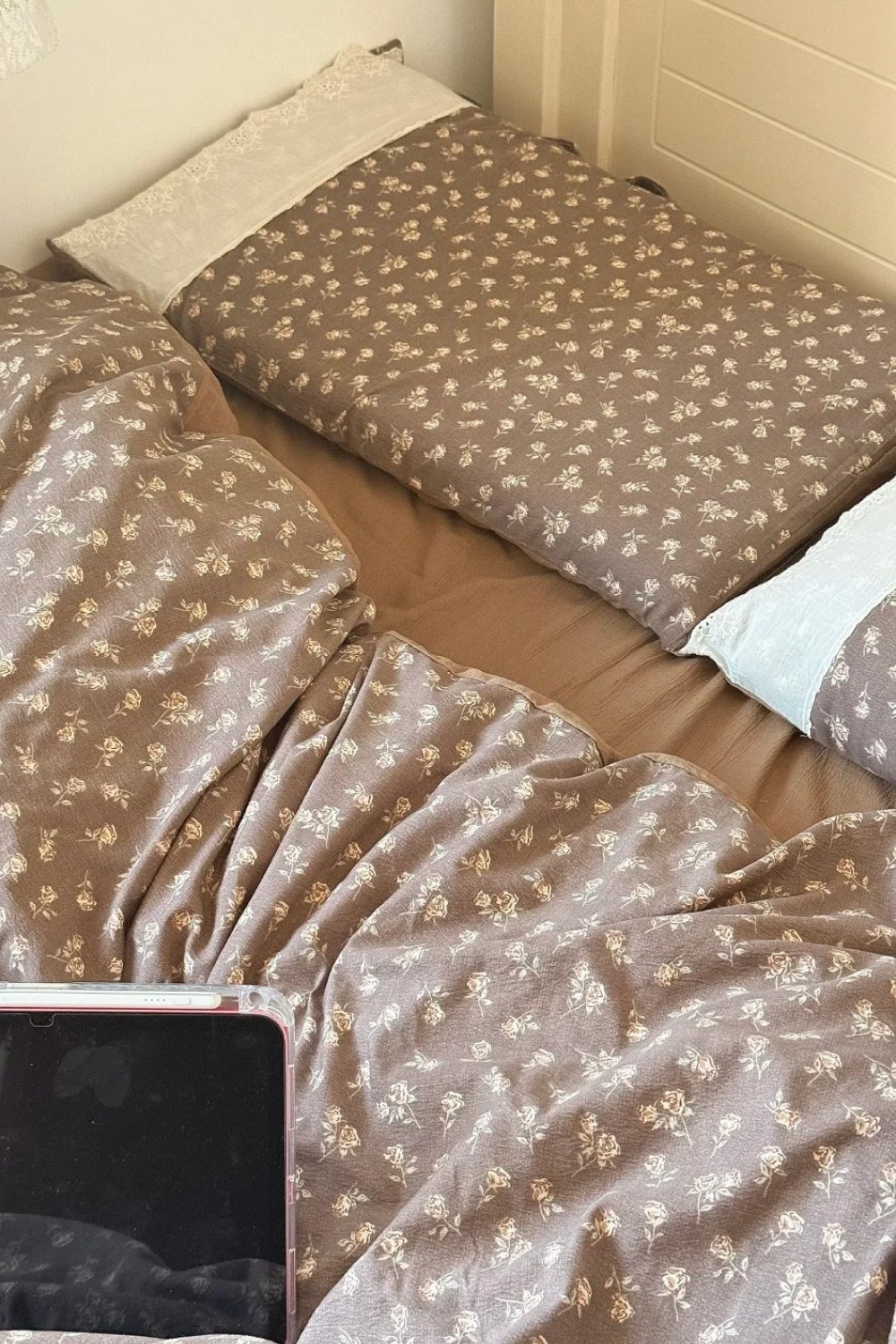
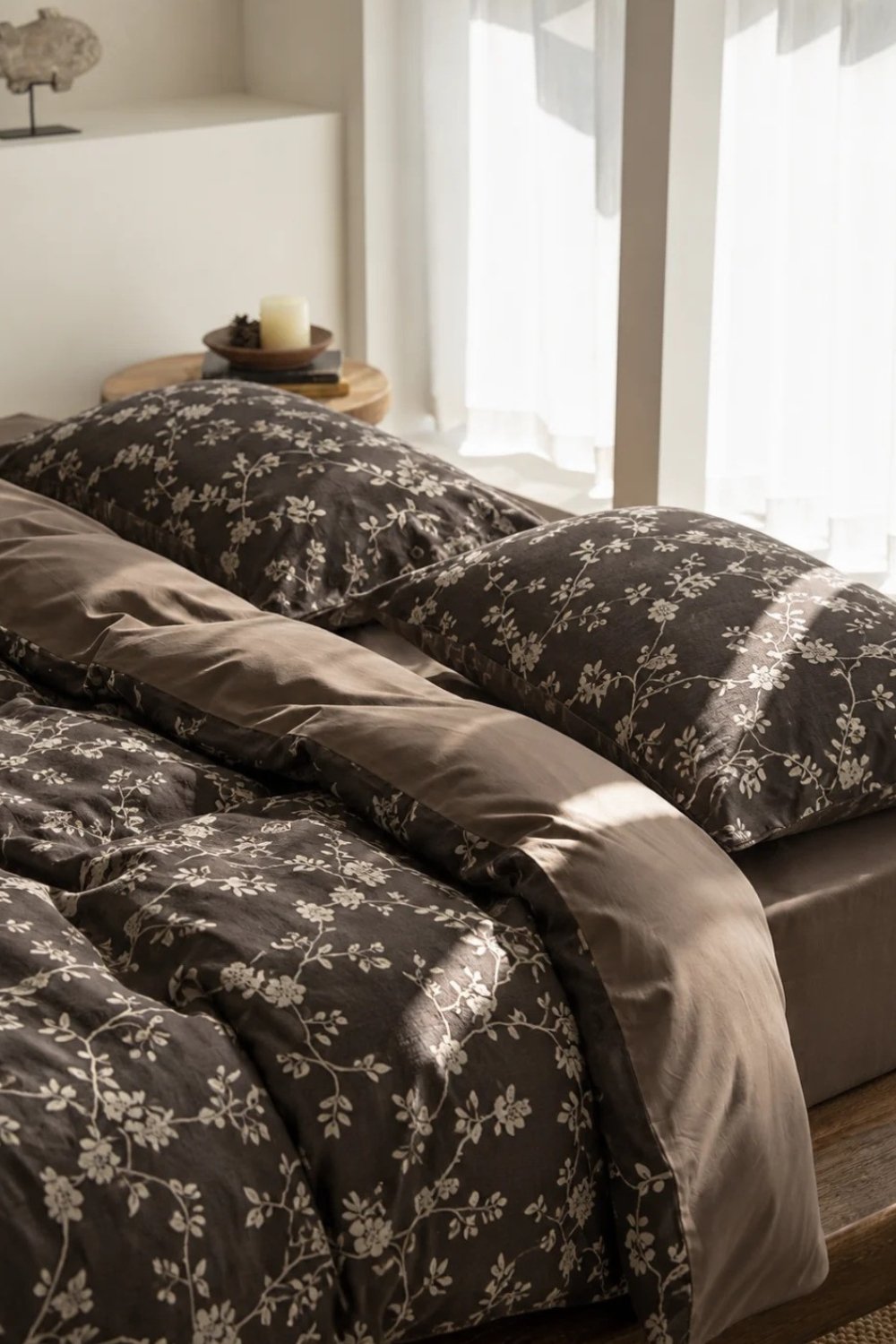
Ditsy florals work the same way with a softer mood. The flowers are small and scattered, so no single bloom draws attention, and the overall effect is closer to a texture than a print. Taupe or mushroom-brown backgrounds with small cream flowers look especially calm, and they hide everyday wear better than white or pastel grounds.
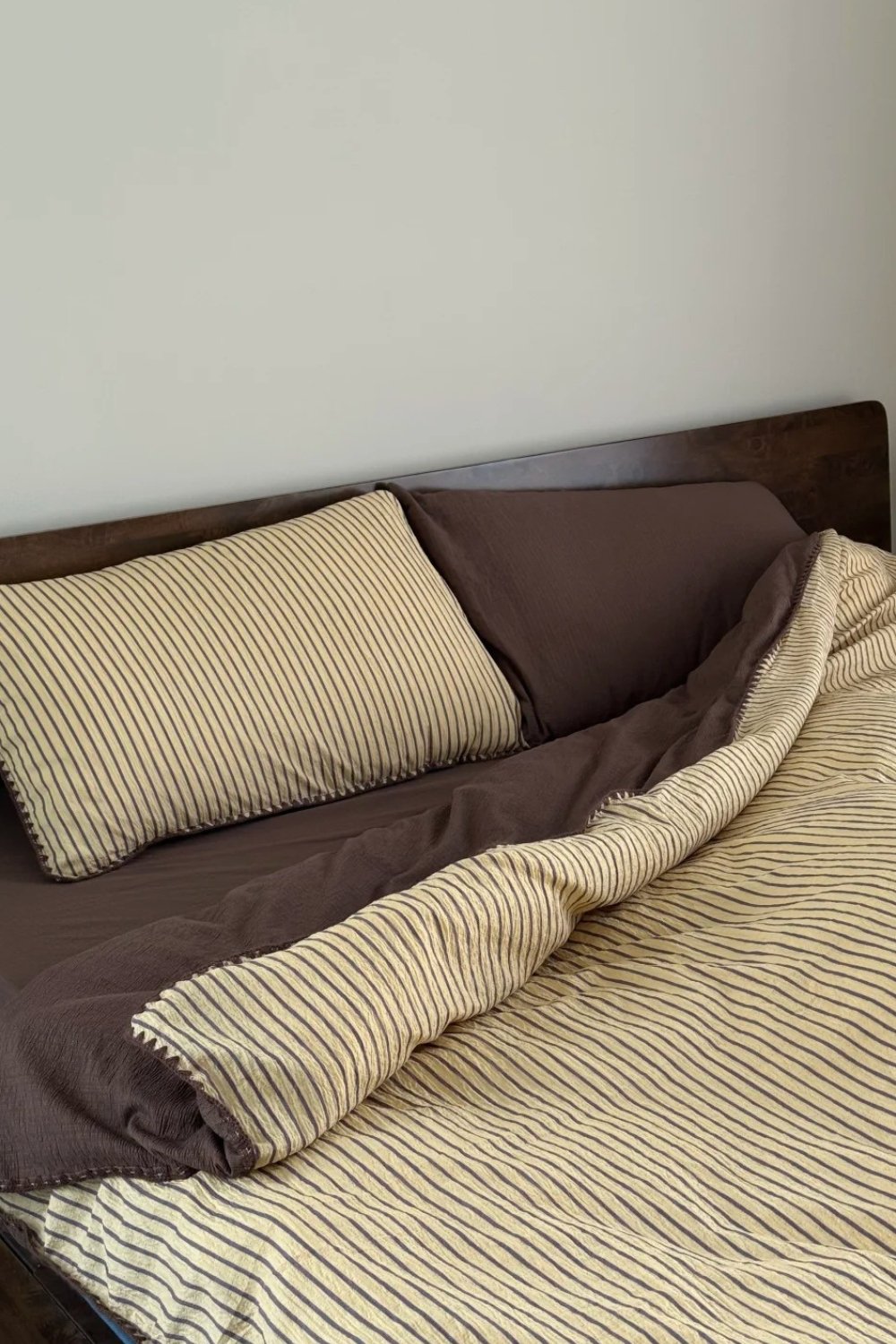
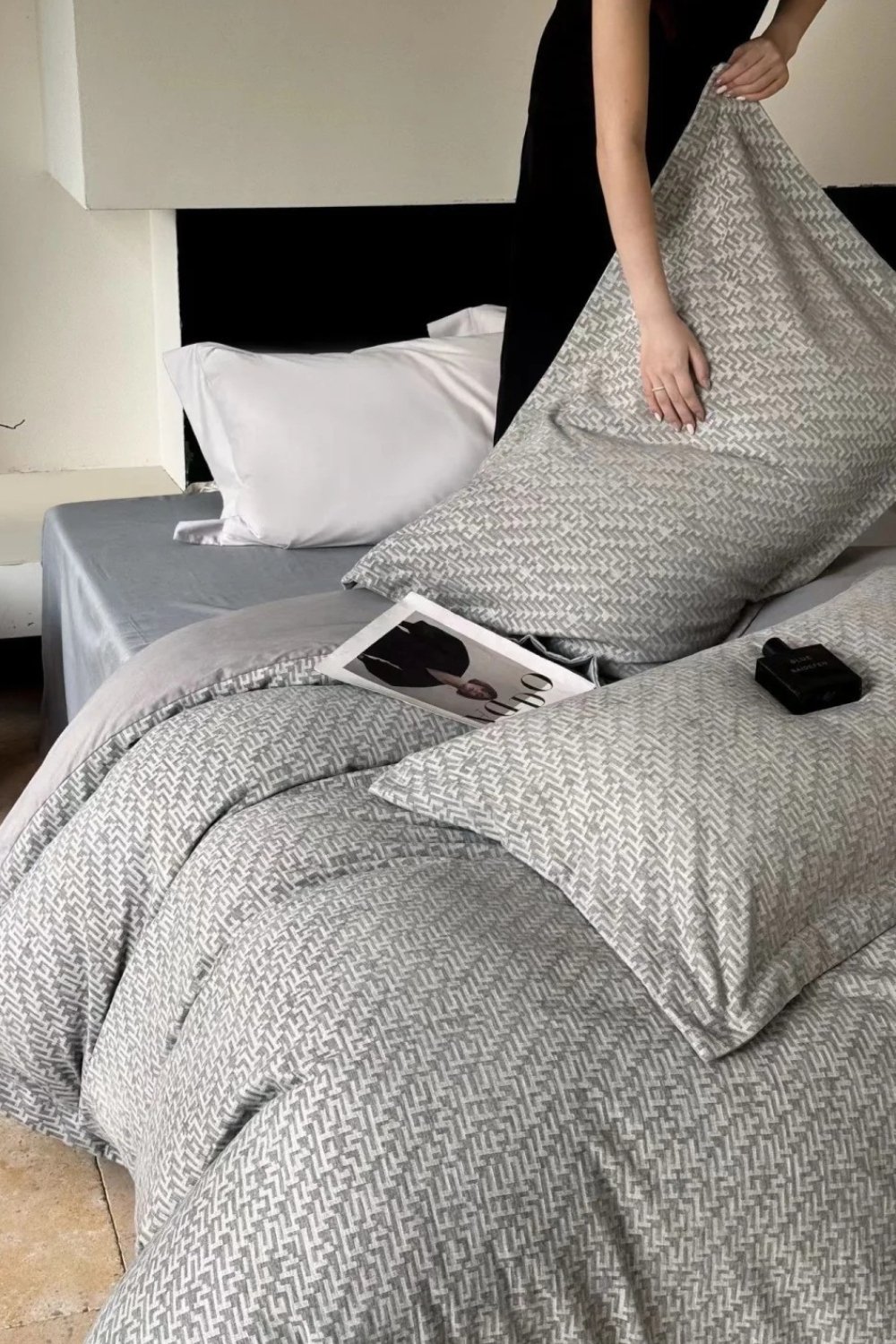
Stripes are the third option, and the most forgiving of all when the stripes are thin. A reversible duvet with stripes on one side and a solid color on the other gives you two looks in one bedding set: fold the top back and the contrast between the two sides looks intentional, even when the fold is lopsided. Textured jacquard does the same job without color. The pattern is woven into the fabric, so light catches the raised parts and the surface already looks varied before you’ve touched it.
Fabrics that look better rumpled
Pattern is half of it; fabric is the other half. Some fabrics look their best pressed and fall apart the minute you lie on them. Others look better slept in.
Washed cotton is the everyday pick. It goes through a washing process before it’s sold, which takes away the stiff, shiny finish of new cotton and leaves it soft and slightly crinkled from the start. Since it never looked crisp, it can’t look un-crisp. Linen goes further: it wrinkles naturally, and the wrinkles are part of the look. It’s also breathable in summer and gets softer with every wash. The downside is price, and linen can feel scratchy for the first few washes.
Quilted cotton has stitched lines running through it, which hold the shape of the duvet and give it a soft, padded surface that hides lumps underneath. The weave matters too. Percale is matte and a little crisp, and its wrinkles look soft; sateen has a smooth sheen that catches the light along every fold, so it shows creases more. If an unmade bed is the goal, percale is the safer cotton weave.
For winter, brushed fabrics like brushed cotton, flannel or fleece-backed covers add warmth and a matte, fuzzy surface where creases simply disappear into the nap.
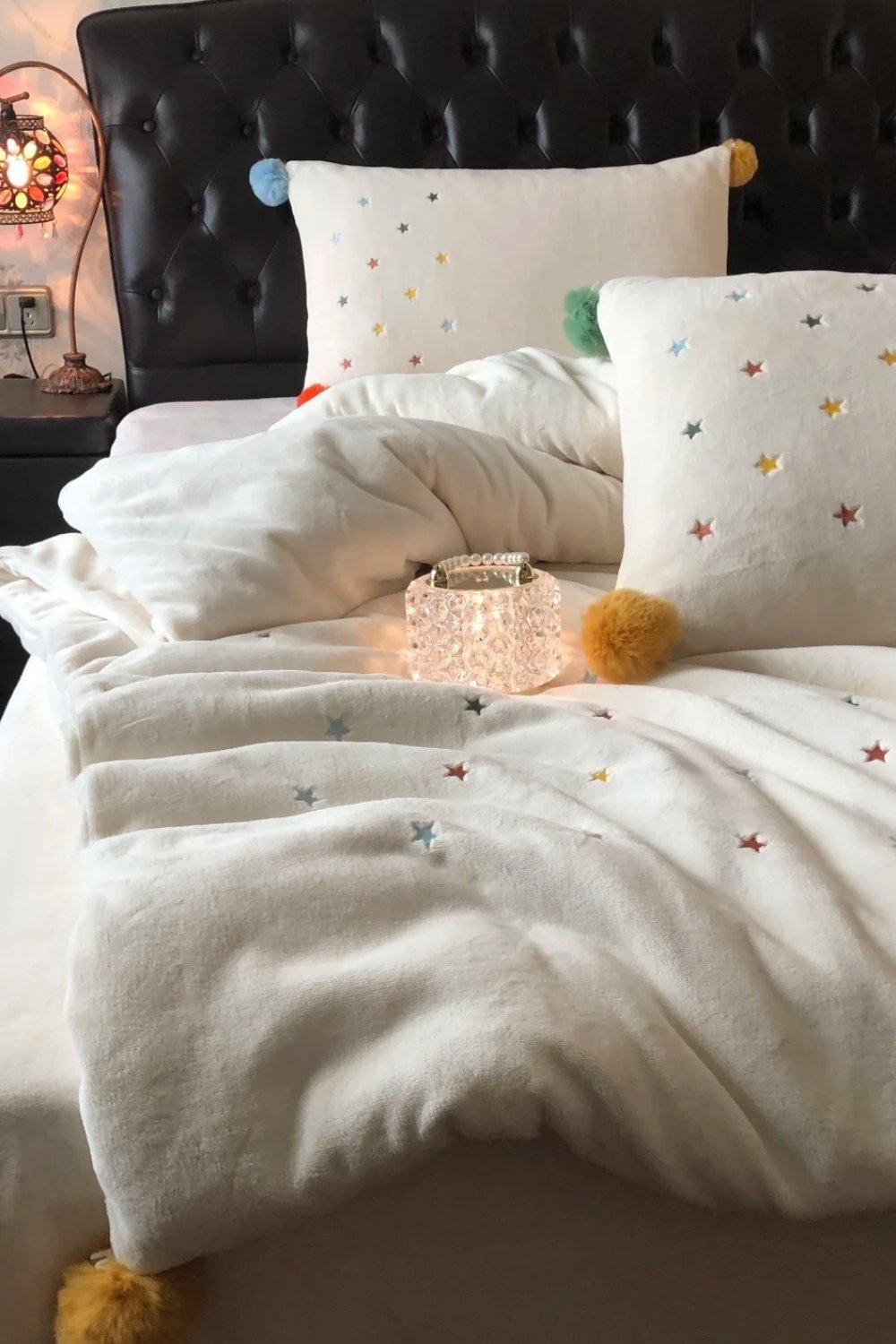
Ruffles and lace trims deserve a mention here too. A ruffled edge on pillows and a duvet is already soft and uneven by design, so a slightly messy bed reads as romantic rather than unfinished. In my opinion, ruffled bedding sets look better a little rumpled than neatly made, because the ruffles have room to fall naturally.

Pick a color mood, not a matching bedding set
Matching bed comforter sets, where the duvet, pillowcases, shams and bed skirt all come in the same print, look neat in the package and a bit stiff on the bed. Choosing a color mood instead gives you room to mix one patterned piece with plain ones, and it makes replacing a single pillowcase later much easier.
Pale blue and cream is the fresh option. It suits rooms with lots of daylight, white walls and light wood, and it pairs well with navy or brown accents in small doses. If you’re after cute bedding ideas for a small room or a first apartment, pale blue with brown dots is hard to beat: playful, but not childish as long as the rest of the room stays plain. A leaf or small sprig print on cream, with one dark accent color, sits in the same family and looks light even with a full duvet. If you’re kitting out a new place from scratch, my first apartment checklist covers what to buy before move-in day.

Taupe and brown is the warm option. Mushroom, coffee and sand tones layered together look calm and hide everyday life very well. If your bedroom already leans natural, my guide to an earthy bedroom has more ideas for that palette.
Dark florals are the moody option. Moody bedding sets in chocolate, charcoal or deep green with a lighter floral pattern make a bedroom feel enclosed and quiet, especially in fall and winter. They work best when the walls are light or mid-tone, so the bed becomes the darkest thing in the room. If you’re thinking about the walls too, these bedroom paint colors include a few that sit well behind darker bedding.
Eclectic bedding, where a floral pillowcase meets a striped duvet and a gingham sheet, can work too. The rule is one shared color across all the patterns. Without it, the mix looks like whatever was clean that week. Most of the eclectic bedding ideas you see saved on Pinterest quietly follow this rule.
Fewer layers, less to fix
The more layers a bed has, the more there is to put back each morning. Six decorative pillows, a bed runner, a coverlet and a folded throw look great in a catalog and take ten minutes to rebuild. Most of that disappears onto the floor at night anyway. When you shop, look for bedding sets that sell pillowcases separately, so you can buy two instead of four.
A simpler setup looks just as finished. A duvet on top, a throw folded loosely at the foot, and two or three pillows: one pair to sleep on, and maybe one smaller pillow in front. If you skip everything else, the bed still looks dressed, and pulling the duvet up takes ten seconds. The throw at the foot does more work than it seems: it covers the part of the duvet that gets pushed around most, and it adds a second texture without adding a step.
New bedding as a small reset
New bedding sets do something that goes beyond looks. After a long, tiring season or a big change, like a move, a new job or the end of something, changing the bed is one of the smallest things you can do that makes a room feel different. It doesn’t need a weekend, a budget for furniture or a plan. You pull off the old cover, put on a new one, and the room you wake up in has changed.
I think that’s why bedding set ideas get saved so often: they’re a fresh start that fits in one shopping bag. It doesn’t fix anything bigger, of course. Still, a bed that looks good when you walk in at night is a pleasant thing to come home to. If you want to take it further, my post on creating a bedroom retreat goes beyond the bed to the whole room.
Washing it so it gets softer
A good bedding set should feel better after a year than on the first night. A few habits make that happen.
Wash in cool or lukewarm water rather than hot, which keeps colors from fading and fibers from shrinking. Use less detergent than the cap suggests, since leftover soap makes fabric stiff. Skip fabric softener on linen and washed cotton; it coats the fibers and makes them less absorbent over time. Dry on low heat, or line-dry and finish with a few minutes in the dryer to soften. Take the bedding out while it’s still slightly damp and put it straight on the bed: the wrinkles that set in a dryer drum are sharper than the soft ones that form on a bed.
Linen and washed cotton keep getting softer with every wash, so the bedding set you buy this fall should be at its best by spring.
A bed that looks good unmade is one less job every morning, and a small print on the duvet does most of that work while you’re already heading out the door.





Leave a Reply