

Take a look at your patio or terrace right now. Not the version in your head, the actual space as it exists today. If it’s a bare concrete slab with a folding chair and a forgotten planter, you’re in the majority. Most outdoor spaces are underused not because they lack potential, but because nobody has taken the time to treat them with the same intention as the rooms inside. Patio and terrace design is one of the fastest-growing home improvement categories in 2026, and for good reason: a well-designed outdoor space adds livable square footage to your home for a fraction of what an interior renovation would cost.
The trend this year is clear. Homeowners want outdoor spaces that feel like natural extensions of their homes, not afterthoughts. That means real furniture (not plastic stackable chairs), intentional lighting, defined zones for different activities, and a cohesive look that connects to the interior design of the house. Whether you’re working with a rooftop terrace, a suburban backyard patio, or a small apartment balcony, this guide covers the design ideas that are trending right now, the mistakes that make outdoor spaces feel cramped, the designer-level setups you can recreate on a regular budget, and how to design the whole thing without feeling overwhelmed.
Budget-Friendly Terrace Ideas for a Cozy Outdoor Refresh
You don’t need a landscape architect or a five-figure budget to make your terrace or patio feel like a retreat. Some of the most impactful changes cost under $200 and can be done in a single weekend.
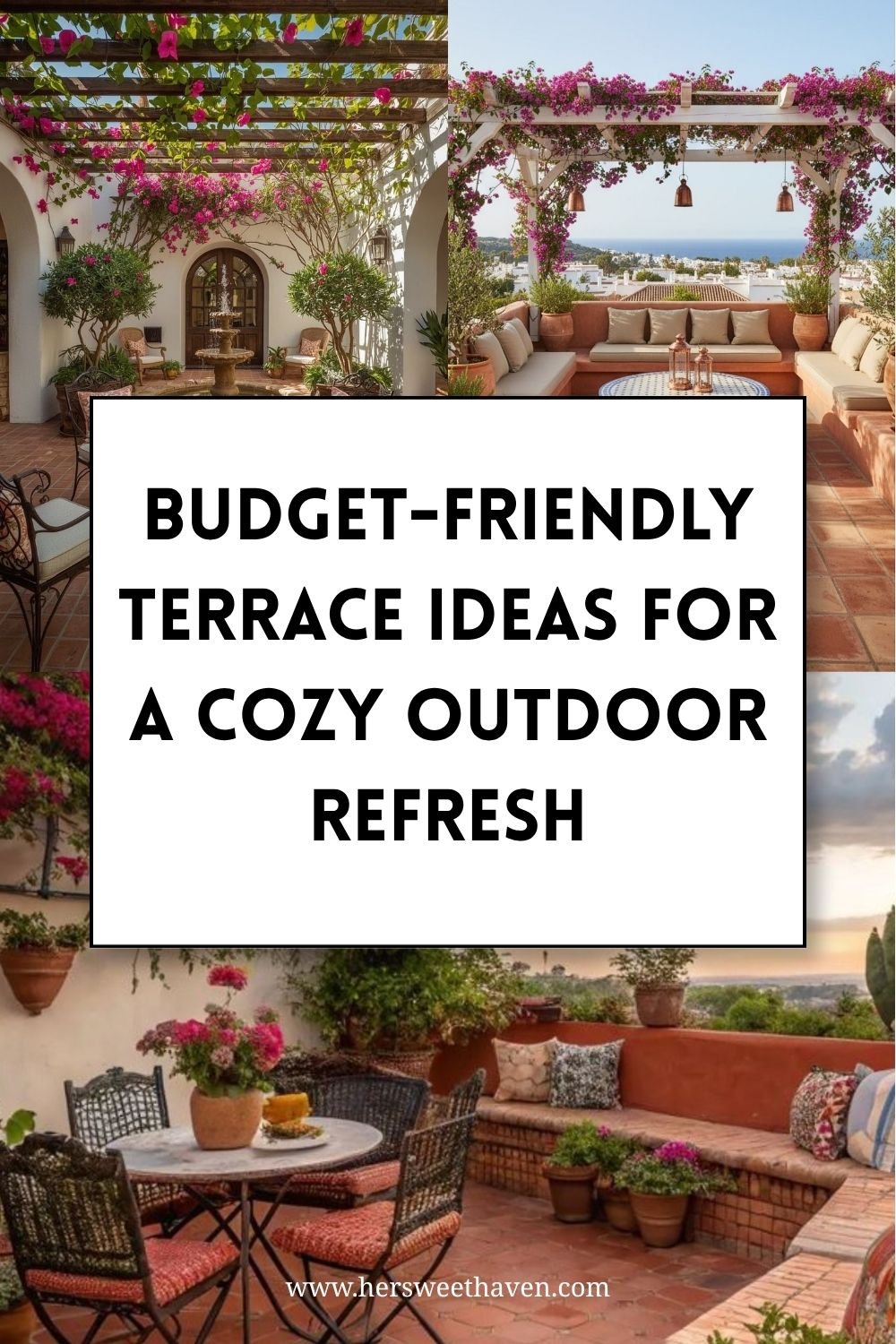
Mediterranean-Inspired Terrace Styling
The Mediterranean patio look is one of the most-pinned terrace design styles on Pinterest because it’s warm, inviting, and surprisingly affordable to recreate. Terracotta pots in varying sizes, bougainvillea or climbing jasmine on a trellis or pergola, wrought iron bistro furniture, and warm-toned cushions in burnt orange, clay, and cream create the feel of a Tuscan courtyard without the plane ticket.
Outdoor design trend reports for 2026 confirm that warm, earthy color palettes (clay, sage, terracotta, and warm neutrals) are replacing the all-grey, all-white outdoor schemes that dominated previous years. Adding a few lanterns with candles (battery-operated ones work for safety and convenience), a woven outdoor rug, and a small side table completes the look for well under $300.
String Lights and Soft Lighting
Nothing changes the atmosphere of an outdoor space faster than lighting. A set of warm-white string lights draped overhead between two anchor points (a fence post and a wall bracket, two trees, or a pergola frame) creates instant ambiance for about $15 to $30. Layer in a few solar-powered path lights, a couple of candle lanterns on the table, and a wall-mounted sconce near the door, and your patio goes from “daytime only” to “outdoor living room” in an afternoon.
Living Spaces’ outdoor trend guide notes that outdoor lighting has shifted from purely practical to fully integrated into the design, with string lights, pendant fixtures, and built-in LED strips becoming standard elements rather than seasonal add-ons.
Outdoor Textiles: Rugs, Cushions, and Throws
The single fastest way to make a patio feel like an indoor room is to add textiles. An outdoor rug defines the seating area and makes the space feel grounded. Weather-resistant cushions in coordinating colors add comfort and visual interest to basic furniture. A couple of throw blankets draped over the back of a chair signal that this space is for lingering, not just passing through.
For more budget-friendly ideas on refreshing your outdoor space, these patio decorating ideas on a budget walk through the full process of making a patio feel finished without overspending.
3 Patio Ideas That Quietly Make Your Space Feel Smaller
Some design choices that seem like good ideas actually work against you by making an already limited outdoor space feel more cramped. Watch out for these common culprits.
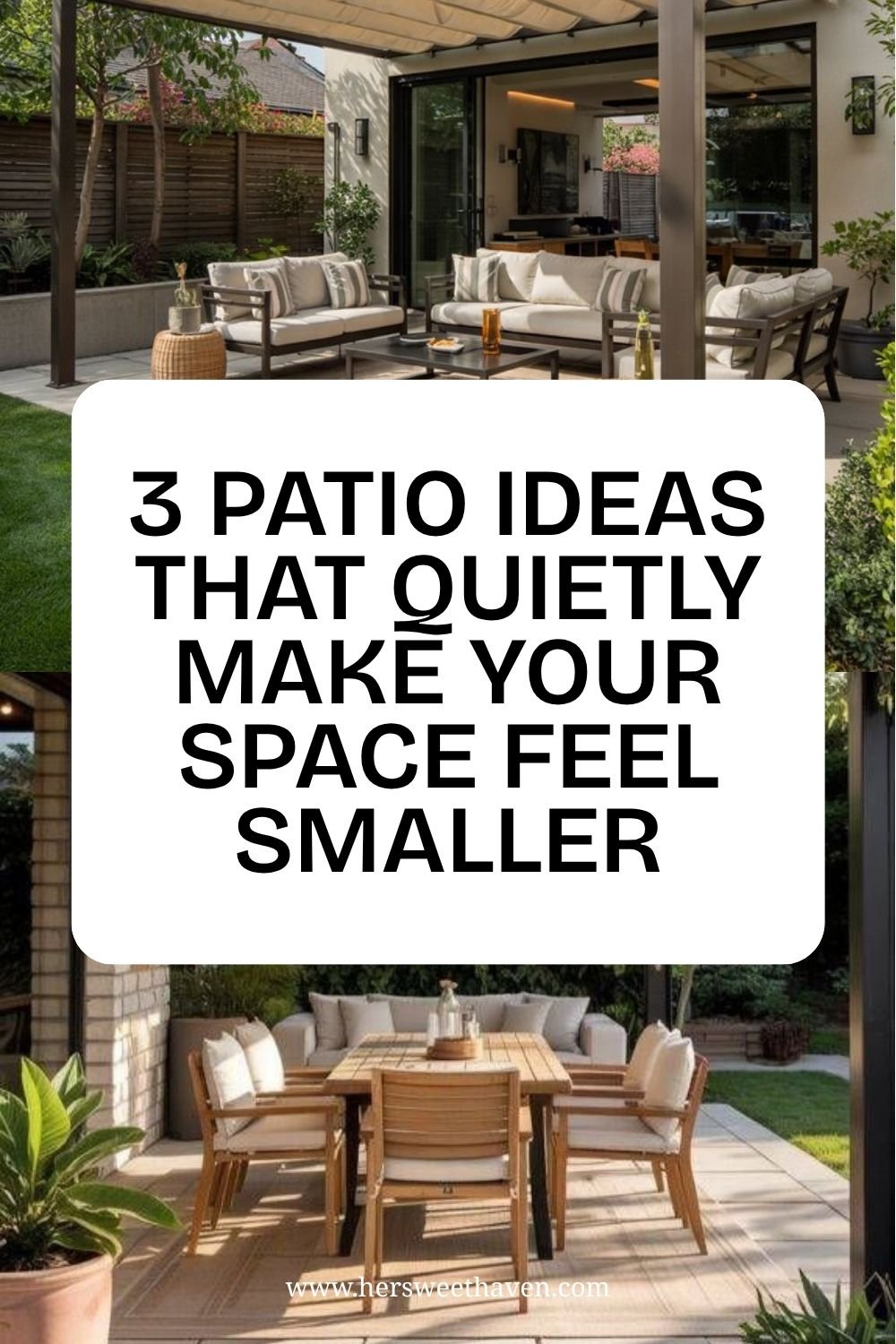
Oversized Furniture in a Small Space
A massive sectional sofa that fills 70 percent of your patio leaves no room to move, no room for a table, and no room for the space to breathe. Patio design experts consistently warn that more furniture does not equal more enjoyment. A compact two-seater with a small side table often feels more spacious and more usable than a large sectional that dominates the entire footprint.
Scale your furniture to your space. If you can’t walk comfortably around every piece with at least 18 inches of clearance, the furniture is too big. For small patios, folding or stackable pieces that can be moved or stored when not in use give you flexibility without sacrificing style.
Too Many Competing Materials and Colors
A brick wall, a stone floor, metal furniture, a wooden planter, a plastic rug, and ceramic pots all in different colors and finishes create visual chaos. Small spaces look bigger when the material palette is limited and cohesive. Two or three materials maximum (wood and metal, stone and wicker, concrete and teak) in a coordinating color family keeps the space feeling calm and organized.
Blocking Sightlines with Tall Barriers
A privacy screen is useful, but a solid wall or a row of tall planters across the front of a small patio creates a boxed-in feeling that makes the space feel like a cage rather than a room. Instead, use partial screens (horizontal slat fencing, open-weave trellises, or climbing plants on a simple frame) that provide privacy while still allowing light and air to pass through.
Dreamy Patio Ideas Straight From a Designer Catalog
The patio setups that look like they came from a professional photoshoot share a few design principles. You don’t need to hire a designer to apply them.
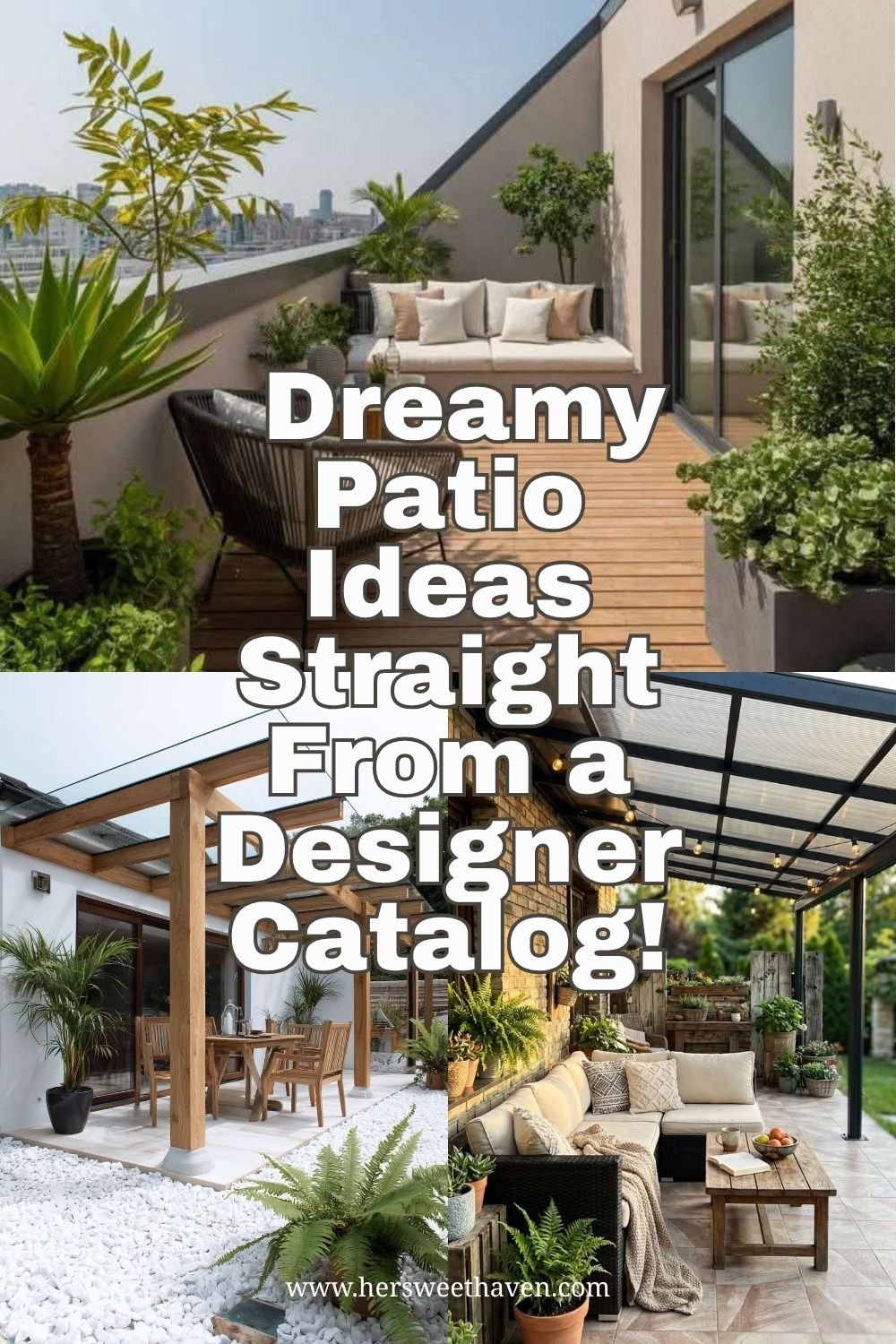
The Rooftop Terrace Lounge
A rooftop terrace or upper-level deck with a modern lounge setup is one of the most aspirational patio designs on Pinterest right now. The formula: a low-profile sectional or daybed with neutral cushions, large potted plants for greenery and soft privacy, a wooden deck or composite flooring, and a pergola or shade sail overhead for sun protection.
BPI Outdoor Living’s design guide highlights bioclimatic pergolas with adjustable louvers as a defining trend for 2026, giving homeowners control over light and shade without visual clutter. Even a simple canvas shade sail (under $50 for most sizes) achieves a similar effect on a smaller budget.
The Covered Patio with Mixed Zones
The most functional patios in 2026 are designed with distinct zones: a dining area, a lounging area, and a green zone (potted plants, a small herb garden, or a vertical planter wall). Outdoor makeover guides confirm that clear zoning is what makes a patio feel larger and more usable than an open, unstructured space where everything blends together.
Define zones using furniture placement (a rug under the dining set, a separate seating group for lounging), changes in flooring material (pavers in the dining area, gravel or wood in the lounge zone), or level changes if your space allows it. The covered portion should house the dining area so meals aren’t interrupted by sudden rain or harsh sun.
If you’re looking for a weekend project to anchor your patio, this guide to building a DIY fire pit for under $100 creates a natural gathering point that draws people outside.
Does Your Patio Ideas List Feel Overwhelming?
If you’ve been saving patio inspiration on Pinterest for months but haven’t actually started, you’re stuck in the planning loop. Here’s how to break out of it and start building.
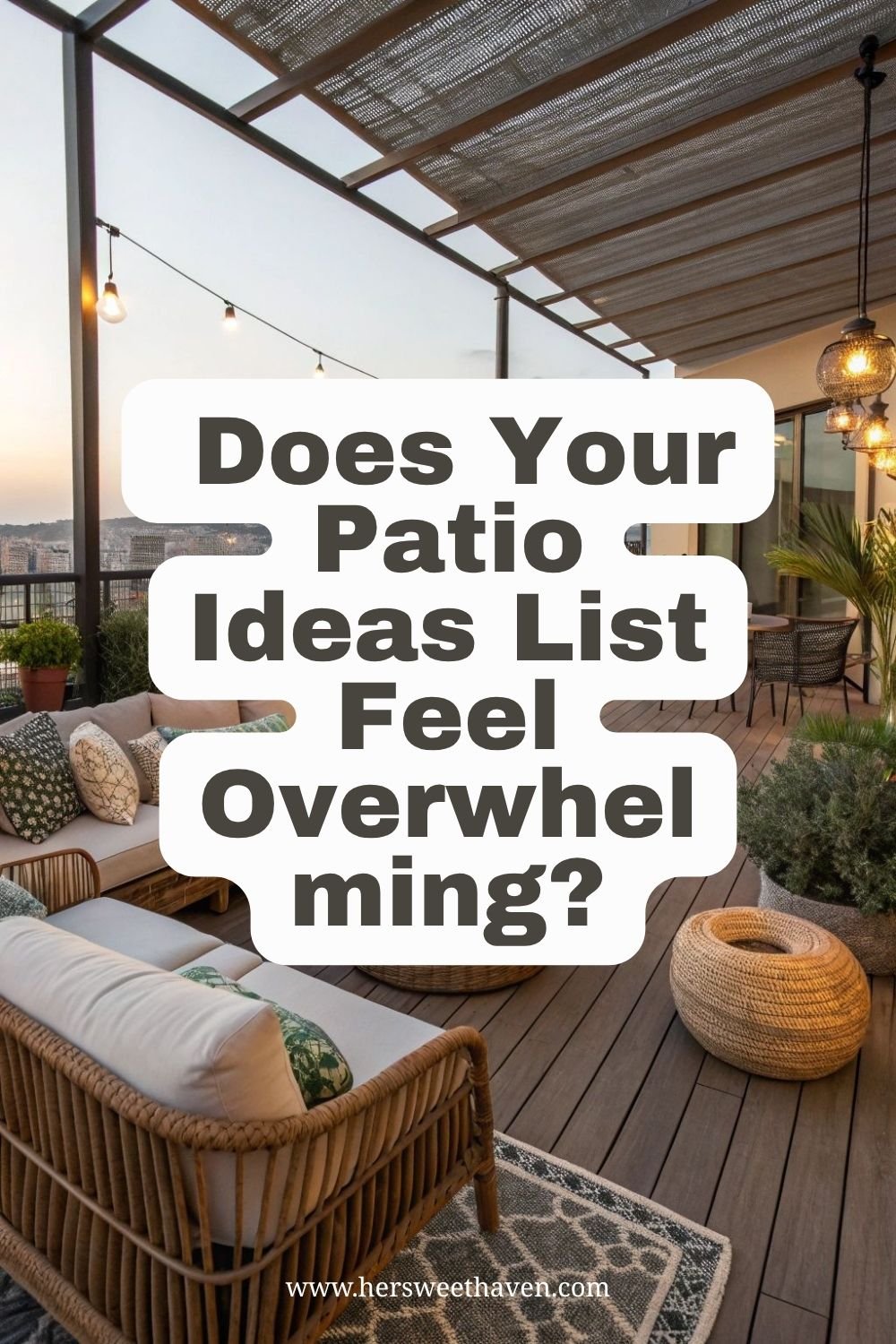
Start with One Zone, Not the Whole Space
The biggest reason people stall on patio projects is trying to do everything at once. Instead of redesigning your entire outdoor space in one weekend, pick one zone and complete it fully. The dining area is usually the best starting point because it’s the most functional: a table, chairs, an overhead light, and a rug underneath. Done.
Once that zone feels finished, move on to the next one (a seating area with a couple of chairs and a side table, then a plant corner, then a lighting pass over the whole space). Building one zone at a time keeps the project manageable and gives you visible progress that motivates the next step.
The Three-Item Rule for Quick Impact
If you can only buy three things this weekend, make them an outdoor rug, a set of string lights, and two to four matching cushions for your existing furniture. These three additions change the look and feel of a patio more than any single piece of furniture could. The rug grounds the space, the lights create atmosphere, and the cushions add comfort and color.
Outdoor courtyard makeover guides emphasize that the most effective outdoor makeovers aren’t about adding more. They’re about making what you have work better. Start with what’s already there, improve it with a few targeted additions, and resist the urge to buy everything before you’ve figured out what you actually need.
How to Design Patio Ideas Without Breaking the Bank
A beautiful outdoor space doesn’t require a contractor, expensive materials, or weeks of construction. These strategies keep costs low while delivering results that look polished and intentional.
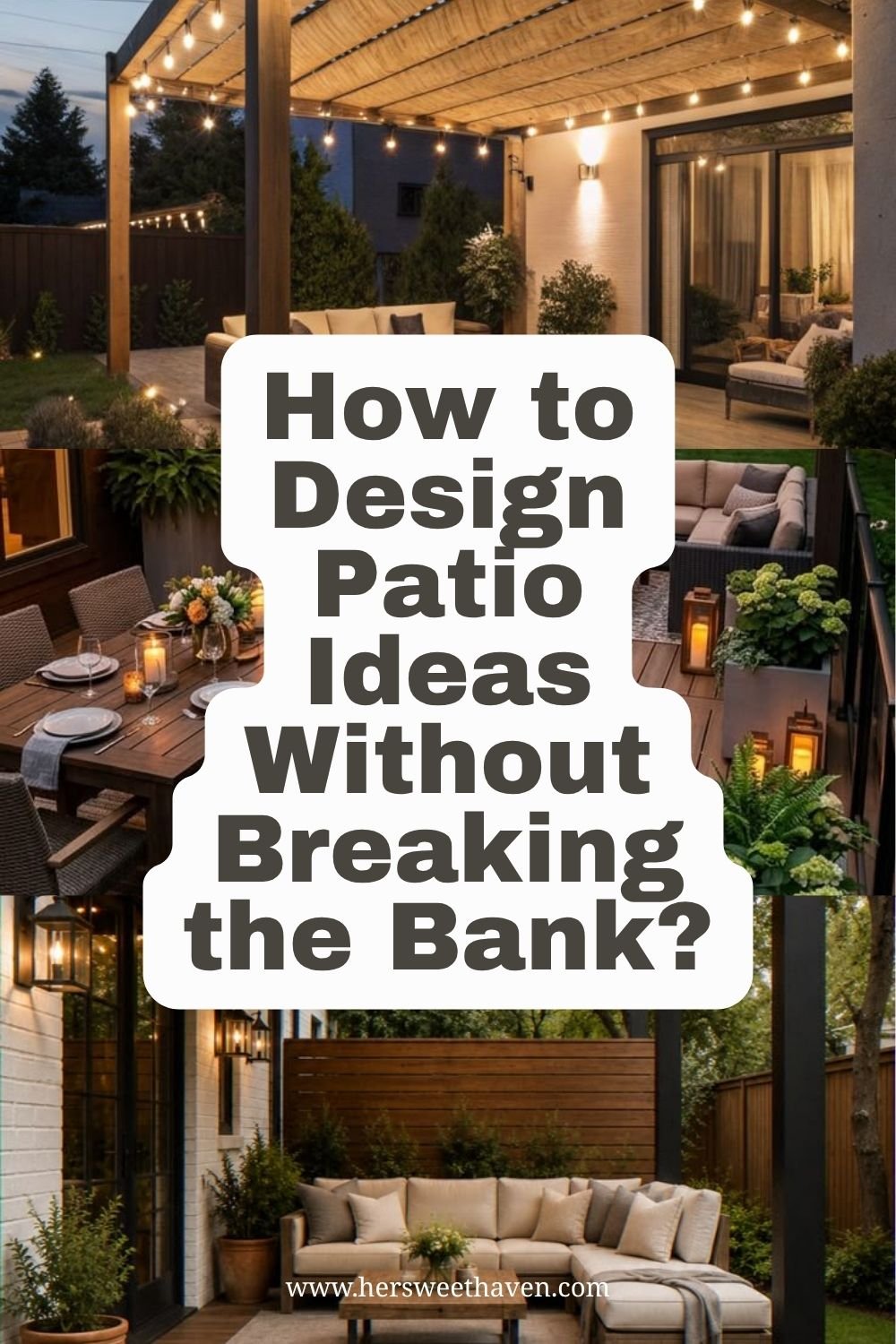
DIY Pergola and Shade Solutions
A pergola creates structure and shade, two things that instantly make a patio feel more like a room. A basic freestanding wooden pergola kit runs $200 to $500 depending on size, and most can be assembled in a weekend with basic tools. If a pergola is out of budget, a shade sail (triangular canvas attached to three anchor points) costs $30 to $80 and achieves a similar overhead element.
For covered seating areas, an inexpensive pop-up canopy or a large patio umbrella with a weighted base provides shade at the lowest price point. The goal is to create the feeling of a ceiling over part of the patio, which psychologically makes the space feel more enclosed and room-like.
Repurposing Indoor Furniture for Outdoor Use
Before buying new patio furniture, look at what you already own. A wooden dining table that’s been replaced indoors can be sanded, sealed with outdoor polyurethane, and moved to the patio. Wooden benches, side tables, and even bookshelves (as plant stands) can be weatherproofed and repurposed for outdoor use.
Thrift stores and Facebook Marketplace are gold mines for solid wood pieces that just need a coat of weather-resistant finish to become outdoor furniture. A $25 thrift-store bench with a $10 can of sealant becomes a patio seating piece that looks like it was bought specifically for the space. For more DIY ideas on making outdoor spaces work harder, these outdoor living space makeover ideas cover affordable projects across every budget level.
Layered Lighting on a Minimal Budget
The most common lighting mistake on patios is relying on a single overhead fixture (usually a harsh porch light mounted near the door). Layer your lighting instead: string lights overhead for ambient glow, a table lantern or candle for task lighting at the dining area, and ground-level solar lights along pathways or garden borders.
The entire layered lighting setup can be done for under $60 with solar-powered and battery-operated options, and the visual difference between a single harsh light and a layered, warm setup is enormous. It’s the change that gets the most compliments from guests because it makes the space feel intentional and inviting after dark. If you’re entertaining, dimmable string lights on a warm setting create the kind of atmosphere that keeps people outside long after dinner is over.
A year from now, you’ll either be sitting on that same bare patio wishing you’d started, or you’ll be out there with string lights overhead, a glass in your hand, and a space that actually makes you want to spend time outside. The difference between those two versions of next summer is one weekend, a few hundred dollars, and the decision to stop scrolling and start building. Your patio is ready whenever you are.
Leave a Reply