

Real bohemian interior design is about building layers. It’s about combining colors, textures, and personal finds into a space that feels warm, lived-in, and completely yours. The good news? You don’t need a designer or a big budget to pull it off. You just need the right ideas and a willingness to mix things up.
That’s exactly what this post is about. These 10 bohemian home decor ideas are blowing up on Pinterest right now, and for good reason. They work in apartments, houses, bedrooms, kitchens, and every room in between. Whether you’re starting from scratch or looking to add a few boho touches to what you already have, you’ll walk away with ideas you can try this weekend.
Let’s get into it.
What Makes Bohemian Home Decor Actually Work?
Before you start buying rattan baskets and macrame wall hangings, it helps to understand what separates a well-done bohemian interior from a room that just looks messy. Two things matter most: layering and color.
It’s All About Intentional Layering
Here’s the key point: bohemian home decor is not about filling every surface with stuff. It’s about building depth through layers that feel collected over time. Think of it like getting dressed. You start with a base layer, then add texture, pattern, and personality on top.
A bohemian living room might start with a simple sofa. Then you add a woven throw, a few patterned bohemian pillows, a layered rug on the floor, and some greenery in the corner. Each piece adds something different. Together, they tell a story.
The boldly layered approach works because every item has a purpose. You’re not decorating to fill space. You’re decorating to create feeling.
Why Your Color Palette Matters More Than You Think
This is where most people get it wrong. They either go too neutral (beige on beige on beige) or too wild (every color at full volume). Neither works on its own.
The sweet spot for bohemian interior design is starting with warm earth tones like terracotta, rust, mustard, and olive as your base. Then you bring in deeper accent colors like emerald, indigo, and gold to add richness. In 2026, designers are leaning into a darker twist on the classic boho palette, using jewel tones and deep accent walls to give bohemian spaces more drama.
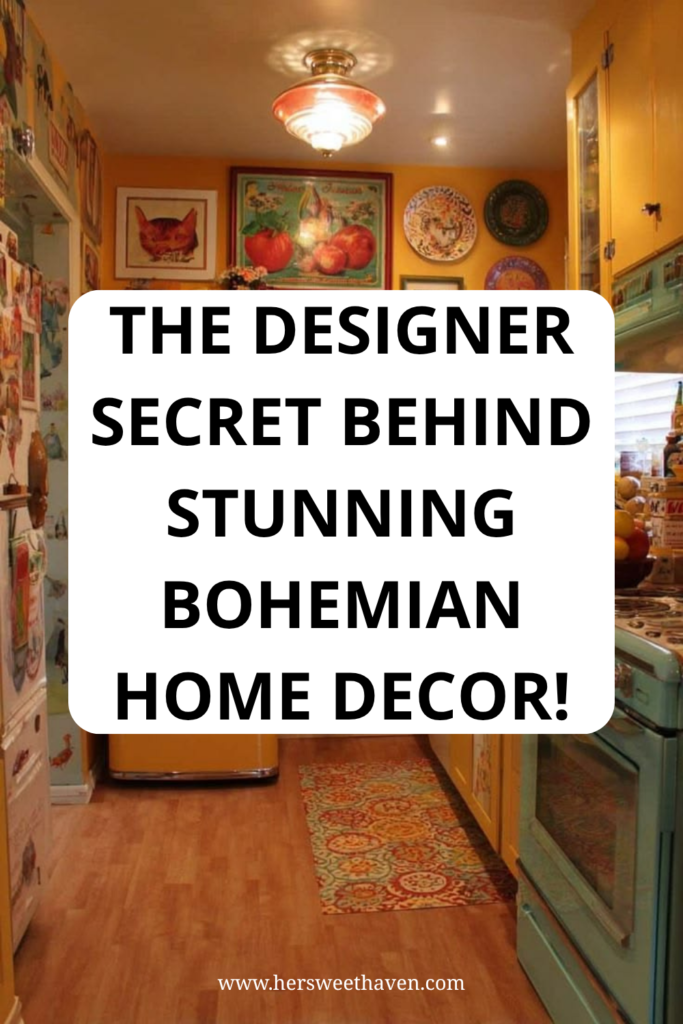
A room like this kitchen shows exactly how that works. The warm yellow walls create an inviting base. The vintage fruit crate art, the decorative plates on the wall, and the colorful patterned rug on the floor all add layers of personality without competing with each other.
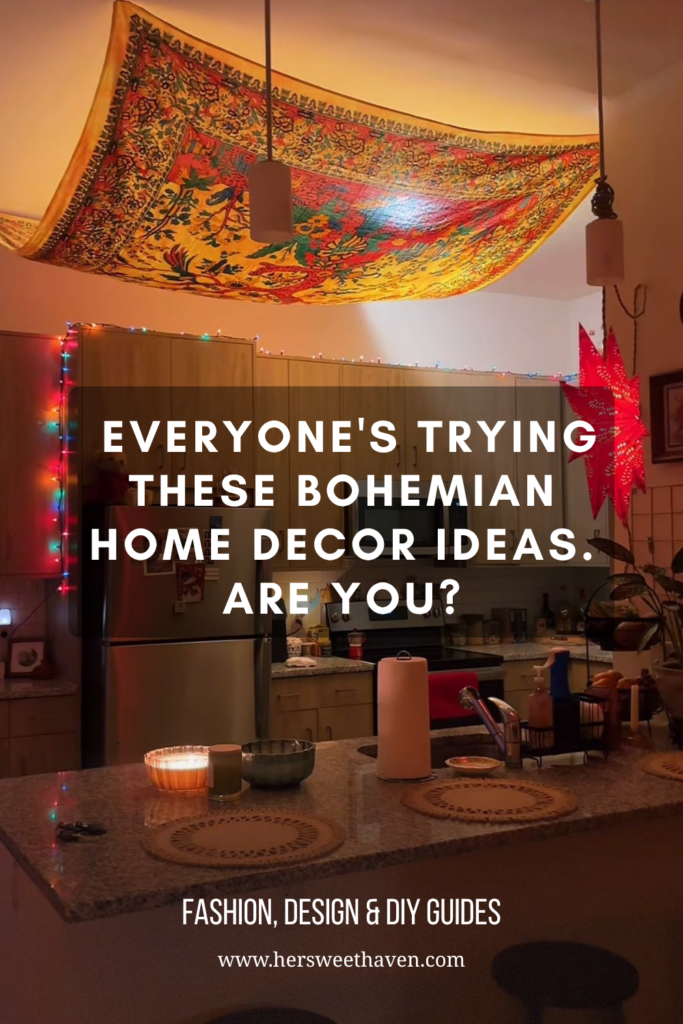
And here’s another great example. The warm lighting, the colorful tapestry draped from the ceiling, and the mix of candles and string lights turn an ordinary kitchen into something that feels like a whole experience.
10 Viral Bohemian Home Decor Ideas to Try Right Now
Here are the 10 ideas that are getting saved, shared, and pinned thousands of times right now. Each one is doable, budget-friendly, and makes a real visual impact.
1. Layer Your Bedding Like a Pro
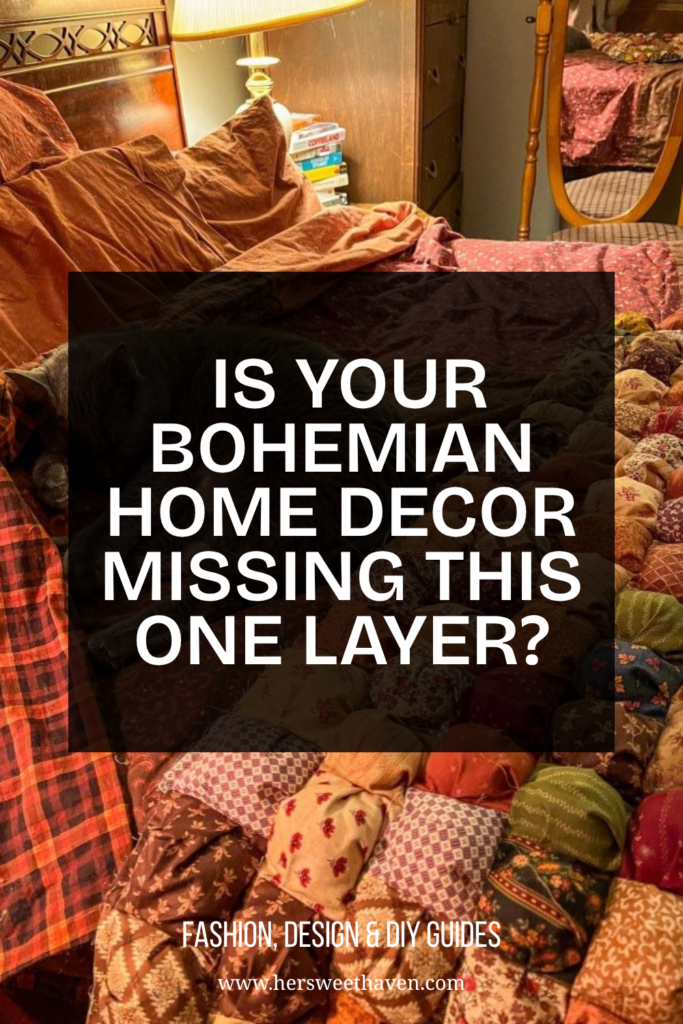
Your bohemian bed should look like it’s been collecting beautiful textiles for years. Start with solid sheets, then pile on a mix of quilts, woven throws, and patchwork blankets in complementary colors. The trick is mixing patterns that share at least one or two common tones.
Don’t aim for perfection here. The slightly “undone” look is the whole point. Fold some pieces at the foot of the bed, drape others across the middle, and let a quilt hang off one side. If you want more ideas for making your bedroom feel like a retreat, check out how to create a cozy bedroom retreat with simple changes.
2. Add a Bold Bohemian Rug (or Two)
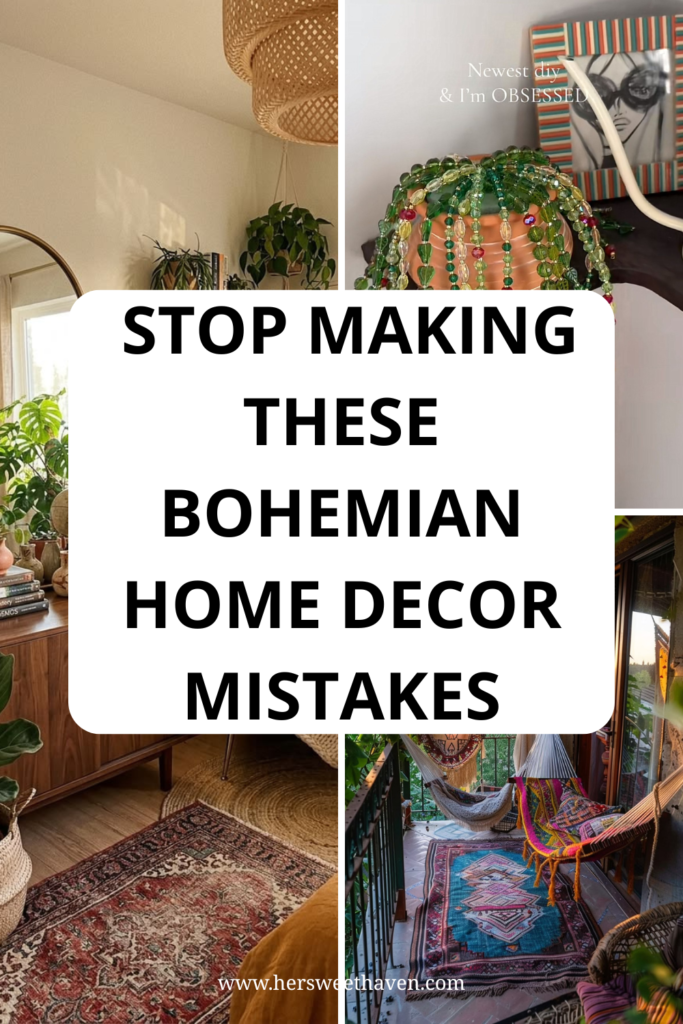
A bohemian rug is one of the fastest ways to change the entire feel of a room. But here’s the move that’s going viral right now: layering rugs on top of each other.
Start with a larger neutral rug (jute or sisal works great) as your base. Then place a smaller, more colorful patterned rug on top. A Persian rug, a Moroccan runner, or even a vintage kilim all work. The layering creates depth and makes the floor feel like part of the design instead of just background.
Interior designers suggest letting your rug do the heavy lifting when it comes to color. Pull two or three tones from your bohemian rug and repeat them in your pillows, throws, and wall art. It ties the whole room together without looking matchy.
3. DIY a Patchwork Window Treatment
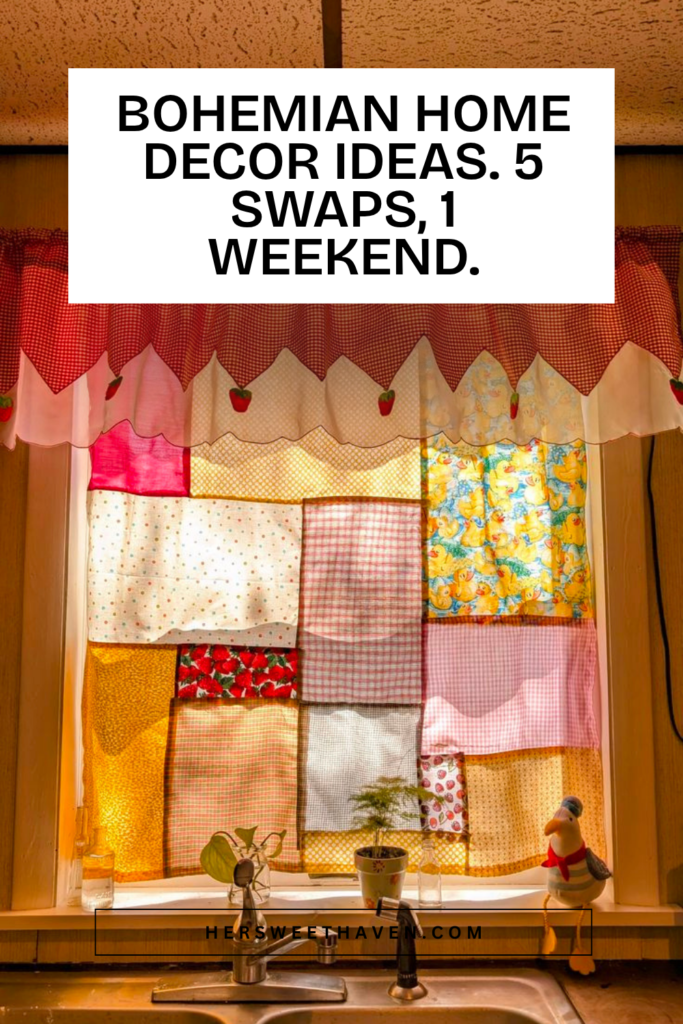
This one is pure DIY gold and the reason it’s going viral. Instead of buying standard curtains, piece together scraps of fabric into a patchwork window covering. Gingham, florals, polka dots, novelty prints. The more variety, the better.
The result is a bohemian kitchen window that looks handmade, personal, and full of color. It works especially well in kitchens and bathrooms where you want something playful. Pair it with a scalloped valance on top for extra personality.
If you’re already thinking about updating your kitchen, take a look at this guide on deciding on your kitchen cabinets to make sure the whole room comes together.
4. Hang Colorful Fabric Bunting
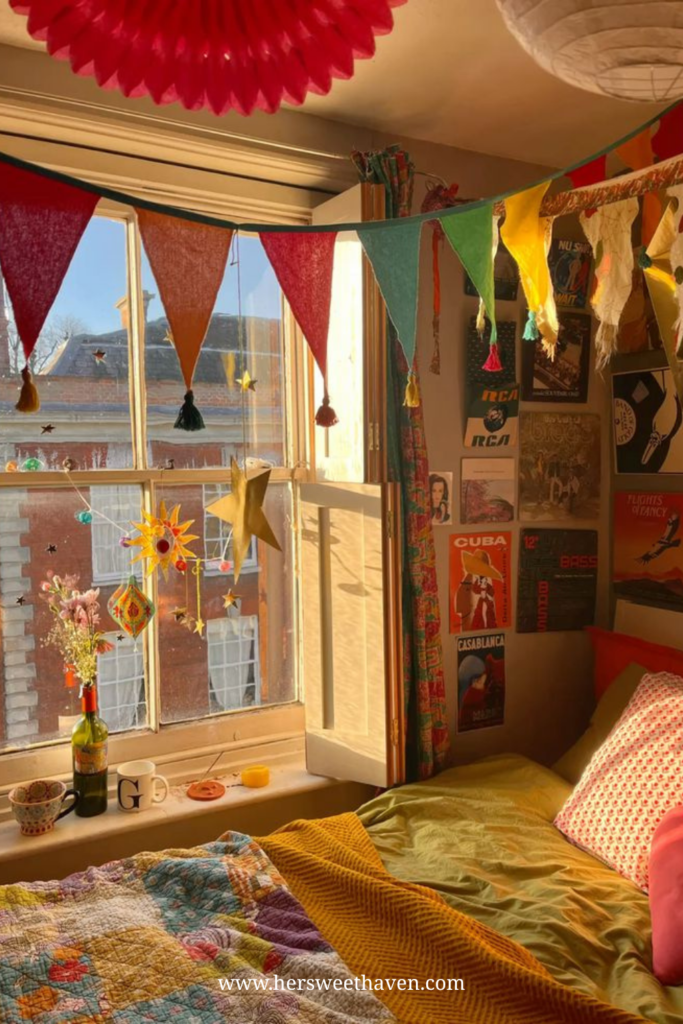
Fabric bunting is one of the easiest and cheapest bohemian wall decor ideas you can try. String triangular fabric pennants across a window, above a bed, or along a wall. Use felt, cotton, or even repurposed fabric scraps in rich colors like red, green, gold, and orange.
Add tassels between the pennants for extra texture. The result is a room that feels festive, personal, and like you actually live there. This works incredibly well in bedrooms, reading nooks, and even kids’ rooms. Pair it with a gallery wall of posters and art for maximum impact.
5. String Beaded Curtains in a Doorway or Window
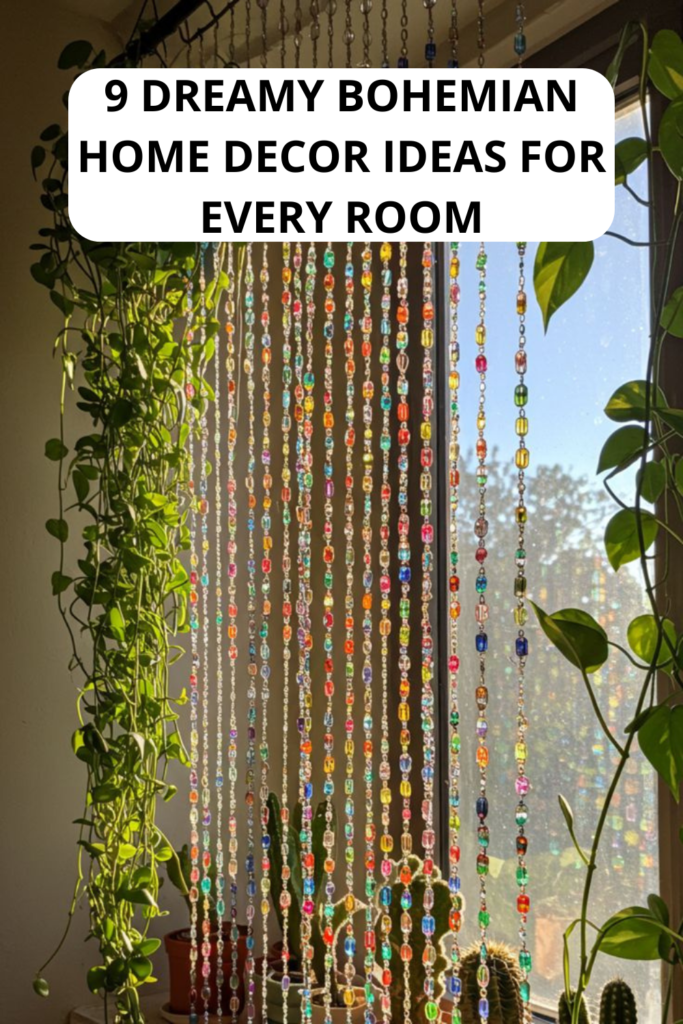
Beaded curtains are making a major comeback in bohemian interior design. The new versions are more colorful and artistic than the plain bamboo strings from decades ago. Glass beads, crystal beads, and hand-painted ceramic beads all catch the light and create rainbow prisms around the room.
Hang them in a doorway between rooms, in a window where they catch the afternoon sun, or even as a room divider in a studio apartment. Pair them with trailing plants like pothos or string of pearls for that full bohemian window look. If you love quirky home decor ideas that make a statement, this is the one to try.
6. Drape a Tapestry From the Ceiling
Most people hang tapestries flat against a wall. But draping one from the ceiling? That’s the move that’s getting all the attention right now.
Pick a large, colorful tapestry and suspend it from the ceiling with hooks or tension rods. It creates a canopy effect that completely changes how a room feels. The space underneath instantly becomes cozier, more intimate, and way more interesting.
This works in bohemian living rooms above a seating area, in bedrooms above the bed, or even in a kitchen or dining area for a dramatic focal point. Add string lights underneath for a warm glow that makes the space feel like something out of a travel journal.
7. Create an Eclectic Bohemian Kitchen
Your kitchen is one of the best rooms in the house for bohemian home decor, and most people completely overlook it. The eclectic bohemian kitchen look is all about mixing vintage finds, bold colors, and functional art.
Hang framed vintage prints, decorative plates, and collected artwork on the walls. Add a colorful patterned runner on the floor. Display your most beautiful bowls, mugs, and ceramics on open shelves instead of hiding them in cabinets. Bohemian furniture like a painted stool or a vintage step ladder adds even more personality.
The key is treating your kitchen like a gallery of things you love, not just a place to cook.
8. Mix Bohemian Pillows and Throws in Every Room
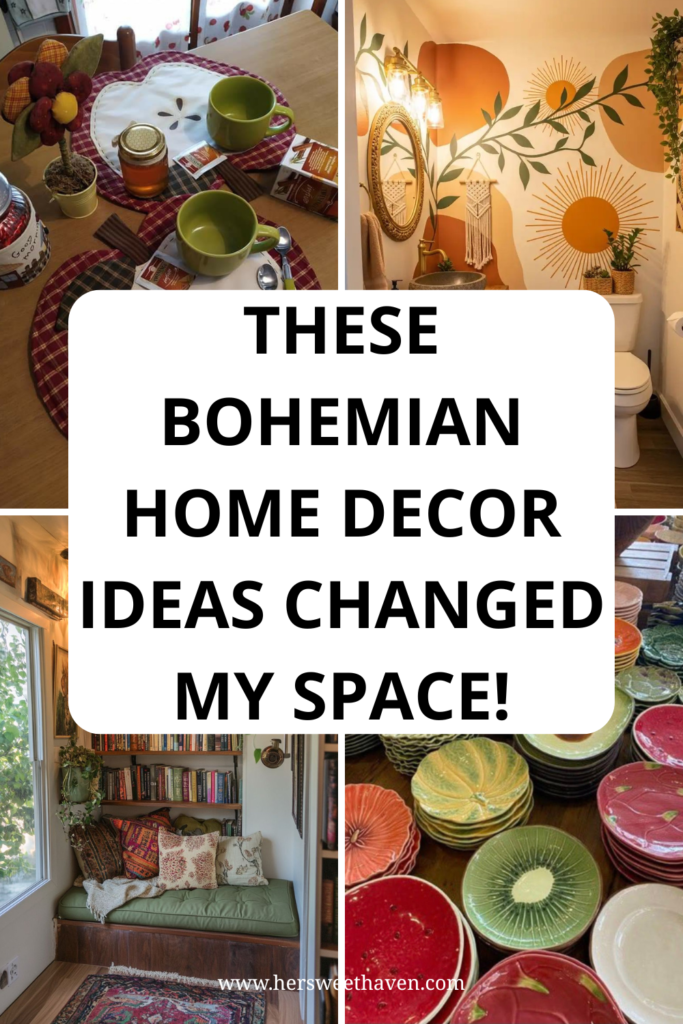
Bohemian pillows are the workhorse of boho design. They’re affordable, easy to swap out, and they add instant color and texture to any surface. The look that’s trending hardest right now is mixing pillows in different sizes, patterns, and textures on a single sofa, bed, or reading nook.
Combine velvet with woven cotton. Put embroidered pillows next to printed ones. Mix florals with geometric patterns. The only rule? Keep your tones in the same warm family so they feel connected, not random.
If you want a deeper guide on getting this right, here’s a helpful post on picking the right decorative pillows for your home.
9. Go Big With Bohemian Wall Decor
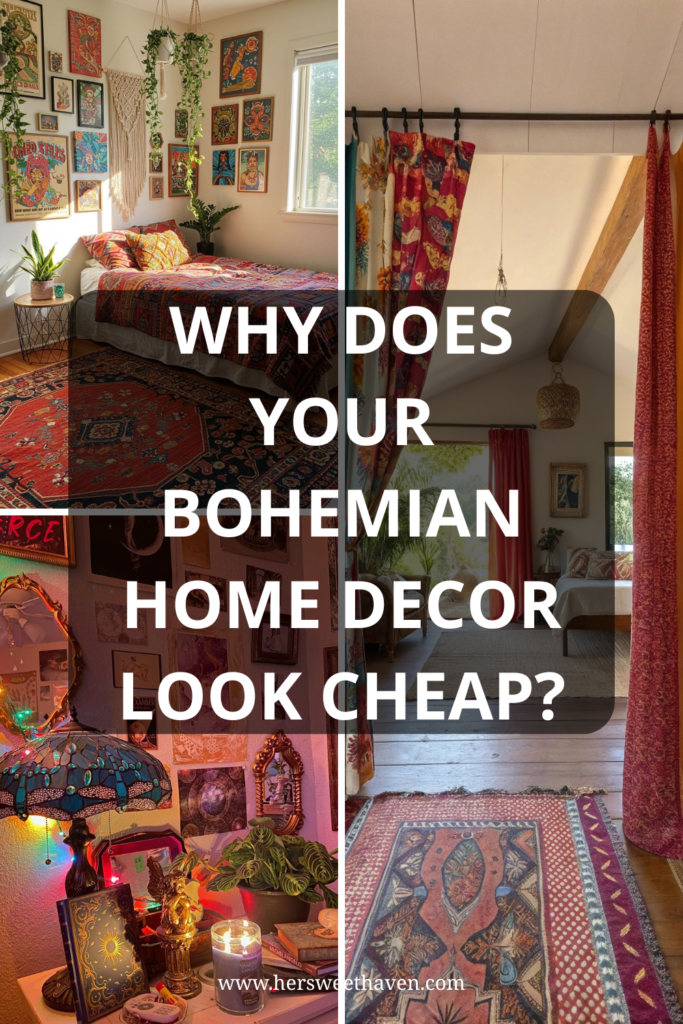
Your bohemian wall should never be bare. Gallery walls with mismatched frames, colorful posters, vintage mirrors, and woven hangings are one of the most impactful things you can do in a bohemian interior.
The approach that works best is mixing different types of wall decor together. Framed art next to a macrame hanging. A mirror next to a woven basket. A set of vintage postcards next to a large tapestry. This eclectic mix is what gives bohemian wall decor that “I’ve been collecting interesting things for years” feeling.
Pair your wall decor with colorful bohemian curtains and a patterned rug to pull the whole room together. A bohemian chair (think: rattan or a velvet accent chair) in the corner completes the look.
10. Combine Budget-Friendly Bohemian Layers
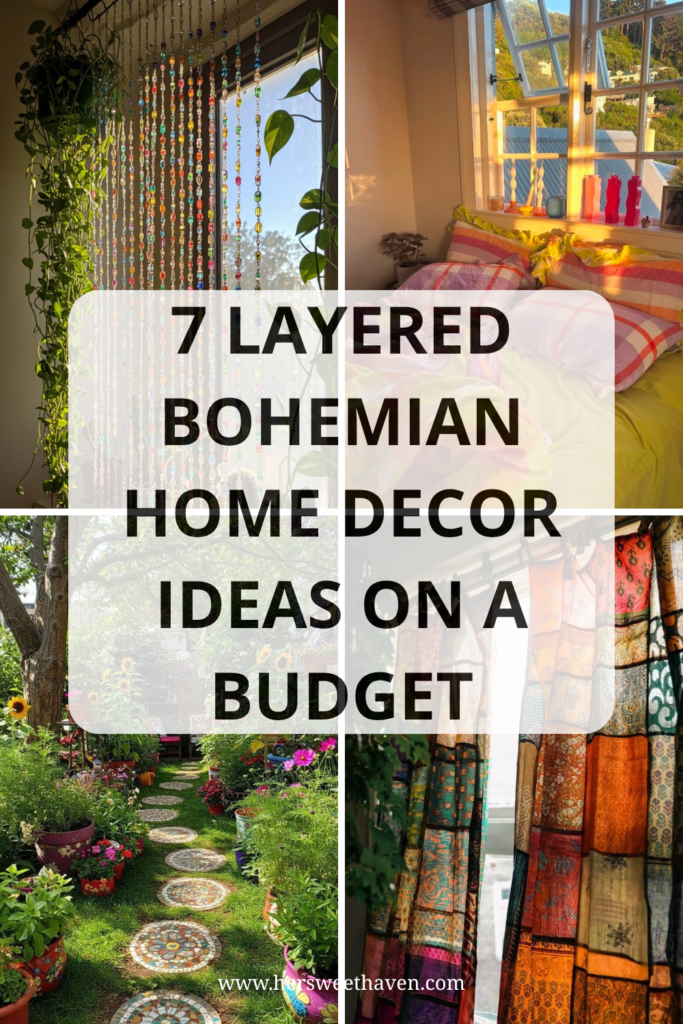
You don’t need to spend a fortune to get the layered bohemian interior design look. In fact, some of the best bohemian rooms are built almost entirely from thrift store finds, DIY projects, and repurposed items.
Start with textiles. Layer affordable throws, blankets, and pillows from secondhand shops. Add a few plants in mismatched pots. Hang a DIY macrame piece or a set of beaded strings in a window. Vintage pieces bring character that brand-new items simply can’t match, so hit your local flea market before you head to any big-box store.
The point of bohemian home decor is not perfection. It’s personality. And personality doesn’t have a price tag.
How Do You Avoid Common Bohemian Home Decor Mistakes?
Bohemian style gives you more freedom than most design approaches. But that freedom can backfire if you’re not careful.
Don’t Overcrowd Your Space
The number one mistake? Going overboard with too many items until the room feels chaotic instead of cozy. Bohemian design loves layers, but it also needs breathing room. Every room should have some open space where your eye can rest. If you can’t see any surface, table, or wall space at all, it’s time to edit.
A good rule: for every item you add, ask yourself if it genuinely brings warmth or personality to the space. If the answer is “not really,” put it back.
What’s the Secret to Looking “Collected” Instead of Cluttered?
The difference between a beautifully bohemian room and a messy one comes down to color connection. Even when you’re mixing wildly different patterns, textures, and eras, keep a loose color thread running through everything. If your rug has rust and teal, make sure you see a hint of rust or teal somewhere else in the room (a pillow, a vase, a candle).
Also, don’t make everything “matchy.” Bohemian rooms that look too coordinated feel staged. Let things be a little imperfect. That imperfection is the charm.
Can You Get a Bohemian Interior Design Look on a Budget?
Absolutely. Bohemian style might be the most budget-friendly design approach out there. Here’s why: it values uniqueness over newness.
Thrift stores, flea markets, estate sales, and online marketplaces are where you’ll find the best bohemian furniture and decor. A $5 vintage mirror from a yard sale adds more character than a $100 mass-produced one from a big retailer. A hand-stitched quilt from a secondhand shop beats anything you’ll find in a catalog.
DIY is your best friend here. Macrame wall hangings, patchwork curtains, painted planters, and handmade pillow covers are all affordable projects that add a personal touch to your space. And plants (pothos, snake plants, succulents) are some of the cheapest and most effective bohemian decor pieces you can buy.
If you’re looking for more ways to make your space feel personal and inviting on a budget, don’t miss these welcoming entryway ideas that work for any style.
Your Bohemian Home Starts With One Idea
You don’t need to overhaul your entire home to get the bohemian look. Pick one idea from this list, one room to start with, and go for it. Layer a few quilts on your bed. Hang some fabric bunting above a window. String beaded curtains in a doorway and watch the afternoon light play through them.
The whole spirit of bohemian home decor is building a space that reflects who you are, one piece at a time. It’s not about following rules. It’s about mixing the things you love, letting your rooms tell your story, and having fun with it.
So which idea are you trying first? Save this post and let me know in the comments!
Leave a Reply