
These chicken coop ideas cover six different styles, from a little cottage coop with a walk-in run to a weathered coop on stilts, and every one of them starts with the same thing: a flock that’s safe at night. Pretty comes second.
I grew up with a chicken coop in the yard, and collecting the eggs every morning was my favorite job. I’d love to keep chickens again one day, along with plenty of other animals. If you ask me, a ranch is the dream.
Until then, I’m collecting ideas. Below you’ll find the measurements every coop needs, six coop styles with what each one does well and where it falls short, and a few ways to make a coop look like it belongs in your garden.
What every chicken coop needs, whatever it looks like
Style is the fun part, but the numbers decide whether your hens stay healthy. These come from the Oregon State University Extension guide to backyard coop design:
| What | Rule of thumb |
|---|---|
| Floor space inside the coop | At least 3 sq ft per bird if they have a run, 8–10 sq ft per bird if they don’t |
| Roosting bars | About 2 ft off the floor, 5–10 inches of bar per bird, 10 inches between bars |
| Nest boxes | One for every four hens, about 12 × 12 × 12 inches |
| Coop height | Raised at least 1 ft off the ground |
| Fencing | Buried 6 inches to 1 ft into the ground |
Round up, not down. A coop that fits your hens exactly on paper gets crowded fast, and crowded hens tend to peck at each other.
Chicken wire keeps chickens in, not predators out
This is the part I’d pay the closest attention to. Massachusetts’ agriculture department puts it plainly: chicken wire is made to keep birds inside, and it won’t reliably keep foxes, raccoons or dogs outside. For the coop windows, vents and the bottom of the run, sturdy welded mesh or hardware cloth is the safer choice.
Digging predators go under, not over. Bury the fencing at least a foot deep, or lay a strip of mesh flat on the ground around the outside of the run (an “apron”) so anything that digs hits wire instead of dirt.
Air, light and a door you can actually reach
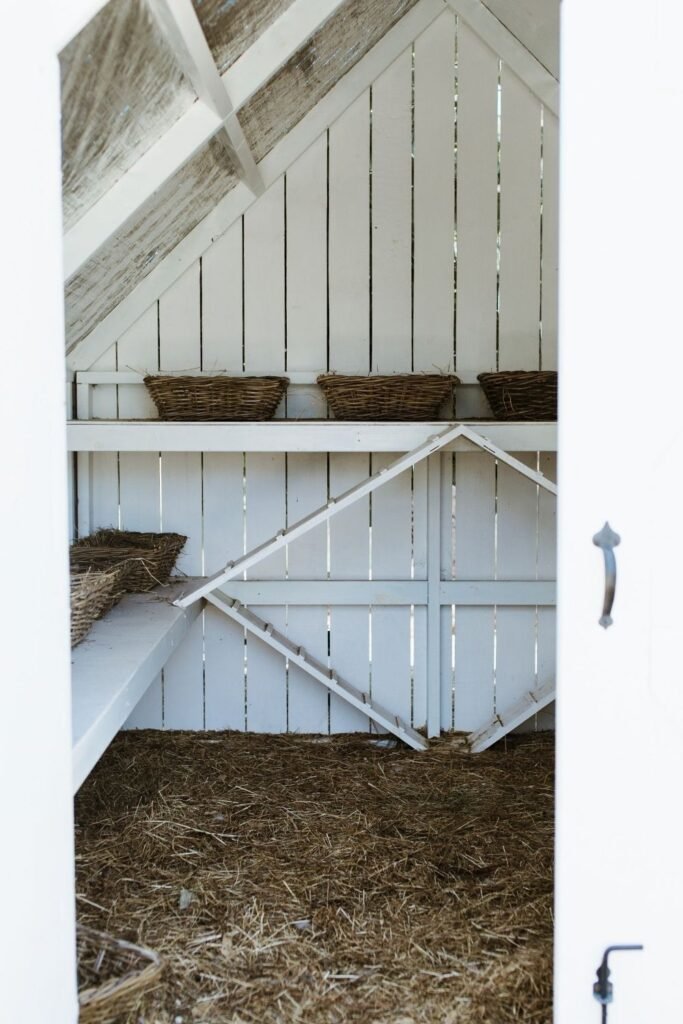
Photo by Rachel Claire on Pexels
Chickens need fresh air even in winter, because damp, stale air inside a closed coop is hard on their lungs. Vents high up under the roofline let moisture out without a draft blowing across the roost.
Then think about yourself. Nest boxes you can open from outside, a door wide enough for a shovel, and a floor you can rake out in a few minutes make the daily chores much easier to keep up with.
Chicken coop ideas by style
Every style below can be safe if it follows the numbers above. What changes is the look, the price, how much room it needs, and how easy it is to clean.
1. Board-and-batten coop with a covered run
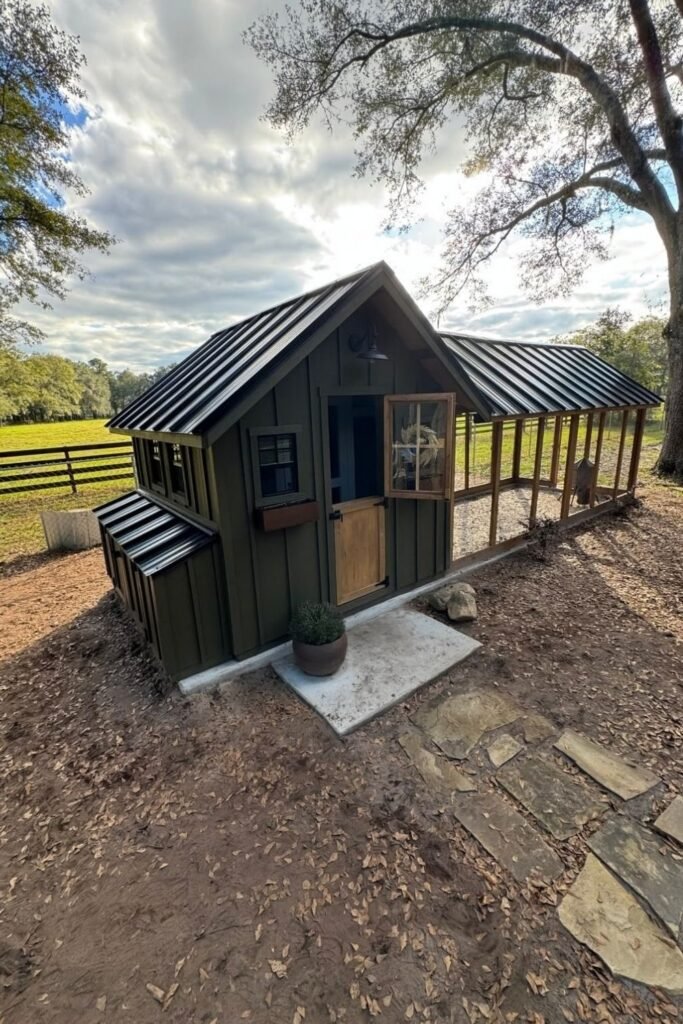
A dark green board-and-batten coop with a black standing-seam metal roof, a Dutch door with a window in the top half, and a long run attached to the side under the same roofline. A barn light over the door, a window box and a small concrete pad at the entrance keep the front tidy, even in a muddy season.
It’s a good fit for a bigger yard where the hens spend most of the day in the run, because the roof keeps rain and snow off the whole area. The downside: a covered run this long takes up a lot of ground and costs more in lumber and roofing than an open pen.
2. Coop on legs with a run underneath
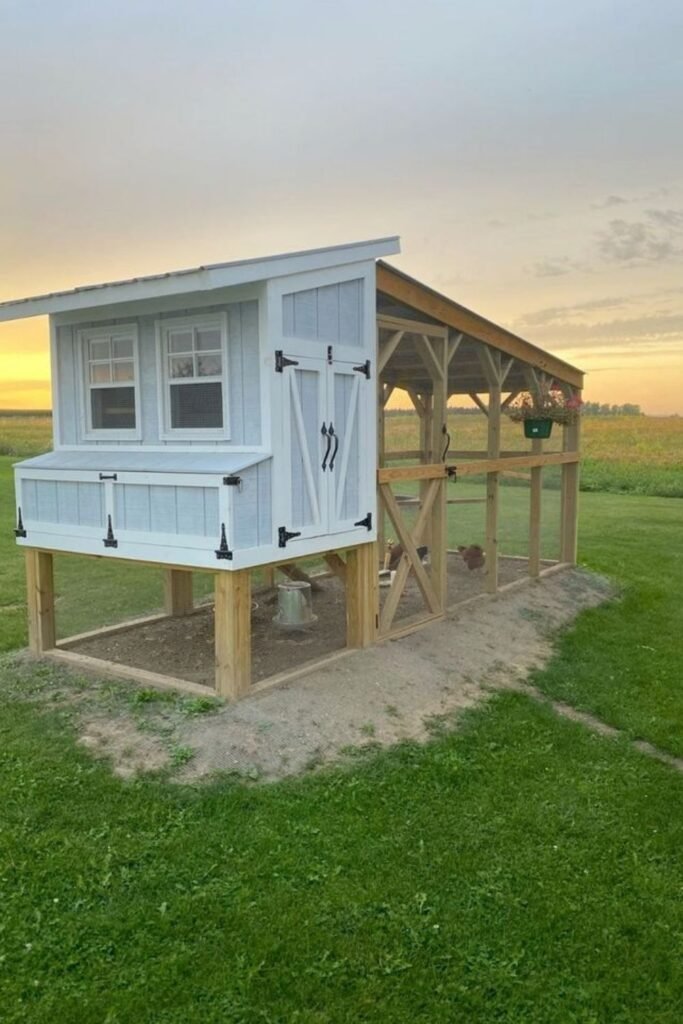
A pale blue coop with white trim and black hinges, raised on sturdy wooden legs under a single-slope roof. The nest box sticks out the front and opens from outside, double barn doors make cleaning easy, and the space under the coop is part of the run.
Raising the coop keeps the floor dry, gives the hens a shaded spot on hot days, and saves ground space in a smaller yard. Mind you, light colors show every muddy footprint, so plan on repainting the lower boards every few years.
3. Dark painted coop with a fenced yard
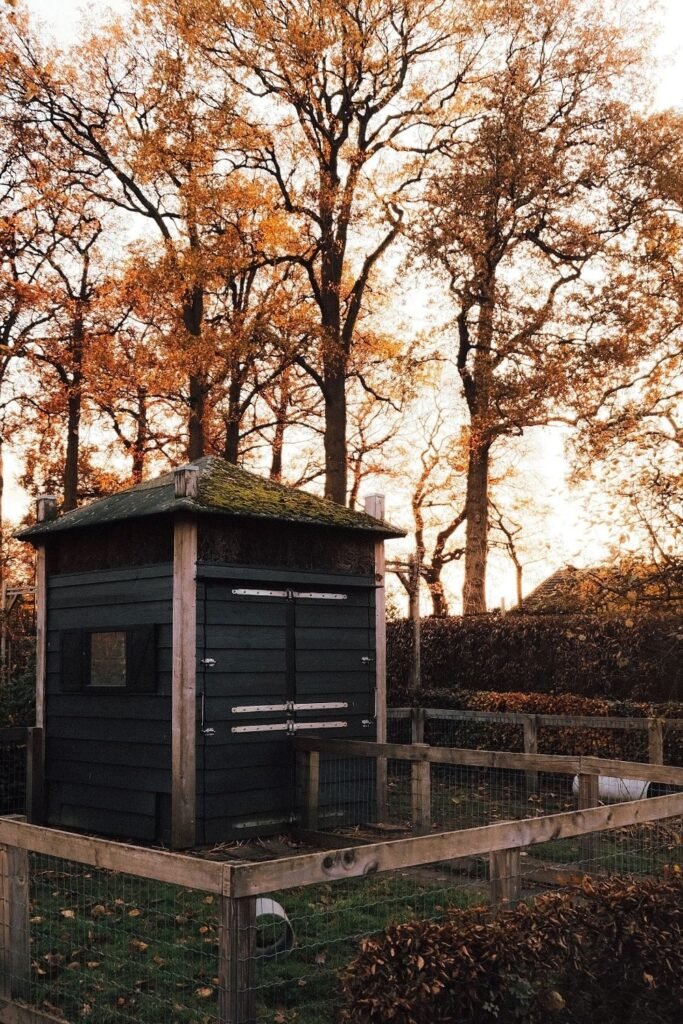
Photo by Stefan Maritz on Pexels
A compact coop painted deep green or charcoal, set inside a low wooden fence lined with welded mesh, with the run marked out like a little yard. Dark colors disappear into a hedge or a row of trees, so the coop doesn’t dominate the garden.
This works well on a larger lot where the hens get a big outdoor area during the day. That said, a low, open-top fence keeps chickens in but not hawks or climbing predators out, so the hens need to be shut in the coop at night.
4. Open-front rustic coop
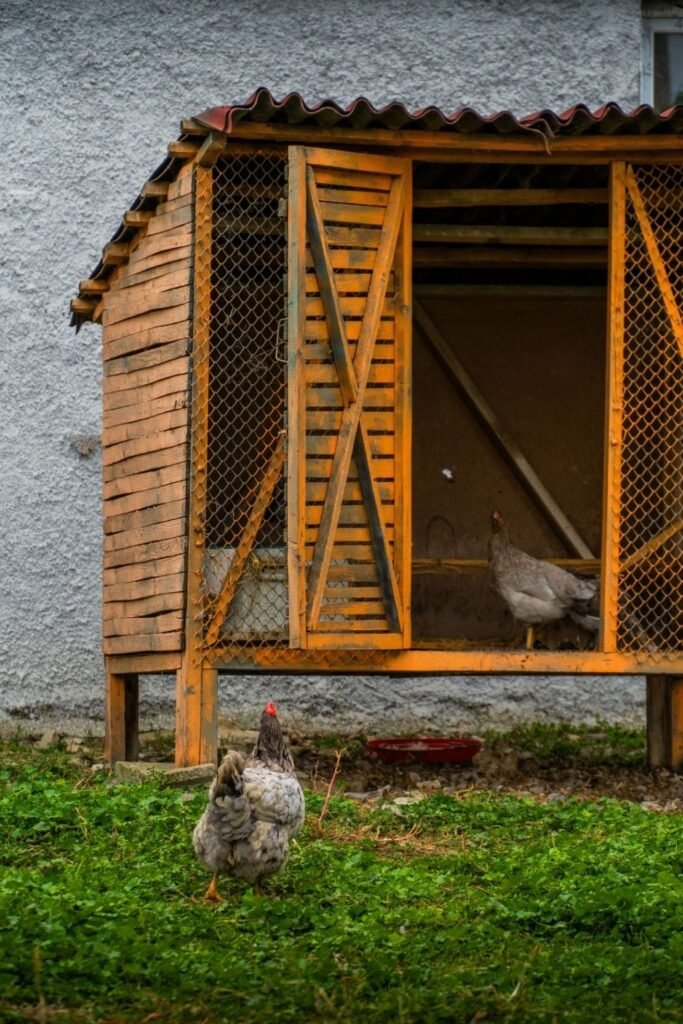
Photo by MuffinLand on Pexels
A simple wooden frame with slatted doors, mesh panels across the front and a corrugated roof, painted in a warm, bright color. It’s one of the easiest styles to build yourself, and the open front gives plenty of airflow in summer.
Two things to watch: open fronts can be cold and windy in winter, and many of these are built with thin chicken wire. If you go this route, swap the mesh for hardware cloth and add solid panels you can close when the weather turns.
5. Coop on stilts

Photo by Pew Nguyen on Pexels
A small weathered-wood house standing on tall posts, with a metal roof and a cleated plank ramp. The height keeps the coop above damp ground, gives hens a dry, shaded spot underneath, and makes it harder for digging animals to get in.
It looks great in a rural setting. Still, steep ramps are tough on older or heavier hens, and you’ll be climbing up to collect eggs unless the nest boxes open at a comfortable height.
6. White garden coop with timber arches
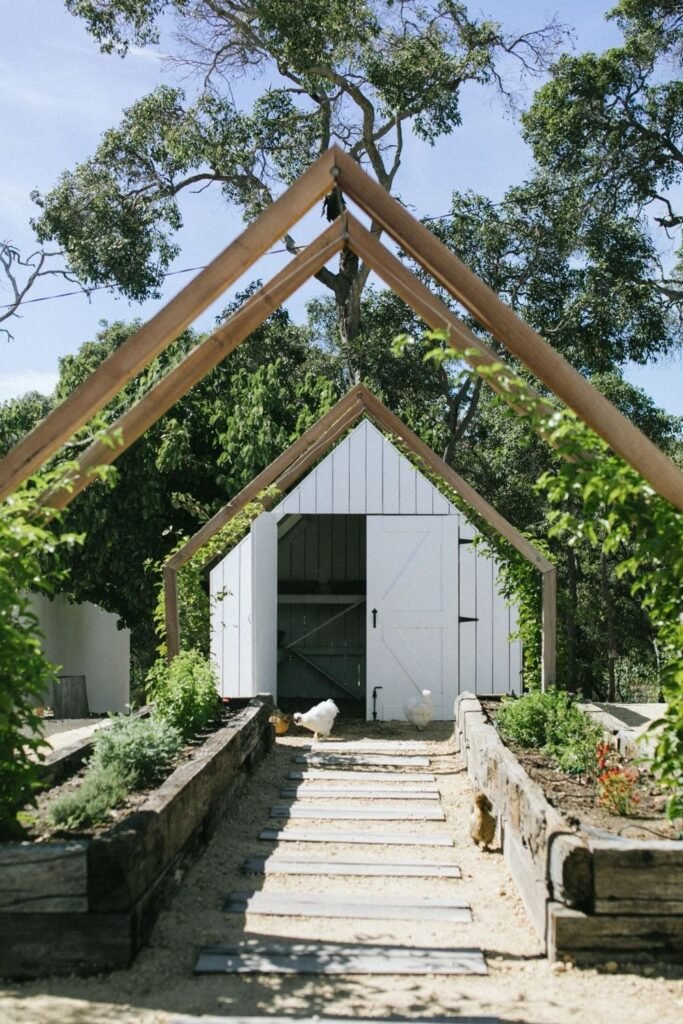
Photo by Rachel Claire on Pexels
A white gabled coop with barn-style doors at the end of a gravel path, lined on both sides by raised vegetable beds and framed by wooden arches with climbing plants. The coop becomes the focal point of the vegetable garden instead of something you hide behind the shed.
This setup takes the most planning and the most space of the bunch. Keep the hens out of the beds during the growing season, or your seedlings won’t last long.
Should you build, buy or convert a shed?
Building your own
Building gives you full control over size, materials and where the doors go, which is how most of the chicken coop ideas above came about. It takes basic carpentry skills, a few weekends and a solid plan. An easy mistake to make is copying a pretty coop from a photo without checking that it actually gives each hen enough floor and roost space.
Buying a kit or a ready-made coop
Kits are quick, and some are well made. Many small ones, though, are sold for more hens than they really fit, use thin wood that warps after a season or two, and come with chicken wire instead of sturdier mesh. Check the measurements against the table above before you trust the number on the box.
Converting a garden shed
An old shed already has walls, a roof and a door you can walk through, so it can be the cheapest route to a roomy coop. It still needs vents up high, roosting bars, nest boxes, a predator-proof window covering, and a small pop door with a ramp for the hens.
Small touches that make a coop look good
- Paint and hardware: one strong color plus black hinges and handles makes even a basic box look finished.
- Window boxes: mount them on the outside, out of pecking range, and plant herbs or flowers you’d grow anyway.
- Solar lights: a small solar lantern by the door makes the evening lock-up easier without running power out to the coop.
- A path: stepping stones or gravel keep you out of the mud in spring and fall. If you’re laying gravel, river rock is an easy way to edge it.
- A sign: a hand-painted name board costs almost nothing and gives the coop personality.
How do you fit a chicken coop into a small backyard?
Put the coop where you’ll see it every day but downwind of the patio. A spot with morning sun and afternoon shade is easier on the hens in summer, and good drainage matters more than a pretty view.
Leave enough room around the coop to walk all the way around it, because you’ll want to reach every side for cleaning and repairs. Tall plants or a fence panel can soften the hard lines of the run. A simple garden privacy screen hides the less charming side of the setup, and a trellis along the run gives climbing plants something to grow on, as long as the hens can’t reach and eat them.
Chicken coop questions people ask
How many chickens can I keep in a small backyard?
It depends on your space and your local rules. Using the numbers above, a run of around 40 sq ft and a coop with 12 sq ft of floor fits about four hens comfortably. Fewer hens in more space is always easier than the other way around.
Do I need permission to keep chickens?
Often, yes. Many towns limit how many hens you can keep, ban roosters, or set a minimum distance from your neighbor’s house, and HOAs can have their own rules. Check with your city or county before you buy a coop or a single chick.
Is it safe to keep chickens with kids?
It can be, with a few habits. The CDC recommends washing hands with soap and water after touching chickens, eggs or anything in the coop, keeping a separate pair of shoes for chicken chores, and not letting children under 5 handle chicks or ducklings. Collect eggs often and keep them in the fridge.
A safe coop first, then the pretty part
In short: give each hen enough room, use hardware cloth instead of chicken wire, bury the fence, let the air move, and make the nest boxes easy to reach. After that, pick the style that suits your yard.
If fresh eggs are part of the plan, a vegetable patch fits right next to the coop. Raised garden beds on a budget or a front yard vegetable garden make a good next project, and the hens will happily take care of the scraps.




Leave a Reply