
Good home office decor is about the room you walk into, not the gadgets on the desk. The light, what’s under your feet, what you see from the chair and how much stuff is piled up around you decide whether the room feels calm at 9 a.m. or makes you want to work from the couch instead. None of it needs a renovation: most of these home office decor fixes take a weekend and a few well-chosen pieces.
The home office feels gloomy by mid-afternoon
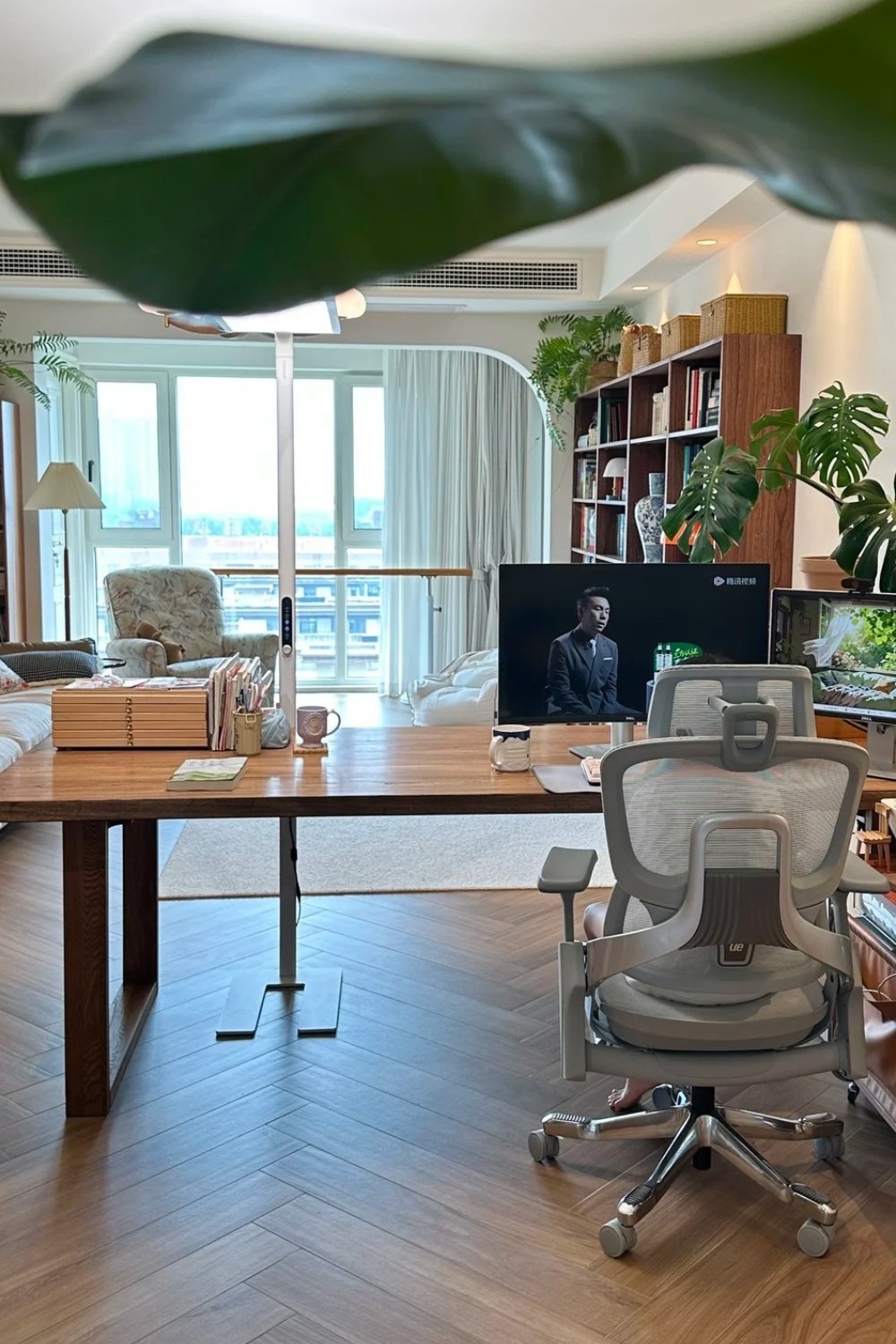
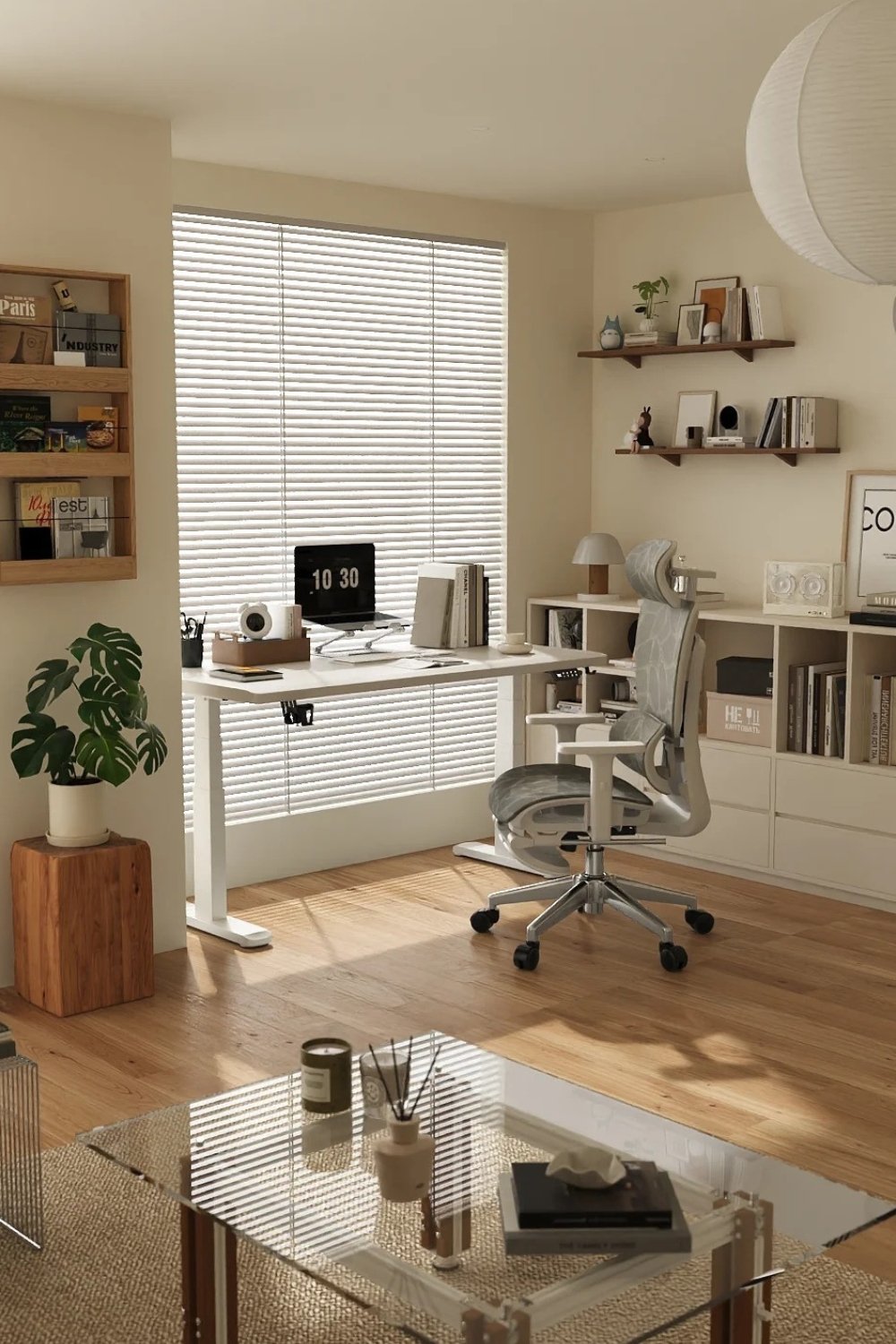
Light comes first, because no amount of decor fixes a dark room. Put the desk beside a window or facing it, so daylight falls across the desk from the side or front. With your back to the window, the screen catches every reflection and your face sits in shadow on video calls. Facing the window directly can be bright at certain times of day, so a desk at a right angle to the glass is often the most comfortable spot.
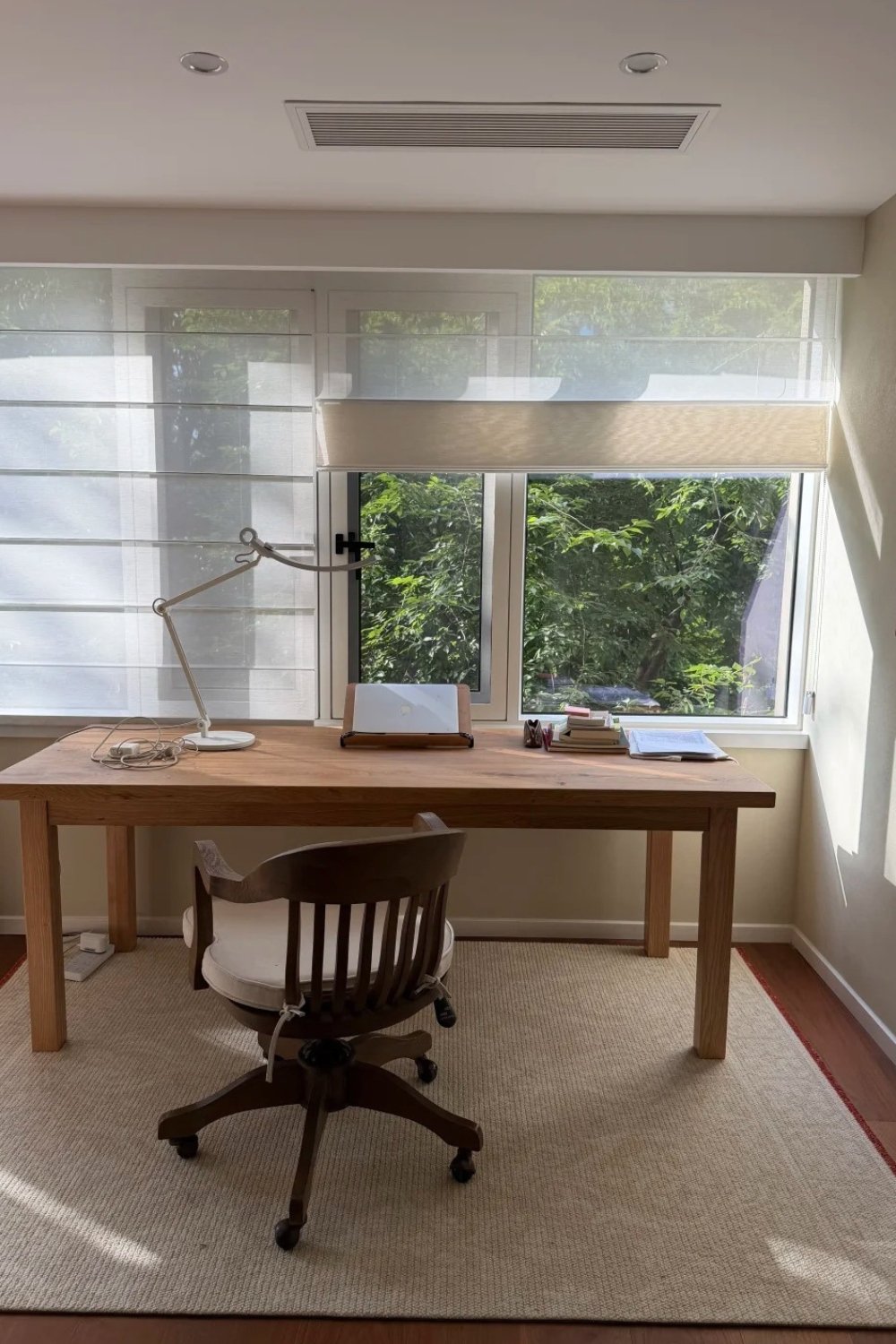
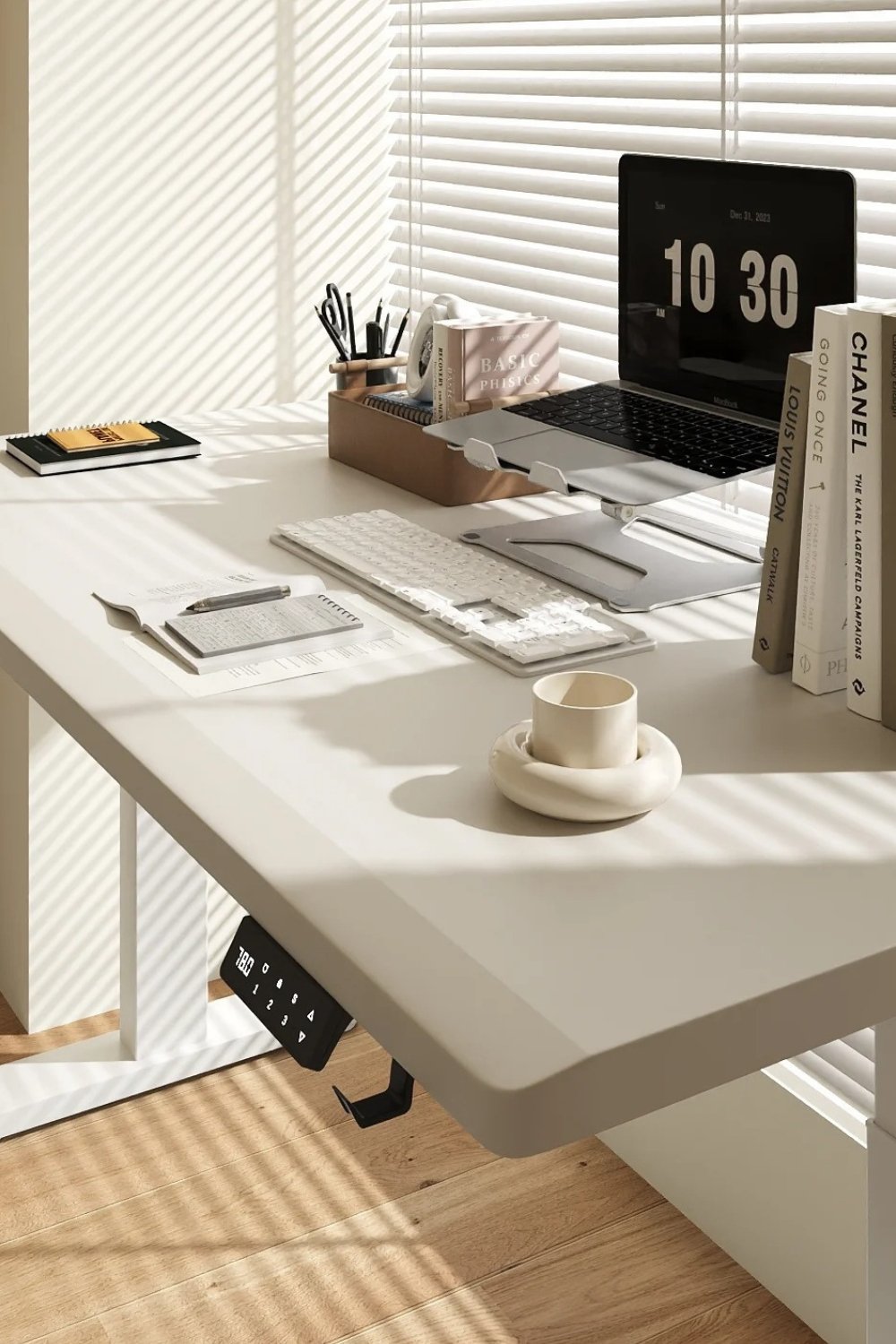
Then soften what comes through the glass. Sheer curtains or light-filtering blinds take the glare off the screen without making the room dark. Roman shades in linen or cotton do the same and look softer than plastic blinds. If the sun hits the desk directly for a few hours each day, choose blinds you can tilt, so you can keep the light and lose the glare.
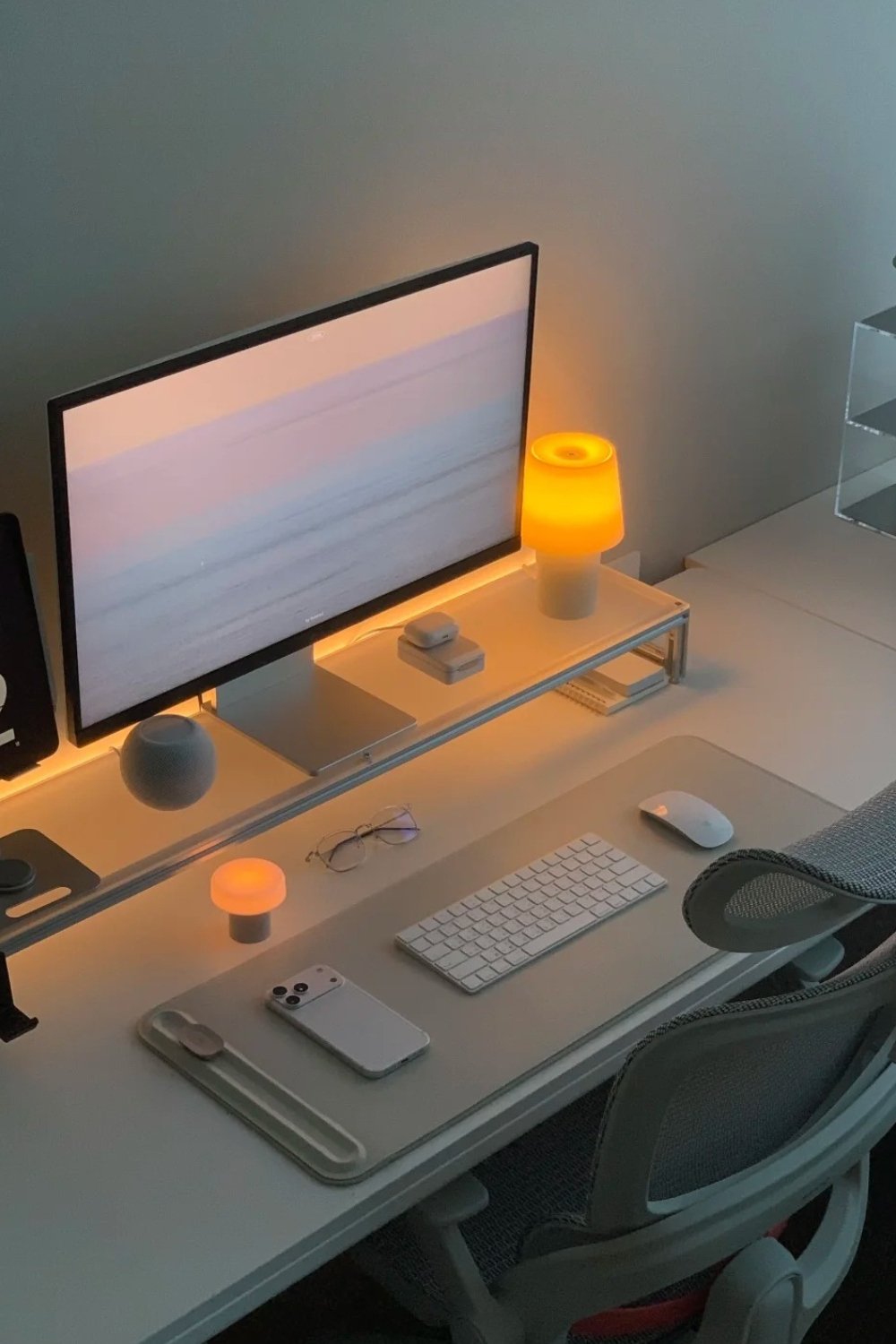
For evenings and dark winter afternoons, add a warm lamp. A bulb around 2700K gives the yellowish light of a table lamp at home, not the cool white of an office ceiling. Put it on the desk or on a shelf beside it, so the light falls on the wall and not straight into your eyes. Two small lamps at different heights make a room feel calmer than one bright overhead light.
Wall color plays a part too. Warm white, soft greige or a pale clay tone bounces daylight around the room without the chilly look of bright white, and it keeps the home office aesthetic calm on gray days. If painting isn’t an option, a large light-colored print or a mirror across from the window does some of the same work.
Everything in the home office feels hard and echoey
A home office room tends to fill up with hard surfaces: a laminate desk, a plastic chair, bare floors, a metal shelf. Sound bounces off all of it, and the room feels like a waiting area. Soft and natural materials fix both the sound and the look. Curtains count here as well: a pair of full-length linen panels absorbs more sound than any blind, even if you leave them open all day.
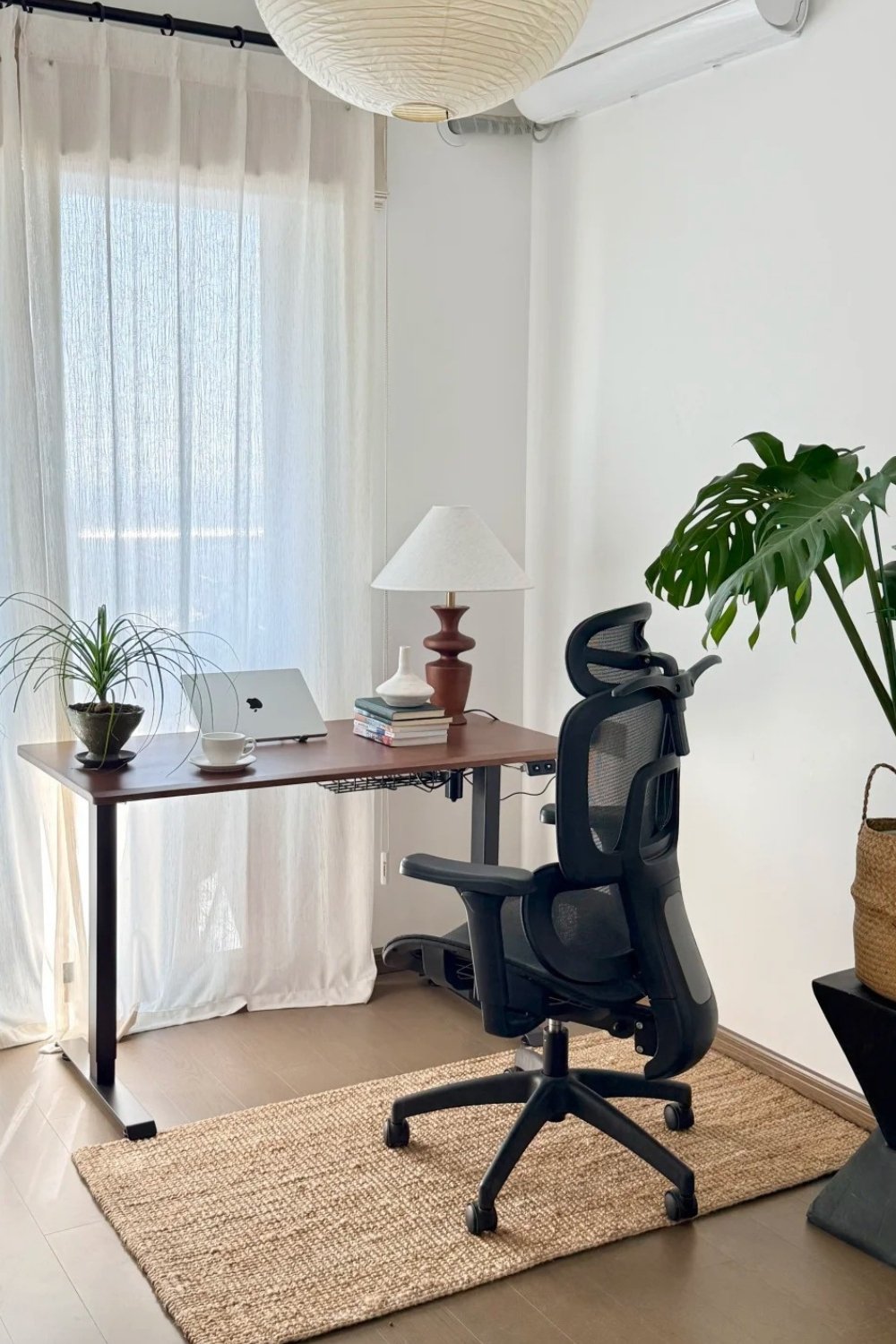
Start with the floor. A jute or wool rug under the desk and chair takes the echo out of the room and gives your feet something warmer than tile. Jute is rough and hard-wearing; wool is softer and stays warm in winter. If you use a rolling chair, get a rug with a low, tight weave, because chair wheels sink into thick pile and wear it down in one spot. Size it so the chair stays on the rug when you push back from the desk.
Wood is the next easy layer: a wood desk, a wood shelf, a wooden frame. Even one wooden surface warms up a room full of white and gray. If your desk stays, a wood desk mat or a wooden monitor stand brings the same effect for less. For the walls, these natural wall art ideas use driftwood and wood slices in the same spirit.
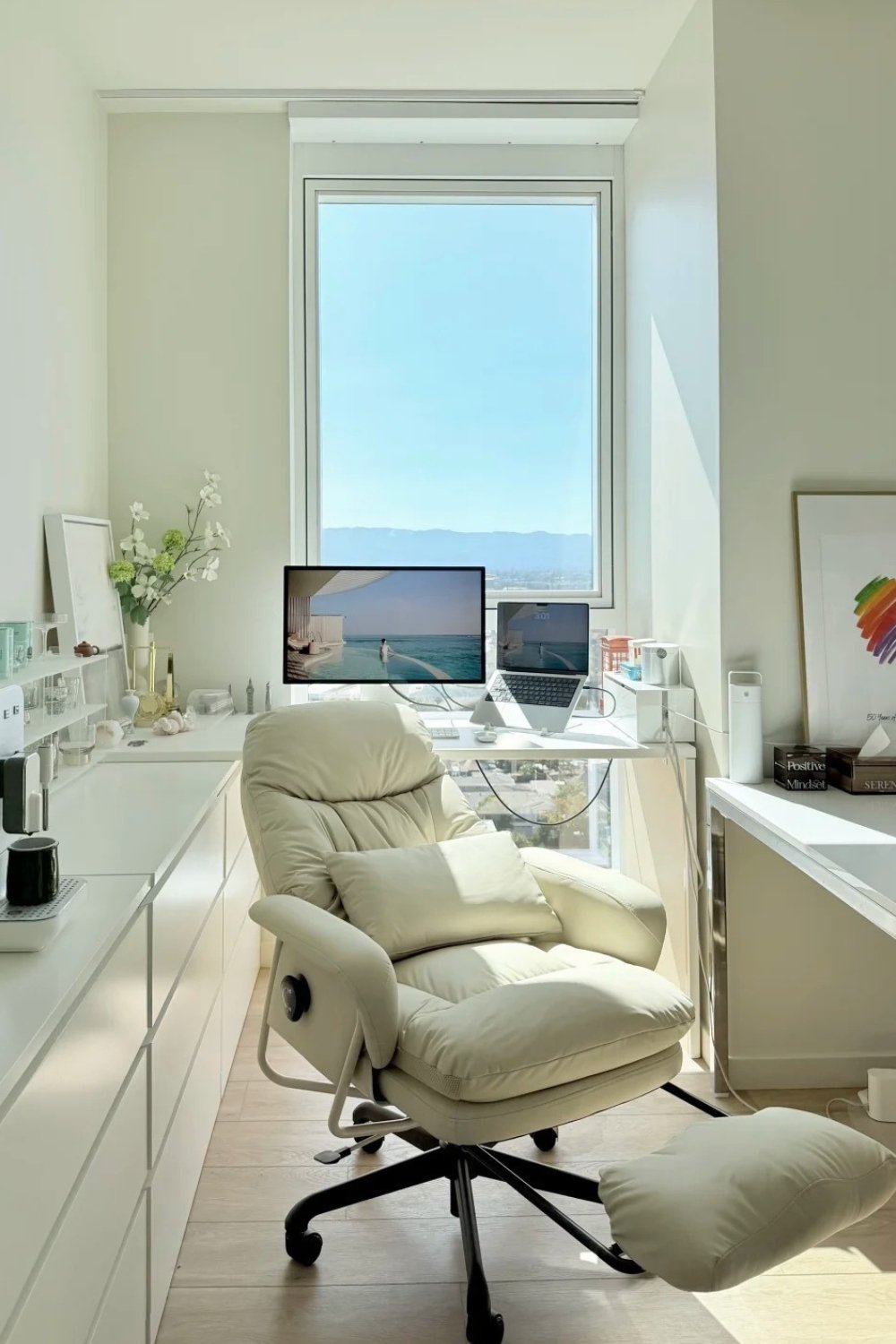
The chair matters more than any other piece in the room, because you sit in it for hours. A good desk chair comes first. A second, softer seat is the upgrade that turns a work corner into a home office you want to stay in: a lounge chair or an armchair by the window for reading, phone calls and coffee breaks away from the screen. If you have space for one, my reading nook ideas work just as well in an office as in a living room.
Screens and cables take over your home office
A monitor, a laptop, a charger, a lamp cord and a phone cable add up to a desk that looks like an electronics aisle. Plants and natural textures pull the eye away from all that.
Pick plants for the light you have, not for the photo you saved. A pothos or a snake plant copes with a darker corner; a monstera or a fiddle-leaf fig wants bright, indirect light near a window. A trailing plant on a high shelf softens a wall of screens better than a row of small pots on the desk, which only adds to the clutter. One large plant usually makes a home office look calmer than ten small ones. If you have pets, check whether a plant is safe for them before it comes home, since several common office plants aren’t. Water on a schedule you’ll keep, not the one on the label: if you only remember on Mondays, choose plants that don’t mind drying out between drinks.
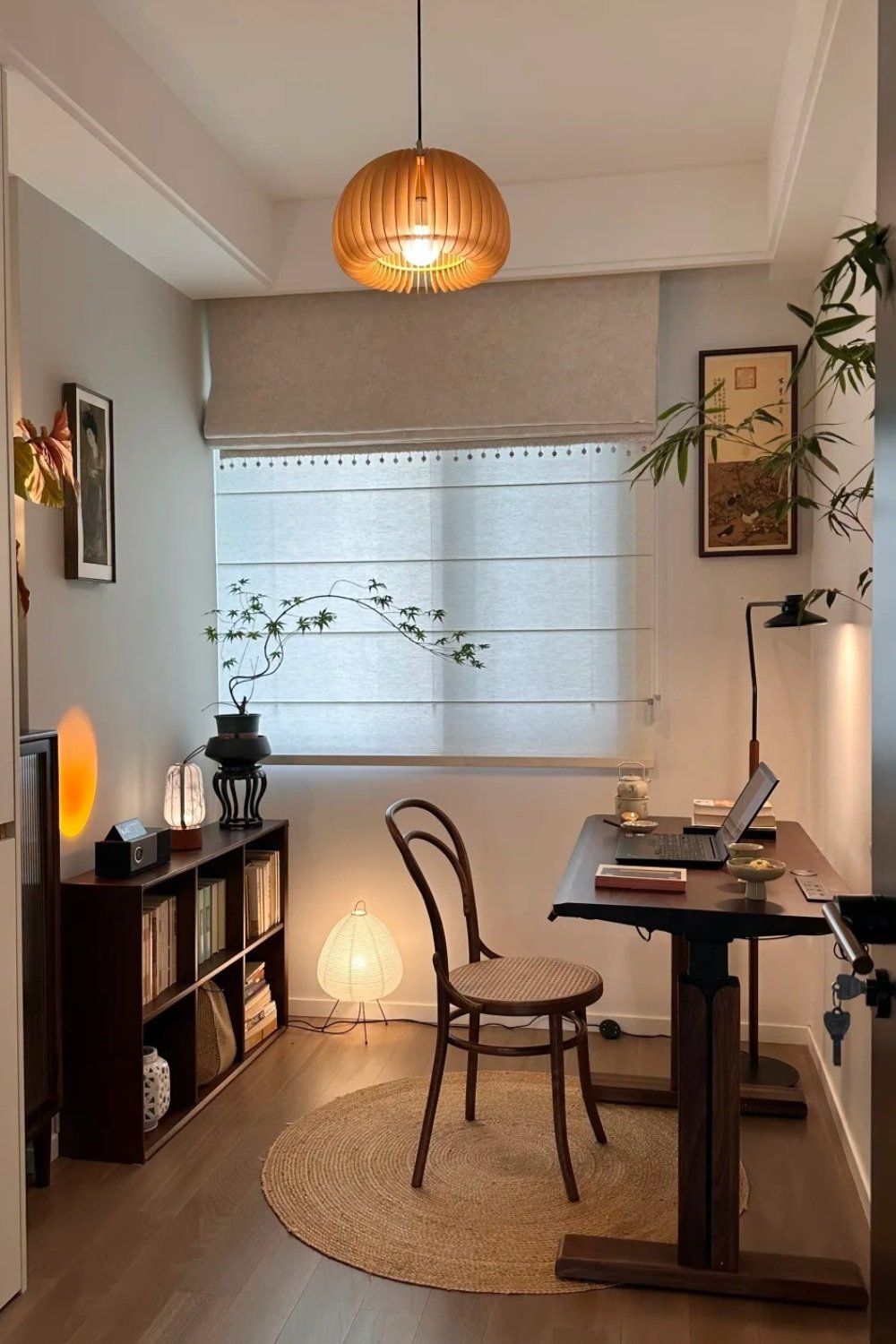
Natural textures help in the same way: a rattan basket for chargers, a linen lampshade, a ceramic cup for pens, a woven rug. For cables, a tray clipped under the desk and a few adhesive cable clips do most of the work. Anything more involved, like new outlets or moving wiring into the wall, is a job for an electrician.
Think about the view from the chair as well. You spend hours looking at one wall, so give it one thing worth looking at: a framed print, a small shelf with a plant and two books, a mirror that catches the window. Most home office inspiration photos are shot from the doorway, but you’ll see the room from the desk, so decorate for that angle first.
The desk keeps disappearing under stuff
A clear desk is the quickest home office setup change you can make in a home office room of any size, and the hardest one to keep. The trick is giving everything else a place off the desk.
Wall shelves above or beside the desk hold books, folders and the things you reach for once a day. Open storage, like a low shelf with baskets or cubbies, takes everything you need weekly. The desk itself keeps only what the current day’s work needs: the computer, a notebook, one pen cup, a drink. Everything else goes back on the shelf before you log off, which takes about two minutes and makes the next morning feel very different.
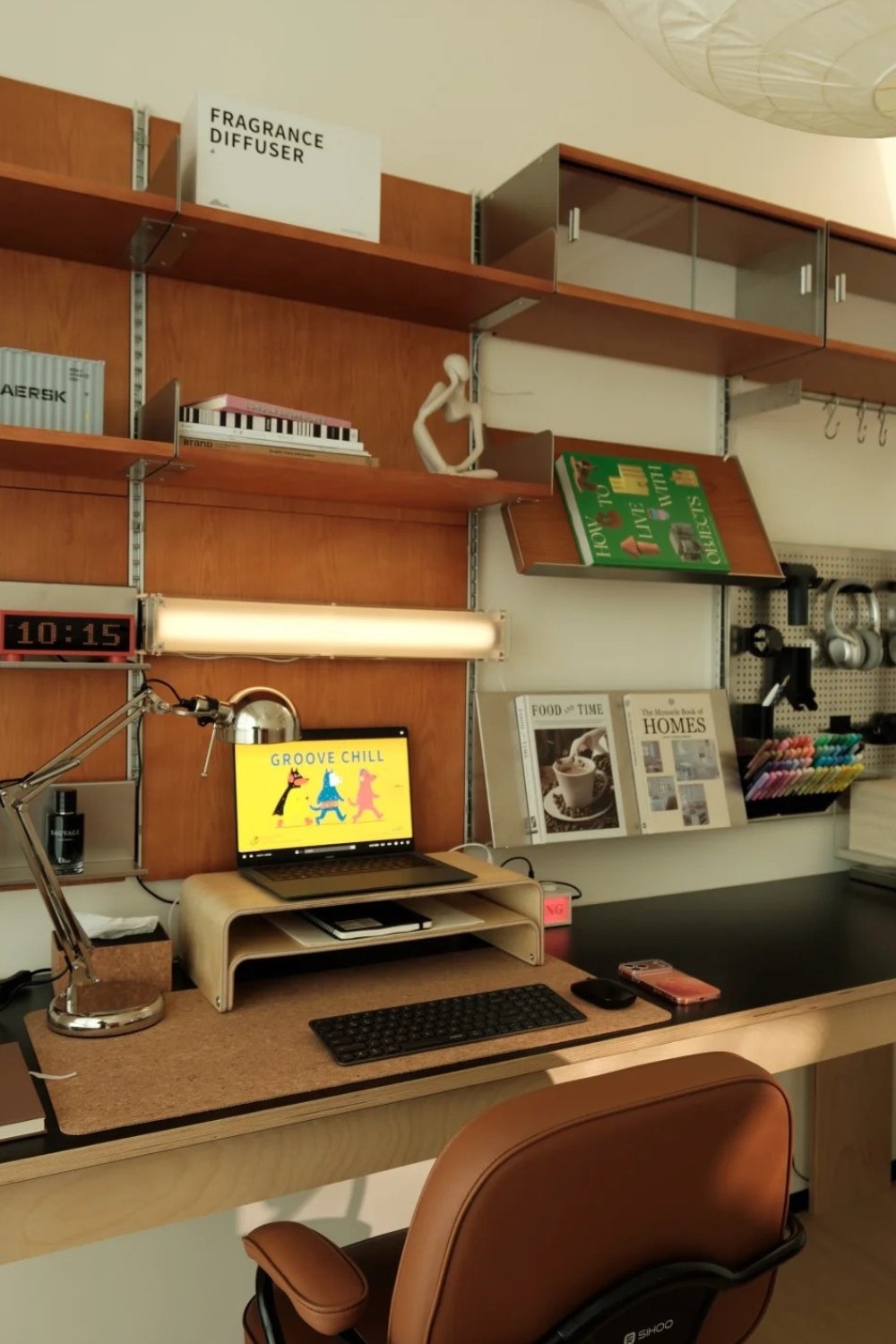
A few small things help the desk stay clear: a monitor stand with space underneath for the keyboard, a single tray for loose items, and books stood upright at one end with a heavy object as a bookend. If you’re still deciding which desk to build the room around, my study table guide covers size and styling.
No spare room? Work in a corner
Most small office ideas for home start with a corner that already exists. A few that work well:
- A bedroom corner. A narrow desk against the wall on the far side of the bed, with its own lamp. Keep the work things on the desk and out of the rest of the room.
- A window nook. A desk built into a window bay or between two cupboards. The window takes care of light, and the nook frames the space.
- One end of the living room. A desk behind the sofa or along a short wall, with a rug that marks the work zone.
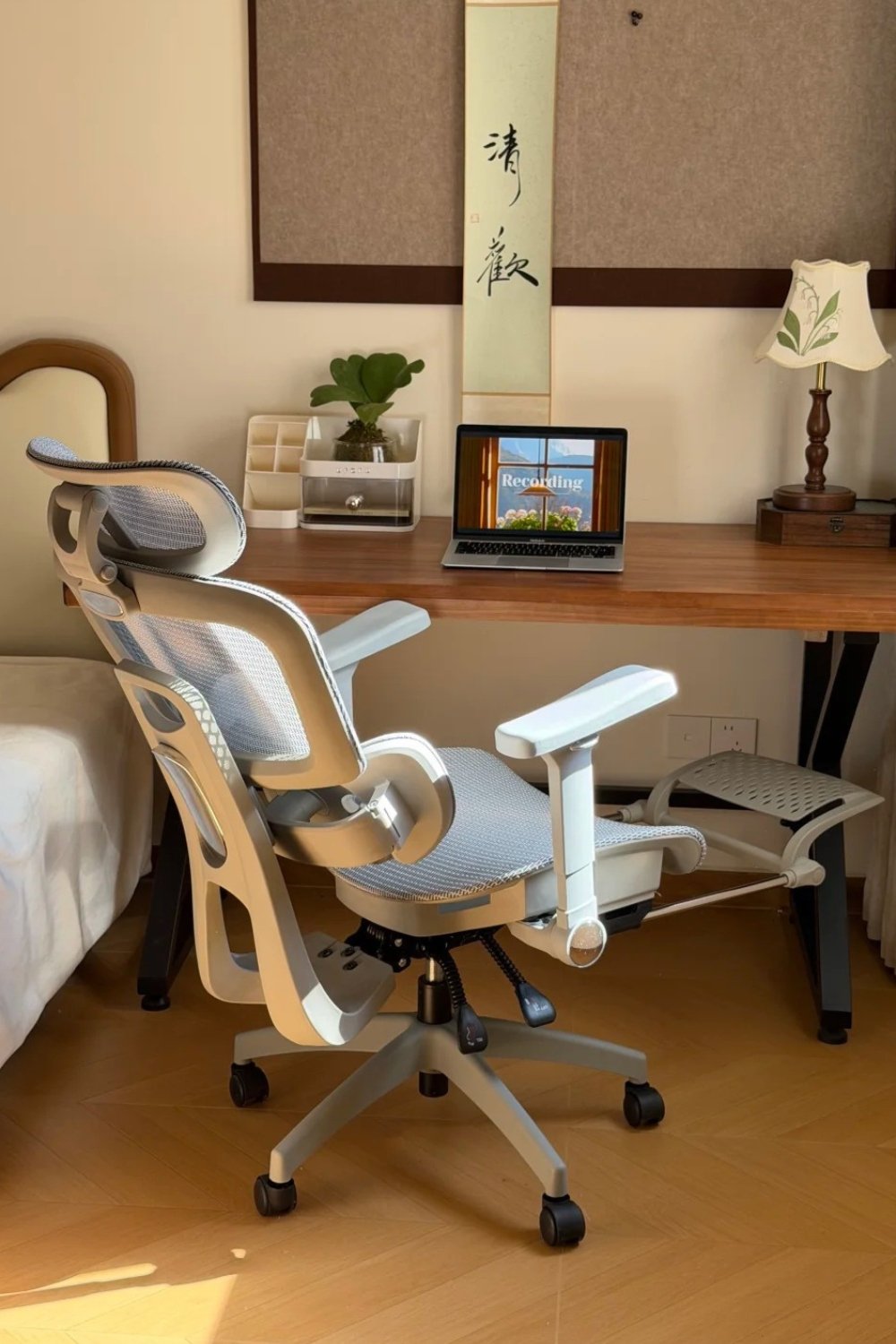
In a bedroom, the hard part is switching off at night when the desk is in view. A folding screen, a curtain on a ceiling track or simply turning the chair to face the wall when you finish helps. Small office decor works best when it repeats the room around it: the same wood, the same color of lamp, the same rug texture. Then the desk looks like part of the room instead of a temporary arrival.
Switching into work mode takes forever
With a work from home set up, the commute is ten steps, and your brain doesn’t always notice you’ve arrived. A small ritual helps mark the start: lighting a candle, turning on a diffuser, opening the blinds, or starting the same playlist every morning. The ritual itself matters less than repeating it at the same point every day, so it becomes the signal that work has started. The playlist version works even if you share the space with someone: headphones on, the same few songs, and you’re at work, whether the desk is in a spare room or at the kitchen table.
Ending the day the same way helps too. Blow out the candle, turn off the lamp, push the chair in. If you use a candle, keep it on a stable, heat-safe surface away from papers and curtains, and never leave it burning when you step out of the room.
In my opinion, this is the most underrated part of any home office decor plan, and the cheapest. A room can look great in photos and still feel like a place you avoid; the ritual is what makes walking in feel normal.
If you only change one thing this weekend, make it the light. A room that stops feeling dim at 9 a.m. makes every other fix easier to enjoy.

Leave a Reply