
Hang a piece of driftwood on a plain wall and the whole room changes. Materials like weathered wood, driftwood and shells bring texture and warmth that a print behind glass can’t, and nature imagery, like soft florals, green meadows or a flight of birds, makes a room feel calmer the moment you walk in. The easiest way to choose is to start with the feeling you want the wall to have. A rustic wall, a beachy one, a quiet one, one that changes with the seasons, or one that stops people in the doorway: each calls for different pieces.
For a warm, rustic wall
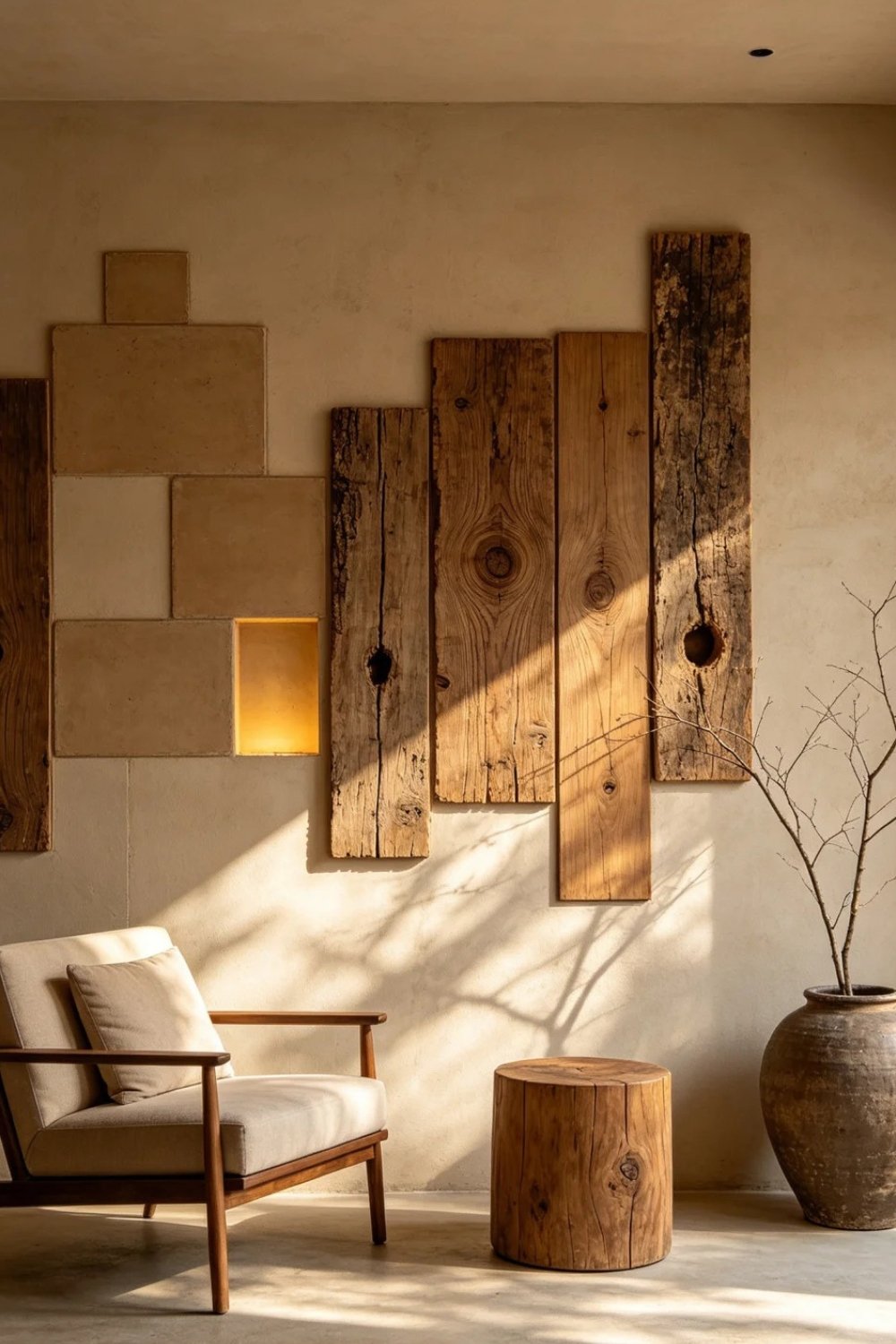
Reclaimed wood is the most direct route to an earthy wall, and it’s the natural wall art I’d start with in almost any room. Old planks with knots, nail holes and uneven color have a history you can see, and mounted vertically in different heights, they read as a single sculptural piece instead of paneling. Stagger the tops and bottoms so the arrangement looks like a skyline, and leave a little gap between each plank so the wall shows through.
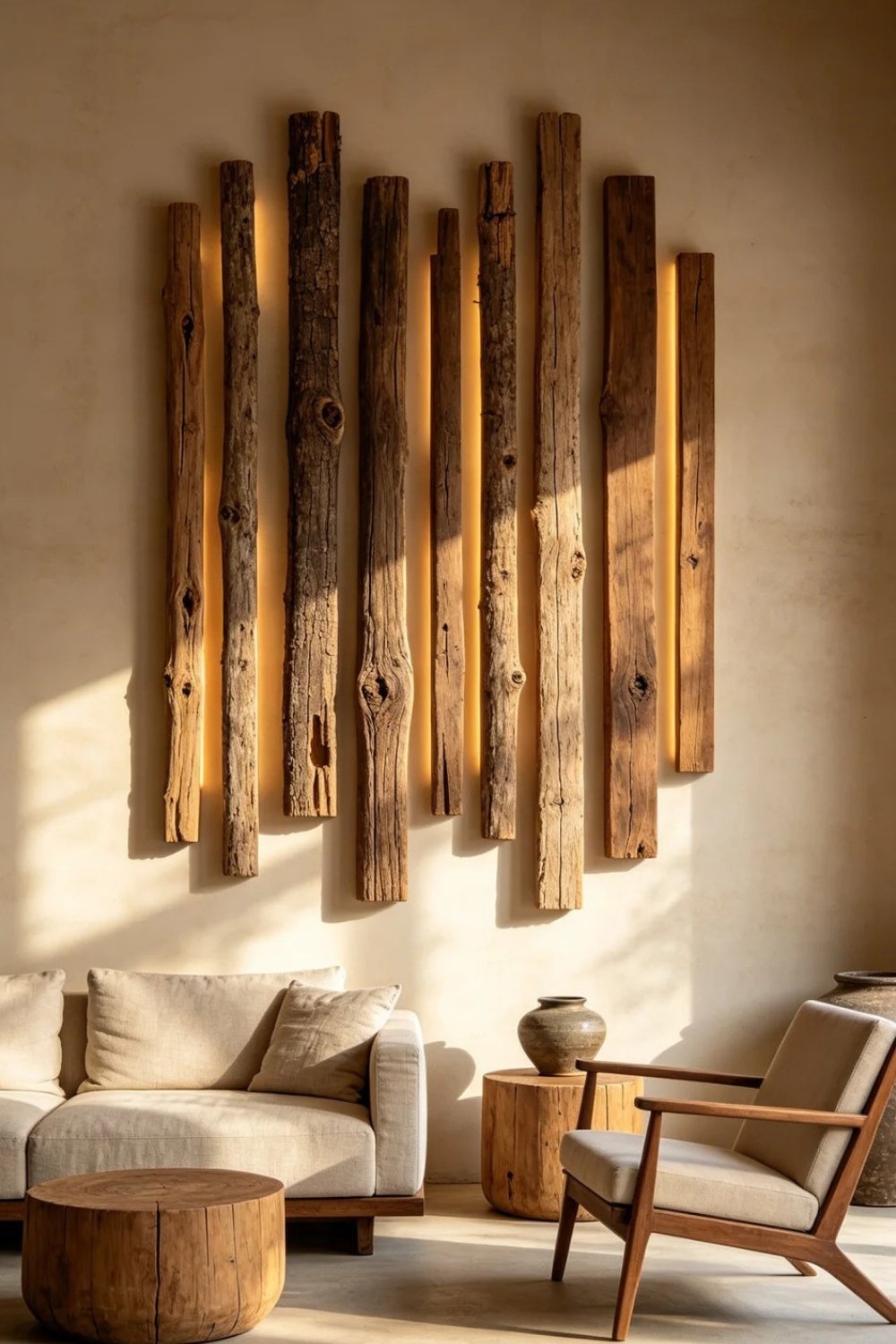
A strip of LED tape behind the planks turns them into an evening feature. In daylight they’re pure texture; at night, the light spills out from behind each board and outlines the grain. Warm white LEDs, around 2700K, keep the glow golden rather than blue.
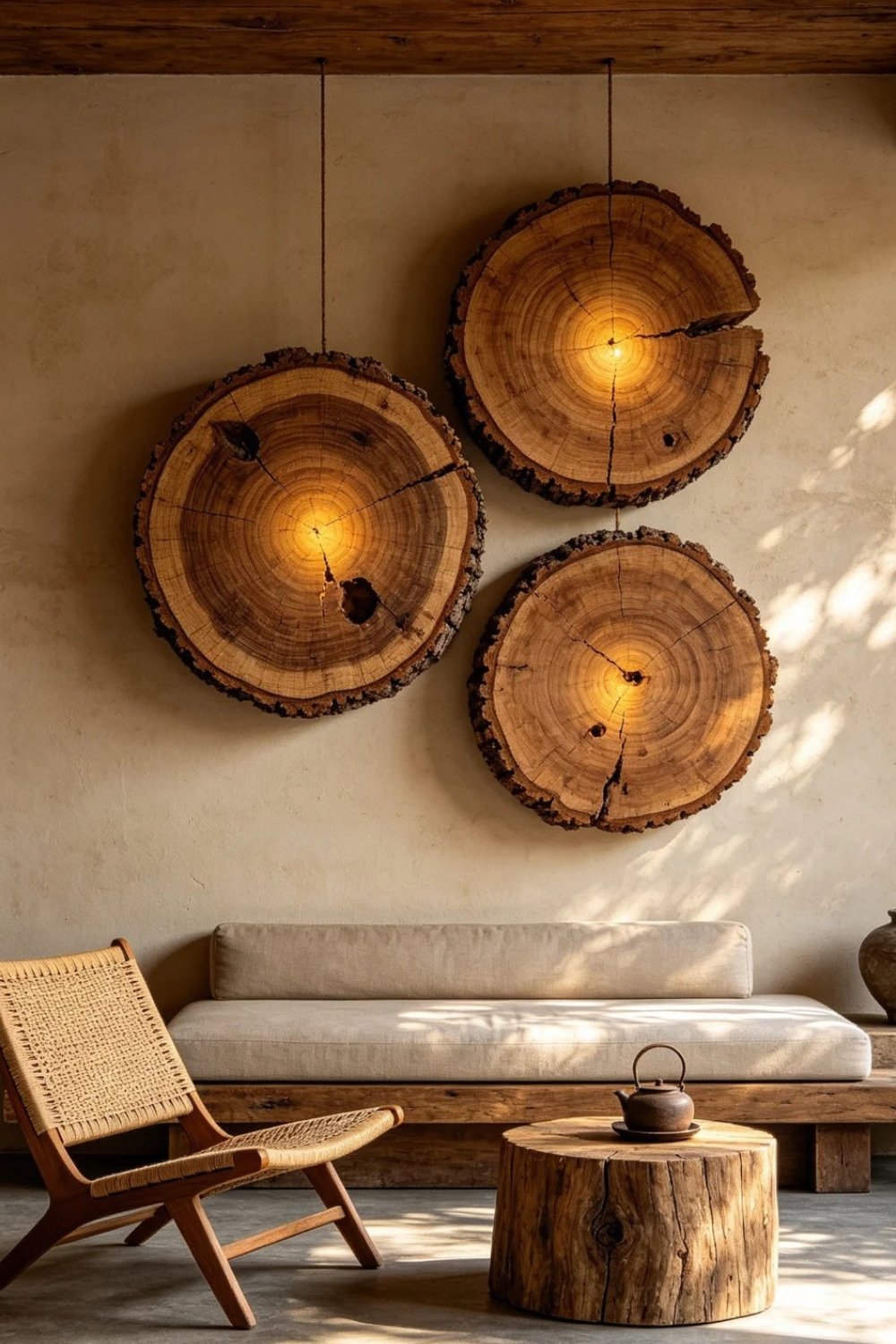
Large wood slices do the same thing in rounder shapes. Three slices of different sizes, grouped in a loose triangle, look like natural wall decor that grew there. Backlit with a small puck light or LED ring behind each one, they glow like small suns in the evening, and the rings of the wood become the pattern. Seal the slices with a clear matte finish first, so they don’t crack or shed bark as they dry out indoors.
Rustic wood pieces work best with a calm palette around them: plaster or limewash walls, linen upholstery, stoneware and dried branches. My guide to an earthy bedroom builds a whole room around the same colors.
Works best in: living rooms, bedrooms, entryways with a long blank wall.
For a coastal, beachy wall
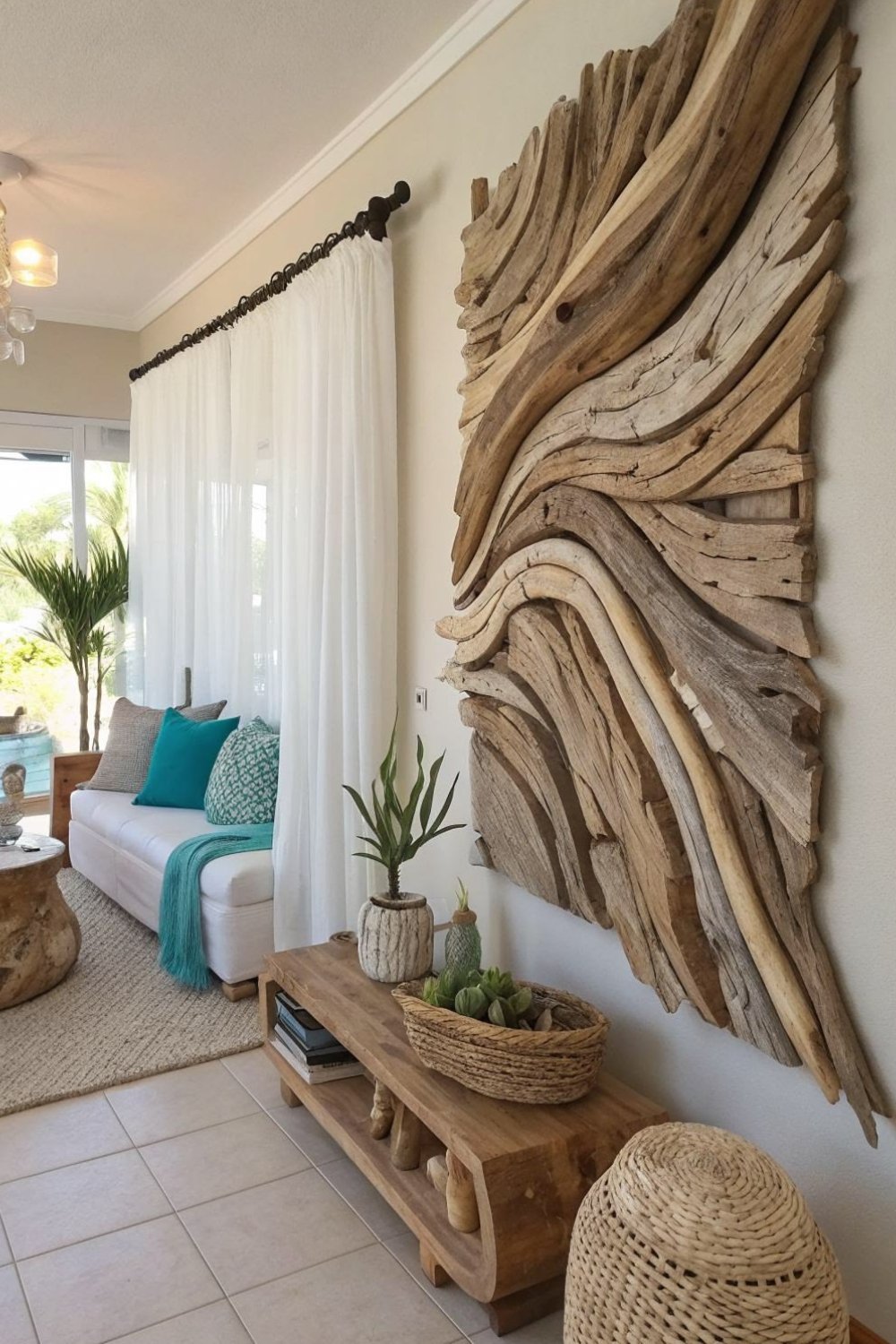
Driftwood is natural wall art made by the sea, and it suits a coastal room better than any print. Each piece has already been shaped and bleached by water and sun, so all that’s left is the arrangement. A large driftwood sculpture, built from dozens of pieces fanned out in a wave or a swirl, makes a statement over a sofa or a console table. Smaller versions work too: a single long piece hung horizontally with twine, or a mirror framed in short driftwood sticks.
Framed seashells are the gentler coastal option. Mount a few shells on a sand-textured or linen background inside deep box frames, one to three shells per frame, and hang them as a grid. Keeping all the frames the same size and finish makes a mismatched collection of shells look curated. Weathered wood frames suit the beach feel, while white frames look cleaner and lighter.
If you collect shells on vacation, this is the nicest way to keep them out of a jar. A small label on the back with the beach and the year adds a memory without cluttering the front.
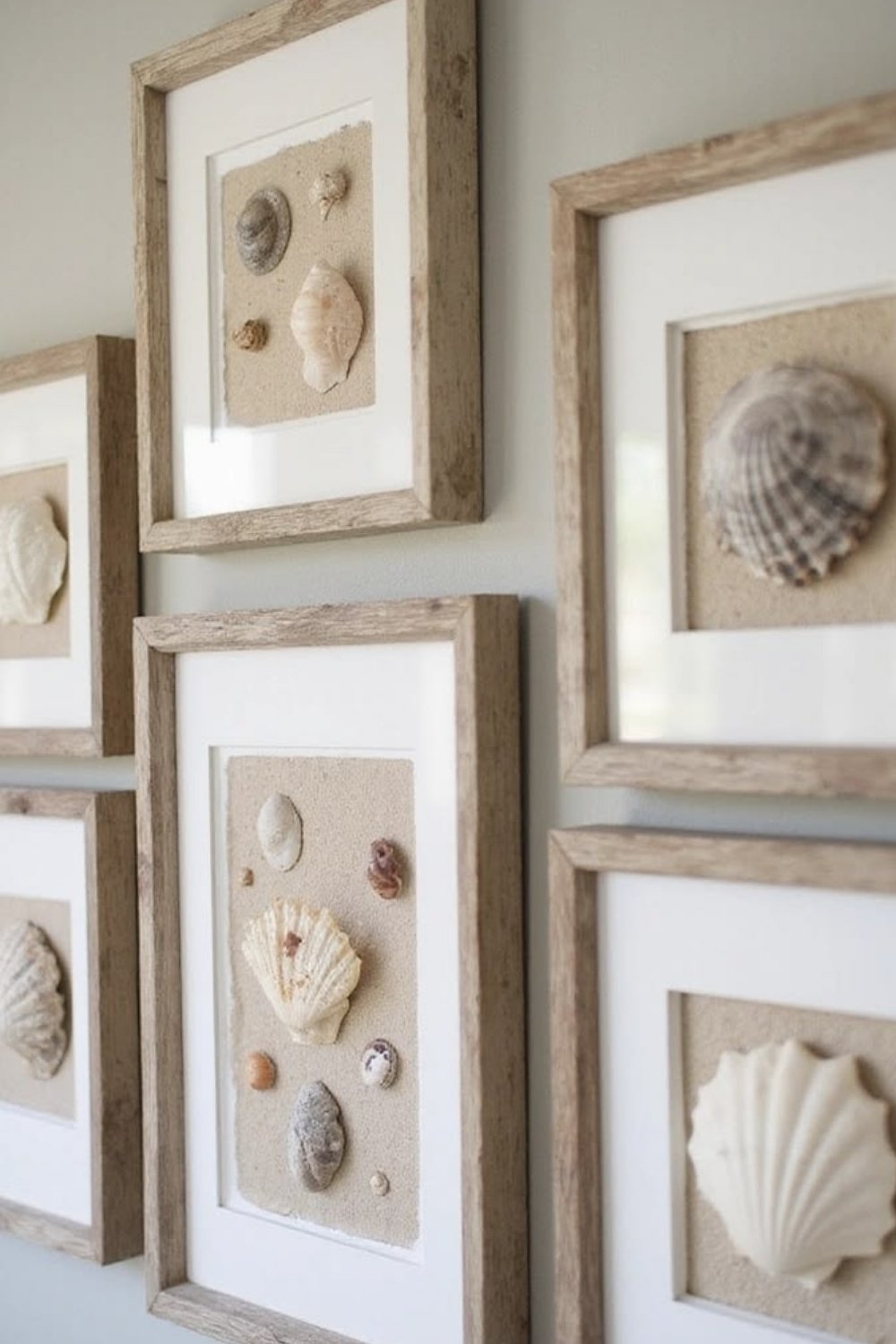
Works best in: bathrooms, sunrooms, guest rooms, any room with white or pale blue walls.
For a calm, soft wall
Not every piece of nature wall art has to be made of wood or stone, and paintings are often the easiest earthy wall art to start with. A large canvas of soft florals or an open meadow brings the outdoors in through color and subject instead of material. Look for muted palettes: cream, sage, pale green, soft gold. Large, loose brushstrokes keep a floral from looking fussy, and a thin wooden or gold frame finishes it without adding weight.
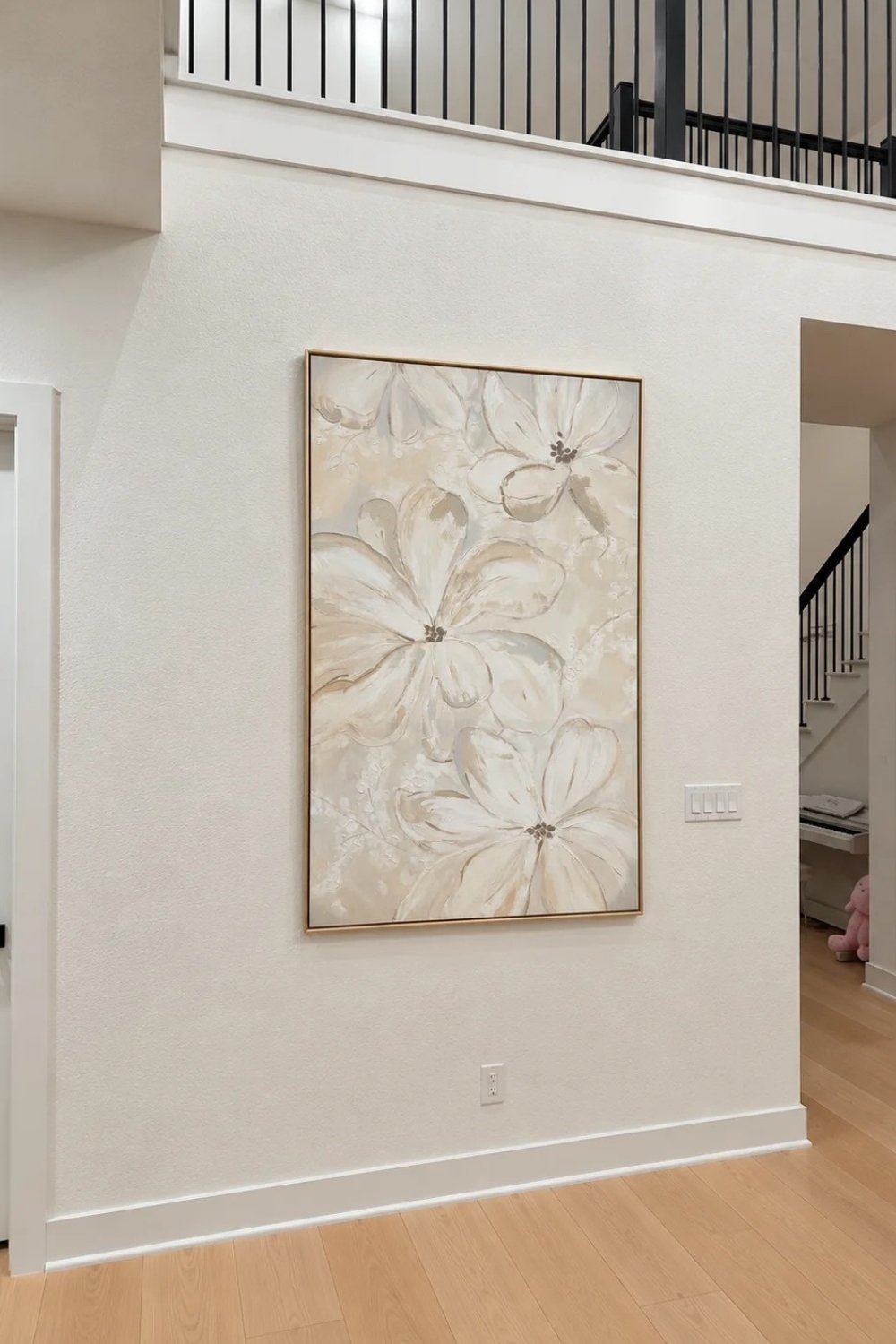
One big painting usually does more than several small ones. Hang it so its center sits at roughly eye level, about 57 to 60 inches from the floor, or a hand’s width above a sofa or a chair. A green meadow canvas next to a single tall plant and a wooden chair makes a quiet reading corner out of an empty wall.
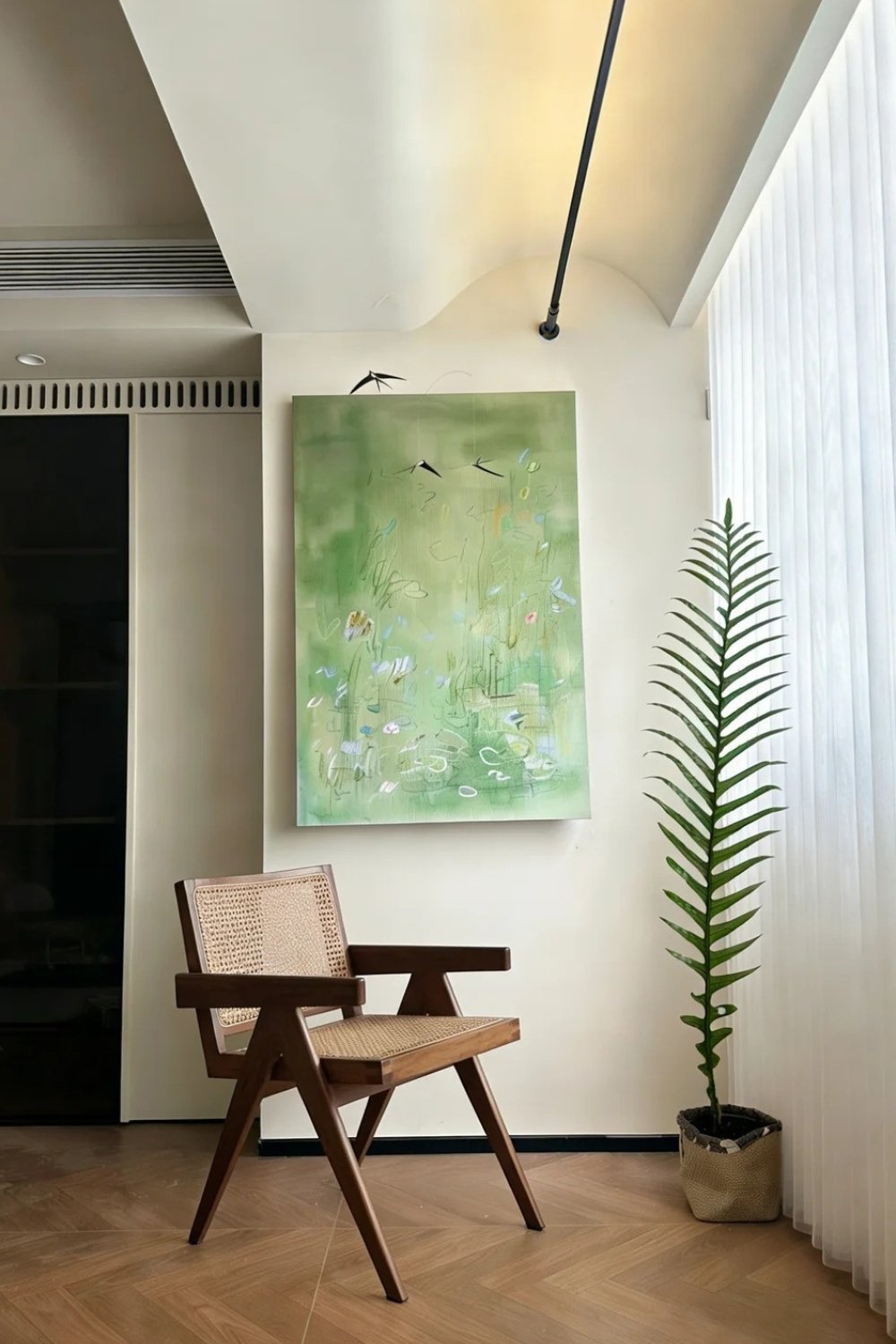
Calm, nature-inspired pieces suit a workspace particularly well, since green and soft neutrals are easy on the eyes during a long day. My post on home office decor ideas covers what else helps a desk corner feel restful.
Works best in: bedrooms, home offices, hallways, nurseries.
For a wall that’s alive
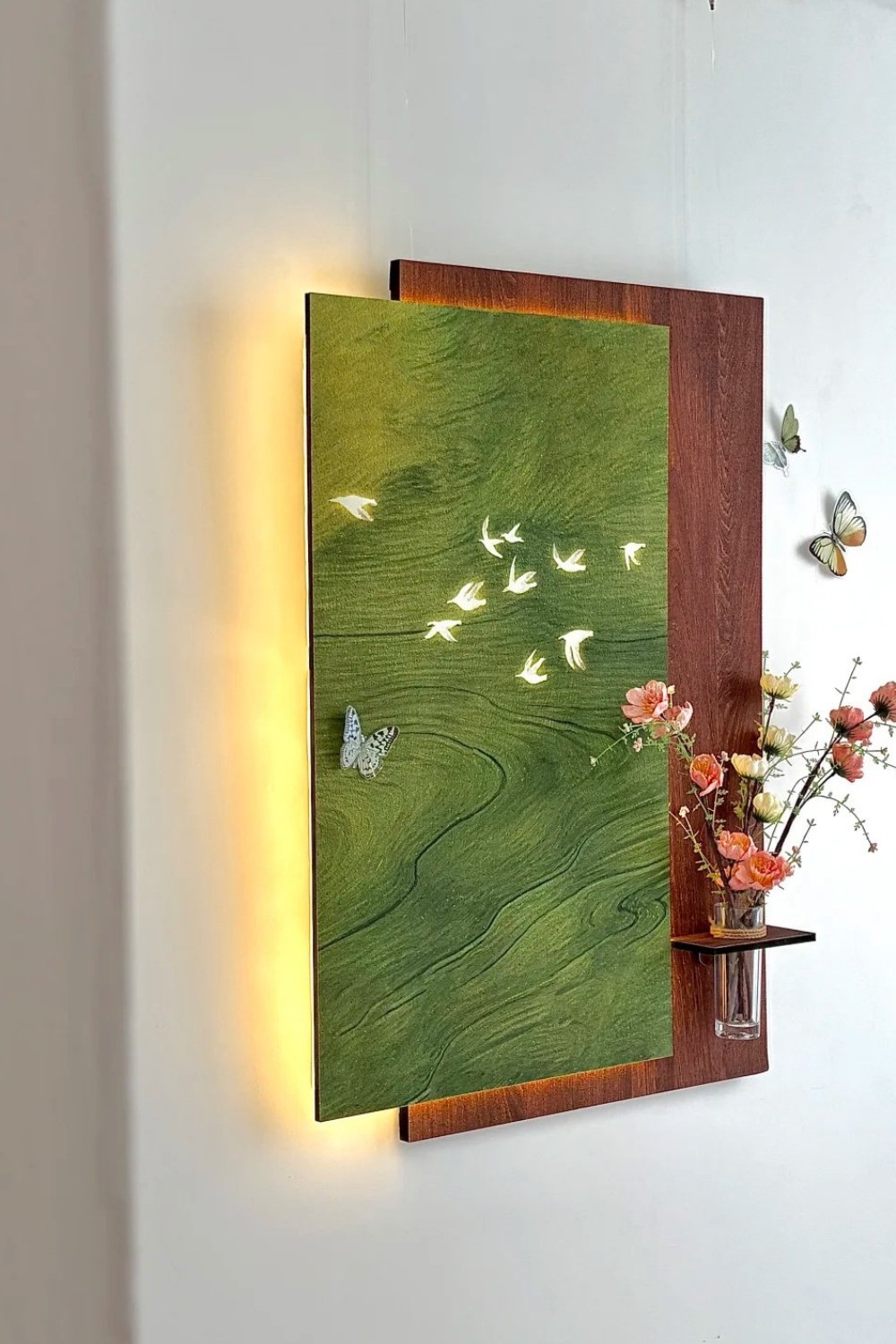
The most natural wall decor of all includes something living. A wall panel with a small shelf and a glass vase lets you add fresh branches, eucalyptus or a few stems of flowers next to the artwork, and the piece changes every time you swap them. A painting of birds or a green landscape on one side, living greenery on the other: the painted nature and the fresh leaves echo each other, which is what makes this kind of nature wall art feel so lively. Branches and dried stems look lovely on a mantel too, as in these fireplace mantel decor ideas.
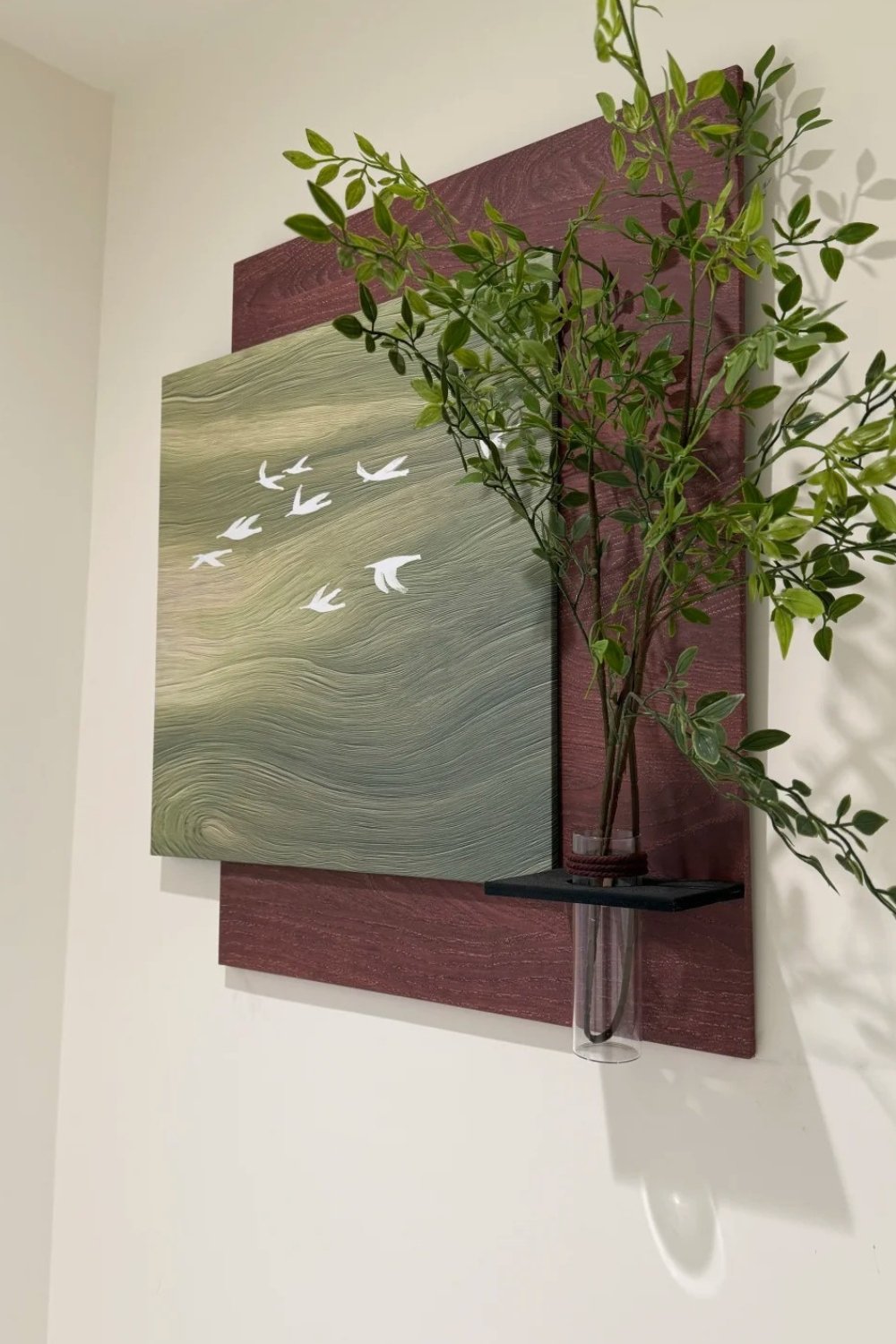
Some panels go further with texture and light. A green artwork with a carved, wavy surface set against a wood panel, with soft LED light around the edge and a small vase of flowers attached, works almost like a living wall without the watering system. Change the water in the vase twice a week, and pick branches that last: olive, eucalyptus and pussy willow stay fresh for a week or longer.
Works best in: entryways, dining rooms, kitchens with a bare wall.
For a bold statement
If you want an earthy wall that stops people in the doorway, paint it. A jungle mural with oversized monstera leaves, palm fronds and cacti covers a whole wall in green, and it can even wrap around pipes or columns that are otherwise hard to hide. You don’t need to be a trained painter: sketch the largest leaves in pencil first, fill them in with two or three shades of green, then add lighter veins and a few flowers in red or orange for contrast.
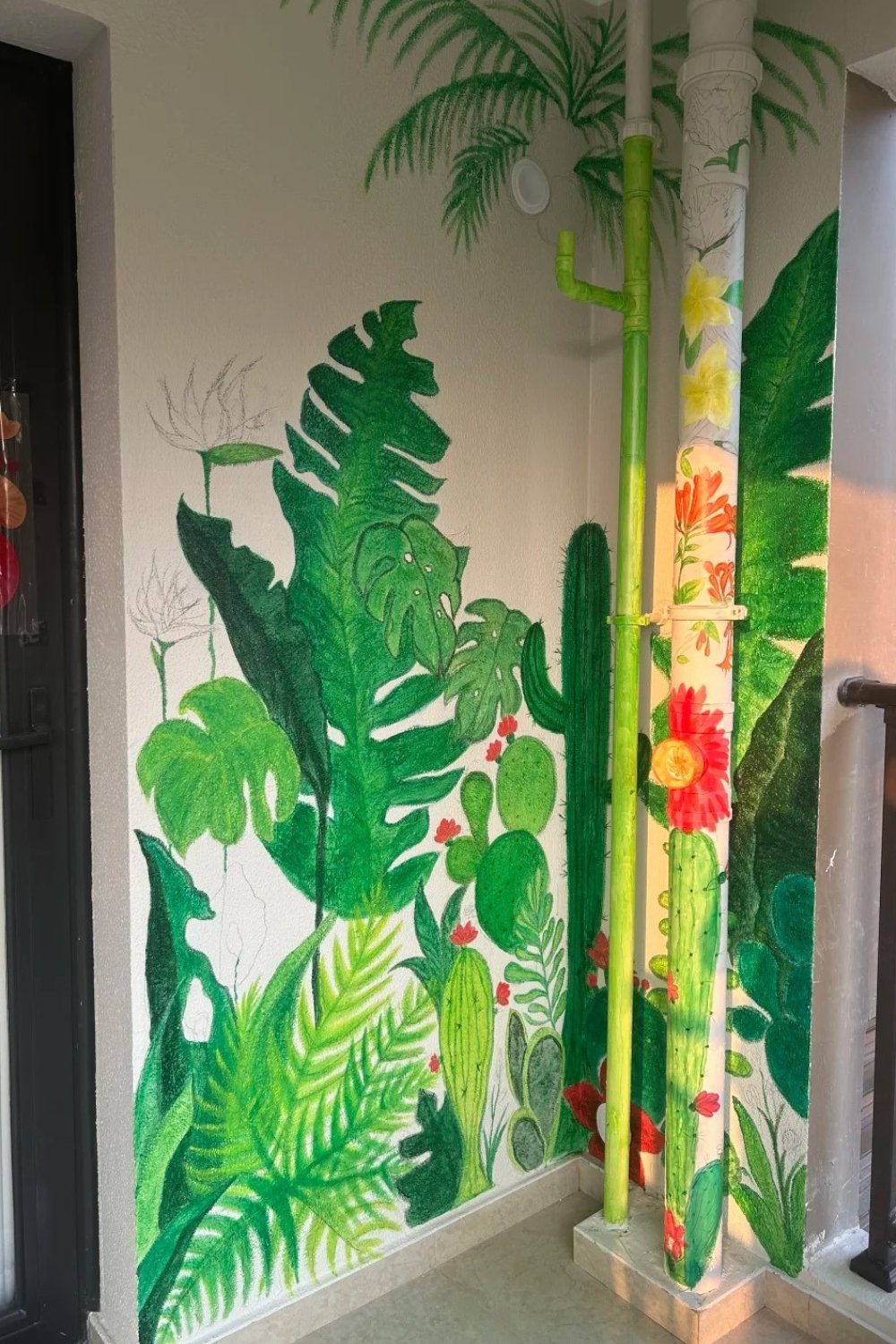
A mural suits a small room, like a powder room or a laundry corner, as well as a big one, because it makes the walls feel like a garden instead of a box. If you rent, the same effect works with peel-and-stick botanical wallpaper. A bold botanical wall also fits right into a relaxed, layered look; my bohemian home decor ideas show how to build the rest of the room around it.
Works best in: powder rooms, kids’ rooms, sunrooms, a single accent wall.
Mixing natural pieces on one wall
You don’t have to choose a single material. A natural wall often looks best with two textures that contrast: smooth canvas next to rough wood, pale shells next to a dark plank, a soft painting above a woven basket. What makes organic wall decor like this work is a shared color family. Keep everything within warm neutrals, greens and browns, and even very different pieces sit together calmly.
Limit yourself to three materials on one wall, and repeat each at least twice so nothing looks like an afterthought. Lay the arrangement out on the floor before you hammer anything, or cut paper templates and tape them to the wall for a day or two. That small step saves a lot of extra holes, and it shows you whether your earthy wall decor needs more breathing room.
Works best in: open-plan living spaces and long hallways where one style would feel flat.
DIY corner: four easy pieces
Some of the prettiest natural wall art is the kind you make from things you found on a walk.
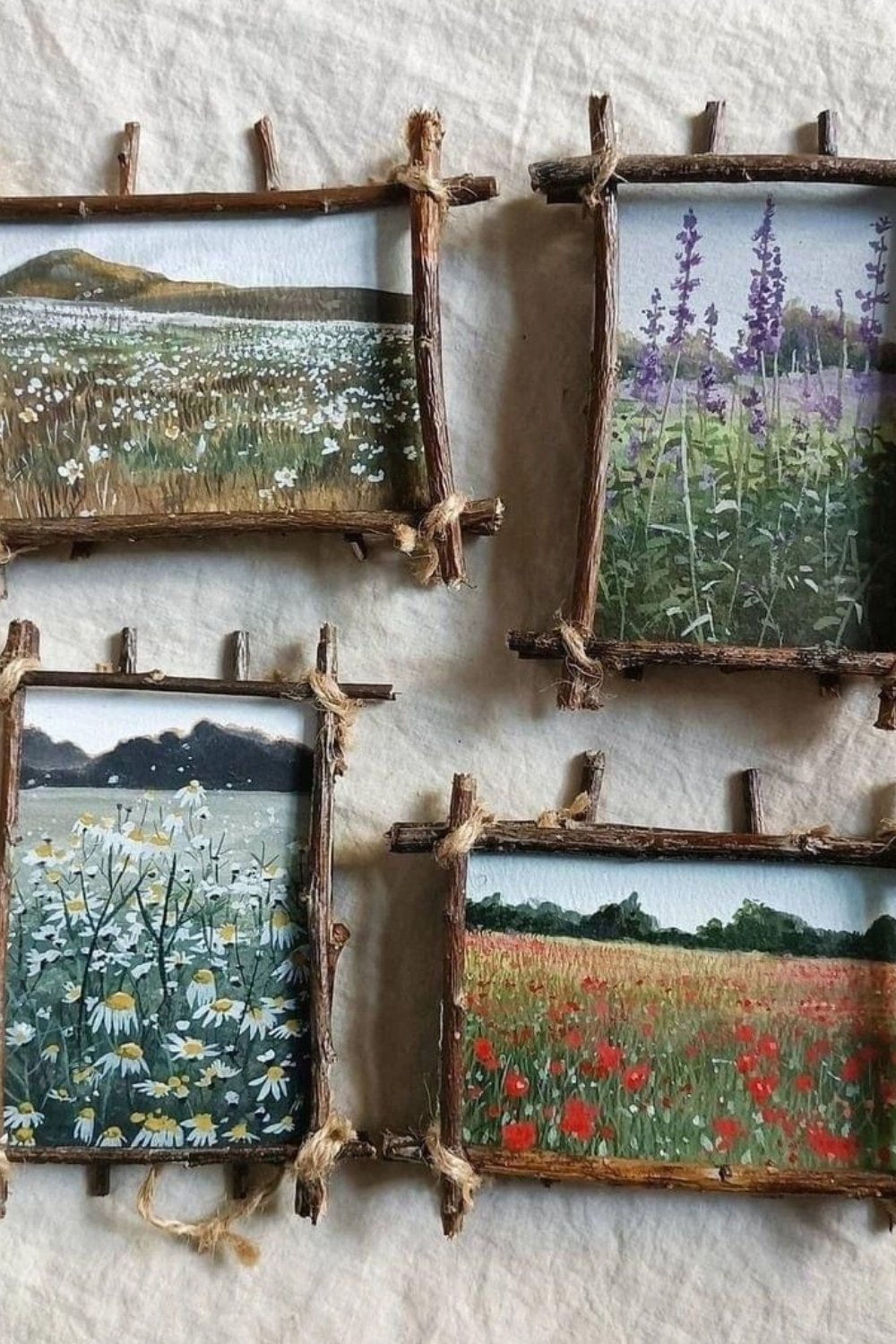
Twig frames. Collect straight, dry twigs about the thickness of a pencil. Cut four for each frame, a little longer than the picture, so the ends cross at the corners. Tie the corners with jute twine, then glue a small painting, a print or a photo to the back. Landscapes and wildflower meadows look especially good inside these, and a set of four in a loose grid makes a charming gallery.
Shell shadow box. Line the back of a deep frame with linen or a sheet of sandpaper for a beach texture. Arrange your shells, then glue them down with a clear craft glue or a small dot of hot glue. Larger single shells look elegant on their own; small ones work best grouped in rows.
Pressed flower frames. Press flowers and leaves between the pages of a heavy book for two to three weeks, then arrange them between two panes of glass in a floating frame. The flowers seem to hover against the wall. If you like keeping flowers from special days, my post on memory boxes and junk journals has more ways to preserve them.
Wood slice cluster. Buy a pack of thin, sealed wood slices in several sizes and arrange them on the floor first. Once you like the layout, mount them with picture hanging strips or small nails. A cluster in an organic, cloud-like shape suits an earthy wall better than a straight row.
Not sure where to start? Bring home a few things from your next walk or beach day, lay them out on the floor, and see which mood they lean toward. A handful of twigs, shells or pressed flowers is often enough to decide the whole wall.

Leave a Reply