

Old money style isn’t about money. It’s about restraint.
Read that again, because it flips the whole thing. The look everyone’s chasing.. the cream shorts, the crisp shirt, the quiet gold jewelry at a café table.. doesn’t come from a price tag. It comes from a set of rules that anyone can follow, in clothes from anywhere.
The myth says you need the trust fund first. The truth is that old money summer fashion is one of the cheapest aesthetics to copy well, because everything loud, logo’d, and expensive-looking is exactly what it refuses to wear.
So let’s bust the myth properly: where it came from, what the look is really made of, where to buy it for less, and the try-hard traps that give the game away.
The Myth: You Need Money to Look Old Money
The name doesn’t help, I’ll admit. But the “you need wealth to wear this” belief has specific, traceable origins, and none of them hold up.
Where the Myth Comes From
Blame the algorithm’s cast of characters: influencers styling the look with an actual Hermès belt, a Cartier watch, and a bag that costs a used car. The outfits went viral, the price tags rode along, and the aesthetic got welded to the receipts.
But look closer at those photos. Cover the belt buckle with your thumb and what’s left is a white shirt, tailored shorts, and a slick bun. The expensive part is doing almost none of the work. (Cover-the-logo is a fun game. Try it on any “rich” outfit today.)
What the Look Is Actually Made Of
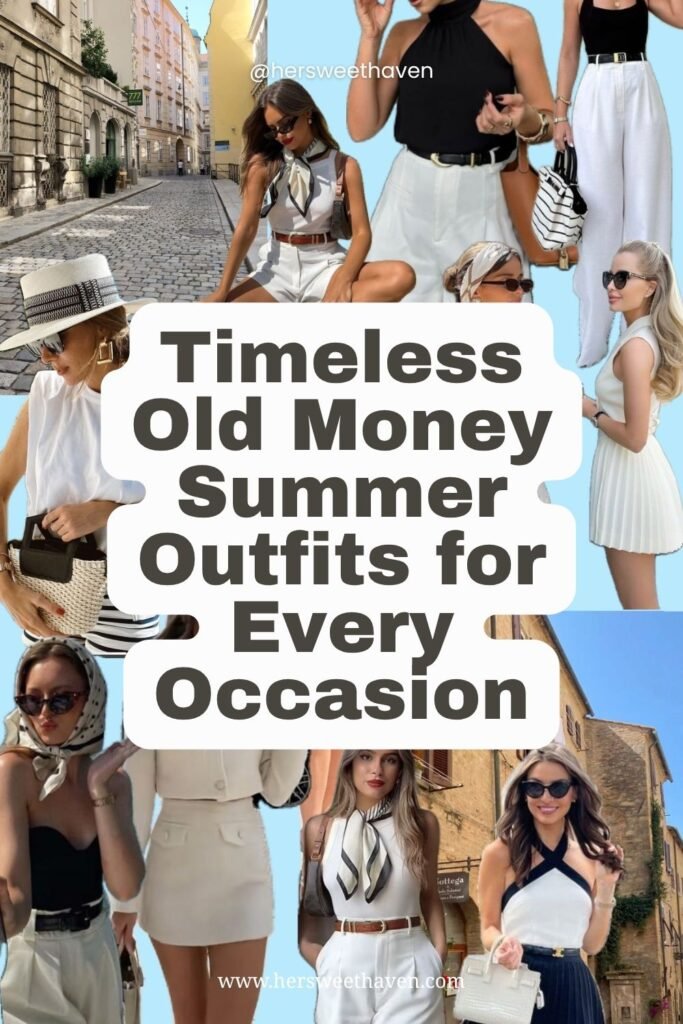
Strip away the branding and four things remain: fit, fabric, palette, and grooming. Clothes that skim the body instead of strangling or swallowing it. Natural fibers that breathe and drape. Colors that never argue with each other. Hair and nails that look tended.
Not one of those four requires money. They require decisions. A $20 thrifted shirt that fits beautifully beats a $300 one that doesn’t, every day of the summer, and nobody at the party can tell you the difference.
I’m not gonna lie, that’s the gritty little secret of this whole aesthetic: it’s discipline cosplaying as wealth.

The Old Money Summer Fashion Formula
Now the buildable part. Old money summer fashion runs on a short formula, and guides like Ways of Style’s old money summer breakdown all land on the same components.
The Palette and the Fabrics
The palette is doing half the heavy lifting: cream, white, beige, navy, with the occasional soft blue stripe or camel accent. Navy-and-cream is the single most reliable “expensive” combination in existence, and it costs the same as any other two colors.
Fabric is the other half. Linen and cotton, full stop. Natural fibers wrinkle a little, breathe a lot, and catch light in a way polyester never will. One linen shirt outperforms five satin-adjacent blouses in this aesthetic. (No, you don’t need to know fabric science. Just read the tag.)
The Core Pieces
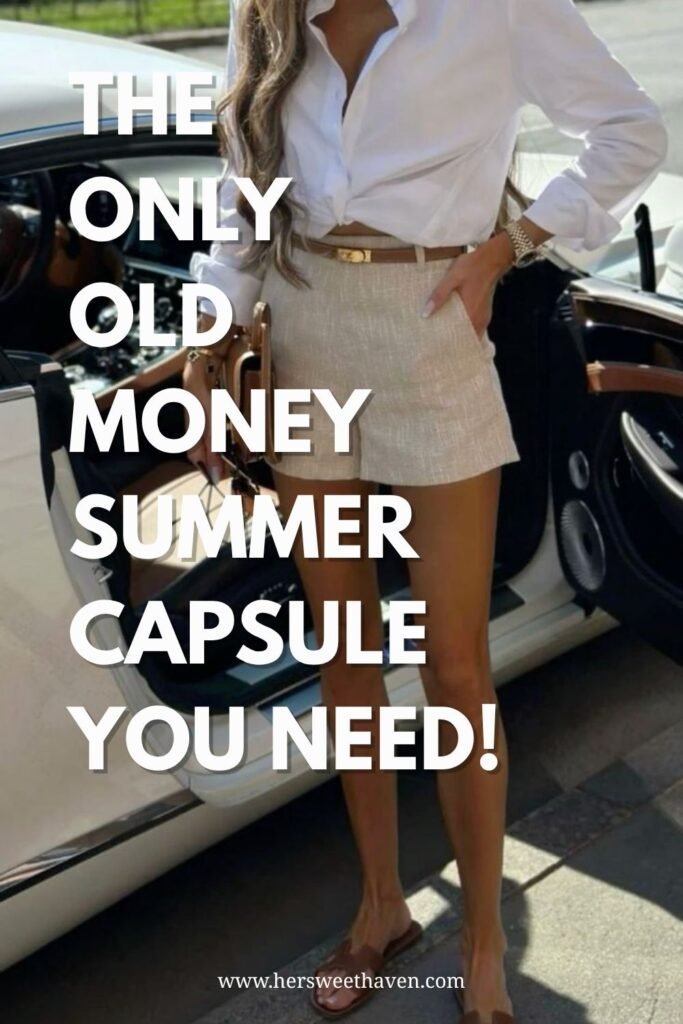
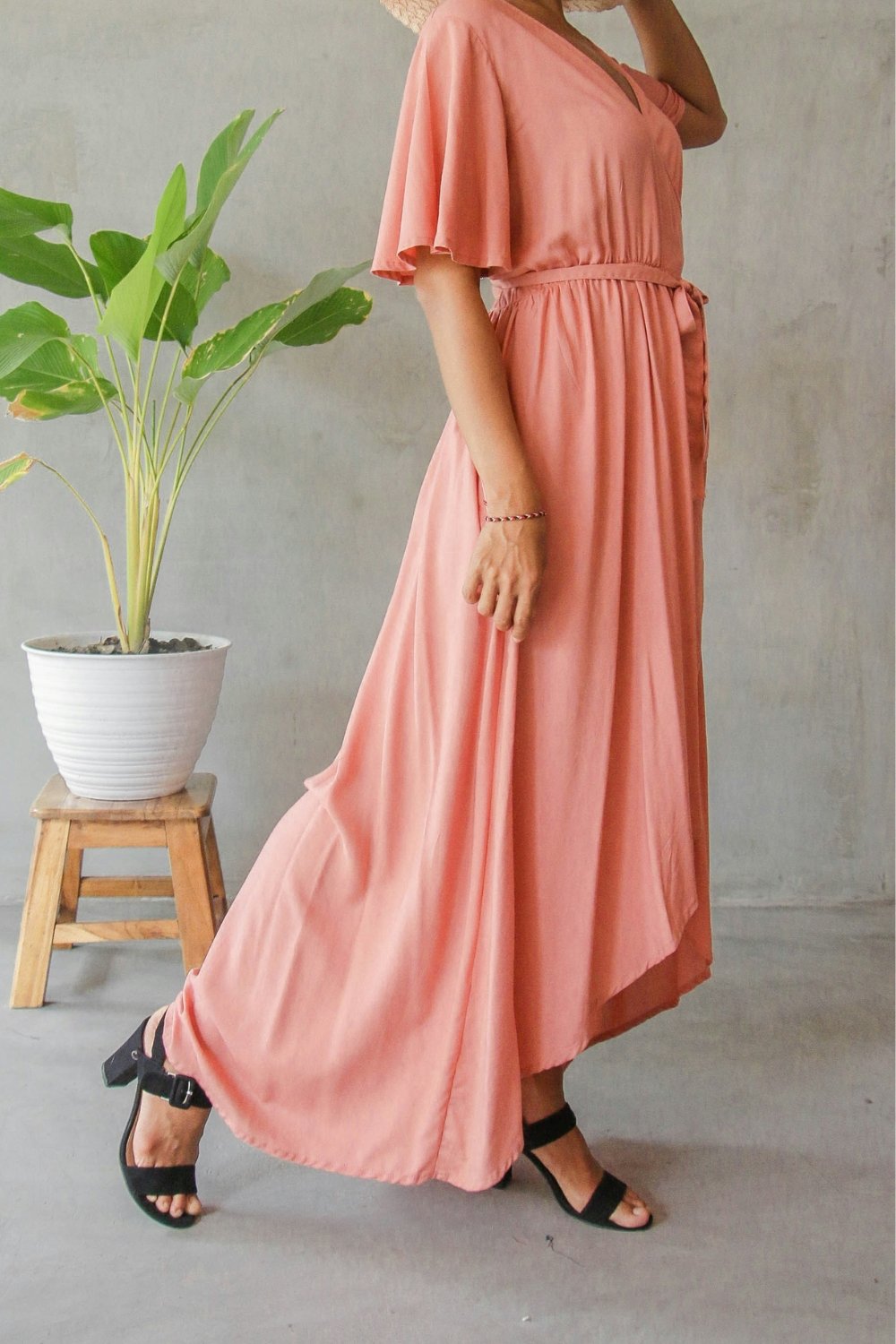
The summer capsule, in one breath: a white button-down, high-waisted tailored shorts, a pleated or A-line skirt, one linen dress, leather sandals or loafers, a silk-feel scarf, and small gold jewelry. A straw or structured bag finishes it.
Notice what’s missing: anything trendy, anything tight, anything with visible branding. Every piece works with every other piece, which is why ten items produce a month of outfits.
The scarf deserves special mention as the highest-return item in the whole list. Ten dollars, and it upgrades a plain tank and shorts into a whole moment: neck, hair, or bag handle.
A few combinations to prove the math. White shirt half-tucked into beige shorts, sandals, gold hoops: the default that never misses. Linen dress plus scarf tied in the hair: two pieces, done. Navy tank, white pleated skirt, loafers: the tennis-club look without the membership. Every one of those is under four items, and that’s not an accident.. fewer pieces, better chosen, is the whole grammar of this style.
Where to Get the Look for Less
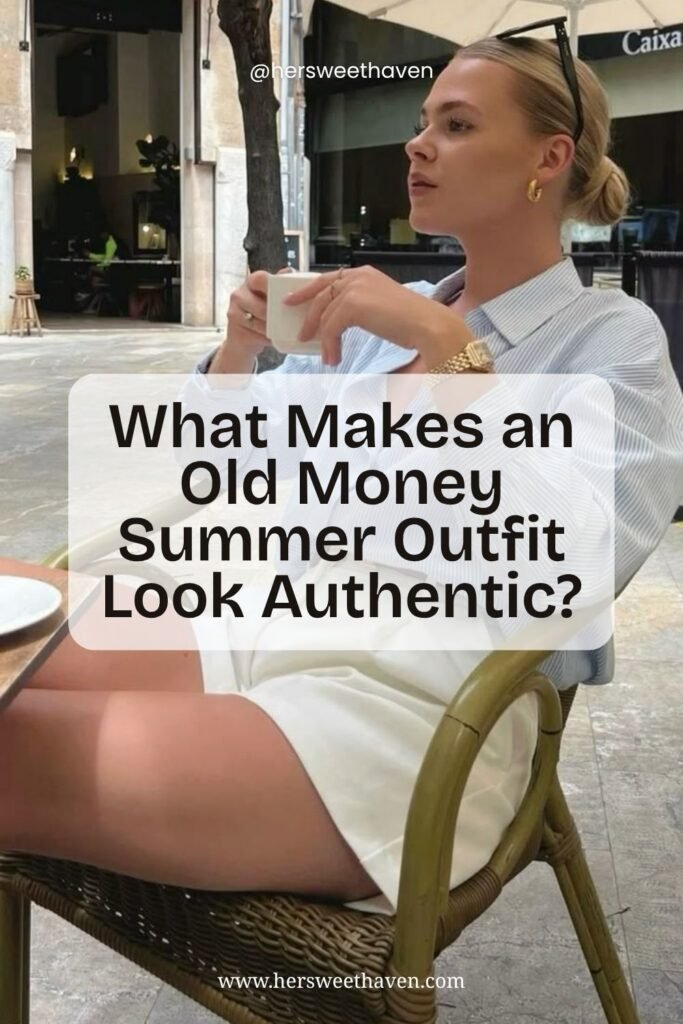
Thrift stores are the actual old money move, and I mean that literally.. quiet wealth has always bought quality secondhand and kept clothes for decades. Estate sales and consignment shops are full of exactly this aesthetic: linen, silk scarves, leather bags, all pre-softened and a tenth of retail.
On the high street, budget recreations like these old money outfits on a budget prove the point outfit by outfit: Zara, H&M, Uniqlo, and Quince cover every core piece for under $40 each.
And here’s the underrated hack: a tailor. Five to fifteen dollars to take in a waist or hem a pair of shorts turns cheap clothes into clothes that look made for you, and made-for-you is the entire illusion. (My tailor knows exactly how cheap my “expensive” shorts were.)
Thrifting this aesthetic has a cheat code, by the way: shop the men’s section for oversized white shirts and quality linen, and check the fabric tag before the brand tag. You’re hunting for 100% cotton, linen, and silk in the right colors. Ignore everything else on the rack, including some very tempting sequins. Stay strong.
Is Old Money Summer Fashion Just Quiet Luxury?
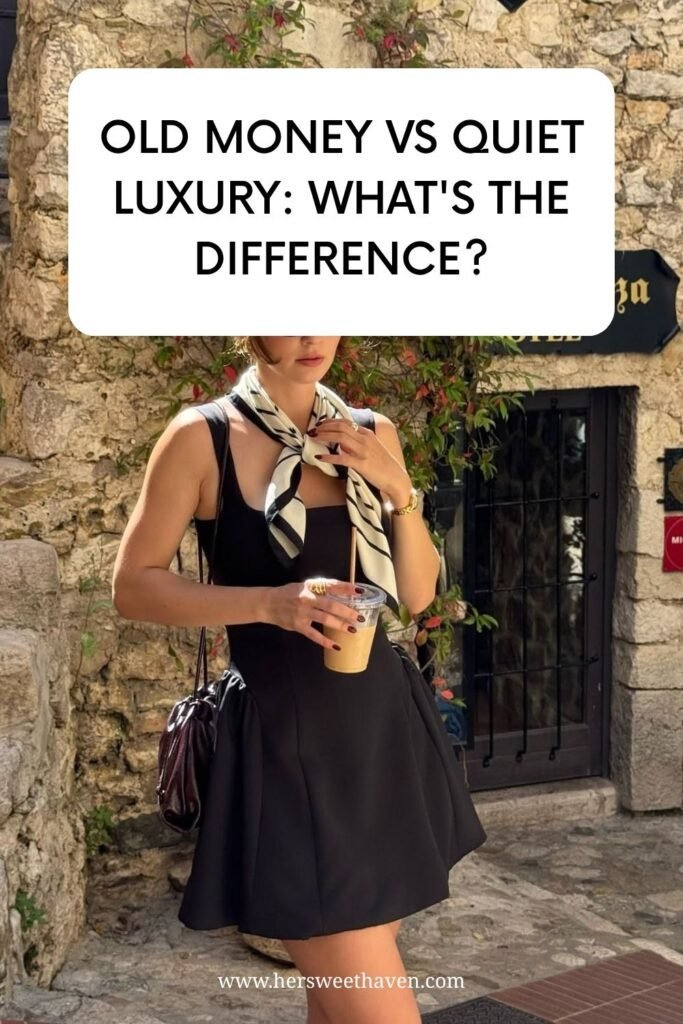
Mostly, yes, and the overlap is bigger than the difference. Both skip logos, both prize quality over trends, both worship the neutral palette. Comparisons like this old money and quiet luxury guide draw the line roughly here: old money leans classic and preppy, with its polos, pleats, and riviera stripes, while quiet luxury leans modern and minimal.
In summer, the two basically merge. A linen shirt and cream shorts belong to both aesthetics at once, so don’t stress the label. If your outfit is quiet, well-fitted, and logo-free, you’re in the club under either name.
The distinction matters only when shopping inspiration: search both terms and you double your Pinterest material. That’s the whole practical takeaway.
One nuance worth knowing: quiet luxury content tends to push actual expensive basics (“the perfect $400 tee”), while old money content leans harder on styling over spending. If budget is the point, the old money side of the algorithm is your friend. Same beige, better advice.
What Makes an Old Money Outfit Look Try-Hard?
Honest section, because this aesthetic has a failure mode, and it’s not “too cheap.” It’s too much.
Logo Overload and Costume Energy
The fastest way to break the illusion is visible branding, even expensive branding. A monogram bag with a “quiet” outfit reads as trying to prove something, which is the exact opposite of the energy. Old money doesn’t announce.
The other trap is the full costume: blazer, loafers, scarf, pearls, hat, all at once, in July. That’s not a person, that’s a mood board wearing a person. Pick three signals per outfit and stop.
The Details That Actually Sell It
Wrinkles are the tell. Not linen’s natural texture, but the slept-in crumple of an unironed cotton shirt. Five minutes with an iron does more for this look than $200 of new clothes.
Same goes for fit issues, scuffed shoes, and chipped polish. The aesthetic is really just “cared for,” expressed through clothes. Neat hair, clean sandals, pressed shirt.. that’s the actual trust fund. (Future you, wearing the same shirt next summer, will be glad you ironed it.)
Hair does more than people admit here. The slick low bun, the neat ponytail, the headscarf: all free, all doing the visual work of a designer accessory. Chipped neon nails next to a cream linen dress breaks the spell instantly, while short nude nails complete it for the price of one bottle of polish.
How Do You Build This on a Real Budget?
The starter five, with honest numbers: a white cotton button-down ($15 thrifted, $30 new), tailored beige or white shorts ($25), a linen blend dress ($35), flat leather-look sandals ($30), and a scarf plus gold-tone hoops ($15 combined). Total: around $120 for a whole summer’s aesthetic, less if the thrift gods are kind.
Add pieces one at a time, always in the palette, always things that match everything you already own. That’s the quiet math of a capsule: every new item multiplies instead of adds.
And spend your one splurge, if you have one, on the bag or the sandals. Accessories carry the most scrutiny and age the best.
The other budget rule: buy for next summer too. Because nothing in this capsule is trendy, everything you buy this July works next July, and the July after that. The cost-per-wear math on a $30 white shirt worn sixty times makes it the cheapest thing in your closet, whatever fast fashion was charging that week.
If $120 up front is steep, build in thirds: shirt and shorts this month, dress and sandals next, accessories last. The look works at every stage because even two pieces from the formula already read as put-together.
So No, You Don’t Need the Trust Fund
Back to the myth we came to bust: the old money look was never for sale, which is exactly why you can’t be priced out of it. Restraint is free. Neutral colors cost the same as loud ones. An iron costs twenty dollars and a tailor costs ten.
What reads as wealth, in the end, is calm: an outfit that isn’t trying, in colors that aren’t fighting, on a person who looks comfortable. You can put that together from a thrift rack by Saturday.
The trust fund kids don’t have a secret. They have a formula. And now, so do you.

Leave a Reply