

Fencing is one of those home projects where the price tags can make you question everything. Vinyl, wrought iron, composite panels: the costs add up fast, and suddenly you’re looking at a number that makes your stomach drop. But here’s the thing. You don’t need to drain your savings account to get a fence that looks great and actually does its job.
If you are here because you need backyard privacy, a safe space for your dog, or just a clean border for your front yard, there are plenty of cheap fence ideas on a budget that work. And no, they don’t have to look like you threw them together over a weekend with zero plan. This guide covers the most affordable materials, real cost breakdowns, DIY strategies, and the mistakes that quietly turn a “cheap” fence into an expensive problem.
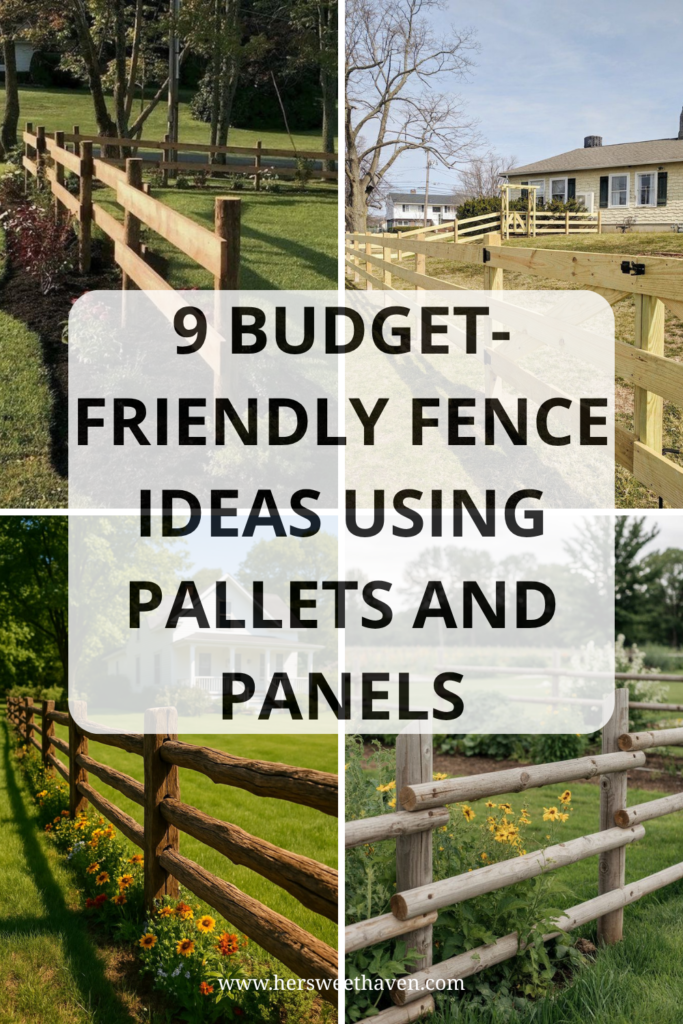
What Are the Best Cheap Fence Ideas on a Budget?
Before you buy a single board, it helps to know what materials give you the most bang for your buck. Some options are practically free. Others cost a fraction of what traditional fencing runs. Here’s a breakdown of the most popular cheap fence ideas that actually hold up.
Pallet Fences (Free or Nearly Free)
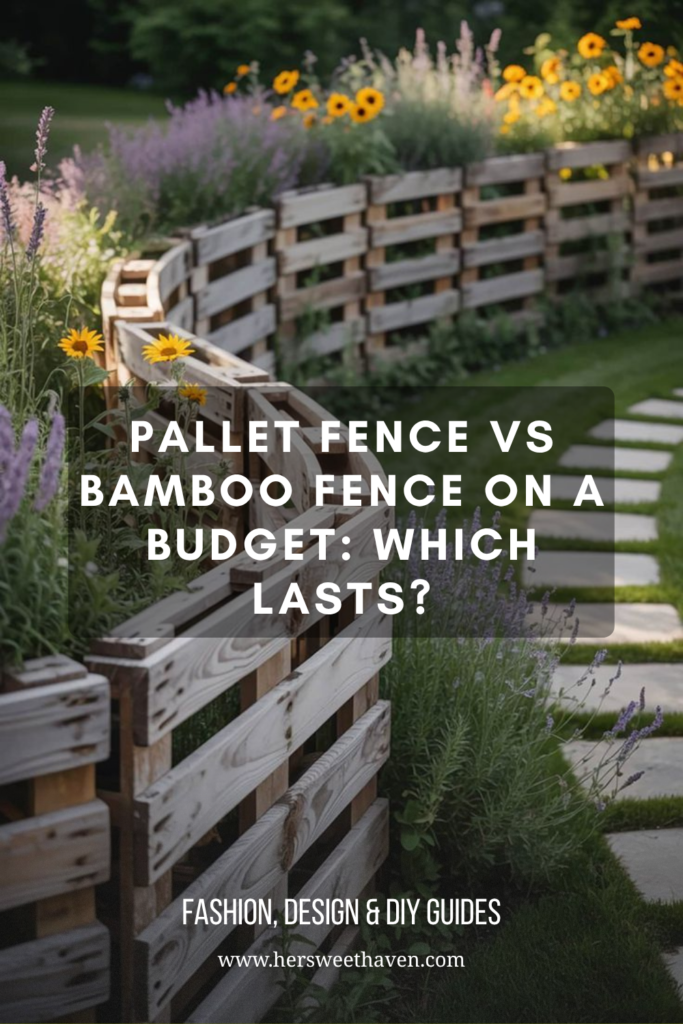
Pallet fencing is one of the most popular DIY options for a reason. Pallets are often free from local businesses, warehouses, or distribution centers. You can leave them raw for a rustic farmhouse look or paint them to match your yard’s color scheme.
They work well as short border fences around garden beds or taller privacy screens depending on how you stack and orient them. The key is choosing pallets that are clean, dry, and structurally sound. Avoid any pallets stamped “MB,” as those have been chemically treated and aren’t safe for home use.
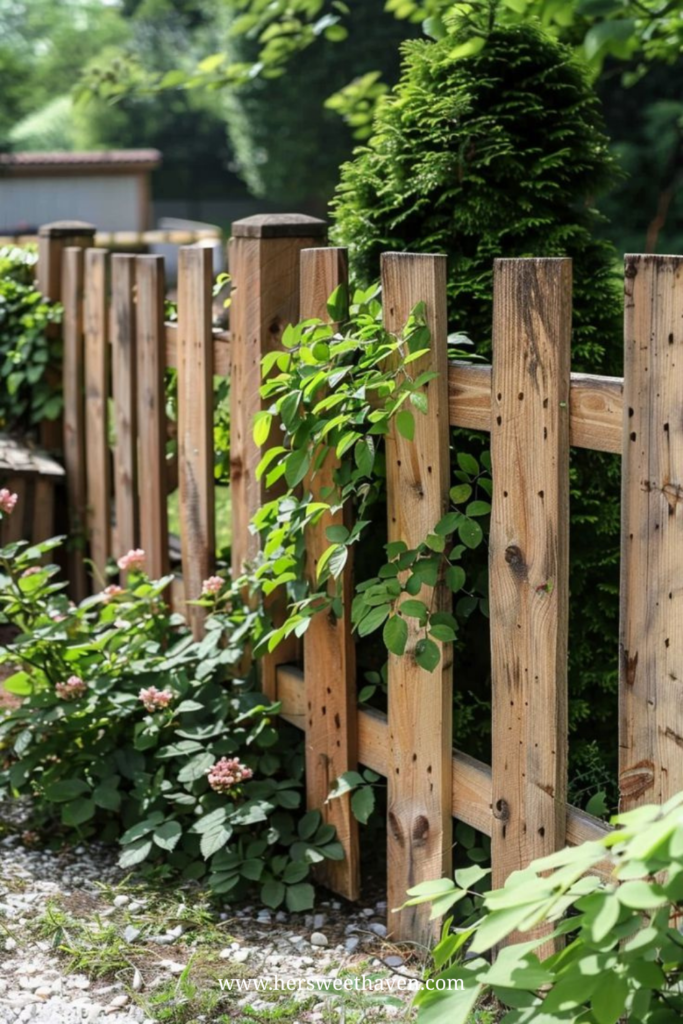
Bamboo Roll Fencing
Bamboo rolls are lightweight, affordable, and surprisingly good-looking. You can find them at most home improvement stores, and they install quickly with zip ties, wire, or screws. A bamboo fence costs roughly $3 to $10 per linear foot, making it one of the cheapest options out there.
Attach bamboo rolls to an existing chain link fence for an instant upgrade, or mount them on simple wooden posts for a standalone screen. Natural yellow bamboo is the cheapest, while black bamboo runs a bit higher. Applying a clear sealant will help protect it from sun and rain damage.
Split Rail and Post-and-Rail Fences
If you have a larger yard and don’t need full privacy, split rail fences are a smart pick. They use far fewer materials than a solid fence, and the open design gives your property a relaxed, ranch-style feel.
Split rail fencing typically costs between $12 and $35 per linear foot installed, with pine and cedar being the most affordable wood choices. This style is ideal for front yard fence ideas where you want to define your property line without blocking the view. It also pairs beautifully with climbing vines or low shrubs for added character.
Hog Wire and Welded Wire Panels
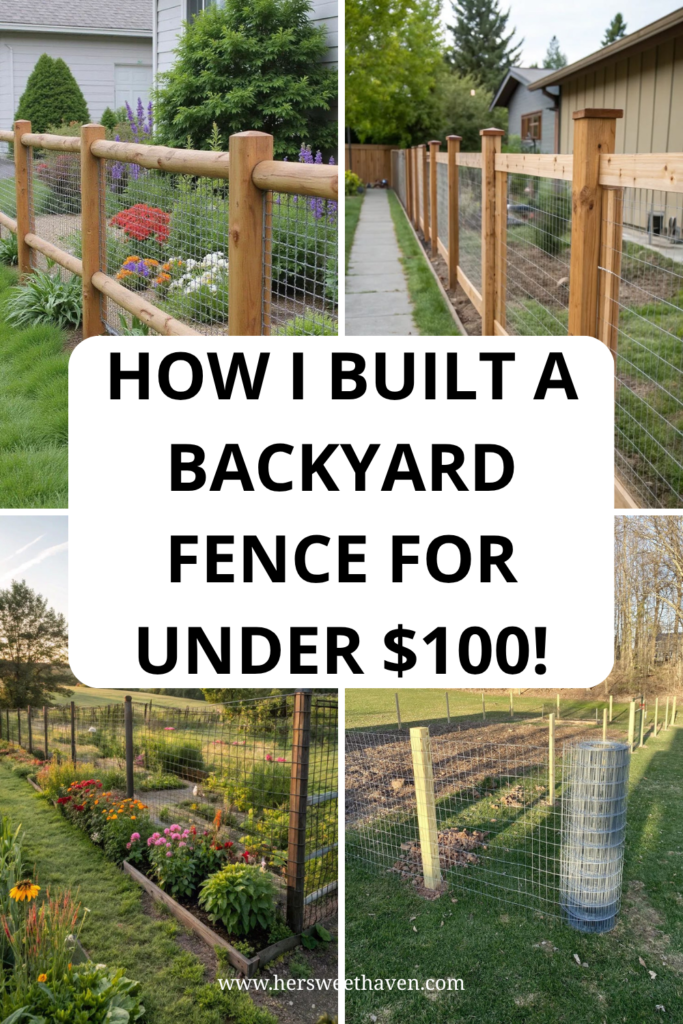
Hog wire fences combine a clean, modern look with serious affordability. Rigid metal wire is strung in a grid pattern over wooden frames, and the minimal wood keeps costs down. These fences typically run between $10 and $18 per linear foot and are a favorite for garden fence ideas.
They’re especially popular for vegetable gardens, side yards, and anywhere you want visibility with a defined boundary. Pair hog wire with cedar posts, and you get a fence that looks far more expensive than it actually is.
Cheap Privacy Fence Ideas That Don’t Look Flimsy
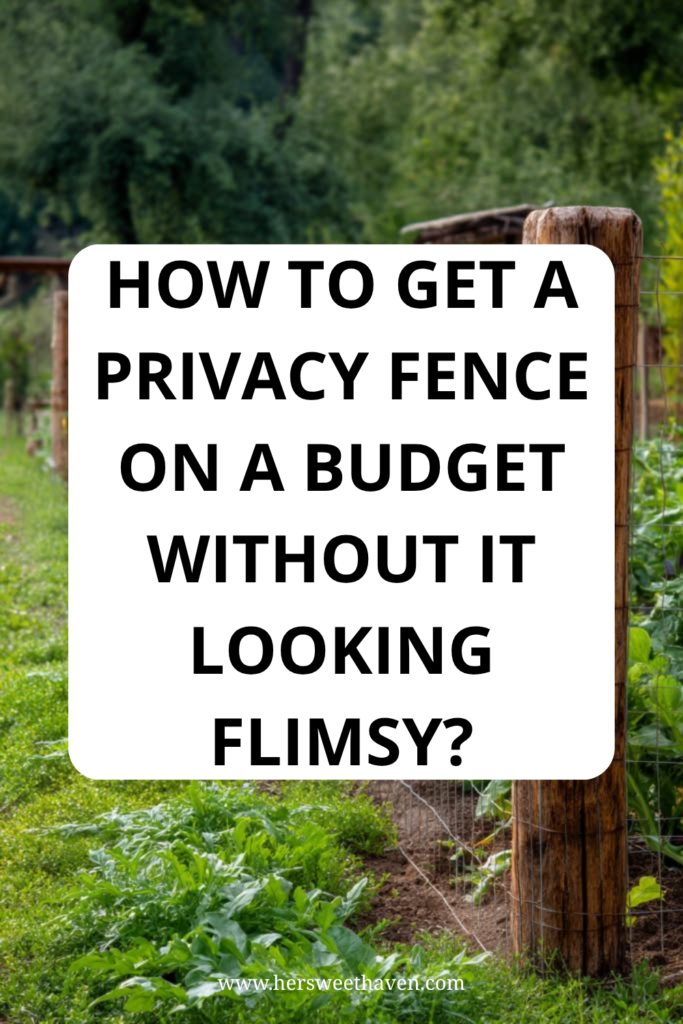
Privacy is the number one reason most homeowners want a fence. But full privacy fencing can get pricey fast. The good news? There are several cheap privacy fence ideas that block sightlines without looking like a temporary fix.
Horizontal Wood Slat Fences
Horizontal slat fences have a modern, clean look that’s trending hard right now. You can build them with pressure-treated pine (the most affordable wood option at $1 to $4 per picket) and space the slats to control how much privacy you want.
The horizontal layout uses fewer boards than a traditional vertical privacy fence, which means less material and lower costs. Stain them dark for an upscale feel, or leave them natural. Either way, they photograph well and hold up nicely with regular sealing.
Corrugated Metal Panels With Wood Frames
This combo is a budget winner. Corrugated metal sheets are durable, rust-resistant, and surprisingly affordable. An eight-foot sheet of corrugated metal can cost as little as $28, and when you frame them with stained wood posts, the result looks intentional and polished.
This is a great option if you want full privacy without spending on solid wood panels. It’s also low-maintenance. No resealing, no repainting, no replacing rotten boards every few years.
Privacy Screens on Existing Chain Link
If you already have a chain link fence, you don’t necessarily need to tear it out. Installing a knitted polyethylene privacy screen over chain link is fast, affordable, and surprisingly effective. You attach it with zip ties and built-in grommets, and you’re done in an afternoon.
Another option? Plant fast-growing vines like ivy, clematis, or jasmine along the chain link and let nature do the work. Within a season or two, you’ll have a living green wall that doubles as a privacy barrier. If you’re also looking at ways to add greenery to your yard, check out these trellis ideas for your garden for more inspiration.
Rope and Post Fencing for Decorative Borders
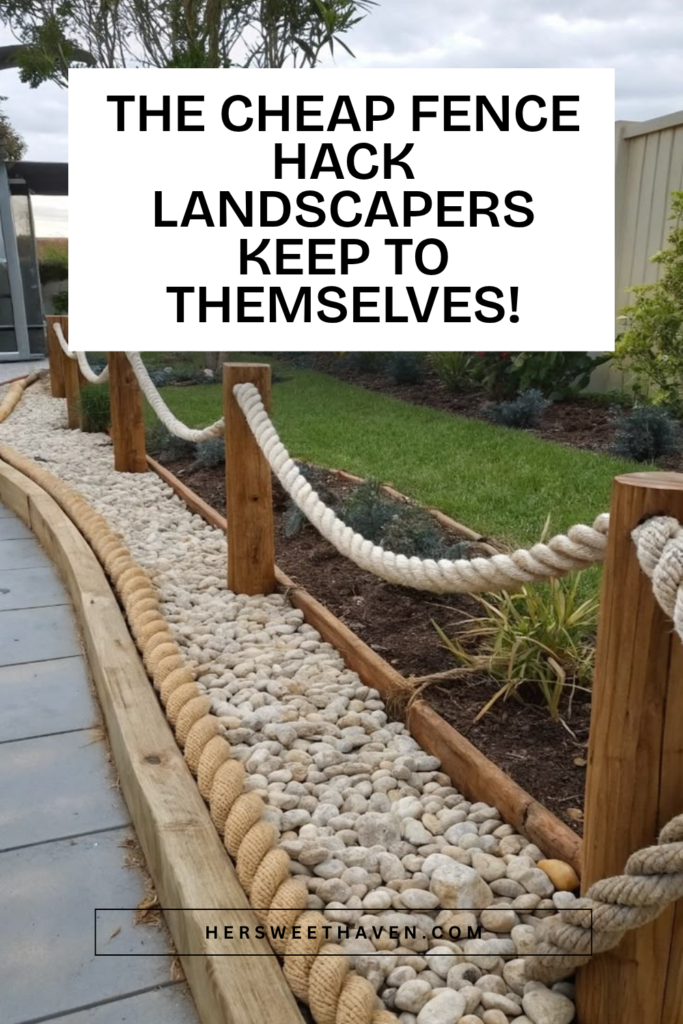
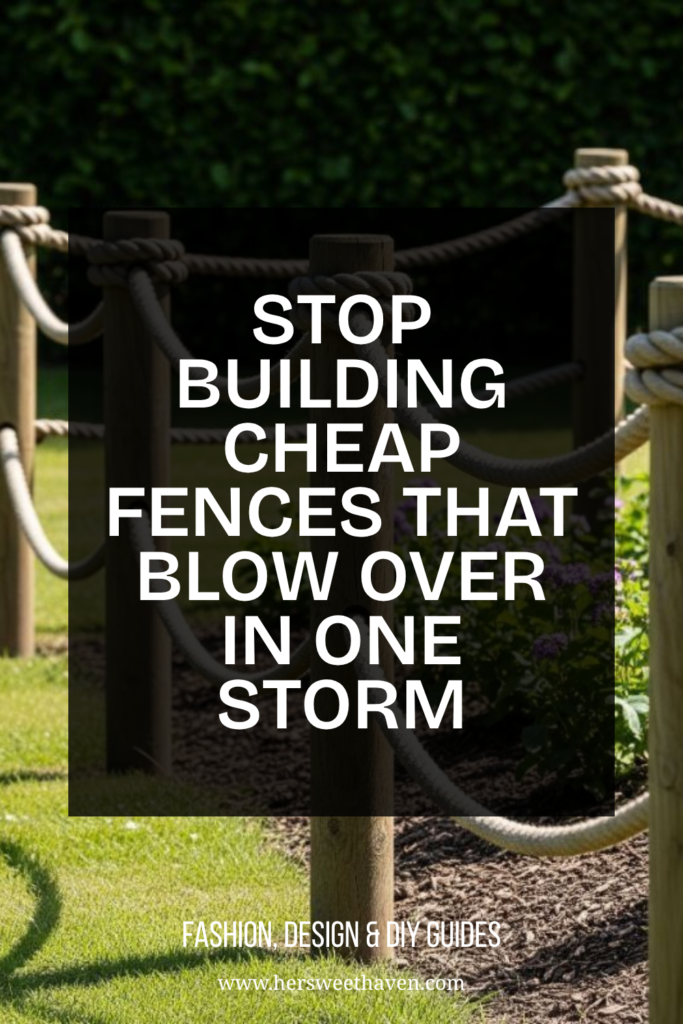
Not every fence needs to be six feet tall. Rope and post fencing is one of those cheap fence ideas that works perfectly for decorative borders, front yard accents, or separating garden zones. Short wooden posts with thick nautical rope strung between them create a relaxed, coastal feel that’s surprisingly polished.
This style won’t give you privacy, but it defines your space beautifully. It’s also one of the easiest DIY projects you can do in a single afternoon. Pair it with river rock or gravel along the base for a finished look, and you’ve got a front yard fence idea that gets compliments.
How to Build a Backyard Fence for Under $200
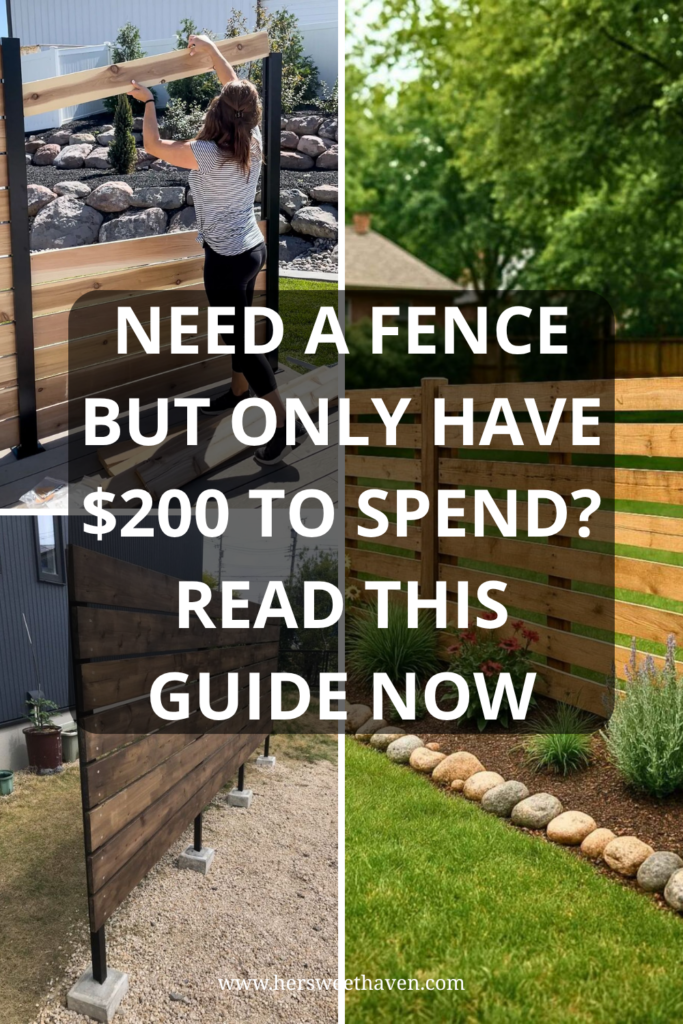
Here’s where it gets exciting. Building a functional backyard fence for under $200 is absolutely doable if you plan smart and source materials carefully.
Planning Your Layout and Materials
Start by measuring the exact footage you need to cover. More fencing means more cost, so think strategically. Do you need to fence the entire perimeter, or can you get away with fencing just the sides that face neighbors or a busy road? Partial fencing is one of the smartest ways to cut costs without sacrificing function.
Sketch out your layout, mark post locations (usually 6 to 8 feet apart), and calculate how many boards, posts, and bags of concrete you’ll need. This step alone can save you from overbuying materials.
Where to Source Free or Low-Cost Lumber
This is the real money-saver. Check local classifieds, community boards, and salvage yards for free or cheap lumber. Reclaimed wood costs as little as $2 to $15 per linear foot and adds a ton of character. Old barn wood, salvaged pickets, and leftover construction lumber all work.
You can also check with neighbors who are replacing their fences. One person’s teardown is another person’s free building material. If you’re working on other outdoor projects at the same time, you might want to look into building raised garden beds on a budget using similar sourcing tricks.
Step-by-Step Basics for a Simple DIY Build
The process isn’t complicated. Dig your post holes (rent an auger if you can, it’s worth it), set your posts in concrete, let them cure for 24 to 48 hours, and then attach your rails and pickets. A nail gun or impact driver speeds things up significantly.
One pro tip: treat or seal your wood before assembling the fence. It’s faster to apply when the boards are laid out flat, and you get better coverage in the cracks and edges. This small step adds years to your fence’s lifespan.
Pallet Fence vs Bamboo Fence: Which Lasts Longer on a Budget?
This is a question that comes up a lot, and the answer depends on your priorities.
Pallet fences are cheaper upfront (often free), but they need more work. You’ll want to sand, seal, and sometimes reinforce them. Without treatment, pallet wood can rot within 3 to 5 years, especially in wet climates. With proper sealing and maintenance, you can stretch that to 7 or 8 years.
Bamboo fences cost more initially ($3 to $10 per linear foot), but they’re easier to install and require less prep. Bamboo naturally resists insects and moisture better than untreated pallet wood. With a clear sealant applied annually, bamboo fencing can last 5 to 7 years outdoors.
So which wins? If you have more time than money and enjoy DIY projects, pallets are the way to go. If you want something fast, clean, and low-effort, bamboo rolls are the better pick. Both are solid choices for garden fence ideas or backyard privacy screens.
For more ideas on creating a beautiful outdoor space without overspending, take a look at these budget-friendly patio decorating ideas that pair perfectly with a new fence.
5 Budget Fence Mistakes That Can Cost You More Later
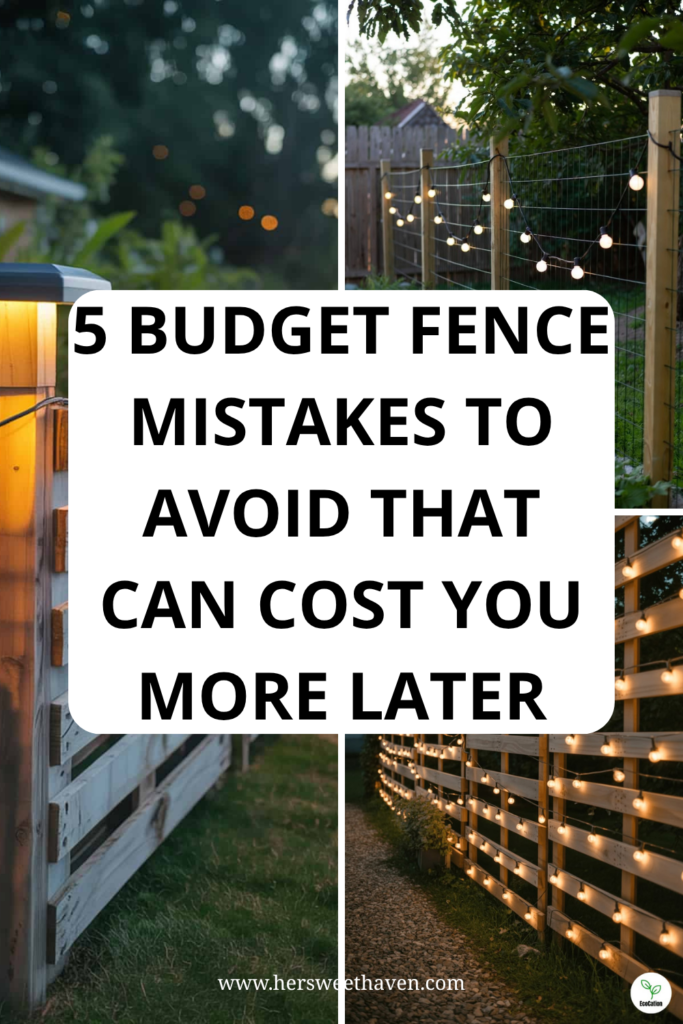
Saving money on a fence is great. Spending money twice because the first one failed? Not so great. Here are the most common mistakes people make with cheap fence ideas, and how to avoid them.
Skipping Post Depth and Concrete
This is the number one reason budget fences fail. Your posts need to be buried at least one-third of their total length (so a 6-foot post needs 2 feet underground), and they need to be set in concrete. Skipping this step means your fence will lean, shift, or blow over in the first serious storm.
Choosing the Cheapest Material Without Considering Climate
A pallet fence might work great in a dry climate but fall apart in two years somewhere with heavy rain and humidity. Think about your local weather before picking materials. If you get a lot of moisture, invest in pressure-treated wood or bamboo with sealant rather than raw, untreated lumber.
Ignoring Local Codes and Permits
Many cities and HOAs have specific rules about fence height, placement, and materials. Building a fence that violates code can mean fines or having to tear it down and start over. A quick call to your local building department before you start can save you a lot of headaches.
Not Treating or Sealing Wood
Untreated wood rots. It’s that simple. A $20 can of wood sealant can add 5+ years to your fence’s life. Seal every surface, including the cut ends and the parts that go underground. This is the one step you should never skip on a budget fence project.
Building Too Tall Without Proper Bracing
Taller fences catch more wind. If you’re building a privacy fence over 5 feet, you need additional bracing and deeper post holes. Without proper support, tall fences act like sails in a storm. Cross-bracing between posts and using thicker posts (4×6 instead of 4×4) can prevent this.
What’s the Cheapest Fence for Dogs and Pets?
If your main goal is keeping pets safe, you don’t need a fancy fence. You need a functional one. Here are the most affordable options for cheap fence ideas for dogs.
Chain link fencing is still the gold standard for pet containment on a budget. It costs $15 to $30 per linear foot and is nearly indestructible. It’s not the prettiest option, but you can soften the look with climbing plants or a bamboo roll overlay.
Welded wire panels on wood frames are another great pick. They’re strong enough to contain medium and large dogs, and they look much better than plain chain link. The open design lets you keep an eye on your pets while they play.
Picket fences work for smaller dogs, but make sure the gaps between pickets are narrow enough that your pet can’t squeeze through. A spacing of 2 to 3 inches works for most small breeds.
For more tips on creating a pet-friendly outdoor space, you might also enjoy these small garden design tips that work well alongside affordable fencing. And if you’re looking for more ways to enjoy your outdoor area, check out these garden privacy screen options for added seclusion.
Your Budget Fence Is Totally Within Reach
A beautiful, functional fence doesn’t require a contractor or a huge budget. Whether you go with free pallets, affordable bamboo rolls, or a simple DIY wood build, the options are out there. The key is planning ahead, choosing the right materials for your climate, and not cutting corners on the basics like post depth and wood treatment.
Pick the style that fits your yard, grab your tools, and get started this weekend. Your backyard (and your wallet) will thank you.
Have you built a budget fence before? Drop your tips and favorite materials in the comments. And if this guide helped, save it for later or share it with a friend who’s been putting off their fencing project.








Leave a Reply