

Your front yard is the first thing anyone sees when they pull up, and it doesn’t take a designer budget to make it look planned. Below are 10 front yard landscaping ideas, from winding stone paths and wide bold flower beds to rock gardens, lighting and a small seating spot, plus the mistakes to skip and what a budget makeover actually costs.
You don’t need all ten. One or two, done well, change the whole picture from the street.
1. Create a welcoming pathway with winding stone walkways
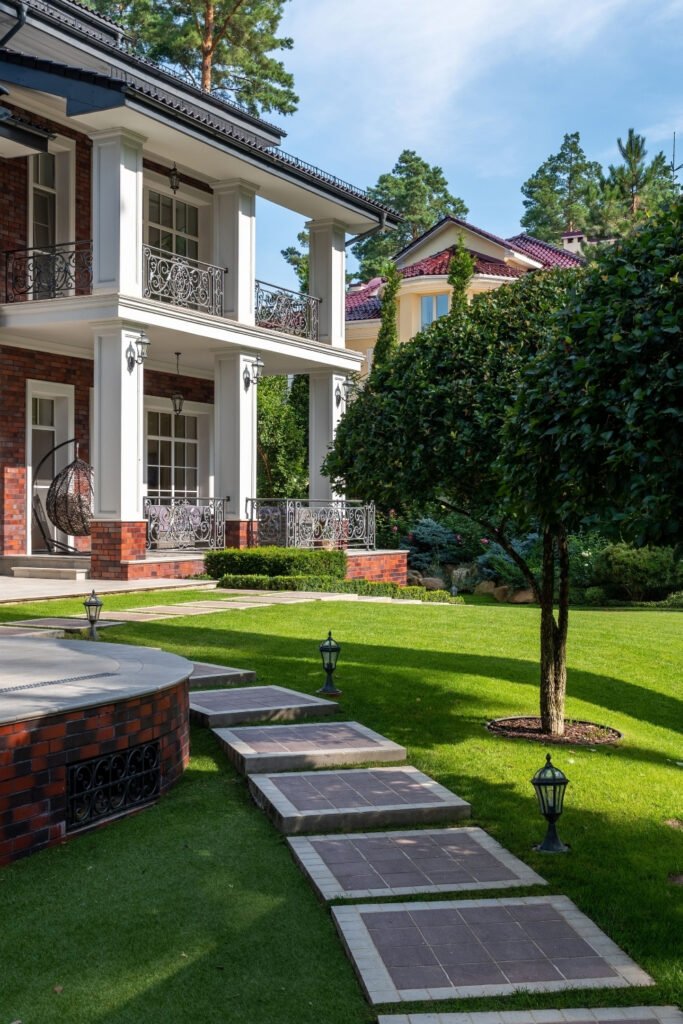
Photo by Max Vakhtbovych on Pexels
A straight concrete strip from the driveway to the door does its job, but it gives the house zero personality. A path that curves, even slightly, slows the eye down and makes the walk to the front door part of the yard instead of a shortcut through it.
Flagstone, bluestone, or simple stepping stones set into gravel or lawn all work. The National Association of Landscape Professionals lists natural materials like stone, gravel and reclaimed wood among this year’s top trends, because they’re practical and they age well.
Already have a basic walkway? Line it with solar path lights (more on those below), and tuck creeping thyme or moss between the stones. The planted gaps soften the edges, and thyme handles light foot traffic.
2. Add layered plantings for year-round texture
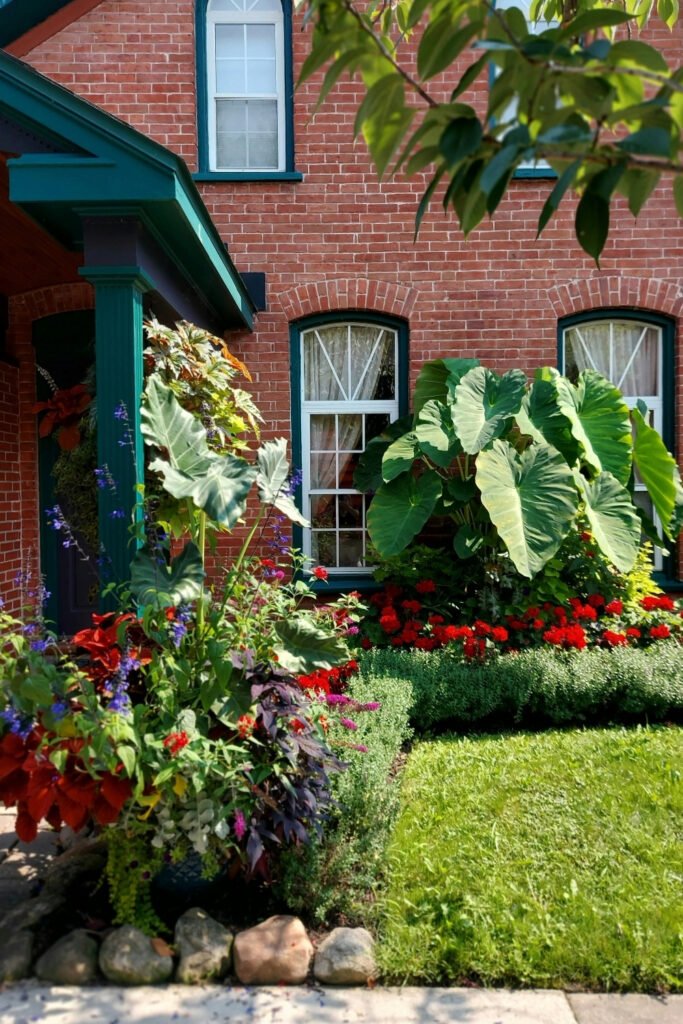
Photo by Kathleen Culbertson on Unsplash
Flat yards with one row of identical shrubs are slowly disappearing. Layered planting is the front yard garden idea that keeps coming up: tall plants or small ornamental trees at the back, shrubs and perennials in the middle, low ground covers or grasses at the front.
Layers make a bed look full without looking crowded, and they keep something going in every season. A white-and-red scheme against brick is a good example of how two flower colors repeated through a bed can look calmer than ten different ones.
This works especially well in a small garden. Start with three to five plant varieties and repeat them along the bed. Repetition is what makes a planting look intentional instead of collected.
3. Use rock landscaping to add structure and low maintenance
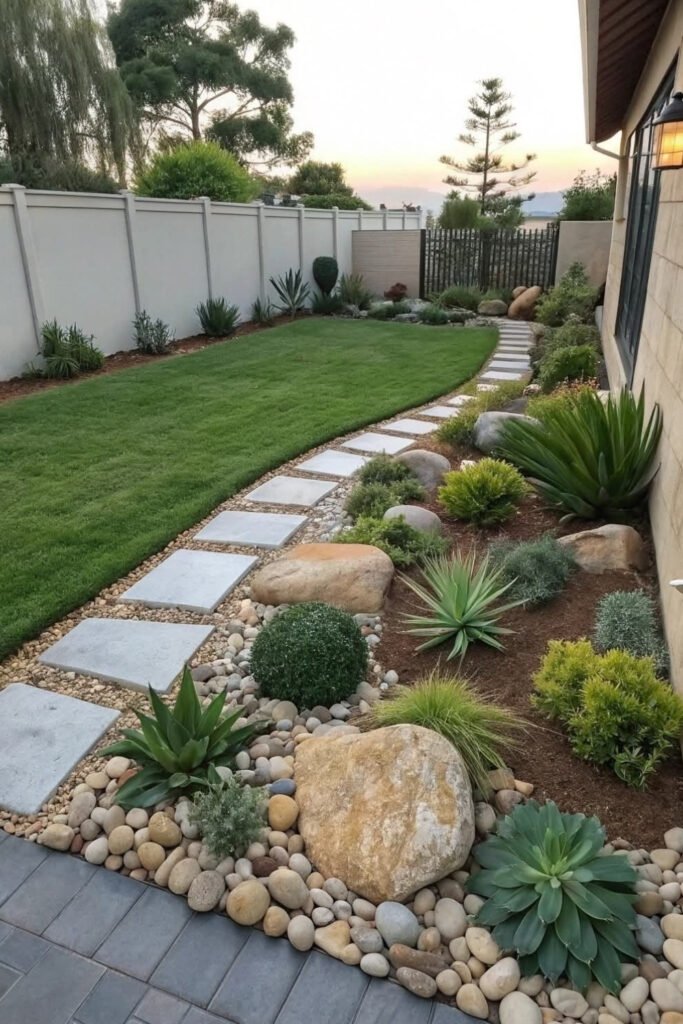
If you’ve been searching for front yard landscaping ideas with rocks, this is the low-effort one. Boulders, river rock borders and low stone walls give a yard structure without adding anything to water or mow.
Rocks look good year-round, which a lawn in August often doesn’t. Tuck drought-tolerant perennials or succulents between them for color, and a dry, sunny corner turns into the easiest part of the yard to look after.
Start small with a rock border around one existing bed, or replace a stubborn patch of lawn with a full rock garden. If you’re adding raised beds too, here’s how to build raised garden beds on a budget.
4. Design a front yard with mixed materials
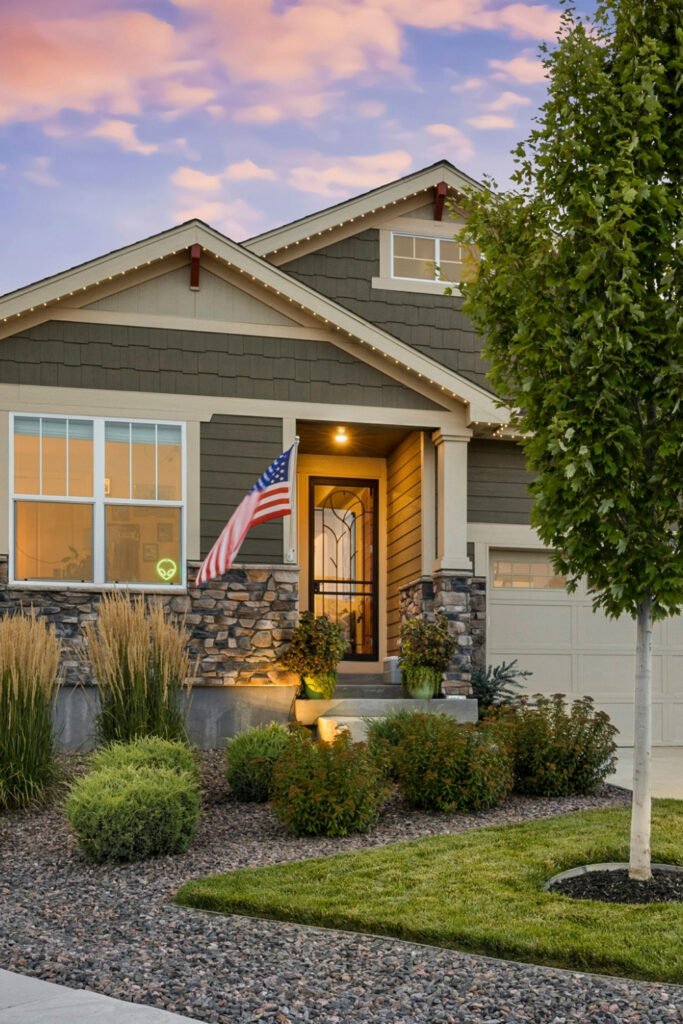
Photo by Patrick Bohn on Unsplash
A clean, contemporary front yard isn’t about being bare. It’s about every material having a job, and the materials not fighting each other.
The trick is a short material list. Pick two or three, for example gravel, flagstone and one kind of ornamental grass, and repeat them across the whole yard. Gray gravel, soft grasses and a few rounded shrubs are enough to make a house look current.
If your yard feels like a random collection of plants and patches, this is one of the fastest fixes: paths that lead somewhere, edges that separate beds from lawn, and the same materials showing up again and again.
5. Frame your home with dark mulch and bold flower beds
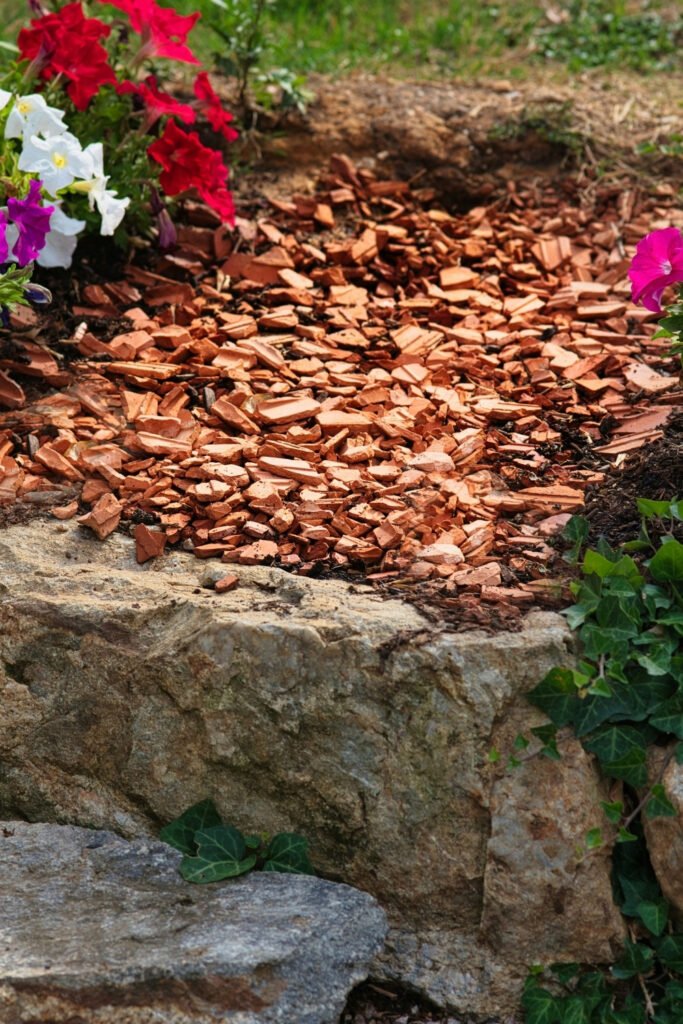
Photo by David Billington on Unsplash
A thick layer of dark mulch is one of the cheapest front yard flower bed ideas, and it does more than you’d think. Black or deep brown mulch works like a dark picture frame: green leaves and bright petunias read much stronger against it.
The most common mistake with front beds is making them too narrow. A thin strip hugging the foundation barely registers from the street. Homes & Gardens even names narrow “mustache” beds as one of the features that date a house fastest. Pull the bed edge further out, give the plants room, and the house suddenly looks better proportioned.
6. Build colorful flower borders with stone edging
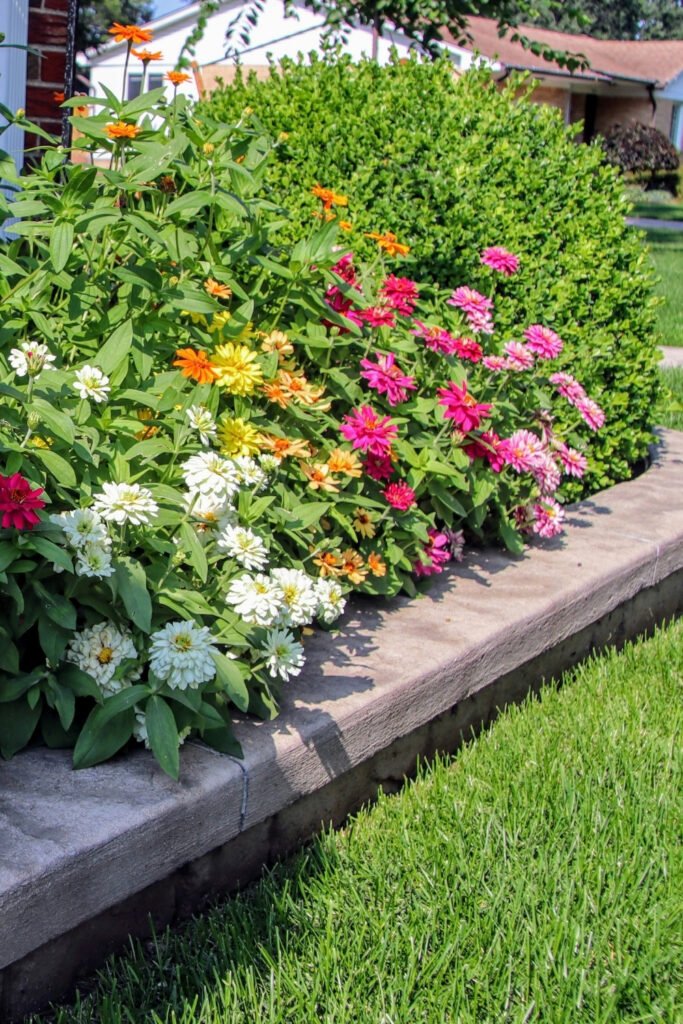
Photo by Gordon Chaffin on Unsplash
If your flower beds keep creeping into the lawn (or the lawn into them), edging is the fix. Natural stone, brick or concrete curbing draws a clear line between bed and grass, and that one line makes the whole yard look cared for.
Plan the planting around bloom times so the border never looks empty: something for spring, summer and fall. Annuals give instant color, perennials give the structure that comes back every year. A mix of both is usually the sweet spot.
Edging doesn’t have to be expensive. Leftover stones from a landscape supply yard or reclaimed bricks do the job well.
7. Install landscape lighting for nighttime curb appeal
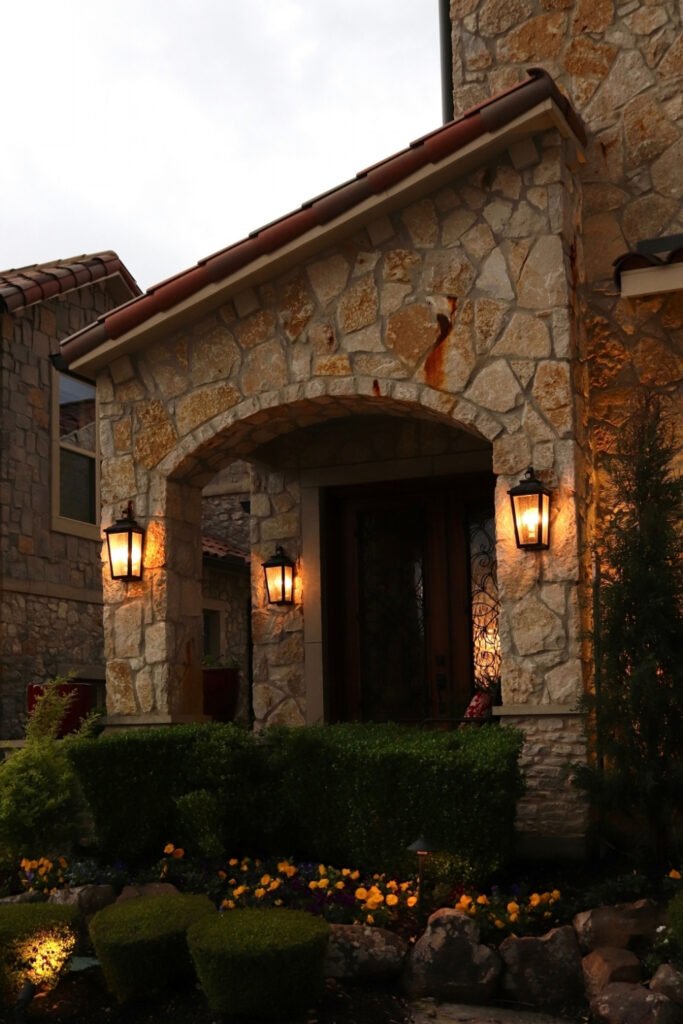
Your curb appeal doesn’t clock out at sunset. Lanterns by the door, a few path lights and one uplight on a tree make a house look lived-in and safe after dark.
It’s also one of the most affordable projects on this list. Solar stake lights cost a few dollars each, and low-voltage LED kits are easy to find at hardware stores. HGTV’s curb appeal guide lists lighting among the upgrades you can install yourself.
Space path lights about 6–8 feet apart along the walkway, then add one or two uplights at the base of a tree or a large planter. If you’re adding wired fixtures or new outlets, that part is a job for a licensed electrician.
8. Add a cottage-style walkway with overflowing plantings
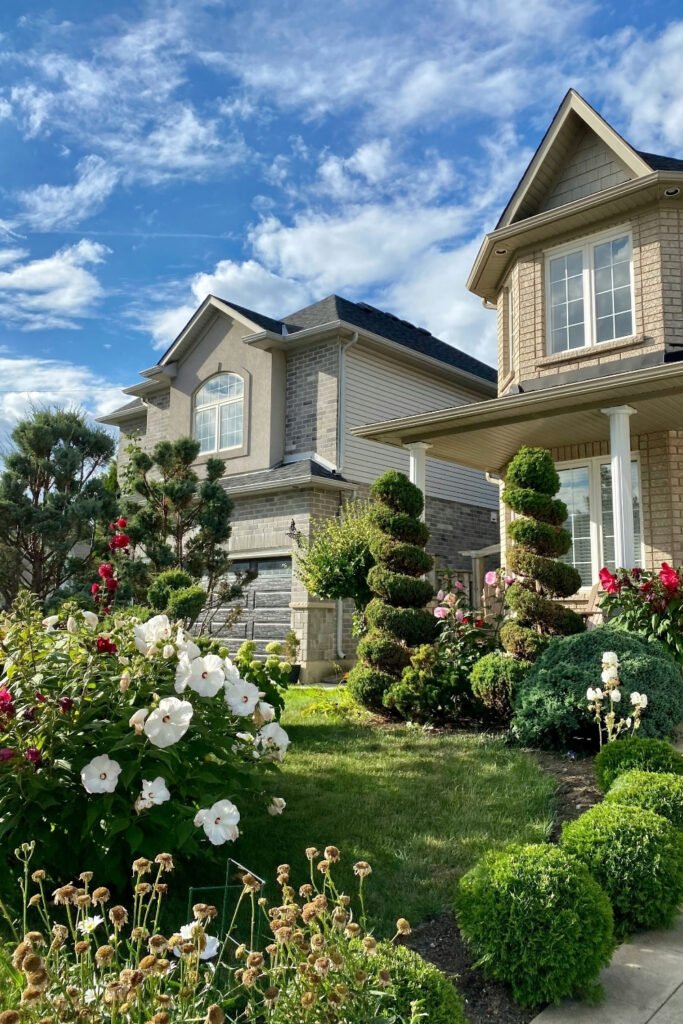
Photo by Wojtek Konrad on Unsplash
Brick is one of those materials that suits almost every house style, from colonial to craftsman to farmhouse. Pair a brick path with beds that spill a little over its edges, and you get that relaxed cottage-garden look.
Brick pavers are durable, reasonably priced and doable as a weekend project. Lay them in a simple running bond or herringbone pattern over a compacted gravel base.
Then let the beds on both sides get full. In partial shade, impatiens, begonias, hostas and ferns all do well and give that overflowing look. If the porch needs attention next, these welcoming entryway ideas pick up where the path ends.
9. Make room for a small seating area in your front yard
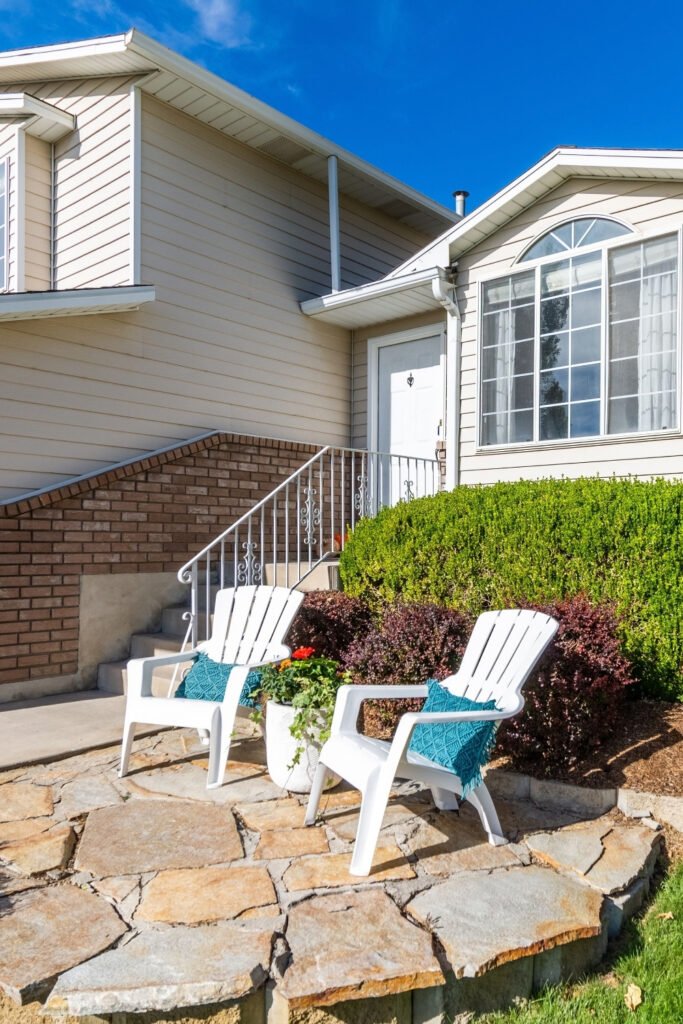
Photo by Get Lost Mike on Pexels
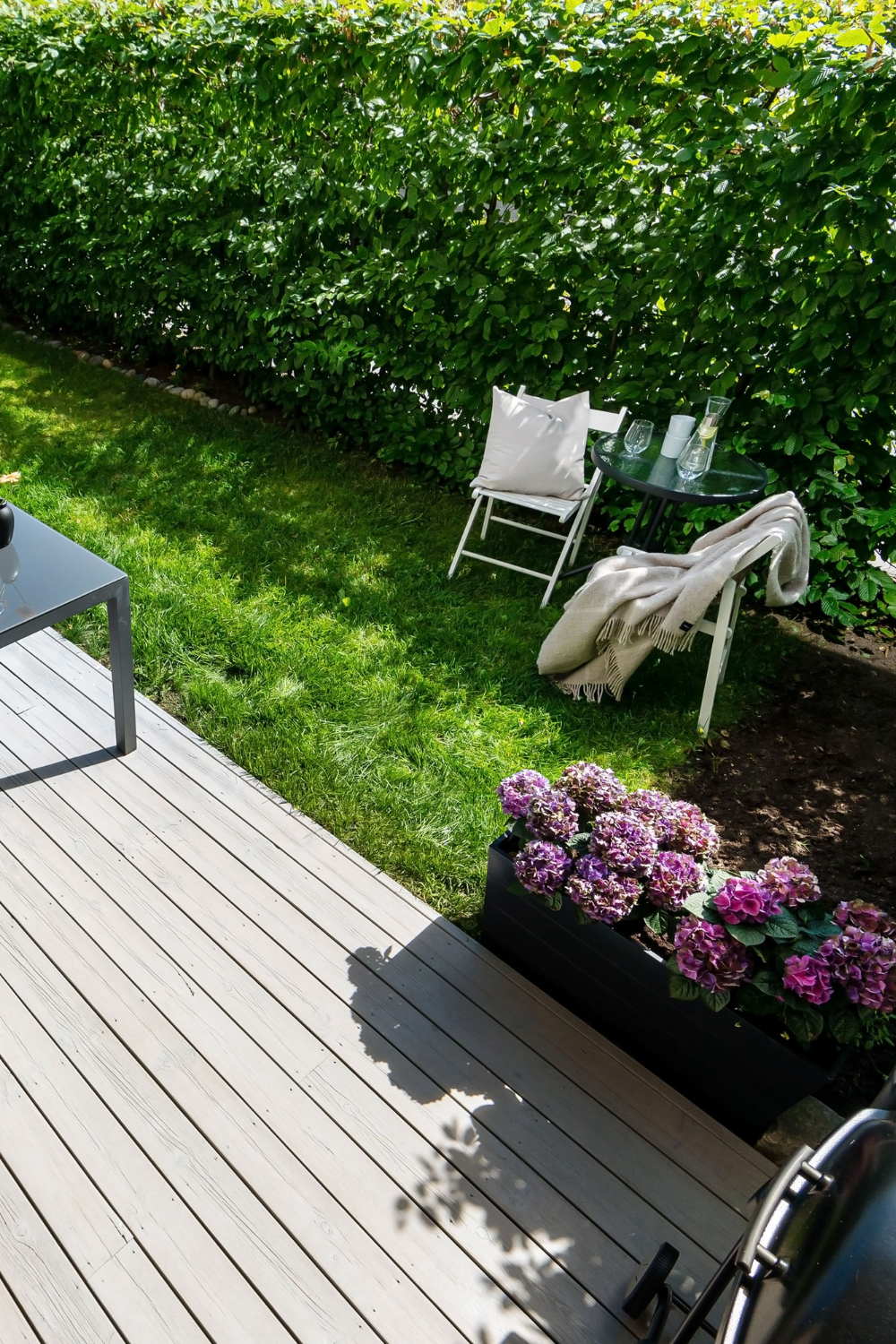
More people are turning part of the front yard into a place to actually sit. The idea is a spot you actually use: morning coffee, a chat with the neighbors, watching the kids ride their bikes.
You don’t need much space. Two chairs on a small stone patch, a bistro set, or a single bench next to a flower bed is enough. Add a few potted plants and the spot looks finished. For more ideas, see these patio decorating ideas on a budget.
10. Start a small front yard makeover in 3 simple steps
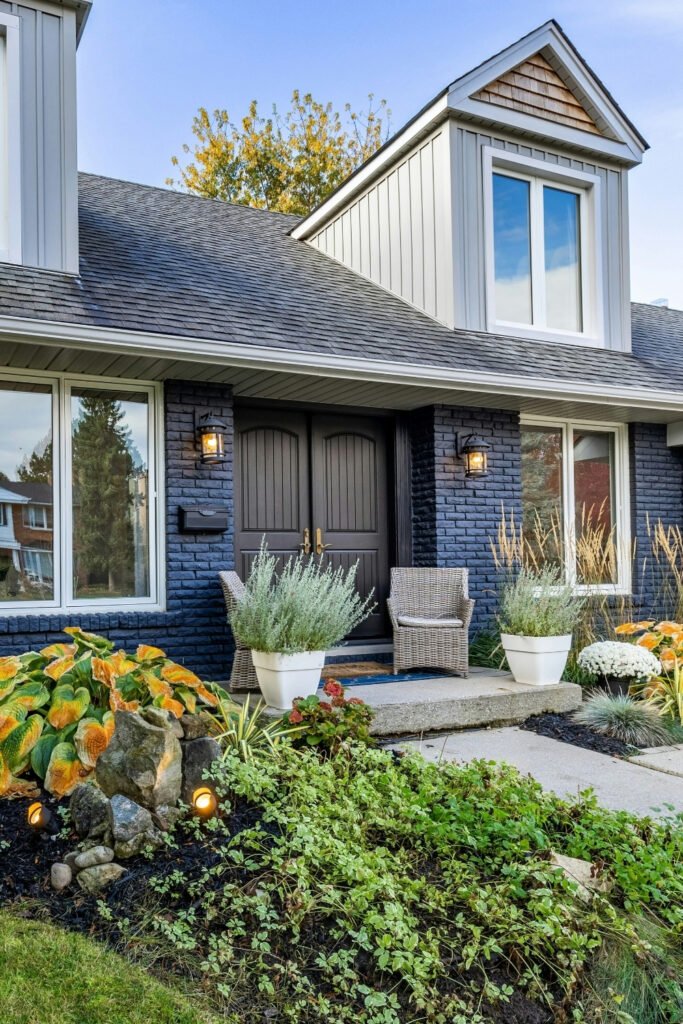
Photo by Venrick Azcueta on Unsplash
Not every project needs a full renovation. A small front yard can look noticeably different after one weekend if you work in this order.
Look at it like a visitor. Walk to the street and look back at the house. Overgrown shrubs, a bare lawn, a cracked path? Write down the one or two things that bother you most.
Pick one idea that fixes the biggest problem. No structure? Add edging or a path. Flat and boring? Add a layered bed or fresh dark mulch. A single, well-filled bed in front of the house can carry the whole look.
Set a budget and do it. Even $50–100 goes a long way on mulch, edging stones and a flat of annuals. One finished project beats a dozen planned ones.
What are the biggest front yard landscaping mistakes to avoid?
Overgrown foundation shrubs are the usual suspect. When bushes cover the windows or crowd the walkway, the whole house looks closed off. Keep them trimmed below the windowsills.
Red or dyed bright mulch looks vivid for a few weeks, then fades and clashes with the greenery. Natural brown or black stays cleaner.
Beds that are only a foot or two wide don’t register from the street. And skipping edging makes everything blur together: a simple stone or metal edge fixes that in an afternoon.
How much does a front yard makeover cost on a budget?
A standard 2-cubic-foot bag of mulch covers about 8 square feet at 3 inches deep and usually costs around $4–6. A typical front bed needs 10–15 bags, so roughly $40–90. Solar path lights often come in packs of six to ten for around $20, and a flat of annuals is usually $15–25 at a garden center. Prices vary by region, so check your local store.
Bigger projects like a flagstone path or a rock garden can run $200–500 in materials, depending on size and stone type. That’s still a fraction of a professional installation.
The easiest way to keep it affordable: one project per season. Mulch and flowers in spring, a path in summer, lights in fall. By the end of the year the yard looks completely different, and the cost was spread out.
Pick one idea and start
In short: wider beds, clear edges, a path that leads somewhere, and a few lights. Pick the idea that fixes your biggest eyesore first, set aside one weekend, and let that first project carry you to the next one.

Leave a Reply