

How many weeks should one braiding appointment actually last? Usually around six weeks with good care. Not one week. Not “until day nine when the frizz takes over.” Six whole weeks of waking up with your hair already done.
And yet most of us tap out somewhere around week two. The parts get fuzzy, the edges rebel, and suddenly those braided cornrow hairstyles you sat three hours for look tired before the month even starts. Sound familiar?
Here’s the thing: the braids were never the problem. The routine around them was. Cornrows are one of the lowest-maintenance styles out there, but “low maintenance” doesn’t mean “no maintenance.” There’s a difference, and it shows up right around day ten.
In this post I’m breaking down exactly why your cornrows quit on you early and the simple daily habits that keep them fresh for weeks. Nothing complicated, nothing expensive. Just the stuff that actually works.
Why Do Your Braided Cornrow Hairstyles Never Seem to Last?
You get them done. They look amazing for a week. Then the slow unraveling starts, and by week two you’re wearing a hat.
The frustrating part? You paid good money for this style. And it feels like everyone else’s braids last a month while yours barely survive a fortnight. So what’s going on?
The Real Reasons Braids Get Frizzy So Fast
Is it your hair type? Usually not. The biggest culprit is friction, and most of it happens while you sleep. A cotton pillowcase grabs at your braids all night, roughs up the surface, and drinks the moisture right out of your hair.
Dryness is the second offender. Dry hair puffs up, breaks, and slips out of formation way faster than moisturized hair. And if you’re piling on heavy grease to fight it, that buildup is loosening your rows from the inside.
The third one surprises people: over-styling. Pulling your cornrows into a tight high ponytail every single day stresses the roots and stretches the style loose. Your braids need a little slack to survive.
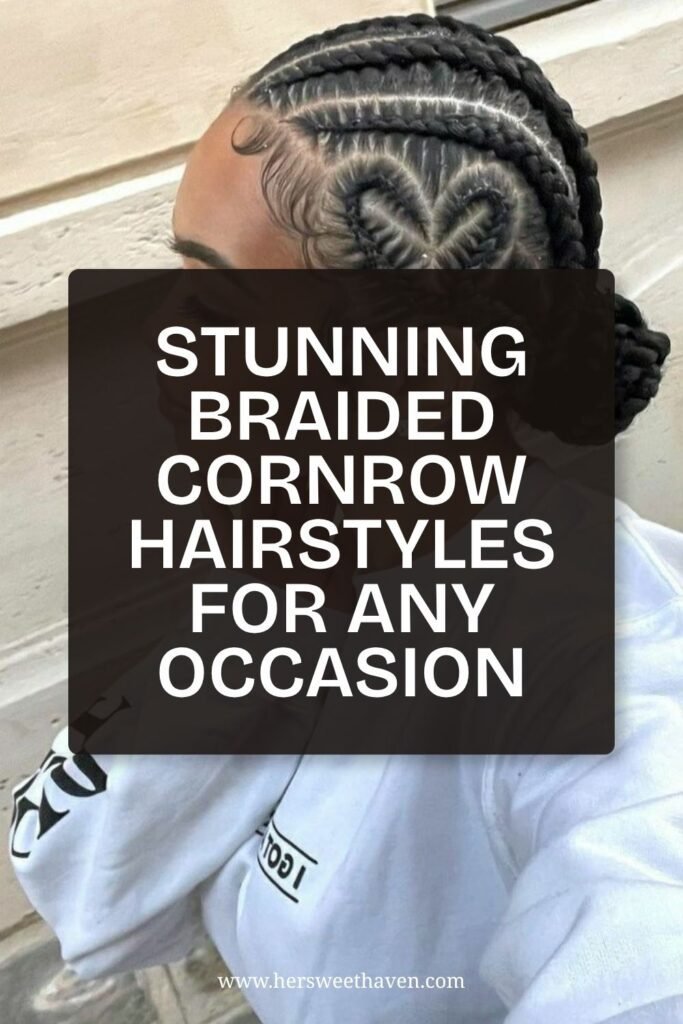
And then there’s the constant touching. Running your fingers over your parts, scratching an itch, adjusting your edges in every mirror you pass.. all of it lifts tiny hairs out of the braid pattern. Hands off means frizz off, more than you’d expect.
What Loose, Fuzzy Braids Are Really Costing You
Every time your style dies early, you’re back in the chair weeks ahead of schedule. That’s real money and a full afternoon, gone. It adds up fast.
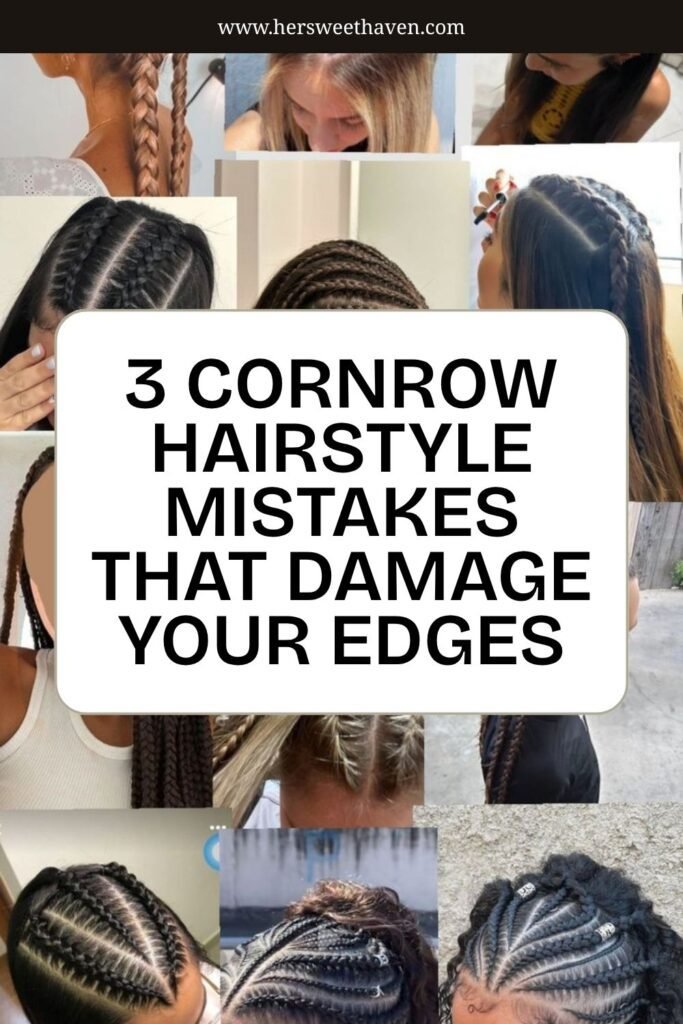
But the bigger cost is your hairline. When braids are installed too tight or worn too long, the constant pulling can lead to traction alopecia, and dermatologists warn that hairstyles that pull can cause permanent hair loss if the tension continues long enough.
Thinning edges don’t grow back on your schedule. Some never fully come back at all. That alone is worth changing your routine for.
The Foundation: Getting Cornrows That Are Built to Last
Real talk: half the battle is won or lost before you ever leave the salon. A rushed install on unprepped hair will not survive a month no matter how careful you are afterward.
So let’s set the style up to win from hour one.
Start With a Braider Who Doesn’t Sacrifice Your Edges
I know the logic. Tighter braids feel like they should last longer. But painfully tight braids actually fail faster, because stressed follicles get inflamed, hairs snap at the root, and your fresh install starts sprouting flyaways within days.
A good braider gets tension right without making your eyes water. Feed-in techniques are great for this: they build up the braid gradually, so there’s less bulk and less pulling right at your hairline.
The test is simple. If you can’t move your eyebrows comfortably on day one, the braids are too tight. Headaches on night one? Too tight. Go back and ask them to redo the front.
Prep Your Hair Before the Appointment
Braids lock in whatever state your hair is in. Braid dirty, product-coated hair and you’ve sealed buildup against your scalp for weeks. Braid dry, brittle hair and it starts breaking inside the rows.
The fix is one good wash day before your appointment. Clarifying shampoo, a solid deep conditioner, and a light leave-in.
Then show up with your hair stretched or blown out. Detangled, stretched hair braids smoother, sits flatter, and holds its shape noticeably longer.
One more prep tip: skip the leave-in overload on appointment day. Your braider needs hair with a little grip, not strands slicked to the point of slipping through their fingers. Moisturized but not greasy is the sweet spot.
And think about the style itself while you’re booking. Smaller, skinnier rows look delicate but tend to fuzz out faster, while medium-to-larger cornrows hold their shape longer and put less strain on each section of hair. If your goal is a style that goes the distance, medium rows are the smarter pick.
The Daily Routine That Keeps Cornrows Looking Fresh
Now for the part that decides everything: what you do between install day and takedown day. The good news? All of this together takes about five minutes a day.
For real. Five minutes.
Your 2-Minute Morning Reset
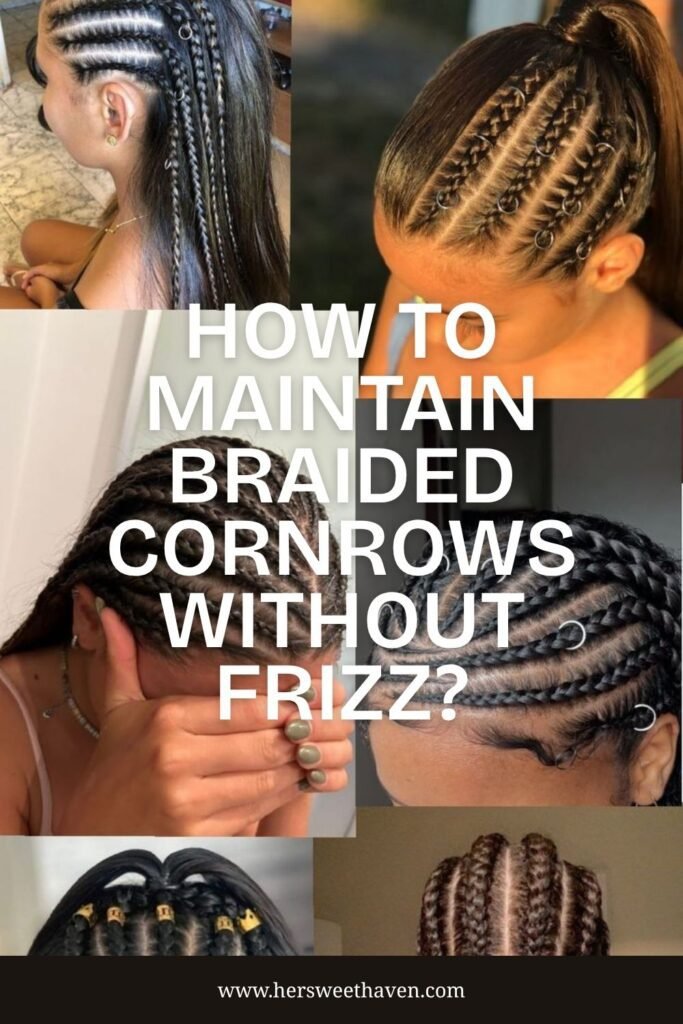
Mornings are for smoothing, not restyling. Lightly mist your braids with a braid spray or diluted leave-in conditioner to bring back moisture, then smooth any fuzz down with your palms.
For the hairline, a small dab of edge control on a soft brush is plenty. Keep it light, because caked-on gel flakes and pulls at the exact hairs you’re trying to protect.
That’s it. Resist the urge to slick everything down aggressively every morning. (Trust the routine. Or at least trust this one.)
The Nighttime Routine That Does the Heavy Lifting
If you only take one thing from this post, make it this: your braids age eight hours every night, and a satin bonnet is the difference between aging gracefully and aging badly.
Satin lets your braids glide instead of snag. No moisture loss, no roughed-up frizz, no flattened rows. A satin scarf works just as well if you tie it snug but not tight across your hairline.
And if bonnets slide off your head by 2 a.m. (we’ve all been there), get a satin pillowcase as your backup. Honestly, I’d get one anyway. It’s the one purchase in this whole routine I’d call non-negotiable.
Scalp Care Between Wash Days
An itchy, flaky scalp will end your style early, because scratching tears up your rows faster than any pillowcase. Keep your scalp comfortable and you’ll keep your braids longer.
A few drops of a light oil, like jojoba or grapeseed, massaged along your parts two or three times a week does the job. Skip the heavy butters and thick grease. They sit on top, collect lint, and turn your parts white with buildup.
Between washes, a no-rinse scalp cleanser or witch hazel on a cotton pad along the parts keeps things fresh. Quick swipe, done.

How Often Should You Actually Wash Cornrows?
Fair question. Every one to three weeks, depending on how much you sweat and how much product you use. Skipping washes entirely won’t save your style. It just trades frizz for buildup, itch, and a scalp situation nobody wants.
Yes, you can fully wash cornrows without ruining them. (Yes, really.) The trick is technique: dilute your shampoo in a squeeze bottle, apply it directly to your scalp along the parts, and massage with the pads of your fingers. Stroke downward along the braids instead of scrubbing in circles.
Rinse thoroughly, squeeze out the water with a microfiber towel, and let everything dry completely before tying anything on top. Damp braids under a bonnet start smelling musty fast.
If you’re short on time between washes, dry shampoo or a no-rinse cleanser buys you a few extra days. Just use it sparingly, because too much powder around your roots creates its own buildup problem. It’s a bridge between wash days, not a replacement for them.
According to professional braiders, cornrows last two to six weeks, and consistent gentle washing is a big part of reaching the upper end of that range. Clean scalp, longer style. Simple math.
How Do You Sleep With Cornrows Without Ruining Them?
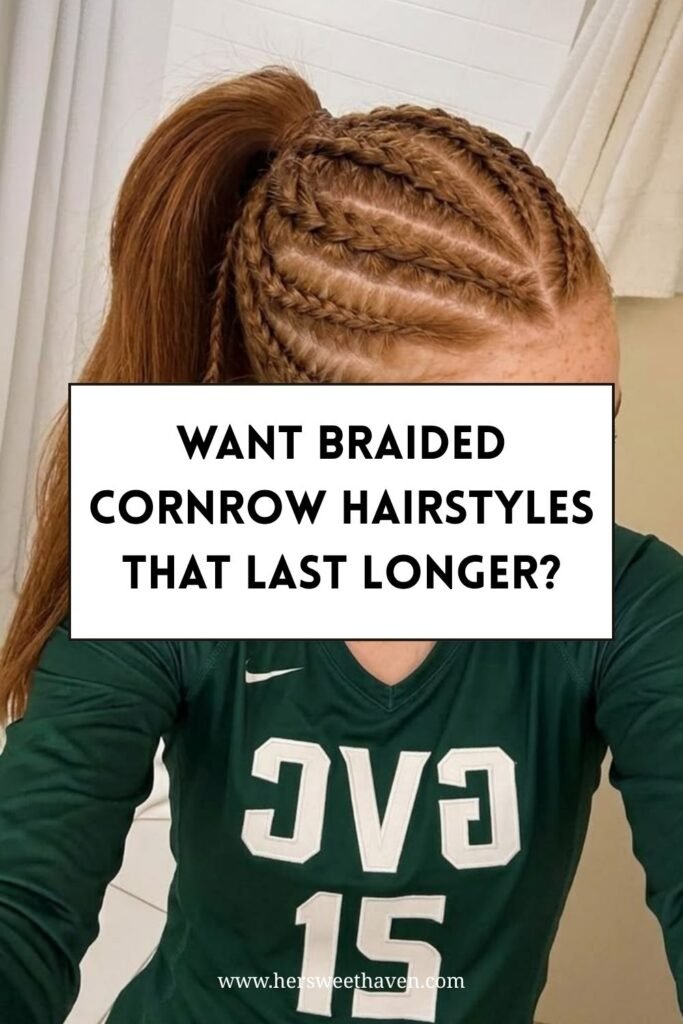
Cover them, every single night. A satin bonnet or scarf is the standard answer, and it works. But there are a few details that make the difference between okay and great.
First, don’t tie your scarf or bonnet band directly on your edges at full tension. You’d be trading pillow friction for elastic friction, which defeats the purpose. Snug, not strangling.
Second, mind the direction. If your cornrows go straight back, lay them flat and wrap so they stay aligned. Braids bent sideways all night wake up with a visible kink.
Third, if you sleep wild, layer your defenses. Bonnet plus satin pillowcase means that when the bonnet inevitably escapes, your braids still land on a friendly surface. The bonnet-flies-off problem is real, so plan for it instead of pretending it won’t happen.
One habit worth adding: give your scalp a light once-over before you wrap up. A quick massage along the parts gets the blood flowing and helps you catch any tender spots early, before they turn into a bigger issue. Thirty seconds, tops.
And never go to bed with damp braids under a bonnet. Trapped moisture plus zero airflow is exactly how mildew smell starts, and once it’s in your braids, only a full wash gets it out. Air dry first, wrap second.
When Is It Time to Take Your Braided Cornrow Hairstyles Out?
Six weeks is the ceiling. Even if the braids somehow still look decent, past that point your new growth starts tangling and matting at the roots, and takedown becomes a breakage festival.
Watch for the signals before that, though. Heavy buildup you can see along the parts, rows that have gone soft and fuzzy beyond rescue, or roots that feel matted when you press them.. those are your hair’s way of saying time’s up.
And when you notice any of them, listen. Stretching a style two extra weeks is not worth losing hair during takedown or letting your strands loc together at the base.
The takedown itself deserves patience too. Unravel gently, detangle each section with your fingers and a little oil before combing, and give your hair a proper wash and deep condition before jumping into the next set of braided cornrow hairstyles. Your hair needs at least a week or two of rest between installs.
That rest week matters more than people think. It gives your scalp a break from tension, lets you assess your edges honestly, and gives your strands a chance to soak up moisture without anything pulling on them. Back-to-back installs with zero downtime is how edges quietly disappear over a year.
The Real Cost of Braids That Actually Last
Let’s run the numbers. A quality cornrow install runs anywhere from about $40 to $250 depending on the style and your city. The maintenance kit: a satin bonnet for around $10, a braid spray, a light oil, and edge control, maybe $30 total.
Time investment: five minutes a day, plus one gentle wash every couple of weeks.
The payoff: braids that last five or six weeks instead of two. That’s half as many salon visits per year, which pays for the maintenance products many times over. Same style, same money, triple the mileage.
So before you book your next appointment, grab the bonnet and the braid spray first. Your braids, your edges, and your wallet will all be better for it.
Want a fresh way to style your braids between appointments? Here’s how I wear bandanas when my hair won’t cooperate.

Leave a Reply