
The first apartment essentials list is shorter than most shopping guides make it look. You need enough to sleep, eat, wash and clean on the first night, a handful of things that make daily life easier within a few weeks, and then a long list of things that can wait until you know how you actually use the space. I’d buy in exactly that order: functional first, pretty second.
Before you buy anything: measure, then list
Ten minutes with a tape measure saves a lot of returns. Before you shop for your first apartment, write down:
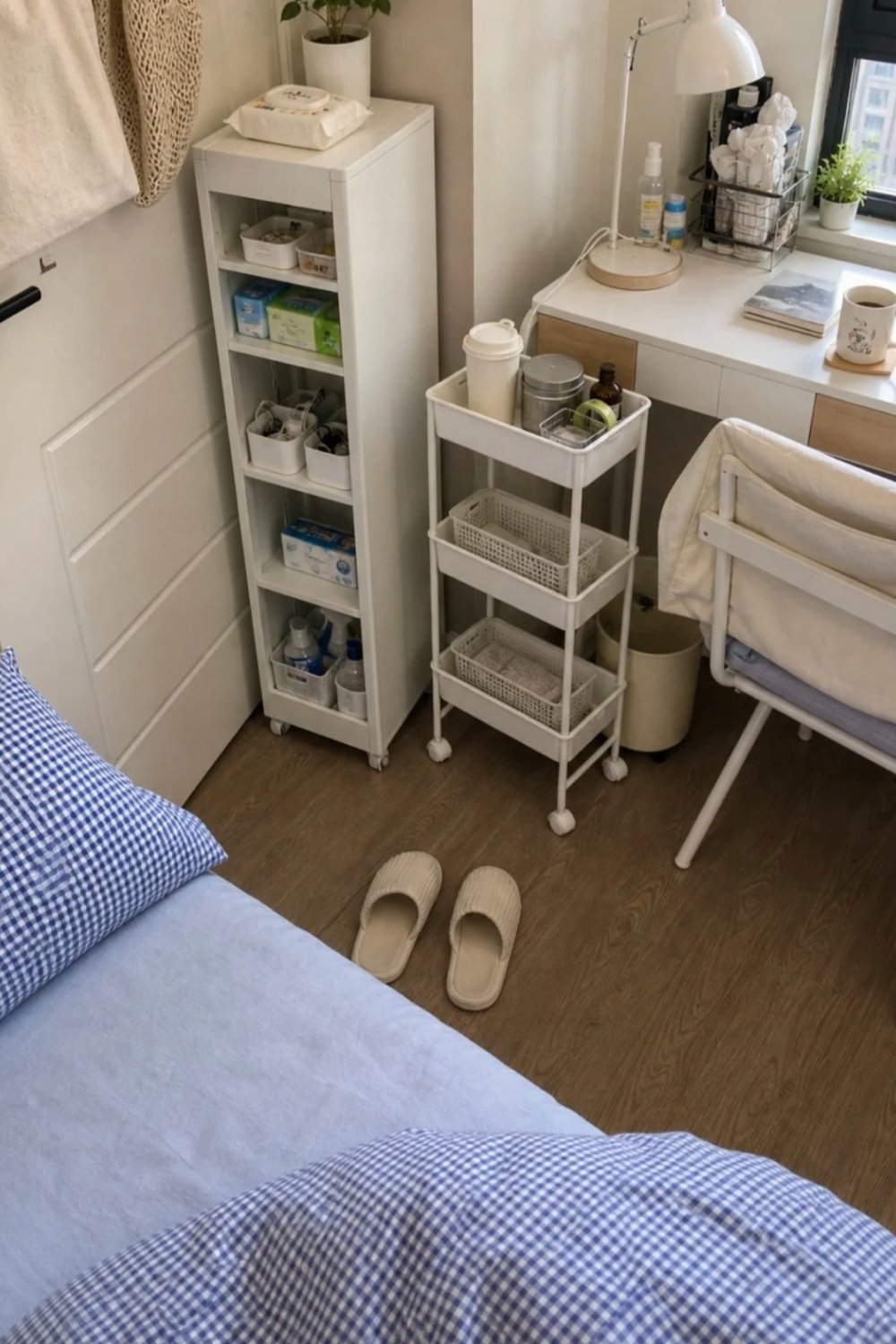
- The width of the gap next to the fridge, the sink and the bed. These narrow spaces are where slim carts and towers go, and they’re rarely wider than 8–12 inches.
- The size of the bed, if one comes with the place. Bedding is sold by mattress size, and a full and a queen look similar until the fitted sheet doesn’t fit.
- The window widths and the shower rod length. Curtains and a shower curtain are first-night purchases in many apartments.
- What’s already there. Some rentals come with a microwave, blinds or a shelf in the closet. Check before you buy duplicates.
Then ask family and friends what they’re willing to pass on. Older relatives often have a spare set of pots, a stack of towels or a lamp sitting in a cupboard, and it costs nothing to ask.
Day one: the night you get the keys
This is the first apartment checklist for the first 24 hours. If something isn’t on it, you can live without it for a week. Pack these or buy them before the move, so the first night in your first apartment feels like home instead of a camping trip.
Bedroom
- Bedding: a fitted sheet, a flat sheet or duvet cover, two pillowcases, two pillows and a duvet or blanket. Two sets of sheets are better than one, so you’re never stuck waiting for the laundry. If you want something cheerful, my bedding set ideas lean toward prints that still look fine when the bed isn’t made.
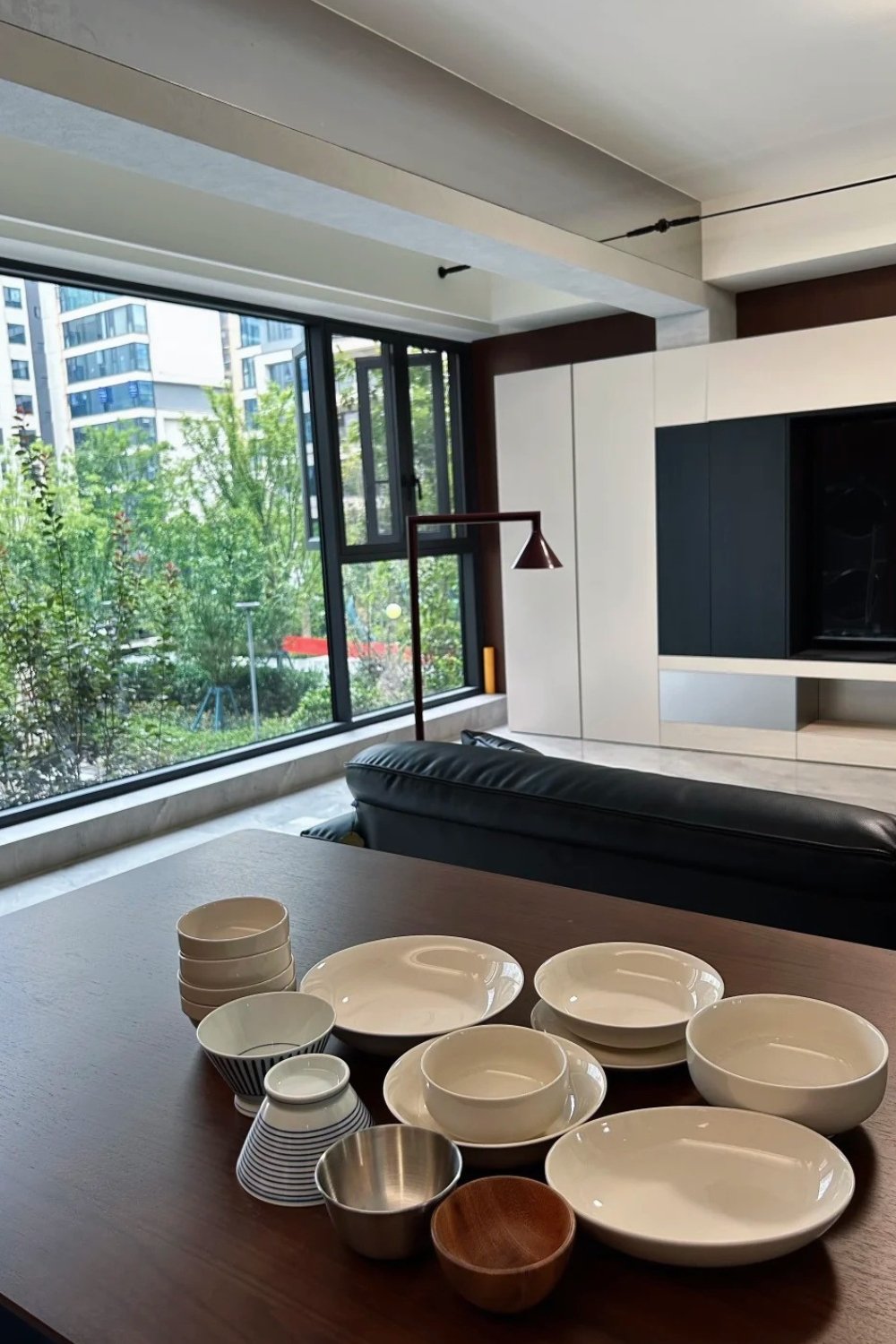
- A laundry hamper: a folding one with handles doubles as a laundry bag on the walk to the machines.
- Hangers: at least 20, all the same kind, so the closet looks tidy from the start.
- Blackout curtains or a temporary shade, if the bedroom faces a street light.
Kitchen
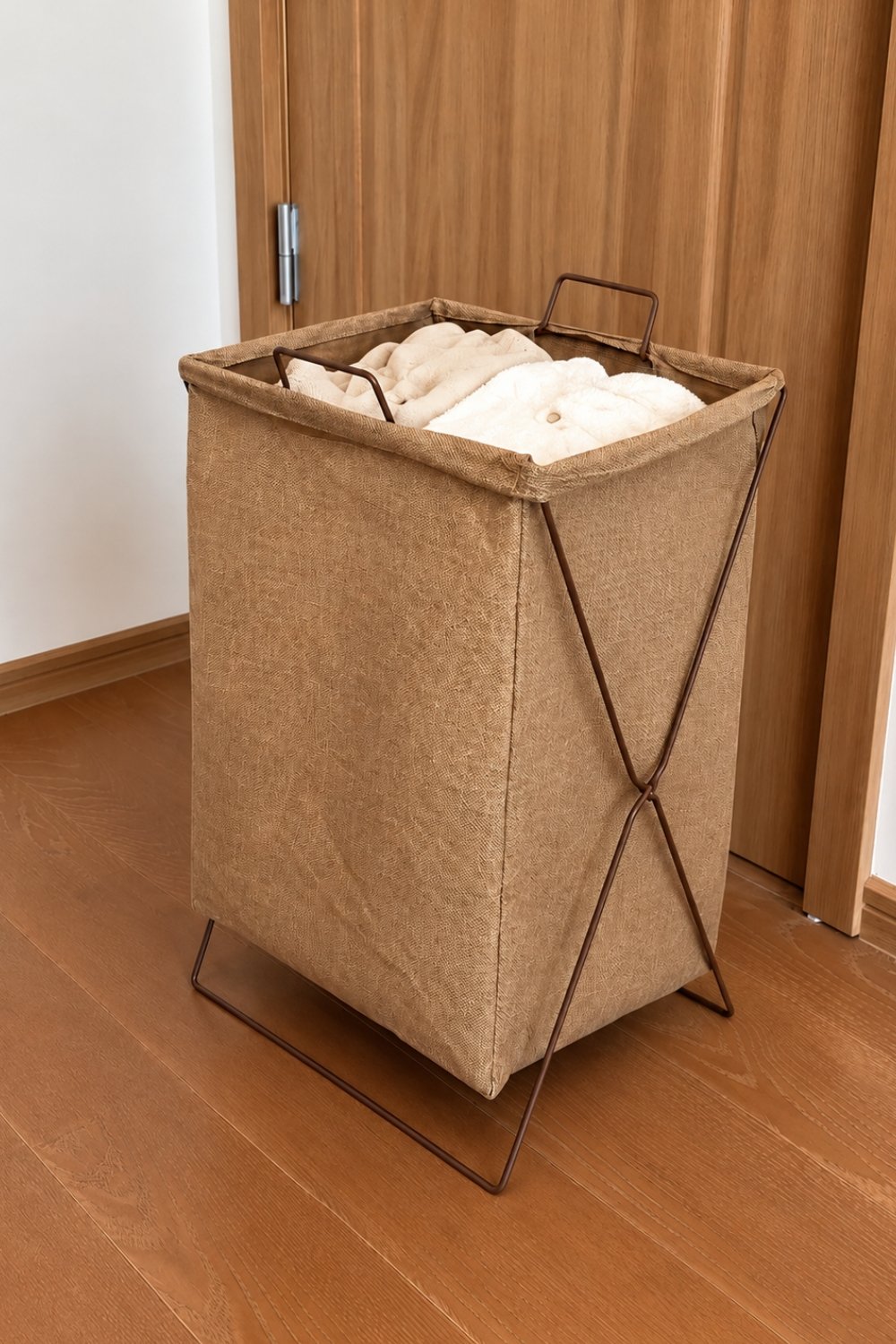
- A simple dish set: four plates, four bowls, four mugs and four glasses. Plain white or cream pieces mix with anything you add later, which matters in a first apartment where the rest of the kitchen will come together slowly.
- Cutlery for four.
- One frying pan, one saucepan and a pot with a lid. That covers most everyday cooking.
- A sharp chef’s knife and a cutting board.
- A spatula, a wooden spoon, a can opener and a colander.
- Dish soap, a sponge and two dish towels.
- Trash bags and a small bin, if the kitchen doesn’t have one.
Bathroom
- Two bath towels, two hand towels and a bath mat.
- Toilet paper, more than you think you need.
- A shower curtain and liner, plus rings.
- A toilet brush and a plunger. Nobody wants to shop for a plunger in a hurry.
- Hand soap and your own toiletries.
Cleaning supplies
The previous tenant may have cleaned, but give the kitchen and bathroom a wipe before you unpack. Cleaning supplies are the first apartment essentials people forget most often, because nobody thinks about them until the first spill. Once you’re settled, my cleaning schedule before the holidays splits the bigger jobs into small weekly pieces. A starter kit:
- An all-purpose spray and a bathroom cleaner
- Microfiber cloths
- A broom and dustpan, or a small hand vacuum
- Rubber gloves
- A bucket and a mop, if the floors are hard
Add a basic toolkit too: a screwdriver with swappable heads, a hammer, a tape measure and a few picture hooks. You’ll use it the first week for loose cabinet handles and flat-pack furniture.
First month: what makes a first apartment work
After a couple of weeks you’ll notice what’s missing. These are the first apartment essentials that turn a place you sleep in into a place that runs smoothly.
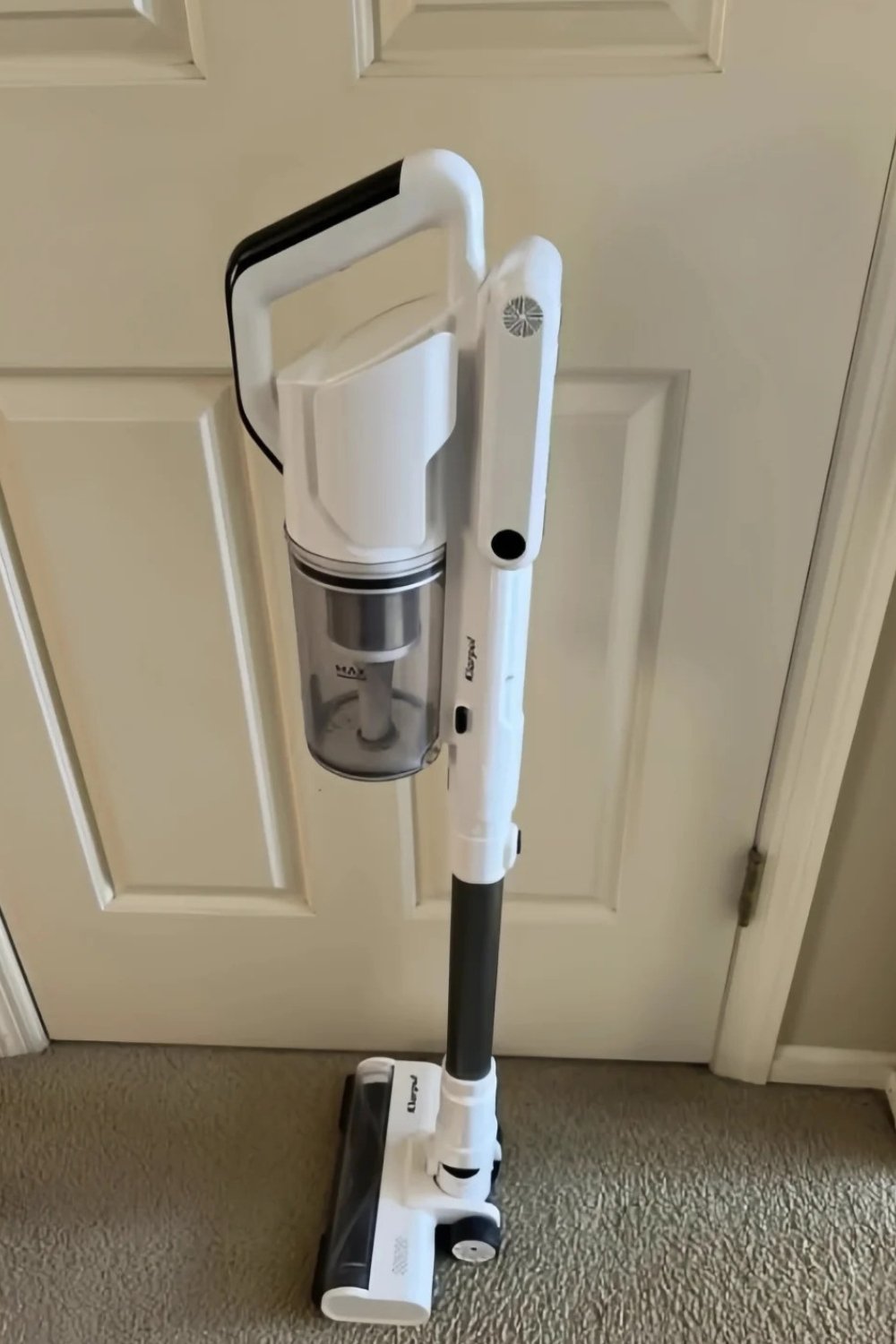
- A cordless stick vacuum. It hangs on a wall or stands in a corner, and you’ll use it far more often than a big corded one that lives at the back of a closet.
- A dish rack, or a roll-up drying mat that sits over the sink when counter space is tight.
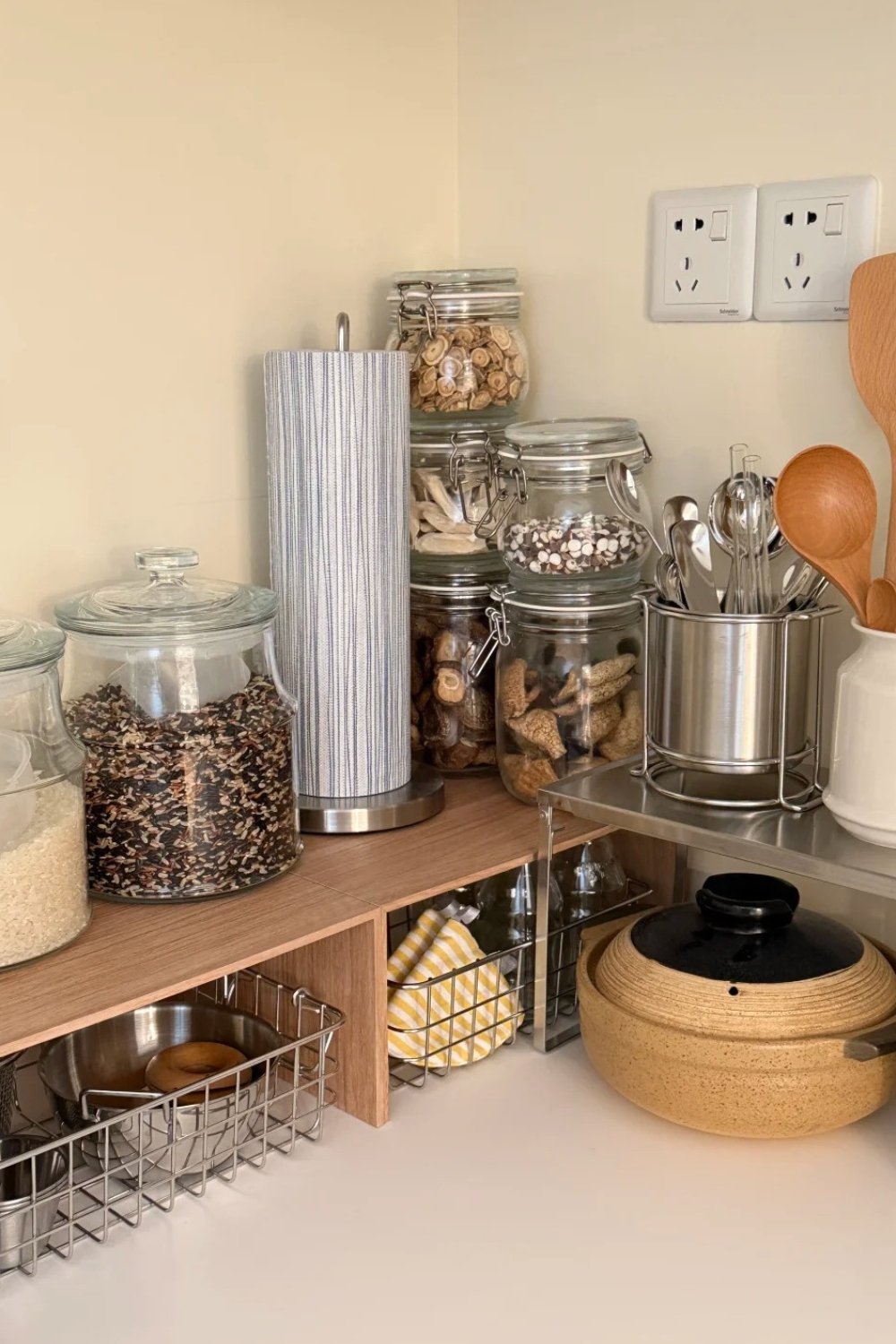
- Storage jars for dry food. Glass jars with clip lids keep pasta, rice, oats and snacks fresh and make it easy to see what’s running low.
- A shelf riser for the counter or the cupboards. It doubles the usable space in a corner by giving you a second level.
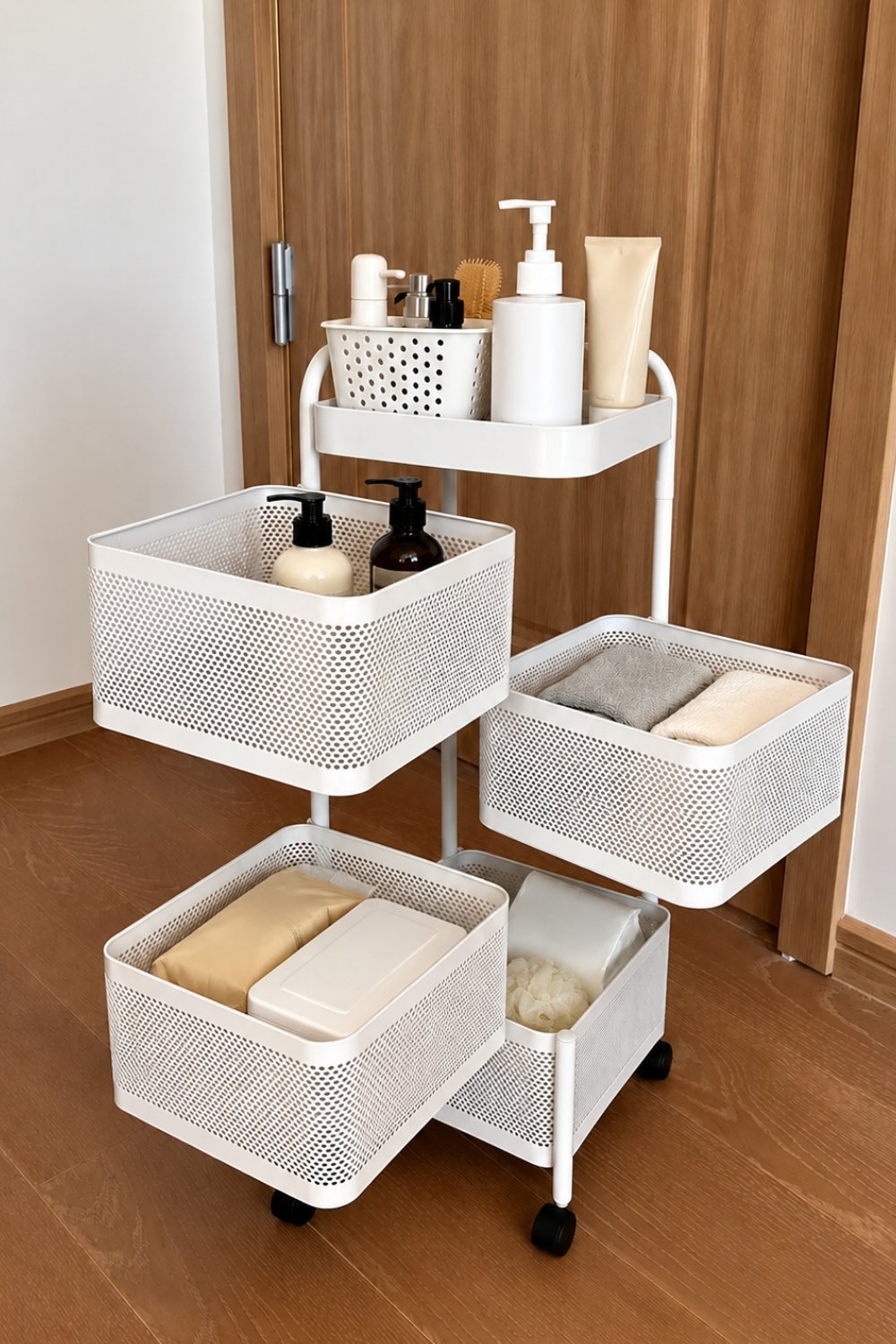
- A rolling cart. The most useful piece of furniture in a small apartment, because it goes wherever the storage gap happens to be.
- A full-length mirror, which also makes a small room feel larger.
- A first-aid kit, a flashlight and a power strip.
A rotating cart with deep baskets is worth a look if you need storage in a bathroom or by the door. The baskets swing out, so you reach the back ones without moving the front ones, and the whole thing rolls out of the way when you mop.
Can wait: decor, extra furniture, the sofa
I’d hold off on the big and pretty purchases for at least a month. The way you use a room is rarely the way you imagined it before you moved in: the chair you planned for the window might end up by the door, and the corner you thought needed a shelf might need a reading lamp instead.
Things on the first apartment checklist that can wait:
- The sofa. It’s the most expensive piece, and a wrong size is hard to undo. Live with floor cushions or a secondhand chair until you know where it fits.
- Rugs, art and throw pillows. These are the fun part of apartment decor ideas, so give yourself time to choose a color story instead of filling the walls in one shopping trip.
- Extra furniture like a dining table, a bookcase or a dresser. A rolling cart and the closet usually cover the first few months.
- Specialty kitchen tools. A blender, a stand mixer or a rice cooker only make sense once you know how you cook.
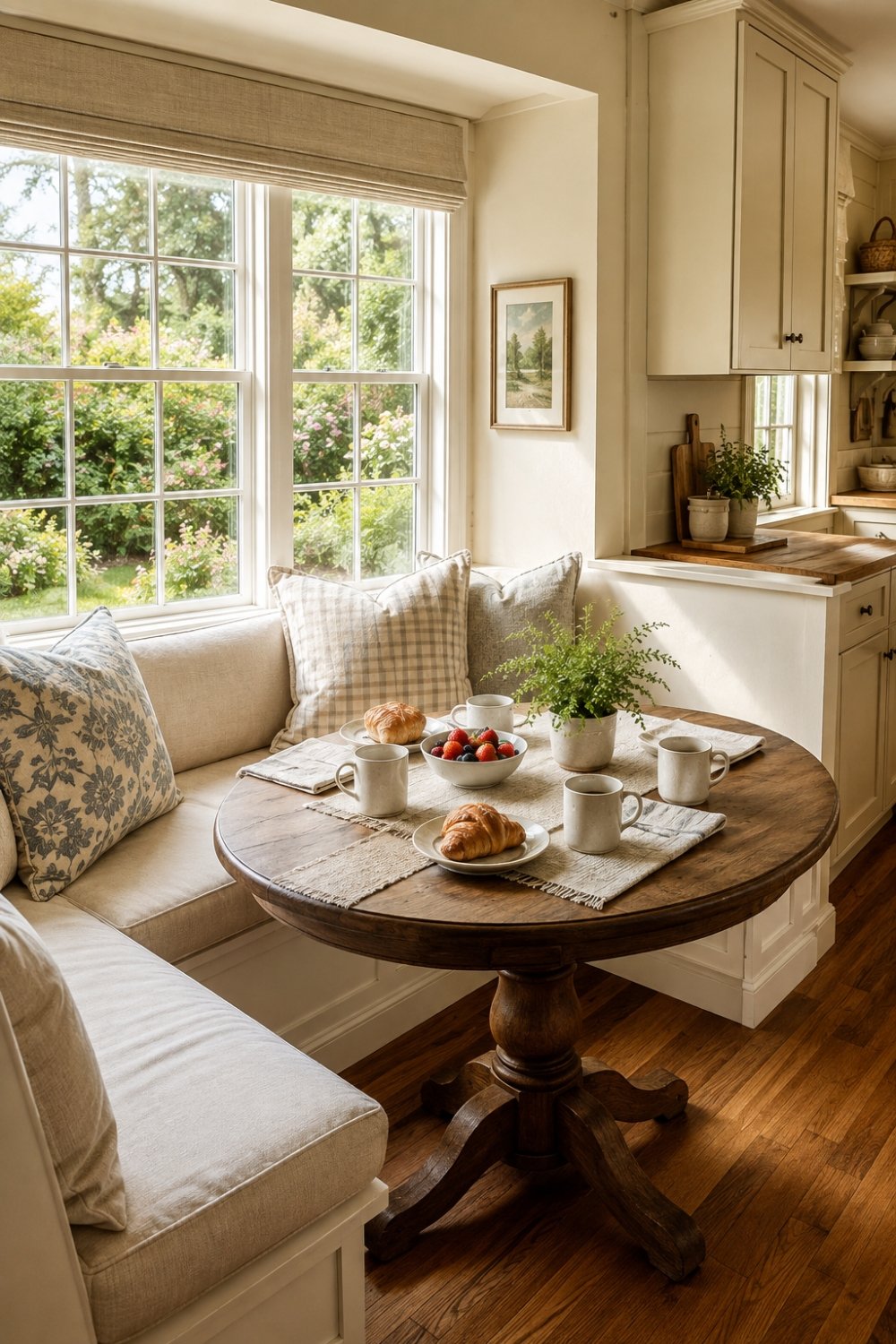
If you’re coming straight from student housing, a lot of the ideas in my post on decorating a dorm room still work in a first apartment, especially the renter-friendly ones, and the post has more apartment decor ideas for walls you can’t paint. And once the basics are sorted, a small corner for morning coffee is one of my favorite first projects: my guide to a simple breakfast nook shows how little it takes.
Space-saving finds, problem by problem
Most first apartments are small, and storage is usually the first thing you run out of. Small apartment storage doesn’t need built-ins, though. Each of these fixes answers one specific problem.
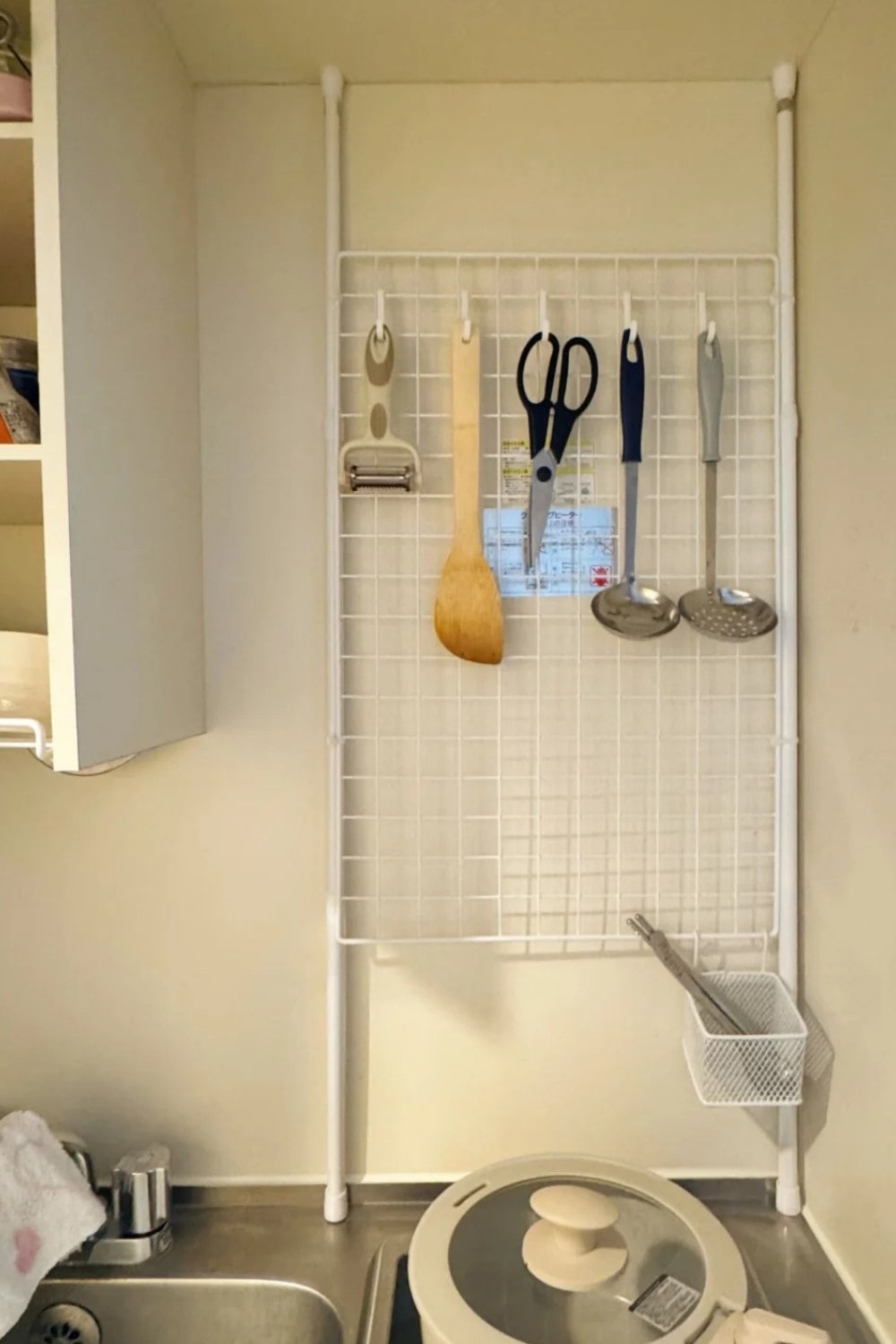
No counter space by the sink. A tension-rod grid stands between the counter and the cabinet above, and S-hooks hold utensils, scissors and a small basket for sponges. It doesn’t need screws, so it’s renter-friendly, and it frees the counter for food prep.
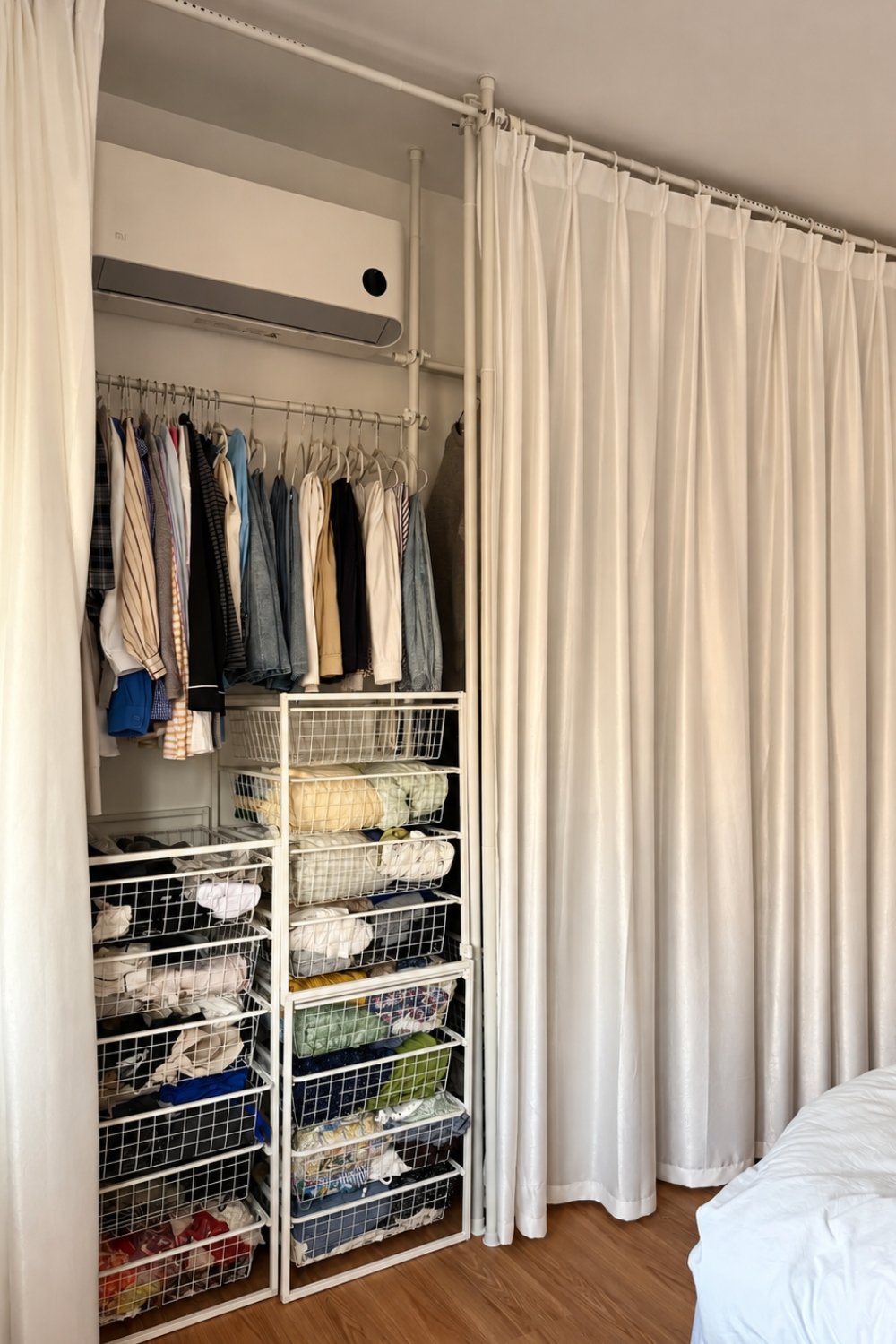
An open closet with no doors. A ceiling-mounted curtain track or a tension rod with a long curtain turns open shelving into a closet that looks tidy even when it isn’t. Wire drawer units underneath hold folded clothes. For more ideas on what goes inside, my closet organization guide covers every shelf and hanger.
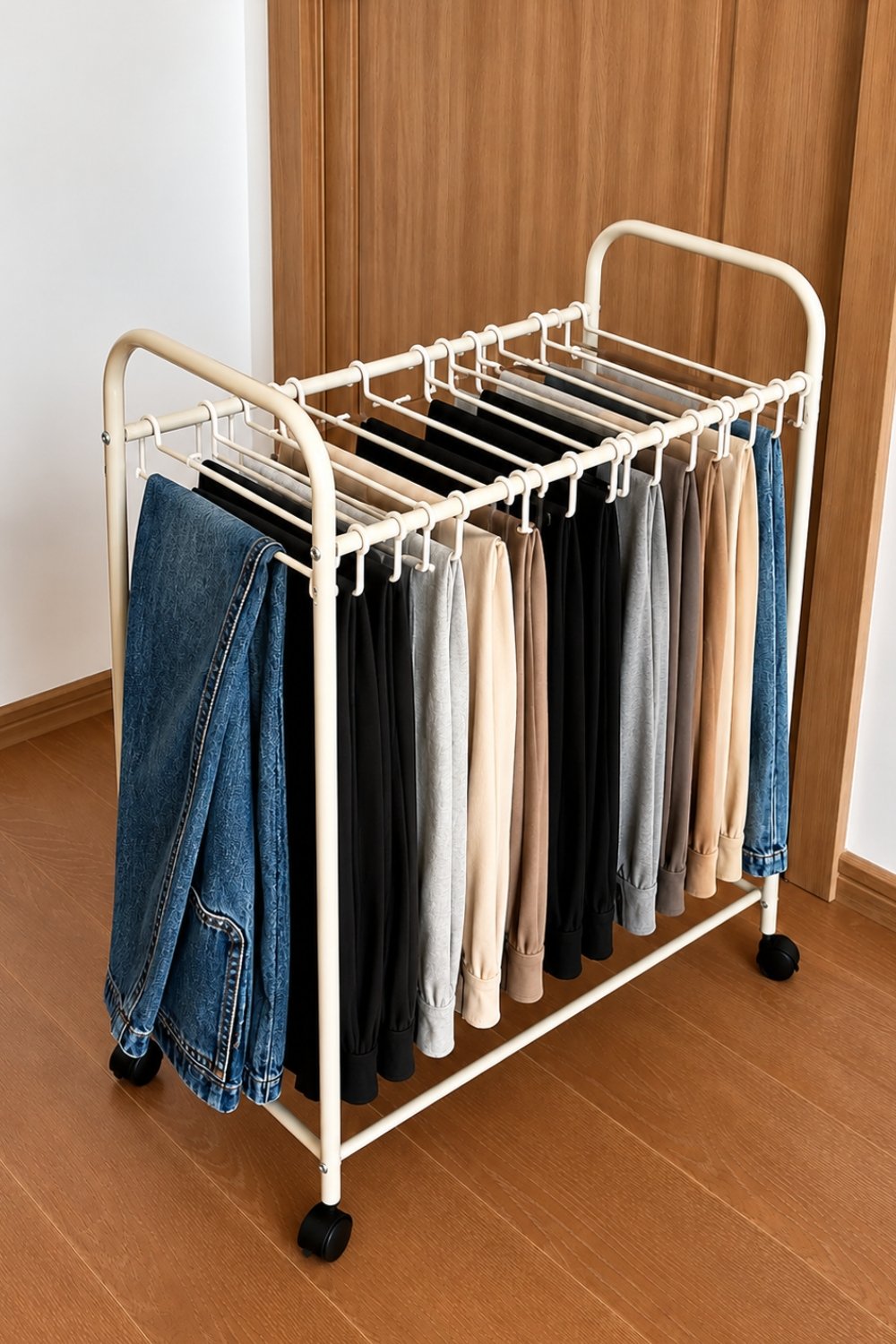
Too many pants for the closet rail. A rolling pants rack hangs a whole stack of trousers and jeans side by side, and it slides into the gap next to the closet or behind a door.
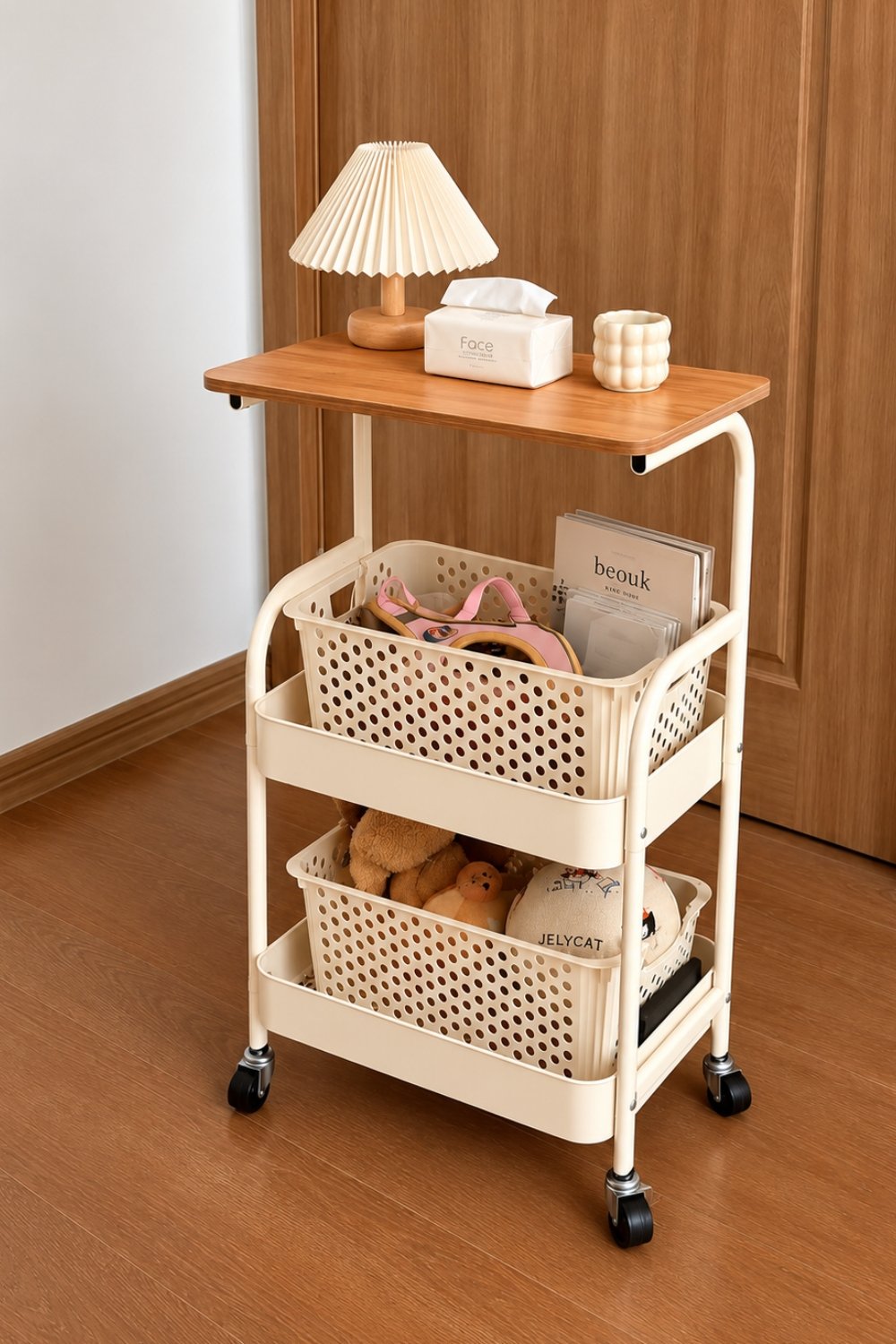
No room for a nightstand. A narrow rolling cart with a flat top works as a nightstand: a lamp and tissues on top, books and chargers in the baskets below. When you need floor space, it rolls away.
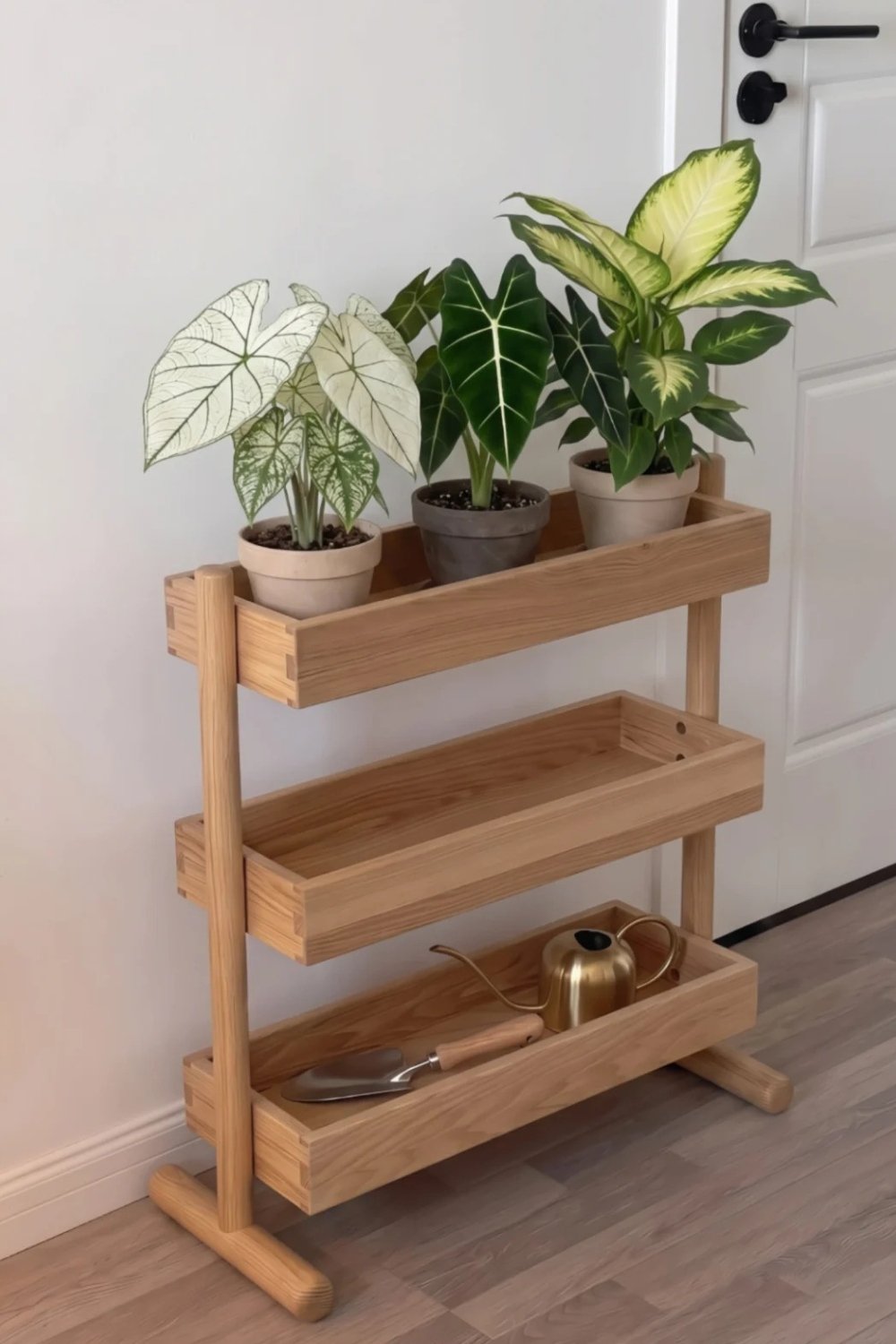
Plants taking over the floor or the windowsill. A tiered plant stand holds several pots in the footprint of one, and the bottom shelf works for a watering can and a trowel.
A cat with nowhere to climb. Vertical space works for pets too. If you’re moving in with a cat, my DIY cat climbing furniture ideas are cheap to build and easy to take with you when you move again.
A few more small-space tricks for a first apartment that cost very little: over-the-door hooks for coats and bags, under-bed storage boxes for out-of-season clothes, and adhesive hooks inside cabinet doors for lids and measuring cups.
Keeping the first apartment checklist cheap
Setting up a first apartment adds up fast, and most of the cost comes from things you buy before you need them.
- Buy secondhand for anything solid. Wooden furniture, pots, lamps and frames are often in excellent shape on local marketplaces. A wipe and new hardware make most of them look new.
- Ask before you buy. Family members downsizing or moving often have dishes, towels and small furniture to give away.
- Buy the cheap version first. For anything you’re unsure about, a basic version tells you whether you use it. Upgrade the things you reach for every day.
- Skip the gadgets. Single-use kitchen tools, smart devices and matching storage sets look great in stores and end up in a drawer. A good knife and a pan do more than ten gadgets.
- Shop by list, not by aisle. Bring this checklist and the measurements from the first step. Big-box stores are designed to sell you things you didn’t come for.
In my opinion, the best money you’ll spend on first apartment essentials goes on the bed, the knife and the vacuum, because you use them every single day. The rest can be cheap, borrowed or secondhand until you know what you want.
Print the day-one list, stick it on the fridge of the place you’re leaving, and tick things off as they go into boxes. Everything else can wait until you’ve lived in the new space for a few weeks.

Leave a Reply