

The truth is, a plastic slide and a patch of grass won’t compete with a tablet. Not even close. If you want your kids to actually choose the backyard over a screen, you need to think differently about how you design their outdoor space.
Here’s the good news: you don’t need a huge yard, a massive budget, or a construction crew to make it happen. What you need is a plan that puts your kids’ actual interests first, keeps safety at the center, and works with the space you have. This guide walks you through everything, from avoiding the biggest mistakes to building a backyard outdoor play area for kids that they’ll genuinely want to spend time in. Whether you’re working with a sprawling lawn or a tiny patio, there’s something here for you.
Let’s get into it.
Why an Outdoor Play Area Beats Screen Time Every Single Time
You already know too much screen time isn’t great. But the numbers make it real.
According to the National Environmental Education Foundation, children ages 8 to 18 now average about four hours of screen time per day outside of schoolwork. That’s a 52% jump from pre-pandemic levels. Meanwhile, Lurie Children’s Hospital reports that 81% of children under 13 now have their own device, and two out of three parents say they’d like to cut back on their child’s screen time.
So what actually works as an alternative? Outdoor play. Not just “go outside,” but a space designed to pull kids in and keep them there.
What the Research Actually Says About Outdoor Play
A 2025 position statement from Outdoor Play Canada reviewed hundreds of published studies and found that active outdoor play is linked to higher physical activity levels, less sedentary behavior, better sleep, and improved emotional regulation in children. It’s also tied to stronger executive functioning, which means better focus, impulse control, and problem-solving.
And here’s the part that really matters for parents worried about screen time: research from Japan found that outdoor play can actually offset some of the negative developmental effects of too much screen exposure in young children. Kids who had more screen time at age two but also played outside regularly showed better daily living skills by age four compared to kids who stayed indoors.
The takeaway? Building an outdoor play area isn’t just a nice weekend project. It’s one of the most effective things you can do for your child’s development.
5 Outdoor Play Area Mistakes Parents Regret Later
Before you start building, let’s talk about what not to do. These are the mistakes that lead to wasted money, unused play spaces, and (worst case) trips to the emergency room.
Skipping Soft Ground Under Play Equipment
This is the big one, and we’re going to cover it in detail below. For now, know this: grass and dirt are not safe surfaces under anything your child can fall from. Period.
Buying Too Big (or Too Small) for Your Yard
A massive swing set crammed into a tiny yard doesn’t leave room to actually play. And a single sandbox in a huge backyard feels like an afterthought. Measure your space first, then plan around what fits with room to spare.
Forgetting About Shade and Weather Protection
An outdoor play area in full sun becomes unusable by 11 a.m. in the summer. Think about shade sails, trees, or covered structures. If you want your kids out there for hours, they need protection from the sun and light rain.
Not Planning for Different Ages
A toddler outdoor play area looks completely different from a setup for a seven-year-old. If you have kids at different stages, zone the space so younger ones have safe, contained areas and older kids have room for bigger activities.
Ignoring What Your Kids Actually Want to Do
This sounds obvious, but it happens constantly. Parents buy what looks good on Pinterest without thinking about what their specific child enjoys. A kid who loves digging and building needs a different space than one who loves running and climbing. Watch how your kids play before you spend money.
How to Create an Outdoor Play Area for Kids Without Ruining Your Yard
One of the biggest fears parents have is that a kids outdoor play area will turn their backyard into an eyesore. Fair concern. But it doesn’t have to happen.
Keep It Modular and Moveable
Instead of permanent structures bolted into the ground, think in zones you can rearrange. A mud kitchen on wheels, a portable sandbox with a cover, or freestanding play frames that can be relocated when the season changes. This protects your lawn and gives you flexibility.
Use Natural Materials That Blend In
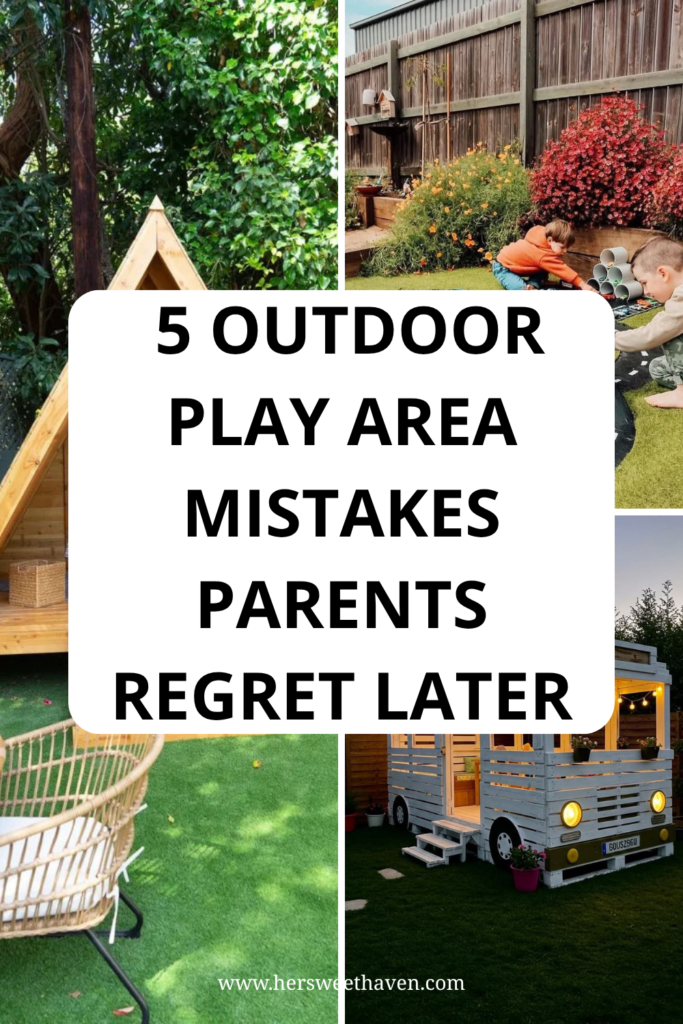
Wood, stone, wicker, and plants look a hundred times better than bright plastic in a backyard. A wooden A-frame tent, woven baskets for toy storage, and natural log stepping stones all create play opportunities while actually improving how your yard looks.
Landscape designer Rochelle Greayer of Pith + Vigor recommends integrating play opportunities throughout the entire garden rather than relegating kids to a separate “kid zone.” Features like swings, stepping stones, and climbing hills can be functional, beautiful, and fun for the whole family.
Zone Your Yard So Adults Enjoy It Too
Divide your outdoor space into areas: active play, quiet play, and adult relaxation. This way, the backyard works for everyone. You can sit with your coffee on your budget-friendly patio while keeping an eye on the kids in their play zone. Everybody wins.
Why Soft Ground Should Be Your First Step (Not Your Last)
Here’s the part most parents skip entirely. And it’s the part that matters most.
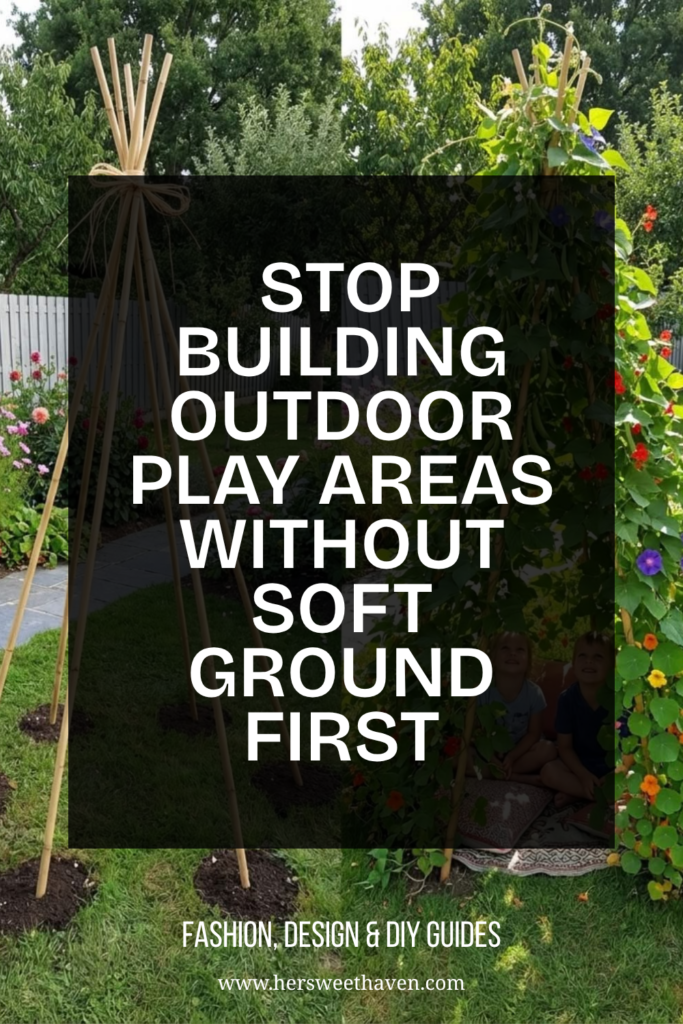
According to the Consumer Product Safety Commission (CPSC), at least 12 inches of shock-absorbing surfacing should surround any play equipment. That’s because falls are the number one cause of playground injuries, and the ground surface is what determines how serious those falls become.
The CPSC is clear: grass and dirt are not considered protective surfacing. They compact, erode, and lose their cushioning ability over time. Certified playground safety data shows that over 600 kids per day end up in emergency rooms due to playground injuries, and more than 70% of those injuries are related to falls.
What Are the Best Soft Ground Options for a Backyard Outdoor Play Area?
You don’t need to pour a commercial rubber surface in your backyard. Here are affordable options that work well for home setups:
Rubber mulch: Made from recycled tires, it’s long-lasting, doesn’t attract bugs, and provides solid shock absorption. A great option under swings and slides.
Engineered wood fiber (EWF): A budget-friendly loose-fill material. It looks natural and provides good fall protection when maintained at the right depth.
Play sand: Affordable and easy to install, but it shifts a lot and needs regular topping up. Best for lower play structures.
Artificial turf with padding: Looks clean and is low-maintenance. The upfront cost is higher, but it lasts for years with almost no work.
Whatever you choose, put it down before you build anything on top of it. Soft ground isn’t an afterthought. It’s the foundation.
Budget Outdoor Play Area Ideas for Small Backyards
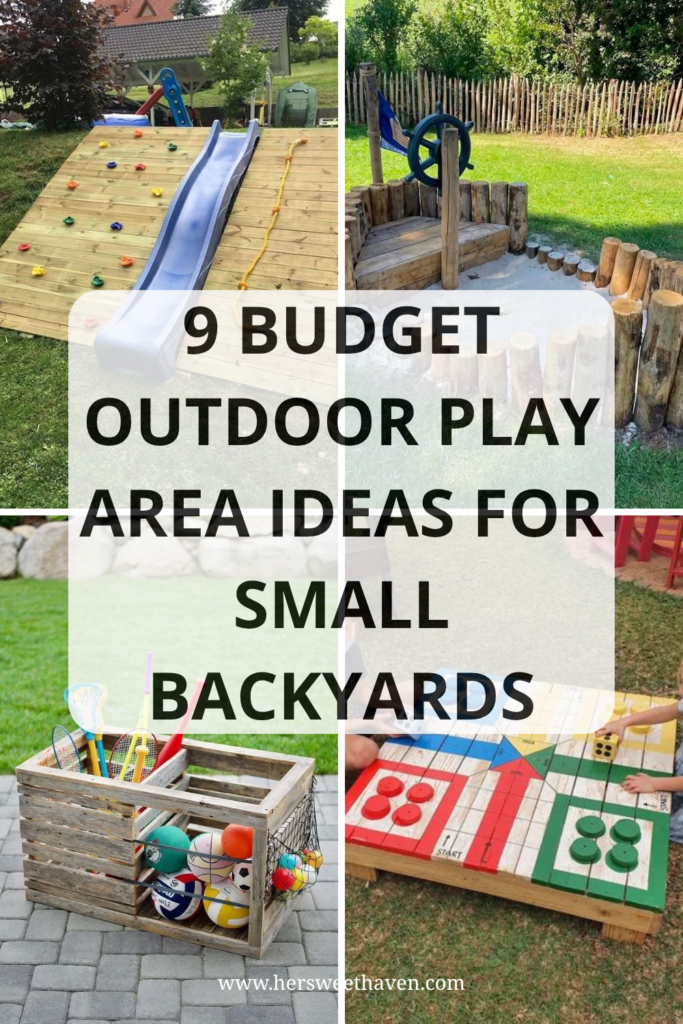
You don’t need a big space or a big budget to create something your kids will love. Some of the best outdoor play areas are the simplest ones, especially in small backyards. Here are ideas that work.
Mud Kitchens and Sensory Stations
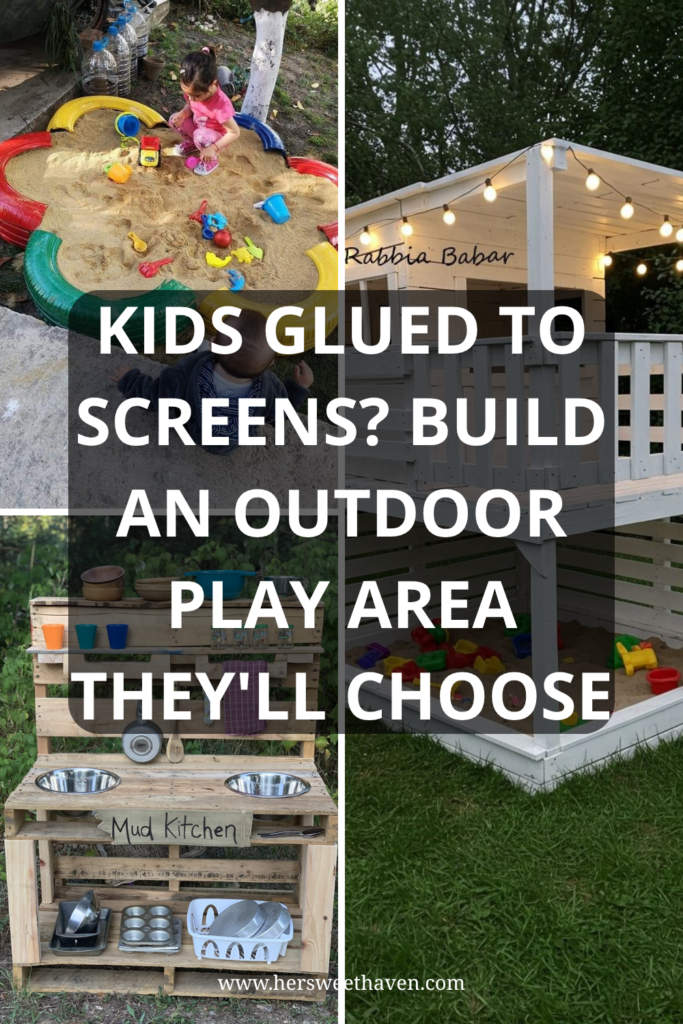
A mud kitchen is one of the most effective play features you can build. An old pallet, a few metal bowls, some measuring cups, and a pile of dirt. That’s it. Kids will spend hours “cooking” and mixing. If you want more ideas on this, check out these mud kitchen ideas for outdoor play.
Sensory stations work the same way. Add bins of water, sand, pebbles, and scooping tools. Simple, cheap, and endlessly entertaining for toddlers and preschoolers.
DIY Sandboxes and Water Play
A tire sandbox (yes, one large tractor tire filled with play sand) costs next to nothing and kids love it. Add a few water containers, funnels, and buckets on hot days and you have a full afternoon sorted.
Nature Play Corners and Fairy Gardens
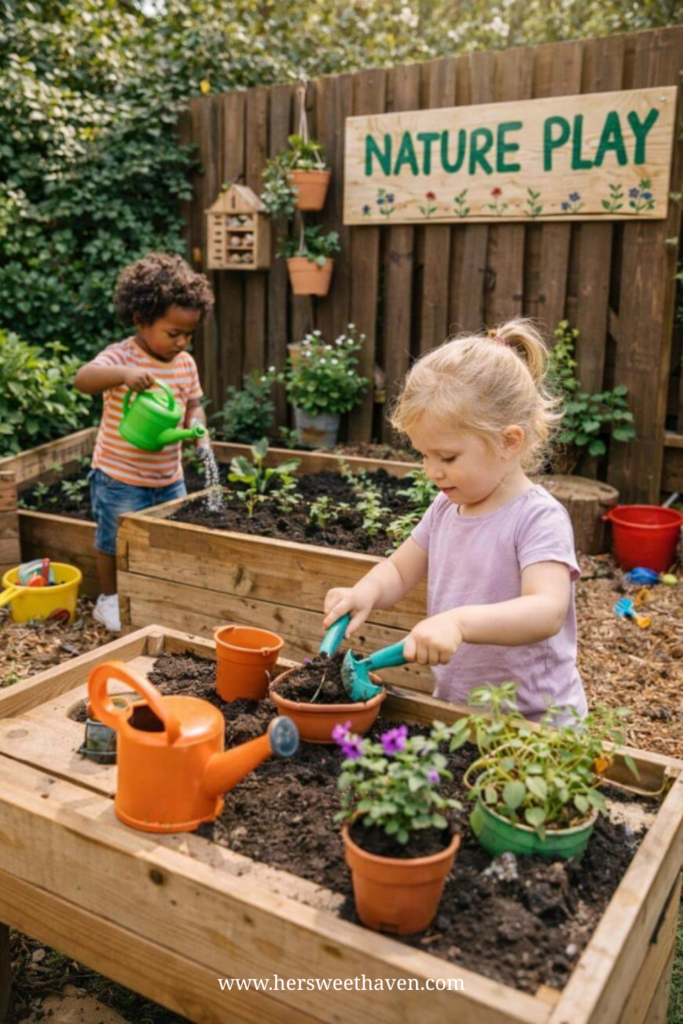
Give your kids a corner of the yard where they can dig, plant, and build. A small raised bed with child-safe plants, some watering cans, and gardening tools is all it takes. For a more magical twist, add a fairy garden. We’ve written a full guide on DIY fairy garden ideas that kids go wild for.
If you need tips for making the most of a tiny yard, we’ve got you covered there too.
Giant Board Games and Chalkboard Walls
Paint a section of fence with chalkboard paint and let kids draw to their hearts’ content. Add a giant outdoor checkers set or a painted hopscotch grid. You can also try sidewalk chalk art ideas to keep things fresh and creative all summer long.
How We Built a Backyard Play Area for Under $120
Here’s the thing: you don’t need to spend thousands. A solid outdoor play area for kids can be built for less than you’d spend on a nice dinner out (for two, let’s be honest).
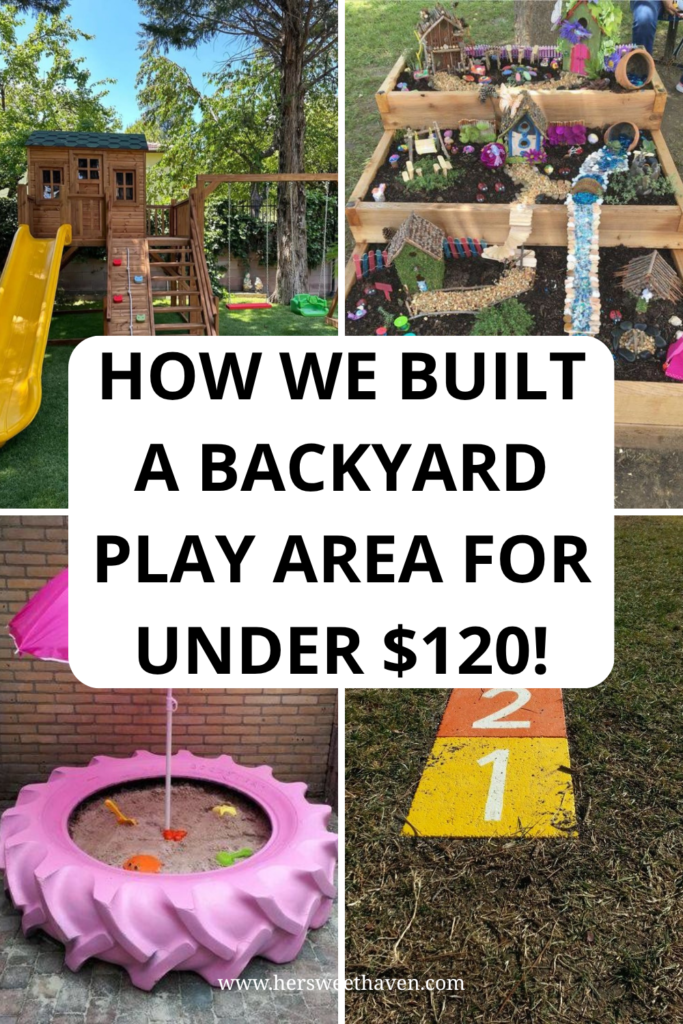
Here’s a realistic budget breakdown for a DIY backyard play setup:
Pallet mud kitchen: Free to $20. Pallets are often free from local businesses. Add a few thrift store pots and pans for a couple of dollars.
Tire sandbox: $0 to $15. Ask a tire shop for an old tractor tire. Fill it with two bags of play sand.
Chalkboard wall: $15 to $25. A sheet of plywood, a can of chalkboard paint, and some chalk.
Stepping stone path: $10 to $20. Use wood slices, flat stones, or even painted tree stumps.
Sensory bins and water play: $10 to $20. Plastic tubs, funnels, cups, and scoops from a dollar store.
Fairy garden supplies: $10 to $20. Small pots, figurines, pebbles, and miniature plants.
Total: well under $120, and you’ll have a space with multiple activity zones that keeps kids engaged for the whole afternoon.
The key is thinking creatively and using what you already have. Old baking trays become mud kitchen cookware. Fallen branches become balance beams. A cardboard box becomes a drive-through window. Kids don’t need expensive equipment. They need variety and freedom.
What Outdoor Play Setup Keeps Kids Busy for Hours?
Single-purpose equipment gets boring fast. A slide is fun for about 15 minutes. A swing holds attention a bit longer. But the play spaces that keep kids busy for hours? They’re the ones that allow open-ended, imaginative play.
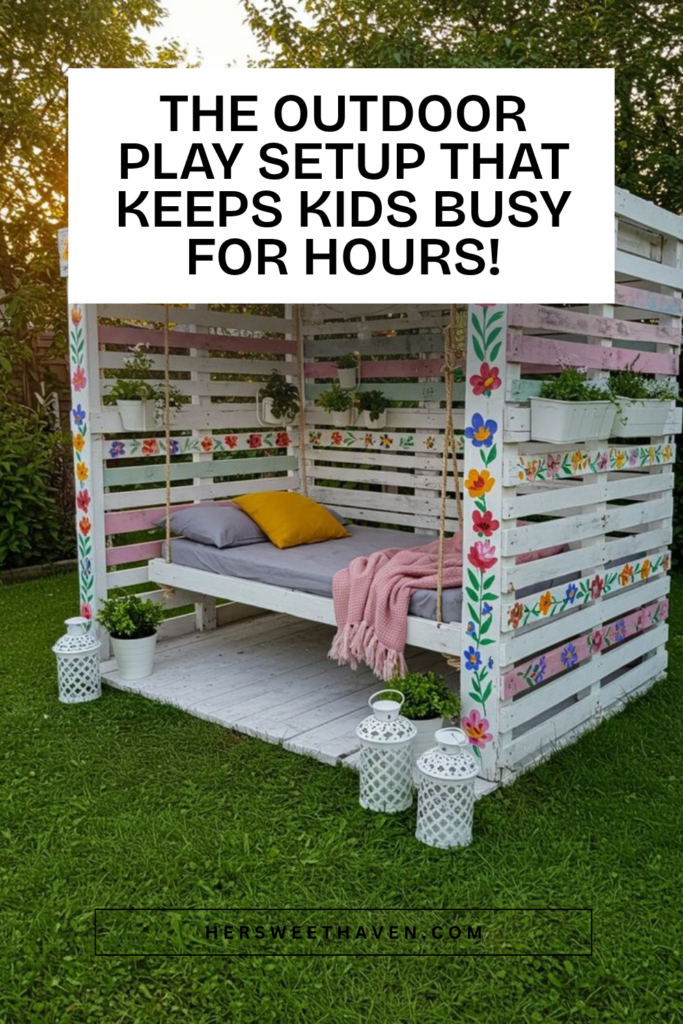
The magic formula is combining three types of play zones:
Active play: Something to climb, swing, balance, or jump on. This burns energy and builds motor skills.
Imaginative play: A playhouse, mud kitchen, or dress-up station. This is where kids create stories, role-play, and interact with each other.
Quiet play: A reading nook, nature observation corner, or drawing station. Every kid needs a spot to slow down when they’re tired of running around.
When you combine all three in one outdoor space, kids naturally rotate between activities. They don’t come inside saying “I’m bored” because there’s always something different to do next.
A pallet playhouse with a small covered porch, a bucket of art supplies, and a mud kitchen nearby? That’s a setup that competes with any tablet. And it’s a toddler outdoor play area and a big-kid hangout all in one.
Can You Really Build an Outdoor Play Area in One Weekend?
Yes. And you don’t need power tools to do it.
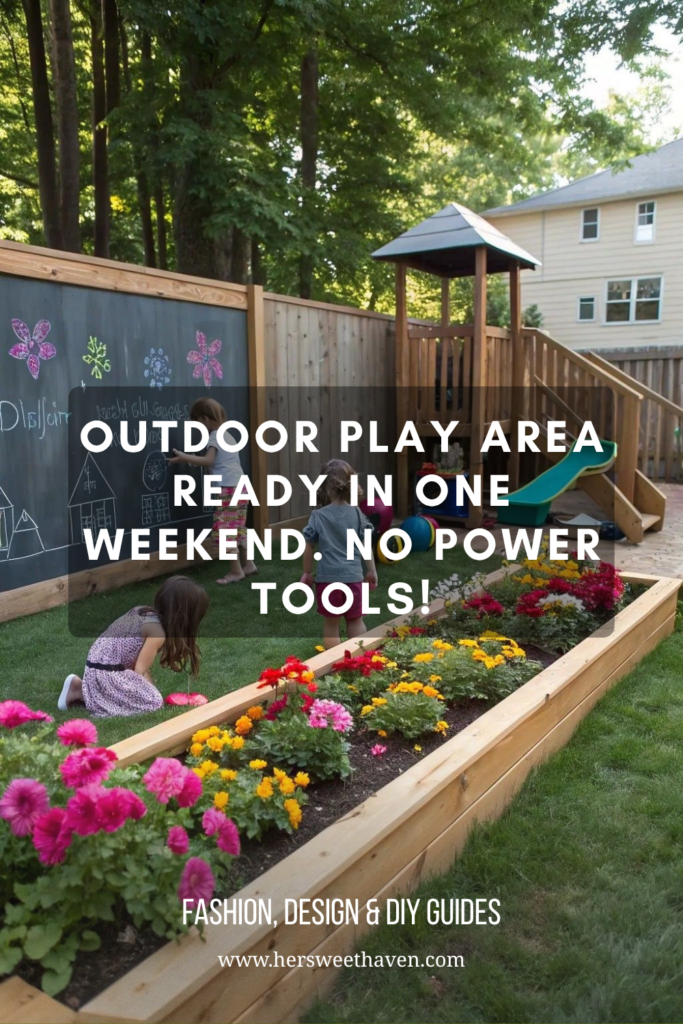
Here’s a simple weekend plan:
Saturday morning: Clear and prep your area. Lay down landscaping fabric if needed, then spread your chosen ground cover (rubber mulch, sand, or wood fiber). This is the most important step, so take your time.
Saturday afternoon: Set up your main play feature. A pallet mud kitchen, a sandbox, or a simple A-frame tent. Nothing that requires drilling into concrete or building from scratch.
Sunday morning: Add the extras. Hang a chalkboard on the fence. Set up sensory bins. Create a nature play corner with a few potted plants and digging tools. Lay out stepping stones.
Sunday afternoon: Let the kids test it out. Watch what they gravitate toward. Take notes on what they ignore so you can swap it out later.
That’s it. One weekend, no power tools, and your outdoor kids play area is up and running. You can always add to it later, but starting with something functional is better than waiting for perfection.
How Do You Keep an Outdoor Play Area Fun Long-Term?
The number one reason outdoor play areas get abandoned is that they stay the same. Kids crave novelty. Here’s how to keep things interesting without spending more money:
Rotate materials. Swap out sensory bin fillers every few weeks. Rice one week, dried pasta the next, water beads after that.
Add seasonal touches. In fall, bring in pumpkins and leaves. In spring, add planting activities. A few small changes make the space feel brand new.
Let kids customize. Give them paint, fabric scraps, or stickers to personalize their play space. When they feel ownership, they use it more.
Invite friends over. An outdoor playground becomes ten times more exciting when there are other kids to play with. A simple playdate in the backyard beats a trip to the park.
Start Small. Start This Weekend.
You don’t need to build a dream playground all at once. Start with one zone. A mud kitchen, a sandbox, or even just a chalkboard wall. Add soft ground underneath it. Watch your kids play, and build from there.
The goal isn’t a picture-perfect backyard from a magazine. The goal is a space your kids actually want to be in, one that gets them moving, creating, and choosing fresh air over a screen. And based on what the research tells us, that choice will pay off in ways that go far beyond just keeping them busy.
So grab a pallet, raid the dollar store, and claim a corner of your yard this weekend. Your kids are going to love it.
What’s the first thing you’d add to your outdoor play area? Save this post and tag a friend who needs these ideas.




Leave a Reply