

Some of my favorite clothes started as thrifted sweaters nobody wanted, and ended up selling on Marketplace almost as fast as I could list them.
Here’s the backstory. My mom was a seamstress, so I grew up next to a sewing machine that rarely got a day off. When I got into thrifting, I’d hunt down good-quality, brand-name sweaters, bring them home, and rework them with her help using other fabrics and prints. Every single piece came out one of a kind.
People kept stopping me to ask where I got them (best feeling ever), and the ones I put up for sale were gone in no time. So when I say upcycled clothing ideas are worth your time, I’m saying it from experience.
Below you’ll find 10 rework projects I love, what you actually need to get started, where to find clothes worth cutting into, and what to do when you mess up. (Because you will. And that’s fine.)
Why Upcycled Clothing Ideas Are Everywhere Right Now
Real talk: the numbers behind fashion waste are pretty grim. According to the Ellen MacArthur Foundation, less than 1% of old clothing gets turned into new clothing. Most of it gets landfilled or burned.
At the same time, secondhand is having a moment. ThredUp’s latest resale report found that 58% of U.S. shoppers bought secondhand clothing in 2024, and resale keeps growing faster than regular retail. Thrift flips on Pinterest and TikTok are basically the creative side of that shift.
And honestly? That’s my favorite part. Upcycling isn’t about guilt. It’s about making something nobody else owns, from stuff that already exists.
What Do You Actually Need to Start Upcycling Clothes?
Do You Need a Sewing Machine to Upcycle Clothes?
Short answer: yes. For the projects on this list, a simple sewing machine is a must. You can hand-stitch a patch or two, but swapping sleeves or joining panels by hand takes forever and rarely holds up in the wash.
If you’re buying one, go for a multifunction machine, ideally with an overlock (serger) option or at least a solid overlock stitch. Here’s why: every rework calls for a different seam. Knit sweaters need a stretchy seam, denim needs a strong straight stitch, and raw edges need finishing so they don’t fray after the first wash.
One machine that handles all of that saves you a lot of frustration. Trust me on this one.
The Small Stuff That Makes a Big Difference
Beyond the machine, grab sharp scissors you only ever use on fabric, tailor’s chalk or a washable marker, pins or clips, a seam ripper, and an iron. Pressing each seam as you go is what separates “homemade” from “handmade.”
Not ready to sew yet? Start with these beginner-friendly bleach clothing designs and work your way up to the machine.
Where Do You Find Clothes Worth Reworking?
I get almost all my base pieces from thrift stores. When I’m making something to sell, I also flip pieces I find on Marketplace.
My rule: quality first. A thick, well-made, brand-name sweater with a small stain or a dated print is a far better starting point than a thin fast-fashion top in perfect condition. Good fabric survives cutting, sewing, and washing. Cheap fabric fights you the whole way.
Also, check your own closet before you buy anything. That pair of jeans you haven’t touched in two years? That’s your first project.
10 Upcycled Clothing Ideas to Try This Season
1. The Patchwork Sweatshirt
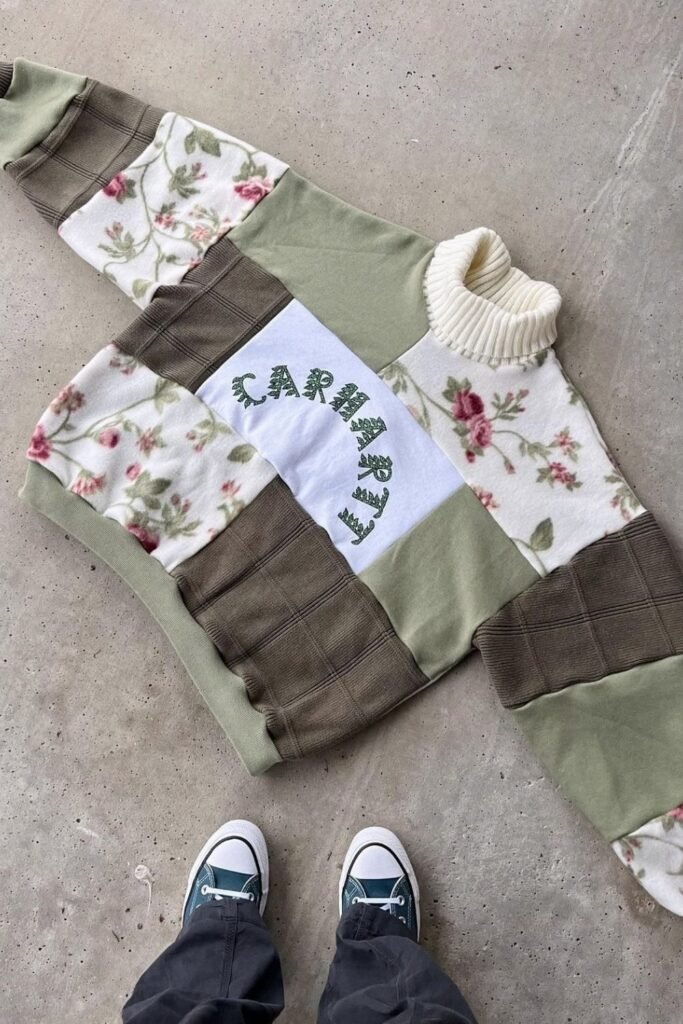
Take a basic crewneck and replace sections (the sleeves, the front panel, or both) with scraps in different fabrics. Floral, denim, plaid, corduroy.. nothing has to match. The mix is the whole point.
Beginner tip: start with just the sleeves. Use the original sleeve as your pattern, cut the new fabric, and sew it into the armhole. It’s the easiest swap, and it shows you how different fabrics behave together.
2. Patched Jeans With Fabric Hearts and Lace
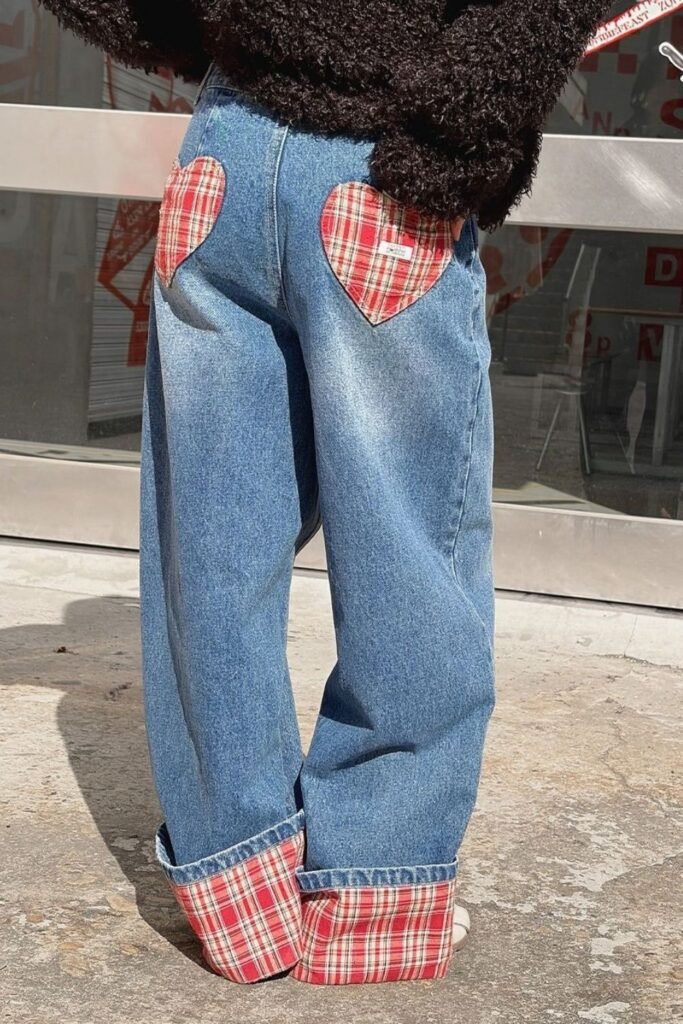
Got jeans that are ripped, stained, or just boring? Cover the worn spots with patches in a contrasting fabric. Plaid, lace, canvas, or cut-out shapes like hearts on the back pockets all work.
Pin the patches in place, then topstitch around the edges. Random, overlapping placement looks more intentional than a perfectly symmetrical layout. Need outfit ideas for the finished pair? These baggy jeans outfits work just as well with patched denim.
3. The Vintage Fabric Two-Piece Set
Vintage tablecloths, curtains, and old bedding are goldmines for upcycled clothing ideas. A bold retro floral turns into a cropped top with matching shorts or a skirt, and nobody else will have the same set. (Yes, really. Your grandma’s curtains are a one-off.)
Use a top and bottoms you already own as your pattern. Trace them, add seam allowance, cut, and sew. Ribbon ties at the sides make it look finished with very little extra work.
4. Denim-Meets-Plaid Skirt or Dress
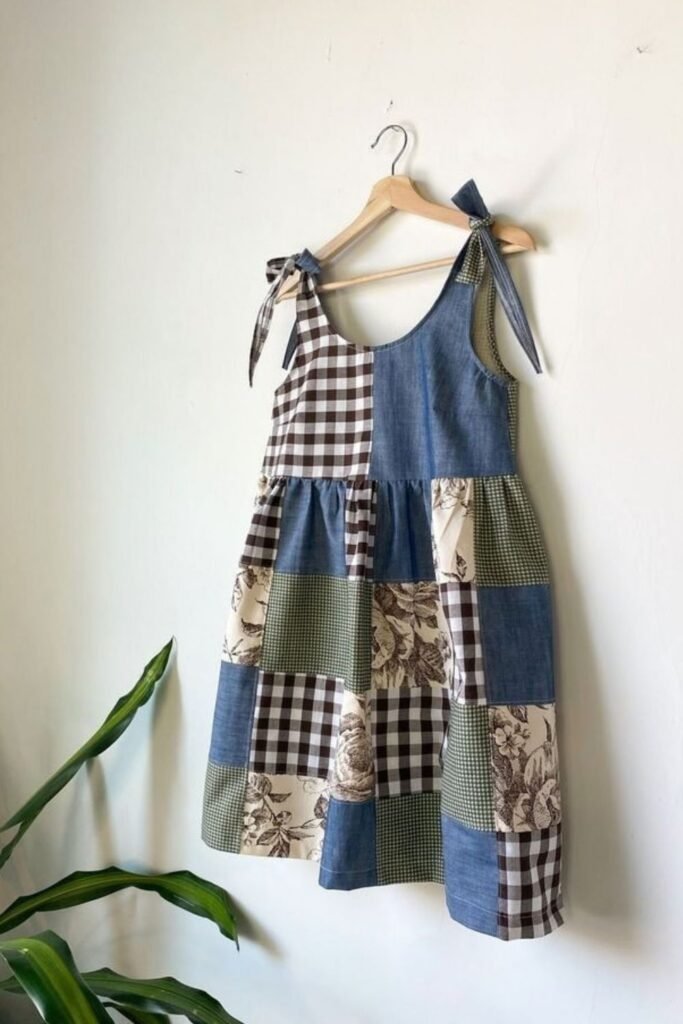
Cut an old pair of jeans at mid-thigh and attach a plaid panel to the bottom. You get a mini skirt that mixes casual denim with structured plaid. Want to go further? Piece denim and plaid squares together into a full patchwork dress.
The trick is matching fabric weight. Plaid that’s much lighter than the denim hangs strangely. A wool blend or thick flannel sits far better next to denim than a thin cotton shirt.
5. The Flannel-Sleeve Hoodie
Swap the sleeves of a plain oversized hoodie for flannel. It looks cozy, it’s warm, and it costs next to nothing if you raid an old shirt for the fabric.
Remove the original sleeves with a seam ripper, use them as your template, and sew the flannel sleeves in. Knit and woven fabrics stretch differently, so a stretchy or overlock stitch on the hoodie side keeps the seam from popping.
6. The Statement Print Hoodie
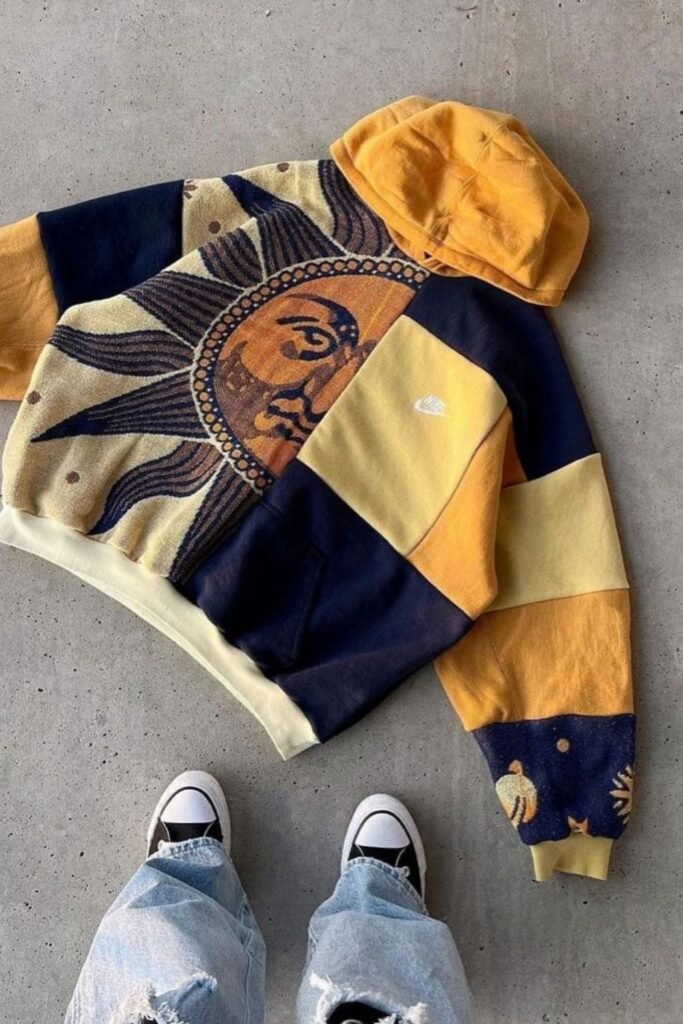
If patchwork isn’t your thing, go bold with one big print instead. A printed throw, a large vintage scarf, or a graphic fabric becomes the front panel of a basic hoodie, while the hood and sleeves stay solid.
Open the hoodie along the side seams, lay the print over the front, trace, cut, and sew it in. Sunbursts, celestial prints, and abstract art all look like a limited drop when you get the placement right.
7. Half Denim, Half Plaid
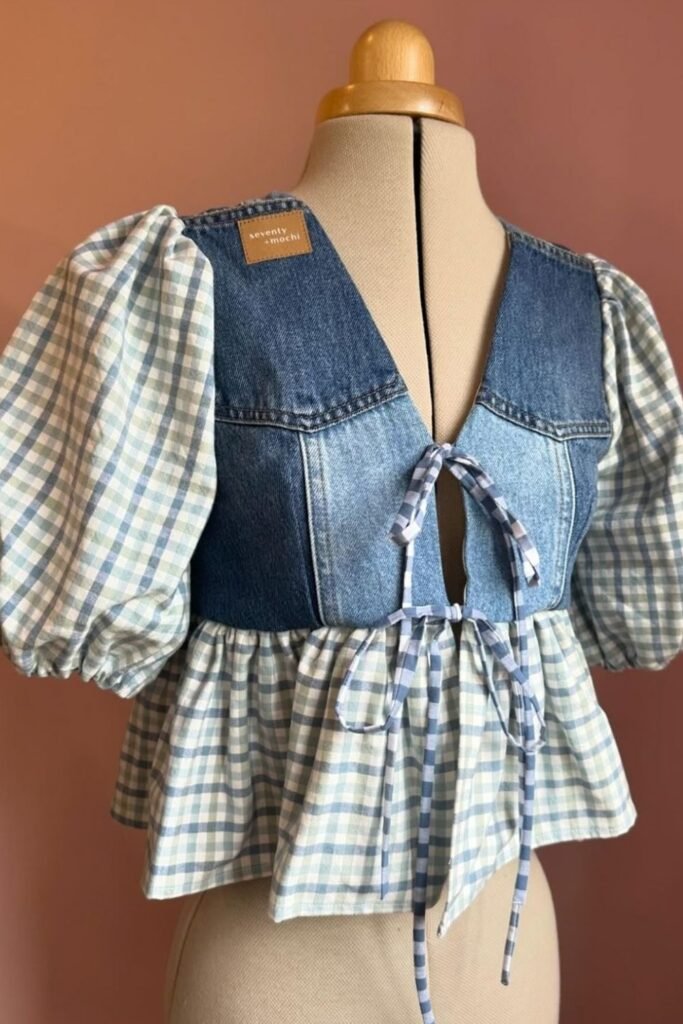
This one mixes a denim base with plaid or gingham. Think a denim bodice with gingham puff sleeves and a ruffled hem, or a denim jacket with a plaid lower half.
It’s a bit more advanced because of the construction. If that feels like a lot, sew a single plaid panel onto the back of a denim jacket you already own. Same contrast, way less stress. It also pairs nicely with the jacket outfits I wear on repeat.
8. Bold Panels on Basic Tees and Sweatshirts
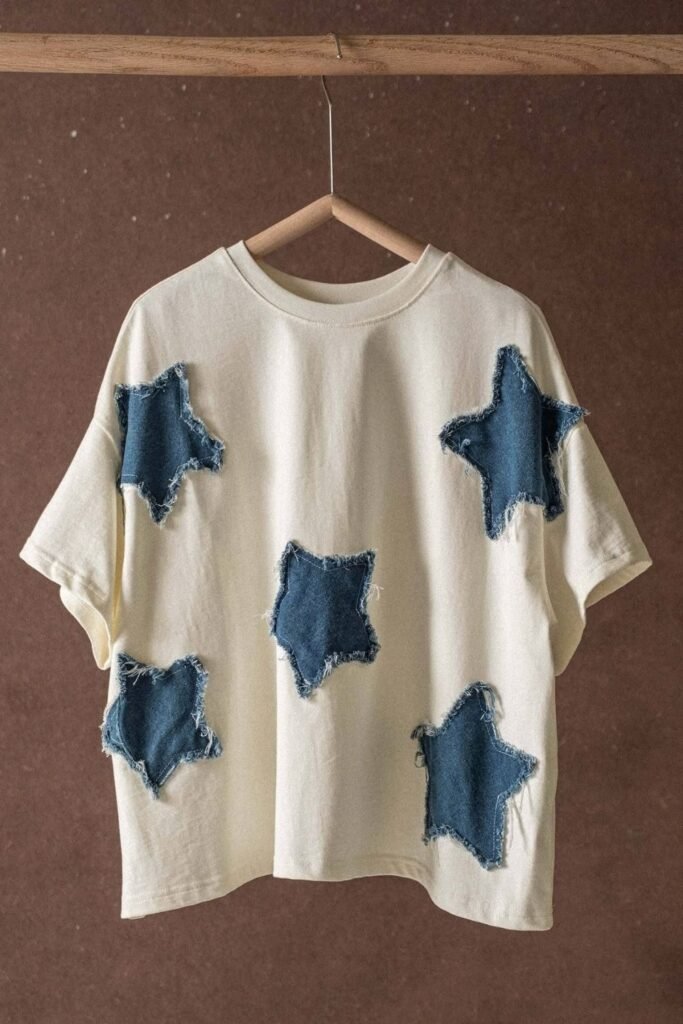
This is the method I used most with my thrifted sweaters. Cut away sections of a basic piece and sew in a contrasting fabric, or appliqué shapes on top. Denim stars on a cream tee look great and take one afternoon.
Stick to medium-weight fabrics with a stretch similar to the base garment. Press every seam flat as you go, and the finished piece looks store-bought, in the best way.
9. The Thrifted Blazer Rework
Thrift stores are full of oversized, slightly dated blazers, usually for very little money. That makes them perfect raw material. Crop one and leave raw edges, add denim panels, or swap the buttons for something with more personality.
Treat the blazer like fabric, not like a finished garment. Structured fabrics like suiting wool hold their shape, so even a simple crop looks intentional.
10. Mix-and-Match Tees and Button-Ups
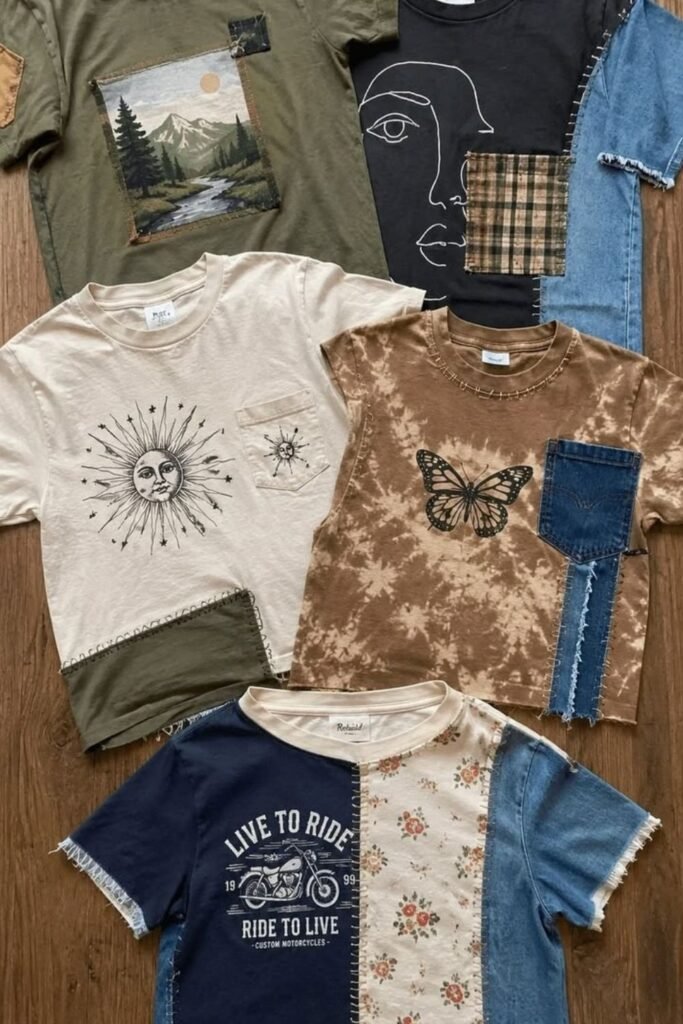
Take two or more shirts and combine them into one: split the front panels, swap the sleeves, or add a denim side panel. Tees and button-ups are some of the easiest garments to take apart, which makes this a solid first project.
Choose fabrics with a similar weight so they drape the same way. Two cotton tees combine easily. A silky blouse with a heavy flannel? Only if the contrast is on purpose.
How to Pick Your First Upcycled Clothing Project
With ten upcycled clothing ideas on the table, it’s tempting to start with the most dramatic one. Don’t. Pick based on three things: the fabric you already have, the stitches your machine can handle, and how much time you’ve got this weekend.
If you’ve got a pile of old jeans, go for the patched jeans or the denim-meets-plaid skirt. If you’ve got a stack of tees, the mix-and-match shirt is your friend. Sweaters and sweatshirts? Start with a sleeve swap or a few bold panels.
And give yourself permission to keep it simple. One finished piece you actually wear beats three half-done projects sitting in a bag in the corner. (We’ve all been there.)
Bottom line: match the project to what you have, not to whatever looks coolest on Pinterest.
What If You Mess It Up?
You probably will at some point. I’ve ruined pieces too: cut something too short, sewn the wrong sides together, the whole list.
But here’s the thing. With upcycling, mistakes are surprisingly easy to save. You’re already combining different fabrics and shapes, so a bad cut becomes a reason to add another panel, a wonky seam gets covered with a patch, and a sleeve that didn’t work gets swapped for a different fabric.
That’s honestly the exciting part for me. There’s almost always another way to make it work.
How Do Beginners Learn to Upcycle Clothes?
My best advice: before you cut into anything, spend some time learning online. YouTube especially has tons of free tutorials on basic sewing, overlock stitching, and specific rework techniques. Watching someone do a sleeve swap once teaches you more than reading about it five times.
Then start small. A sleeve swap or a few patches on old jeans makes a great first project. Once that feels easy, move on to panels and full reworks.
Can You Sell Upcycled Clothes?
You can, and it’s more doable than you’d think. The reworked sweaters I listed on Marketplace sold really fast, because people happily pay for pieces they can’t find anywhere else.
If you want to try it, take clear photos in natural light, mention the original brand and the fabrics you used, and be upfront about measurements. And the timing is good: ThredUp expects the U.S. secondhand apparel market to reach about $74 billion by 2029.
Upcycling Is About Wearing What Feels Like You
Here’s how I see it. The best upcycled clothing ideas were never about perfect seams. It’s about wearing something that feels like you, made from clothes that would’ve ended up in a landfill otherwise.
Sustainable fashion doesn’t have to mean beige basics and a strict capsule wardrobe. It can be a patchwork sweatshirt, jeans with plaid hearts on the pockets, or your grandma’s curtains turned into a summer set. Wear what makes you feel good. That’s the whole point.
Once you’ve made a few pieces, give them a proper home with a simple closet organization system so they actually get worn. Want another weekend project? Hand-painted hats are a fun next step. And save this post for your next thrift run.
Leave a Reply