

Most water damage starts with bad drainage around your house, not a freak storm.
If you’ve ever walked outside after a heavy rain and found a mini lake sitting next to your foundation, you already know the frustration. That standing water is not just ugly. It’s doing real damage to your home, your yard, and your wallet every single time it rains.
The good news? You don’t need a contractor or a massive budget to fix it. The right drainage around house setup can protect your foundation, stop the soggy mess, and even make your yard look better in the process.
In this post, I’m sharing 10 practical, budget-friendly drainage solutions you can tackle yourself. Each one is based on real projects (with photos), and most of them can be done in a single weekend. Let’s get into it.
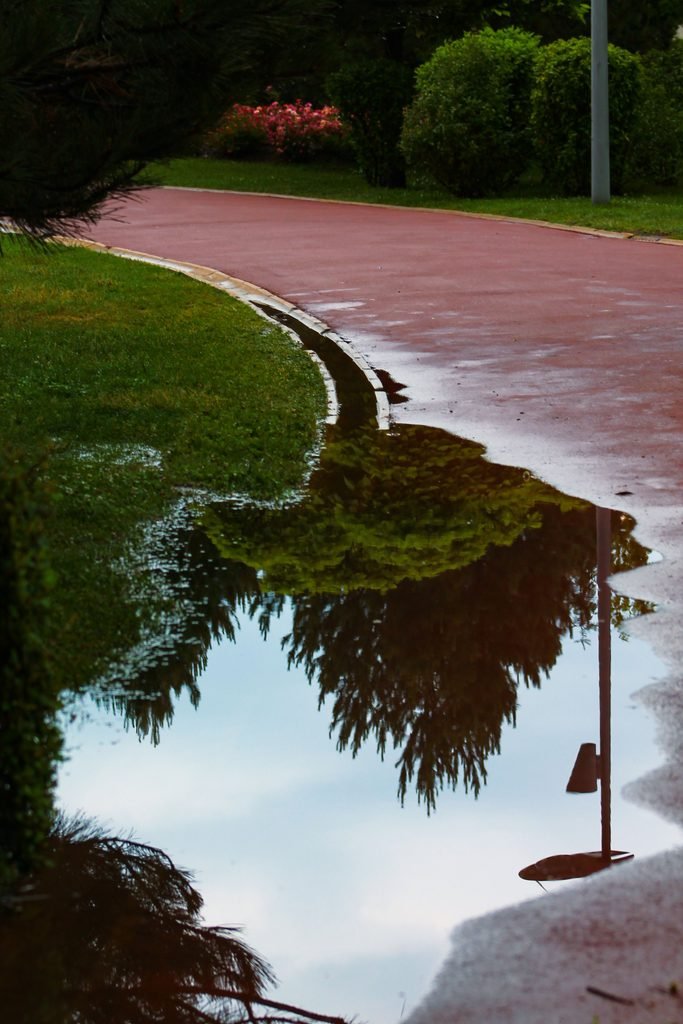
Photo by Rahime Gül on Pexels
Why Drainage Around Your House Matters More Than You Think
Before you start digging trenches or buying gravel, it helps to understand why this matters so much. Water is sneaky. It finds every low spot, every crack, every gap near your foundation. And when it sits there long enough, the consequences add up fast.
What Happens When Water Sits Near Your Foundation
When rainwater pools around the base of your home, it saturates the surrounding soil. According to JES Foundation Repair, that saturated soil creates hydrostatic pressure against your foundation walls, which can lead to cracks, bowing, and water seeping into your basement or crawl space.
Over time, the soil itself starts to erode. That creates voids and unstable ground underneath your home. In clay-heavy regions, the soil expands when wet and shrinks when dry, putting constant stress on your foundation. None of this is a quick or cheap fix once the damage is done.
Signs You Have a Drainage Problem in Your Yard
You don’t need a professional inspection to spot the warning signs. Look for standing water after rain (even small puddles that stick around for hours), a soggy or mushy yard near the house, water stains on your foundation walls, or a basement that smells damp or musty.
If you notice erosion lines in your landscaping or mulch washing away from flower beds, that’s water run off doing its thing. The sooner you address it, the less damage you’ll deal with later.
10 Budget-Friendly Drainage Ideas Around Your House
Here are 10 backyard drainage ideas that actually work. Each one addresses a different type of water problem, so you can mix and match based on what your yard needs.
1. Install a French Drain Along Your Foundation
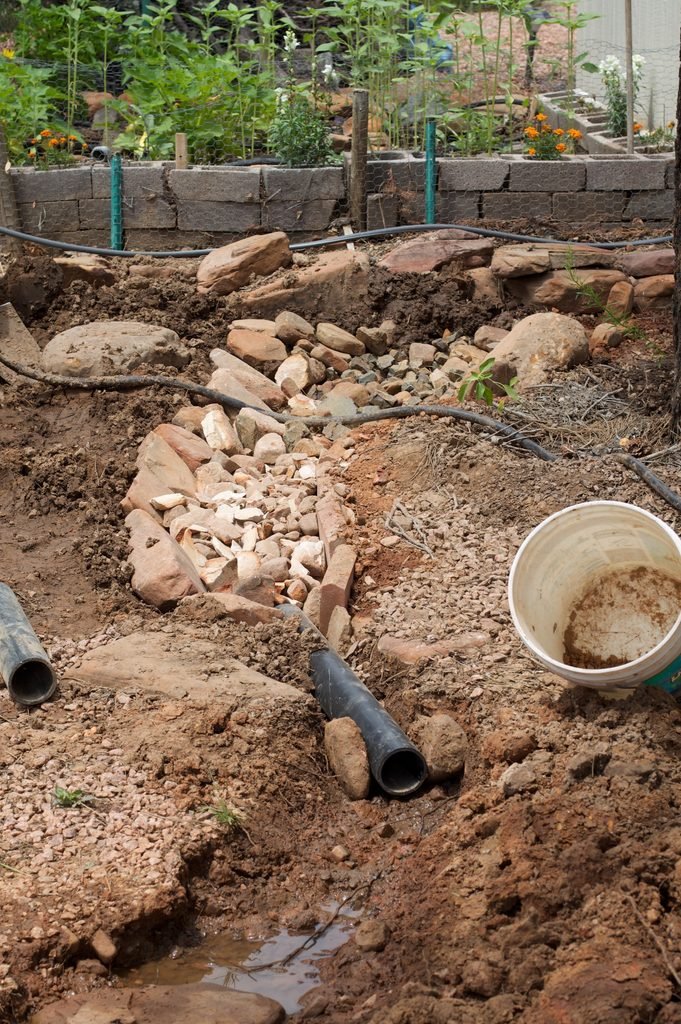
A French drain is one of the most effective landscaping drainage solutions for any backyard. It’s a trench filled with gravel and a perforated pipe that collects water underground and redirects it away from your home.
The process is straightforward: dig a trench along your foundation, line it with landscape fabric, lay a perforated pipe on a bed of coarse gravel, cover the pipe with more gravel, and backfill with soil. According to Bob Vila, French drains are one of the top DIY yard drainage solutions for homeowners dealing with persistent water issues.
For best results, your trench should slope about 1% away from the house so gravity does the work. A typical french drain project can be done in a weekend with basic tools.
The full four-step process: digging the trench, adding the landscape fabric liner, placing the perforated drainage pipe with coarse gravel, and the finished result topped with decorative river rock. It’s a great visual for anyone new to french drain ideas.
“Small Project Grows” by Alan Levine, CC0 1.0 Public Domain Dedication.
2. Add a Channel Drain Along Your Patio or Walkway
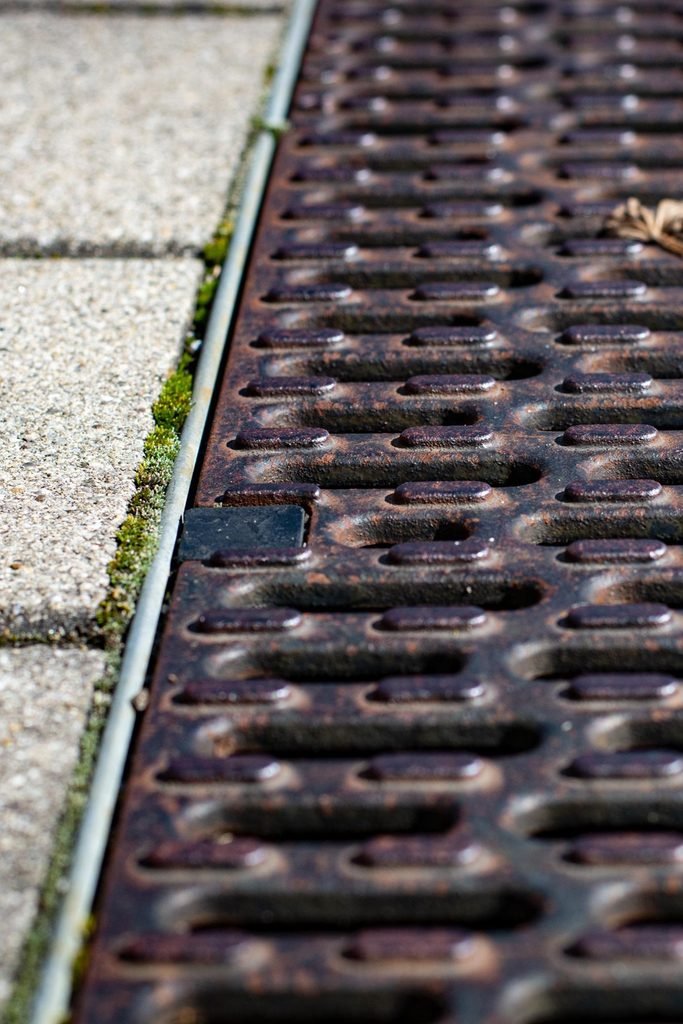
If water pools on your patio, driveway, or near your back door, a channel drain (also called a trench drain) is the fix. These are narrow, grated drains installed flush with the surface that collect water and channel it away.
Channel drains work especially well along the edges of patios, at the base of sloped driveways, and next to doorways where water tends to gather. They’re a popular choice for landscaping drainage solutions because they handle surface water without requiring deep excavation.
You can find pre-made channel drain kits at most home improvement stores. Installation involves cutting a shallow trench, setting the channel in concrete or compacted gravel, and connecting it to an outlet pipe.
3. Set Up a Catch Basin for Heavy Water Run Off
A catch basin is basically a collection box buried in the ground. Water flows into it through a grate on top, then exits through a pipe that carries it to a safe drainage point farther from your house.
Catch basins are ideal for spots where large amounts of water run off converge, like at the base of a downspout or a low point in your yard. They’re one of the more affordable backyard drainage ideas and can be installed in just a few hours.
Catch basins work well when paired with underground pipes that carry water to a dry creek bed or drain emitter elsewhere in the yard.
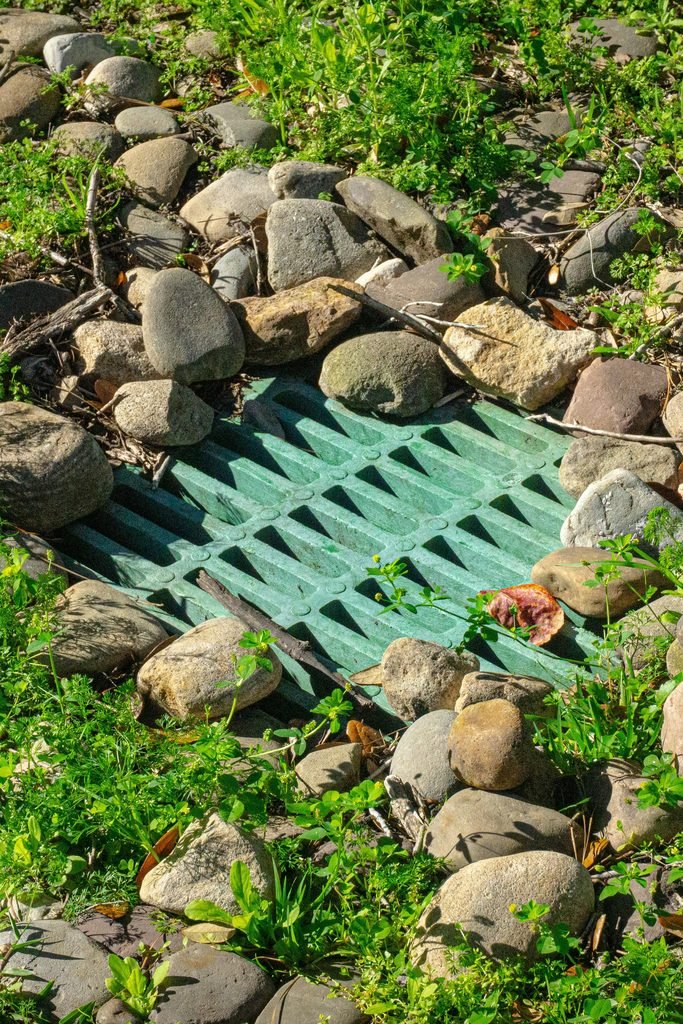
Photo by Osmany M Leyva Aldana on Unsplash
4. Build a Dry Creek Bed with River Rock
A dry creek bed is one of those drainage solutions that doubles as a landscaping feature. It’s a shallow, rock-lined channel that mimics a natural streambed. When it rains, water flows through the rocks and away from your home. When it’s dry, it looks like a decorative landscape element.
To build one, dig a shallow, meandering trench leading away from the problem area. Line it with landscape fabric to prevent weeds, then fill it with a mix of river rock, pebbles, and larger stones. Add some plants along the edges for a natural look.
If you love the look of natural stone in your yard, you’ll want to see these river rock landscaping ideas for even more ways to use rock in your outdoor space.
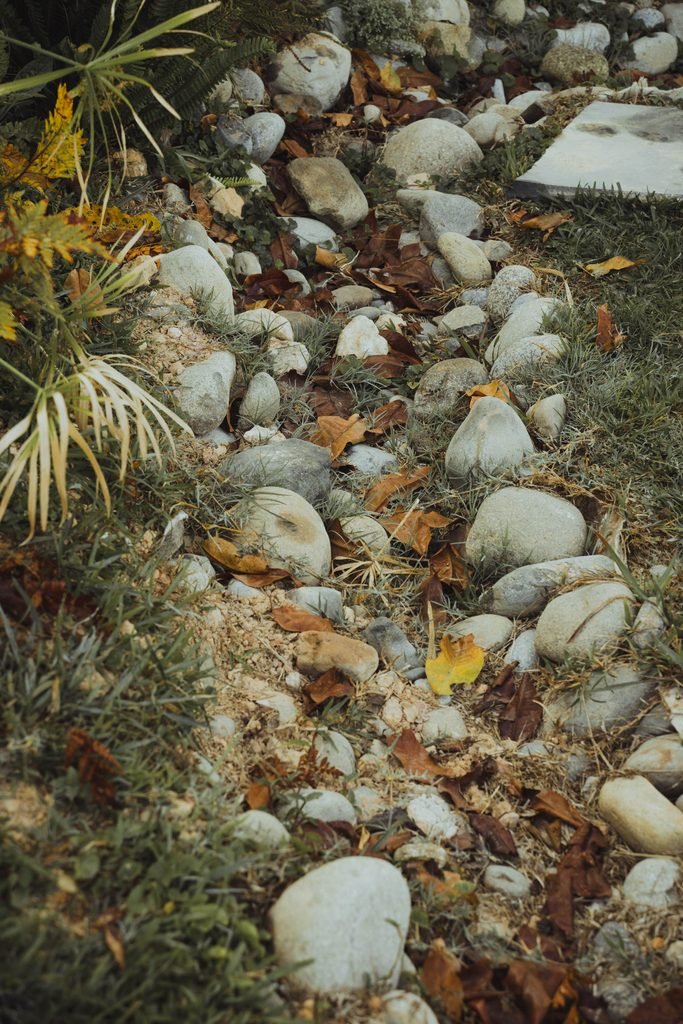
Photo by Red Nguyen on Pexels
5. Extend Your Downspouts Underground
This one is a big deal and most homeowners skip it. Standard downspouts dump water right at the base of your foundation. That’s the exact spot where you do NOT want water collecting.
The fix is to connect your downspouts to underground PVC pipes that carry water 8 to 10 feet away from your home (or even farther). At the end of the line, install a pop-up drain emitter that releases the water at ground level in a safe spot.
Pinnacle Foundation Repair recommends extending downspouts at least 3 to 4 feet from the foundation as a minimum. But if you can go farther, do it. This is one of the most effective french drain landscaping upgrades you can make.
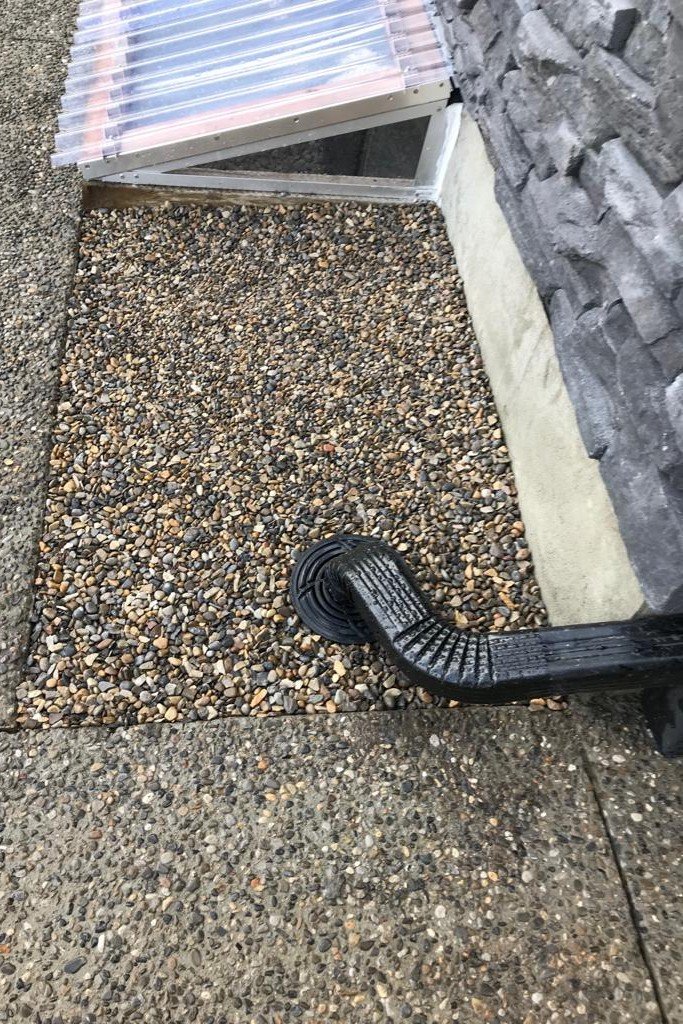
Photo by AGreenFutureCalgaryLandscping via Wikimedia Commons, licensed under CC BY-SA 4.0.
6. Create a Gravel Border Along Your Foundation
A gravel border is one of the simplest drainage around house solutions. Instead of having soil or mulch right against your foundation (which holds moisture), you replace it with a strip of gravel or decorative stone.
Gravel allows water to drain through quickly rather than sitting against your siding or foundation wall. It also reduces splash-back from rain hitting the ground near the house.
To install, remove the existing soil or mulch about 12 to 18 inches out from the foundation. Lay landscape fabric, then add 3 to 4 inches of gravel. You can use white stone for a clean look or mix sizes for a more natural feel.
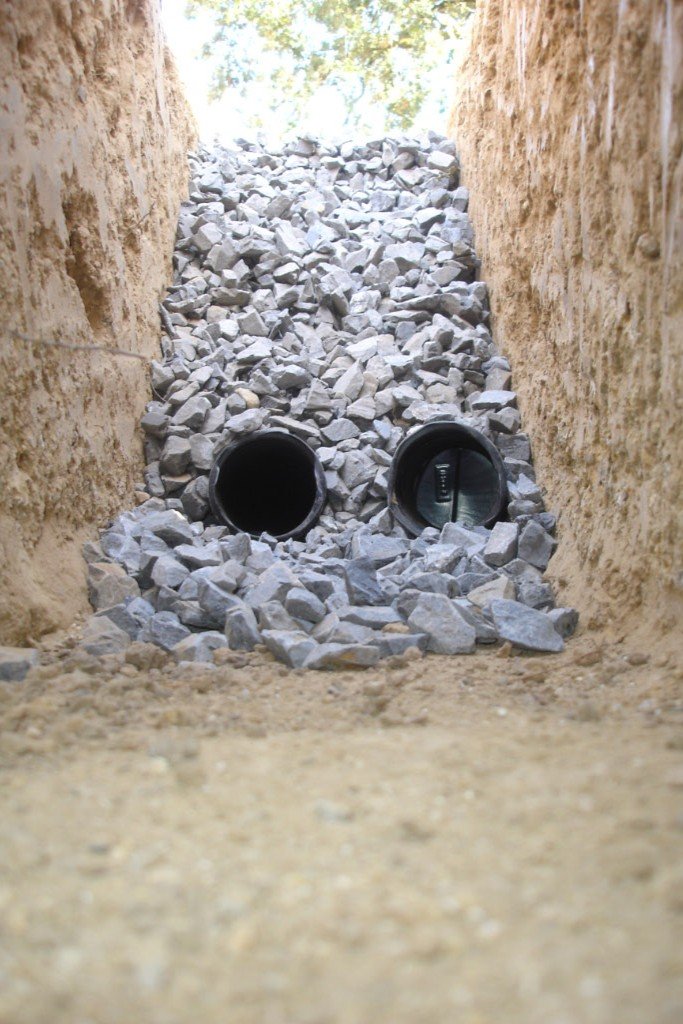
Image by Scooter133 via Wikimedia Commons, Public Domain.
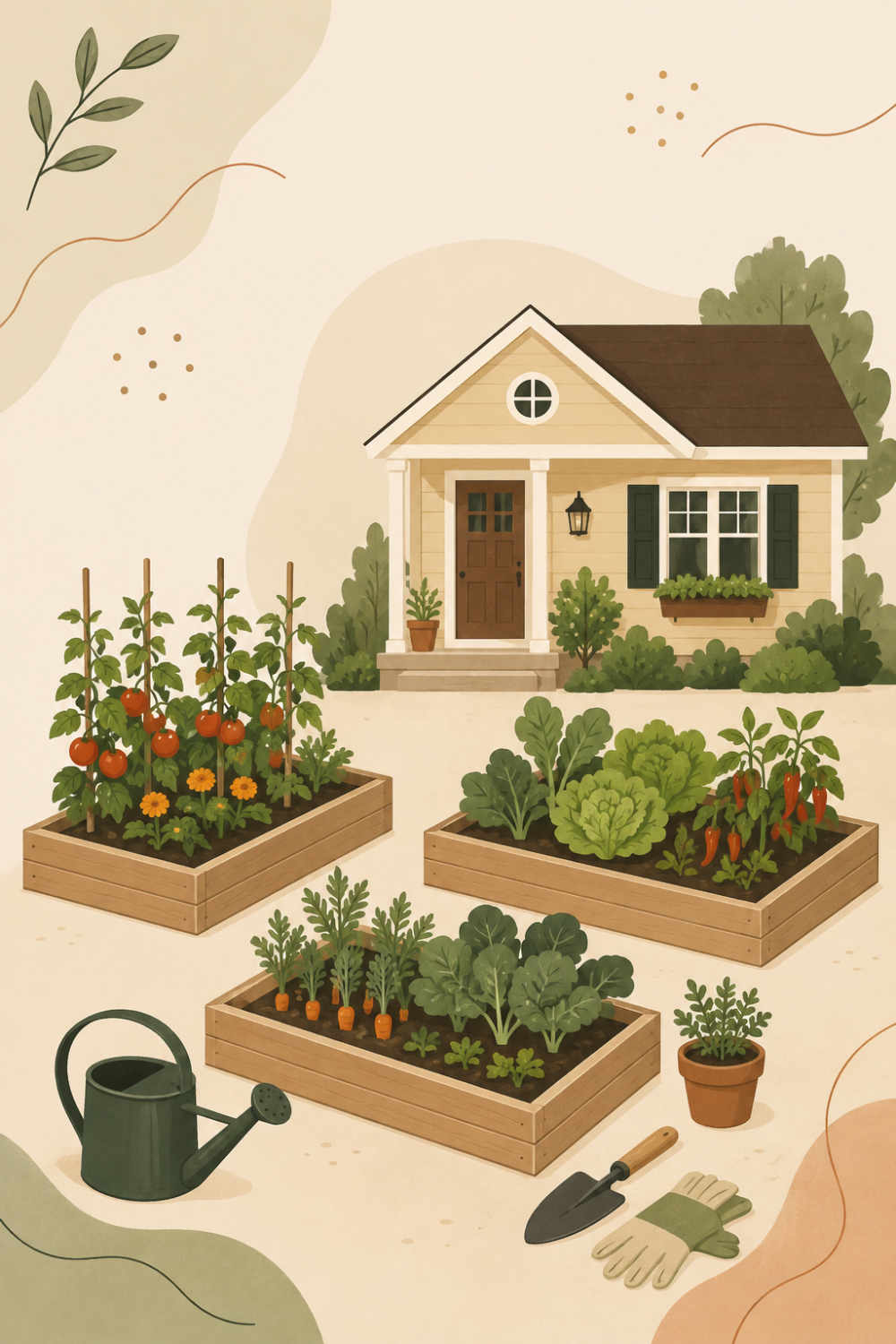
7. Use Raised Garden Beds to Redirect Water
Here’s a creative one. Raised garden beds positioned strategically near your foundation can actually help manage drainage while giving you a place to grow flowers, herbs, or vegetables.
The key is building them with proper drainage in their base (gravel layer, drainage holes) and positioning them so they catch and redirect water run off away from the house. Some homeowners connect downspouts directly to raised beds filled with water-loving plants.
If you want to try this approach, here’s a full guide on how to build raised garden beds on a budget that walks you through the entire process.
8. Add a Rain Garden or Planter Box Near Downspouts
A rain garden is a planted depression that collects water from your roof, driveway, or yard and lets it soak into the ground slowly. It’s a natural, sustainable approach to managing water run off.
You can also use a simple planter box placed near a downspout to catch and absorb water. Fill it with plants that thrive in wet conditions (hostas, ferns, daylilies) and make sure it has a gravel base for drainage.
Rain gardens typically need to be about 6 inches deep and positioned at least 10 feet from your foundation. They work best in spots where water naturally flows through your yard.
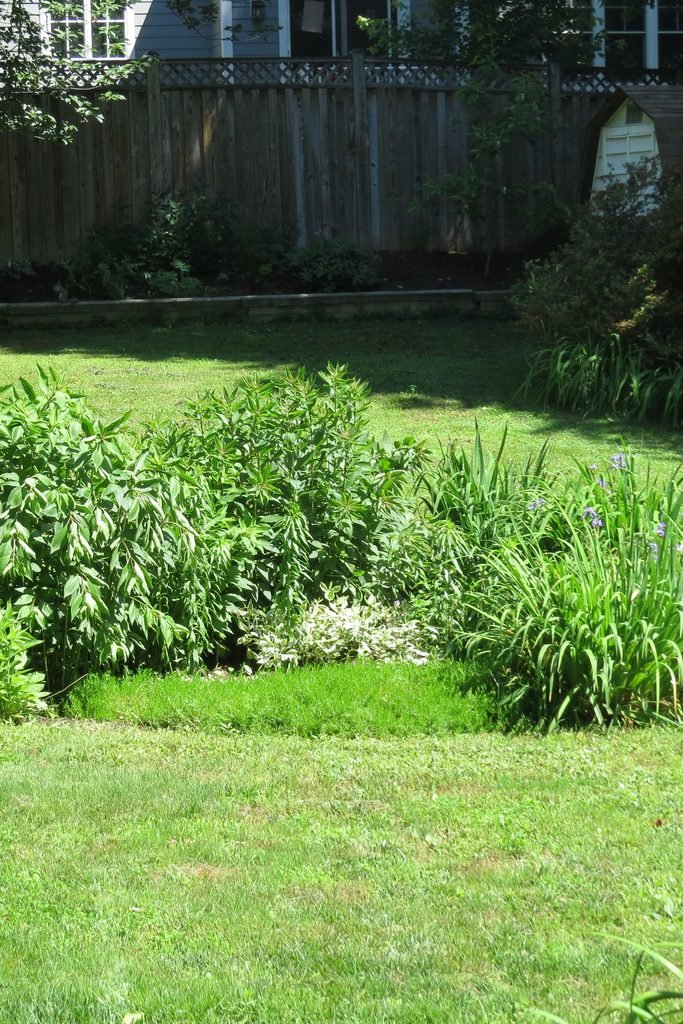
Photo by Arlington County via Wikimedia Commons, licensed under CC BY-SA 2.0.
9. Regrade Your Yard for Better Water Flow
Sometimes the problem is not that you’re missing a drainage system. It’s that your yard is sloped toward your house instead of away from it. This is more common than you’d think, especially in older homes where the soil has settled over time.
According to Budget Dumpster, your yard should slope about 1 inch for every foot as you move away from the house. If it doesn’t, you need to add soil to build up the grade near the foundation.
Use dense topsoil (not sand or mulch, which let water pass right through) and make sure you keep at least 4 inches of visible concrete foundation above the soil line. This prevents rot and keeps pests out.
This is a weekend project that costs very little but makes a huge difference in how water moves through your yard.
10. Install Splash Blocks and Pop-Up Drain Emitters
If you’re not ready for a full underground drainage system, splash blocks and pop-up emitters are a quick, affordable starting point. Splash blocks sit at the base of your downspout and redirect water away from the foundation. Pop-up emitters connect to buried pipes and release water at a distance.
Both of these are backyard drainage ideas that take less than an hour to install. They won’t solve major drainage problems on their own, but they’re a solid first step, especially when paired with other solutions on this list.
Which Backyard Drainage Ideas Save You the Most Money?
Not every drainage project costs the same, and some give you way more bang for your buck. If you’re on a tight budget, start with the cheapest fixes first and work your way up.
Regrading your yard, adding splash blocks, and extending downspouts are the most affordable options. You’re looking at under $50 for materials in most cases. A gravel border or dry creek bed costs more (depending on how much rock you need) but still stays well under $200 for a typical section.
French drains and catch basin systems are on the higher end for DIY projects, usually between $200 and $500 depending on length and materials. But compare that to hiring a contractor (which can easily run $1,000 to $5,000+), and the savings are obvious.
The smartest approach is to layer your solutions. Start with grading and downspout extensions, then add a french drain or channel drain where water problems persist. This way you’re only spending money where it’s truly needed.
If you’re working with a smaller outdoor space, these small garden design tips can help you make the most of your yard while keeping drainage in mind.
How Do You Fix Drainage Around Your House Without a Contractor?
You absolutely can handle most drainage projects yourself. The tools are basic (shovel, level, wheelbarrow, tape measure), and the materials are available at any home improvement store.
Here’s the approach that works best. First, walk your yard during a heavy rain and watch where water goes. Take notes or photos. This tells you exactly where the problems are and where your drainage solutions need to focus.
Second, start with the simple fixes. Clean your gutters, extend your downspouts, and check your yard grading. These three steps alone solve a surprising number of drainage issues without any digging at all.
Third, plan your bigger projects (french drain, channel drain, catch basin) for a dry weekend. Lay everything out before you start digging so you know exactly where pipes will run and where water will exit.
If you’re a renter or don’t want to make permanent changes, check out these renter friendly backyard ideas for temporary solutions that still work.
What Are the Biggest Drainage Mistakes Homeowners Make?
The number one mistake is ignoring the problem. Water damage gets worse over time, never better. What starts as a small puddle can turn into foundation cracks, basement flooding, or mold growth if you wait too long.
Other common mistakes include downspouts that are too short (dumping water right at the foundation), using mulch instead of gravel next to the house (mulch holds moisture against the foundation), and grading the yard toward the house instead of away from it.
Another big one: not maintaining the drainage you already have. Gutters full of leaves overflow and dump water exactly where you don’t want it. French drains clogged with sediment stop working. Check your systems at least twice a year (spring and fall) to keep everything flowing properly.
And finally, using the wrong fill material. Sand and fine soil let water pass through too easily. When you regrade or backfill, use dense, compacted soil that actually redirects water instead of absorbing it.
Your Yard Deserves Better Drainage (and You Can Do It Yourself)
Fixing drainage around your house is one of those projects that pays for itself many times over. You’re protecting your foundation, keeping your basement dry, and making your yard actually usable after it rains.
You don’t need to do everything at once. Pick one or two ideas from this list that match your biggest problem areas and start there. A single weekend of work can make a noticeable difference.
Save this post for your next home improvement weekend, and let me know in the comments which drainage solution you’re planning to try first. Your foundation will thank you










Leave a Reply